Gianmaria Andreetta’s practice develops through a process of research and exchange that unfolds gradually, keeping different interpretative perspectives open. Through the investigation of archival documents and dialogue with contemporary artistic languages, the curator reflects on how collective narratives are constructed, transmitted and continuously renegotiated.
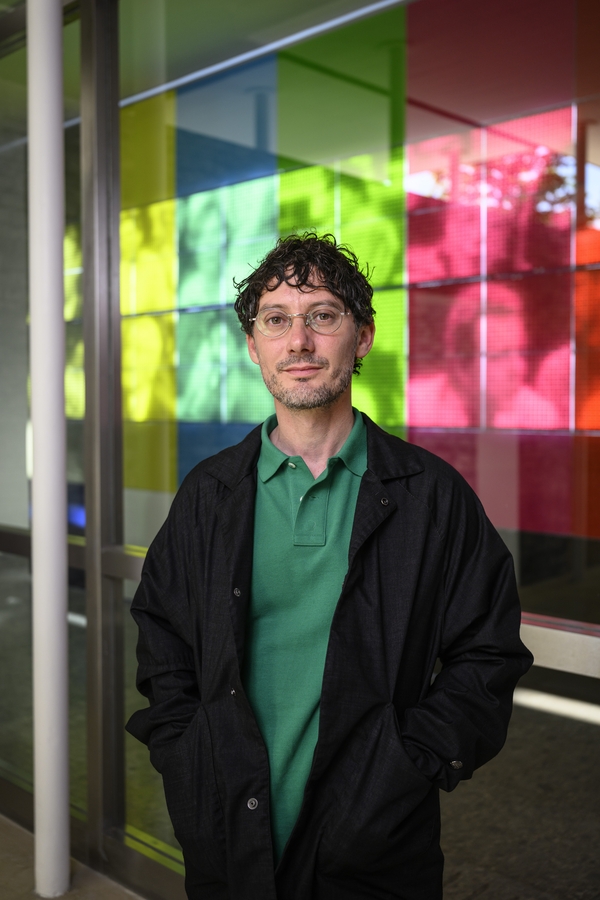
Gianmaria Andreetta is a curator, critic and lecturer born in Lugano and based in Berlin. After studying economics and political philosophy at the University of Geneva and Critical Studies at the Sandberg Instituut in Amsterdam, he developed a practice that combines curating, writing and research. His writings have appeared in art journals and catalogues. His work takes shape through an ongoing dialogue with artists, archives and contexts, viewing curatorship as a journey built upon exchange and dialogue. His major projects include the exhibition SECOND, held at the FriArt Kunsthalle in Fribourg in 2021; The Wig, an exhibition space and independent project which he co-directs in Berlin with Angharad Williams and Richard Sides; and The Unfinished Business of Living Together, presented at the Swiss Pavilion at the 2026 Venice Biennale. The latter represents the most recent chapter in his research and explores the theme of coexistence as a process of negotiation that addresses the concrete conditions of living together, ranging from artistic and curatorial processes to the dynamics of shared responsibility.
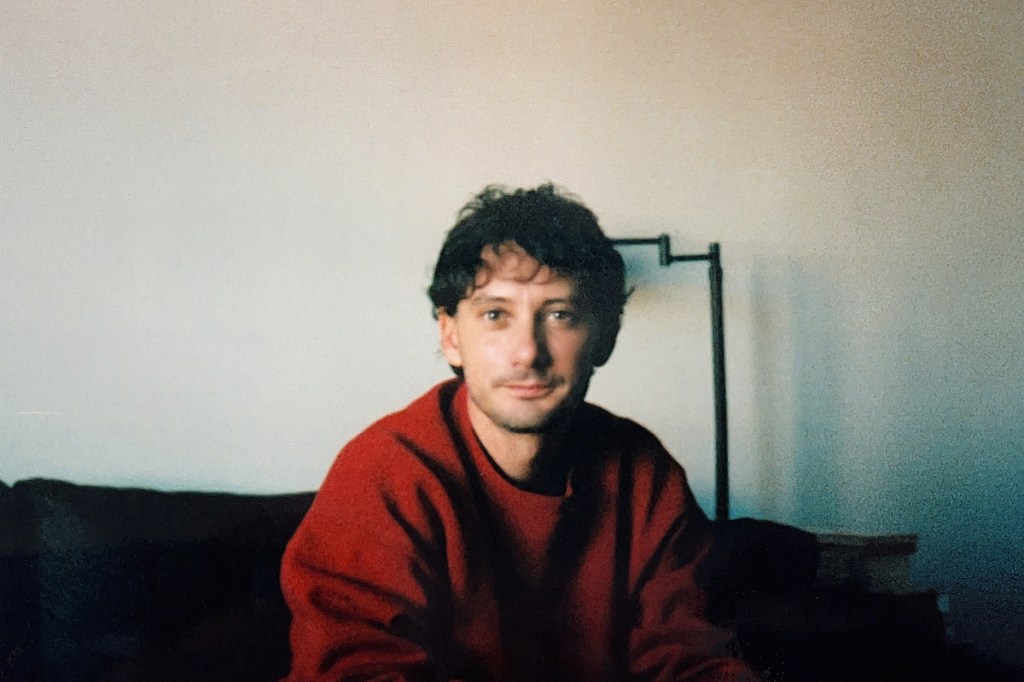
THE INTERVIEW WITH GIANMARIA ANDREETTA
After studying political philosophy and mathematics at the University of Geneva, working as a curator at Analix Forever between Geneva and Paris, and completing postgraduate studies in Critical Studies at the Sandberg Instituut in Amsterdam, your profile reflects a deeply multidisciplinary background. How have these experiences and areas of study contributed to shaping your curatorial vision?
It looks more deliberate on paper than it was. I studied political economy and philosophy, and mathematics in Geneva because I couldn’t choose between all of them, although I didn’t continue with mathematics. What stayed was a habit of reading slowly and being suspicious of arguments that move too quickly. Analix Forever was my first job, first as a gallery assistant and later as gallery manager. The gallery had two locations, in Geneva and Paris, which meant I did everything: press, transport, hanging, invoices, artist liaison, dinners, painting the walls and selling. I still think that’s most of the job. Sandberg was different. The MA in Critical Studies is not exactly a training in exhibition-making. It was two years of reading, thinking and arguing with people, which sounds like hell but wasn’t, because the conditions for it were well put together. It was a meaningful experience for me. My research interests, curating and writing stopped feeling like separate activities. Annie Goodner, Elizabeth Graham and Elisabeth Klement, with whom I later worked on How To Show Up?, all came from that period in Amsterdam. We were classmates. I think of it less as a curatorial vision from the outset than as a set of habits that developed through figuring things out, one step at a time.
Your research brings together writing, artistic practice and curating. At a time when the boundaries between these roles have become increasingly fluid, and curating is often considered a creative and authorial practice in itself, how do you conceive the relationship between these different dimensions of your work?
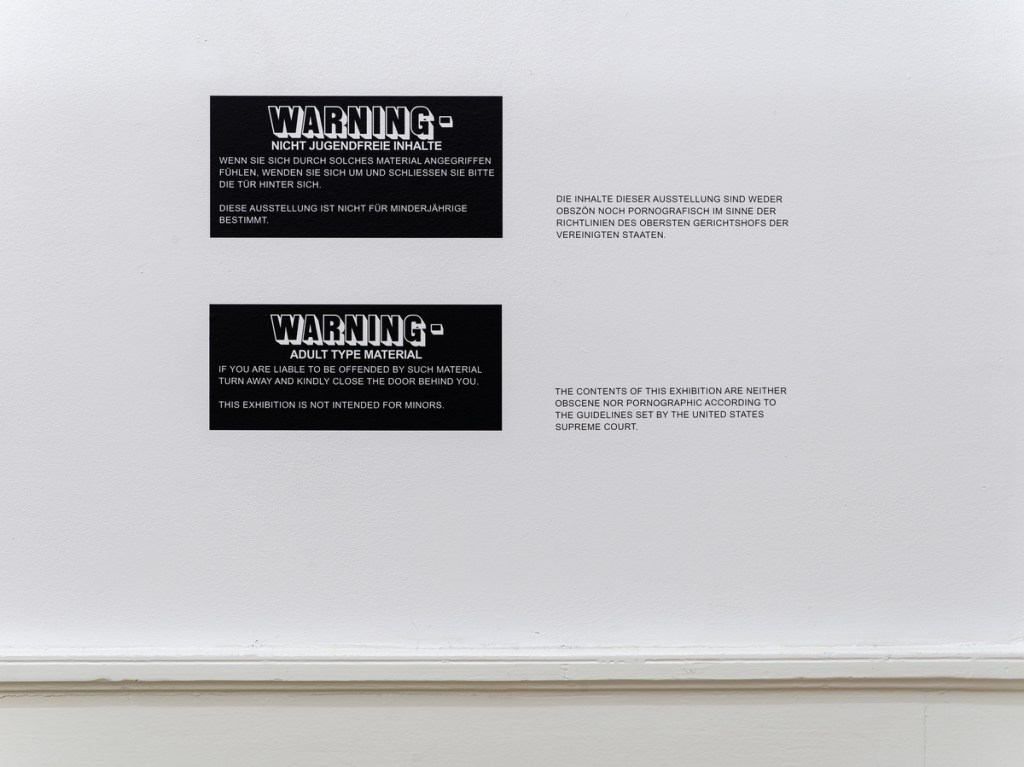
I’m wary of the authorial version of curating. It’s often a way of taking credit for other people’s work. In practice, the three things you mention involve different degrees of exposure, I think. When I write criticism, I’m accountable for every sentence. When I curate, I’m accountable for the conditions: the budget, the timing, what is in the room and whether we all feel we’re having an interesting conversation about art. The latter can be more work and is much less visible, which is fine. Writing is what I do when I don’t yet know what I think. Several projects started like that. The project on Ingo Swann, Being a faggot-spaceman I am awesome (Stadtgalerie Bern, 2022) for example, began because we couldn’t decide what we thought of him and his pornographic collages and writing: whether he was a charlatan or some kind of a genius, a good or bad person, or even a good or bad writer. He remained an ambiguous figure. The Venice project began, among other things, by reading transcripts of Swiss talk shows from the 70s. I don’t feel the need to self-categorise or define the boundaries between these roles. I try to be precise about what I know at a given point, and what I’m still trying to work out.
During your residency at Rupert, an independent art centre in Vilnius, you developed a project focused on moral panic and the witch hunts in eighteenth-century Lithuania. Drawing on non-canonical sources and informal forms of knowledge circulation, such as oral narratives, the project challenged the idea of a single historical truth. How important is the dialogue with the history and culture of the places hosting your projects within your artistic and curatorial practice?
I was in Vilnius for a few months in 2016. The starting point was the witch trials in the Grand Duchy, which are not well documented compared with the Western European ones. Much of what survives consists of court records shaped by what the court wanted to hear. So the record is heavily biased. What interested me was oral history as a form of evidence. Rumour was how most of these accusations travelled. A completely unreliable medium in some ways, yet treated as sufficient to decide the life of a person, usually if not always a woman. I was “reading” that alongside the canonical texts. I visited some of the sites in and around Vilnius and closer to the coast. People at Rupert gave me references I could not have found on my own. That is the honest answer to the question about dialogue with a place: I arrived knowing very little and people told me things. The artist Robertas Narkus, whom I had met at Sandberg, was about to open Autarkia, which he called an artist day-care centre and had a restaurant inside it. I spent a lot of time there.
THE PROJECTS BY GIANMARIA ANDREETTA
Writing seems to occupy a central position in your practice. I am thinking in particular of How To Show Up?, the project developed at San Serriffe bookshop in Amsterdam, where language becomes a situated and performative gesture capable of creating new relationships between people. To what extent can writing today be conceived as a collective practice of activating thought, capable of bringing people and different forms of knowledge into dialogue?
A small correction first. How To Show Up? was made by four of us: Annie Goodner, Elizabeth Graham, Elisabeth Klement and me. It existed because San Serriffe made room for it after hours or on Sundays. It ran every couple of months for around four years. The format was simple. We invited someone with a writing practice to present something new, and the shop was rearranged for the evening. San Serriffe had most of its furniture on wheels, so that was convenient. For one performance the room was dark and people listened lying on air mattresses. For another, we made a bar in the middle of the room, and so on. I don’t think writing is inherently collective. Most of it is done alone, and should be. What was collective was the reading and editing and, finally, the performance in front of an audience. San Serriffe is also in the middle of the Red Light District, so anyone who came had made a decision to be there.
Let us now turn to three particularly significant moments in your practice. In SECOND, artworks emerge from collaboration and mutual exchange between the artists. In The Wig, the exhibition space becomes an infrastructure for shared production and exchange, challenging established notions of authorship. Likewise, The Unfinished Business of Living Together, the project for the Swiss Pavilion at the 2026 Venice Biennale, takes shape as a collective and polyphonic process in which the curatorial method mirrors the exhibition’s central theme of coexistence. Looking at these projects, a recurring thread seems to emerge: living together is not simply a subject to be represented, but a concrete method built through continuous negotiation. In your experience, what are the main advantages and difficulties of working together within curatorial practice?The Wig started in 2021 with Angharad Williams and Richard Sides. The name comes from de Certeau’s concept of “la perruque” from his famous book, The Practice of Everyday Life: work done on the employer’s time that is not the work you are paid for. That can be creative work. That describes how the space runs, as well as an interest we have in work about work. But not only. SECOND brought together five artists who already knew one another, some of whom had appeared in each other’s work. I commissioned new pieces and asked them to work across one another’s practices. Kunsthalle FriArt gave us the room upstairs, and Fribourg is small enough that everyone could be there at the same time. The advantage of working this way is that other people catch what you can’t see. The difficulty of collaborative work is that it’s slow and produces conflict, and the conflict isn’t always productive, or is a lot to deal with. Six people in Venice, three language regions plus English, different generations, and on top of that the concept of “national representation”. There were long arguments about credit and about what belonged to whom. Some of them aren’t resolved. Anyone who describes collective work as smooth is either lying or working alone.
Many of the projects you have curated reveal a consistent engagement with historical documents and archival materials, regarded as tools capable of generating new readings of the present and questioning the social, cultural and political conditions of contemporary life. How central is working with archival traces of the past for the new generation of artists and curators?
I can’t speak for a generation. What I notice and can say is rather practical. Some say the twentieth century was the century of recording and recording technology. More material is accessible now than ever before, partly because of digitisation. At the same time, many independent archives are underfunded and kept going by volunteers who are getting older. Institutional archives are struggling to survive too. Archives Contestataires in Geneva and the Schweizerisches Sozialarchiv exist because individual people kept boxes. Working with them means dealing with decisions someone made decades ago about what was worth keeping. The risk in archival work is that the document argues on your behalf. A grainy videotape, yellowing paper or a b&w photograph looks like evidence, and it flatters whoever is showing it. Keeping the ambiguity in view, and in the historical record, is not easy, and I think that ambiguity is central to any archive. I don’t have a solution. In Venice we tried to keep the material visibly edited, so that it’s clear somebody chose.
THE SWISS PAVILION AT THE 2026 VENICE BIENNALE
Returning to The Unfinished Business of Living Together, the exhibition takes shape through extensive research into a range of archival materials, particularly the Swiss television programmes Telearena (1978) and Agora (1984), which brought the debate on homosexuality into Swiss public television. Around these sources, a broader research process also involved independent archives and LGBTQ+ activist networks from across Switzerland. How did the participating artists engage with these materials, allowing them to resonate in the present through their own artistic languages and poetics? From a curatorial perspective, how did you coordinate such a heterogeneous constellation of documentary materials and artistic interventions belonging to different periods, memories and sensibilities?
The core material is an episode of Telearena from April 1978, in which what was called “the problem of homosexuality” then, was debated live in a studio in front of an audience. Agora made a French-language version in 1984 on the same subject on what was then TSR, linking Swiss, French and Canadian audiences by satellite. Both programmes used sketches performed live and written by their drama departments to provoke responses from the studio. That idea was strange and experimental for the time, and it’s what kept us formally with the material.
Nina Wakeford had already done two years of oral-history and archival research in Switzerland for Concrete Comeback ⚣⚢ Arms Are For Linking at Stadtgalerie Bern with Luca Beeler, and also with Lithic Alliance. Much of what we had at the beginning came from them, from local archives and from people in queer networks around the country who gave us their time. Coordinating it was not especially conceptual or rigid. We agreed early that nobody would illustrate the archive. Everyone took what they needed from it. Miriam Laura Leonardi worked with time, loops and muted images of the audience. What does an archive produce when language is removed, was one of her questions. Yul Tomatala worked with the figure of the now-defunct continuity announcer and with television formats more generally, as did Lithic Alliance, appearing in drag. Lithic Alliance also introduced a timescale extending well beyond 1978 and 1984, including the AIDS crisis. Nina worked collaboratively with a lot of activists and artists from that period; people who appeared on the talk shows. Luca and I worked on the sequencing of the multichannel video work with the artist Richard Sides, and Nikki Buzzi for sound.
Swiss Pavilion in the Giardini, designed by Bruno Giacometti, carries a strong architectural identity and a layered exhibition history. The exhibition respects the building’s original spatial organisation, preserving the historical names and functions of its rooms, each of which seems to establish a different relationship between architecture, artworks and visitors. How did you engage with the specific qualities of these spaces while seeking a balance between the memory of the building and its reactivation through contemporary artistic interventions?
The pavilion dates from 1952. Bruno Giacometti conceived it as a series of separate volumes: a large painting room lit from above, a semi-open sculpture room with its own courtyard, and a smaller connecting room originally intended for prints and drawings. We kept the rooms as they were and retained their historical names, mostly because it was clear that the building already organises attention and circulation in a very specific way. Each room receives light differently, and each has a different scale and gravitas. That already felt like a script. We added two facsimile brick walls. The trompe-l’œil is a collaborative work by Miriam, using black-and-white photographs made specifically for the purpose by Cédric Eisenring. One extends the walls immediately to the left of the entrance. The other forms a new wall in the courtyard, with a window looking onto the garden. It effectively closes access to the garden while framing it as an image. The garden is where the exhibition goes outside without really going outside, and where questions of intimacy, public space and architecture stop feeling abstract. In the sculpture room, we built an infrastructure inspired by civil defence architecture, reusing timber from the Architecture Biennale pavilion that preceded ours. What interests me now that the project is up and running is how natural these modifications feel. Audiences have perhaps come to expect some form of architectural intervention. But one important change is less immediately visible: we reversed the way visitors would normally enter the pavilion through its largest room. By bringing them in through the courtyard and the new corridor we built, we were able to construct a sequence leading towards the main space. That sequence is perhaps analogous to what it must have felt like to appear on television for the first time: passing through a succession of corridors and mysterious rooms, preparing to speak in front of a camera. There is also a practical constraint. The building belongs to the Confederation, and everything you do to it has to be vetted. Not a bad discipline.
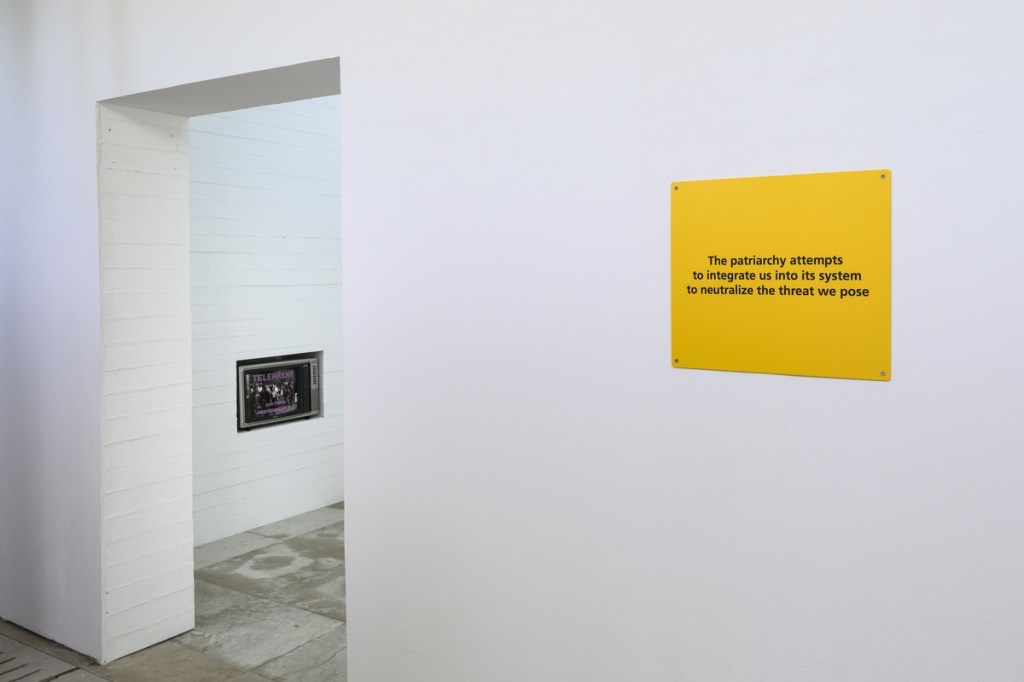
In the Painting Room, a four-screen installation inspired by the format of the television talk show takes shape. Whereas television audiences generally occupy a passive position, here this logic is reversed: visitors are required to take a position themselves, navigating between simultaneous flows of images and sounds and constructing their own path through the installation. How important is it for you to engage the viewer as an active participant in the construction of meaning within an exhibition?
The four screens play simultaneously and don’t resolve into a single argument. It’s more collage than essay. Standing in one place gives you a partial version, but you can move. Sometimes the work choreographs attention through sound and image. At other times the same image plays four times. I’d resist the word participation, though. Nobody is being asked to do anything. It’s closer to the position of someone in a studio audience in 1978, who also couldn’t possibly follow every thread and had to decide whom and what to believe while it was still happening. The talk show is a useful format to borrow because it’s dishonest about precisely this. It presents itself as free and open debate, but it’s entirely staged. The sketches in Telearena were prepared in advance by the drama department, so the audience was reacting to a fiction it had been handed. And the host had a plan. Whether visitors take a position isn’t up to us. Some will walk through in three minutes. In the Giardini during the Biennale that’s a fair assumption. The four-channel video alone runs for about an hour. People did leave, and some came back.
Throughout your projects, language occupies a central role. Statements, fragments of speech and declarations contribute to constructing positions and forms of visibility, making explicit the social and political tensions that shape the present. In your view, how can messages advocating for rights continue to have a meaningful impact on public debate within today’s saturated and fragmented media landscape?
I’m not sure curators are especially well placed to answer this. What the material suggests is that the 1978 broadcast had an impact partly because there was so little else of that scale at the time. One channel, one evening, much of a country watching the same thing. People who appeared were recognised in the street afterwards, with consequences, some of them bad. It also meant that speaking on television once was an event, in the sense that there was a before and an after. Some people spoke about Telearena as the Swiss equivalent of Stonewall. The archive doesn’t offer a straightforward lesson about media or queer politics for the present. The conditions have changed completely. One pattern does carry over: the people who spoke had prepared together, in groups, for a long time before the cameras were switched on. That kind of preparation is unfashionable, but it’s probably still the mechanism. An exhibition doesn’t intervene in public debate at the same scale in my opinion. I’d put it more strongly than that: believing an exhibition can change the world or repair the past is the conservative position. It assumes the business can be “finished”, re: our title. What interested us was leaving our gesture ambiguous, which is also what I’d want from an archive. A lot of people will see it, but in the end it’s a room in a park in Venice, and I’d rather be accurate about that.
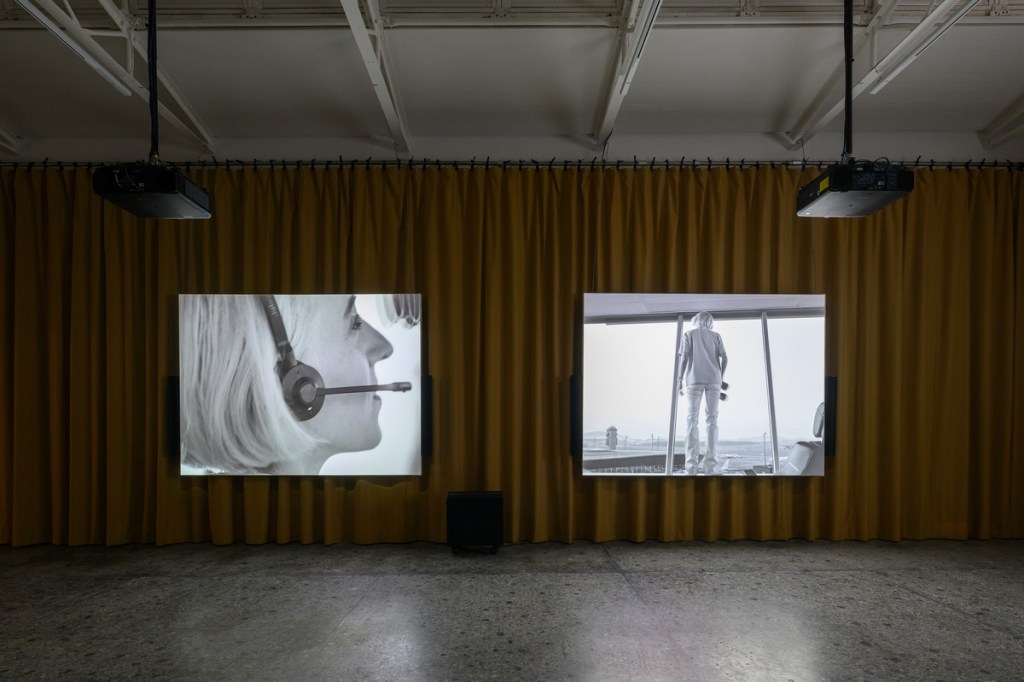
The media have long contributed to defining what a society is able to recognise and perceive about itself, determining who has the right to appear in the public sphere and under what conditions. Today, in a media landscape that is far more fragmented and seemingly more inclusive, do you think forms of instrumentalisation still persist in the representation of diversity, particularly of queer subjectivities? What possibilities do you see today for building forms of coexistence grounded in the mutual recognition of difference?
Yes, although I would be careful with the word instrumentalisation, because it can easily be used to dismiss any visibility at all. What the two broadcasts show is that inclusion, which was arguably a good thing, came with conditions and real consequences. In 1978, you could appear if you were calm, articulate and willing to be discussed as a problem. Lesbians were badly underrepresented. Heidi Oberli, for example, spoke the way she did because she had to. Lesbian groups had fought to be included in the programme at all. The terms of the supposedly open debate had already been set by the programme and its producers. What is interesting is how many people accepted those terms and appeared anyway. The broadcast helped produce new coalitions between lesbian and gay groups across Switzerland, alongside a great deal of positive change. Three participants lost their jobs. An article from that time reports that, following the broadcast, a young viewer took his own life. These conditions still exist, but they are less centralised and harder to name. Social media is not a broadcaster, and nobody really assumes editorial responsibility, which makes its conditions feel more like weather. Something similar is happening in traditional media, where editorial decisions are increasingly shaped by algorithms and clickbait. Violence and horror take up so much space. Everywhere, it feels as though empathy is a thread that continually needs to be tamped down.
On coexistence, I do not have a definitive proposal. Living together is mostly a negotiation over specifics: money, space, access, who is tired, who does the administration and who does the cleaning. We encountered all of that within a group of six.
Alessandro Cerchier
9 May – 22 November 2026
The Unfinished Business of Living Together
Swiss Pavilion
Giardini della Biennale – Venice
https://www.labiennale.org/en/art/2026/switzerland
Pavilion of Switzerland at the Biennale Arte 2026, The Unfinished Business of Living Together, Gianmaria Andreetta. Photo Credits: Christian Beutler ‒ Keystone 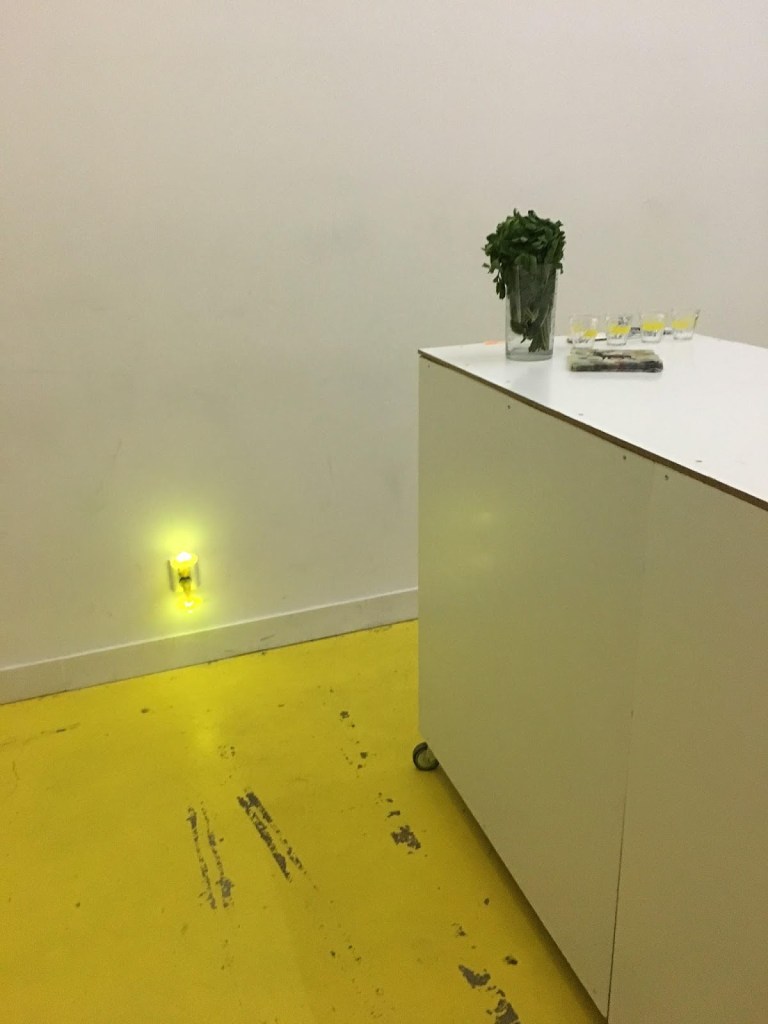
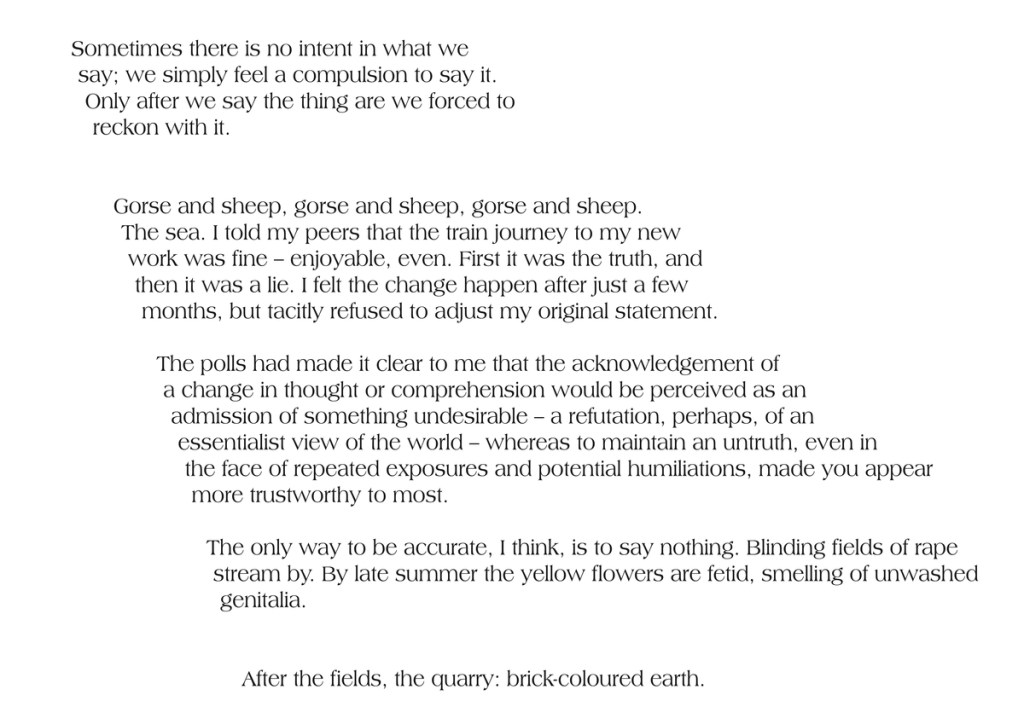
Ghislaine Leung, 29042017, HTSU (How To Show Up?), Amsterdam, 2017. Installation view. Credit: Courtesy HTSU, Amsterdam Sophie Collins, The Forest Fire, HTSU (How To Show Up?), Amsterdam, 2018. Detail of the text. Credit: Courtesy HTSU, Amsterdam 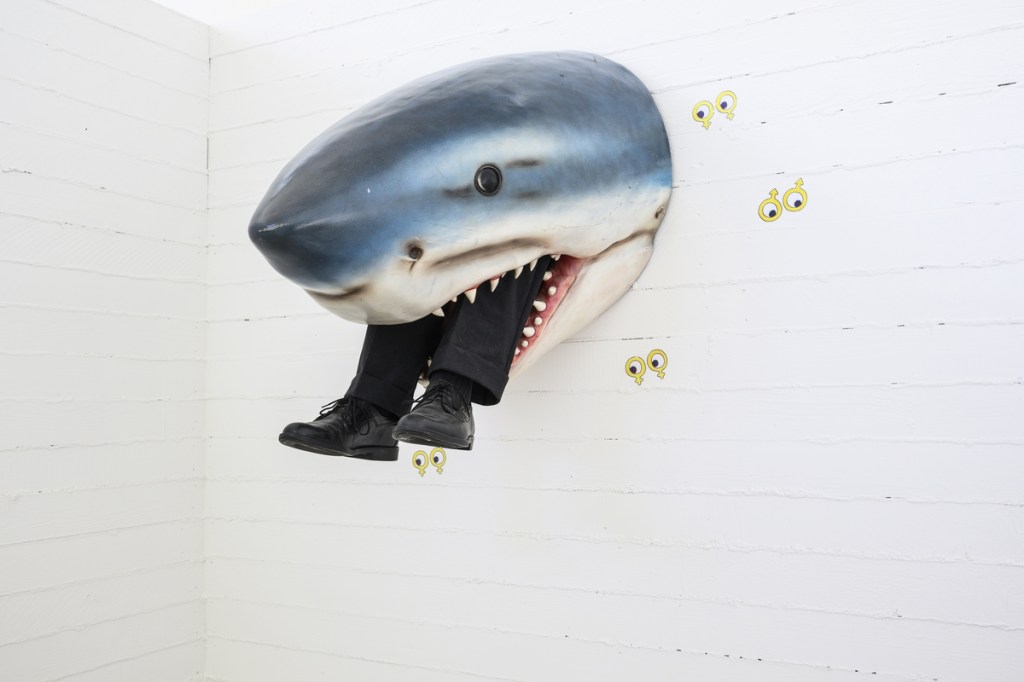
Pavilion of Switzerland at the Biennale Arte 2026, The Unfinished Business of Living Together. Photo Credits: Christian Beutler ‒ Keystone Angharad Williams, No Fate, HTSU (How To Show Up?), Amsterdam, 2016. Credit: Courtesy HTSU, Amsterdam 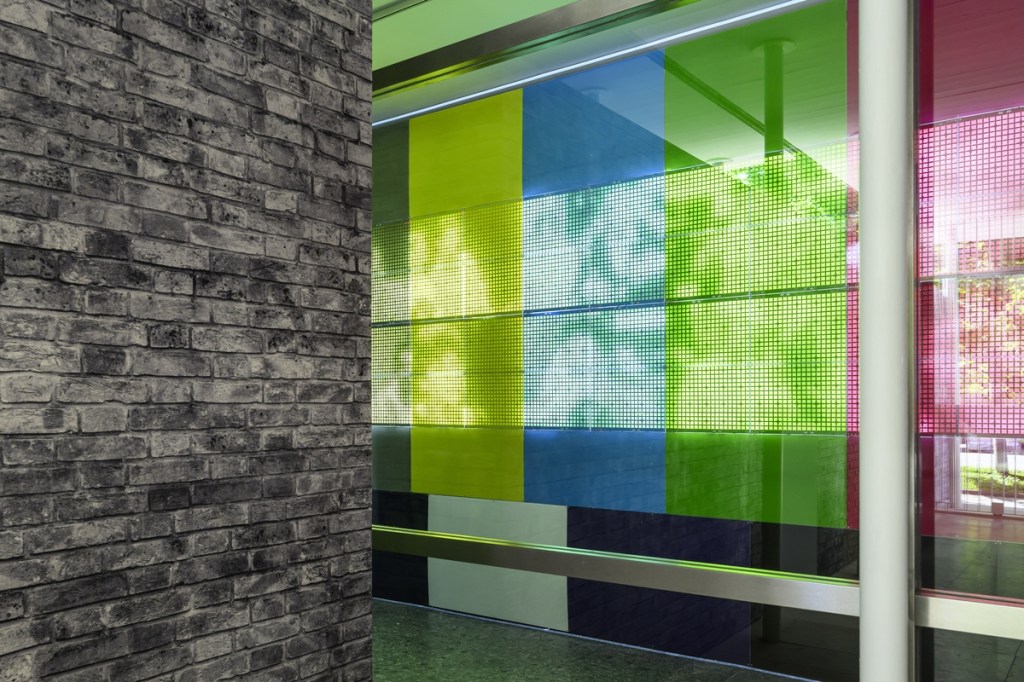
Pavilion of Switzerland at the Biennale Arte 2026, The Unfinished Business of Living Together. Photo Credits: Christian Beutler ‒ Keystone 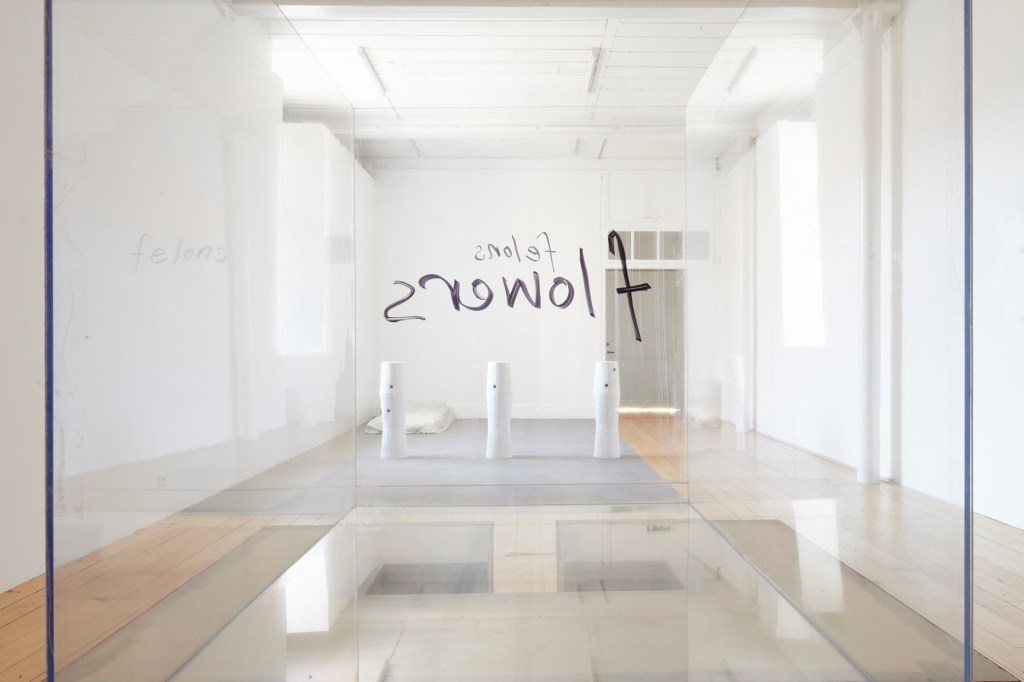
SECOND, Fri Art Kunsthalle, Fribourg, 2021. View through Angharad Williams’s work, with Becket MWN’s work beyond. Credit: Photo Guillaume Python. Courtesy of the artists and Fri Art Kunsthalle Pavilion of Switzerland at the Biennale Arte 2026, The Unfinished Business of Living Together. Photo Credits: Christian Beutler ‒ Keystone 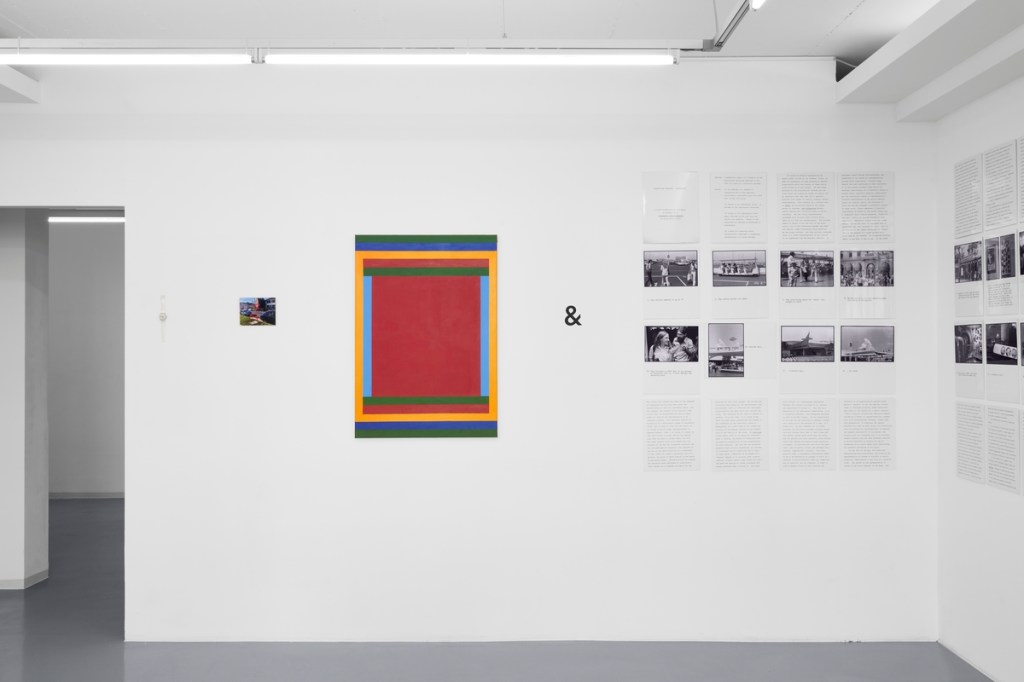
The Wig, Bonner Kunstverein, 2022. Installation view with works by Nancy Dwyer × Swatch, Angharad Williams, Louise Lawler and Fred Lonidier, from left to right. Credit: Photo Mareike Tocha. Courtesy of the artists and their galleries Pavilion of Switzerland at the Biennale Arte 2026, The Unfinished Business of Living Together. Photo Credits: Christian Beutler ‒ Keystone 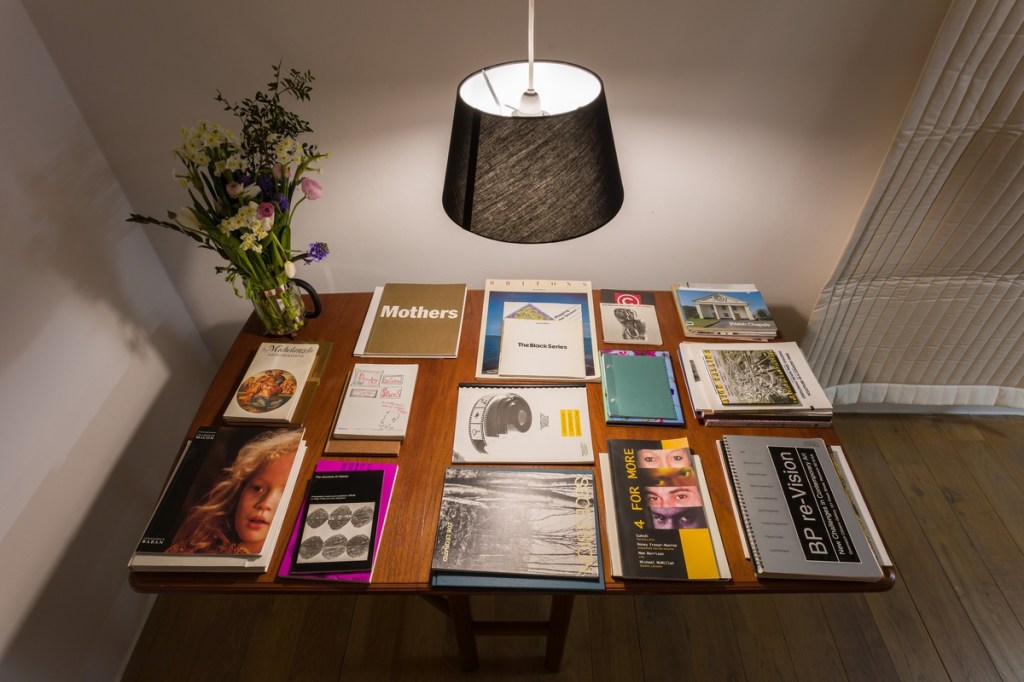
The Wig, MOSTYN, Llandudno, 2022. Books and catalogues rediscovered in boxes in the museum’s back rooms, brought out for visitors to browse. Credit: Photo Mark Blower. Courtesy of the artists and MOSTYN 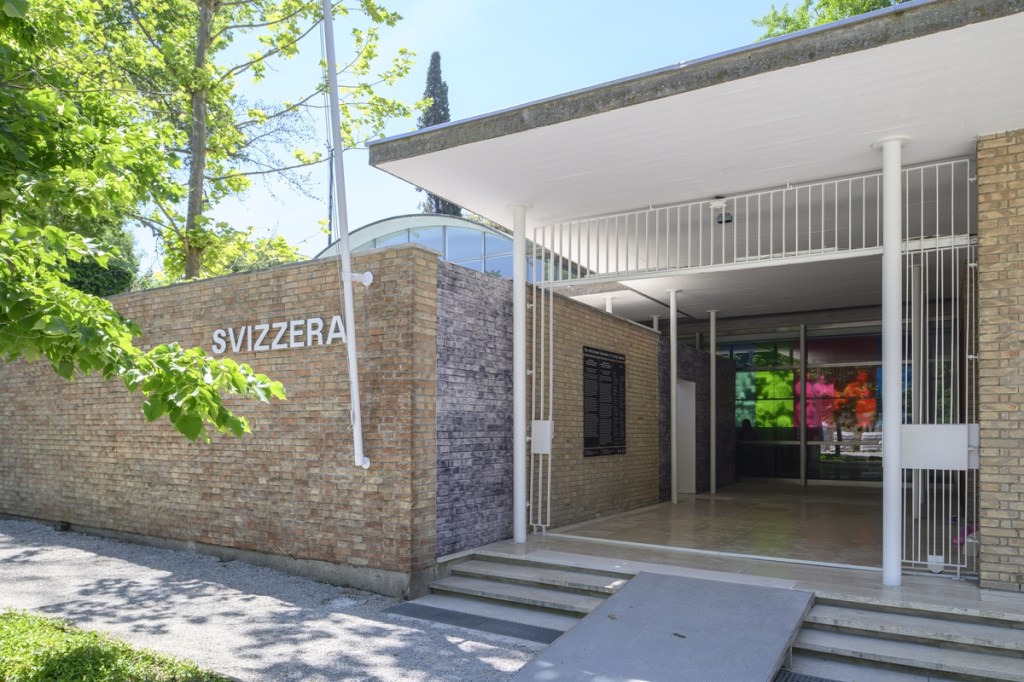
Pavilion of Switzerland at the Biennale Arte 2026, The Unfinished Business of Living Together. Photo Credits: Christian Beutler ‒ Keystone Ingo Swann, Being a faggot-spaceman I am awesome., Stadtgalerie Bern, 2022. A warning from Screw: The Sex Review (7 March 1969), reproduced with a German translation. That issue also featured a collage by Swann, published as Hero Haubold and included in the exhibition. Credit: Photo Studio Mussano. Courtesy of the artists and Stadtgalerie Bern 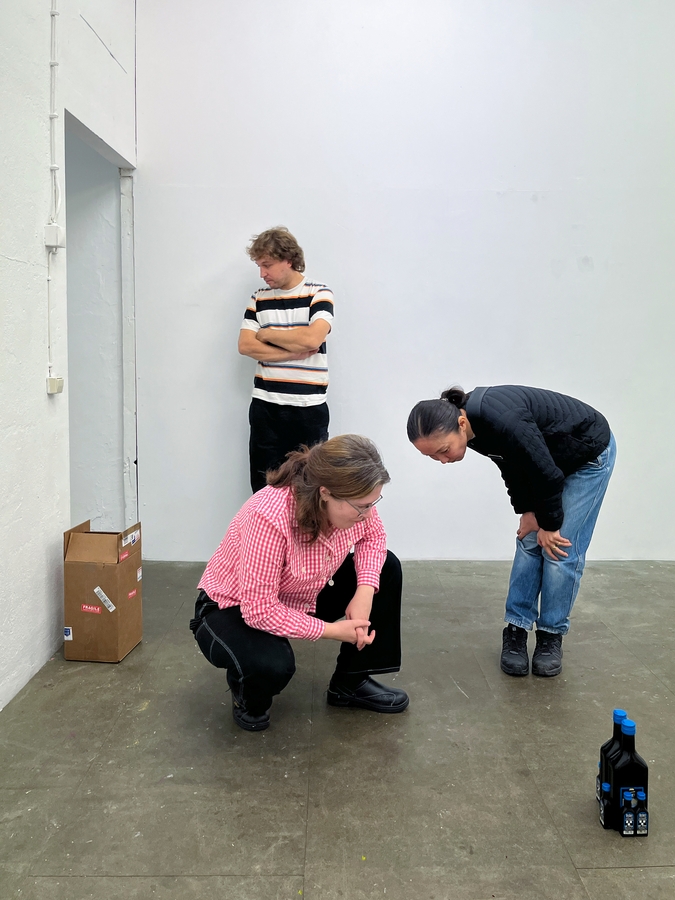
DRIVE LANGUAGE CRAZY, The Wig, Berlin, 2022–23. Richard Sides, Angharad Williams and Yuki Kimura discussing the display of Kimura’s work. The exhibition documentation is itself an artwork by Jason Hirata, Cigarettes and chips in the dark (2022–23). Credit: Documentation artwork Jason Hirata. Courtesy The Wig, Berlin 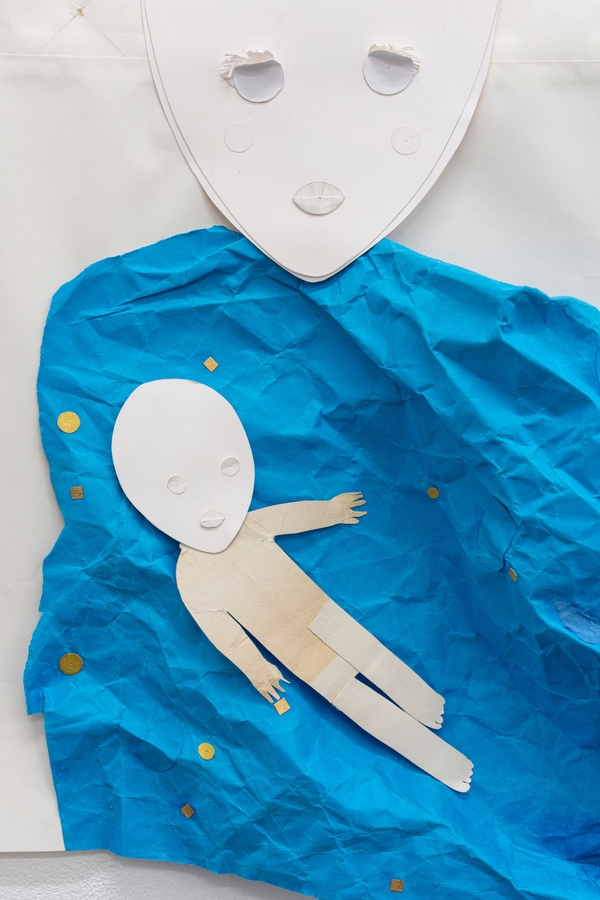
James Whittingham, A mother and her infant, graphite, PVA glue, paint, staples and paper clips on paper, 46 × 54 cm. From People Going Up & Down, The Wig, Berlin, 21 September–26 October 2024. Credit: Courtesy of the artist and The Wig, Berlin Gianmaria Andreetta. Photo: Angharad Williams

