In the privacy of a dimly lit space, the Egyptian Pavilion at the 61st Venice Art Biennale hosts the sculptures and reflections of Armen Agop. The “Pavilion of Silence” calls for deep listening, challenges convention and transforms the taboos of sacredness. From these themes, we asked the artist to talk about icons, alchemy and protests, in a conversation that intertwines Armen Agop’s personal history with that of Egypt and humanity.
What is sacred, especially in a society like our contemporary one? The works of Armen Agop (Cairo, 1969) revive an idea of the sacred linked to intimacy and to a physical and emotional closeness between the viewer and the artwork. The sculptures, arranged in three dark spaces within the Egyptian Pavilion at the 2026 Venice Art Biennale, can – and must – be touched, thereby breaking down the taboos that have defined artistic norms for centuries.
The granite of the sculptures brings into the present a story with ancient roots: that of the relationship between human beings and stone. With a clear reference to Egyptian civilisation – as suggested by the essence of the lotus flower that pervades the final room – what emerges is a call for silence, for listening and for reconnection with one’s inner self. The pavilion is aniconic – and anti-iconic, given the explicit request not to take photographs – in search of a human community without reference images and, for this reason, universal.
We interviewed Armen Agop to explore this meditative setting in greater depth and to understand how silence is, now more than ever, necessary and not always static. To understand how remaining silent can also be a form of protest, how declining an invitation can become a sign of introspection, and how, without speaking, one can say a great deal.
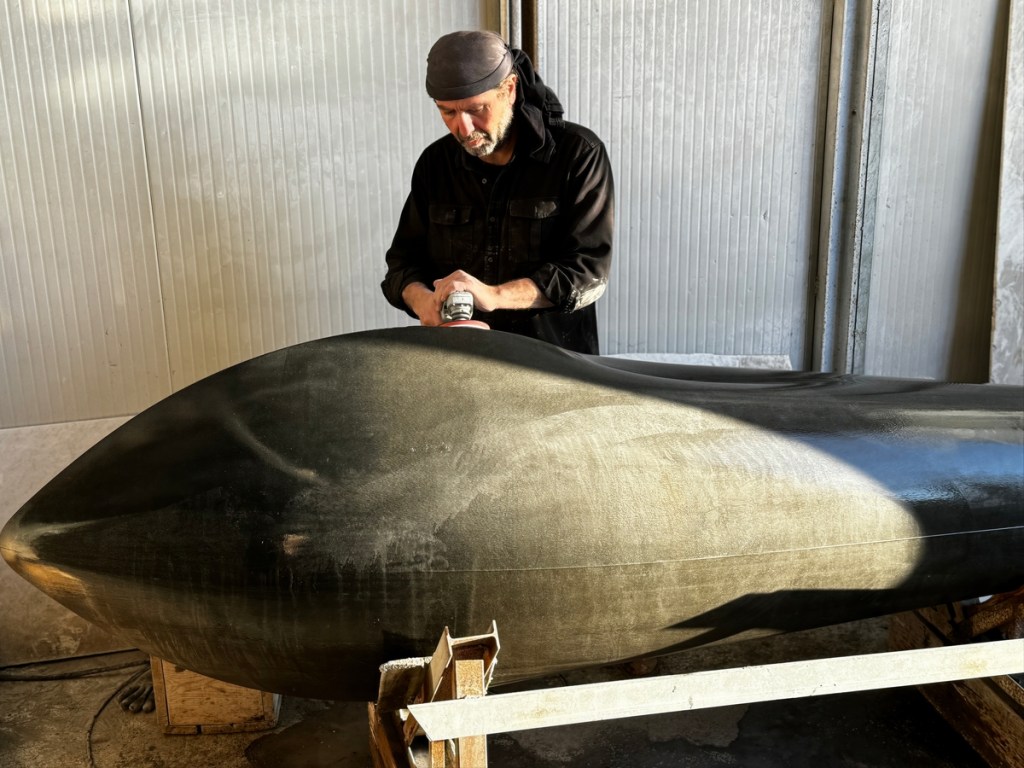
THE INTERVIEW WITH ARMEN AGOP
You are representing the Egyptian Pavilion at the 61st Venice Art Biennale, a Biennale that has been fraught with political turmoil. How do you feel about this role?
Egypt has contributed to our civilisation for millennia and is a vast reservoir of human experience. A place where various gods, languages and cultures have emerged and passed through; a place where people have always pushed beyond limits, where they have managed to transform themselves. A place where different ethnic groups have been welcomed and integrated, absorbing their cultures and enriching the local one. For this reason, representing Egypt is an enormous responsibility, especially at the world’s most important exhibition, the Venice Biennale.
Among the political controversies surrounding this year’s Biennale is the presence of the Israeli pavilion, which was the main reason why, on 8 May, ANGA (Art Not Genocide Alliance) organised a strike that was also joined by many participants in the Biennale. How would you comment on your symbolic participation in the strike?
I believe that art can go beyond the transient moment. In the Pavilion of Silence, we are invited to listen to our inner voice. I believe that art can lead us towards a clearer consciousness and awaken what lies dormant and hidden within us. Silence is not muteness. I believe in the power of art, because we are more human when we make art, enjoy it and interact with it.
You were born in Cairo in 1969 to a family of Armenian origin and have been living in Pietrasanta since 2000. What does Egypt mean to you and to your family history?
For me, Egypt is not just a country: it would be far too reductive to view it as a state limited to the present. Egypt is an immeasurable accumulation of human experience, and, for me, it represents a highly significant example in relation to our contemporary problems. It is the land where different cultures, languages, and religions have been welcomed, and where different ethnic groups have merged. I see this immense experience of human survival as unspoken, yet expressed in silence. By looking carefully at the past, we find different answers for the future: we need deep reflection, and for that, a moment of silence.
In 2011, you turned down an invitation to take part in the Venice Biennale. Those were the months of the Egyptian Revolution and the protests in Tahrir Square against Hosni Mubarak’s presidency, which brought an end to his thirty-year rule. You declined the invitation, stating: “I did not want to consider it only as a career opportunity when I did not feel it was the time for my voice”. This year you have accepted, with the project Silence Pavilion. Between the Tangible and the Intangible. What has changed in you, as an artist and as a human being, over the last fifteen years?
Age! Joking aside, every situation in which we take a stand is an opportunity to get to know ourselves better. Since that day, when I turned down the invitation, my relationship with myself and with what I believe in my work has grown much stronger. It’s not that I had any doubts, but I realised I could not compromise even a fraction of my loyalty to my work. What I do is an end in itself and serves no other purpose.
It’s not that I didn’t know it already, but it was an experience that showed me the absoluteness of a certain belief. I know myself more clearly now. Since then, I have come to believe even more strongly in this inner strength, which has helped me face situations far more difficult than I thought I could handle – technical, financial, emotional and psychological – and to put in the background everything that society calls “success” and everything the art world demands.
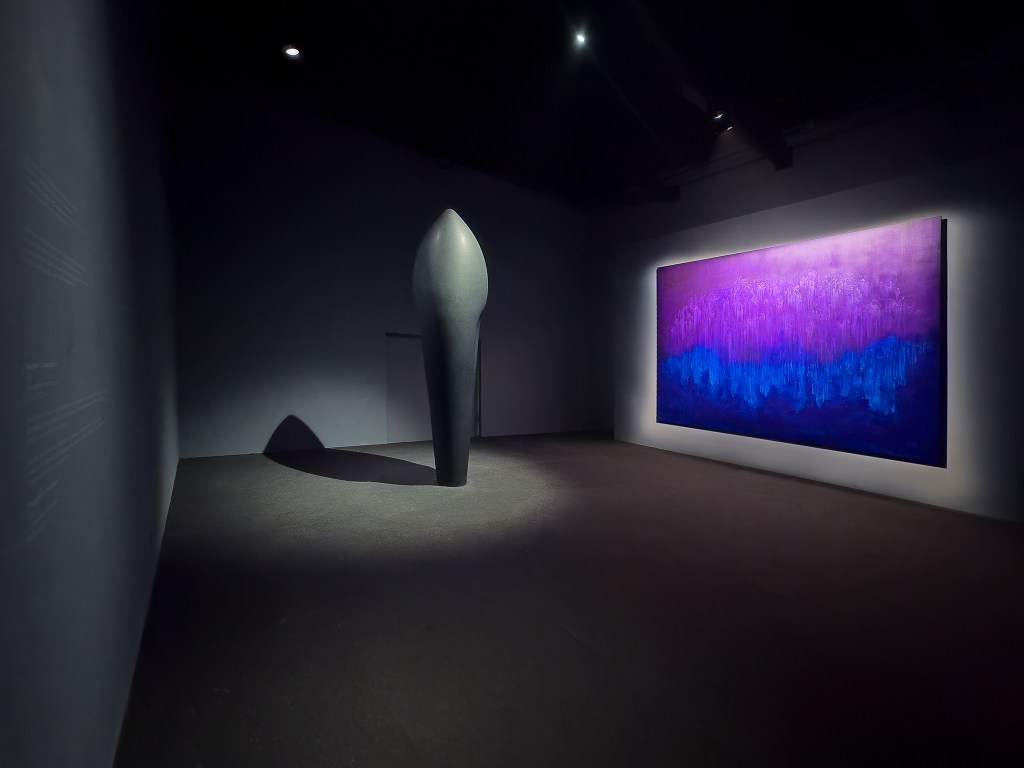
THE PAVILION OF SILENCE AT THE VENICE BIENNALE
The exhibition is divided into three spaces and gradually immerses the visitor in a contemplative experience, designed to stimulate the various senses: sight, touch, hearing, and smell. What role does the viewer play in the exhibition’s structure?
I believe that art, in general, is a continuous flow of energy between the human being who transmits it and the one who receives it. Works of art, for this reason, remain continuous transmitters of energy. The most important role, the one in which the circle is completed, is when the energy transmitted by the works is received by the viewer: that is when the works come to life. Those who internalise all this, absorb it and make it their own become part of all of us and, therefore, of the universe. Once we see and relate to an external energy, we can no longer erase that experience, even when we no longer remember it: it is there somewhere, because it is within us.
Inside your pavilion, you allow visitors to touch the artworks, thereby breaking a sort of taboo in the art world. Do you think that allowing people to touch the artworks can help challenge the legacy of the artwork as an intangible object?
We have created this distance within a sacredness that has led us to physical and, consequently, emotional detachment. In reality, our relationship with stone is very close: our first tools for hunting and defence were made of hard stone; we entrusted our survival to stone, to feed and defend ourselves, and when we had spiritual needs, we once again turned to stone, creating our gods. So we have a very intimate bond, and I believe that the invitation to touch reawakens this deep connection. And it is not limited to a visual experience. It is a relationship that goes beyond that. Granite comes from the heart of the Earth: the invitation to relate to a part of the Earth’s heart can reawaken our bond with the Earth as it travels through the cosmos. And nothing is separate; everything is connected, and this allows us to touch the cosmos.
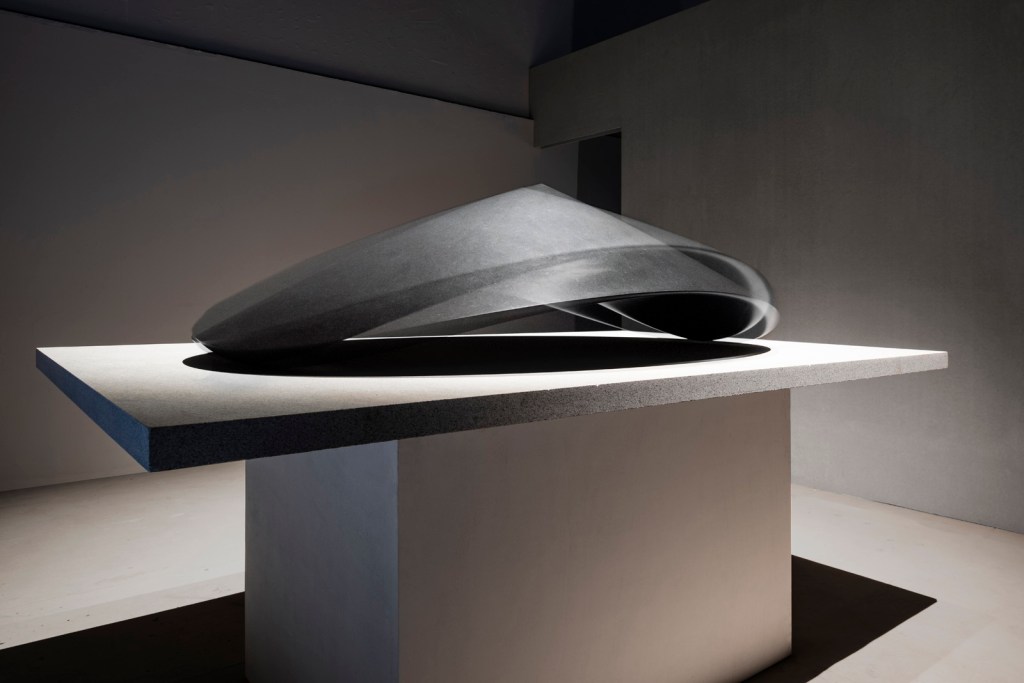
Given their impressiveness, the materials used and their religious symbolism, your works come across as “monumental” sculptures. Would you describe your works as monuments?
I try not to define anything. I’m very careful with the term “monumental”: the monumental often places the human being in a subordinate position; this dominance creates a situation of superiority, in which the ego of the monumental work is much more present and powerful. I seek a balance between us and the work. I am much more drawn to inner monumentality, to the invisible force that transcends the physical dimension.
As a sculptor, how do you approach the transformation of matter and its alchemical value?
I do not see myself merely as a sculptor, as I do not confine myself to a single practice. When faced with granite, I act as a sculptor; when faced with colours, as a painter. The material awakens in me a desire to connect with it. An artist is not indifferent to matter, and I believe that an artist is someone who acts in the presence of matter or with matter; matter stimulates them, and the relationship is necessarily alchemical.

Mysticism and contemplation are fundamental aspects of your practice and are also evident in Silence Pavilion. Between the Tangible and the Intangible. How does your art relate to the concept of the sacred?
For me, art is sacred, because it springs from an energy that goes beyond the hand: the source of that energy is not calories, but something else. And, at the same time, what a work of art conveys goes beyond information or the representation of the known; quite the opposite – it is precisely the unknown that intrigues me. When I look at a painting by Van Gogh, there is nothing to understand; I do not understand the flowers he depicts, I see a human energy struggling for survival, salvation, existence: the sacred within us all, to exist, to be, each in their own way.
Growing up in Egypt, as a young person, I saw sculptures depicting gods far removed from my own beliefs, yet they exuded inner strength: I sensed the sacred even though I did not relate to them spiritually or conceptually; their sacredness was undeniable, and yet it moved me. We need this connection with ourselves and with the universe. Religions have changed throughout history, but many rituals and practices have remained, transforming and adapting to the new god.
ARMEN AGOP’S ARTISTIC PRACTICE
Photography is not permitted inside the pavilion. Do you think this decision – which goes against the tide of images in which we are constantly immersed – might enhance the contemplative experience of those visiting the exhibition?
Absolutely. The Biennale is the most photographed exhibition in the world, but whatever we do while engaging with a work – whether visually or physically (if we touch it) – becomes an obstacle to internalising the energy it generates. I believe that works of art constantly transmit energy: we must be open to receiving it without distractions.
The contemplative experience requires a certain intimacy – with ourselves, first and foremost.
The absence of figurative elements and subjects makes your paintings and sculptures, in a sense, “aniconic”. By eliminating a subject, you also eliminate individuality. Could this decision be interpreted as an attempt to give form to a sense of community?
We, and our minds, as human beings, have remained self-centred for millennia. When we wanted to depict a god, we often portrayed him in our own image, and the same applies to the devil. When, as a young man, I made this observation, it became clear to me how important it was to free myself from this self-centredness and explore the rest of the universe, both externally and internally. We cannot imagine the inner universe through a figurative approach; otherwise, we would start depicting livers and stomachs. I believe there is something else, beyond imagination – that which is invisible. We are very aware of our inner energy, and I see no need to reduce it to a recognisable image. The unknown is there; I do not wish to deny it, but I welcome it with great curiosity.
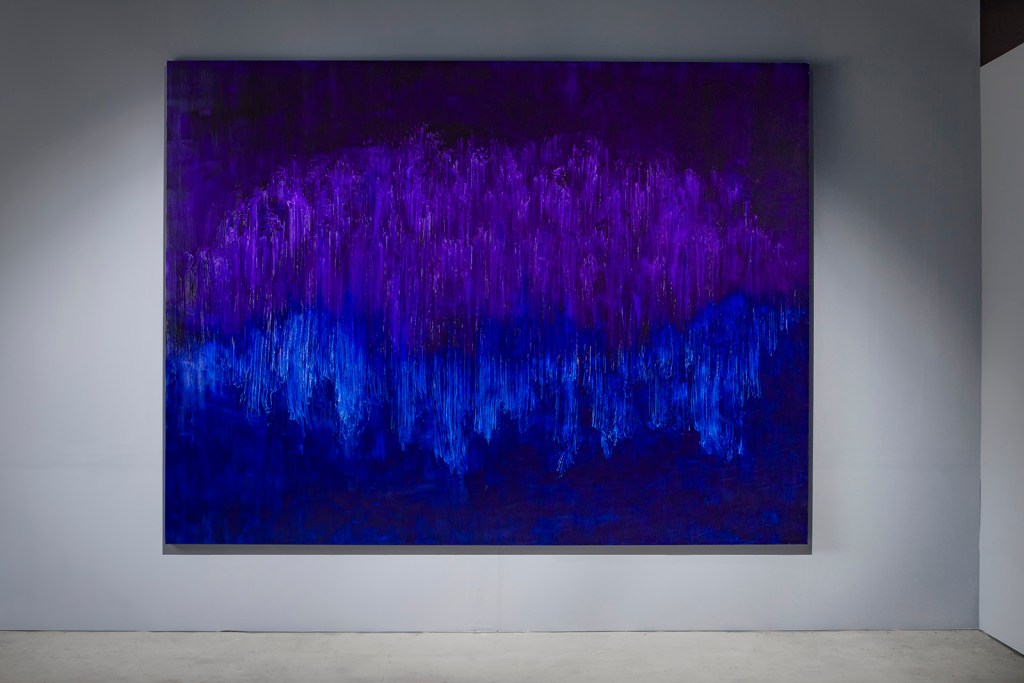
As is often the case, you yourself are the curator of the exhibition in the Egyptian pavilion. What is your relationship with curating?
I am very happy and satisfied to have curated the entire pavilion. Everything developed and evolved simultaneously while I was working. It was a unique experience for me. It is the first time I have curated an exhibition. It gave me complete freedom to present the works as I wished and offered me the opportunity to let everything come together organically, without any external interference. And it made me realise so many things about my work, about myself and about the relationship between us.
Rebecca Canavesi
9 May – 22 November 2026
Armen Agop. Silence Pavilion. Between the Tangible and the Intangible
Biennale Gardens – Venice
Silence Pavilion. Between the Tangible and the Intangible
Armen Agop, Intangible I. Photo by Andrea Ferro Armen Agop working on one of the artworks for his exhibition in Egypt Pavilion at Venice Biennale 2026. Photo by Karim Kaddal 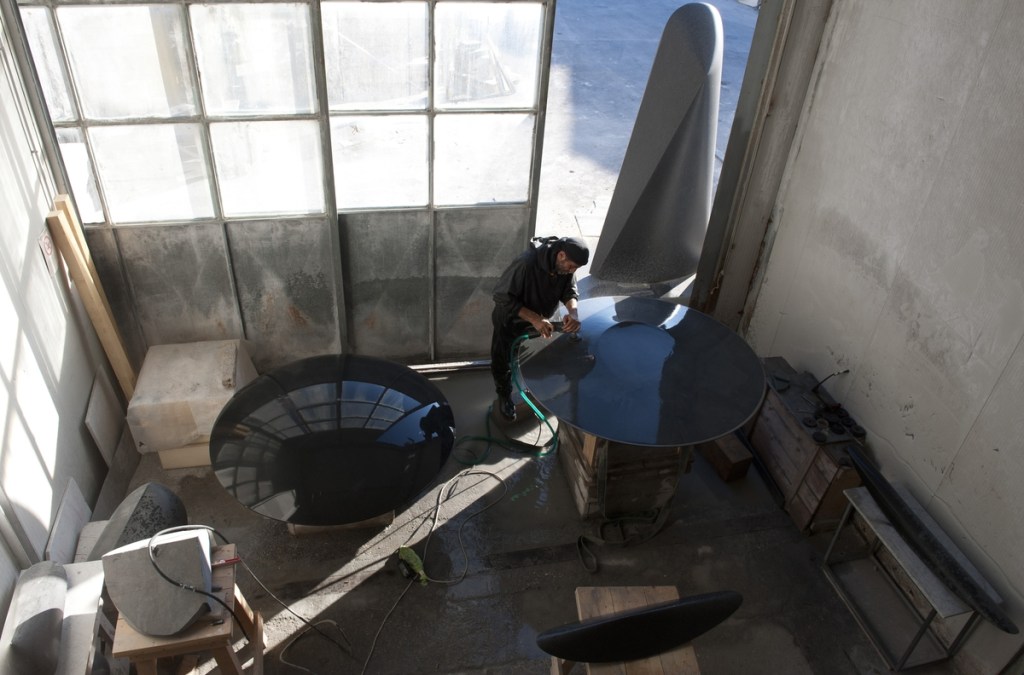
Armen Agop in studio. Photo by Partricia Franceschetti 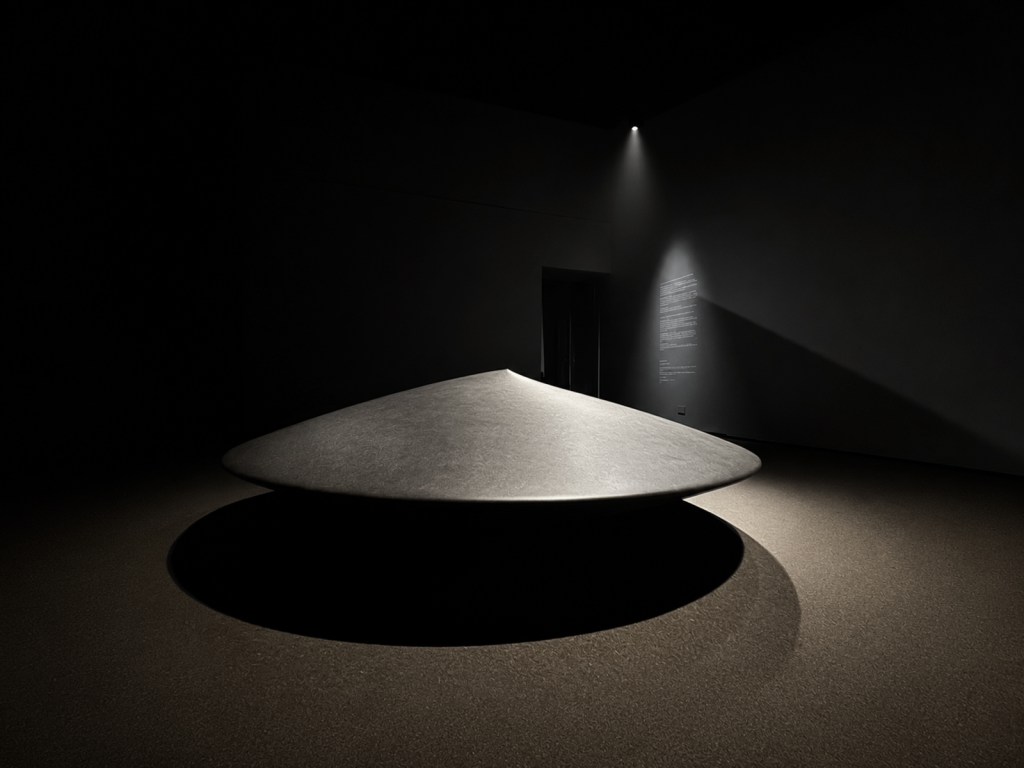
Armen Agop, Silence I. Photo by Andrea Ferro 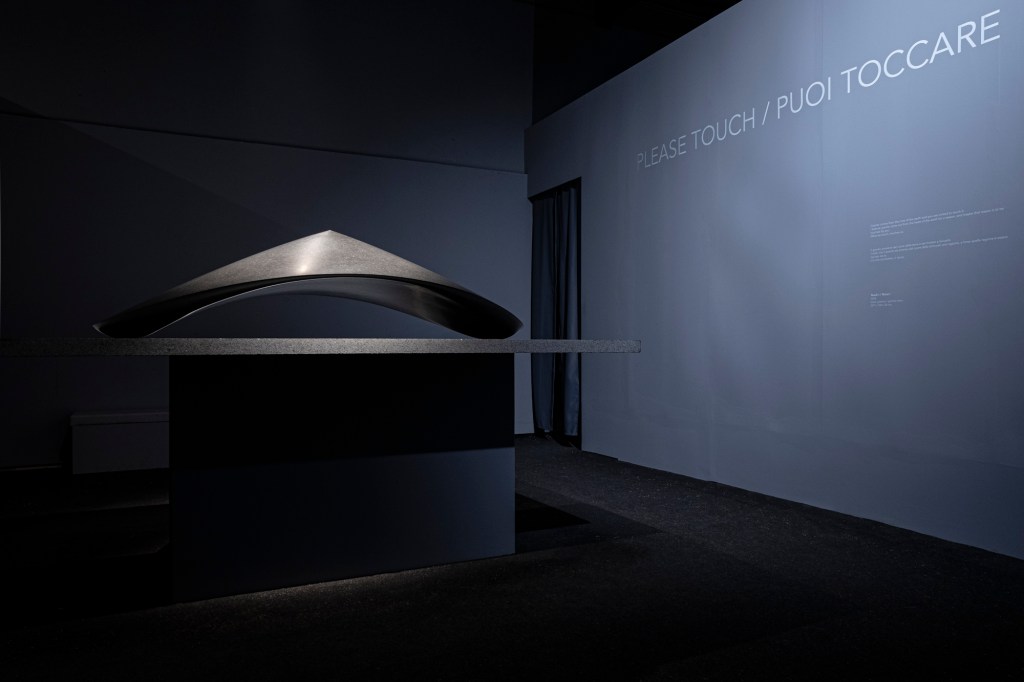
Armen Agop, Egypt Pavilion, Venice Biennale 2026. Photo by Andrea Ferro Armen Agop. Photo by Bob Bagley 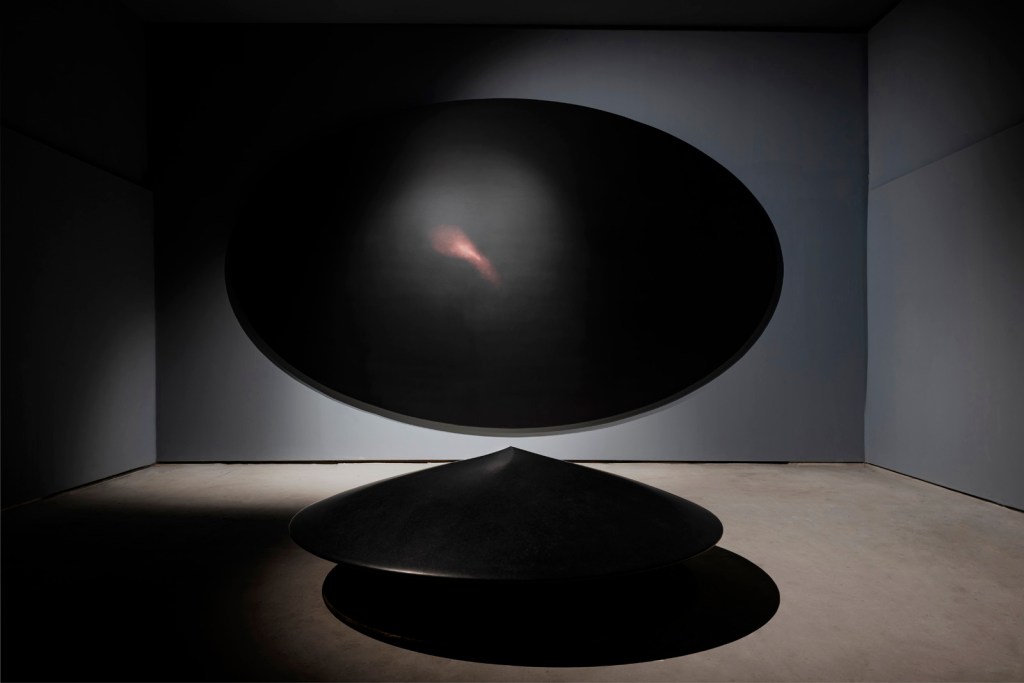
Armen Agop, Egypt Pavilion, Venice Biennale 2026. Photo by Matteo Losurdo Armen Agop, Egypt Pavilion, Venice Biennale 2026. Photo by Matteo Losurdo 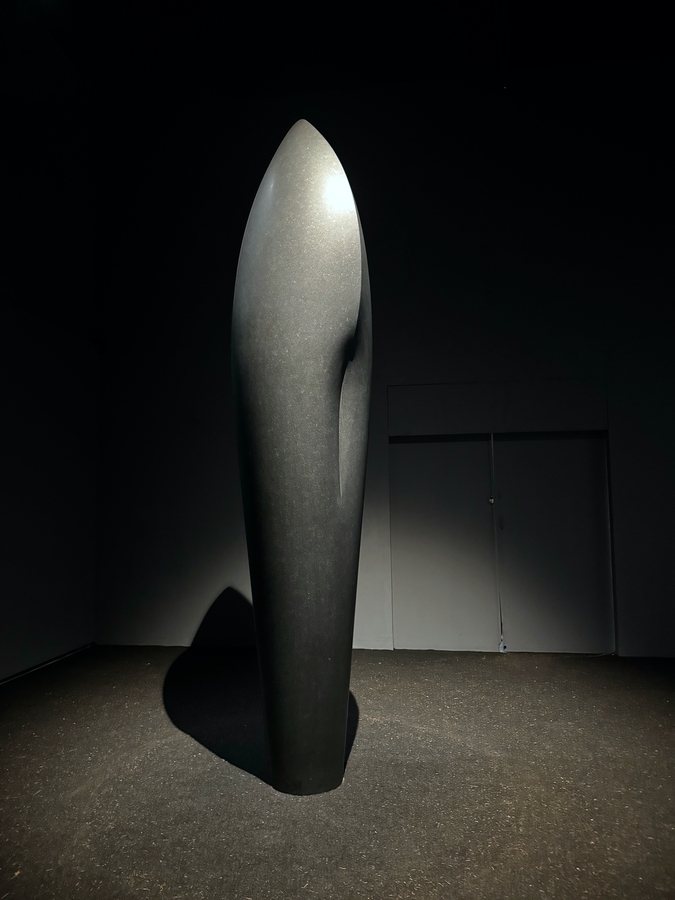
Armen Agop, Intangible. Photo by Rebecca Vitale Armen Agop, Egypt Pavilion, Venice Biennale 2026. Photo by Matteo Losurdo 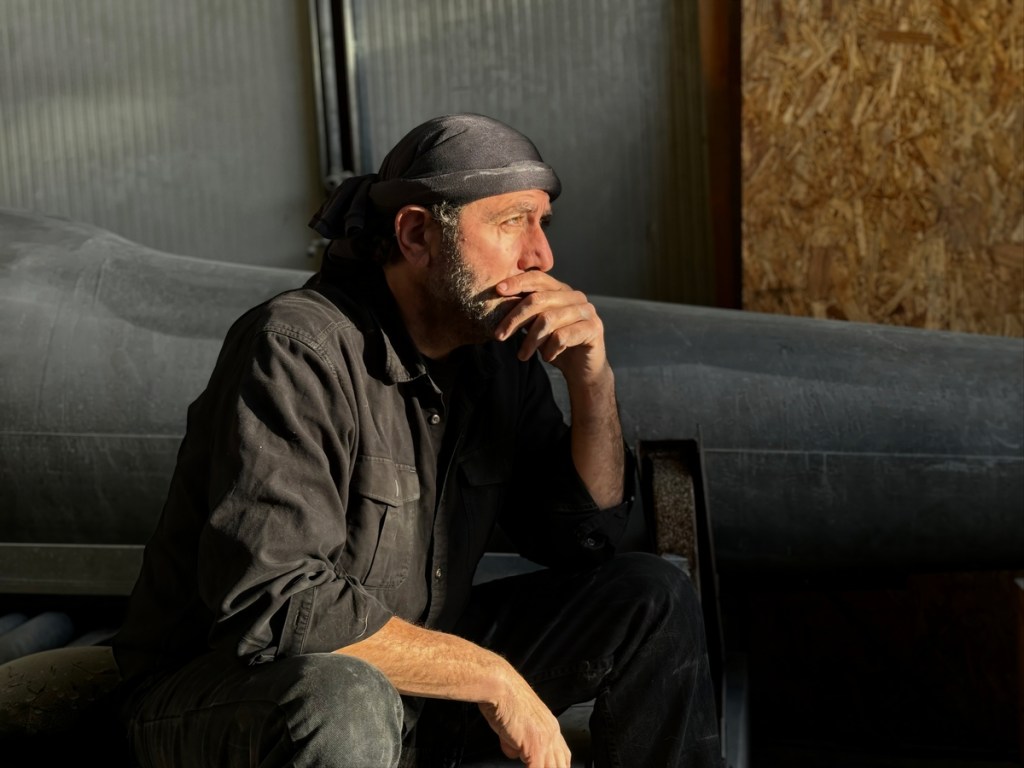
Armen Agop. Photo by Karim Kaddal HIRES 
Armen Agop, Egypt Pavilion, Venice Biennale 2026. Photo by Matteo Losurdo
The text has been translated in English using AI


2 responses to “The need for silence: Armen Agop, the artist of the Egyptian Pavilion at the 2026 Venice Art Biennale”
[…] not only within artistic practices, but also within exhibition-making itself. Visitors to the 61st International Art Exhibition of the Venice Biennale – In Minor Keys ‒ the final curatorial vision conceived by Koyo Kouoh and brought to completion by her team after […]
[…] The Unfinished Business of Living Together, the project for the Swiss Pavilion at the 2026 Venice Biennale, takes shape as a collective and polyphonic process in which the curatorial method mirrors the […]