What is preserved and what is left behind? Ibrahim Mahama’s practice revolves around the social life of materials: the relationships that run through them, the narratives they hold, the stories they gather, and the forms they take on over time. We interviewed the artist about his relationship with matter and its deterioration, with tradition, memory, institutions, and the spaces in which these stories can continue to be passed on.
In Ibrahim Mahama’s practice, ruins can be brought back to life through the relationships forged by the community: objects are bearers of stories, tangible remnants of a past that once was and, as such, custodians of knowledge and of the ways in which they were used. From this perspective, the artist engages in an ongoing reflection on what is preserved – and how it is preserved – and on what, by contrast, is abandoned.
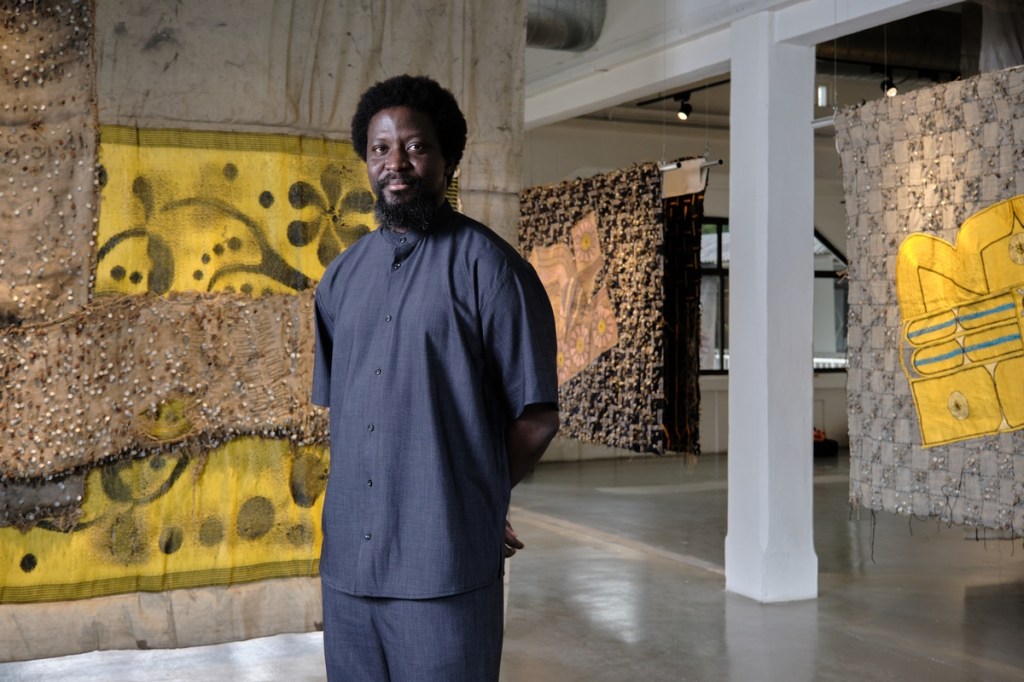
Ibrahim Mahama (Tamale, 1987) ‒ who was recently in the spotlight in Naples with the public art installation Voyageur ‒ explores the traces that time leaves on objects, the link between a material and its history, and the possibility of reclaiming the past to imagine a different future. Monumental installations, terracotta pots, and educational spaces such as Red Clay, SCCA, and Nkrumah Volini – created within abandoned or repurposed buildings – thus become devices for connecting the past with a present that, perhaps precisely by virtue of this reinterpretation of memory, may be a little more just.
THE INTERVIEW WITH IBRAHIM MAHAMA
In your works, the material plays a fundamental role. From installations featuring jute sacks to terracotta pieces, the material serves as a vehicle for much broader theoretical reflections without losing its status as an element. As you yourself said when referring to your latest installation (The Physical Impossibility of Debt in the Mind of Something Living, 2025) at the Kunsthalle in Vienna, this reflection also centres on the intrinsic fragility of materials. What is your relationship with matter? And with its deterioration?
I think I have always been interested in materials because they have already lived a life before they come into the studio. A jute sack has been somewhere, it has carried something, passed through different hands. The same is true of a piece of wood, a railway carriage, or a piece of terracotta. I don’t really see deterioration as something that needs to be corrected. The stains, the cracks, the marks and the damage are part of the material’s history. Sometimes they tell you more than a new surface would. With the work I made in Vienna, I was thinking a lot about weight and the body, but also about how things eventually break down. Materials have a kind of lifespan, just as buildings and infrastructures do. What interests me is what remains after that process and what you can still do with it.
A Shea Garden, your exhibition displayed at the Galleria Barovier&Toso in Venice until 18 July 2026, engaged with terracotta and with glass – a material intimately connected to Venice and an artisanal practice striving to survive amid the city’s continual changes. How important do you think it is to preserve a craft tradition for the community?
For me, preserving a craft doesn’t mean keeping it frozen in the past. A tradition has to be able to move, otherwise it becomes something only to be looked at. With A Shea Garden, I was interested in bringing two very different traditions together: terracotta from northern Ghana and Murano glass. Both have a very strong relationship with the hands that make them, and both depend on knowledge being passed from one person to another. The terracotta vessels come from a culture where these objects are part of everyday life, and there is a lot of knowledge in how they are made and used. The same applies to glassmaking in Venice. These things can disappear very quietly if the people who know how to make them are no longer able to continue. For me the question is not only how we preserve an object. It is how we preserve the conditions that allow the knowledge behind it to continue.
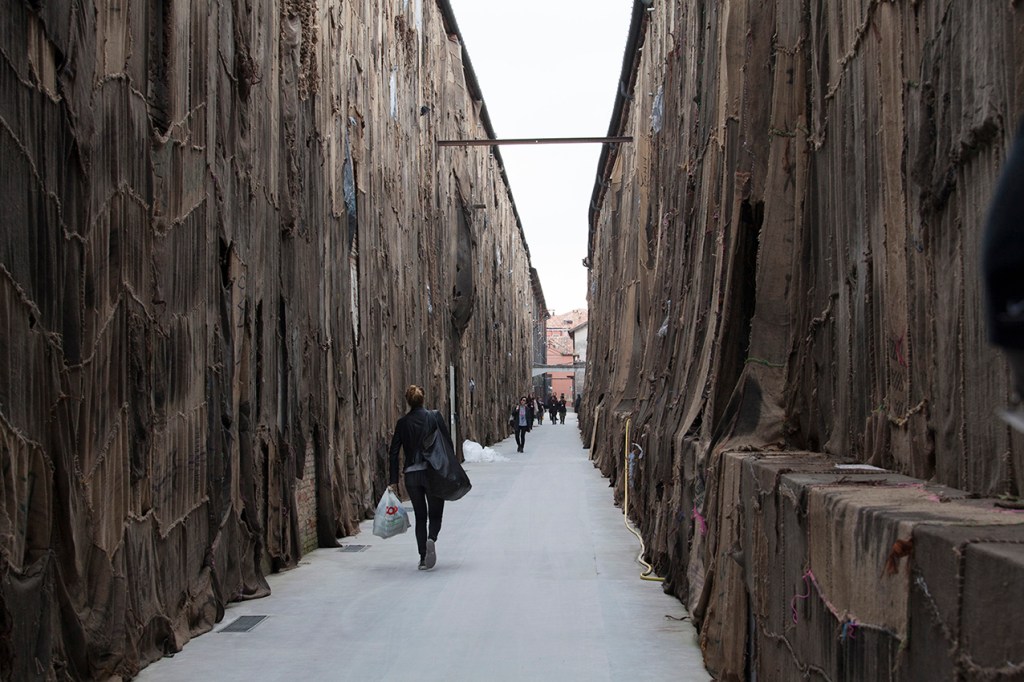
A Shea Garden was staged in an intimate space, to which your works are perfectly suited. Yet your works are often displayed in public spaces and on a larger scale – one need only think of the installations featuring jute sacks, such as the one created in Milan for the Nicola Trussardi Foundation in 2019. How do you structure the dialogue between your works and the venues that host them?
I don’t usually start with an idea of making a work that is large or small. The place comes first. Every space already has its own history. It has the people who have used it, the things that have happened there, and sometimes things that have been forgotten. I try to understand some of that before deciding what the work should do. That’s also why the same material can behave very differently in different places. A jute installation in the middle of a city is going to have a different relationship to people and architecture than the same material in a gallery.
What led to the decision to intervene in public spaces through architecture?
I think part of it comes from where I grew up. In Tamale, there weren’t many spaces dedicated to contemporary art when I was studying. We were encouraged to look outside the gallery ‒ at markets, streets, bridges, railway lines, places where people were actually living and working. That stayed with me. I also became interested in buildings that had been abandoned or had lost their original function. I started to see them not simply as ruins, but as things that could still have a role.
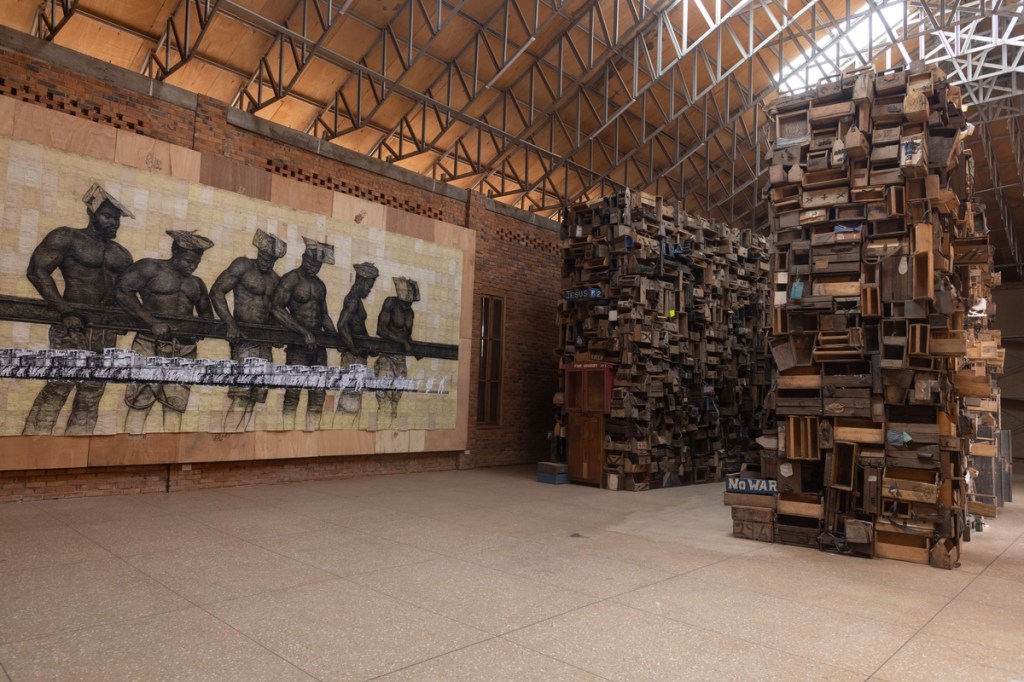
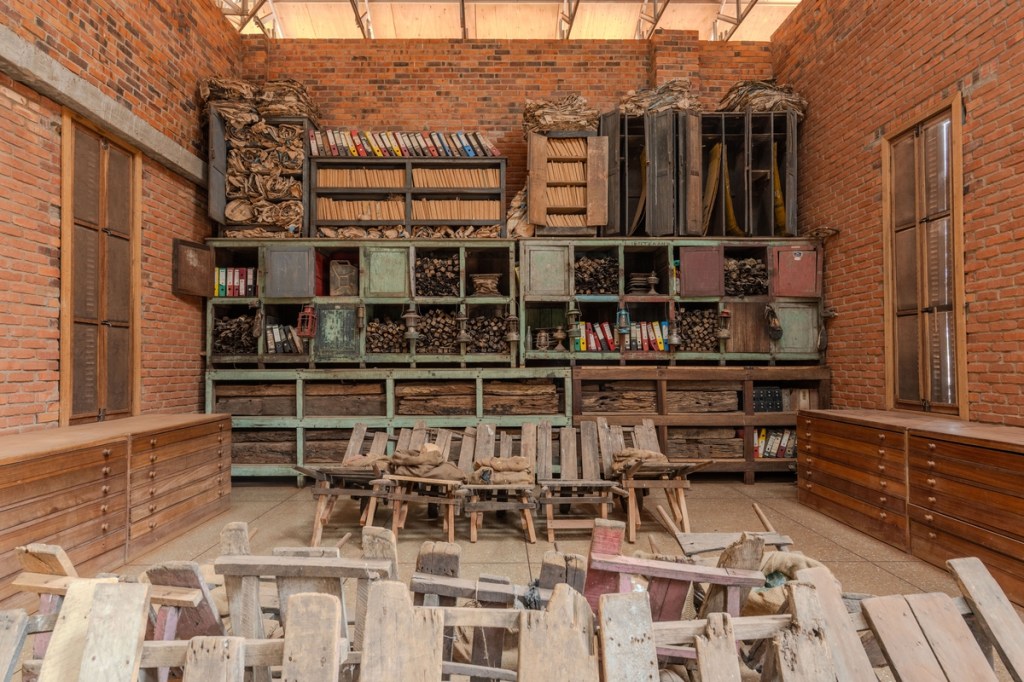
With the spaces we have created in Tamale, I wanted to take that a little further. Red Clay, SCCA and Nkrumah Volini are not only places to display art. They are places where people can work, study, meet and experiment. So architecture became part of the practice almost naturally.
INSTITUTIONS, CURATORSHIP AND EDUCATION
Your practice emerges and develops through relationships. Large-scale projects such as yours – in terms of both scale and research – require a great deal of trust in your relationships with your collaborators. How do you build these relationships? Who do you collaborate with?
Most of the relationships I work through have developed over time. You work together, you have difficult moments, you solve problems, and gradually you understand each other. A lot of the work is made with people in Tamale ‒ fabricators, artists, craftspeople, architects, students, people who know how to work with particular materials. There are also people I have met through exhibitions and research who I continue to work with years later.
Throughout your career, you have collaborated with a range of organisations, from the smallest to the largest, such as the Centre Pompidou and the Kunsthalle in Vienna, where you presented the exhibition Zilijifa in 2025. You have also taken part in documenta 14, the Venice Architecture Biennale in 2023 and the Manchester International Festival in 2019. How would you describe your relationship with the institutions?
I have always been interested in institutions, but also in questioning what an institution can be. Working with a large museum is very different from working with a small independent space, but both can give you something. Sometimes a smaller institution can allow for a very direct conversation, while a larger one has the resources and the public to make something else possible. For me, the important thing is that the relationship is not only about putting the work into a building. I am interested in what the institution can learn from the work, and what I can learn from the institution.
What about your relationship with curatorship?
I don’t really think of curatorship as something separate from the practice. A lot of the projects I have been involved in have developed through conversations with curators, and sometimes the curator becomes part of the research itself. At SCCA, for example, we have worked with different curators and researchers to look again at artists and histories from Ghana that haven’t always received the attention they deserve. Curating can be a way of bringing things into relation. It can change how you understand an object simply by putting it next to something else. I am also interested in artists taking on some of those responsibilities themselves. In Tamale, I have had to think about exhibitions, archives, education, collections and buildings. They are all connected in some way.
The connection with Ghana is a fundamental aspect of your practice. Not only as a direct historical and cultural reference, but also as a symbol of a colonial past and of new postcolonial perspectives and opportunities. In this regard, how important is history, and to what extent do you think it shapes the future?
History is always present, even when people don’t want to talk about it. In Ghana, you can see it in the railway lines, in the old factories, in the architecture, in the objects that people continue to use. Sometimes these things tell you more about history than an official monument does. But I don’t look at history only to reconstruct the past. I am more interested in what it leaves behind and what we can do with that. There are ideas from the period around independence that were never fully realised. Some of those ideas are still useful to think with today. I often say that the past contains unrealised futures. Looking backwards can also be a way of finding another direction forward.
In 2024, you opened A Spell of Good Things, your first solo exhibition in New York at White Cube. Do you think that these residual objects can serve as tools for new narratives?
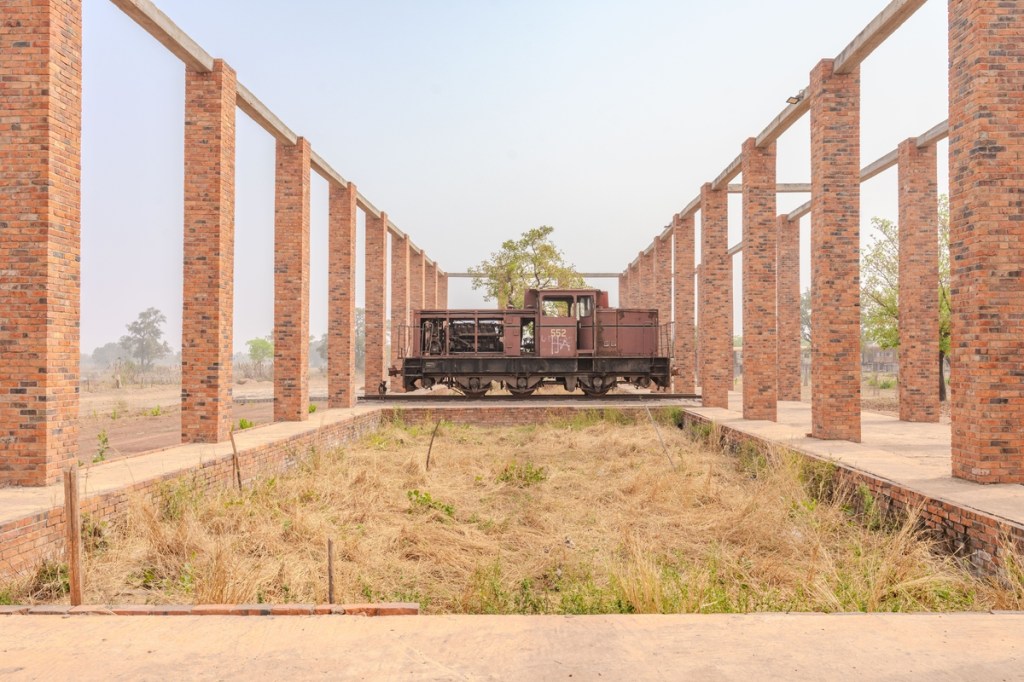
Yes, I think that is one of the reasons I am drawn to them. An abandoned hospital bed or a piece of a railway carriage is not neutral. It has been used by people. It has been part of a particular system, and then at some point that system stopped working or changed. When I found the hospital beds in Tamale, for example, I wasn’t interested in them because they were old objects. I was interested in what they could tell us about the hospital, about the people who had passed through it, and about a particular period in Ghana’s history. The same thing happened with the railway materials. The railway was built as part of a colonial system of extraction, but it also involved the movement and labour of people from northern Ghana. So the same object can hold several histories at once. I think that is where the possibility is. You don’t have to throw away the object once its original function is finished. You can look at it again and perhaps understand the history around it differently.
THE PROJECTS BY IBRAHIM MAHAMA
Starting from the ruins, from what remains, you have regenerated abandoned and disused areas, creating three centres dedicated to art: the Savannah Centre for Contemporary Art (SCCA), Red Clay and Nkrumah Volini. To what extent does the educational aspect influence your practice?
A lot. When I started SCCA, I was thinking about exhibitions and research, but quite quickly I understood that the space could do much more than that. There is a real lack of art infrastructure in Ghana, particularly outside Accra. So, the question became: what happens if you create a place where young artists can come, where people can see archives, where they can work and where different generations can meet? That is also what happened with Red Clay and Nkrumah Volini. They have developed in different ways, but education is always somewhere inside them. I don’t necessarily mean education in the formal sense. Sometimes a child seeing an old train for the first time is already a form of education. Or an artist learning from somebody who has been working with a material for thirty years. Those encounters are very important to me.
Your artistic practice is characterised by a decolonial approach: do you think there is a need to rethink Western Museum practices in this regard?
I think museums are already changing, but there is still a lot to think about. For a long time, a lot of African art was collected, interpreted and presented through institutions outside Africa. The problem is not simply where an object is shown. It is also who has the resources to preserve it, who decides how it is interpreted, and who has access to the knowledge around it. That is one of the reasons I became interested in building institutions in Tamale.
I wanted to create places where histories and contemporary practices could be discussed from within the communities they come from. I don’t think there is one model that can solve everything. But I do think institutions need to be more open to different ways of organising knowledge, and to understand that there are histories and forms of knowledge that don’t always fit comfortably within Western Museum structures.
In October 2026, the group exhibition The Harvest Season will open at the Fondation Cartier in Paris. This is a project in which you play a leading role alongside nine other artists and collectives whom you have invited to take part. What inspired you, and what will the exhibition be like?
The idea came from thinking about the spaces we have been building in Tamale and what might happen if some of that way of working was brought into the Fondation Cartier. I didn’t want to make an exhibition that was only about my work. The nine artists and collectives are people with whom I have had different kinds of relationships over the years, and each of them brings something that I couldn’t bring myself. The building will be very important. We are working with the architecture, the facade and the different spaces inside it, so the exhibition will feel more like an environment than a collection of separate works.
Rebecca Canavesi
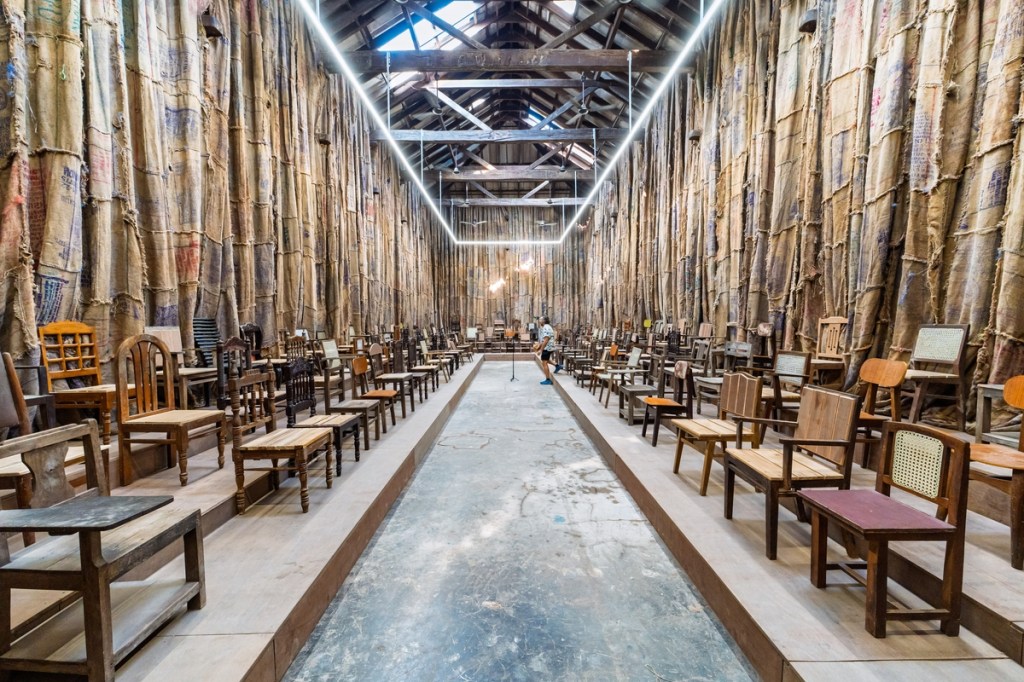
Ibrahim Mahama. Photos by Art Outreach Singapore. Courtesy of the Artist, APALAZZOGALLERY and White Cube Ibrahim Mahama, Parliament of Ghosts, Kochi-Muziris Biennale, Kochi, India, 2025. Installation view. Courtesy of the Kochi Biennale Foundation 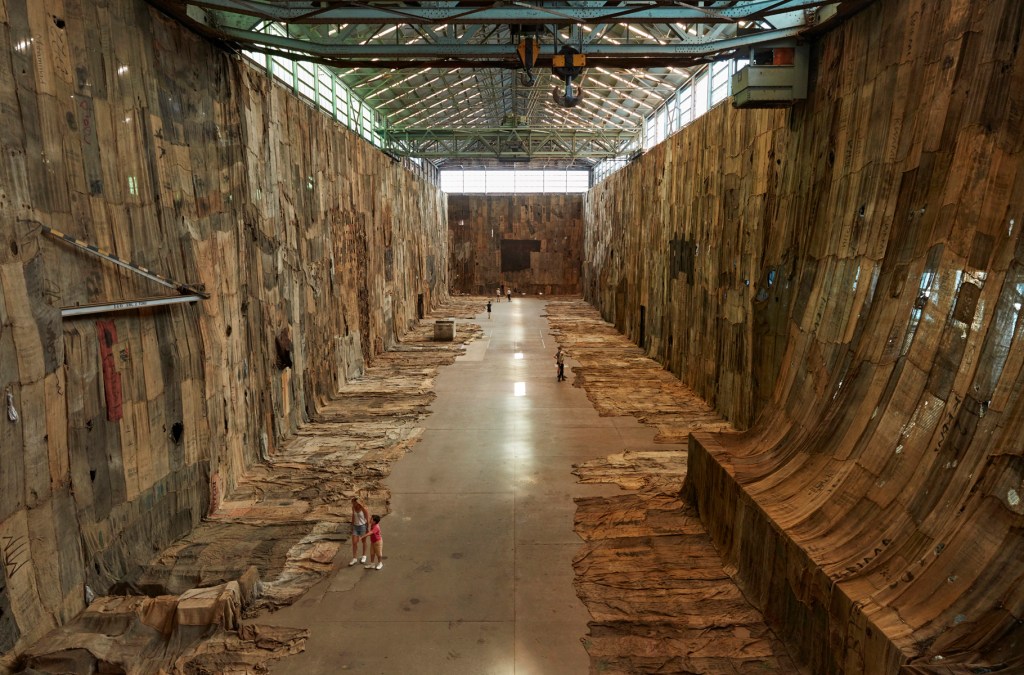
Ibrahim Mahama, No Friend but the Mountains 2012-2020, 2020. Charcoal jute sacks, sacks, metal tags and scrap metal tarpaulin, dimensions variable. Installation view (2020) for the 22nd Biennale of Sydney, Cockatoo Island. Courtesy of the Artist, APALAZZOGALLERY and White Cube. Photo by © Zan Wimberley 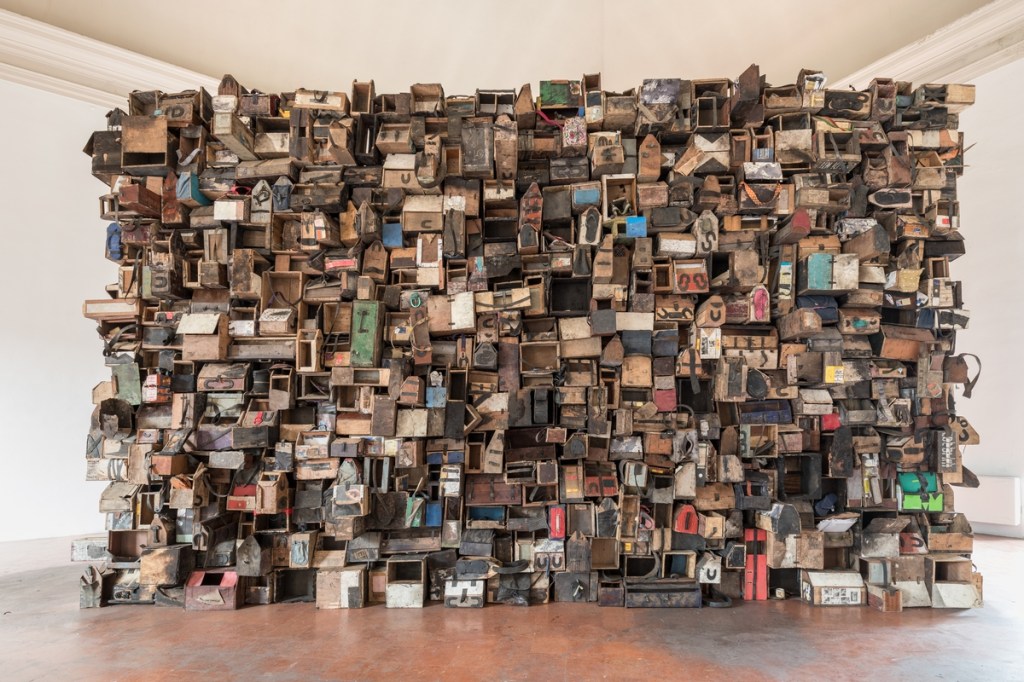
Ibrahim Mahama, Non-Orientable Nkansa II. 1901 – 2030, 2016, installation view, In Dependence, APALAZZOGALLERY, Brescia, Italy, 2018. Courtesy the Artist and APALAZZOGALLERY. Photo Credits © Marco Cappelletti, DSL Studio Ibrahim Mahama, Out of Bounds, 2014-2015. Site specific installation. Coal sacks, metal tags and jute ropes on coal sacks. 56th Venice Biennale, Venice, Italy. Photo by © Haupt & Binder. Courtesy the Artist and APALAZZOGALLERY 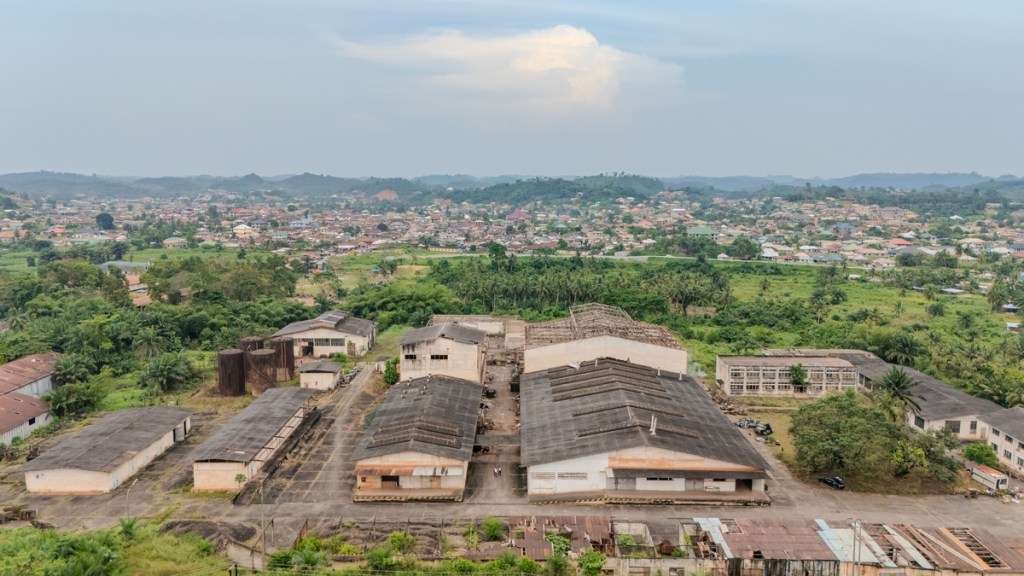
Red Clay. Photo by Ernest Sackitey. Courtesy Red Clay Red Clay. Photo by Ernest Sackitey. Courtesy Red Clay 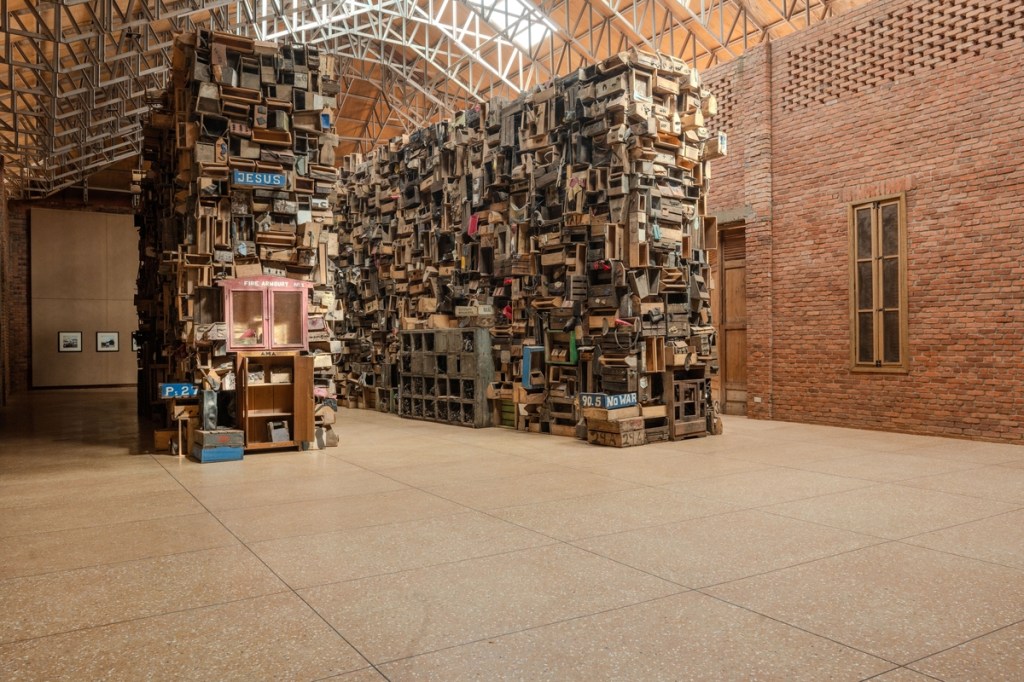
Red Clay. Photo by Ernest Sackitey. Courtesy Red Clay Red Clay. Photo by Ernest Sackitey. Courtesy Red Clay 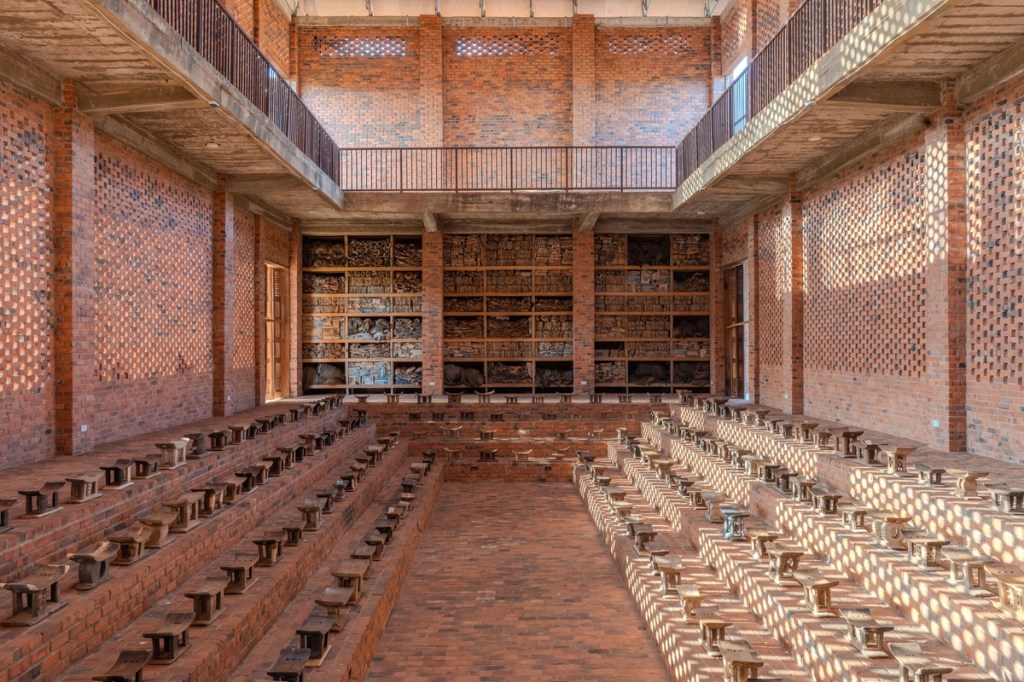
Red Clay. Photo by Ernest Sackitey. Courtesy Red Clay 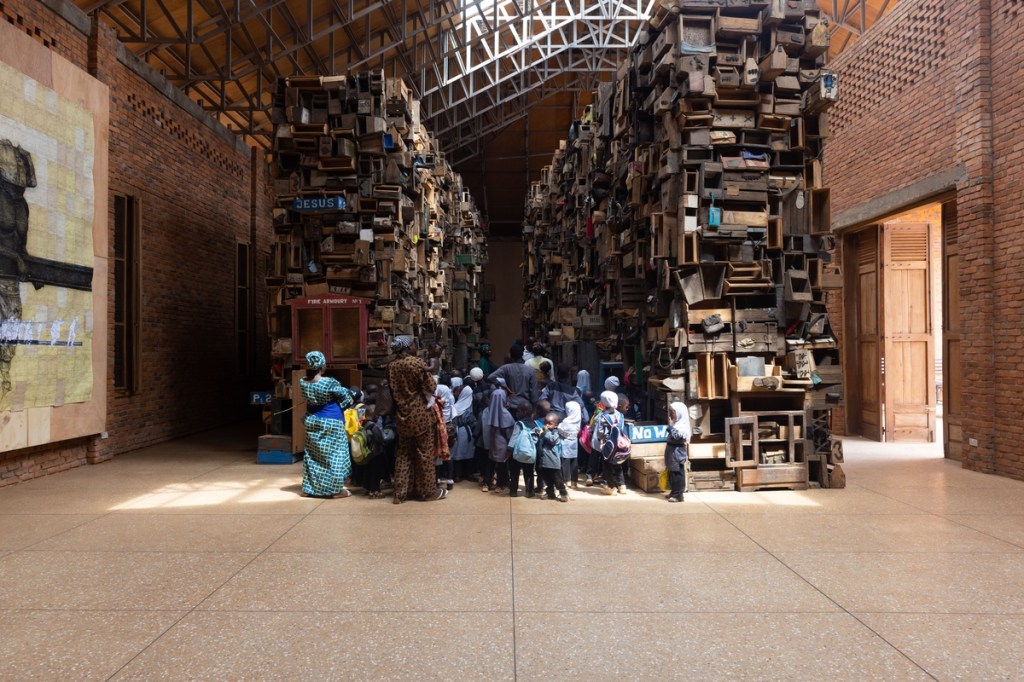
Red Clay. Photo by Ernest Sackitey. Courtesy Red Clay Red Clay. Photo by Ernest Sackitey. Courtesy Red Clay 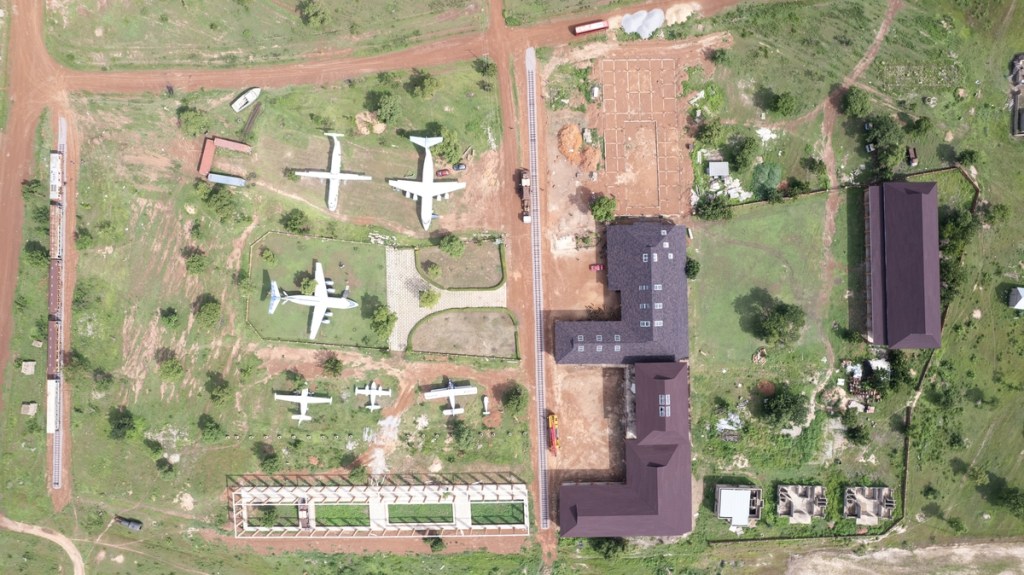
Red Clay. Photo by Ernest Sackitey. Courtesy Red Clay 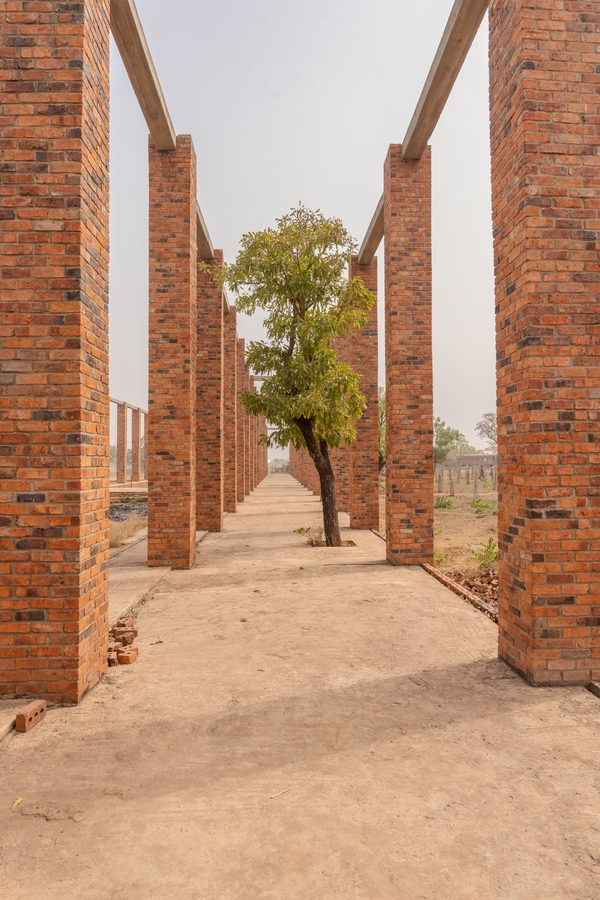
Red Clay. Photo by Ernest Sackitey. Courtesy Red Clay

