Until 19 October 2026, the Peggy Guggenheim Collection in Venice presents an exhibition retracing the activity of the pioneering Guggenheim Jeune gallery in London. From Abstract Art to Surrealism, the exhibition portrays Peggy Guggenheim as a proponent of a plural modernism, fostering dialogue between different artistic languages while promoting women and men artists who long remained at the margins of the dominant narrative.
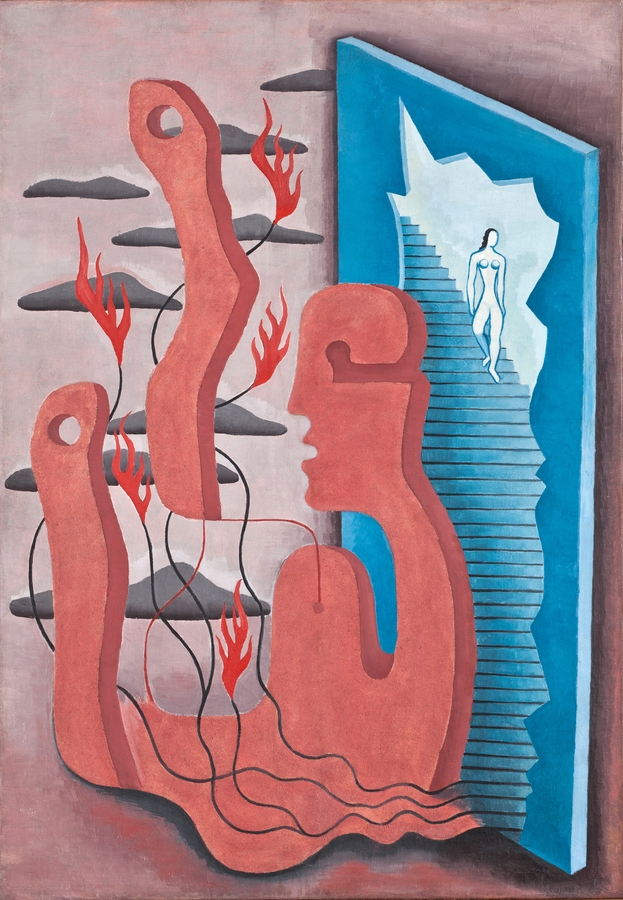
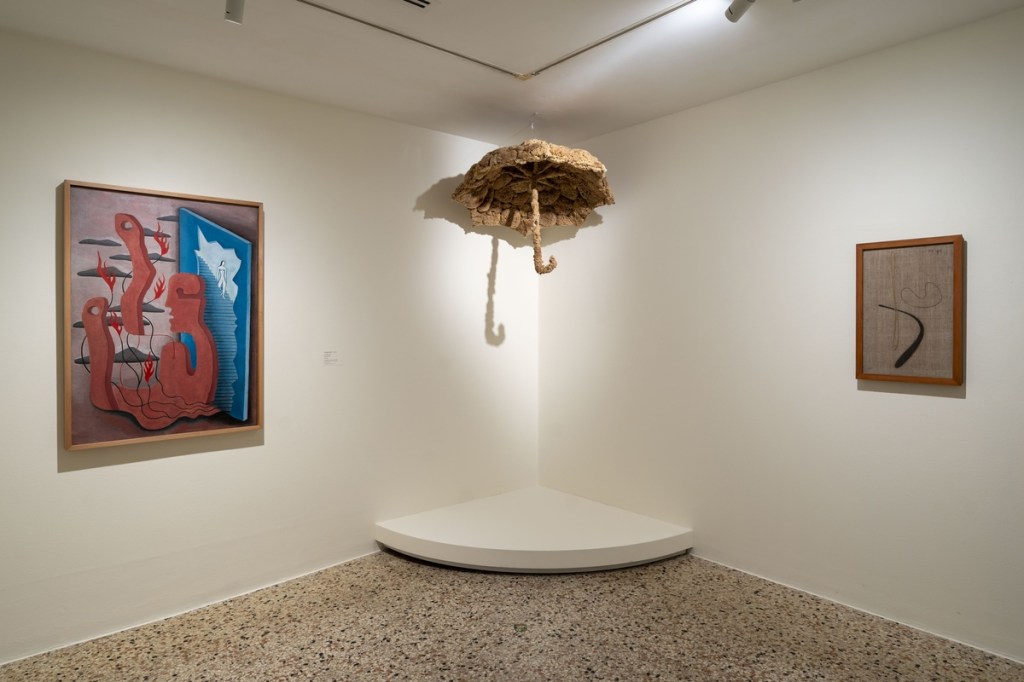
“In another moment Alice was through the glass, and had jumped lightly down into the Looking-Glass room. […] Then she began looking about, and noticed that what could be seen from the old room was quite common and uninteresting, but that all the rest was as different as possible. For instance, the pictures on the wall next to the fire seemed to be all alive, and the very clock on the chimney-piece (you know you can only see the back of it in the looking-glass) had got the face of a little old man and grinned at her.” (L. Carroll, Through the Looking-Glass and What Alice Found There [1871], HarperCollins Publishers, London 2013, pp. 13-14). Like Alice stepping through the looking glass, visitors entering Peggy Guggenheim in London: The Making of a Collector at the Peggy Guggenheim Collection in Venice find themselves transported into a real place inhabited by images and objects that seem to obey a logic entirely different from that of everyday life. In the opening gallery, resting quietly within its display case, stands Head and Shell (1933 ca.) by Jean Arp ‒ the very first work Peggy Guggenheim acquired for her collection. Moving further into the room, visitors find themselves beneath the unsettling presence of Wolfgang Paalen’s Articulated Cloud (1937/2023), an unusable umbrella covered with natural sponges and suspended from the ceiling. Facing these works are two paintings: Paule Vézelay’s Three Forms (One Sewn on Canvas) (1935), whose surface combines charcoal markings with an oval of rope stitched into the composition, and Rita Kernn-Larsen’s Behind the Mirror (1937), an oil painting inspired by Lewis Carroll’s Through the Looking-Glass and What Alice Found There (1871). The painting depicts a faceless woman descending a staircase into the dreamlike world beyond the mirror, where the human figure appears distorted, almost melting beneath the warmth of flames that seem to breathe life into the foreground figure. She may be understood as the artist’s alter ego, portraying herself as Alice, or perhaps as the viewer’s own reflection, as if looking into a mirror. The parallel reality imagined by Kernn-Larsen and narrated by Carroll, while representing the Wonderland that resides within our subconscious, at times appears more vivid than the world we inhabit every day.
THE EXHIBITION IN VENICE
On view at the Peggy Guggenheim Collection in Venice until 19 October 2026, Peggy Guggenheim in London: The Making of a Collector explores the formative years of the American patron and collector in Britain and traces the origins of Guggenheim Jeune, the gallery she opened at 30 Cork Street, London. During its brief eighteen-month existence, from January 1938 to June 1939, the gallery organised twenty-one exhibitions, providing both visibility and support to leading figures of European modernism alongside emerging voices from the British art scene. Within the conservative cultural climate of 1930s London, galleries such as the Mayor Gallery, the London Gallery, the Redfern Gallery and Guggenheim Jeune played a crucial role in introducing and promoting avant-garde art informed by the latest developments on the European continent. Curated by Gražina Subelytė, Curator at the Peggy Guggenheim Collection, together with Guest Curator Simon Grant, the exhibition brings together, for the first time, a substantial selection of works originally shown in Guggenheim Jeune’s exhibitions, borrowed from major international museums and private collections. These are presented alongside works that Peggy Guggenheim acquired only later but which belong to the same years and share comparable formal concerns. Paintings, works on paper, photographs, sculptures, dolls and archival materials evoke the extraordinary diversity of artistic languages promoted by the gallery, bearing witness to a period of remarkable experimentation and intense cultural vitality set against the backdrop of the profound social and political tensions that preceded the outbreak of the Second World War. Guggenheim Jeune’s exhibition programme was strikingly unconventional, not least for its attention to gender representation and its inclusion of women artists and queer artists. The gallery opened with a solo exhibition devoted to Jean Cocteau (24 January – 12 February 1938), featuring costume studies for his play Les Chevaliers de la Table Ronde alongside two large-scale allegorical drawings. One of these is dominated by a portrait of the actor Jean Marais, whose explicit nudity carries an unmistakable homoerotic charge. This was a bold curatorial statement, particularly in light of the fact that only a few months earlier, in July 1937, the Nazi regime had mounted Entartete Kunst (Degenerate Art) in Munich, the notorious exhibition intended to condemn modern art. It was also Cocteau who introduced Peggy Guggenheim to Marie Vassilieff, the Russian-born painter and sculptor who was then living and working in Paris and who became the subject of the final exhibition of the gallery’s first season (2-23 December 1938). Rediscovered only in recent years, Vassilieff was a central figure of the School of Paris. In 1912 she founded the Académie Marie Vassilieff in Montparnasse, which soon became an important meeting place for many artists. Although her paintings reinterpret Cubist forms and Surrealist imagery through a highly personal visual language, it was in sculpture that she developed her most original artistic vision. Vassilieff produced masks, dolls and portrait puppets using fabric, cardboard, plastic, hair and buttons ‒ unexpected materials that seem to anticipate many of the sculptural and painterly experiments of the post-war period. The hierarchical structure of the art world at the time was not yet prepared to acknowledge the innovative nature of these works, especially when created by a woman. Hybrid and interdisciplinary practices that challenged the conventional distinction between the “fine” and the “decorative” arts were instead relegated to the margins. Despite the difficulties of presenting to both the public and the market the work of artists excluded from the dominant modernist canon, Guggenheim never abandoned her commitment to promoting women at the forefront of the avant-garde. The gallery’s first solo exhibition devoted to a Surrealist artist featured the Danish painter Rita Kernn-Larsen (31 May – 18 June 1938), one of the leading figures of both Danish and international Surrealism. Guggenheim Jeune also organised solo exhibitions dedicated to the painter Grace Pailthorpe, the ceramicist Jill Salaman and the photographer Gisèle Freund, while works by Eileen Agar, Barbara Hepworth, Sophie Taeuber-Arp and Paule Vézelay appeared in several group exhibitions.
AVANT-GARDE MOVEMENTS IN LONDON
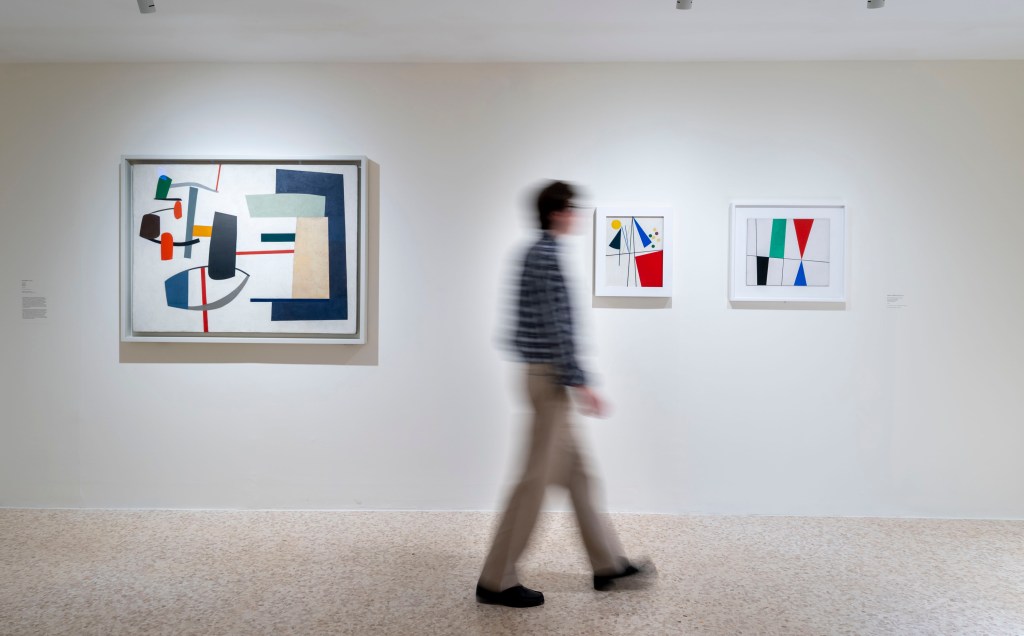
Throughout the 1930s, the experimental practices of the European avant-garde attracted only limited attention within the British art world. Surrealism was first introduced to London in 1933 through an important exhibition at the Mayor Gallery, while the landmark International Surrealist Exhibition was held at the New Burlington Galleries in 1936. Between 1938 and 1939, Guggenheim Jeune presented the first solo exhibitions in Britain dedicated to British Surrealists such as Julian Trevelyan and Reuben Mednikoff, alongside major international figures including the French painter Yves Tanguy and the Austrian artist Wolfgang Paalen. Instead, Abstract art was promoted through both solo and group exhibitions. These included the first retrospective of Vasily Kandinsky ever held in Britain (18 February – 12 March 1938) and, above all, the landmark Exhibition of Abstract and Concrete Art (11 – 27 May 1939). Bringing together works by twenty-three international artists working across a wide range of techniques and visual languages, the exhibition introduced the British audience to the diversity and complexity of European abstraction. Guggenheim’s deep commitment to these two artistic tendencies undoubtedly reflected her own aesthetic sensibility, although it was also profoundly shaped by Marcel Duchamp who, as she later recalled in her autobiography, taught her to distinguish between Abstract and Surrealist art. Duchamp likewise advised her on many of the artists to exhibit and played an active role in organising several exhibitions, including the Exhibition of Contemporary Sculpture (8 April – 2 May 1938). In that exhibition, as well as in the Exhibition of Collages, Papiers-collés and Photo-montages (3 – 26 November 1938), works by abstract artists were displayed alongside those of Dada and Surrealist practitioners, establishing a productive dialogue rather than reinforcing rigid stylistic divisions. Guggenheim’s position between Abstract art and Surrealism proves particularly complex, especially in light of the tendency among contemporary critics to regard the two movements as fundamentally distinct. During these years, Alfred H. Barr Jr. developed his celebrated Diagram, a schematic map tracing the relationships between the various movements of modern art during the first thirty-five years of the twentieth century. Although the American art historian identified a point of convergence between the two tendencies in what he termed Abstract Surrealism, the exhibitions he organised at the Museum of Modern Art in New York in 1936 nevertheless reflected a firmly established distinction: Surrealism was presented in Fantastic Art, Dada, Surrealism, while abstraction was the focus of Cubism and Abstract Art, whose catalogue famously reproduced Barr’s Diagram on its dust jacket. The vision underpinning Guggenheim Jeune, by contrast, was not founded upon a strict separation between these artistic tendencies. Rather, it sought to foreground their points of contact and the fertile exchanges that emerged between them. In the gallery’s group exhibitions, artists pursued related formal investigations characterised by abstract, organic forms with curvilinear contours and metamorphic qualities. These are evident in the fluid surfaces of sculptures by Henry Moore, Sophie Taeuber-Arp and Jean Arp, as well as in the automatic lines and dynamic compositions of collages by André Masson, Eileen Agar and many others. The development of a non-representational art capable of challenging nature through the creation of archetypal, sensuous and biomorphic forms was central to both Abstract art and Surrealism. Each movement sought a universal visual language capable of making visible the relationship between the inner and the outer worlds, speaking directly to the emotional and psychological experience of the viewer. Many of the artists represented in Guggenheim Jeune resisted being categorised exclusively as “Abstract,” “Dada,” or “Surrealist,” preferring instead to preserve the freedom to move between different artistic vocabularies and experimental approaches.
One year after the closure of Guggenheim Jeune, Clement Greenberg, in Towards a Newer Laocoon (1940), not only identified London around 1939 as one of the principal centres of the European avant-garde ‒ particularly of Abstract art, which he regarded as the highest and purest achievement of modern painting, liberated from the constraints of mimetic representation and free to investigate its own formal means ‒ but also highlighted the decisive contribution of Paul Klee, Jean Arp and Joan Miró to modernism. Precisely because of the hybrid nature of their artistic practices, Greenberg described these artists as heterodox Surrealists, occupying a liminal position between the formal concerns of abstraction and those of Surrealism. Guggenheim’s privileged attention to these two avant-garde movements would continue to shape the development of her collection in the years that followed. While Art of This Century, the New York chapter of Peggy Guggenheim’s career, adopted Frederick Kiesler’s visionary architectural design to separate the two tendencies into distinct environments ‒ the Surrealist Gallery and the Abstract Gallery ‒, the first European presentation of the Guggenheim Collection, installed in the Greek Pavilion at the 24th Venice Biennale in 1948, proposed a markedly different interpretation of their relationship. Although Carlo Scarpa’s installation placed the Surrealist works on the left and the abstract works on the right, the display ‒ conceived in close collaboration with Peggy Guggenheim herself ‒ ultimately centred on the dialogue between the two movements. Rather than reinforcing their separation, it encouraged encounters between their respective masterpieces, positioning them in close visual proximity and revealing the profound affinities that linked the two strands of modernism.
THE EXHIBITION AT THE PEGGY GUGGENHEIM COLLECTION
Walking through the galleries, one has the impression of travelling back in time, retracing the spaces of Guggenheim Jeune and revisiting its exhibitions. Each room is devoted to one or more displays organised by Peggy Guggenheim together with her advisers and close collaborators, among them Marcel Duchamp, Herbert Read, Mary Reynolds, Samuel Beckett and Winifred Henderson, the gallery’s sole employee and the designer of its visual identity. Greeting visitors at the entrance to each gallery are the original brochures and invitation cards. These archival materials reactivate their original function of introducing audiences to the themes and artists of each exhibition while simultaneously guiding visitors through the narrative of the show. The opening galleries focus on the major solo exhibitions organised by Guggenheim Jeune, while the subsequent rooms explore its more experimental thematic exhibitions. The display alternates freely between monographic and group exhibitions, faithfully reflecting the diversity and complexity of the gallery’s original programme. Despite the wealth of documentary material that has survived, only limited photographic and written evidence records the original exhibition layouts, some of which were designed with the direct involvement of the artists themselves. Kandinsky, for example, supplied floor plans for his retrospective; Duchamp designed the installation for the Cocteau exhibition; and Jean Arp contributed to the organisation of the Exhibition of Contemporary Sculpture. As an art-historical research project, the curators have deliberately adopted a restrained and minimalist exhibition design rather than attempting speculative historical reconstructions. In the absence of sufficient documentation, faithfully recreating the original displays would have proved impossible. One of the few relatively detailed descriptions concerns the Exhibition of Collages, Papiers-collés and Photo-montages. Winifred Henderson describes works arranged across several horizontal rows, a configuration partially evoked by the wall dedicated to that exhibition in the final gallery. Taken as a whole, the exhibition is characterised by a refined and understated installation, in which white walls alternate with pastel-coloured galleries that frame the more monographic sections of the display. The result is an exhibition design that lends coherence and continuity to a complex narrative while establishing meaningful connections between the different exhibitions organised by Guggenheim Jeune. The curatorial project succeeds in restoring to public memory a pivotal chapter in the history of European art during the first half of the twentieth century through a fluid reconstruction of perspectives, relationships and artistic exchanges. Above all, the exhibition renews our understanding of the dynamic relationship between the many expressions of modernism ‒ from Surrealism to Abstract art ‒ while reaffirming the decisive contribution of women to the history of modern art. As protagonists of artistic practices grounded in plurality, openness and diversity, these artists and art-world figures anticipated many of the complexities that continue to shape contemporary culture.
Alessandro Cerchier
25 april – 19 october 2026
Peggy Guggenheim in London: The Making of a Collector
curated by Gražina Subelytė, Simon Grant
Peggy Guggenheim Collection
Palazzo Venier dei Leoni, Dorsoduro 701, Venezia
https://www.guggenheim-venice.it
© Peggy Guggenheim in London: The Making of a Collector, 25.04. – 19.10.2026, Peggy Guggenheim Collection. Photo Matteo De Fina 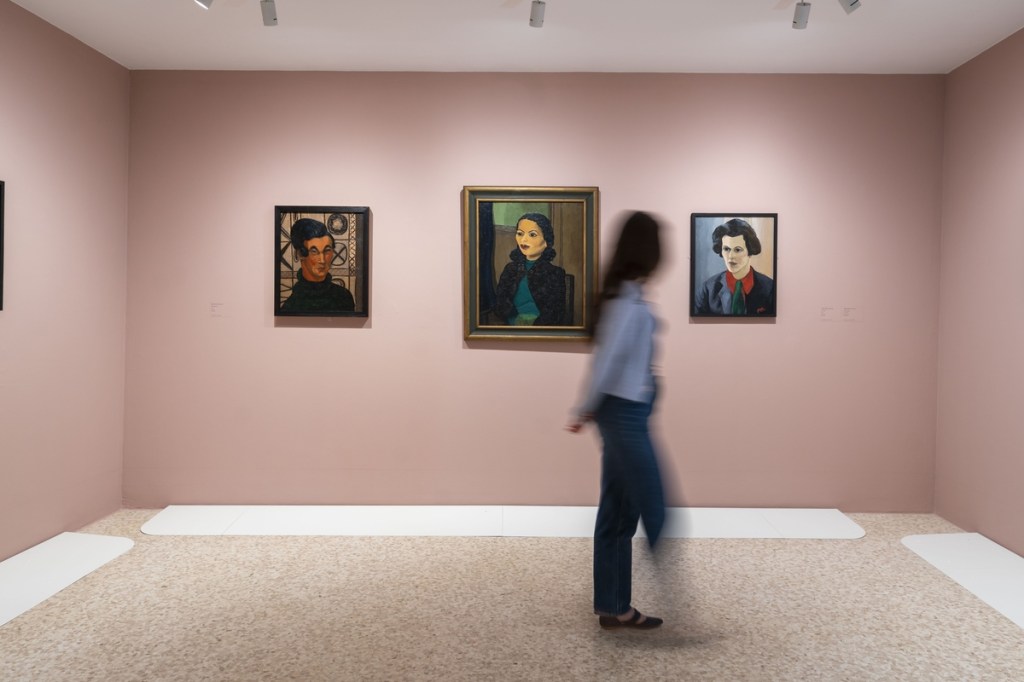
© Peggy Guggenheim in London: The Making of a Collector, 25.04. – 19.10.2026, Peggy Guggenheim Collection. Photo Matteo De Fina 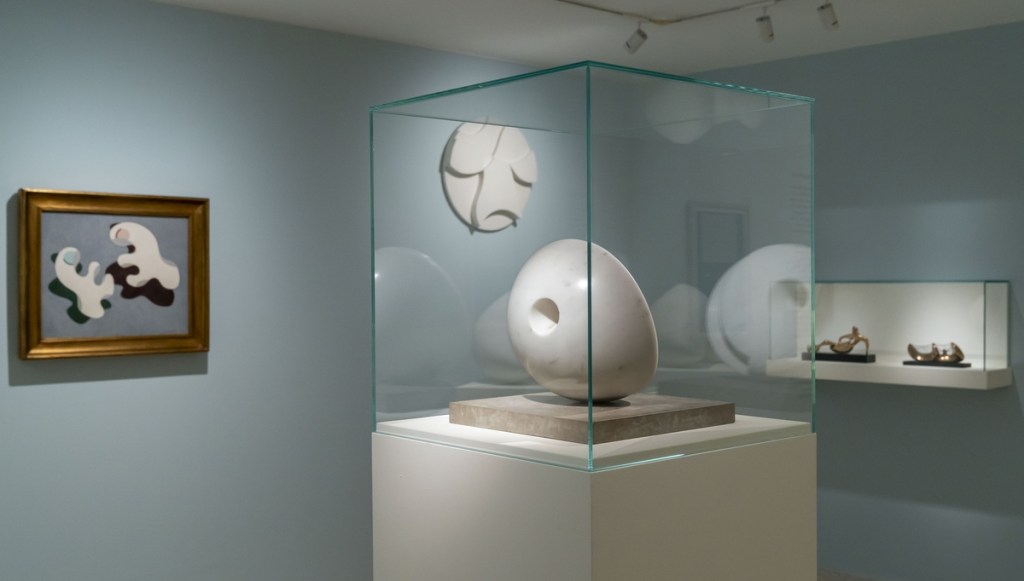
© Peggy Guggenheim in London: The Making of a Collector, 25.04. – 19.10.2026, Peggy Guggenheim Collection. Photo Matteo De Fina 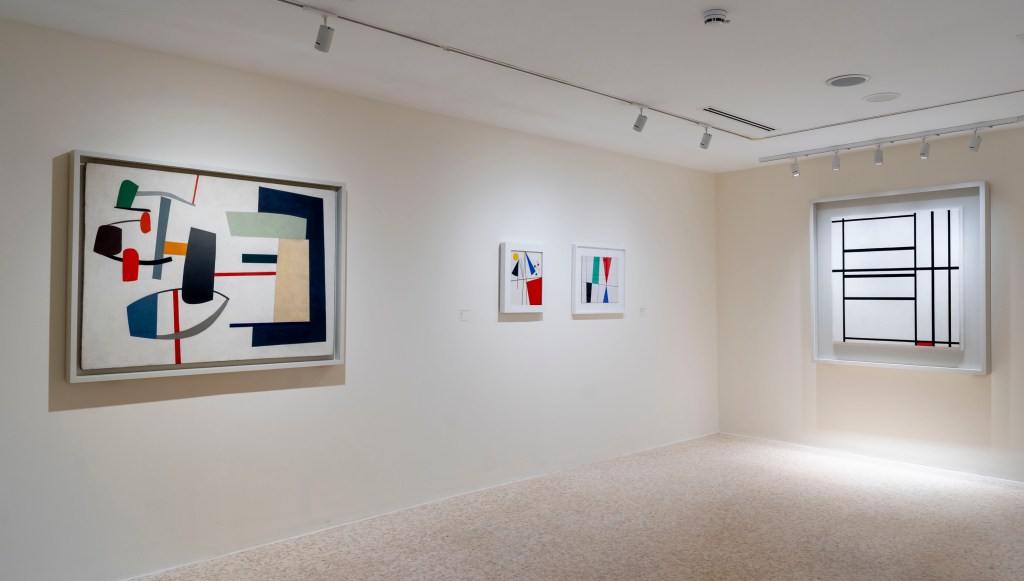
© Peggy Guggenheim in London: The Making of a Collector, 25.04. – 19.10.2026, Peggy Guggenheim Collection. Photo Matteo De Fina 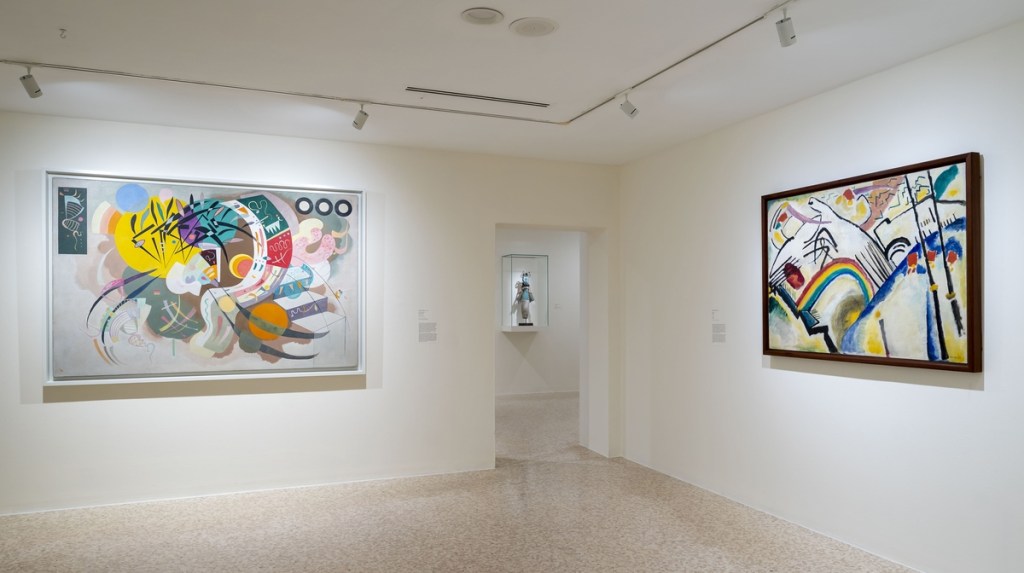
© Peggy Guggenheim in London: The Making of a Collector, 25.04. – 19.10.2026, Peggy Guggenheim Collection. Photo Matteo De Fina © Peggy Guggenheim in London: The Making of a Collector, 25.04. – 19.10.2026, Peggy Guggenheim Collection. Photo Matteo De Fina 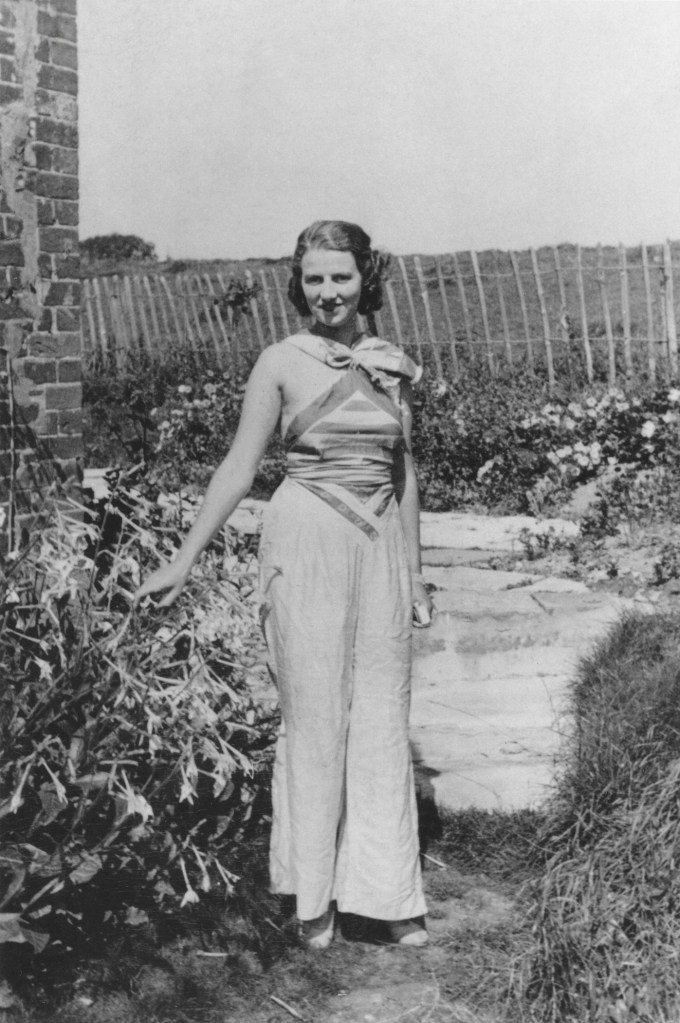
Peggy Guggenheim a Hayford Hall, ca. 1934. Private Collection 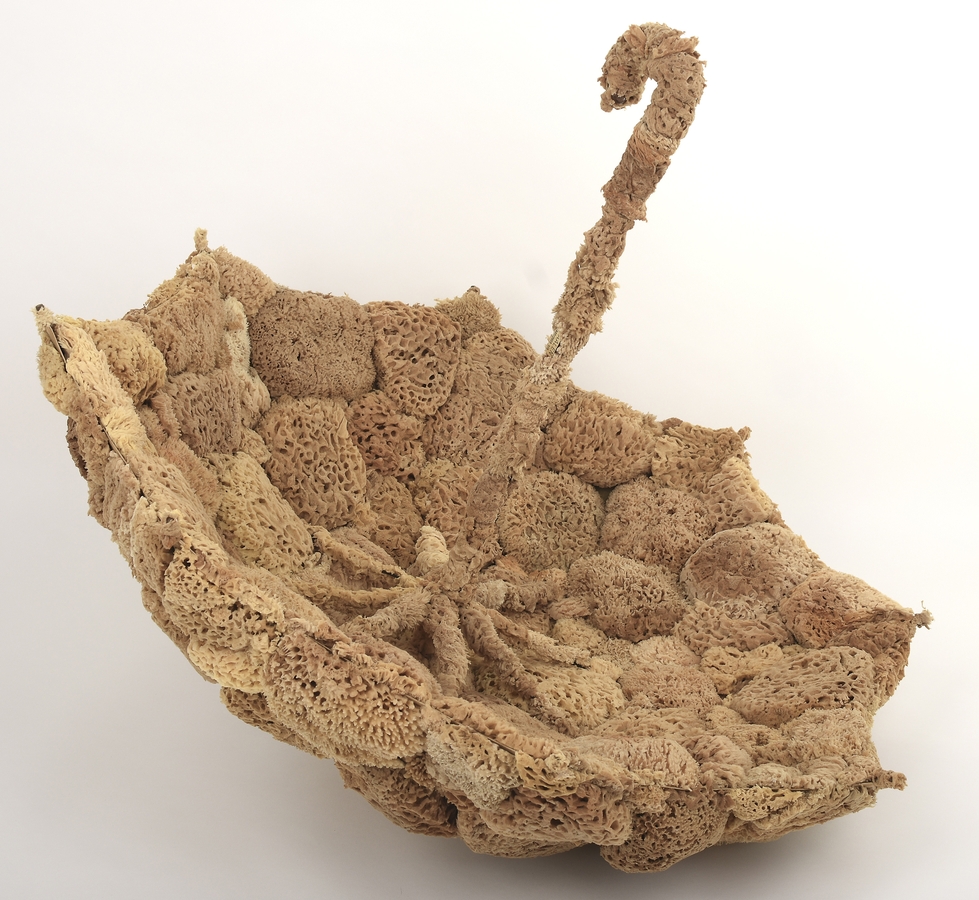
Wolfgang Paalen (1905-1959), Articulated Cloud (Le Nuage articulé), 1937/2023. Assemblage with umbrella and natural sponges, 105 x 85 x 85 cm. Edition 1/3, The Wolfgang Paalen Society, e. V., Berlin 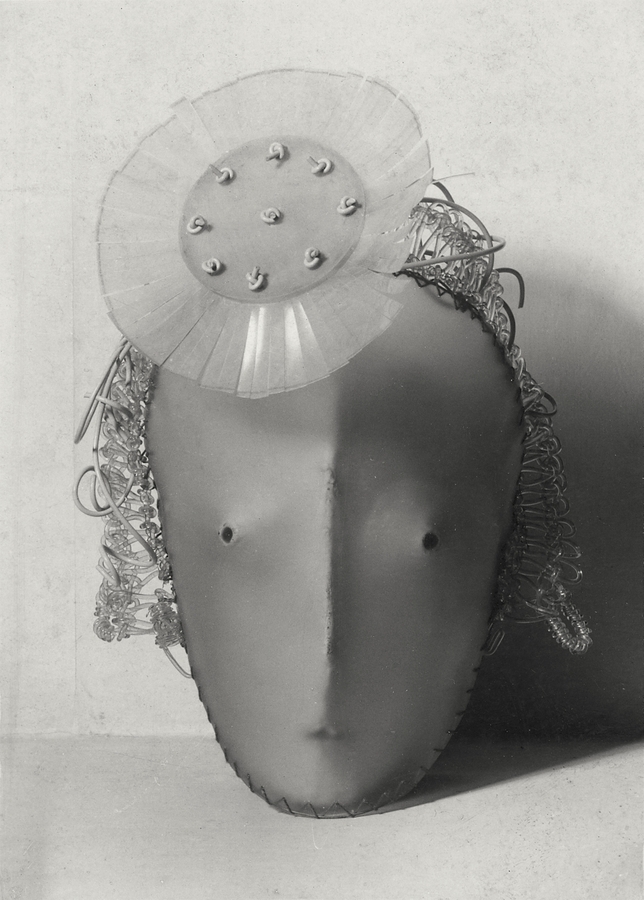
Marie Vassilieff (1884-1957), Mask of Marlene Dietrich, photographed by Pierre Delbo, 1930. Photograph, 15 x 11 cm. Collection of Claude Bernès, Paris, courtesy Rouillac, France 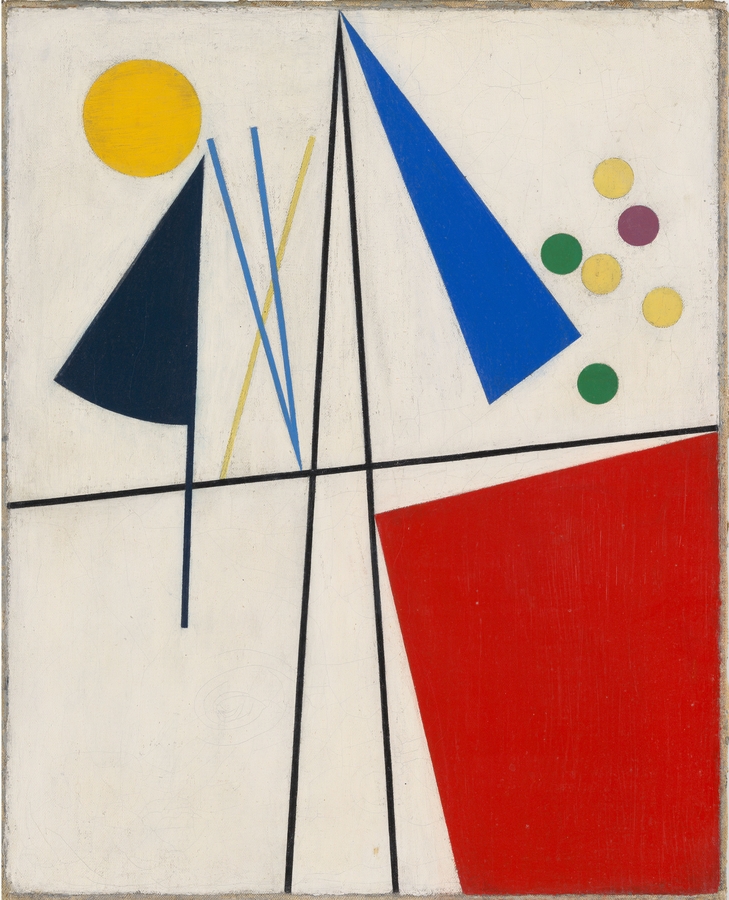
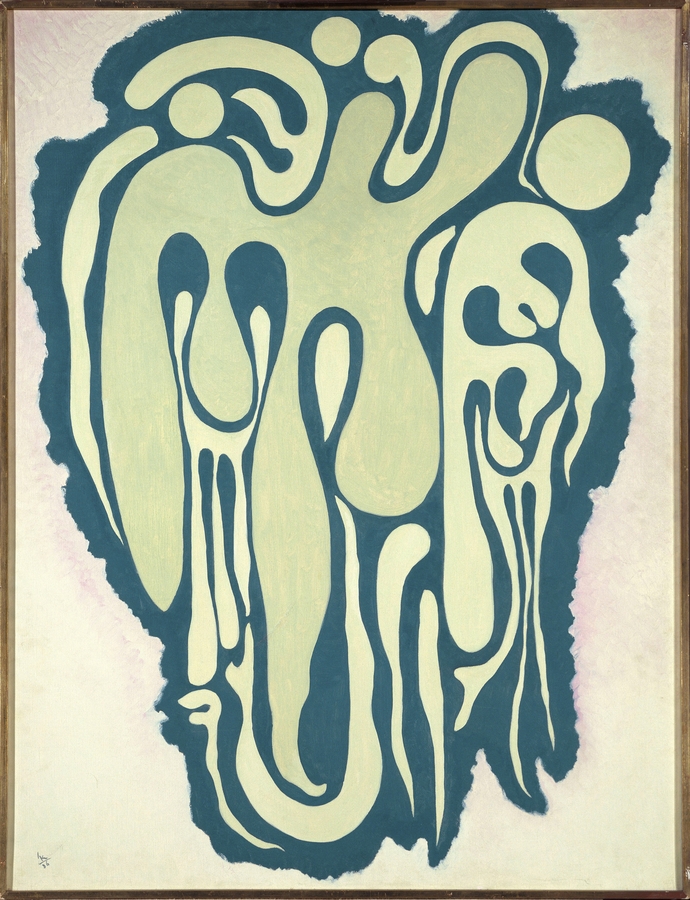
Sophie Taeuber-Arp (1889-1943), Equilibrium (Equilibre), 1932. Oil on canvas, 41.7 x 33.5 cm. Stiftung Arp e. V., Berlin/Rolandswerth Rita Kernn-Larsen (1904-1998), Behind the Mirror (Spejlets Revers), 1937. Oil on canvas, 120 x 84 cm. Kunstmuseet i Tonder, Denmark Vasily Kandinsky (1866-1944), Green Figure (Figure verte), 1936. Oil on canvas, 117.5 cm x 89.3 cm. Centre Pompidou, Paris, Musée national d’art moderne / Centre de création industrielle, Bequest Nina Kandinsky, 1981, In deposit, from July 20, 1998, at Musée d’art moderne et contemporain de la Ville de Strasbourg, Strasbourg
The text has been translated in English using AI

