On view until 20 September 2026, “Tragicomica. Perspectives on Italian art from the mid-20th century to today” brings together at the MAXXI in Rome the many forms of artistic creativity that have emerged in Italy from the post-war period to the present day. Through the works of 134 artists selected by curators Andrea Bellini and Francesco Stocchi, the exhibition adopts irony as its guiding principle.
Bringing together and placing in dialogue three hundred works connected to both artistic movements and individual artistic practices developed over the last eighty years in Italy, the exhibition curated by Andrea Bellini and Francesco Stocchi unfolds throughout the galleries of the MAXXI in Rome. The exhibition is built upon an interplay of heterogeneous languages and artistic poetics, held together by irony, which is adopted as a lens through which to critically investigate contemporary Italian culture.
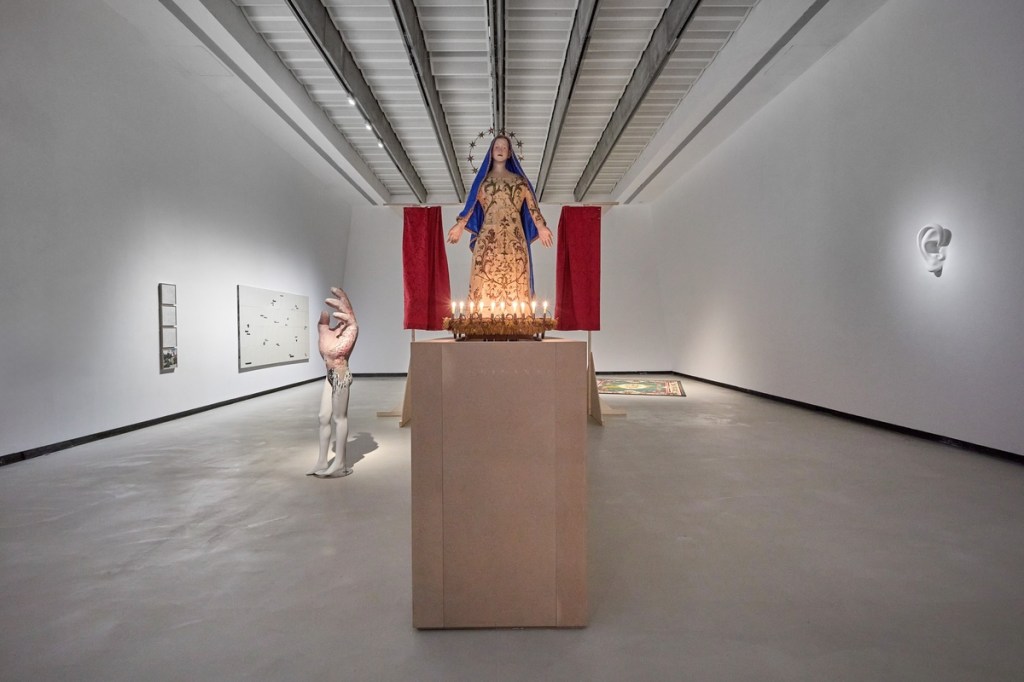
Presented from the outset as a distinctive trait of Italian culture, the comic impulse welcomes visitors as the dominant note of the entire exhibition. Accompanied by the light whistling spread through Liliana Moro’s sound installation, which resonates throughout Gallery 3, the exhibition route starts with works renowned precisely for their ironic dimension: Piero Manzoni’s Merda d’artista and Io sono un santo by Lucio Fontana occupy the first balcony in a carefully orchestrated spatial dialogue, while, on the terrace above, La Nona Ora by Maurizio Cattelan stands in isolation, imbued with a sense of hieratic stillness. Emblematic, transgressive, irreverent and, at times, even scandalous, the works that open the exhibition simultaneously attract and disorient the viewer, guiding them along a path that makes ambivalence its fundamental organising principle.
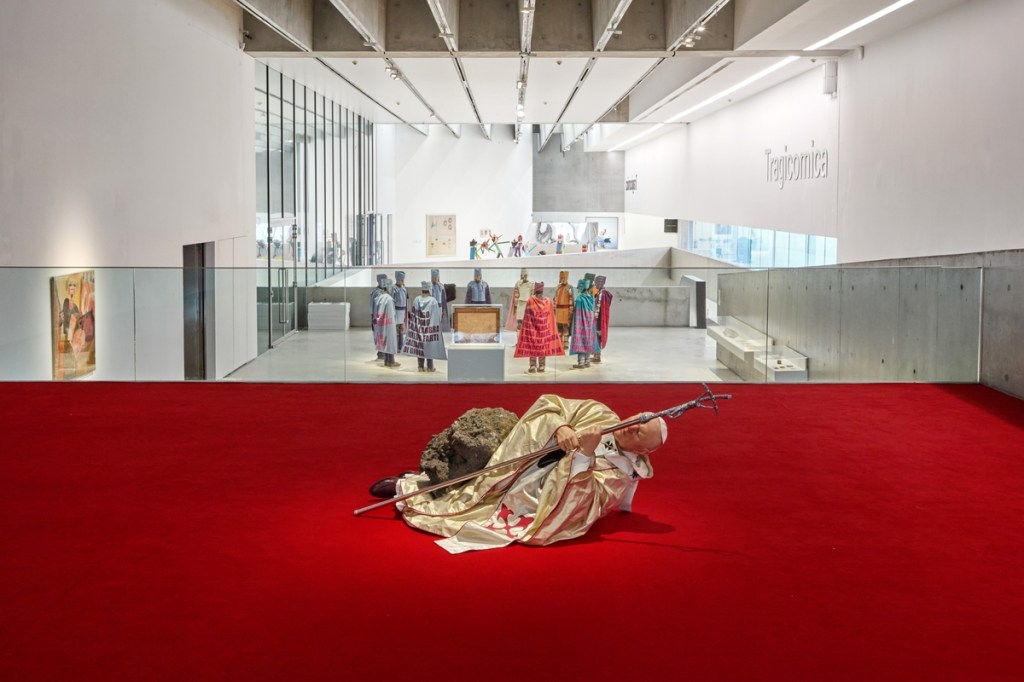
Indeed, the irony expressed through the various works soon reveals itself to be inseparably connected to reality, opening up a further interpretative layer. The comic register thus becomes a key instrument through which to investigate social, religious, economic and political issues and, at times, even questions intrinsic to the art world itself. The humour underpinning Manzoni’s intervention develops into a provocation aimed at the mechanisms of the art system, while Fontana’s work evokes the paradox of the artist-intellectual figure. Reinforcing one another through their spatial proximity, the two works also enter into dialogue with Simone Berti’s series of portraits which ‒ through an interplay of references and continuous reversals ‒ opens up a critical reflection on the stylistic monotony of many of his fellow artists.
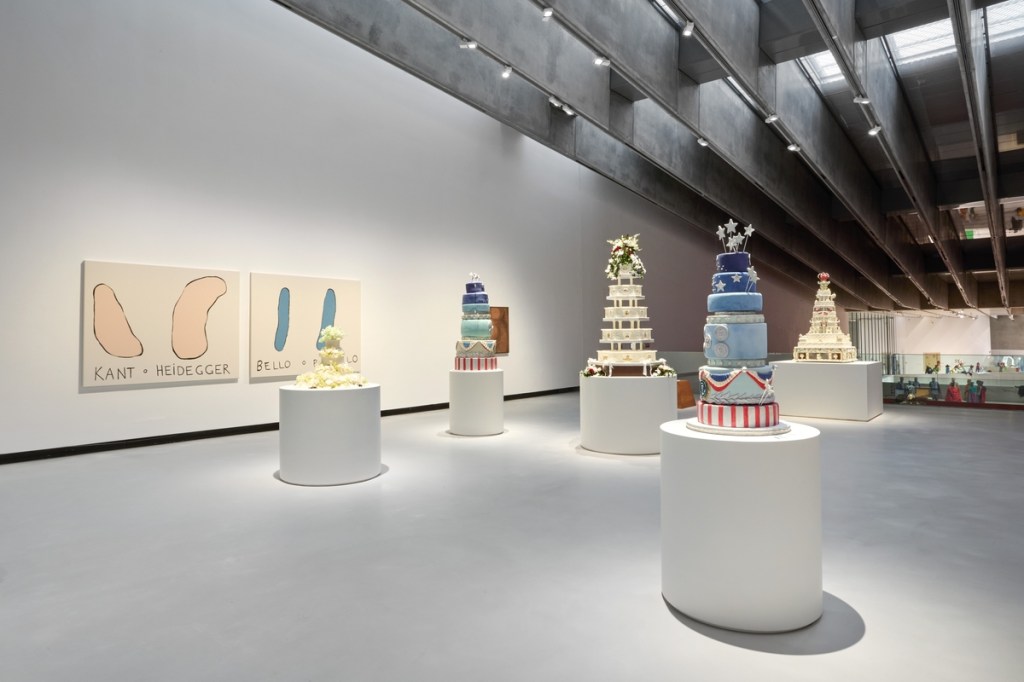
Upon reaching the final balcony, it is Roberto Cuoghi’s installations that are particularly compelling due to their hyperrealistic and almost appetising appearance. Magniloquent and sumptuous, they invite visitors to move through the expansive space in which they are arranged, raising questions about their true nature at every step. Depicting reproductions of the wedding cakes of American presidents and European royalty, the works ‒ festive and celebratory at first glance ‒ gradually reveal a more unsettling undertone, triggering deeper reflections on consumer culture and on the often unfortunate historical and political trajectories associated with their commissioners.
THE EXHIBITION “TRAGICOMICA” AT THE MAXXI IN ROME
What emerges as central to this first section of the exhibition, then, is the subtle interplay between comedy and its more satirical counterpart, constructed through a continuous tension between order and dispersal. The works are organised according to a system of pauses and distances that allows visitors to move freely through the space, gradually immersing themselves in the layered structure of their meanings. Within this framework, even empty spaces acquire significance, becoming active sites of reinterpretation and renewed meaning.
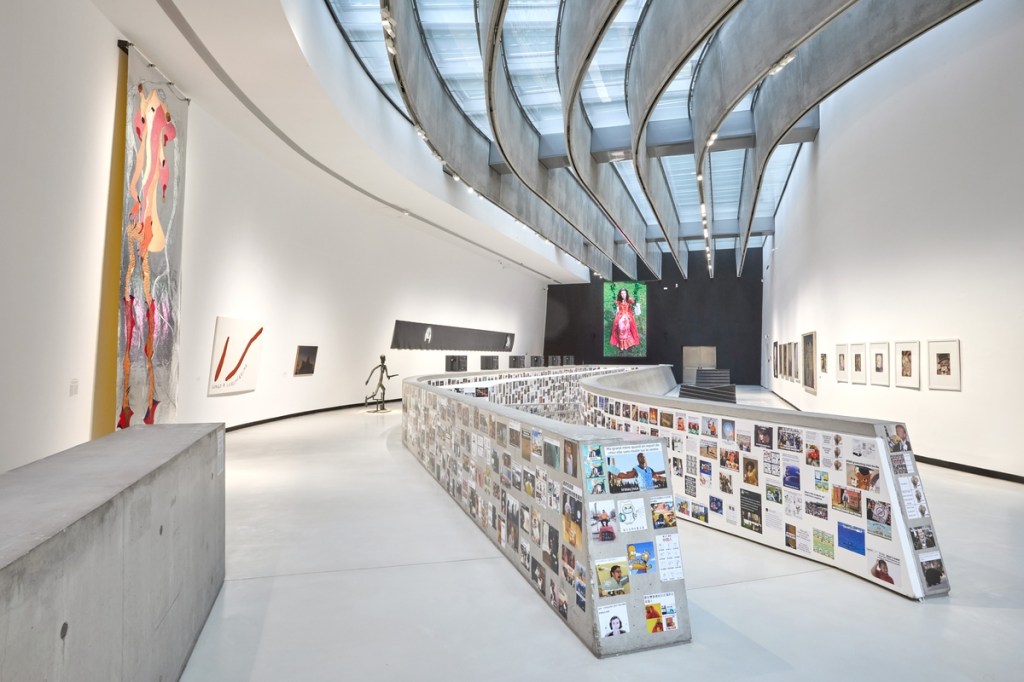
At the end of Gallery 3, a large-scale intervention by Paola Pivi occupies the undulating walls of the narrow passage connecting it to Gallery 2, where the exhibition continues and expands.
Passing through the thousands of sheets that constitute 25,000 Covid Jokes (it’s not a joke), visitors suddenly find themselves enveloped in a dense field of images which ‒ mirroring the saturation of the virtual space in which they usually circulate ‒ anticipates the dramatic shift in rhythm that characterises the subsequent gallery, while encapsulating the conceptual core of the exhibition as a whole. Across the walls of the corridor unfolds an immense collection of memes gathered by the artist during the pandemic. As perhaps the quintessential expression of the tragicomic, they materialise, through their very existence, a natural tendency to respond with irony even within ‒ and about ‒ the most dramatic situations.
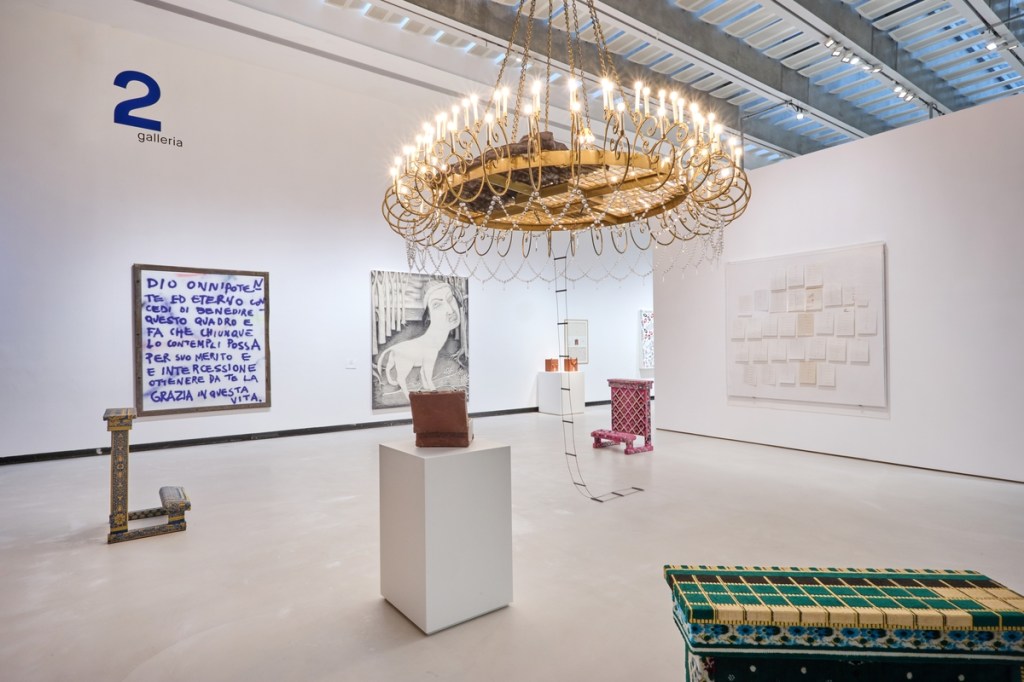
In keeping with Pivi’s intervention, the second part of the exhibition develops throughout Gallery 2 as a tightly structured sequence of spaces conceived specifically for its display, following a markedly different logic from the system of pauses and intervals that characterises the opening gallery. Here, meaning is generated not through absence but through an all-encompassing visual density: media, languages, themes and artistic investigations that are often far removed from one another are brought together in the same space, while the legacies of major artistic movements of the 1960s and 1970s enter into close dialogue with works by lesser-known artists.
It is within this concentration that irony confirms itself as an intrinsic and transversal strand running throughout Italian artistic production. From the verbo-visual experiments of Elisabetta Gut and Lucia Marcucci ‒ which combine text and image while using paradox to challenge cultural norms and social conventions ‒, to the irreverent feminist claims advanced by Ketty La Rocca, Carol Rama and Suzanne Santoro, the tragicomic dimension extends beyond aesthetics and emerges as an active tool of subversion. The exhibition design, which in Gallery 3 articulated ambiguity through emptiness and distance, is transformed here into an operative device based on accumulation, to the extent that even Comedian, Maurizio Cattelan’s celebrated banana affixed to the wall, risks passing almost unnoticed.
THE MANY SHADES OF IRONY IN CONTEMPORARY ITALIAN ART
With Risata continua by Gino De Dominicis in the background, which gradually gives way to Luciano Fabro’s sound installation Cittadini, consideratemi irresponsabile di quanto succede!, visitors are absorbed into an overwhelming polyphony in which different sensory stimuli compel them to engage continuously with the works on display.
In doing so, while at times bordering on the oppressive, Tragicomica. Perspectives on Italian art from the mid-20th century to today identifies a culturally shared stance of inhabiting Italy’s historical, social and cultural reality; at the same time, through its constant perceptual short-circuits, the exhibition itself becomes the embodiment of a tragicomic experience.
It is precisely through this engagement with plurality that the exhibition proves most effective, as it generates unexpected connections between works that initially appear unrelated and opens up new lines of inquiry into Italian artistic production, in accordance with its clearly stated curatorial aims. To this end, the exhibition is accompanied by a catalogue conceived as a broader study of recent Italian art history and is positioned at the centre of a public programme developed in collaboration with a scientific committee assembled specifically for the occasion.
By engaging with a wide range of creative disciplines ‒ from philosophy and cinema to theatre and architecture ‒ Tragicomica succeeds in offering a layered account of Italian culture, examined through the ongoing negotiation between ironic expression and the weight of its subject matter. Spanning more than half a century of artistic production, Bellini and Stocchi construct throughout the MAXXI’s galleries a constellation of implicit connections that reveal the (tragi)comic not only as a distinctly Italian cultural trait, but also as an effective lens through which to understand the country’s contradictions and to work through its conflicts and transformations.
Alessia Leoni
2 April – 20 September 2026
Tragicomica. Perspectives on Italian art from the mid-20th century to today
curated by Andrea Bellini and Francesco Stocchi
MAXXI
via Guido Reni, 4 A – Roma
MAXXI art
Tragicomica. Prospettive sull’arte italiana dal secondo Novecento a oggi, exhibition view, MAXXI, Roma 2026. Photo ® Simon d’Exea. Courtesy Fondazione MAXXI Tragicomica. Prospettive sull’arte italiana dal secondo Novecento a oggi, exhibition view, MAXXI, Roma 2026. Photo ® Simon d’Exea. Courtesy Fondazione MAXXI 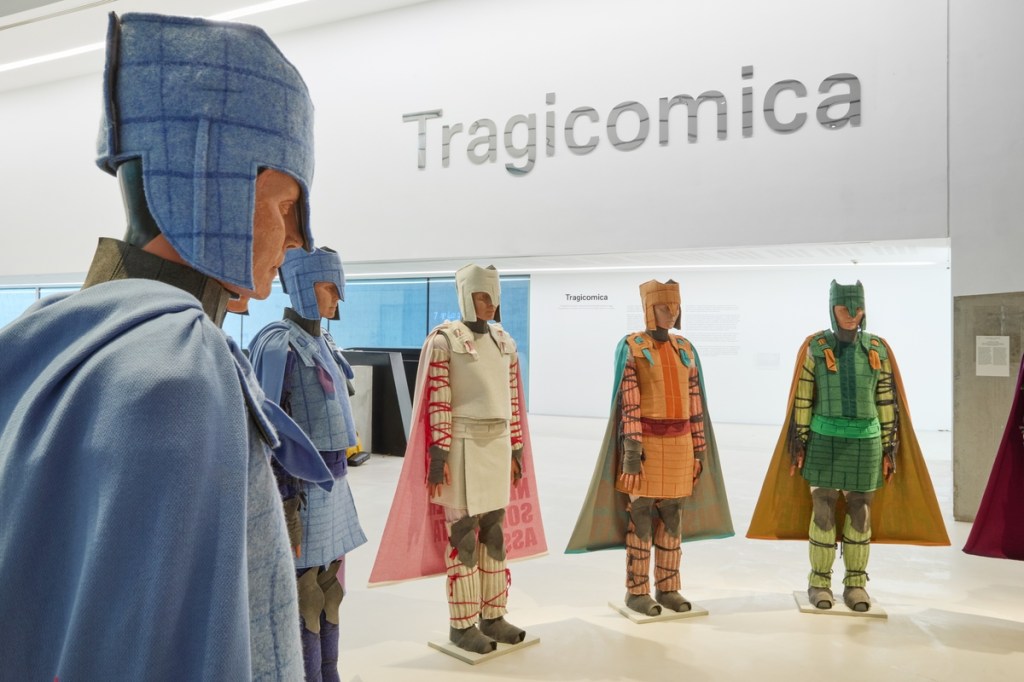
Tragicomica. Prospettive sull’arte italiana dal secondo Novecento a oggi, exhibition view, MAXXI, Roma 2026. Photo ® Simon d’Exea. Courtesy Fondazione MAXXI Tragicomica. Prospettive sull’arte italiana dal secondo Novecento a oggi, exhibition view, MAXXI, Roma 2026. Photo ® Simon d’Exea. Courtesy Fondazione MAXXI Tragicomica. Prospettive sull’arte italiana dal secondo Novecento a oggi, exhibition view, MAXXI, Roma 2026. Photo ® Simon d’Exea. Courtesy Fondazione MAXXI 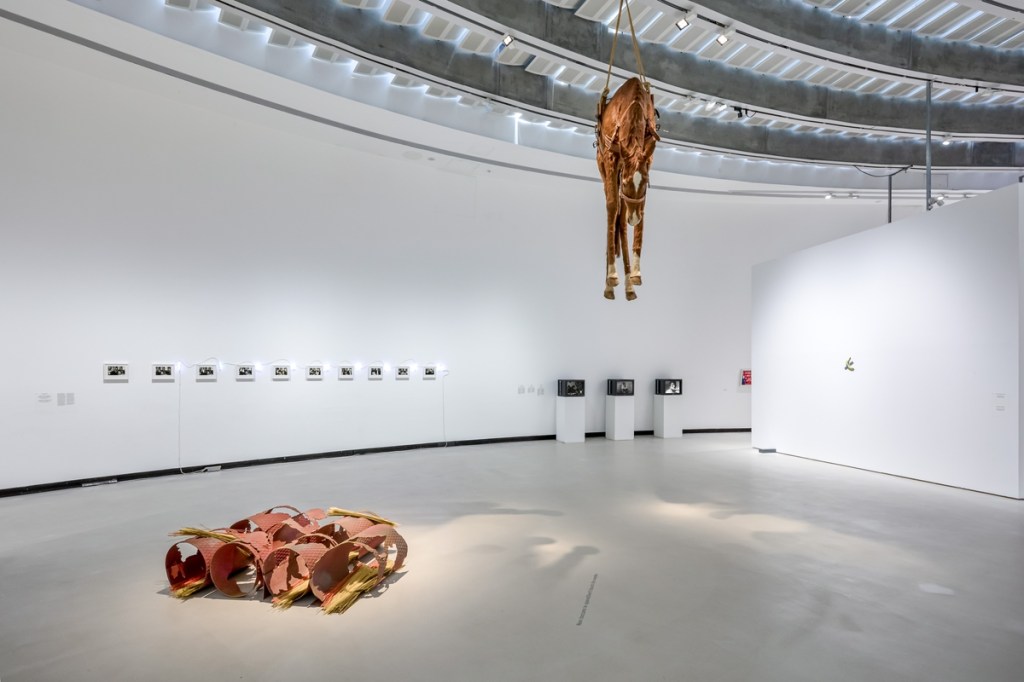
Tragicomica. Prospettive sull’arte italiana dal secondo Novecento a oggi, exhibition view, MAXXI, Roma 2026. Photo ® Simon d’Exea. Courtesy Fondazione MAXXI 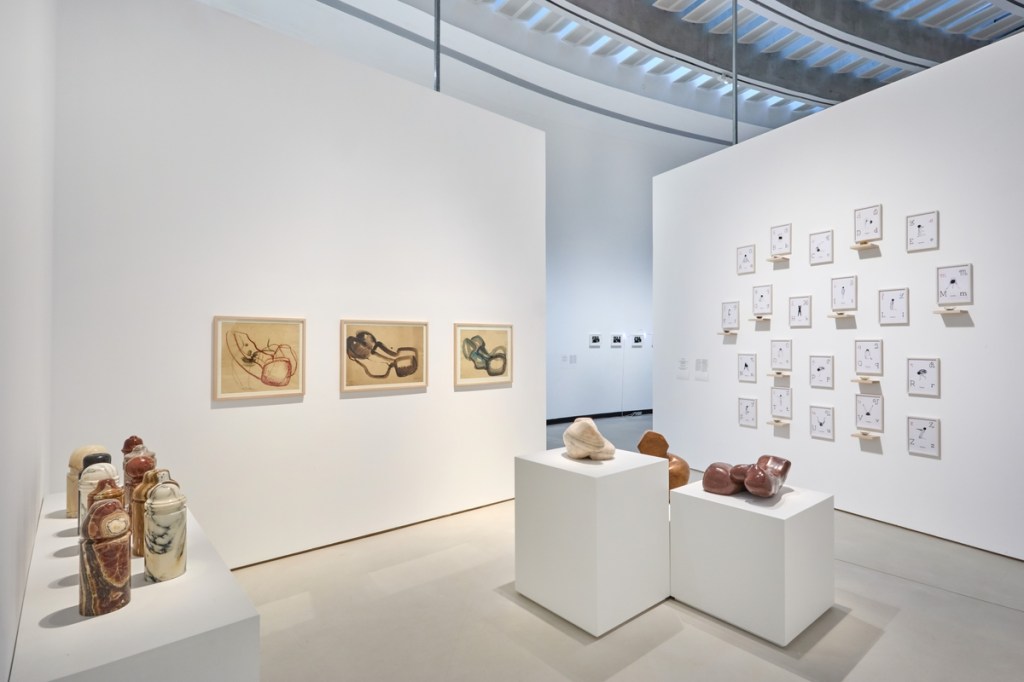
Tragicomica. Prospettive sull’arte italiana dal secondo Novecento a oggi, exhibition view, MAXXI, Roma 2026. Photo ® Simon d’Exea. Courtesy Fondazione MAXXI Tragicomica. Prospettive sull’arte italiana dal secondo Novecento a oggi, exhibition view, MAXXI, Roma 2026. Photo ® Simon d’Exea. Courtesy Fondazione MAXXI 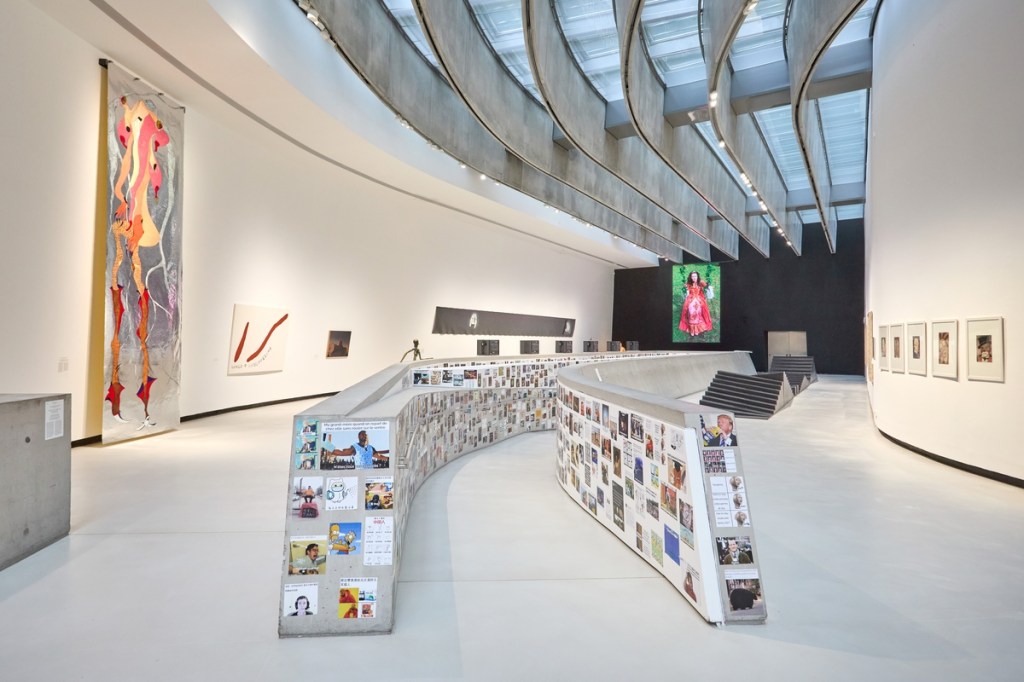
Tragicomica. Prospettive sull’arte italiana dal secondo Novecento a oggi, exhibition view, MAXXI, Roma 2026. Photo ® Simon d’Exea. Courtesy Fondazione MAXXI 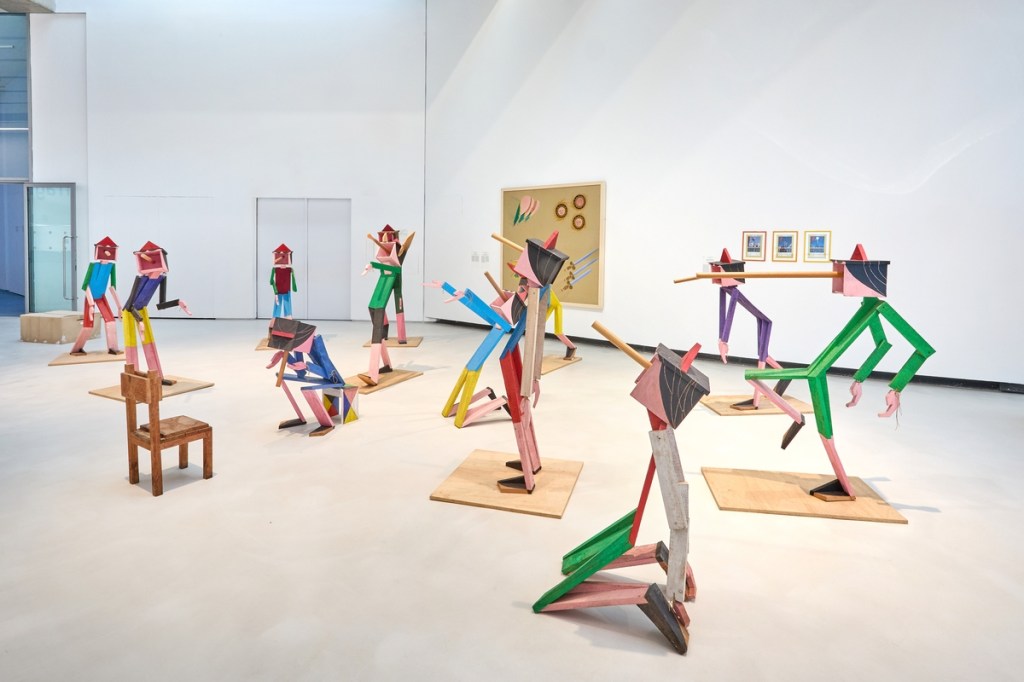
Tragicomica. Prospettive sull’arte italiana dal secondo Novecento a oggi, exhibition view, MAXXI, Roma 2026. Photo ® Simon d’Exea. Courtesy Fondazione MAXXI
The text has been translated in English using AI

