Until 18 July 2026, the Galleria Tommaso Calabro in Venice presents “See You”, an exhibition that explores the portrait as a device for encountering the other and for investigating one’s own identity. Through a picture gallery of faces and gazes, the exhibition stages a dialogue between portraits from different historical periods and pictorial languages, reflecting on the image’s capacity to evoke absence and to make the invisible visible.
Gazes. Gazes that observe us, that question us, inquisitive. Eyes lost in emptiness, looking toward a distant horizon. Others are absorbed in their thoughts, seemingly ignoring us. Yet they are feigning indifference, aware that we are there. A girl turns her back on us, yet does not avert her gaze; she scrutinises us, wanting to know who is looking at her. A woman seems to be posing, capturing our attention. Meanwhile, her neighbour, visibly uncomfortable in posing, appears to judge the woman, wondering how she can be at ease in such a condition. In front of them, a man, unable to hold back his emotions, seems on the verge of tears, while the boy beside him has wide, frightened eyes. What is he looking at? What frightens him so much? Perhaps our presence? Upon entering the Galleria Tommaso Calabro in Venice, until 18 July 2026, we are greeted by dozens of portraits: young and old figures, doges, sultans, saints, fantastic characters, cats, and imaginary creatures. They are all there, hanging on the walls. They inhabit their canvases with natural ease, leaning out from their frames as they wait for our gaze to meet theirs, eager to tell their stories and reveal their identities. In dialogue with the Venetian exhibition of paintings, the gallery’s Milan venue presents, until 27 June 2026, an equally significant group of portraits on paper.
Are the portrayed figures truly there with us? Who, in fact, are we observing? People? Or merely their images? To understand this, one must return to the primary function of portraiture, starting from the etymological origin of the term: “portrait” derives from the Latin trahere, meaning “to draw forth, to bring out.” Portraiture arises from a specific human need: to extract an image from a subject, to make an absence present, evoking here and now an original belonging to another time and place. This form of representation is closely linked to death and funerary ritual. In the ancient Roman aristocracy, the ius imaginum was widespread: the right to commission realistic wax portraits of the faces of illustrious ancestors, carried in procession during funeral ceremonies, sometimes worn by individuals resembling the deceased in bodily constitution, with the intention of substituting the departed person with their image. Portraiture, therefore, constitutes the visual response to the human inability to accept the loss of a loved one. It is interesting to note how, for the ancient Romans, imagines did not simply refer to any images, but specifically to this form of portrait practice. Death thus becomes one of the principal motivations underlying the anthropological drive to produce images, as a necessity to respond to the absence of the body itself through its re-presentation in image form.
THE PORTRAIT ON DISPLAY IN VENICE
Throughout the modern period, portraiture continues to function as a tool of memory, aimed at preserving the identity of the depicted subject over time. Renaissance and Baroque portraiture, while increasingly attentive to emotional dimension, still pursue a mimesis, a representation as faithful as possible to empirical reality. From the second half of the nineteenth century, Cesare Lombroso’s studies in physiognomy – in which the criminological anthropologist argued that specific physical traits could reveal inner dispositions – and the 1900 publication of Sigmund Freud’s The Interpretation of Dreams decisively reshape the destiny of portraiture, which becomes the visual representation of an inner world, traversed by forces that can never be fully controlled or comprehended. The dramatic fragmentation of the human figure developed within the historical avant-gardes signals the anxious uncertainty of modern subjectivity in its attempt to grasp its own identity. The individual can no longer recognise themselves within classical portraiture and is compelled to reinvent their own image. In the twentieth century, the representation of the human being is thus invested by a complex process of linguistic experimentation, driven by the need to express through the face and body of the subject the indefinable unconscious universe that inhabits interiority. Portraiture becomes, in all respects, a window onto the soul in Surrealist investigations, particularly in the work of Leonor Fini and Stanislao Lepri, both of whom have already been featured in previous monographic exhibitions at THE Galleria Tommaso Calabro – most recently the double exhibition devoted to the artist couple and lovers, hosted in the Venice venue in 2025. In Ritratto di Léon Delafosse (1935-1940), Leonor Fini conceives the human figure as a space of metamorphosis, in which the individual does not present themselves in a univocal manner to the viewer, but instead appears marked by a mysterious ambiguity. Although executed with a refined technical precision indebted to Renaissance painting, her figures disrupt the conventions of representation, challenging the traditional poses and symbolic codes associated with the subject’s gender. In this way, portraiture becomes a reflection on identity, transforming each face into an archetypal testimony to the fluidity of the human condition. Her partner Stanislao Lepri – present in the exhibition with a substantial selection of works such as Le prestidigitateur (1942), L’Homme au visage craquelé (1953), L’Homme à la chemise rouge (1955), Il pedagogo (1968) and Le Créateur des anges (1969) – develops a more fantastical and unsettling visual language, populated by hybrid creatures in which the boundary between human, animal and imaginary dissolves. His figures inhabit a theatre of the imagination, expressing a cultured and ironic form of universal unease, in which the absurd appears as the ultimate condition of existence.
Although already in the first half of the twentieth century the centrality of the human figure had been questioned, it is especially from the post-war period onwards that portraiture no longer necessarily coincides with the representation of face and body, opening itself to conceptual, process-based and linguistic practices aimed at investigating the theme of identity. In portraiture, making the invisible visible becomes essential. In Ritratto di filosofo (1971) by Vincenzo Agnetti, there is no longer any image to be recognised: the subject becomes an absence, entirely replaced by language. Identity is entrusted to a system of signs and words that invites the viewer to reflect on the very nature of representation. In his portraits, the face disappears altogether, giving way to the invisible. Nevertheless, within the process of redefinition of contemporary portraiture, the human figure does not disappear entirely, but rather assumes new formal valences.
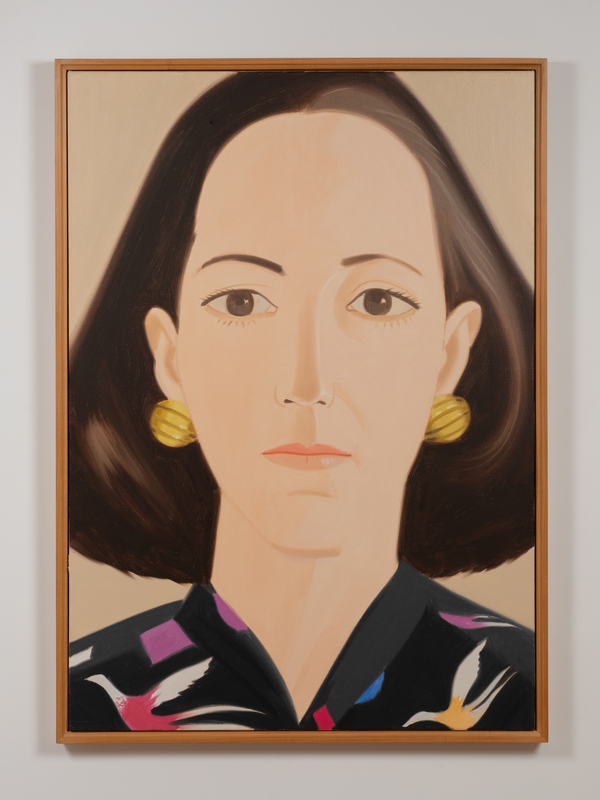
In the 1980s and 1990s, the human face continues to interrogate artists. A paradigmatic case is Alex Katz, whose pictorial practice follows a highly distinctive trajectory. He never abandons figuration, but strips it of the elements traditionally associated with the psychological depth of portraiture. The face in Ann (1982) is reduced to such an essential treatment of colour that it verges on abstraction. For Katz, portraiture is not a means of probing interiority, but an attempt to convey the presence of the other in its everyday visual immediacy. In Viso (1991) by Gino De Dominicis, portraiture goes even further, calling into question the very possibility of knowing the identity of the other. The face, reduced to a few essential features and devoid of any psychological characterisation, refuses identification with a specific individual and instead takes shape as a universal image, a presence that resists all attempts at definition. The artist is concerned with what escapes representation: the enigma of human existence, that which remains invisible to the gaze.
In contemporary artistic practices, portraiture is often confronted with the iconographic legacies of art history. Francesco Vezzoli reworks celebrated ancient and Renaissance models, appropriating pre-existing images and sometimes provocatively altering their meaning. In Casa Iolas (Be my guest) and Iolas the Great – works produced in 2020 for the exhibition Casa Iolas. Citofonare Vezzoli at the Galleria Tommaso Calabro in Milan – Vezzoli humanises the heroic and iconic face by introducing elements of ambiguity and estrangement. In this way, the idealised and timeless images created by the great masters of the past are inexorably thrust into the precariousness of the present, marked by an unexpected vulnerability. Similarly, in Autoritratto o “Allegoria della pittura” (2026) and Ritratto d’uomo (2026) by Andrea Loi, the past becomes an iconographic repertoire to be reactivated through an openly ironic approach. His works emerge from a continuous layering of visual references and stratifications. Portraiture thus ceases to be the site of a unitary identity and becomes a space of disguise and staging. The face that recurs obsessively in his paintings is always the same, yet never fully coincides with itself: at once self-portrait, quotation and character. In Interlude (2026) and Room with a view (2026) by Cecilia Cocco, the face becomes a place of suspension and expectation. Her figures, at times fragmented, appear to inhabit an intermediate temporality: a pause, an interval, a moment in which something has just happened or is about to happen, without ever fully revealing itself. Portraiture no longer returns a defined identity, but constructs an enigmatic presence in which the visible constantly alludes to a fugitive truth.
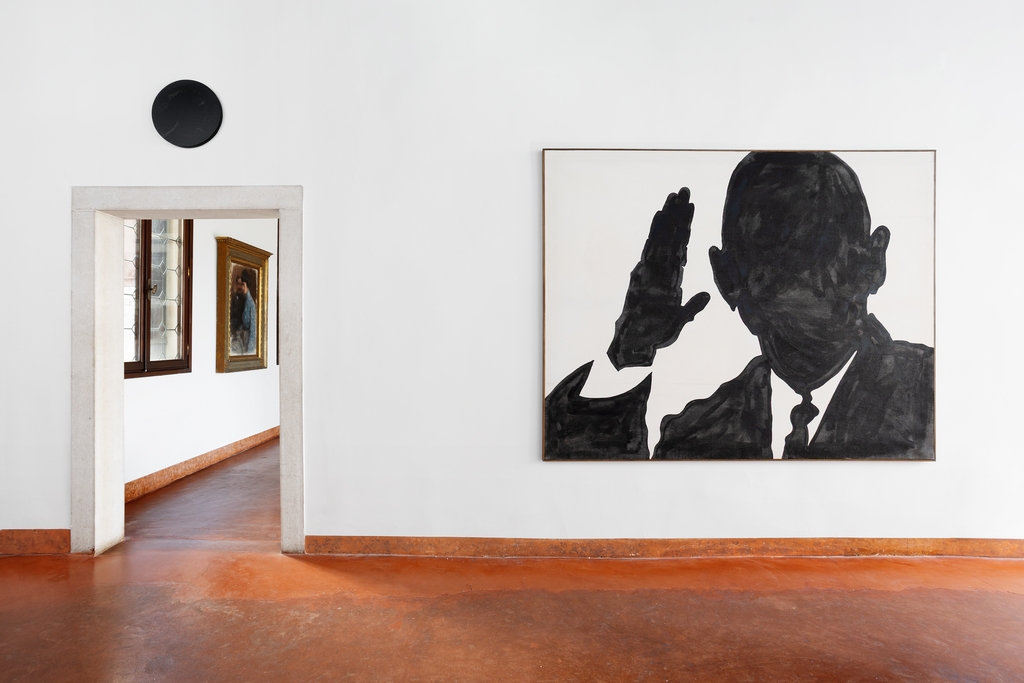
THE EXHIBITION AT THE GALLERIA TOMMASO CALABRO IN VENICE
The dialogue between the ancient and the contemporary informs the entire exhibition project. Through a dense and heterogeneous arrangement of paintings, the display recalls the model of seventeenth-century picture galleries and nineteenth-century Parisian Salons, reactivating their principle of juxtaposition and comparison, while freeing it from any encyclopaedic purpose and transforming it into a space of continuous re-signification. The walls present intertextual compositions of different images, at times belonging to distant historical periods, in which confusion is only apparent, since behind it lies a subtle montage of combinations and references. The result is a gallery of gazes that echoes Aby Warburg’s Mnemosyne Atlas, a visual assemblage of images arranged on black panels through a dialectical practice aimed at outlining a network of formal and semantic affinities, analogies and differences that bring to light temporal discontinuities – leaps, passages, intervals, returns – in the history of the visual arts. At the same time, this anthology of portraits recalls André Malraux’s Musée imaginaire, a mental, personal space, a private archive «that everyone “carries behind their eyelids”, the place where artworks fully manifest their capacity to provoke true acts of love, since it is they who choose us more than we choose them» (A. Malraux, Le Musée Imaginaire [1947], Gallimard, Paris 1965, p. 247).
The exhibition See You marks the epilogue of a rich programme of exhibitions and initiatives that have taken place in the spaces of Galleria Tommaso Calabro over recent years. Yet it does not take the form of a definitive farewell, but rather of a “see you again”, a “see you soon”.
A display of portraits that ultimately becomes itself a portrait of the gallery’s history, of its exhibitions, of the emerging artists discovered and promoted by Calabro through monographic and collective projects, and of twentieth-century Italian artistic tendencies once underexplored and recently rediscovered also thanks to the gallery’s research, such as certain protagonists of Italian Fantastic Art. An exhibition that traces a geography of stories, people, and identities. Between viewer and portrayed subject an almost epidermal affinity emerges, a psychological connection. A picture gallery of gazes becomes an environmental experience, inviting the visitor to traverse it and to enter metaphorically into the universe of images. In front of the portrait, the individual is drawn into a conversation not so much with the depicted figure, but with themselves, as if standing before a mirror. What do we seek in the eyes of others if not that invisible truth that unites us? In the faces of others, we strive to understand ourselves more fully. This is the meaning of the gaze: to move beyond alterity in order to grasp our own identity. In front of the portrait we participate in an introspective inquiry that goes beyond visual perception. We observe at the very moment in which we are ourselves observed, questioning the nature of human existence, aware of the impossibility of obtaining an answer.
Alessandro Cerchier
See You exhibition at the Galleria Tommaso Calabro in Venice
The text has been translated in English using AI
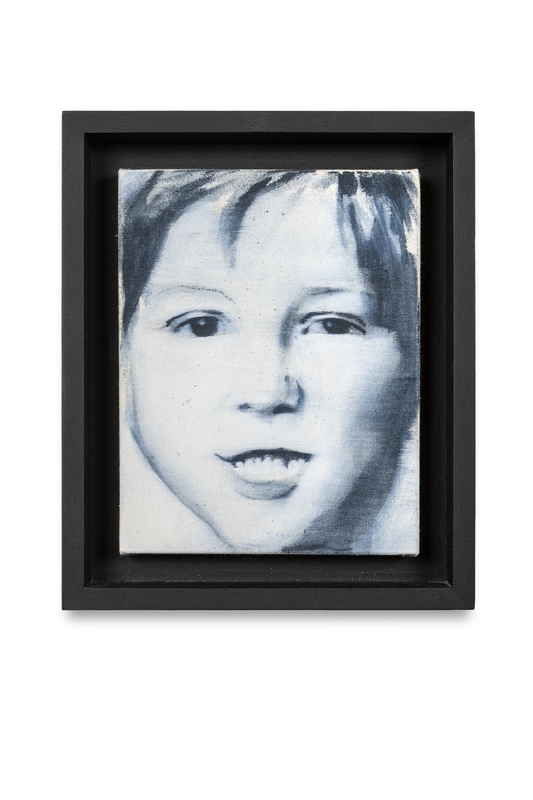
Giulia Andreani (b.1982), Ritratto, acrylic on canvas, 24 x 19 cm. Executed in 2018. Courtesy the artist and Tommaso Calabro, Venice 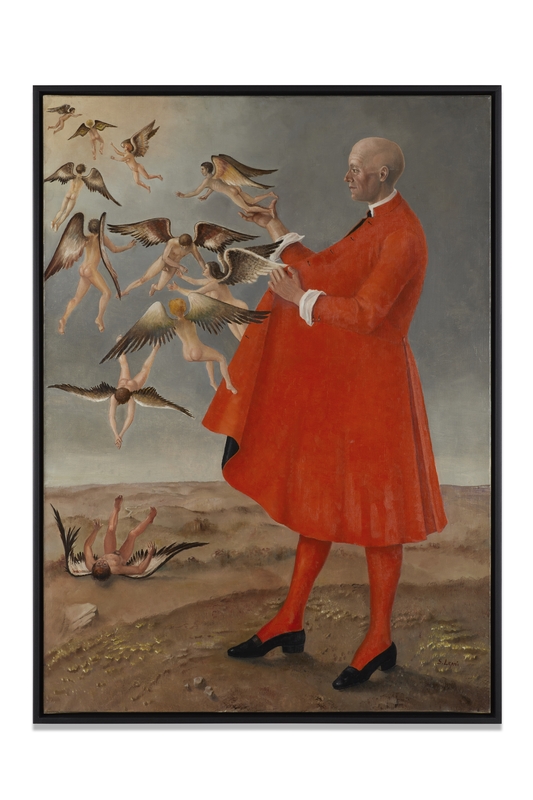
Stanislao Lepri (1905-1980), Le Créateur des anges, oil on canvas 100 x 72.7 cm. Executed in 1969. Courtesy Tommaso Calabro, Venice 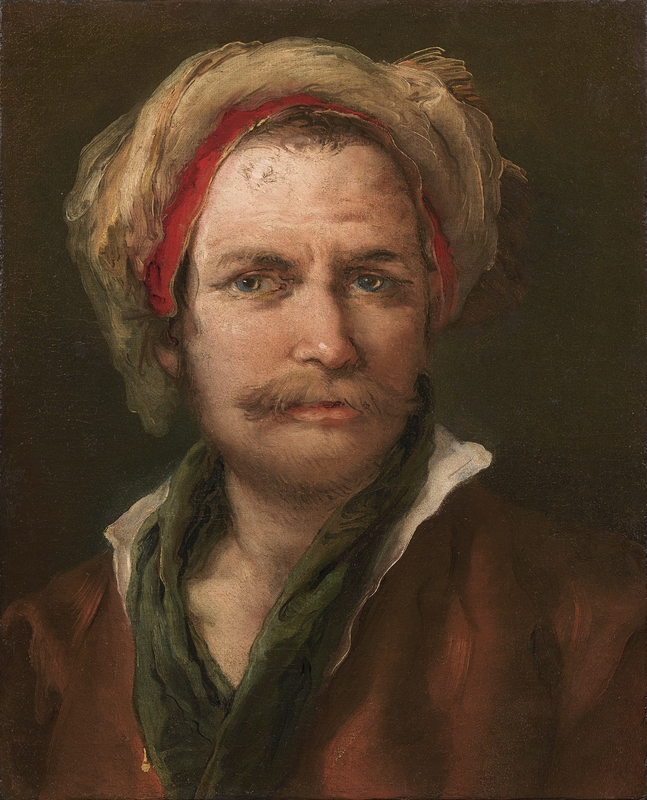
Gianbattista Tiepolo (1696 – 1770), Head of an Oriental Gentleman with a Moustache and Turban, oil on canvas, 43.5 x 35.5 cm. Executed in 1755 c. Courtesy Tommaso Calabro, Venice 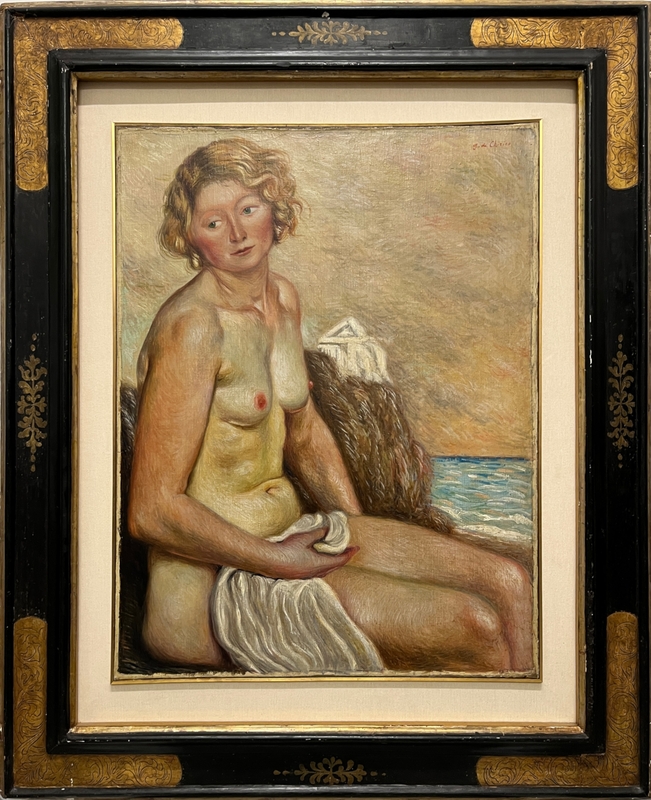
Giorgio de Chirico (1888 – 1978), Nudo di donna, oil on canvas, 90 x 70 cm. Executed in 1930. Courtesy Tommaso Calabro, Venice. 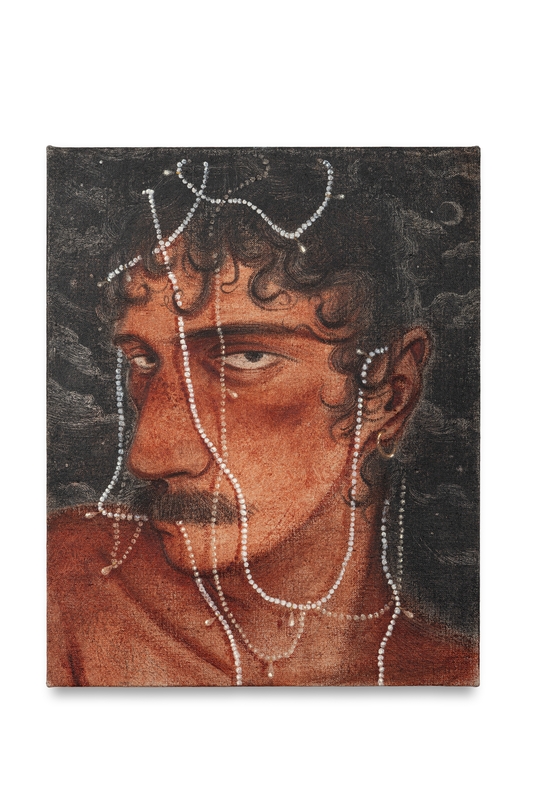
Roberto De Pinto (b.1996), Di notte con un filo di perle, oil on canvas, 40 x 30 cm. Executed in 2026. Courtesy the artist and Tommaso Calabro, Venice Alex Katz (b.1927), Ann, oil on linen, 122.2 x 86.4 cm. Executed in 1982. Courtesy Tommaso Calabro, Venice. See You, Venice. Installation view. Courtesy Tommaso Calabro, Venice. Photo Silvia Longhi 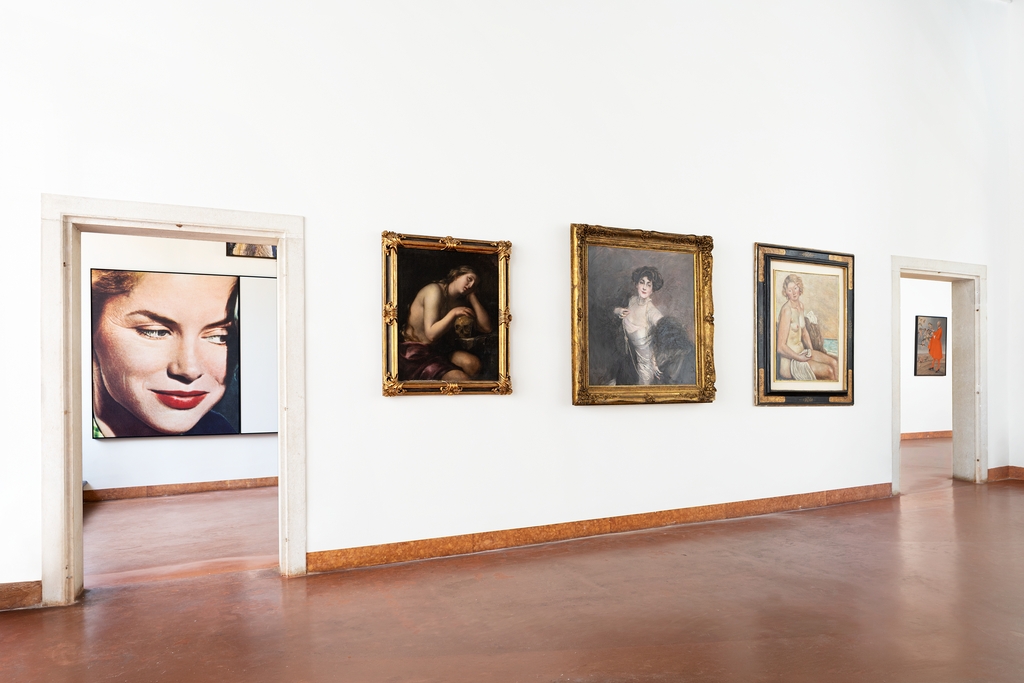
See You, Venice. Installation view. Courtesy Tommaso Calabro, Venice. Photo Silvia Longhi 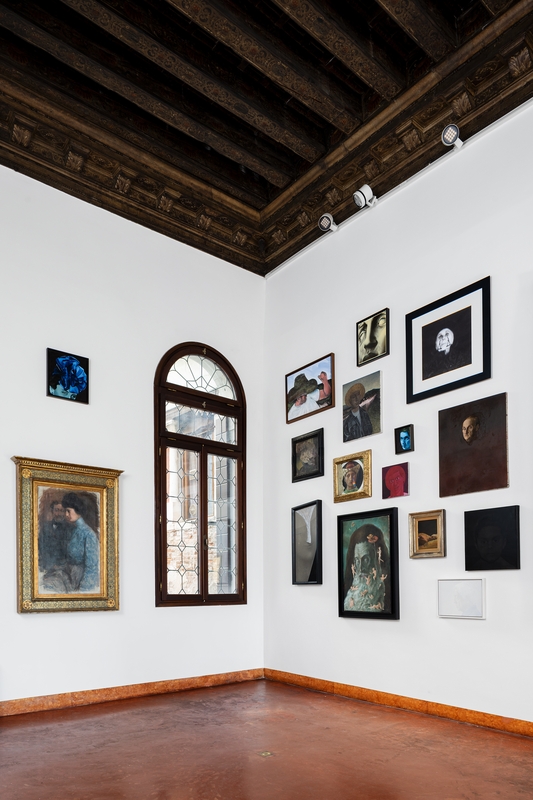
See You, Venice. Installation view. Courtesy Tommaso Calabro, Venice. Photo Silvia Longhi 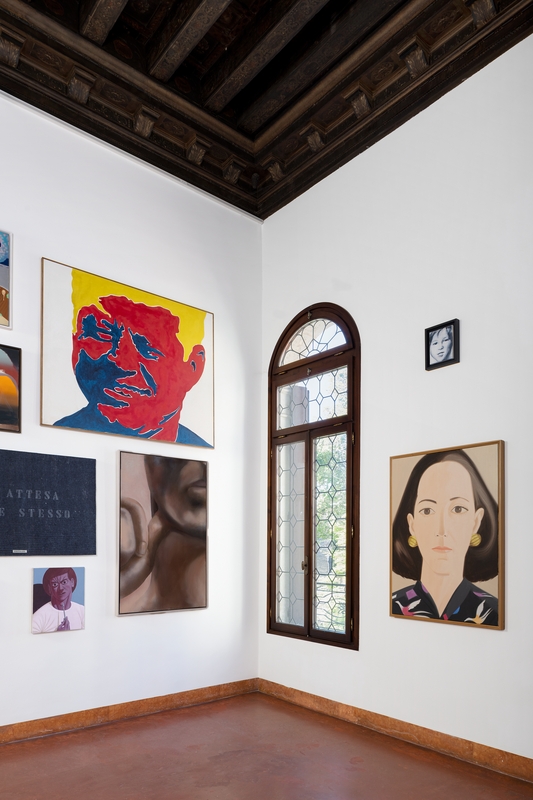
See You, Venice. Installation view. Courtesy Tommaso Calabro, Venice. Photo Silvia Longhi 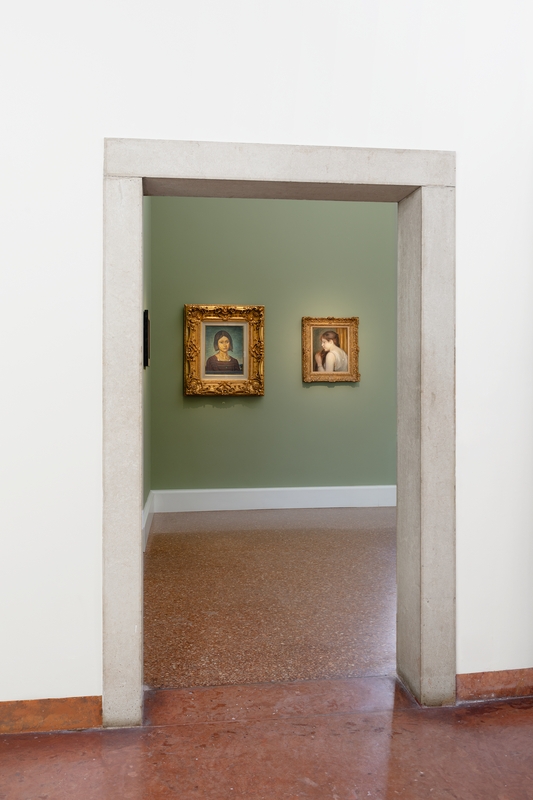
See You, Venice. Installation view. Courtesy Tommaso Calabro, Venice. Photo Silvia Longhi

