Architect and curator Ippolito Pestellini Laparelli and curator Erica Petrillo sit down with us to explain how the interdisciplinary studio 2050+ is redefining the concept of curatorial practices, moving between contemporary phenomena and spatial exploration.
Founded in Milan back in 2020 out of the need to make sense of the complexity of the world we live in, 2050+ builds new narratives by working across spatial practices, curatorial research, and interdisciplinary collaborations. Architect, curator and founder of 2050+ Ippolito Pestellini Laparelli, together with curator and studio partner Erica Petrillo, told us what it means to be part of a young practice that dissolves the boundaries between disciplines, shaping a rich, unique language of the present. Architecture, scenography, curating, and research are no longer treated as separate, self-contained fields; instead, they constantly interact, engaging in an almost osmotic exchange with a wide range of domains of knowledge.
THE INTERVIEW WITH 2050+
Nowadays, interdisciplinarity can almost be seen as a necessity. Issues such as the environment, politics, and technology also intersect in your projects. Where and when does the need to engage with these topics arise? And how does 2050+ position itself within this landscape?
Ippolito Pestellini Laparelli: We have to take a step back to when the studio was founded about six years ago. Coming from our previous experiences, most of the core team at 2050+ had already explored, in their own practice, what it means to work through an interdisciplinary lens. So there was a natural alignment of both needs and experiences already moving in that direction. In the Netherlands, I spent five years as a partner at OMA, which had developed a parallel branch – AMO – where spatial practices were used as a lens to observe contemporary reality. The goal was to create projects capable of telling the story of a changing world, also through publishing and exhibition design. Our need stems from the fact that architecture, as a discipline, is not enough to capture the complexity of the world around us – especially given the accelerating crises we are experiencing. Over time, we’ve developed the ability to engage in dialogue with other fields of knowledge, enriching our perspectives. We try to offer a more complete view of the world. This doesn’t mean we claim to be experts in everything – we don’t replace a sociologist, a scientist, or a political theorist – but we have developed the sensitivity to engage with these fields, building relationships that are as open and osmotic as possible. We’ve learned that a complex reality cannot be addressed without a highly articulated interdisciplinary structure.
Erica Petrillo: This interdisciplinary approach is very much reflected across the studio. I don’t actually have a background in architecture, but rather in political science. I came to curating through a path alongside Paola Antonelli. At MoMA, we worked in the R&D department, and that experience was crucial. The department was founded on the idea that museums shouldn’t just be containers for displaying beautiful objects, but social and political engines – spaces with a responsibility to foster conversations that go beyond aesthetics. The belief that institutional spaces dedicated to art, architecture, and design should engage with social, political, and environmental issues is something that has naturally carried over into 2050+. We arrived there from different backgrounds, but with very similar ways of understanding and engaging with the world.
Working as a collective across different areas, your practice brings together professionals from a range of fields – architects, designers, and researchers. What does it mean to work as a team and engage with such diverse professional figures?
Erica Petrillo: Actually, we don’t define ourselves as a collective. This is an intentional choice, because in terms of scale, ambition, and structure, we are a studio. Working together is always a challenge that requires aligning codes and even language, but once this initial effort is made, the dialogue becomes increasingly productive. Interdisciplinarity isn’t limited to the core team of ten to fifteen people based in Milan: the studio has an almost “accordion-like” structure, expanding for specific projects that require expertise we may not already have. For example, two years ago we developed a site-specific installation in Istanbul focused on air toxicity. In order to gain the specialized knowledge we needed, we involved a toxicologist from Istanbul University. This way, the accordion-like nature of the studio allows us to bring in highly specific expertise when necessary.
Ippolito Pestellini Laparelli: It’s a kind of ongoing negotiation. Especially in today’s world, with the way we interact with technology platforms and experiment daily, there’s a kind of clustering process based on disciplines and tastes. We try to keep the exchange and negotiation with other bubbles active and continuous, and this requires deliberate, ongoing effort. The projects we work on and put our name to are always the result of extensive collaborations and could not exist without a polyphonic, ensemble approach.
We could say that every collaboration comes with its own challenges. Engaging with curators and directors means your work is in constant evolution and dialogue. What do you see as the strengths and the challenges of working with many hands?
Ippolito Pestellini Laparelli: Maintaining a focus on complexity, finding the stimuli to renew ourselves project after project, and cultivating an open-minded approach. This requires a commitment that must be continually refreshed and also passed on to those who come to work with us in the studio. Finding people with that level of flexibility, adaptability, and curiosity isn’t easy. In my view, one strength is building a shared culture of research and language. Another, in terms of the market, is the fact that we work in a hybrid or kaleidoscopic way. This allows us to engage in a multifaceted manner and enter different domains, reflecting the interdisciplinarity we aim to keep alive.
Erica Petrillo: I’d like to connect to the word Ippolito used: complexity. On one hand, there’s an enormous richness of perspectives and viewpoints. We live in a complex world, and we need tools to embrace it whole. On the other hand, it’s always challenging to communicate what we do, especially in Italy. The flip side of complexity might be considered a weakness – the challenge of narrating ourselves –, but it’s one we try to embrace with pride.
2050+’S PROJECTS
What does it mean to work in an independent creative practice in Italy? Six years on, how do you assess your journey so far, and what do you hope for in the years ahead?
Ippolito Pestellini Laparelli: It is not always easy to work in Italy. Many of us have worked abroad, and returning has been a real challenge. There are structural difficulties, budgets are lower, and creativity and culture are often seen – as a matter of perception – as less economically significant than other sectors. We rely on cultural institutions, but in Italy, few operate in a contemporary way, even in terms of production. Only a handful of institutions understand the contribution a studio like ours can make. Often, museums call us in to support exhibitions, but our role is reduced to a very limited margin, which can be tedious and frustrating. Few curators and directors grasp that, for us, scenography and exhibition design go hand in hand with content development. Fortunately, we have open collaborations with those who do understand.
Erica Petrillo: I would add that, in moments of optimism, we tend to look at Italy as a gateway to regions that aren’t necessarily part of the Western mainstream dominating established museum institutions. Other places we’ve worked – like the Netherlands, the UK, or the US – offer less opportunity to play with geographic nuances, whereas Italy can be seen as a point of connection between the SWANA region and the former Yugoslav regions. “Mediterranean Italy,” as Federico Campagna puts it, is a concept that fascinates us; it’s a hub linking other geographies, and that gives us a bit of hope.
Your portfolio spans a wide variety of projects: collaborations with museums and theaters, exhibitions and initiatives with brands – Gucci, Sunnei, Nike – independent research projects, and much more. Looking ahead, which direction do you want to take? What areas would you like to explore further, and why?
Erica Petrillo: Our ambition for the future is to become a bit more sustainable in the long term. Being a young studio, it’s challenging to plan projects on a larger scale. It’s not a matter of choosing between focusing solely on independent or commercial work. For us, projects shouldn’t be seen in separate compartments: the approach to research-driven work and more commercial projects is always the same. We would like to maintain and expand this variety, but above all, gain the stability to plan and design in a more consistent, long-term way.
Ippolito Pestellini Laparelli: It’s important to emphasize that our approach doesn’t change. We’re omnivorous: while languages and codes shift across different contexts, our attitude remains the same. Our work with Gucci during last year’s Salone is a good example. We had the chance to collaborate with Palestinian artist and designer Dima Srouji – an opportunity that, in today’s context, would be very difficult to realize within traditional cultural institutions.
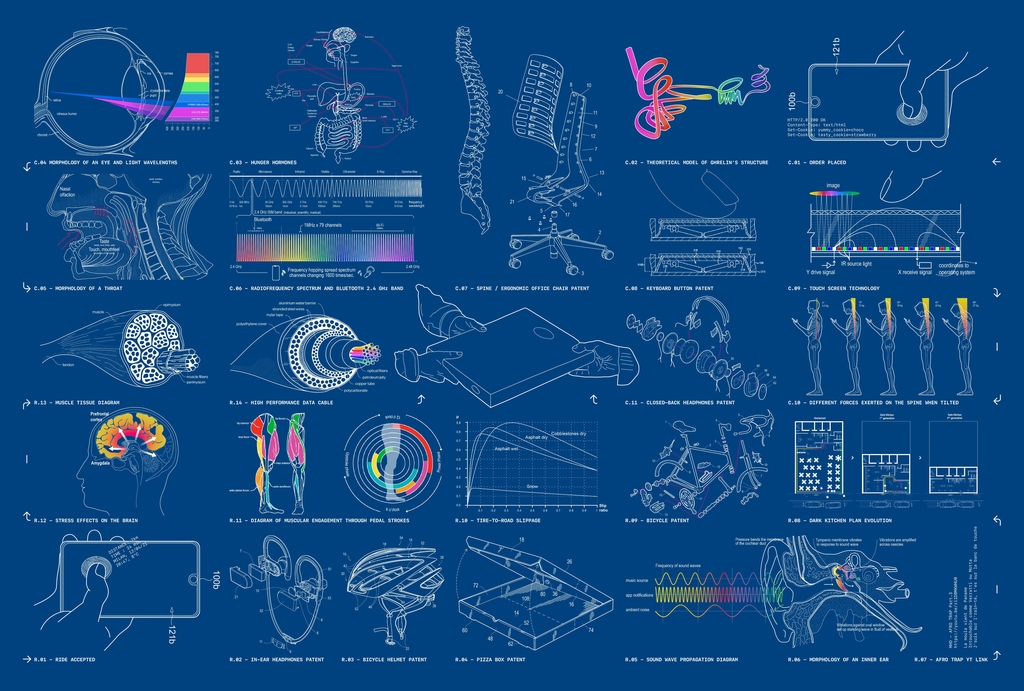
Another example is Riders Not Heroes – conceived and produced at the very start of our studio – a research-based film project exploring the conditions of delivery riders during the pandemic, addressing issues that are still very urgent. It grew out of a project we were developing for Nike as consultants and researchers. The osmosis between areas that seem very different is very much present at 2050+ and highly significant.
Which project do you consider the most ambitious, or the one that best embodies your vision? And why?
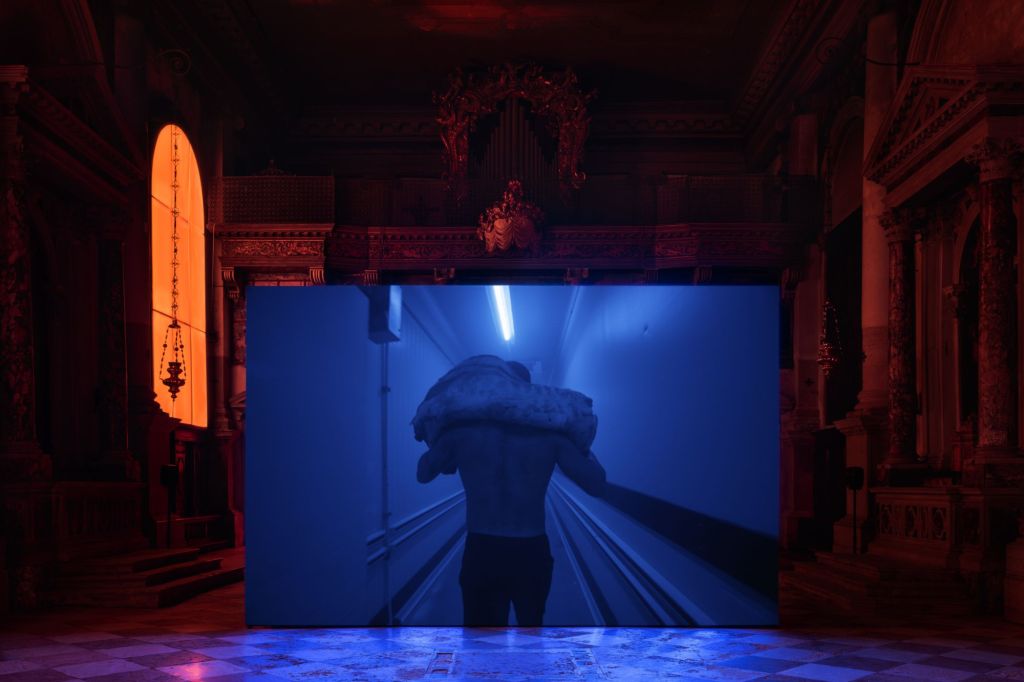
Erica Petrillo: We like to think that the perfect project still lies ahead, but there are ongoing projects we often refer back to that we feel really capture the essence of the studio. One of these is Synthetic Cultures, curated and designed for the 10th Rotterdam Biennale in 2022. It’s a research project focused on in vitro meat – a topic that is rarely addressed in museum contexts due to political, environmental, and sociological considerations. From the very beginning, curating, research, and scenography developed in parallel, coming together in the installation presented in Rotterdam. Recently, it had a second life in Vienna, with a more queer and feminist reading of the theme.
Ippolito Pestellini Laparelli: I don’t think we’ve reached a manifesto project yet, but some certainly reflect our interests. I’m still attached to Riders Not Heroes, realized through two films, which established a language and a way of looking at certain dynamics, both our relationship with technology and with otherness. Another project that embodies our approach is our collaboration with Masbedo on Diluvio Universale, a Gaetano Donizetti opera at Teatro Donizetti in Bergamo. We curated the visual dramaturgy for this unique collaboration, which was notable both for the approach to the opera itself and for Masbedo’s role as directors. The visual narrative was reshaped to convey environmental activism, in partnership with the marine conservation organization Sea Shepherd. The opera became a device to address urgent issues, creating connections across different dimensions, beginning with what happens outside the theatre.
CURATORSHIP ACCORDING TO 2050+
In your various installations, certain distinctive traits stand out: the use of modules, suspended supports, and minimalist lines and shapes. All elements that give the work a clearly defined personality. How much does architecture influence the way your projects are experienced, and what do you see as the key elements for a transversal approach to curating?
Erica Petrillo: Perhaps the only way to answer is by comparing my current experience with past ones. Experiences at MoMA and the Triennale were extremely formative, but the workflow operated in silos. Curators did their work, handed it off to exhibition designers, the installation was set up, and the process ended. In our case, the process is osmotic. Projects are shaped, even spatially, by the initial theme. I’ve come to understand much more how space is a factor to consider at every step of the curatorial process; it’s another voice in the polyphony that helps structure a narrative. The experience is perhaps 90% about space, perhaps more than content.
Ippolito Pestellini Laparelli: Scenography and exhibition design should be seen as material and spatial tools to strengthen and expand the content. This works when there’s continuous exchange from the very start of content production, through a very close dialogue. Curatorial input is first translated into the mise-en-scène, which then interacts with the artists’ works. The relationship between space and content also reflects on the architecture of the venues themselves. In the end, there is no fixed approach and each exhibition carries its own language, even in terms of exhibition design.
How do you define curating, and how can it engage in a dialogue between space, languages, and architecture?
Ippolito Pestellini Laparelli: There’s a type of visual-rational knowledge and a type of knowledge that comes through the body. What you perceive through other senses is part of the cognitive experience of an exhibition. In projects like Penumbra, Nebula or Canicula, sound, darkness, and blinding light heightened the tension that the works were trying to convey. Then there’s the material aspect. We design and produce installations and scenographies in which the material itself is never neutral. Take, for example, the brick used in de bello, made of cement for post-war reconstruction – it carries meaning on its own and already tells part of the exhibition’s content. The dialogue is constant, and the material is never inert.
Are there figures, practices, or experiences that have helped shape your vision?
Ippolito Pestellini Laparelli: There are countless influences: directors, artists, writers. It would be unfair to single out one over another. It’s true that we’re a studio, not a collective, but we value our polyphony. The operation of total synthesis is very difficult because collectives of experimental cooking, digital world enthusiasts and activists coexist, and each of us brings a bit of their own experience. There’s a diagram we often use in our lectures that represents us well: a constellation.
Erica Petrillo: I’m sure everyone in the studio could give you at least ten names each. Maybe we should just send you a photo of our library.
Maddalena Domenghini

2050+, Synthetic Cultures CH I. Photo Gaia Cambiaggi, 2022 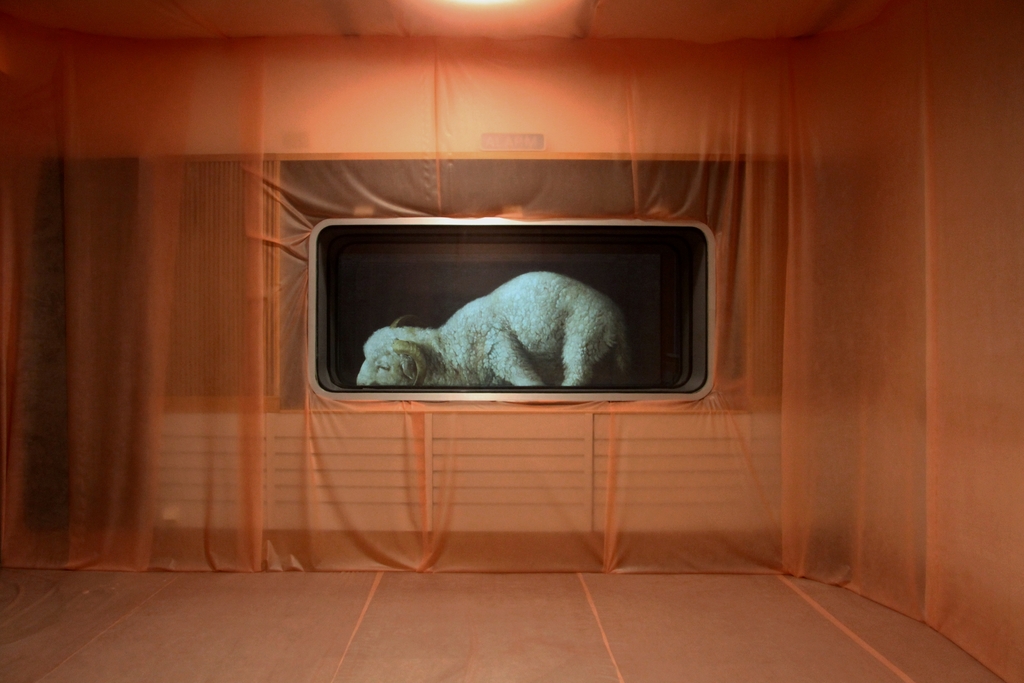
2050+, Synthethic Cultures CH2. Photo Davide Marcianesi, 2025 2050+, Riders Not Heroes. Anatomy of a Delivery, 2020 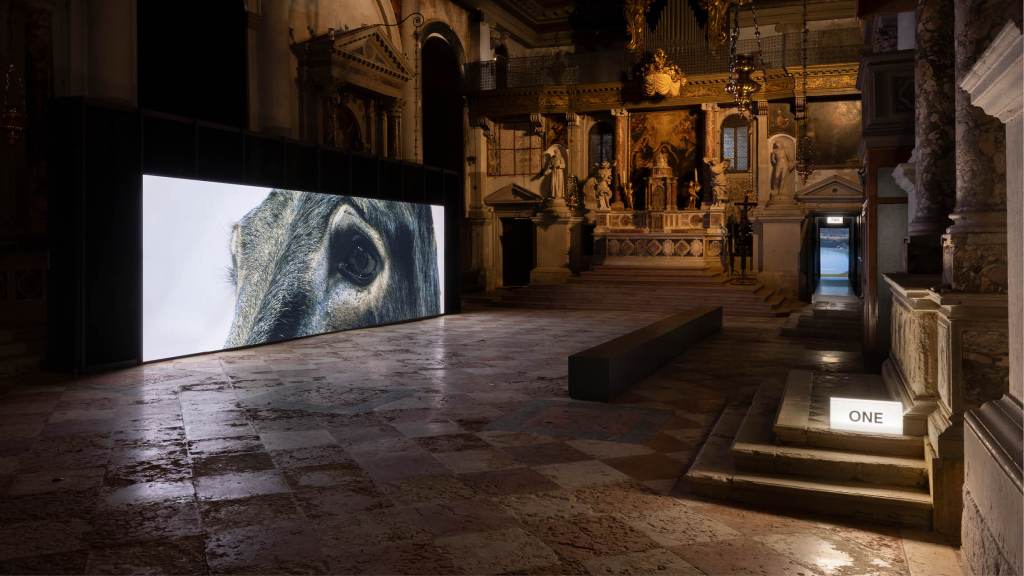
2050+, Penumbra, Complesso dell’Ospedaletto, Venice. Photo Andrea Rossetti, 2022 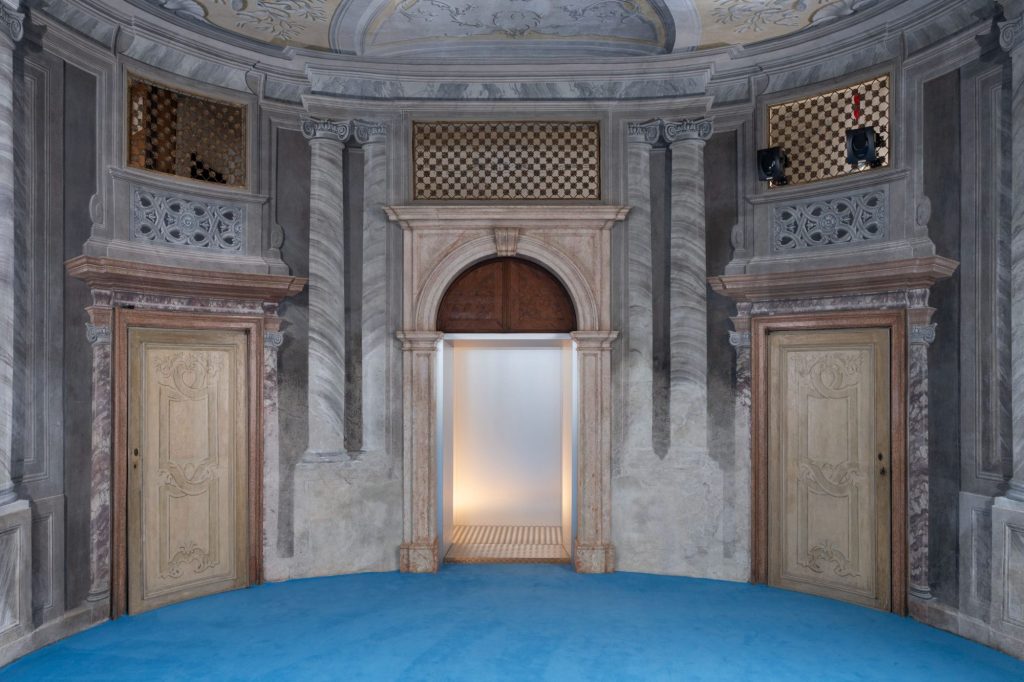
2050+, Nebula, Complesso dell’Ospedaletto, Venice. Photo Lorenzo Palmieri, 2024 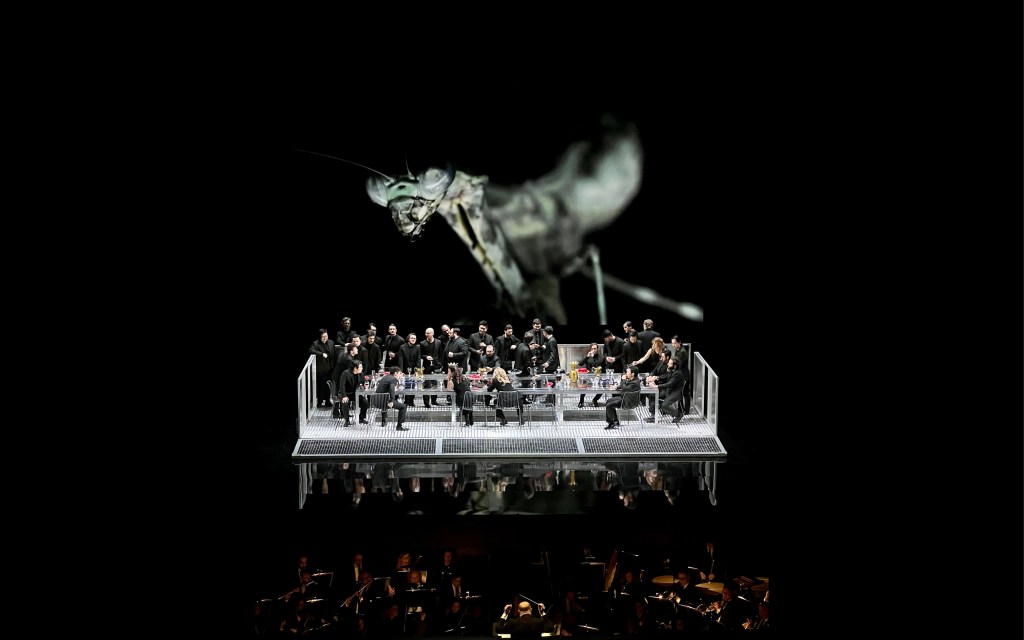
2050+, Il Diluvio Universale. Photo 2050+, 2023 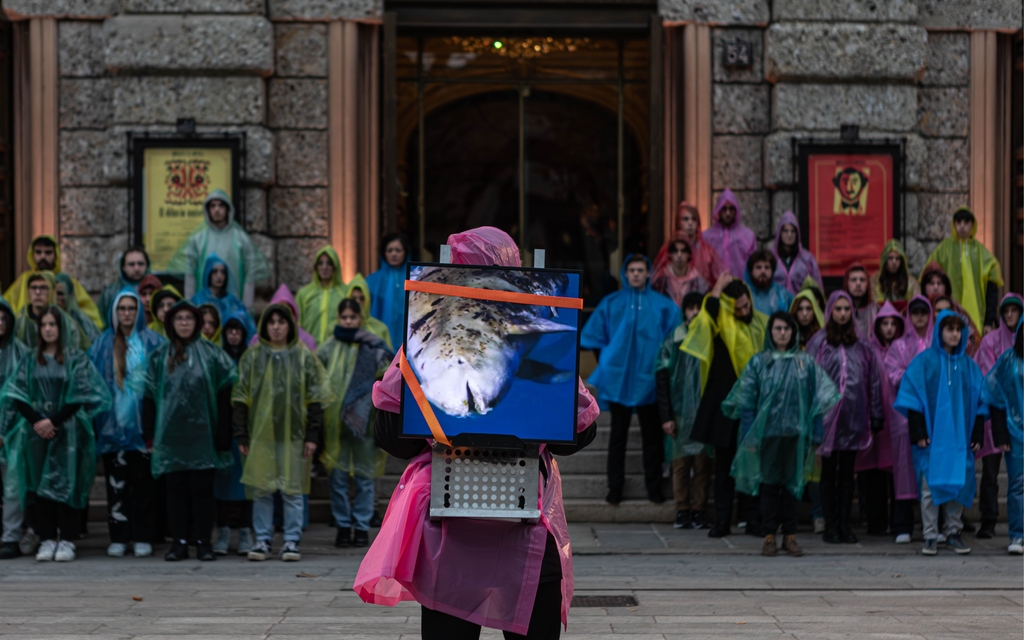
2050+, Il Diluvio Universale. Photo 2050+, 2023 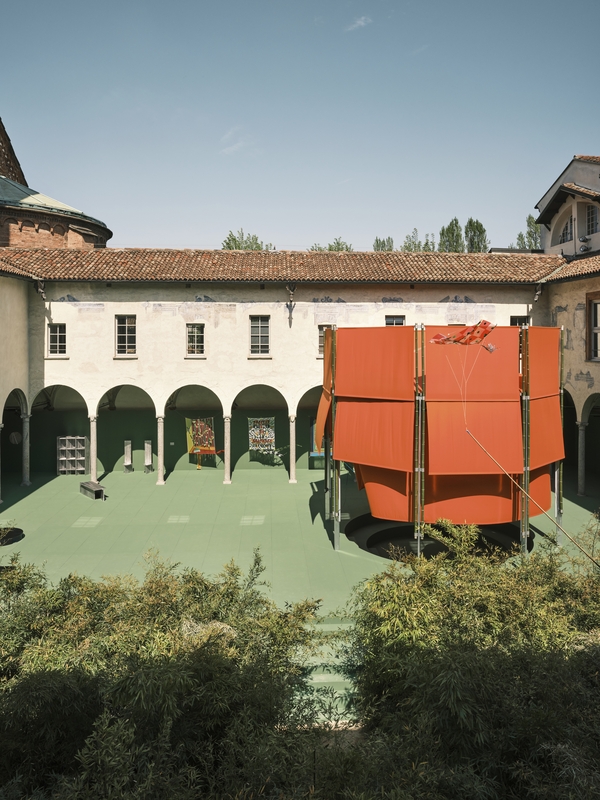
2050+, Gucci, Bamboo Encounters. Photo François Halard, 2025 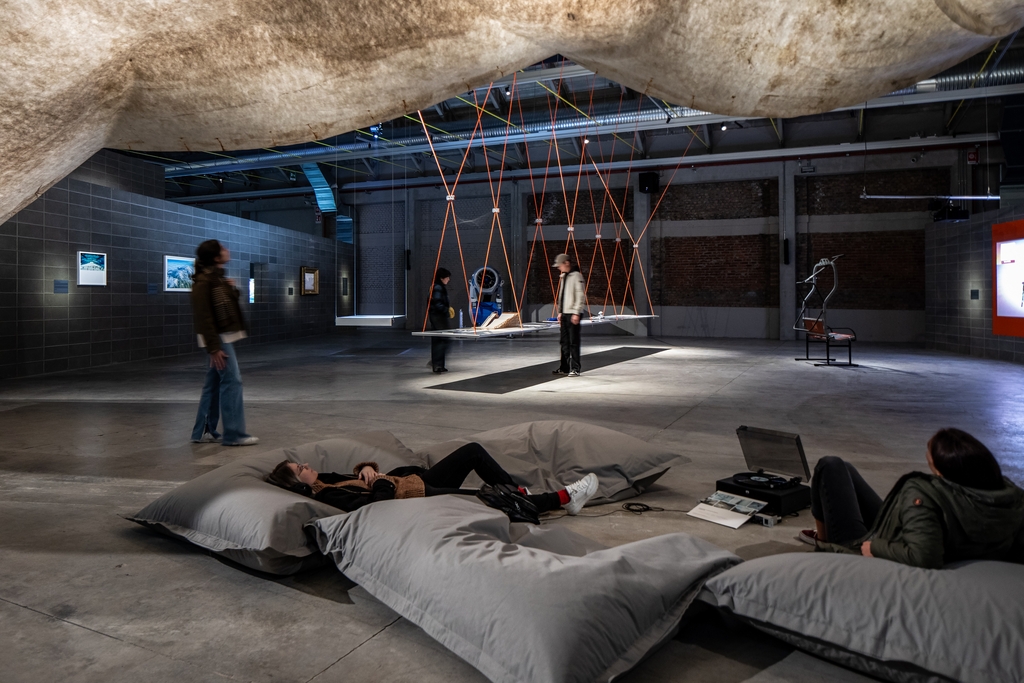
2050+, Fuoripista, gres art 671, Bergamo. Photo Diego De Pol, 2025 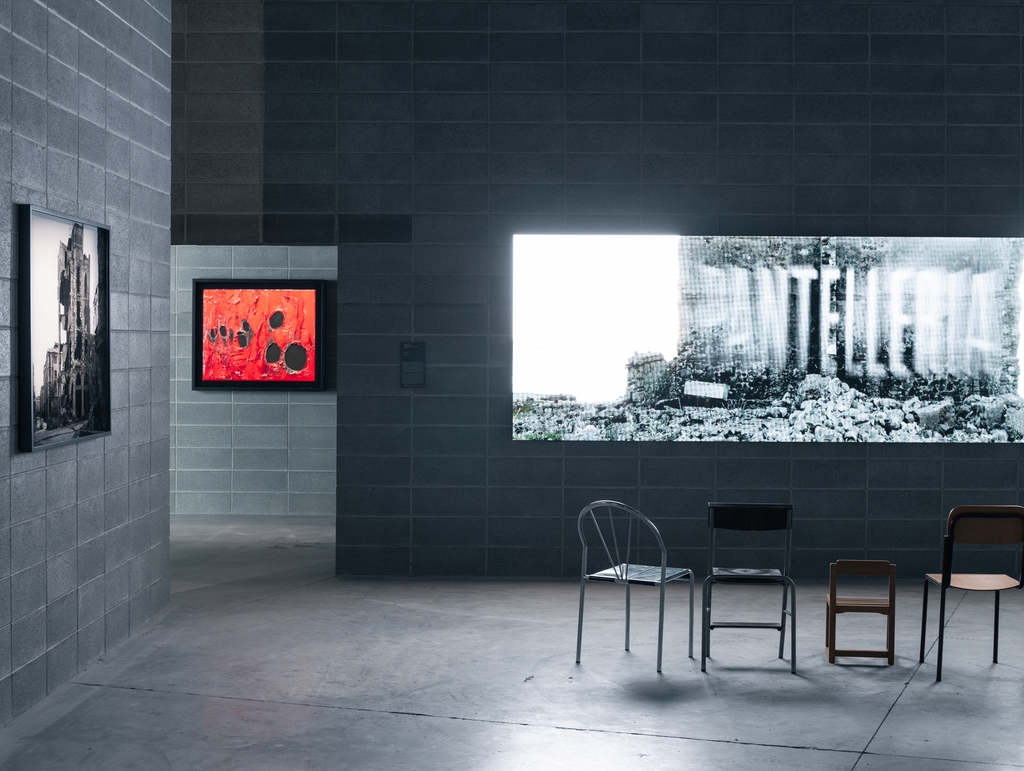
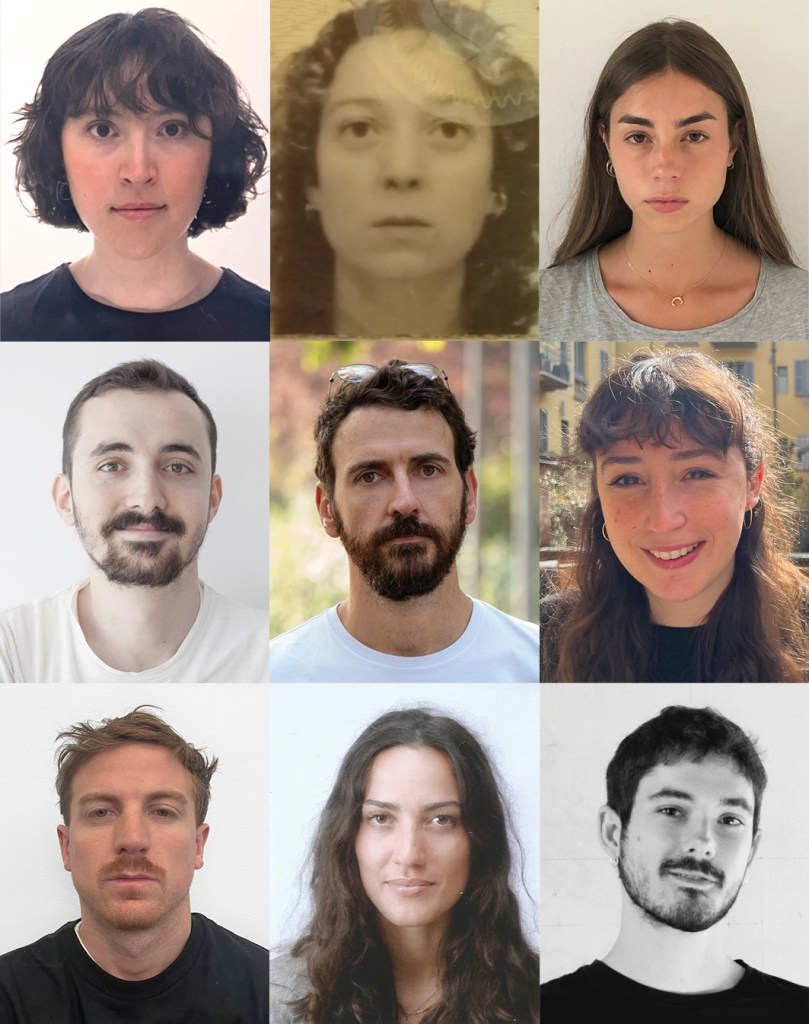
2050+, de bello, gres art 671, Bergamo. Photo Giovanni Galanello, 2025 2050+, Canicula, Complesso dell’Ospedaletto, Venice. Photo Marco Cappelletti Studio, 2026 2050+ team portraits. Courtesy 2050+

