“A foundation in a state of rêverie.” This is how Cristiana Collu, director of the Querini Stampalia Foundation in Venice, describes it. Her words paint a picture of a utopia coming to life, the story of an accessible museum programme and a dream shared with the institution she has been leading for the past year.
Appointed director of the Querini Stampalia Foundation in Venice in September 2024, Cristiana Collu shared with us her thoughts on the reorganisation of the collection, unveiled on 5 May 2026, on the new residency programme, and on the impact of ‘extraordinary’ museum initiatives in a city as out of the ordinary as Venice.
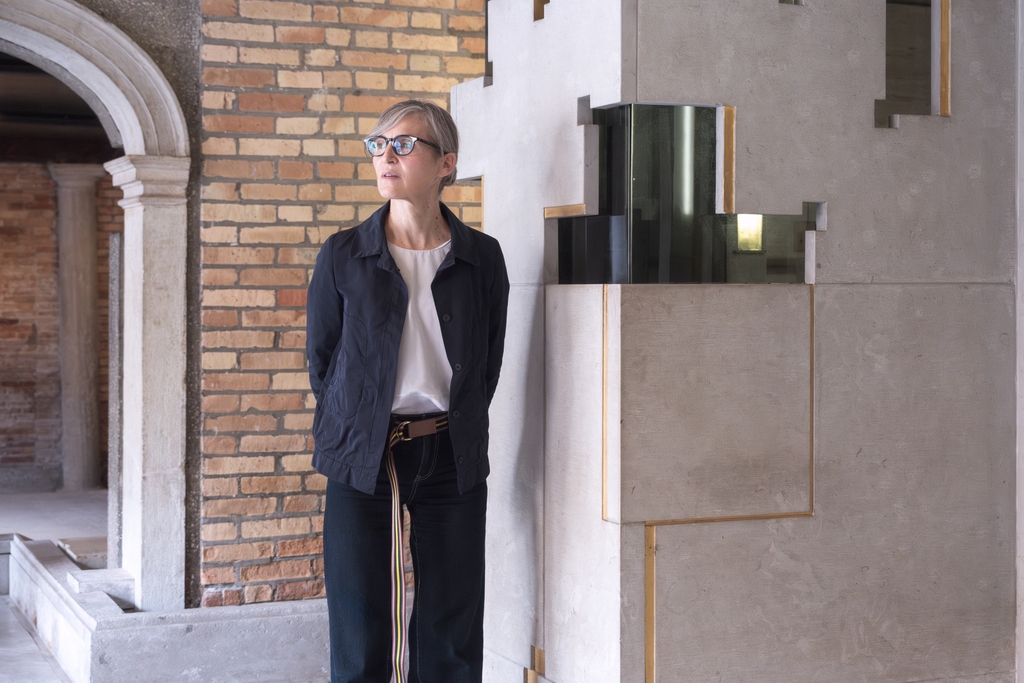
On 5 May 2025, the first exhibition under your direction opened: John Baldessari. No Stone Unturned – Conceptual Photography; and this year, again on Giovanni Querini’s birthday, The Dreamer opened. Is there a common thread linking these two exhibitions and the other exhibitions and initiatives organised over the past year?
Perhaps it is more of a method, a declaration of intent renewed every year on 5 May, like a manifesto that is rewritten to put itself to the test, but with the right touch, that of a certain irony, the kind practised by John Baldessari, and which I find exemplary, in the work Teaching a Plant the Alphabet, the centrepiece of the exhibition No Stone Unturned. A title that is not merely a note scribbled by Baldessari on a sheet of squared paper, displayed amongst the ephemera, and is far more than the banal, pragmatic, athletic, horizontal and colloquial ‘don’t give up’; it is democratic in the truest American sense: it is addressed to anyone, in any circumstance, without hierarchy; it is linked to the culture of the ‘comeback’, of the second chance, of defeat as a temporary state; it is rooted in a worldview in which failure is not an ontological condition but a narrative episode, as F. Scott Fitzgerald wrote: “There are no second acts in American lives”. Baldessari’s phrase ‘No stone unturned,’ on the other hand, is an epistemic attitude. It does not say ‘don’t give up’ nor ‘hold on;’ it says, ‘keep looking, ‘look where the eye cannot reach at first glance’. It does not encourage blind perseverance but intelligent perseverance; it is Sherlock Holmes’s method: “When you have eliminated the impossible, whatever remains, however improbable, must be the truth”, exalted by Baldessari’s ironic and irreverent lightness. John is a free seeker, like Giovanni Querini, a Sisyphus sui generis, a Diogenes of our time: the lantern is his curious gaze, the staff his never mocking irony. To stop searching is to contribute to the breakdown of social bonds. Searching, on the other hand, is always a constructive act, a radical gesture that does not succumb to disillusionment; indeed, as John knew better than anyone, it turns the tables on it. All this is linked to the 2025 theme ‘Wonder Booster’, wonder as a propellant, as the energy that propels the gaze beyond the predictable, beyond the already seen, beyond the already known. In ‘Dreams Begin Responsibilities’, this year’s theme embodies all the tension between imagination and desire, between vision and care. A dream is not escapism; it is the highest form of intentionality. Bachelard calls it rêverie, not the nocturnal dream, passive and unconscious, but daytime rêverie: an active, vigilant, intentional consciousness, a ‘function of unreality’ that transcends the real only to return to it with greater force. The dream is an imagination of the future, tension, desire projected onto the world, the ability to see what does not yet exist and to work so that it may exist. And this is where the question of inheritance arises: as Derrida taught us, it is not something one possesses, but something one inhabits, questions and transforms; and the heir is never merely a custodian, but someone who takes a stand, called upon to choose what to keep, what to transform, what to let go of, whilst assuming the responsibility of creating in turn. We are on a journey in the company of the arts; it is hard to get bored, easy to be amazed, and we retain a sense of wonder without any established norms to imitate or rhetorical traditions to fall back on. The Querini Stampalia is a foundation in a state of rêverie: alert, active, curious, and capable of imagining without losing touch with reality.
The reorganisation of the collection is both meticulous and daring, thanks in part to the dialogue with contemporary art, which is explored through various narrative and exhibition devices. Considering the ‘theatrical’ approach taken in the reconstruction of Pietro Longhi’s work, or the ‘negative’ display in the room featuring Rivalta’s sculpted horse, why did you choose these narrative approaches to display the collection?
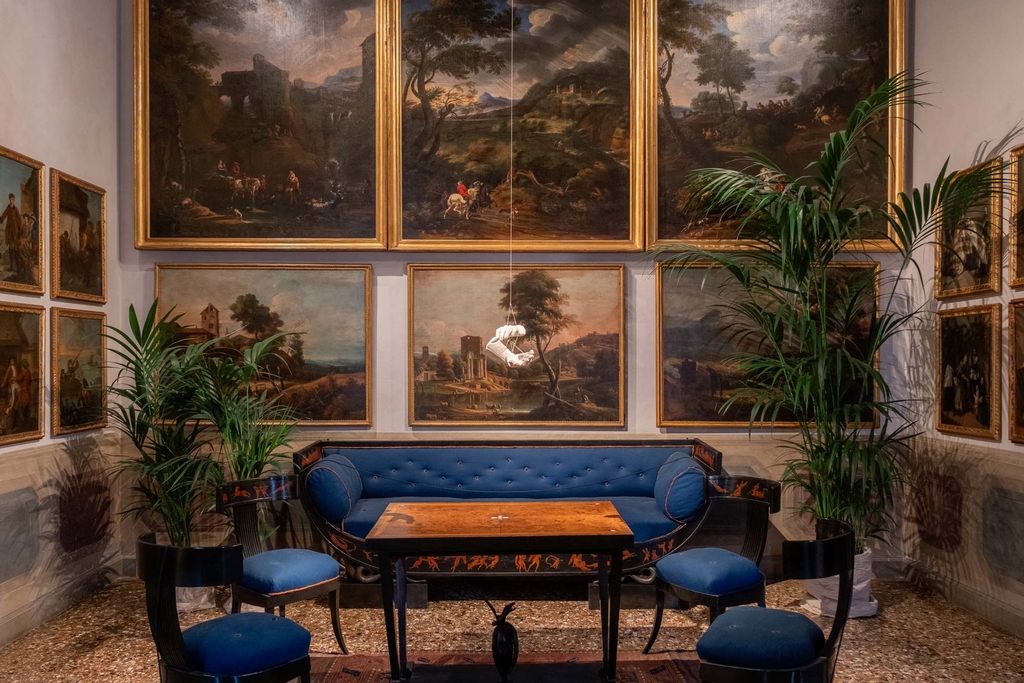
The Dreamer is a re-staging of the Querini collection as if it were a temporary exhibition, an approach I have used on previous occasions (La Magnifica Ossessione at the Mart, Time Is Out Of Joint and Panorama IXX at the National Gallery of Modern and Contemporary Art) and which I find particularly fruitful and interesting. The exhibition is not presented as a definitive arrangement, but as one of many possible ones, and it derives from a direct engagement with the layered complexity of the house-museum, finding a precise visual and narrative framework in the cinematic imagery of Luchino Visconti’s Senso. As in a film, the rooms are conceived as sequences and sets to be walked through, deliberately made environments in which time expands, overlaps and becomes charged with emotional tension. Here, the visitor is part of a narrative constructed through images, atmosphere and resonance: the history of the Querini family engages with a more unstable, dreamlike dimension, where past and present intermingle. The exhibition unfolds across eighteen rooms. Each refers to an evocative concept that guides the viewer’s interpretation and experience: The Art of Dreaming, The Portrait, ThePoetry of Steel, Time, Fiction, Silence, Care, Memory, War, The Banquet, Government, Politics, The Dreamer, Intimacy, Beauty, Life, The Fleet, Motherhood. These titles do not function as captions, but as elements of distortion, thresholds that open different perspectives on the permanent collection, creating resonances between works, spaces, and time. The galleries thus become chapters of a single fragmented narrative, in which history does not proceed linearly but through layers, references and unexpected connections, offering the visitor an experience that is both perceptual and imaginative. Chronological history accelerates, rendering the past, present and future anachronistic. The reference to cinema, and in particular to film editing, is not ornamental but methodological, based on Eisenstein’s teaching: when you juxtapose two different images, you do not get the sum of the two, but a third entity of meaning. Malraux speaks of this in relation to his imaginary museum, which, by bringing together works of art that differ in era, place of origin and formal characteristics, liberates art from its historical context. What matters is not the specific value of each individual work, but rather the possibility of discovering, within the entire artistic output of every time and place, the common and transcendent capacity to question the world. The possibility of an exhibition narrative that is neither chronological nor encyclopaedic can be constructed as if it were a film. Each room is a set or a stage. Each juxtaposition is an edit. The visitor is not the spectator, but the director. In the case of Pietro Longhi, the artwork is a gaze that is already cinema, already a scene, already a film shot, already direction: a translation into space of the painting as a window onto the world and of the painting as a construction of that world. The ‘negative’ exhibition in the room with Davide Rivalta’s lion, on the other hand, works on the opposite yet complementary principle: an unexpected, unsettling, dreamlike presence that activates a system of relationships within the non-linear time of art history ‒ layered and dense ‒ which writes the story or narrative through images that shine in constellations of meaning that also resonate within our own biography, awareness and knowledge.
THE QUERINI STAMPALIA FOUNDATION ACCORDING TO CRISTIANA COLLU
On 5 May 2026, the exhibition opened by Nigel Cooke, the Querini Stampalia Foundation’s first artist in residence. What made you decide to launch a residency programme? Will there be further artist residencies in the coming years, or will this be a one-off?
Nigel Cooke’s residency marks the start of a cycle that we wish to continue and adapt in various forms, an open programme capable of adapting to artists and their artistic language: from painting to the visual arts and the full spectrum of contemporary production. This age-old model tells us something fundamental: the most forward-thinking institutions have always understood that art needs time and artists. In Letters to a Young Poet, Rilke puts it with a precision that has lost none of its original force: “Here, there is no need to compete with time; here, a year is of no importance, and ten years are nothing; to be an artist means: no counting, no calculating; to mature like the tree, which does not force its sap and stands firm in the storms of spring, confident, without the fear that summer, in the end, might fail to arrive”. The residency is an attempt to create the conditions for this maturation, to remove the artist from pressure and grant them respite. It is a dialogue, a moment of experimentation and research, of forging connections, and in Nigel Cooke’s case, this dialogue has been particularly fruitful. The space that later became an exhibition venue was first his studio; his works were created there, in dialogue with this light, with this city and its history. Venice has a long history of artists who have lived here. Turner returned every year to capture a light that could not be found elsewhere. Brodskij spent his winters here; in Venice, Nietzsche underwent an intellectual metamorphosis that he himself recognised as fundamental. And many others, and we wish to be part of this tradition by giving time and space ‘to look forward to summer’.
The series of talks About: Talks / Reframing Culture placed architecture at the centre, viewing it as a cosmopolitan practice and – as you yourself put it – the ‘infrastructure of the sensible’, featuring, amongst others, Beatrice Leanza, Ippolito Pestellini Laparelli, Formafantasma, Izaskun Chinchilla and David Gianotten of OMA. How were the themes of the talks structured? Do you think any useful ideas emerged for the development of artistic and architectural practice?
At the Querini, architecture is the very subject of the conversation. A building constructed in the early 16th century, which has since undergone four major architectural interventions: by Carlo Scarpa, Valeriano Pastor, Mario Botta and Michele De Lucchi. The Foundation is not merely the venue where the series of talks takes place. It is the talk itself. It is the physical embodiment of what Reframing Culture has sought to explore through the testimonies of those who practise architecture—aware of their role in forging connections between time and space, between memory and the present, between those who have inhabited a place and those who will inhabit it, and between the world as it was, as it is, and as it will be. An architecture that is also the ‘infrastructure of the sensible’, the condition of possibility for experience. The Golden Lion for Lifetime Achievement awarded by the Architecture Biennale to Donna Haraway celebrates architecture as an open work, capable of constructing ecologies and developing intelligences of survival: everything Haraway has written over the past decades, from A Cyborg Manifesto to Staying with the Trouble, permeates the work of architects, designers and urban planners in more or less explicit ways. Haraway’s insistence on staying with the problem, on not evading the question—remaining within the sprawling thought that grasps complex relationships rather than attempting to simplify them, can be read as ethics of architecture. Living in deeply troubled times means surviving amidst discomfort: coexisting with ruins is a radical alternative to that extractivist logic which builds by destroying, develops by erasing, and plans for the future as if the past had no right to endure, as if every new construction first required a clean slate, an erasure, a silence. Architecture does not merely build from scratch: it repairs, adds, recycles, and reinterprets. And the oldest and most intelligent model of this practice is the architecture of reuse, that medieval tradition, far from being poor, which took fragments of the ancient world and reused them in new contexts: columns from pagan temples becoming naves of Christian churches, capitals of one order within another, marble from one empire within the walls of a new city. Recycling suggests that the material has a longer life than the function for which it was produced, and that the form survives the original meaning and can generate a new one without erasing the previous. It was ahead of its time and a very contemporary ecological concept. Ultimately, architecture that endures is not that which resists the ravages of time, but that which allows time to pass through it. The architecture added and juxtaposed of the Querini Stampalia carries with it a layered memory; time is always an interlocutor.
The Querini Stampalia Foundation places great emphasis on accessibility, specifically intersectional accessibility. Examples of this include the ALLiS. Design for All project, developed in collaboration with La Sapienza University of Rome, Mercatorum University, Federico II University of Naples and IUAV University of Venice, and the projects for expectant mothers, parents and newborns in collaboration with ULLS 3 and S-cambio, with the participation of Artismo. Do you believe that this can and should be an approach adopted by all museums?
“Intersectional accessibility” is a radical redefinition of the very concept of accessibility. The term intersectionality was coined in 1989 by the legal scholar and activist Kimberlé Crenshaw, and her fundamental insight is as simple as it is revolutionary: discrimination and forms of exclusion never operate in isolation, but are intertwined and overlap: gender, race, class, disability, age, sexual orientation and nationality produce forms of marginalisation that cannot be understood by looking at just one of these categories at a time. The metaphor Crenshaw uses is that of an intersection: just as at a junction,traffic flows in all directions and accidents can be the result of several vehicles colliding, so too can discrimination not be understood by considering a single category in isolation, but only by viewing each of them as interconnected. Applied to the museum, this theory has specific and awkward implications. This means that accessibility is not merely a technical issue, a ramp, a lift, a tactile paving path, but a structural issue concerning who can enter, who feels represented, who finds something in this space that relates to them, and who has the right and the practical means to participate in cultural life. The discussion on social inclusion no longer concerns only physical access, but broader issues of representation, respect, power-sharing and social justice. Richard Sandell, one of the topic’s most authoritative theorists, posed a specific question: to what extent do museums or cultural institutions shape the normative understanding of difference, acceptability and tolerance? True accessibility must be addressed through design that works for everyone, and the fundamental insight of Design for All is that what is designed for those with specific needs: the person in a wheelchair, the mother with a pushchair, the person with a cognitive disability, the elderly person, improves the experience for everyone. The difference between accessibility as compliance and accessibility as care is essential here. I believe that all institutions should adopt these practices, but on one non-negotiable condition: that they do so authentically, rooted in the real needs of their community.
CRISTIANA COLLU’S POINT OF VIEW
Since your arrival at the Querini Stampalia Foundation, the museum’s image has undergone a complete rebranding, which has also been welcomed on social media. To what extent has this success influenced public engagement?
Let’s start with a necessary distinction, because the word ‘rebranding’ is one of the most overused terms in contemporary language. In its most superficial sense, it refers to a change of logo, colour palette or font, a ‘restyling.’ In a deeper sense, it refers to something radically different: the redefinition of an organisation’s identity in terms of how it presents itself to the world, the language it uses to tell its story, and the promise it makes to its audience. The brand is not the logo; it concerns the experience and the vision. The difference between the two approaches is fundamental. A ‘restyling’ changes the surface without touching the structure. Authentic ‘rebranding’, on the other hand, is a metamorphosis: the construction of a new relationship between the institution and the world, which, to be credible, must start from within and generate institutional credibility. The new visual identity was created by the graphic design studio Designwork and is based on two new original typefaces and a clean, recognisable aesthetic. The visual grammar is the result of a decision about what the Foundation wants to be and communicate. The billboard campaign in Venetian, Davide Rivalta’s installation of the Lions in the Square and Martí Guixé’s Q Spot were the application of these declarations of intent, followed by the Giovanni Bookshop, Cafè Mariona and the cultural programme: in essence, the construction of an ecosystem in which every single element or action contributes to defining the institution’s identity and purpose.
Compared to other institutions you have led, what are the peculiarities of a historic Foundation in a city like Venice?
Venice resists definition. Whenever anyone tries to sum it up in a single sentence, it slips away like water. Guy de Maupassant wondered: “Is there a city more revered, more celebrated, more serenaded by poets, more coveted by lovers? Is there a name in human language that has made people dream more than this?” And Nietzsche, who was certainly no sentimental: “When I seek another word for ‘music’, I never find any other word than Venice”. Aldo Manuzio: “A place more like a whole world than a city”. It is from this excess, from this luxury, that we must start to understand what it means to run an institution here. In Venice, memory is a living archive, a document, a monument, a text, and an image. Iosif Brodskij had seen it: “The vertical lines of Venetian façades are the most beautiful mark that time ‒ or rather, water ‒ has left on the mainland, anywhere in the world. It is as though space, more aware here than anywhere else of its own inferiority to time, were to respond to it with the one quality that time does not possess: beauty”. And Nietzsche, again: “A hundred profound solitudes together form the city of Venice; this is its enchantment. An image for the men of the future”. This is where Giovanni Querini Stampalia comes in, our hero, my hero. He was born on 5 May 1799, the last descendant of one of the oldest families of the Venetian aristocracy. He lived through the 19th century in its entirety, what Eric Hobsbawm called the long century: an era that began with the French Revolution of 1789 and ended on the eve of the World War I in 1914, more than 120 years in which everything we call modernity, science, industry, democracy, nationalism, capitalism, socialism, took shape, clashed, and exploded. Giovanni Querini was a child of that era: he embodied its contradictions, its passions, its marvellous openness to the future and the dark omens of what was soon to come. He realised that the world had changed and, whilst not renouncing his noble origins, he distanced himself from them. He stubbornly refused to marry. He was a man free to choose what to do with his inheritance, his life and his time. And the choices he made were radical. Driven by his passion for science, he set up a laboratory for chemical and physical experiments at his palace and conducted the city’s first experiments in public electric lighting. He was a patron of the arts: he donated modern equipment for diagnostics and treatment to the hospital; he supported the Veneto Institute of Sciences, Letters and Arts and the Ateneo Veneto, of which he was president. In 1861, he brought to Venice a French machine for treating the sick. In 1868, he bequeathed an anatomical collection to the Veneto Institute to further the dissemination of medical knowledge. He established prizes for agricultural research. He was a man of his time: curious, versatile, open-minded, and convinced that knowledge is a common good. In his will of 11 December 1868, he bequeathed his estate to the newly established Querini Stampalia Foundation, ‘designed to promote the pursuit of good studies and useful disciplines’, so that the library (which stays open late), the gallery, the medal collection and the works of art in the palace in San Zaccaria might become available for public use. An extraordinarily modern vision, almost a manifesto of cultural democracy ahead of its time. In 1869, Giovanni Querini’s new life began because the library, the gallery, the palace, everything he had loved and cherished, belonged from that moment on to the city. He established that the Foundation is not a static archive or a refuge from history, but a space capable of bringing together Venice and the world, tradition and the contemporary, the generations that pass and those to come. This is what sets the Querini apart from any other institution I have led. You do not merely manage a legacy; you live in constant dialogue with Giovanni. Every decision is, to some extent, a response to his generous and far-sighted gesture, to his dream for the future.
THE ART SYSTEM AND THE FUTURE
How would you define the art system today?
To define is to draw a boundary, and this is precisely the act that the art system continually does to itself, with consequences that are anything but innocent. The word ‘system’ carries with it a promise of coherence, functionality, and stability that is illusory: relationships are unstable, and the codes that present themselves as universal have never been so. A hyper-connected yet simultaneously fragmented system, more reactive than reflective, which produces visibility without duration but which, precisely for this reason, gives rise within itself to practices that work against the logic of saturation. If I must use two further adjectives, I would choose ‘extractivist’ and ‘amnesic,’ knowing that they are partial; indeed, I use them precisely for this reason, because they create friction, because they are only partly true. The contemporary art system attempts to diversify but nevertheless functions as a network of distributed and mutually dependent validation: artists, galleries, fairs, collectors, critics, curators, museums, foundations, and biennials. Each of these nodes needs the others to produce value. Value does not pre-exist the system: it is the system that decrees and produces it. This captures precisely what Bourdieu conceptualised as symbolic capital and what Steyerl has described in more radical terms: a system of value organised through decentralised networks that operates asynchronously. The art world survives because of an economy of negation of the economy. The artist who works ‘against the system’ commands a remarkably high value on the symbolic market of radicalism, which is then converted into economic value. Anti-system is a position within the system. It means that the system can contain criticism without being destabilised by it; indeed, it draws strength from criticism, which makes it more complex, richer, and harder to attack. Criticism is the fuel of legitimisation. In short, the system cannot reform itself using its own tools, not because it is immobile, but because its tools transform every attempt at reform into an element of the system itself. Yet there is a qualitative difference between the possible positions within the system. Not all nodes in the network perform the same function, not all institutions have the same structure, not all practices produce the same effects. But those who act consciously within the system, knowing its structure, refusing to confuse the action with the result, keeping open the question of what remains irreducible to that logic, can produce, in that space of friction, something that the system cannot fully name, not an alternative but a difference and, better still, a defection.
What are your next goals? Have you achieved all the ones you set at the start of your term?
There is a distinction that Mariana Mazzucato has brought to the forefront of contemporary economic debate: that between ‘value extraction’ and ‘value creation.’ Extractive management optimises what already exists, redistributes value that has already been produced, and measures results over the short term. Creative management creates the conditions to generate value over the long term, investing in infrastructure, knowledge and institutional capacity assets that are not immediately visible, but which endure. I chose the second path. The programme’s goals were clear, measurable, and ambitious. We, and I use the plural meaning the team, have achieved and exceeded them; this was by no means a foregone conclusion in such a brief time. But what I believe is most interesting is the management framework I have built to make them possible. I approached my intervention on the building in these terms: not merely as restoration or functional adaptation, but as a new and progressive way of inhabiting a building that possessed, and still possesses, layers of meaning yet to be explored. We worked on the ground floor and third floor in the first year, so the immediate focus was on reception, services, exhibition space, and on the osmotic way in which the city enters and the foundation reaches outwards. Carlo Scarpa docet. This year it was the turn of the second floor with The Dreamer, the reorganisation of the collection, and the first floor with the start of the library renovation, which is scheduled to begin in the coming months. Next year we will focus on the fourth floor and on completing the first. A stratigraphic logic, based on chiasmus rather than a linear sequence, in constant negotiation between what the architecture of the Querini was, is, and might be. I have placed Giovanni Querini at the centre, his story, and his vision as an open question, not merely to commemorate, but to trigger in the present what remained pending in the past. The Foundation’s collection is not an inventory: it is a system of relationships ready to be reinterpreted and to sing. Our library is our schedule, the infinite infrastructure of possibilities. My approach, and not just my way of practising museology, is out of joint, off the hinges, not at all orthogonal or orthodox, like almost everything in Venice. I am interested in real transformations, the radical aspect of things; I am already living the dream, that of things we imagine and which then become reality. The Querini Stampalia is ready to face the next 150 years above sea level. This is not a metaphor: it is reality. High tide is not merely a physical challenge for Venice and the rest of the world. It is an epistemological challenge: it forces us to think differently about duration, to build on foundations that will hold firm in spite of ‒ and through ‒ the lopsided precariousness of a city for which it is difficult to find superlative adjectives that do it justice.
Rebecca Canavesi
The Querini Stampalia Foundation in Venice
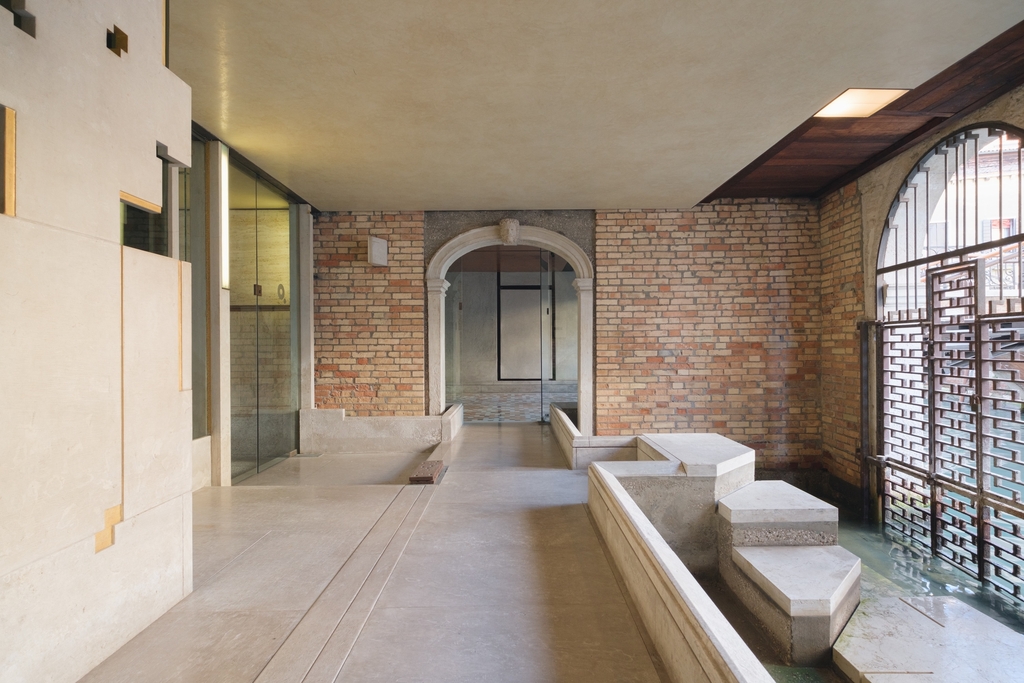
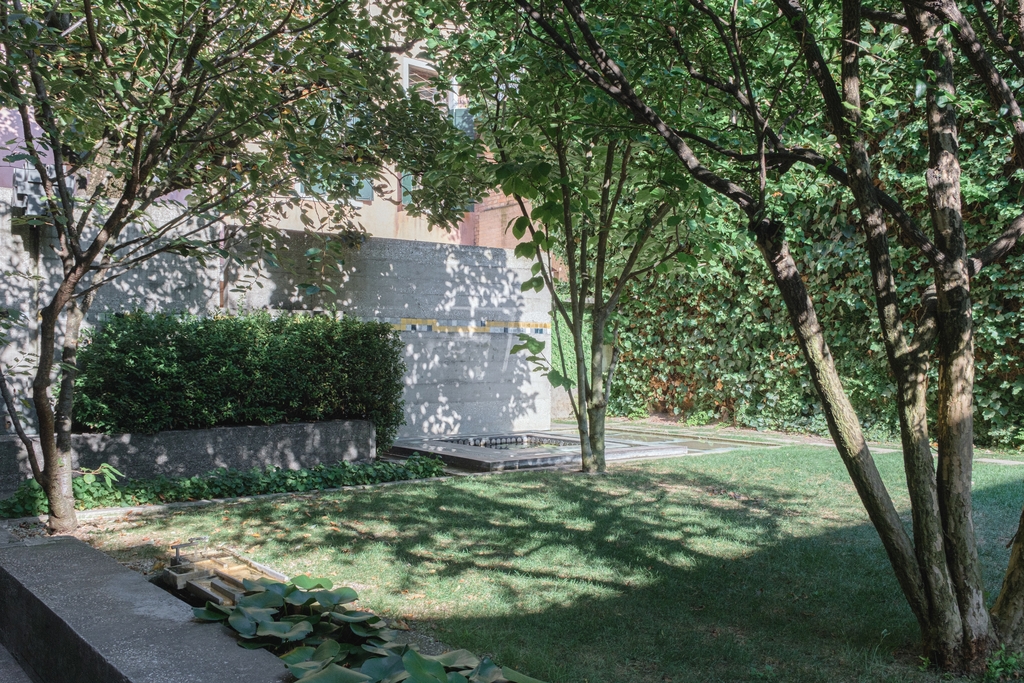
Area Carlo Scarpa, Fondazione Querini Stampalia, Venice. Photo Adriano Mura. Courtesy: Fondazione Querini Stampalia, Venice Carlo Scarpa’s Garden, Fondazione Querini Stampalia, Venice. Photo Adriano Mura. Courtesy: Fondazione Querini Stampalia, Venice 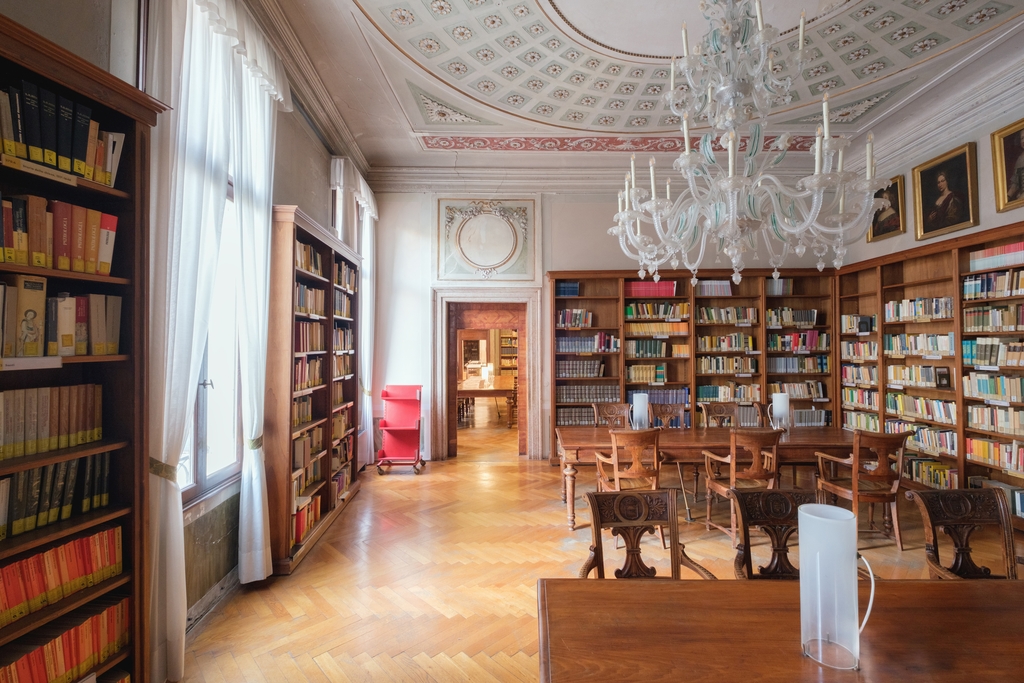
Library, Fondazione Querini Stampalia, Venice. Photo Adriano Mura. Courtesy: Fondazione Querini Stampalia, Venice 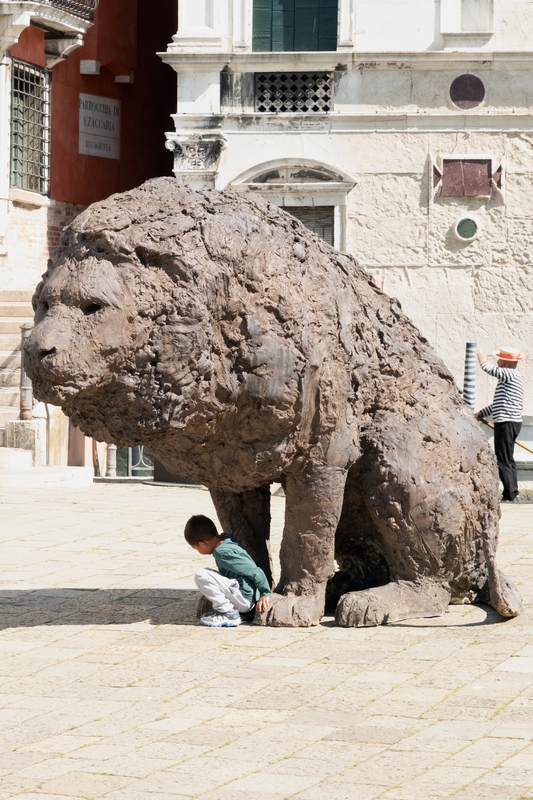
Davide Rivalta, Leoni in campo, Venice. Photo Adriano Mura. Courtesy: Fondazione Querini Stampalia, Venice 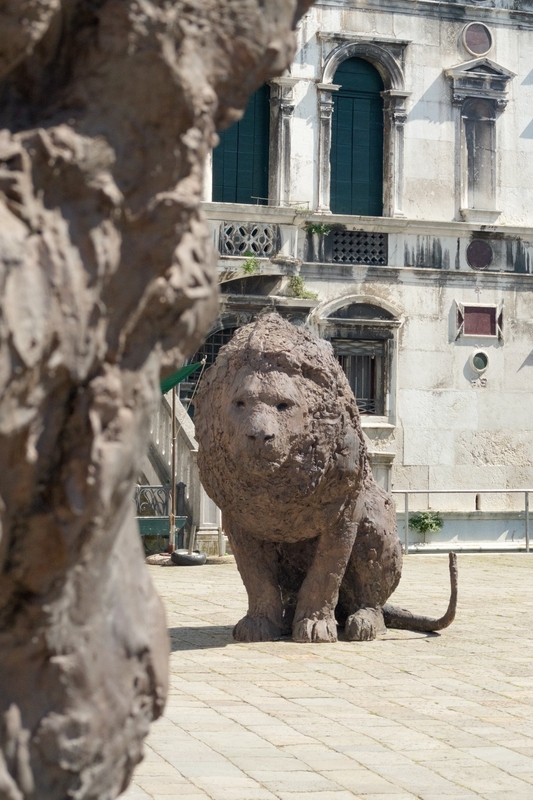
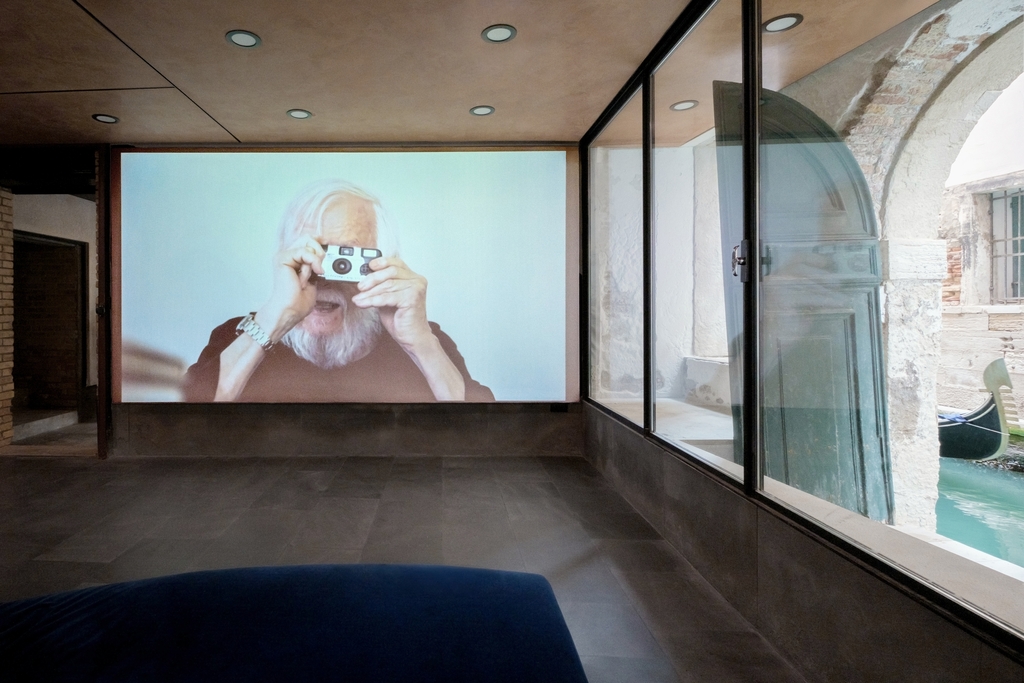
Davide Rivalta, Leoni in campo, Venice. Photo Adriano Mura. Courtesy: Fondazione Querini Stampalia, Venice John Baldessari. No Stone Unturned – Conceptual Photography. A project by Cristiana Collu in collaboration with the Estate of John Baldessari, John Baldessari Family Foundation and Sprüth Magers. Photo credits: Adriano Mura. Courtesy: Fondazione Querini Stampalia, Venice 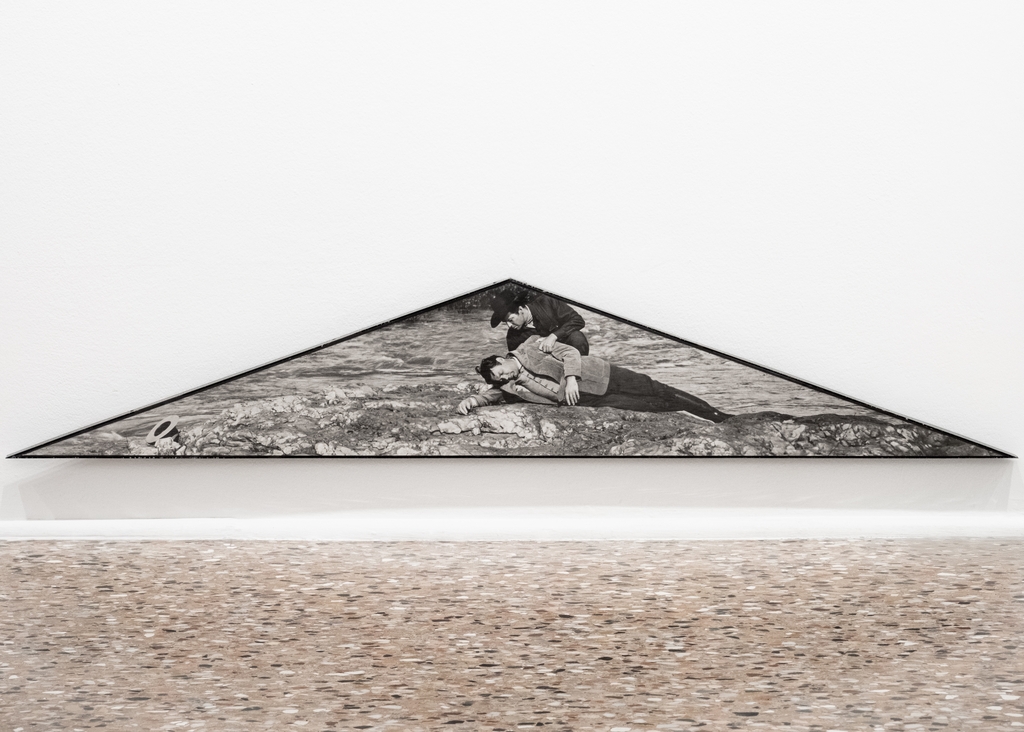
John Baldessari. No Stone Unturned – Conceptual Photography. A project by Cristiana Collu in collaboration with the Estate of John Baldessari, John Baldessari Family Foundation and Sprüth Magers. Photo credits: Adriano Mura. Courtesy: Fondazione Querini Stampalia, Venice The Dreamer, exhibition view, Fondazione Querini Stampalia, Venice 2026. The Time room, Sogno infrangibile, 2013, by Daniela De Lorenzo. Photo Adriano Mura. Courtesy: Fondazione Querini Stampalia, Venice 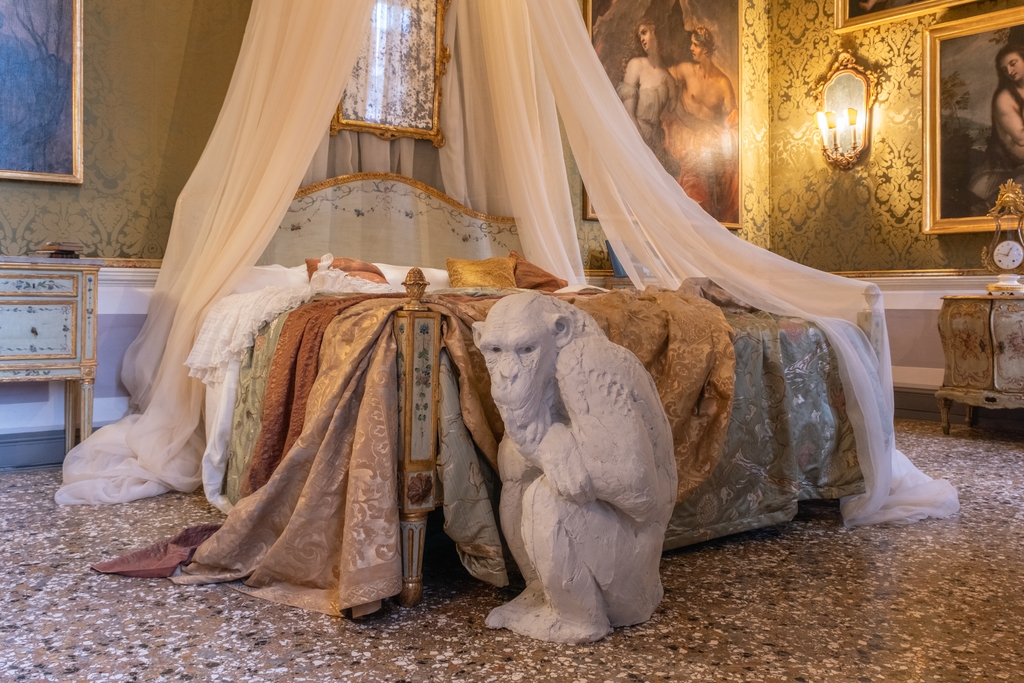
The Dreamer, exhibition view, Fondazione Querini Stampalia, Venice 2026. Intimacy room, detail of the work Scimpanzé, 2026, by Davide Rivalta. Photo Adriano Mura. Courtesy: Fondazione Querini Stampalia, Venice Cristiana Collu. Photo Adriano Mura

