Curated by Charlotte Laubard, the exhibition on the island of Giudecca unfolds within a private home where the artist will carry out her practice and her life without distinction between the time of one and the other. The house, entirely clad in milky white fabric, will be manipulated and painted by Dora Fiammetta Perini, who invites visitors to interact with this space in continuous transformation.
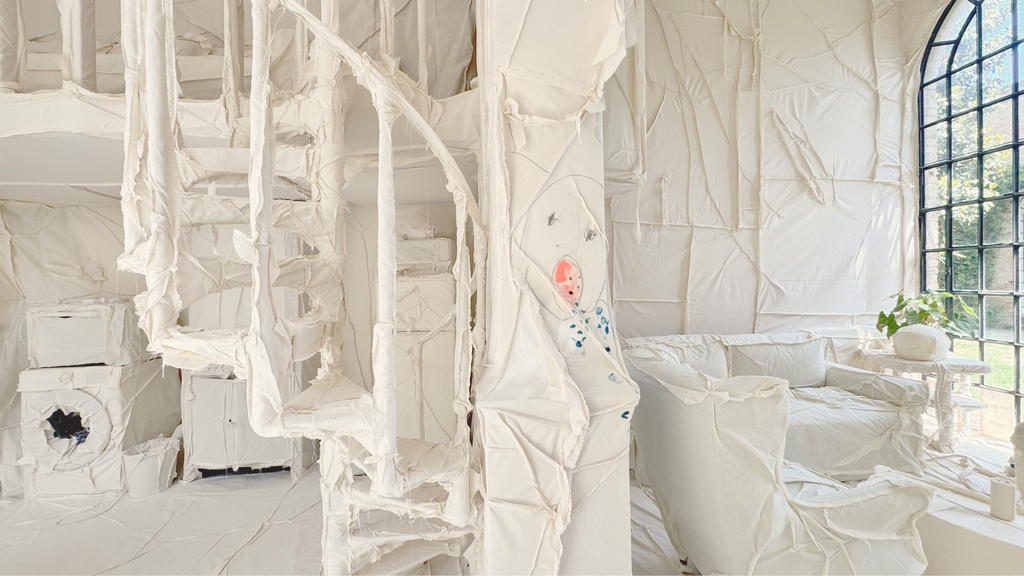
CA’DORA is the exhibition ‒ the house, the body ‒ by Dora Fiammetta Perini (New York, 1995), curated by Charlotte Laubard in the heart of the Giudecca island and open to the public until 22 November 2026. After completing a Master’s degree in Contemporary Art Practice at the Royal College of Art in 2023 and a residency at the Fondazione Bevilacqua La Masa in 2024, Perini leaves her exhibition spaces behind and takes refuge in a private home with soaring windows, through which, for now at least, one can glimpse only milky-white fabric and a few faint, bluish painted figures. Laubard describes the project as a domestic Gesamtkunstwerk, in which the intimate becomes universal, and the radical subtraction of the space’s identity corresponds to a hyper-extension of recognition between human and object. The house is personified through an ongoing and unexpected series of pictorial and manipulative interventions, carried out by the artist throughout the entire duration of the exhibition.
THE EXHIBITION BY DORA FIAMMETTA PERINI IN VENICE
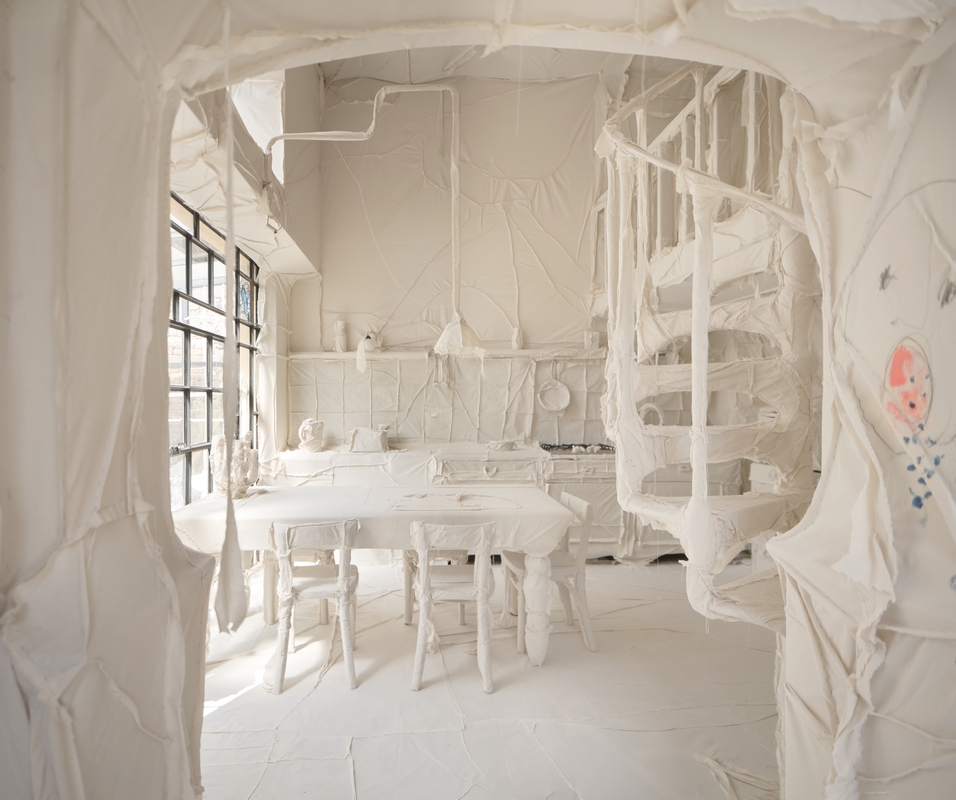
The site-specific work is totalizing, visceral, unstable. Inside the house, which the artist will inhabit as if it were her own, walls, objects, and furnishings have disappeared, concealed beneath pure white yet rough-textured cloth. The kitchen, seating, surfaces, stovetops, lights ‒ even the toaster ‒ have become epidermis; wall joints are veins, cables arteries beneath the skin. The folds carve into space like a vulnerable yet tough wound, a rind that resists time and life. Thousands of staples pierce and hold the fabric in place, echoing surgical instruments that once pierced the artist’s body, in a profound and courageous autobiographical metaphor recalling the manipulations that changed her form: the shell, the dwelling that demanded to be razed and rebuilt ‒ as Perini writes ‒ “joining the edges of the canvas, narrowing a threshold between inside and outside, giving a desired shape to a body, a house, which are the same thing”. This is precisely what will unfold in the months to come. To sew, staple, or constrict a surface is never a neutral gesture: it means deciding what remains outside and what is retained, what emerges and what is buried. The house becomes an extension of the body and the body an extension of space; both subjected to a regime of continuous transformation oscillating between control and loss of control, construction and dissolution, urgency and boredom. “An unpainted canvas seems unnatural, like cut skin”, Perini says: color, indelible, will continue to stain the house’s epidermis and alter it forever, from the fabric-covered chairs in the garden to the very heart of the space, at the highest and innermost point possible.
The experience thus becomes a free yet contemplative path: abundant light at the exit, especially on sunny days; no light in the empty niche at the end of the tiny spiral staircase, invisible from the ground floor and reached alone, physically and mentally, in the most radical sense of the term.
TIME AND CURATORSHIP
CA’DORA is a process of permanent creation and exhibition. Living within the work does not assume the tones of performance, but rather those of a cohabitation tending toward structural codependence: to inhabit means to be inhabited. Perini will continue to cook, wash her clothes, sleep, receive friends, host dinners, and store her oversized rings in a fabric-lined jewelry box. Everyday life persists in the work and, while Perini is its protagonist, those who orbit around her will inevitably leave traces on the fabric. “I am every kind of visitor”, she says, extending the body-house personification to the guests as well. Who will have “kissed the cuts”? Who will have felt overwhelmed? In this sense, time becomes curatorial material.
Laubard and Perini work on interior and exterior landscapes and on the possibility that a practice allows itself to be curated and consumed even as it consumes and cares. This is perhaps the project’s most intuitive trait: a call for continuous, curious engagement by all those involved. Every gesture in the coming months will be absorbed by the milky-white sheets until the initial whiteness disappears. Color will likely reach the ceilings; dust will take possession of every crack; there will be the inevitable marks of those who come and go. Perhaps some staples will come loose and certain tears will widen, as real wounds do. Something may break, as happens in all houses; an attempt will be made to fix the damage, and if it fails, help will be sought ‒ or the trouble will simply be lived with, as anyone does. Perini calls herself “the witch of the Giudecca island” and offers blue candies at the entrance, like in Hansel and Gretel. She reminds visitors not to accept them from strangers ‒ but she can no longer be one: she has opened the doors of her home to everyone, when the house is herself.
Vittoria Colagiovanni
The text has been translated in English using AI
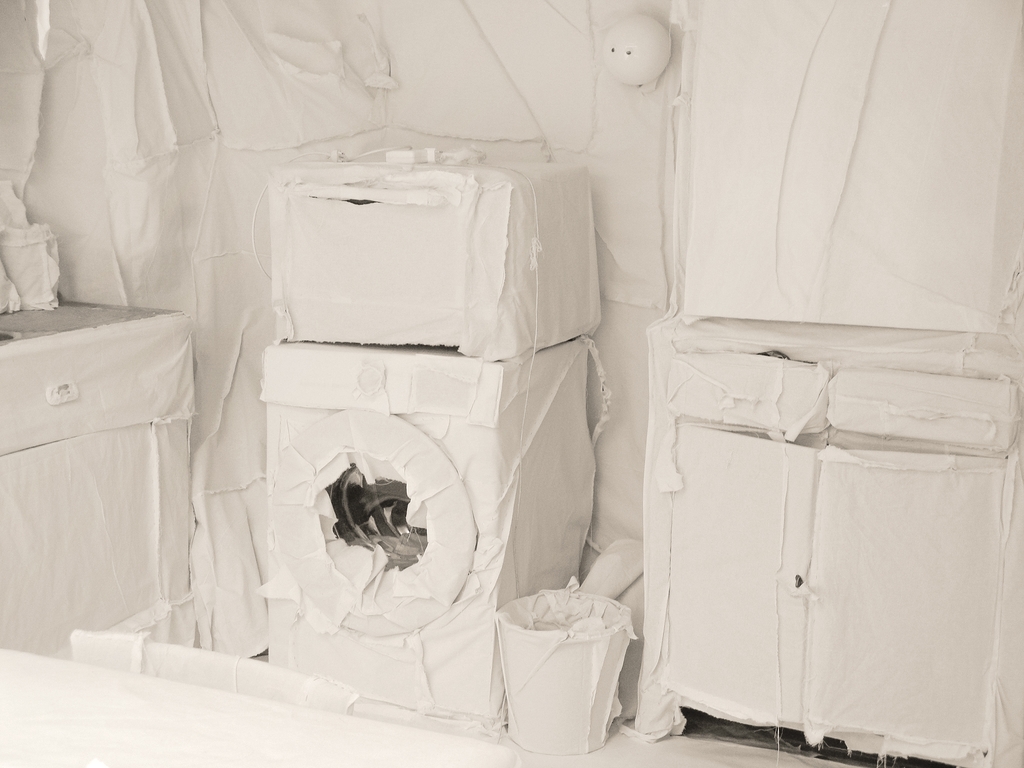
Ca’ Dora, exhibition view, Venice 2026. Photo Giulio Favotto (@giulio.favotto) Ca’ Dora, exhibition view, Venice 2026. Photo Giulio Favotto (@giulio.favotto) 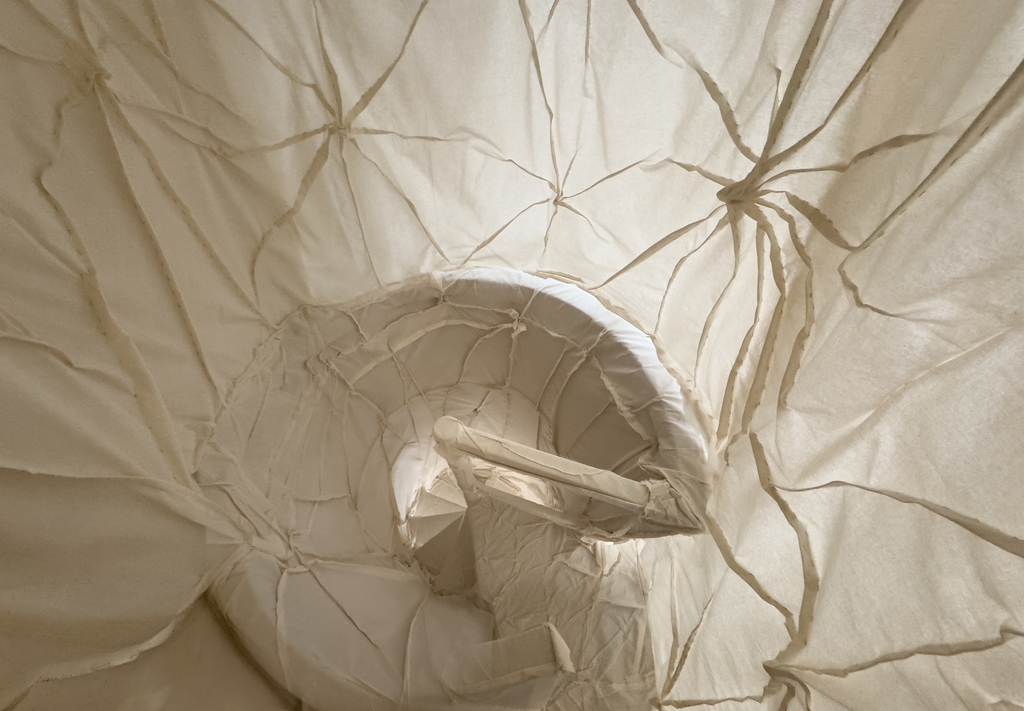
Ca’ Dora, exhibition view, Venice 2026. Photo Giulio Favotto (@giulio.favotto) 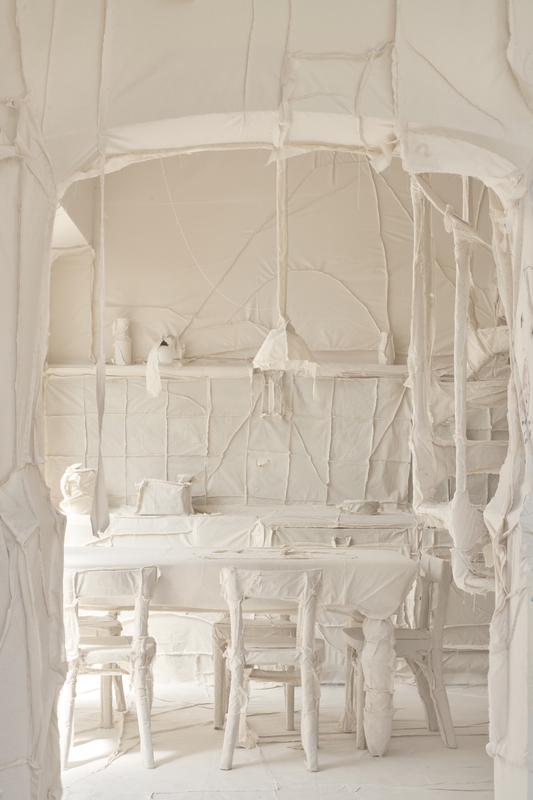
Ca’ Dora, exhibition view, Venice 2026. Photo Giulio Favotto (@giulio.favotto) 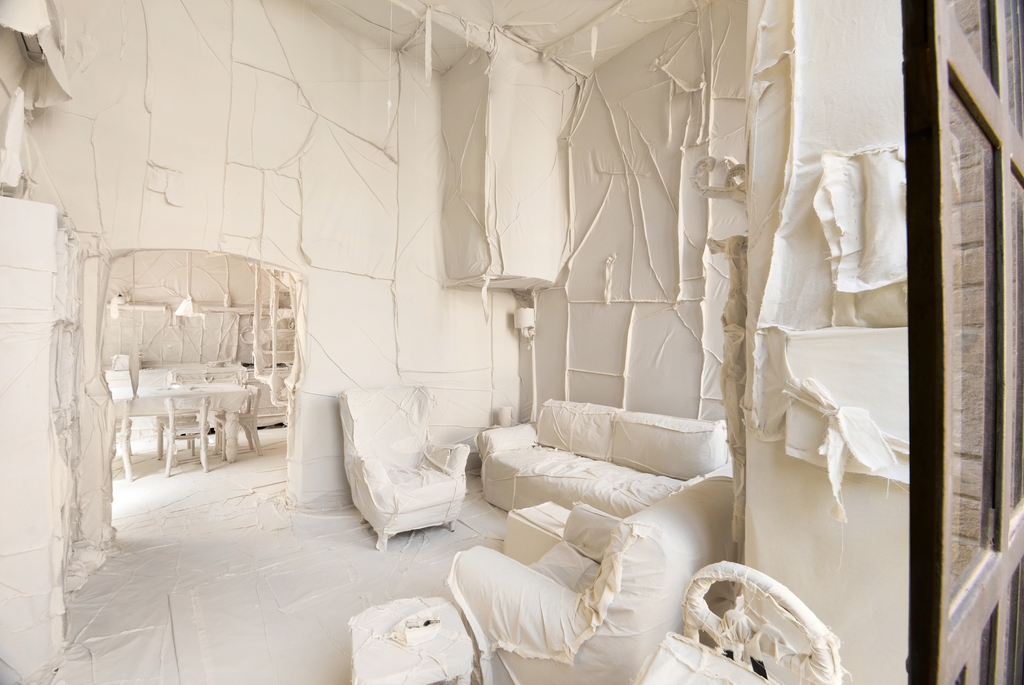
Ca’ Dora, exhibition view, Venice 2026. Photo Giulio Favotto (@giulio.favotto) Ca’ Dora, exhibition view, Venice 2026. Photo Giulio Favotto (@giulio.favotto) 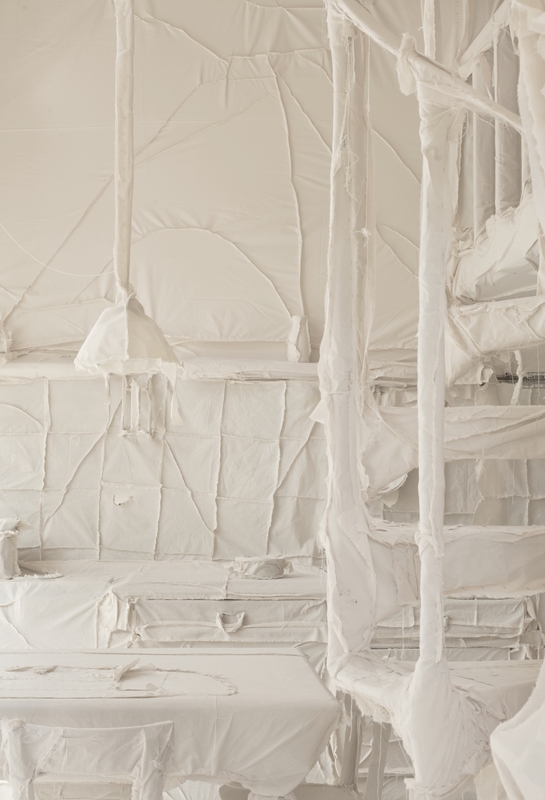
Ca’ Dora, exhibition view, Venice 2026. Photo Giulio Favotto (@giulio.favotto) 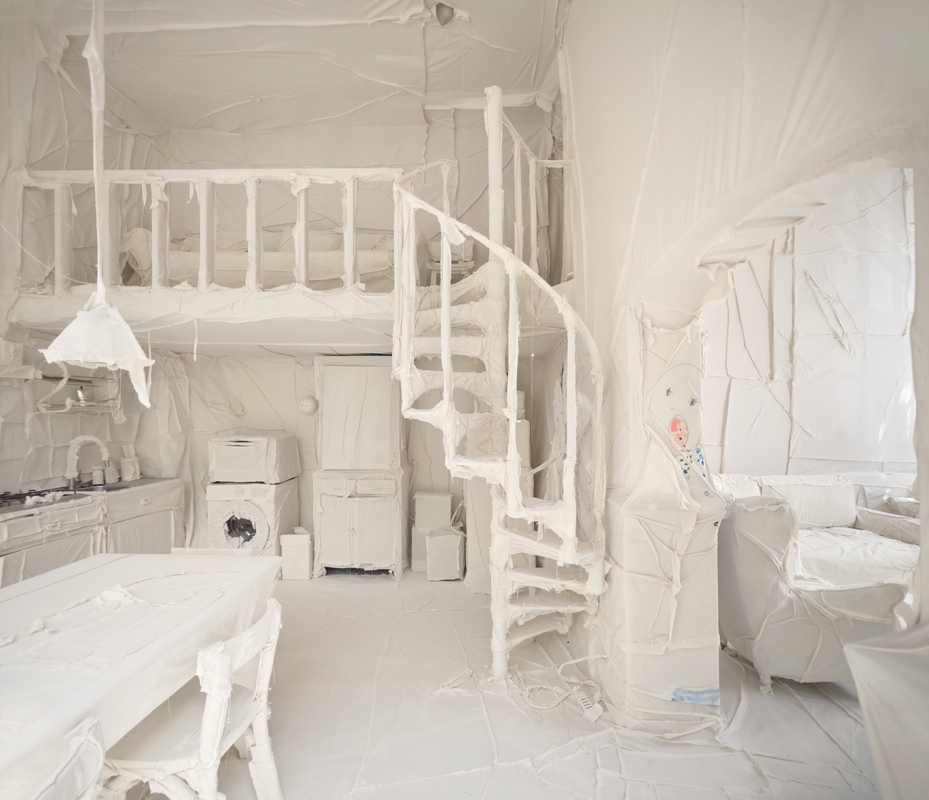
Ca’ Dora, exhibition view, Venice 2026. Photo Giulio Favotto (@giulio.favotto) 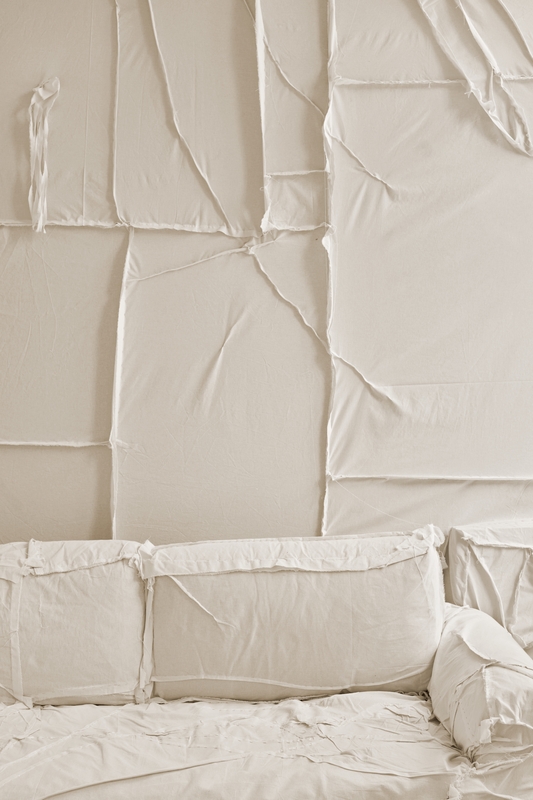
Ca’ Dora, exhibition view, Venice 2026. Photo Giulio Favotto (@giulio.favotto) 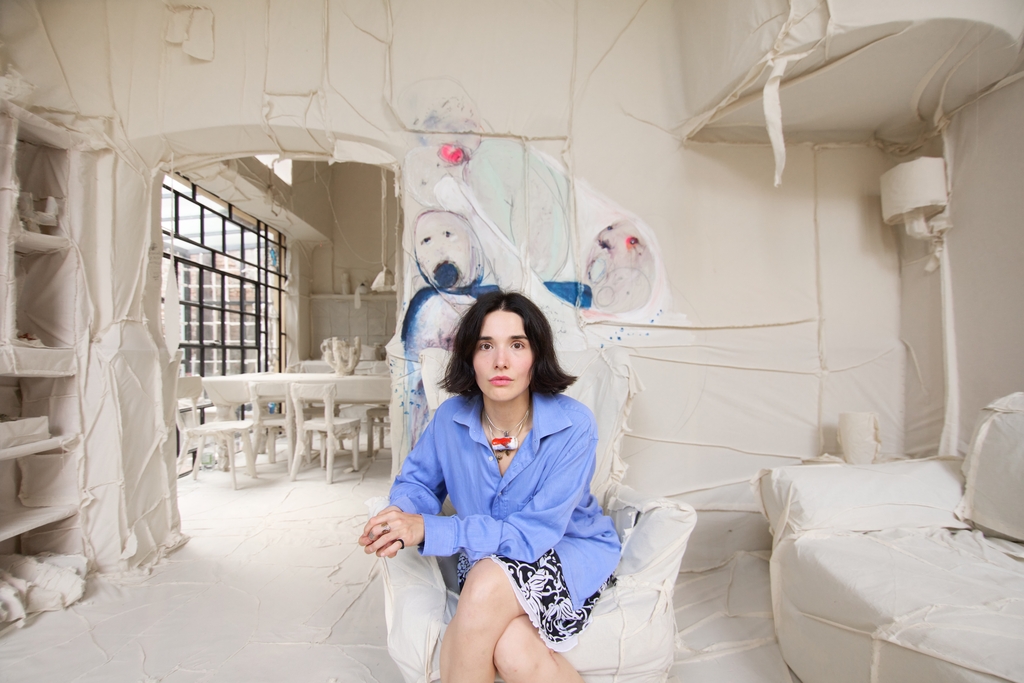
Ca’ Dora, exhibition view, Venice 2026. Photo Giulio Favotto (@giulio.favotto)

