An exhibition space, bookshop, publishing imprint and graphic design studio based in Venice, bruno tells its story through the voices of its founders, who reflect on the role of unpredictability and error as generative elements in the creative process. Through concrete examples and references to collaborative practices, working methodologies emerge that intertwine the material production of books, content curation and the construction of an ongoing dialogue with local and international communities.
Andrea Codolo and Giacomo Covacich are the creators of bruno, a Venetian studio that, since 2013, has combined the logic of graphic and editorial design with that of the exhibition space, establishing collaborations with artists and local and international institutions. We interviewed them.
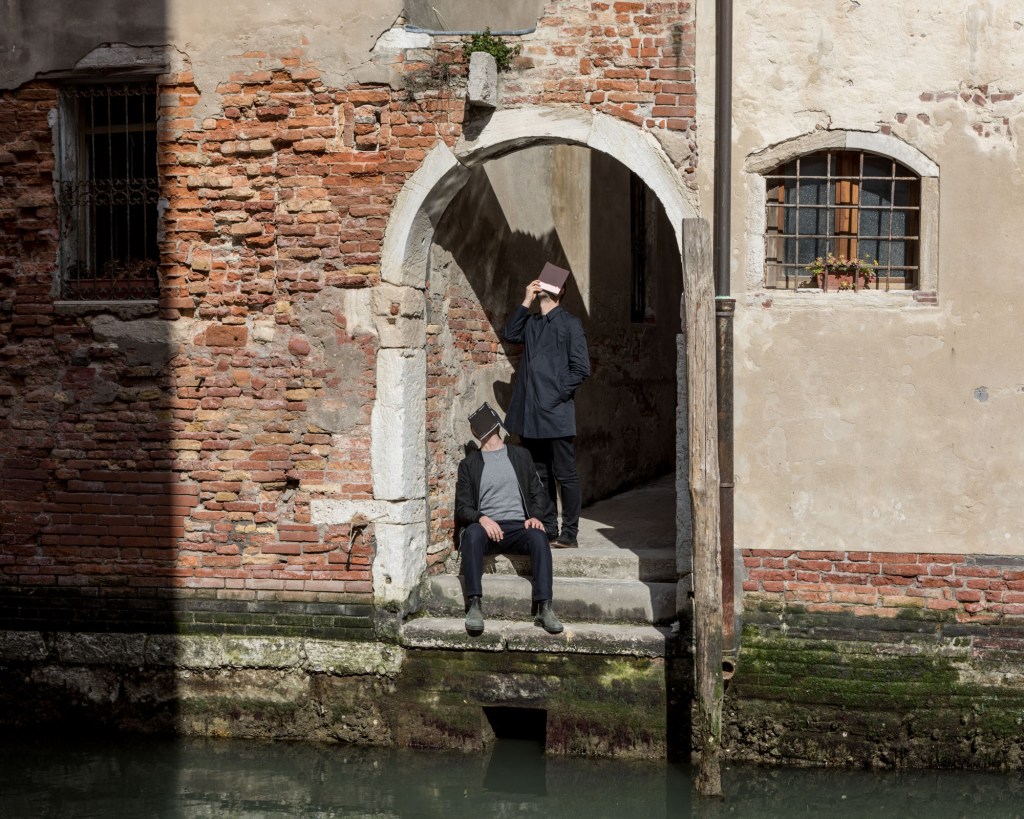
foto © Matteo de Mayda
Let’s start with the name bruno, which seems capable of referring to many things at once. Among these is also the bear, a figure that appears more or less explicitly in your communication. For you, is it one of the many possible natures of the project, a narrative key, or a presence that more radically shapes your way of working?
Andrea Codolo: The process of choosing the name was quite complex. We were looking for something that would not be too strongly associated with only one aspect of the activity we wanted to establish, so from the beginning our project was conceived in its multiple natures. We liked the idea that it could be a somewhat ambiguous, perhaps even old-fashioned name; bruno is also an adjective, a shade of color, perhaps a little gloomy. It is a simple word for the audience we have always wanted to address, which is not exclusively Italian but also international. That is how bruno came into being. Then, when we opened the shop, we put a teddy bear in the window that a friend had given us, and from that moment people kept giving us more. We became collectors of teddy bears of all kinds and it became a mascot. In reality, it also helps us, especially in online communication, to be less serious and not take ourselves too seriously.
Your space in the center of Venice is at once a workshop, a bookshop, an exhibition venue and a place of passage. Do these different identities interact naturally with one another or do they sometimes coexist in a productive tension?
Giacomo Covacich: The name intentionally reflects the possibility of embracing multiple dynamics. Obviously, the project is still evolving: when we opened, we were a graphic design studio and a bookshop, then after a year and a half we started publishing. The space aims to embrace and be contaminated by this degree of uncertainty, by this unpredictable variable. It is something we sought out, but at times also endured. Sometimes it is difficult to manage, while at other times it is highly productive. There are moments when we are working and, at the same time, presentations are taking place; everything is very open, there is no real control. But this has also allowed us to meet stimulating and interesting people. It is a variable that, at first, we merely theorized, and then experienced in our daily lives. Over time, we learned to transform this unpredictability into an added value.
BRUNO’S PROJECTS
In your projects, craftsmanship often coexists with technical experimentation, particularly in the fields of printing and independent publishing. How do these elements relate to one another?
Giacomo Covacich: There is certainly, as you say, a somewhat artisanal component. We consider ourselves designers in every sense of the word: we want to work in harmony with all tools, both digital and production-oriented, and then give ideas a concrete form. We really enjoy working with the book format and understanding how different types of binding and printing can best help enhance content. We always seek a very direct relationship between content and the graphic form of the project; in some respects, bruno is also a place of research for us, something we can draw from. Having access to a broad panorama of work by our colleagues is extremely stimulating. Everything here revolves around the book object, and this allows us to pursue theoretical research related to the profession. This applies to all the events and presentations we organize, as well as the books we produce. The goal is to balance different aspects, ranging from authorship to functionality.
Are there any processes that you have decided to explore and continue developing over time?Andrea Codolo: We enjoy experimenting on the technical side because it allows us to better understand the production process. We have an almost symbiotic relationship with Grafiche Veneziane, our main supplier. Almost all our books have been printed by them, and this allows us to engage with the production process in much greater detail. Going into the bindery, testing things on the printing press… These are all experiences that help us pay closer attention to both industrial and artisanal processes, while also advancing the research at the heart of our project.
In your experience, are there projects that originated from a production mistake, a leftover element, or an unforeseen circumstance?
Giacomo Covacich: I could say all of them and none of them.
Andrea Codolo: Mistakes are part of the game, and on some occasions something better than what we had imagined emerged from them. That said, given the type of work we do, errors are always a great source of suffering; we carry them with us forever. Even if you are mentally prepared and know they can happen, especially in publishing, it is still difficult. After all, a book without errors does not exist.
And when, in your opinion, does an error stop being something to correct and become perhaps a method, or even a recognizable feature of your work?
Giacomo Covacich: Thinking about errors and their capacity to generate creative deviations, there was a time when we wanted to produce a small book with a super glossy effect achieved through photographic development. In the end, we applied such a glossy lamination that the sheets would no longer stay still, and the bindery could not gather them because they kept slipping everywhere. Binding it was a nightmare. Another time, we accidentally cut off a flap, then stamped the books along the edge pretending it was a decorative edge treatment. The final result is beautiful, if you do not know the story behind it.
After all, very often only the final result remains visible from these processes.
Andrea Codolo: Exactly. Error is also a challenge: finding a way out of it and turning it into experience and memory so that it can be avoided in the future. Especially because it is not fun at all when it has economic consequences.
In this regard, is there any past work of yours that you would like to revisit today? Not necessarily to correct it, but perhaps to reinterpret it or take it in a different direction.
Giacomo Covacich: At the moment, no. What happens more often is that we have to deal with reprints, and in those cases we need to make choices, such as changing the paper because the second print run needs to be more economical than the first.
Andrea Codolo: Like all things in life, if I look back there are decisions we made with the awareness we had many years ago, and that awareness has changed over time. There have certainly been occasions when we thought, “This specific thing would have been perfect for that project,” but I think that is simply part of the experience one gains in every situation.
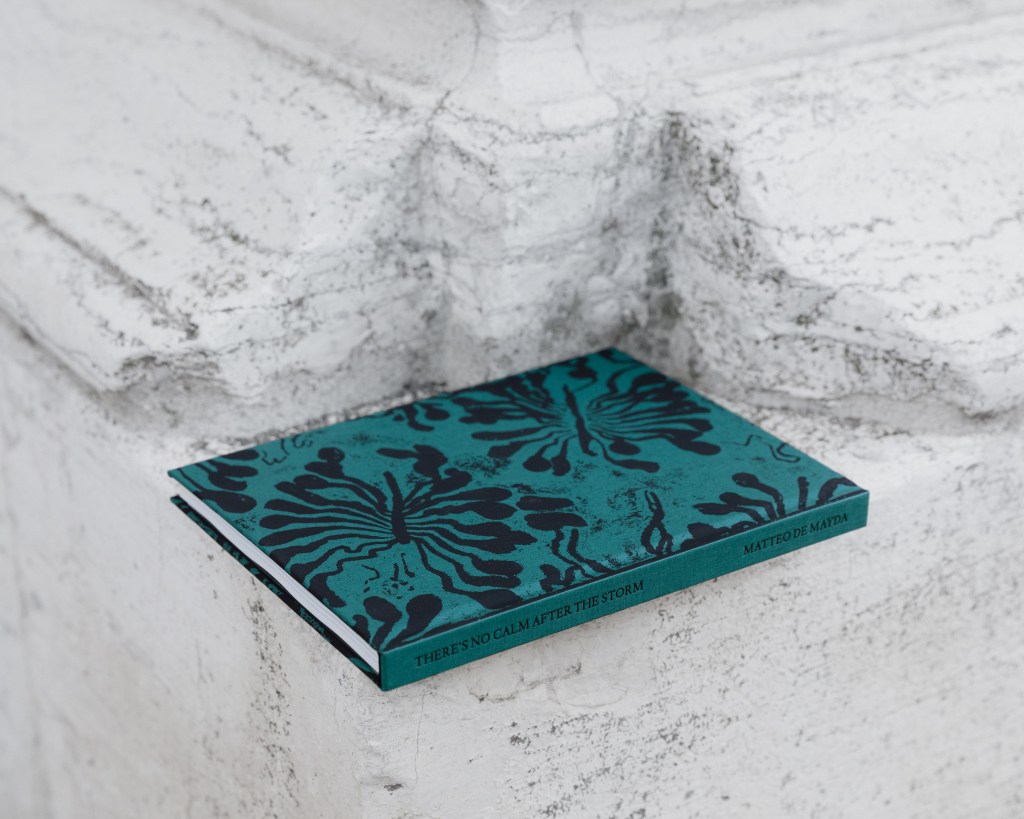
Matteo de Mayda, bruno, Venezia 2024
foto © Matteo de Mayda
BRUNO AND VENICE
Era Mare stands as an emblematic project within your work, both for its theme and its methods. In the face of the high tide of 12 November 2019, you avoided direct reportage and instead constructed a fragile collective narrative that invites reflection on the city’s future. What urgencies prompted you to initiate it?
Andrea Codolo: Era Mare emerged from a dramatic and shocking event for everyone who was in Venice at that time, including us. In the end, our studio withstood the flooding very well, but we were closed inside it thinking about our own fortress and how to defend it, without realizing that we might have been able to help others. That was the emotional backdrop we carried with us in the weeks that followed.
How did the project develop in practical terms?
Giacomo Covacich: In the days that followed, we were among the few places that remained fully operational. This allowed us to host Matteo de Mayda, a dear friend and excellent photographer, who was documenting the situation in the city for several European newspapers. He spent his days photographing Venice and returned to us in the evenings to process and send the images. The idea arose from seeing the material Matteo was producing. We began thinking that we, too, could do something. Shortly before that, an association of residents and shopkeepers from Campo San Barnaba and Campo Santa Margherita had been established, and it seemed interesting to contribute with a project that narrated what was happening. Rather than focusing exclusively on the tragedy, we wanted to propose a perspective that was also constructive. That is how the project was born. We invented this particular format that allows you either to perceive the fragility of the situation or almost pretend nothing is happening. As you turn the pages, the photographs appear to show people playing with architecture, when in reality they are holding onto walls to move through the water. An intentionally unusual, almost dystopian text suggests a future in which water has become a permanent condition, where ground floors no longer exist and public squares are constantly flooded.
In what way does this curatorial gesture reflect your approach to publishing, where political positioning, care for relationships and formal experimentation coexist?
Giacomo Covacich: The project involved many people and reflected the spirit of that moment, a strong need for community and connection, a way of asking one another, “How are you? Do you need anything?” In this sense, the production process itself encouraged sharing. The outcome was very positive. We produced 750 copies, which were distributed through donations supporting the association.
Andrea Codolo: To facilitate its circulation, we also helped with communication, through social media and public presentations, contributing to the distribution of all the copies.
Giacomo Covacich: We raised more than €8,000, and with those funds we were able to install flood barriers for the most vulnerable places in the neighborhood. The project also received excellent media coverage; several newspapers talked about it, helping spread awareness. We produced it by trying to do the best possible work with the resources available, collaborating with a high-quality Venetian printer, using papers we had already employed in previous editions and not seeking to cut costs but rather aiming for the best possible result.
Era Mare is not an isolated case: many of your books emerge from relationships and dialogues with artists, designers, photographers and researchers. How important is curatorship in choosing who to involve and how to combine materials, images and texts?
Giacomo Covacich: For us, designing also means opening a dialogue, so understanding other people’s thinking is fundamental. The most interesting aspect of this profession is that you can engage in conversations and continue learning. For us, bruno is the key to creating connections with other realities working within the city and the territory. Over the past year we have collaborated with Simone Carraro, Amalgama, Tocia, Barena Bianca and others. Venice is where bruno was born and we chose to remain fully involved in it. Having a network is part of a vitality that is necessary not only commercially but also relationally. The goal is to have a space frequented by people who share our interests.
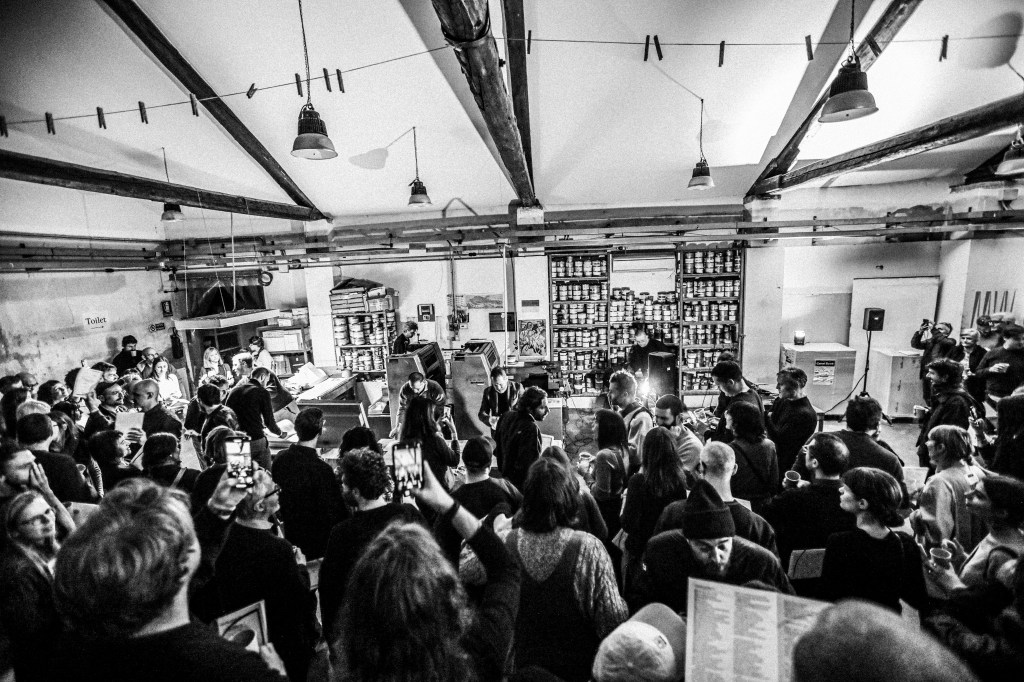
foto Grafiche Veneziane
DIALOGUE AND COLLABORATION ACCORDING TO BRUNO
During the latest Art Biennale, you presented for the third time a collaboration with UC Studio that took shape as Morning Rituals: an invitation to slow down, to come together in a deliberately non-productive moment through a collective breakfast. How did this experience interact with your daily practice?
Andrea Codolo: Morning Rituals has a clear impact on our daily practice. First of all, it makes us wake up earlier so that we are ready when guests arrive; moreover, it allows us to enjoy both the presentations and the collective breakfast. It is something we care deeply about, so much so that we will do it again this year. It allows us to invite people into a convivial setting while maintaining focus on what we are presenting. During the Biennale opening week, so much happens and there are always many events in the evening, so we were interested in finding a balance. We think it works.
If we think of bruno more as a practice than as a studio, what is the aspect you would defend even if it became unproductive, inefficient, or non-performative? Is there something that, precisely because it is fragile or not optimized, you consider essential to preserve?
Andrea Codolo: I would say the very essence of bruno. After all, the balance that emerges between an open space like a shop and a more private space like a studio contains certain fragilities, but it is also the essence of what we do. It would not work any other way; its added value is unpredictability.
Giacomo Covacich: There was a project that we later discovered had originated during an Architecture Biennale through meetings between curators of various pavilions who came here to browse books. Two years later they asked us to present the resulting publication and told us that bruno, entirely on its own, had acted as a catalyst for the project.The same applies to us: we like the idea that someone can come in, see interesting projects condensed into book form, and think, “I could do this with my own project,” thus beginning a new challenge.
Andrea Codolo: In a sense, it makes us very accessible. It creates opportunities that over time have become friendships, but also work opportunities. Of course, sometimes it also creates incredible annoyances because, just as an interesting person can walk in, so can a complete nuisance. In the end, even if we sometimes complain about it, we have become accustomed to it. It is part of the fragility and the essence of bruno.
Camilla Credendino
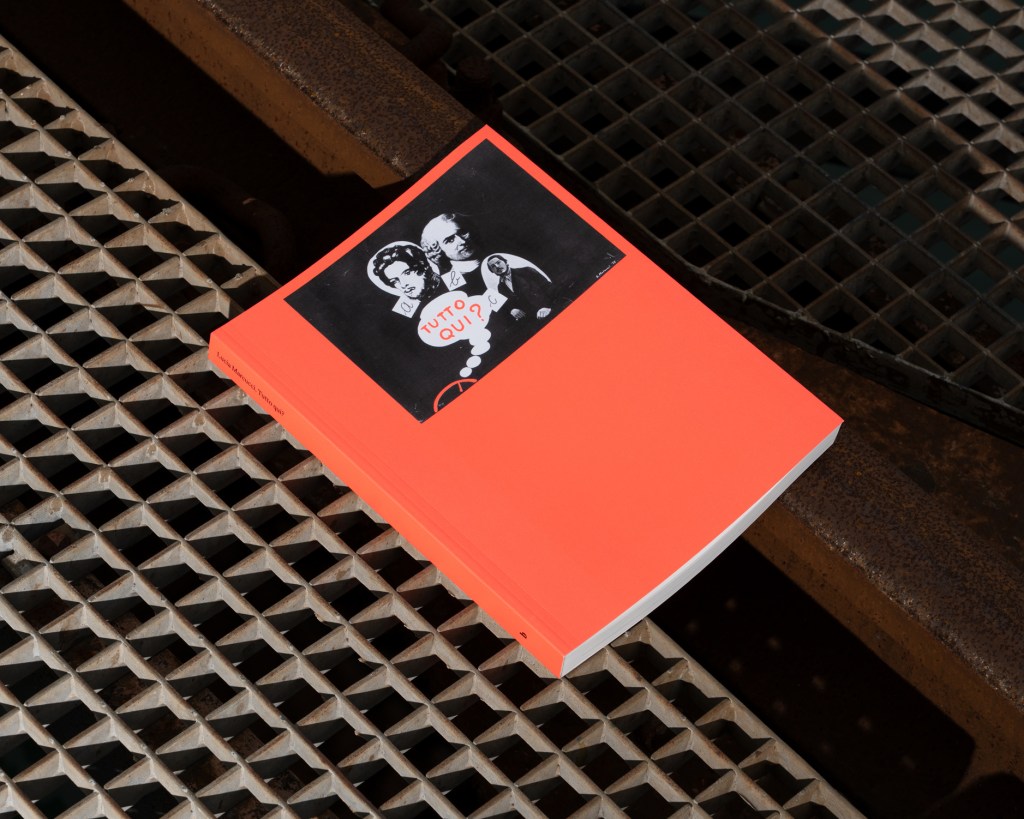
Lucia Marcucci. Tutto qui? Frida Carazzato, Francesca Verga (eds.) bruno, Venezia 2025 foto © Giacomo Bianco 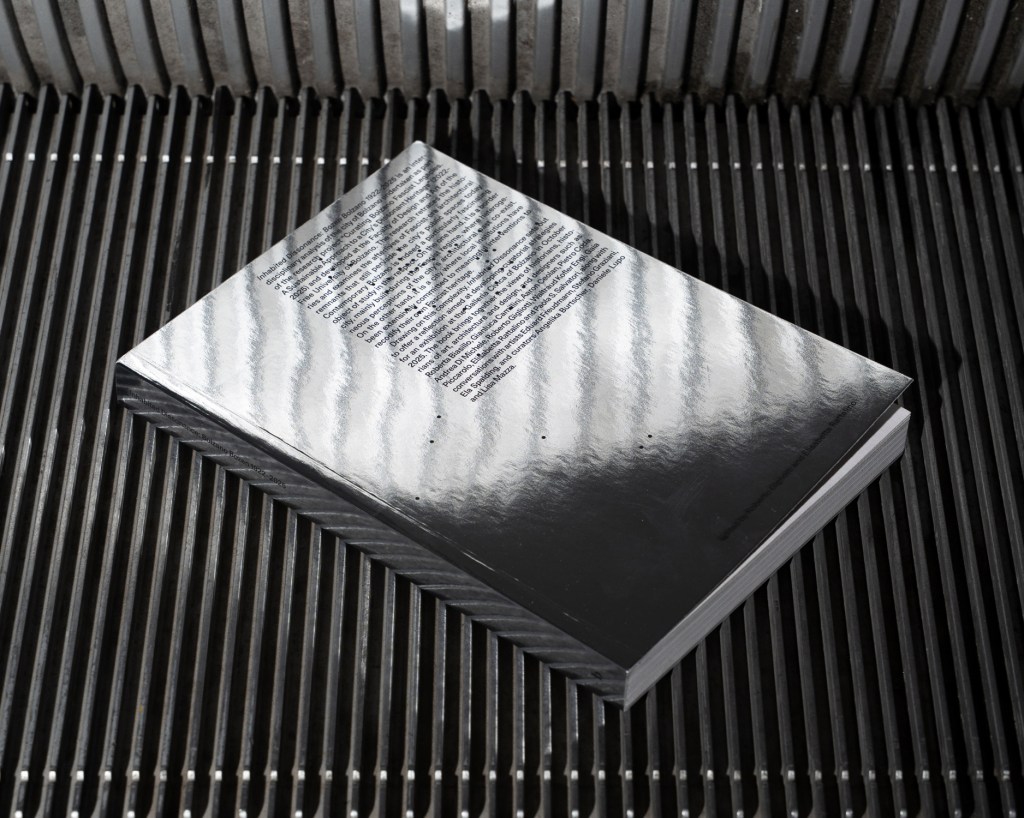
Inhabited Dissonance: Bozen Bolzano 1922–2025 Roberto Gigliotti, Elisabetta Rattalino (eds.) bruno, Venezia 2025 foto © Giacomo Bianco 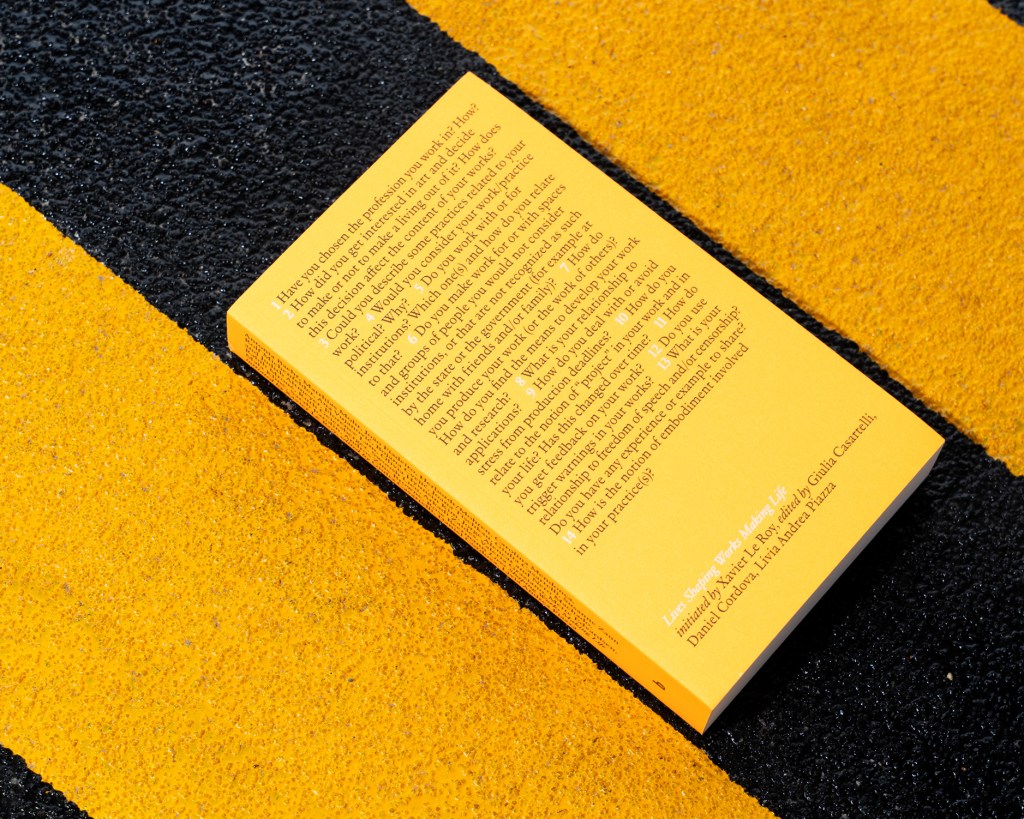
Lives Shaping Works Making Life Xavier Le Roy, Giulia Casartelli, Daniel Cordova, Livia Andrea Piazza (eds.) bruno, Venezia 2025 foto © Giacomo Bianco There’s No Calm After the Storm Matteo de Mayda, bruno, Venezia 2024 foto © Matteo de Mayda 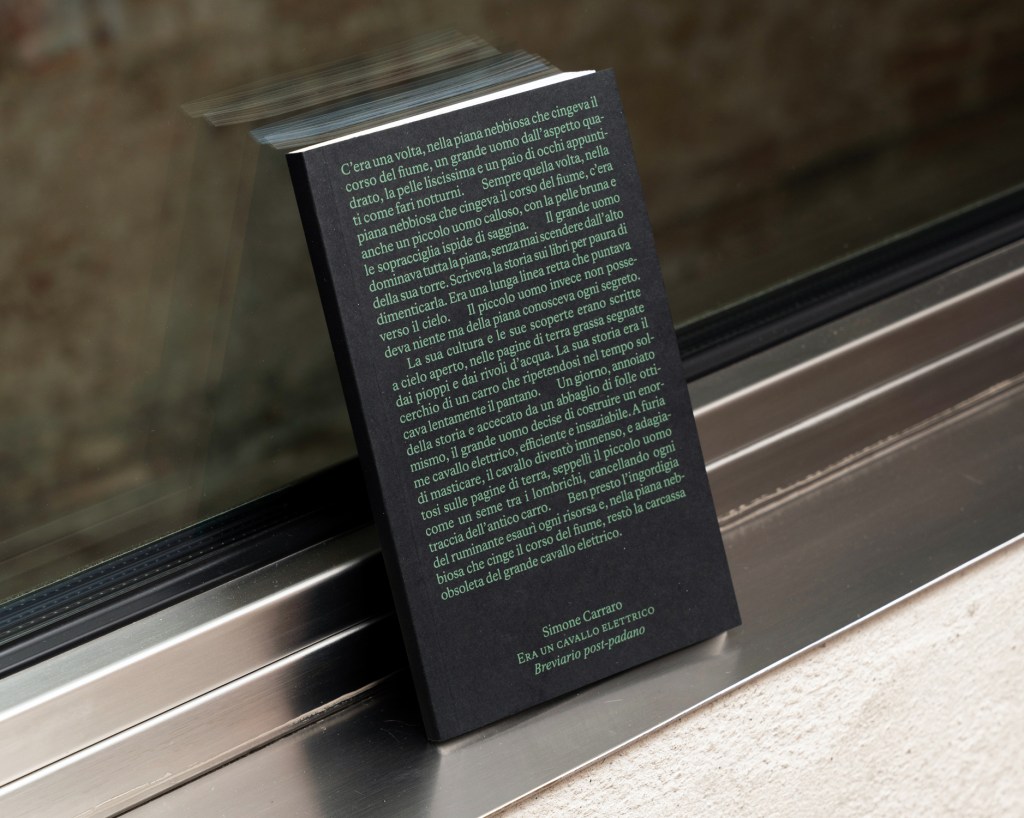
Era un cavallo elettrico Simone Carraro, bruno, Venezia 2025 foto © Giacomo Bianco Dieci di bruno – Grafiche Veneziane, Venezia 2023 foto Grafiche Veneziane bruno Andrea Codolo e Giacomo Covacich, Venezia 2019 foto © Matteo de Mayda

