First a curator at the Kunsthalle Wien, then artistic director of MACRO – The Museum of Contemporary Art in Rome – until early 2025, Luca Lo Pinto has always combined publishing with curating, adopting a free and open approach that embraces misinterpretation.
Luca Lo Pinto’s (Rome, 1981) curatorial practice stands out for its unconventional nature. His approach consists of distancing himself as much as possible from the self-referentiality of the art world, creating encounters and hybrid cultural spaces. This identity emerged during his tenure as curator at the Kunsthalle Wien ‒ where he developed exhibitions characterized by a non-hierarchical and highly process-oriented approach ‒ and was further solidified during his artistic direction of MACRO ‒ The Museum of Contemporary Art in Rome, where he promoted the idea of the museum as a magazine and an organism in constant transformation.
Lo Pinto is also part of the publishing world: he is co-founder of the magazine and publishing house NERO, and his catalogs often reflect the non-conformist and conceptual aspect of his practice. One example is Editorial, an exhibition in words, which does not contain photographs of the exhibition but rather the words of writers invited to visit it and write about it.
In his conception of curatorship, misunderstanding is not an error to be corrected but a condition with which to work. Similarly, the idea of curatorial authority does not coincide with control, but with a form of presence that never completely overlaps with the artists and that, precisely for this reason, must continually redefine its own position. Thus, the exhibition, too, is never a stable entity.
THE INTERVIEW WITH LUCA LO PINTO
You often talk about the importance of individual freedom. As a curator, where do you draw the line between your own freedom and that of the artists you work with?
I have always viewed curating exhibitions as an act of authorship, and when a curatorial project has a strong authorial dimension, it is often interpreted as a gesture of vanity, as an attempt to overshadow the artist or the works. From my perspective, this is not the case at all: the starting point is always the artist and their work. I try to understand them deeply, almost to get inside their head, and then step back to truly imagine an exhibition together.
I’m interested in being a sort of accomplice in the creative process, so that my presence isn’t merely an accessory. Otherwise, my work would risk being reduced to that of a facilitator ‒ almost useless. There are, of course, contexts in which the curator assumes a more productive role: I’m thinking about spaces like the Secession in Vienna, where the model is that of a solo exhibition in which the artist retains almost total control. This, too, is part of curatorial work: helping an artist transform a vision into reality. However, this dimension alone is not enough for me. The opportunity to engage in direct dialogue with artists, to share the same historical moment, is an aspect that has always fascinated me in working with contemporary art, compared, for example, to ancient art. This dialogue is something unique, which I strive to make the most of. Even in solo exhibitions, my goal is for the project we create together to be different from what the artist would have created without me. Every artist is different, every collaboration has its own dynamics, but for me, the relationship between curator and artist is above all about a working methodology, a way of constantly asking questions. I have never agreed to carry out a project simply “for the sake of doing it”: I have always tried to push every work as far as possible.
You say you’ve learned from artists not to be afraid of being misunderstood. Have any of your exhibitions ever been misunderstood?
Many. Spending time with artists from different generations has taught me that misunderstanding can be a productive part of dialogue. I’m thinking, for example, about the time I spent with artists like Emilio Prini or Luigi Ontani, who showed me a less rigid way of relating to art, and taught me to poke fun at the art world’s systems and not to be so attached to the constructed image of the intellectual. Or Mike Kelley, who in his writings fiercely criticized Rosalind Krauss: a gesture that struck me deeply, because at the time it didn’t seem possible to do so.
Some artists want their message to be understood exactly as they formulate it, while others want misunderstanding to be part of the dialogue. In this sense, even opacity can be productive: not necessarily something negative, but a space for interpretation. When an exhibition doesn’t propose an explicit theme or a linear narrative, it inevitably invites different interpretations. It’s a bit like experimental cinema: by eliminating certain narrative elements, the viewer is called upon to engage more deeply with the experience. It’s a more demanding process, but also a more open one. We often prefer familiar paths, like always choosing the same dessert because we already know what flavor to expect. But when an unexpected element is introduced, a possibility for discovery opens up.
Can you give us an example?
The communication work done at MACRO, which we might call “pop,” has been interpreted by some as a sign of a kind of negative frivolity. This was also the case with the catalog for MACRO’s latest exhibition, Post Scriptum. A museum forgotten by memory, the use of language drawn from fashion publishing could be misinterpreted as a form of adherence to commercial imagery. In reality, it is not a matter of appropriation, but of working with languages and their structures. It is always the combination of elements that produces meaning.
You told me that you don’t read art magazines and that this was one of the reasons you founded NERO in 2004. While art magazines were once one of the main sources of information about the art world, where do people now learn about and discuss contemporary art?
I have no idea. This isn’t a stance against art magazines: I used to flip through them just as I would fashion or music magazines. However, I often find that the way they talk about art lacks a personal touch. There must be a vision, an almost obsessive dimension, a style of writing where you sense a real urgency, even if imperfect, but authentic. For this reason, I’m more interested in editing than in writing art criticism in the traditional sense. Editing is a form of indirect writing, which allows you to construct a discourse through the relationship between different contents.
Today, the ways we access information are much more diverse. The idea of getting information exclusively through art magazines seems almost limiting: it’s more about reading everything. Some editorial projects I liked, such as Index or Purple, focused heavily on the format, or prioritized the interview as a space for reflection. When we founded NERO, there was no particular magazine that served as inspiration. Today I’m more interested in a platform like Contemporary Art Daily, which functions as a visual archive-in-progress documenting exhibitions with images that are not always easily accessible: a very simple but effective idea.
CURATORSHIP ACCORDING TO LUCA LO PINTO
I believe that exhibitions are not necessarily the main locus for art. Where do you seek out or find art?
The search often unfolds through a chain of connections: a series of encounters, suggestions, and conversations. When I travel, I try to see as much as possible; I listen to people I trust, and I let my curiosity guide me. Many discoveries arise from dialogue: a conversation with an artist can lead you to a book, a place, an unexpected figure. I am surrounded by very different people, and I am interested in building an open network of references, avoiding overly self-referential circuits. Sometimes a suggestion can lead you not to a museum, but to a church or a marginal place, and it is precisely there that an intuition for a project can emerge. I am often drawn to details that escape a more casual glance, to figures left on the margins, to irregular stories. Over time, one realizes that some of history’s “losers” probably deserved a different standing, and this opens up new ways of interpreting events.
Speaking of history’s defeated, the program of the Museum for Preventive Imagination ‒ whose name paid homage to the Office for Preventive Imagination project created in Rome in 1973 by artists Carlo Maurizio Benveduti, Tullio Catalano, and Franco Falasca ‒ features the project Aritmici, which has given space to “irregular figures and atypical stories from a more or less recent past.” This drive toward the rediscovery of subjectivities that are marginal or overlooked by history often recurs in your curatorial practice. I’ve noticed a very high number of women in these projects. How can curatorship help preserve the memory of certain artists, and female artists in particular?
This is not a matter of policy or quotas. I am interested in avoiding a rhetorical approach to issues of identity. When these topics are treated superficially or merely as a matter of political posturing, the result risks being hypocritical. This does not mean denying the urgency of these issues, but rather asking how to address them consistently. When bringing figures into an institution who have also worked outside the art system, the responsibility is even greater. “Taking care” means avoiding rhetoric and working concretely on the conditions through which these stories can be understood.
Consistency between what is said and what is done is fundamental. It is not enough to select a name or follow a trend: every project must fit within a broader vision. Otherwise, the risk is simply that of chasing whatever appears relevant at a given moment. Regarding issues of representation ‒ I am thinking in particular of women and artists of color ‒ if we look at the data, the disparity is evident: one need only examine the statistics published by collectives such as the Guerrilla Girls. However, today we must also pay attention to how these issues are addressed. In many cases ‒ especially in the American context, which often drives these processes ‒ there is an attempt to rapidly make up for centuries of historical delay. The reality, however, is more complex. The same applies to the debate over monuments: I believe neither in their simple preservation nor in their destruction. There is a third way, which consists of questioning them, problematizing them, and creating new ways of interpreting them.
Reducing everything to a polarizing logic – black or white – is dangerous, because it is precisely this kind of simplification that fuels far-right populist politics. Complexity must be preserved, not simplified.
You became director of MACRO in 2020, at the start of the pandemic. How did these circumstances affect your work and your understanding of the audience?
Actually, less than one might think. The challenges were already there: it was as if the ground had been pulled out from under my feet, even though I was already somewhat accustomed to working without certainties. Of course, beyond the health emergency, the main regret was not being able to open the first exhibition right away.
At the same time, that situation opened up new possibilities. I’ve never had a rigid approach to curating: I don’t think reality should have to adapt to a pre-established project. During COVID, for example, while we were working on the first group exhibition, it was impossible to predict whether the works would arrive on time. So, I decided to embrace this uncertainty: if a work arrived later, we would integrate it subsequently. It wasn’t about constructing an “evolving exhibition” as a theoretical choice, but about letting reality itself determine the project’s rhythm. It’s an attitude that implies a certain openness to risk, but also the possibility of discovering unexpected paths.
Paradoxically, some ideas emerged precisely because of that situation: without the pandemic, I wouldn’t have organized the Lawrence Weiner exhibition in the sky or published a catalog like Editorial, an exhibition in words – devoid of images.
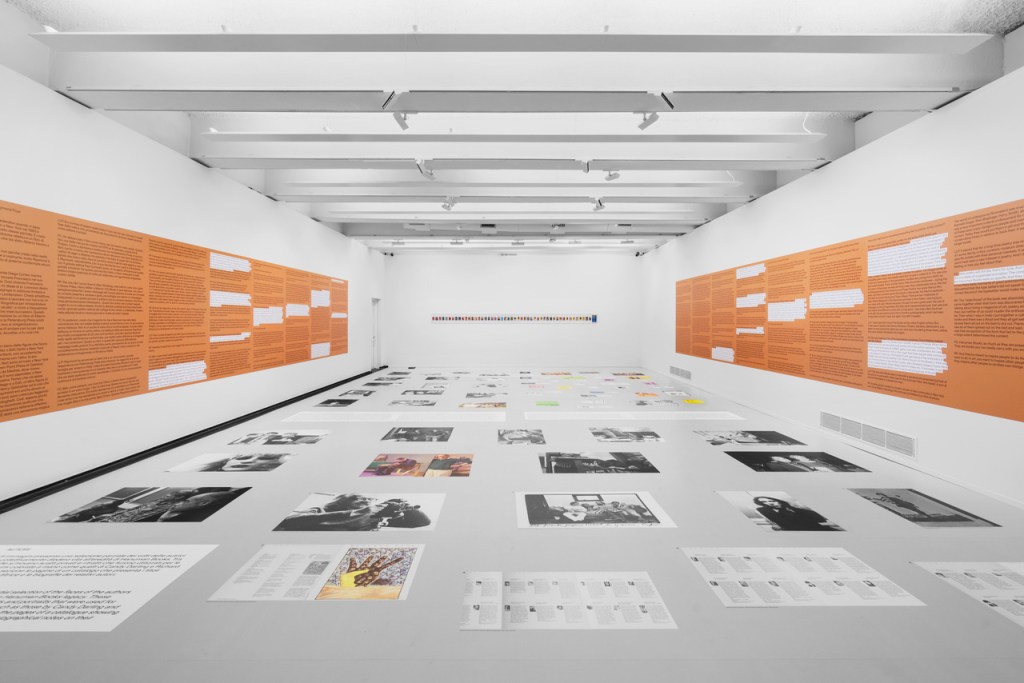
Your installation choices are anything but conventional. You just mentioned the Lawrence Weiner exhibition where the works were dragged through the sky by an airplane; I’m also thinking of the Hanuman Books 1986–1993 exhibition, where the publishing house’s archive was laid out on the floor, inviting visitors to walk over it. What criteria do you use to determine the placement of an artwork, and how does the mode of display influence the very definition and perception of the work?
I believe that the arrangement of works in space can profoundly alter their meaning, or at the very least suggest new interpretations. It is one of the most interesting aspects of curating exhibitions. When I speak of “exhibitional writing,” I’m using a metaphor; the ideal would be to construct an exhibition that stands on its own, without the need for any explanatory apparatus. Like when you walk down the street and encounter images, objects, people: you don’t have a caption, but you still construct an experience and a meaning. Some exhibitions work exactly like this, asking the viewer to engage. I’m thinking of Corrado Levi’s exhibition, Il Cangiante, at the PAC in Milan, where works of American Pop Art were arranged in a serial fashion, all at the same distance, suggesting a reflection on repetition and the logic of the product. Or Ed Ruscha’s intervention at the Kunsthistorisches Museum in Vienna, where he altered the height and exhibition context of historical works, radically transforming their perception.
Sometimes a single detail – the height of a painting, its position on the floor, the possibility of walking over an archive – is enough to generate a significant change. These choices arise from a blend of imagination and research, but also from spontaneous intuitions: there is no linear or programmable process.
MUSEUMS, INSTITUTIONS, AND THE FUTURE
There are a lot of discussions today about the attention deficit crisis and the use of artificial intelligence, even in exhibition settings. What future do you see for wall text?
Artificial intelligence is a recent but unavoidable tool. You can’t stop reality. Thinking of excluding it from educational or cultural processes is unrealistic. The point, once again, is how to use it: limiting oneself to generating automatic summaries is a trivial, tired solution, devoid of real interest.
Every choice depends on the context. If I’m curating an exhibition in a highly specialized setting, I can afford a certain level of complexity. But in a public museum, accessible to everyone, the challenge is different: how to create a language that is meaningful to a scholar, a casual visitor, and a teenager accustomed to watching TikToks.
The goal is to find a form that is neither simplified nor artificial, but something else. And, precisely because it is “something else,” this form can lead to misunderstandings. It’s a situation I know well: even with NERO, it was often unclear whether it was an art magazine, a fashion magazine, or something else. For us, this ambiguity was a virtue, because it signaled the success of a hybrid project. Of course, this stance comes at a cost: being difficult to classify also makes securing financial support more complex. But that’s part of the game. If we want to talk about freedom – a word perhaps overused today – we must accept that it comes at a price. “Te la devi accollare”, as they say in Rome.
Your leadership style has been one of taking nothing for granted. In your interview with Il Giornale dell’Arte, you said that “Everyone sensed that this was a museum truly designed to welcome them, one that spoke their own language – a significant achievement, given that museums typically speak the language of history rather than that of artists, a language with different rules, different tones, and a different grammar.” You also opened the doors of your institution to everyone, putting up a sign outside that read “free admission.” Should museums be free? Or rather, can they be?
I don’t know if they should be free. I don’t think there are any rules. We need to think about the context we’re in. In a country like Italy, with shocking cultural decline and rampant precariousness, being able to share the work of avant-garde artists with a wider audience ‒ since the avant-garde usually has a smaller audience ‒ is important. Reaching out to the public doesn’t necessarily mean it will be reciprocated, but I think the choice to reach out anyway has a dimension that is also political. But I don’t think that, by its very nature, a museum should always be free. I think that right now it’s more important than ever to be even more generous than usual.
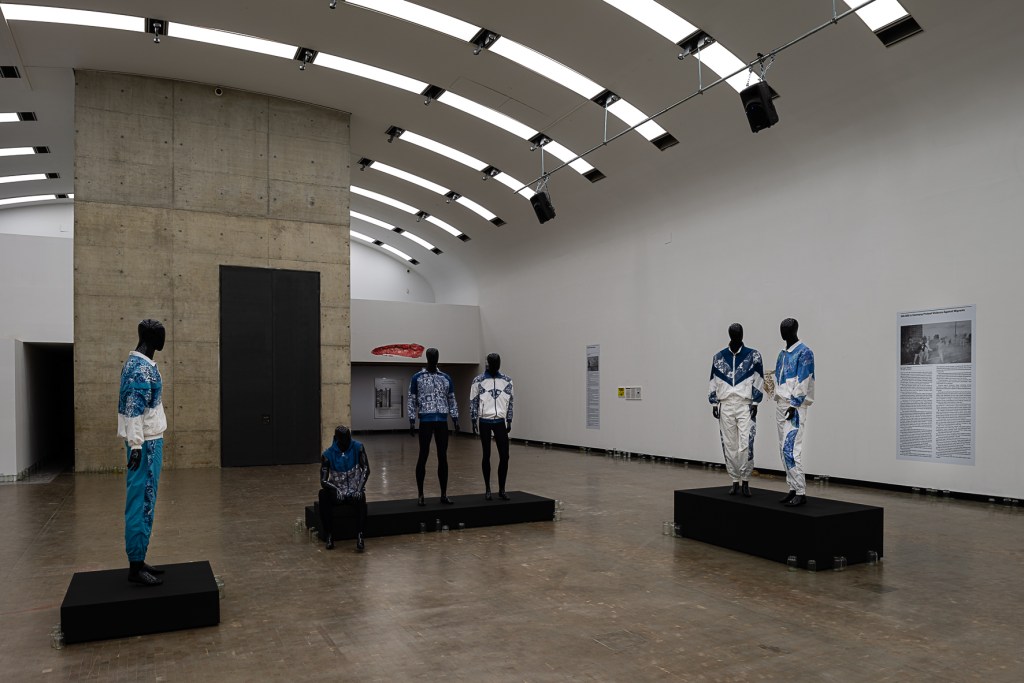
For your latest exhibition at the Kunsthalle Wien, Time Is Thirsty, you created an immersive exhibition space: you asked Sissel Tolaas to recreate the scent of Vienna in 1992, and loud music played continuously throughout the exhibition – which you said you made them promise never to turn down. How important is the sensory dimension in your curatorial approach?
The immersive and sensory aspect, in and of itself, doesn’t particularly interest me; on the contrary, I often perceive it as a form of entertainment, especially when, in large institutions, complexity is reduced to something almost circus-like. I’m more interested in a sensual dimension, in the broadest sense of the term: a total, almost synaesthetic engagement that activates multiple senses simultaneously and isn’t limited to a single mode of perception.
In this sense, the use of elements such as smell, sound, or light can become significant, especially when one wishes to transport those entering a neutral exhibition space – the classic white cube – into another dimension. It is not, however, a matter of creating spectacular effects, but rather of constructing a complex perceptual condition.
In the past, you wanted to be an architect, and – for example, in the case of MACRO – your practice was greatly influenced by the museum’s architectural structure: its alien form partly inspired your idea of an “octopus museum.” If, in a parallel reality where you actually are an architect, you had to design your own museum, what would the ideal structure be?
I’d like a modular museum that can be modified. One that can open, close, move, rise, and change its flooring – parquet one day, marble the next. A bit like a child would imagine it.
You don’t like themed exhibitions, because in that context the artist risks becoming merely “a means” to support a curatorial idea. You have, in fact, organized many solo exhibitions; but in your group exhibitions, how have you avoided reducing artists to this role?
I don’t organize themed exhibitions. The latest exhibition at MACRO, for example, sought rather to reflect and condense the threads that had run through the entire program. The first, on the other hand, had an almost manifesto-like character: it involved artists working with very different languages, including practices that go beyond the traditional artistic object.
In Vienna, I conceived an exhibition in which there was no actual object, but time itself became the primary medium; in projects with house museums, on the other hand, it is the space that constitutes the subject. During a residency at the Frac in France, I worked on the collection while avoiding a traditional exhibition: I reflected on the idea of the artwork as an image, creating a postcard for each work, which was then paired with a book selected from the library. This resulted in a collection of 788 “meta-artworks,” a structure deliberately left implicit, partly left to chance.
Still on the theme of the image, for an exhibition in Vienna as part of Curated By – which took Beatriz Colomina’s The Century of the Bed as its reference – I arranged the works in the space, photographed it with the idea of exhibiting only a 1:1-scale photo, thereby transforming the exhibition into an image. In all these cases, even when the curatorial project is underpinned by a strong concept, the artists are never reduced to mere tools: they are involved in the process and participate actively, recognizing the solidity and coherence of the proposals. It may happen that someone refuses, but I have always sought to make it clear that behind every project there is substantial research and a genuine commitment to its realization.
ITALY VS ABROAD: A COMPARISON
You have directed two institutions that are very different in terms of history, structure, and context: the Kunsthalle Wien and MACRO – The Museum of Contemporary Art in Rome. How did their different institutional statuses ‒ the Kunsthalle without a permanent collection and MACRO as a municipal museum with a collection ‒ concretely influence your curatorial and programmatic decisions? And to what extent, on the other hand, did the systemic differences between the Austrian and Italian contexts (cultural policies, funding, relationship with the public, decision-making autonomy) influence your way of working?
From the perspective of autonomy, I had great freedom in both cases. At the Kunsthalle Wien, although I was not the director, I worked with a director, Nicolaus Schafhausen, who gave me absolute freedom.
The systemic differences, however, are enormous and represent almost two opposite extremes. Austria is a small but very wealthy country, and Vienna, as its capital, offers an extraordinary cultural concentration considering its physical scale. There are institutions of the highest caliber – just think of the musical tradition, from the Opera to the Musikverein, or the major museums – but also a solid educational system, with very strong academies. Above all, there is a genuine cultural welfare system: work in the arts is recognised, supported, and structured. This, however, also produces a side effect. In such a stable system, there is a risk of a certain overproduction: exhibitions, books, and projects that exist because the system allows them, but not always out of real necessity.
In Italy, the situation is the opposite. One grows up in a state of structural precariousness, without guarantees. On the one hand, this is problematic; on the other, it generates a different kind of tension, a more radical drive. Personally, I have always believed – perhaps still in a somewhat romantic way – that the artist should not be an “employee of the system,” but a figure capable of thinking outside the box, of embodying a form of freedom and risk.
And what about how the institutions operate?
Here, too, the differences are clear. In Italy, the system is much more fragile, both economically and politically. In Rome, for example, budgets are extremely limited, and political influence can directly affect cultural decisions: a change in administration can also mean a change in direction. This does not happen as easily in Austria.
How then does the relationship with the public change?
Paradoxically, in a context like Vienna’s, where the cultural offerings are so extensive and integrated into daily life, one sometimes senses a decline in curiosity. When something is always available, it risks becoming taken for granted. This is also reflected in the way institutions engage with the public. In Vienna, there is a strong focus on educational programs: they are structured, in-depth, and truly integrated into the school system. The educational departments function very well and play a fundamental role.
At the same time, however, I wondered about the overall effectiveness of this effort: how much of it is actually absorbed? It’s not enough to produce content; you also need to understand how it is received.
Working within an institution allows for precisely this: not only carrying out projects, but also observing over time how they function, how they evolve, and how they can be recalibrated. It is an opportunity that is not available in more temporary contexts, such as a single exhibition.
In your recent interview with Cristiano Seganfreddo for Flash Art, you spoke about your faith in art. What does it mean, given the global situation we find ourselves in, to have faith in art?
The idea that I might encounter works or people capable of surprising me, and of leading me to discover things I didn’t know, or making me see things I already knew in a new way. And that’s what still excites me. It happens rarely, but when it does, it has such power that it still makes working with art rewarding for me.
Yasmine El Hafidi
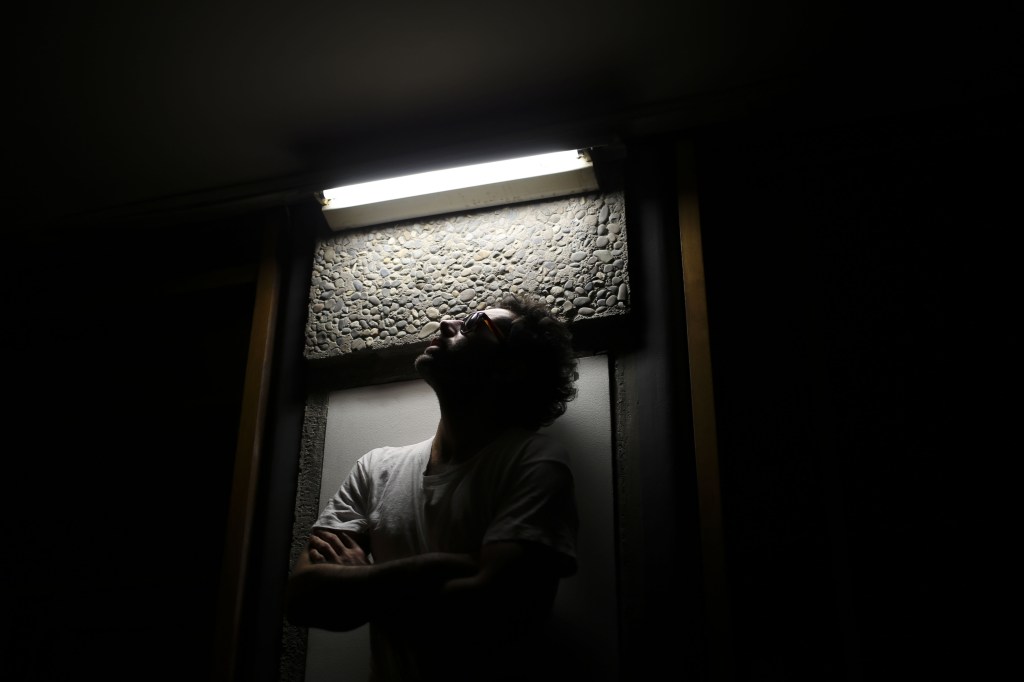
Luca Lo Pinto. Photo by Bianca Hirata 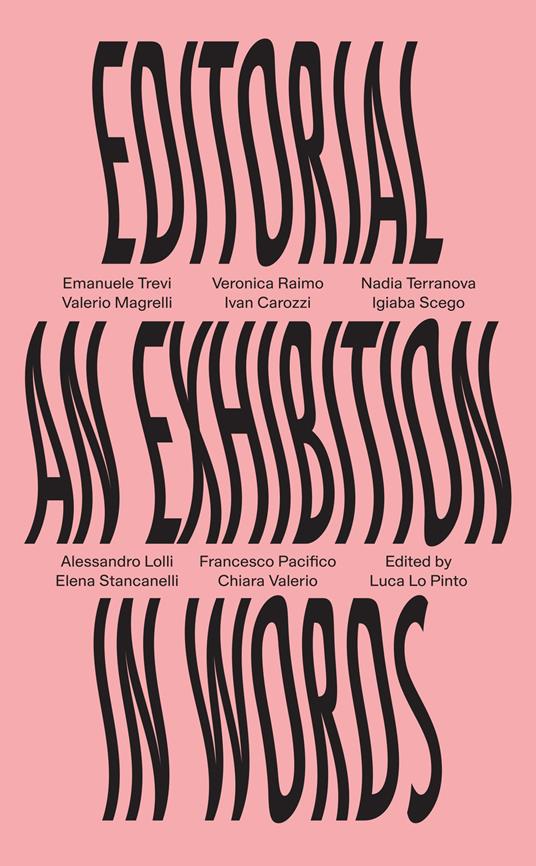
Luca Lo Pinto (ed.), Editorial: an Exhibition in Words, Humboldt Books, Milan 2021 (cover) Hanuman Books 1986 – 1993. Exhibition view, MACRO, Roma 2022. Courtesy Collezione Mughini. Photo Piercarlo Quecchia – DSL Studio 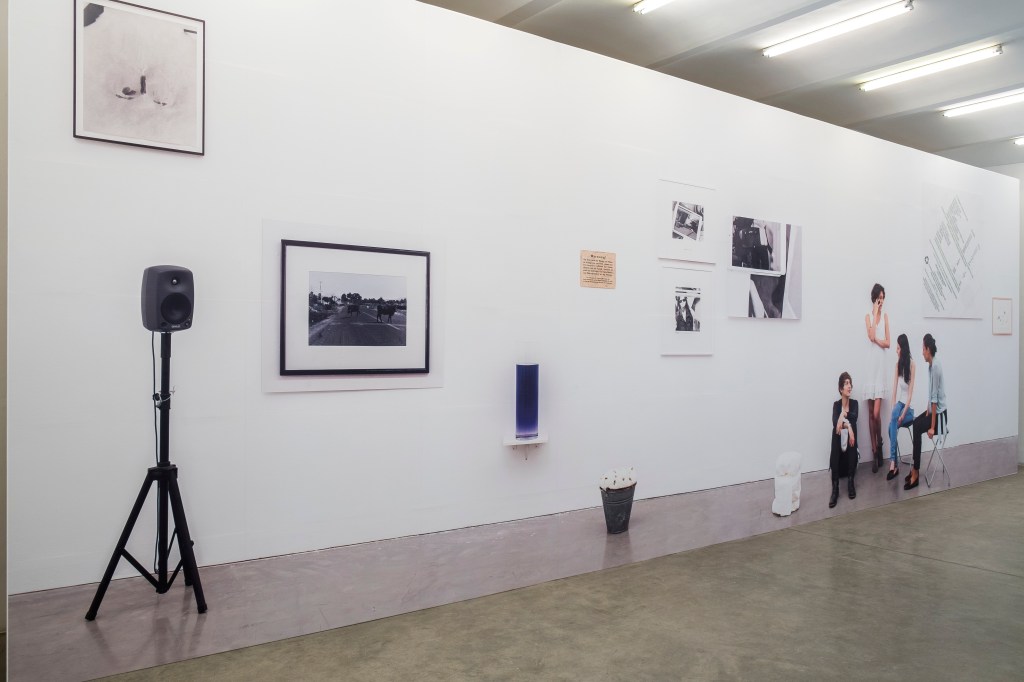
IN REAL LIFE, exhibition view. Christine König Galerie, Vienna 2014 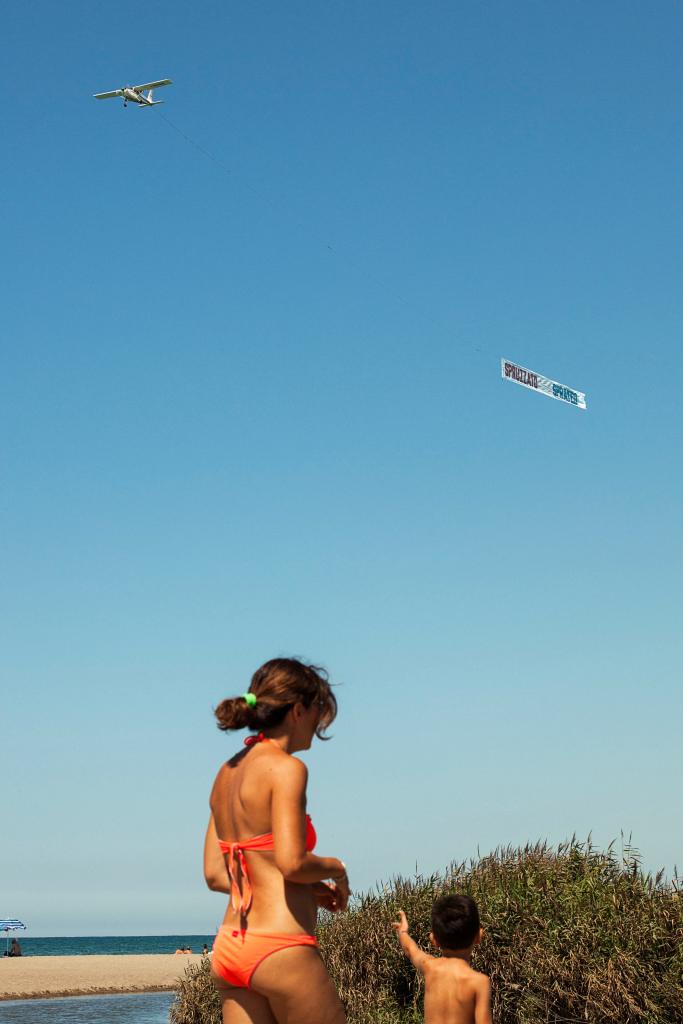
Lawrence Weiner, Spaccato – Split, TRACCE / TRACES. Photo Claudia de Nicolò, Bianca Trevisani 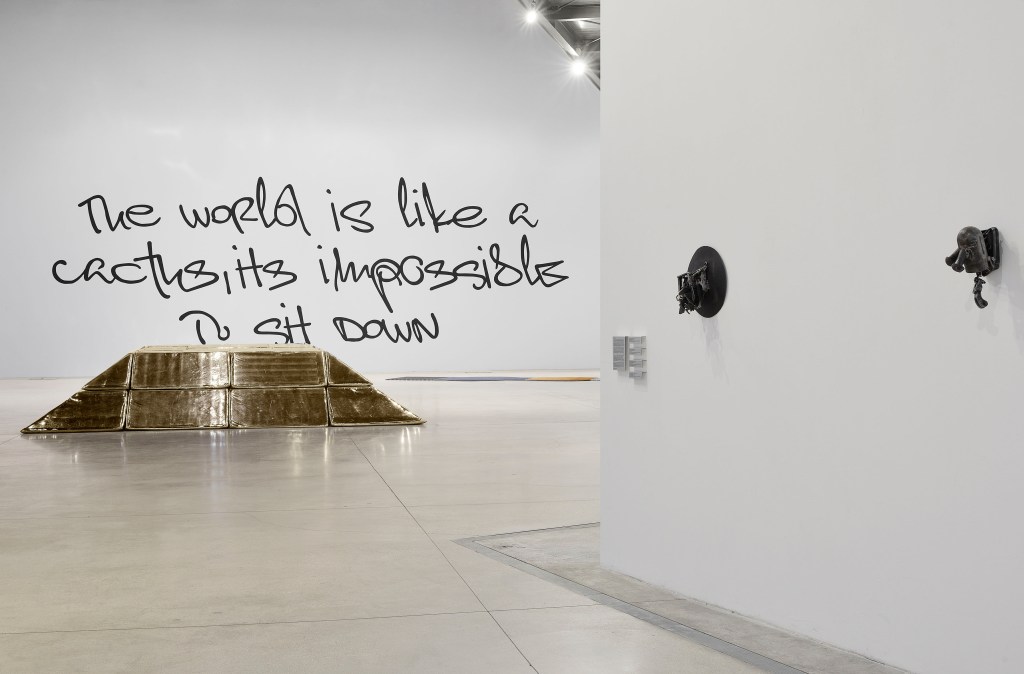
Veduta della mostra Museo per l’Immaginazione Preventiva – EDITORIALE, MACRO, Roma 2020. Photo Roberto Apa NERO 34 Time Is Thirsty, installation view, Kunsthalle Wien 2019. Photo: Jorit Aust: Willem de Rooij, Body Warmer, Size S; Jacket, Size S; Jacket, Size L; Tracksuit, Size XL; Tracksuit, Size XL; 3-Part Track Suit (Jacket, T-Shirt, Pants), 2015, Courtesy the artist and Galerie Daniel Buchholz, Berlin/Cologne/New York
The text has been translated in English using AI

