In her latest book, “Antimacchine. Mancare di rispetto alla tecnologia”, curator and art historian Valentina Tanni explores the possibility of disrespecting machines, breaking free from the dogmas they impose. This conversation delves into the relationship between art, technology and web culture and how it has changed over time.
The curator and art historian Valentina Tanni (Rome, 1976) focuses on a particular area of research, the relationship between art, technology and web culture. This is a field that is still underestimated in an academic context, despite the fact that these issues are generating increasing interest. Tanni herself, for example, teaches Digital Media Culture and Meme Culture and Aesthetics at the Department of Communication and Media Studies at John Cabot University in Rome, and her research has resulted in a series of publications, including Exit reality. Vaporwave, backrooms, weirdcore and other landscapes beyond the threshold (NERO, 2023. English version in 2024) and the recent Antimacchine. Mancare di rispetto alla tecnologia, published by Einaudi in 2025.
We tried to understand, together with Valentina Tanni, what role web culture plays in the contemporary landscape and in art history, discovering that, ultimately, its roots are deeper than one might think.
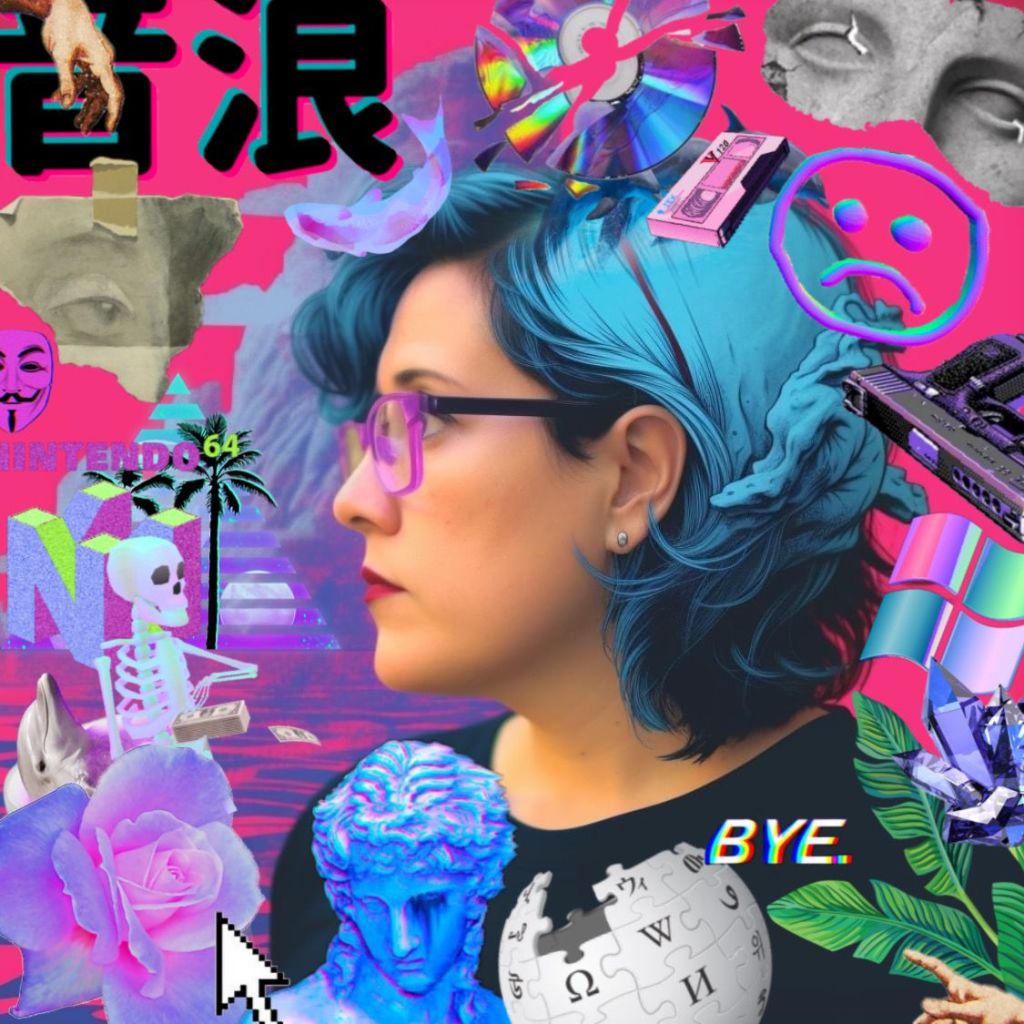
THE INTERVIEW WITH VALENTINA TANNI
Since the early 2000s, your studies and work as a curator, theorist, author and lecturer have focused on the relationship between art and technology, using the web and its dynamics as a field of investigation. How has this relationship changed over the last two decades?
The relationship between art and technology is constantly evolving. Not only because the technological tools available increase and change over time, but above all because the very concept of art is highly unstable: it changes according to the historical moment, the geographical location, and the specific communities that practise it.
In general, I would say that in this part of the world, over the last two decades, artistic experimentation with technology has become much more frequent and visible. The approaches have also become much more diverse.
In 2003, you curated L’oading, an exhibition dedicated to works based on the creation of patches ‒ modifications to existing video games. What was the significance of the exhibition at the time, and what significance and characteristics would it have today?
The exhibition included numerous modified video games, but also some software produced entirely by artists, as well as works inspired by the world of gaming in general. In 2003, it was a deliberately unconventional project: the idea of bringing video games into a museum was still perceived as strange. For this reason, the exhibition attracted the attention of the press and even ended up on television. However, it was not discussed in relation to artistic languages, but rather as a “curiosity”. My goal, on the other hand, was to show how artists were able to appropriate the medium of video games and transform it. Not only to produce new aesthetics, but above all to investigate and question it.
Game art was also part of a broader movement that also included net art and software art, one of the most interesting things that happened in art between the 1990s and the 2010s.
Another aspect concerned the immateriality of the works: the entire exhibition was contained in a dozen CDs, which I personally carried in my backpack from Rome to Syracuse.
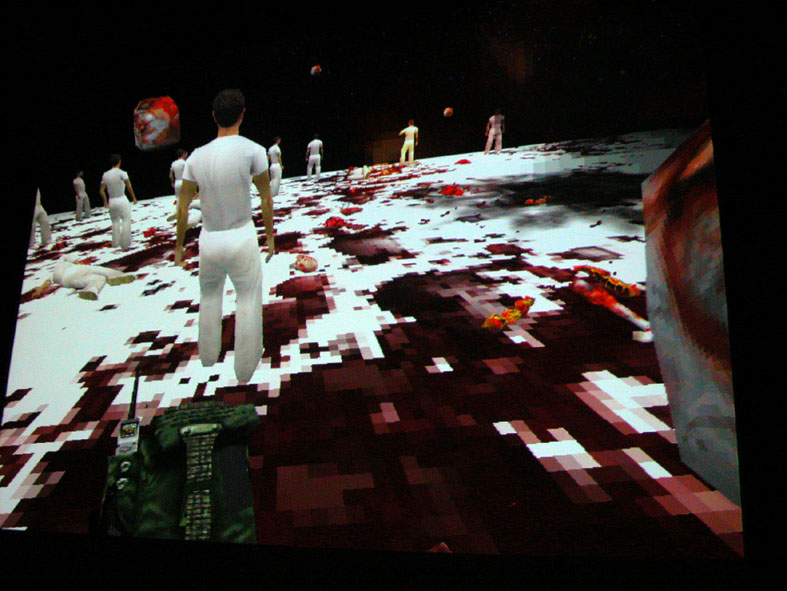
Today, video game modification is a widespread and recognised practice, both within and outside the art world, so the exhibition would probably no longer have the disruptive impact it had back then. However, I think some of the works I selected at the time would still be powerful today, especially if installed in a museum. I am thinking, for example, of Adam Killer by Brody Condon.
Can curating online spaces improve accessibility to certain artistic practices? In what way?
If the works in question originate online (net art, software art, online performance), it makes sense for them to be enjoyed within their own ecosystem. Curating online spaces makes sense first and foremost in these cases. This does not mean that digital works cannot also be taken outside, but in that case a process of “translation” is carried out that transforms them more or less radically.
TECHNOLOGY AND ART HISTORY
You have often reflected on sludge content, a type of content based on hyperstimulation and presented simultaneously on screen, defining it as a pure signal that does not convey any kind of message. Are there any examples in art history that could be considered the ancestors of this type of content?
Yes, it is possible, especially if we think of all the movements that have worked on overload, fragmentation and nonsense. A first reference is Futurism, in particular words in free form: texts, signs and images coexisted simultaneously on the surface, focusing more on sensory impact than on conveying a message. Another possible antecedent is Dadaism, which, through collages and random combinations, challenged the very idea of communication. However, we are talking about affinities that are mainly formal and perceptual, given that these phenomena arose in profoundly different contexts.
In the case of sludge content, these dynamics seem to emerge mainly from the logic of digital platforms and hyperstimulation as a permanent perceptual condition.
Your research often originates on social media and platforms such as Reddit. What tools do you use to study Internet subcultures?
I explore digital spaces where people meet, talk, produce images and sounds, and share ideas and cultural objects. I go wherever online cultures take me: on social media platforms, forums, YouTube, Discord channels, and mailing lists. I combine exploration and direct participation with study: reading articles, books, and interviews.
In an article written for Lucy, you discussed gnomecore, a digital niche that identifies the figure of the gnome as the celebration of an idyllic model of bucolic life. There is extensive literature on this subject, dating back as far as the 1970s. Are there other digital niches that refer, perhaps unconsciously, to past stories and mythologies?
Yes, many Internet aesthetics draw on imagery and mythology from the past. I am thinking, for example, of cottagecore, which reworks 19th-century pastoral and romantic myths, or dark academia, which stems from the romanticisation of classical knowledge. Witchcore and fairycore also draw on folklore, fairy tales and magical traditions.
In your book Exit Reality, you focus on backrooms, a set of levels outside reality that become increasingly dangerous the deeper you go and from which it is virtually impossible to escape. In your opinion, what motivates people to become fascinated by disturbing topics online?
I believe that these issues resonate with people because they give visible form to widespread fears that are difficult to name, such as disorientation, loss of control and the sense of profound unease that characterises this moment in history.
CURATORSHIP AND DIGITAL TECHNOLOGY
What technical problems can arise when curating exhibitions with digital works? Have you ever encountered difficulties when putting together an exhibition?
The technical problems that can arise are endless. Literally anything can happen: the software may malfunction or be incompatible with the devices available; the media may break, the lighting conditions may be very difficult to manage; the audio of the different works may conflict, etc. (I could go on for another two pages!).
I have always found myself having to solve all kinds of problems when setting up the exhibitions I have curated, which is why I always recommend testing everything well in advance, so that you always have time to come up with a plan B. When I curated my first exhibition (Netizens. Cittadini della rete, Rome, Sala 1, 2002), for example, one of the works was I Shot Andy Warhol by Cory Arcangel; the Nintendo console on which the modified software ran had arrived from the United States and literally burned out due to the difference in voltage (we had an adapter but it didn’t work properly). I bought a new console, but once it arrived at the gallery, I discovered that in Italy the cartridges were slightly different in size, so Arcangel’s cartridge was not compatible. In the end, I was forced to run the work on an emulator. It was a great disappointment, but also a lesson I have never forgotten. Since then, I always expect anything and everything and I am ready for anything.
Moreover, the problems do not end when the installation is complete: digital works require constant maintenance, and often the staff working in museums/galleries are not trained or paid to perform this task.
Martina Leva
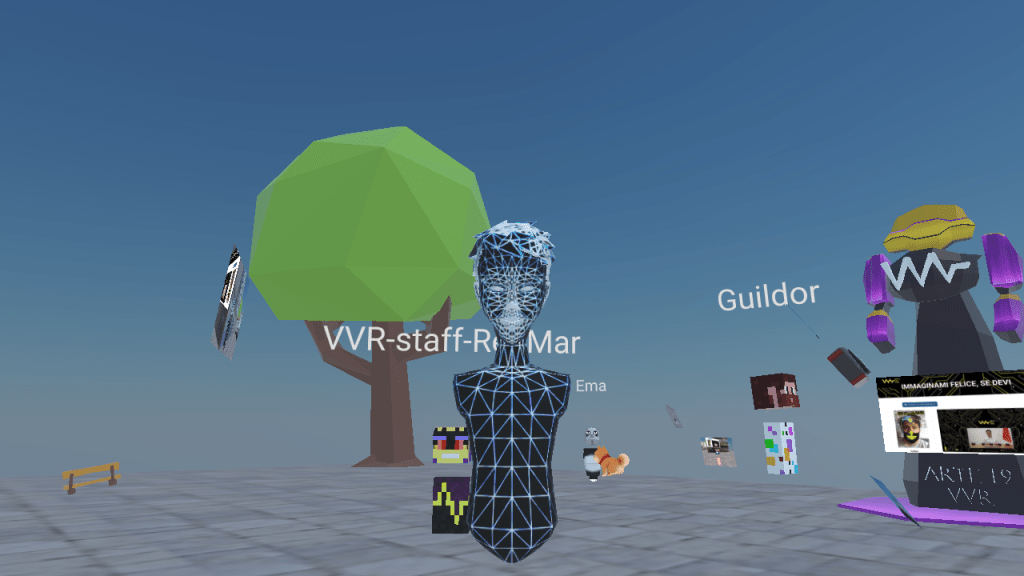
Arte-19 _ Virus Virtual Reality Game, 2020 Brody Condon, Adam Killer, 2000 – L’oading, Museo Montevergini, Siracusa, 2023 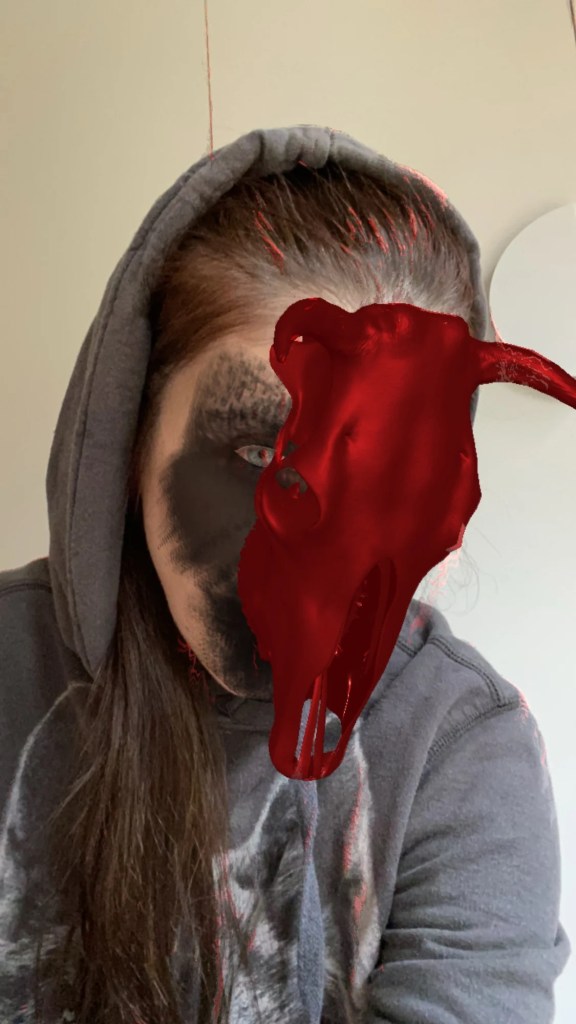
Mara Oscar Cassiani, Spirit Avatar, filtro Instagram – mostra Art Layers on Artribune, 2021 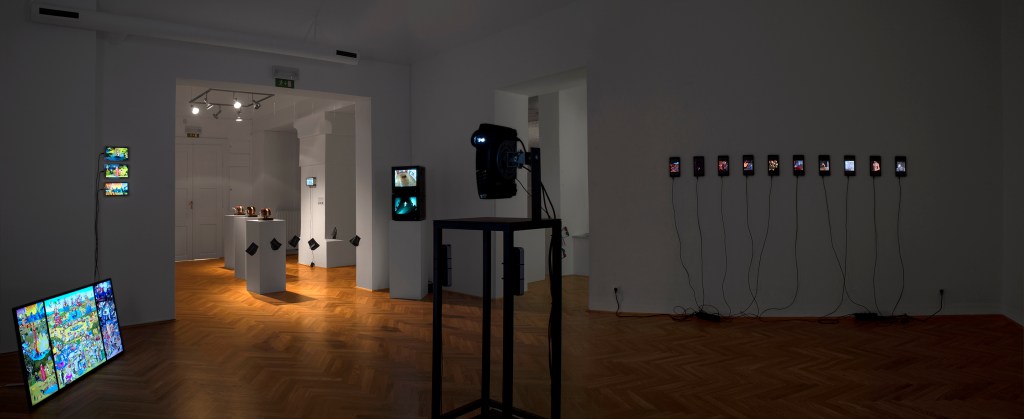
Stop and Go. The Art of Animated Gifs, MGLC – International Centre for Graphic Art, Ljubljana, 2018 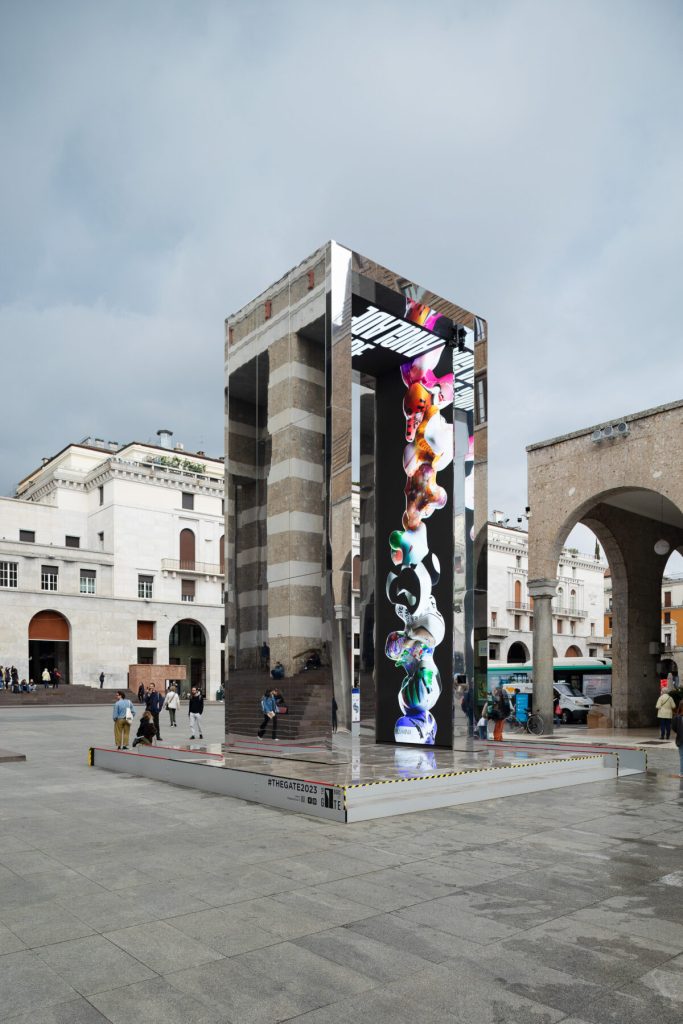
Unreel – A door to alternative realities, Rassegna di arte digitale nello spazio pubblico, The Gate – Bergamo, Brescia (aprile-giugno 2023) 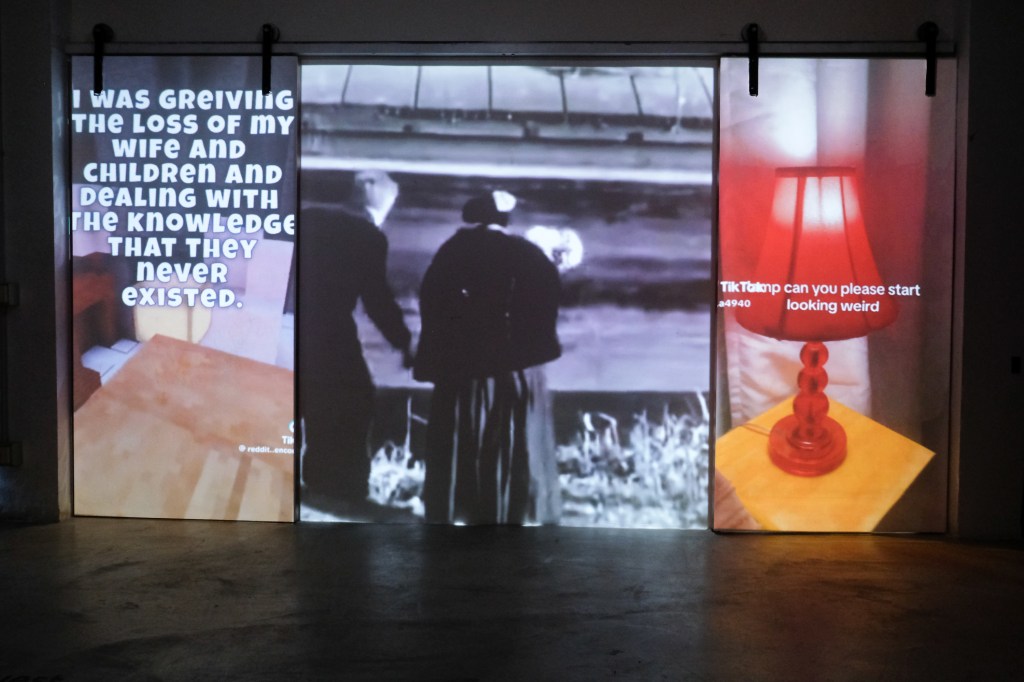
Valentina Tanni, reality Quest, 2025 – The Lamp, Liminal Space, Roma 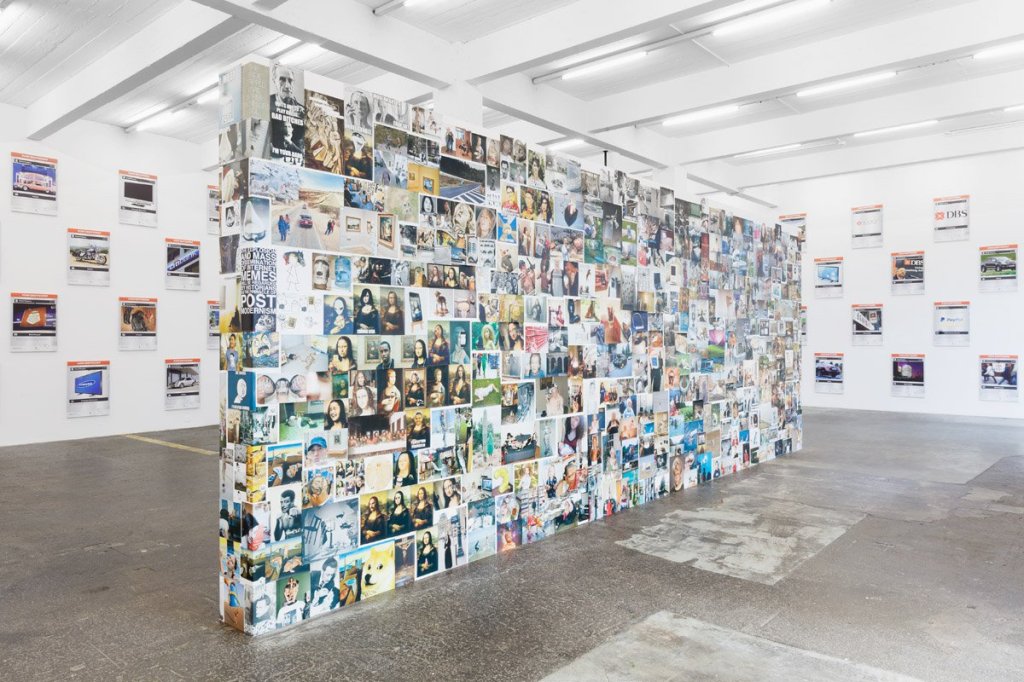
Valentina Tanni, The Great Wall of Memes – The Darknet. From Memes to Onionland, Kunst Halle Sankt Gallen, 2014 Valentina Tanni 
Valentina Tanni