A meeting with director Alessandra Galletta to explore the subtle boundary between curating and video documentation, and to understand how art can be brought to a wider public.
Alessandra Galletta (Padua, 1964) is a director, writer, and producer. She founded LaGalla23 in Milan, an independent production company focused on creating documentaries, videos, and original formats with an artistic and cultural edge. From the 1990s television show Le Notti dell’Angelo to documentaries on internationally renowned artists such as Adrian Paci, Tomás Saraceno, Ettore Spalletti, and Francesco Vezzoli, Galletta has developed her own distinctive way of telling artists’ stories, with the clear goal of spreading their message.
You began your career as an independent curator and later co-authored the cult TV program Le Notti dell’Angelo with philosopher Marco Senaldi. What did it mean, back then, to curate a television program about art and culture? How were the contents selected and structured for broadcast?
The show, created by Gregorio Paolini, aired on Mediaset channels at a time when the editorial direction was to broaden TV offerings ‒ until then largely entertainment-based ‒ to include art, fashion, and contemporary culture. For us, as writers, it was immediately clear we had the chance to create the kind of program we ourselves would want to watch: contemporary topics conveyed through a video language that blended multiple disciplines. Each episode interwove philosophy, exhibitions, artworks, as well as literature, cinema, and even commercials ‒ which, at the time, were like short, high-quality films. The entire structure rested on smart and agile editing, with no studio, host, or voiceover. And it worked.
You founded LaGalla23 in Milan, a production company entirely devoted to contemporary art documentaries. Among other works, you’ve written and directed portraits of Adrian Paci, Francesco Vezzoli, and Ettore Spalletti. How do you determine the approach or perspective for a documentary? What draws you to a particular subject?
The subject emerges when, in getting to know an artist more deeply, I discover key aspects of their work that fascinate me so much I feel compelled to share them with a wider audience.
The approach, however, is unconsciously suggested by the artist themselves. It arises from their willingness to let the camera enter both their artistic and personal lives. Great artists are always consistent with their work, and that consistency is evident not only in their studios but also in their homes, over dinner, on the phone… or in the book sitting on their nightstand.
ART THROUGH THE LENS OF ALESSANDRA GALLETTA
You also work on commission for museums and cultural institutions. Does your approach change in these contexts?
Not fundamentally. I always start by writing a shooting plan that faithfully follows reality, without altering it: the unpacking of the artworks, the often-complicated installation process, the noise of the opening night ‒ and above all, the words of the artists themselves, who, along with their work, are always the true protagonists of my documentaries.
Telling Maria Lai’s story means engaging with an intimate and hard-to-translate body of work. As producer of Sulle tracce di Maria Lai, how did you contribute to defining her art?
The film was directed by Maddalena Bregani, with whom I’ve collaborated since our Mediaset days. We’ve always shared a creative alignment and a similar vision. I read her project and wouldn’t have changed a word. I’m proud to have been her first producer.
Would you say your work could be considered a form of curating? After all, like a curator, you choose what to show, you establish an order, and construct a narrative ‒just like in an exhibition.
What curating and directing definitely share is the initial phase, focused primarily on research and writing ‒ both fundamental to the two professions.
The difference lies in the fact that, in curating, your role is to express your own viewpoint through the artists’ work, whereas in my documentaries, I use my skills to amplify the artist’s message and vision ‒ not my own.
THE CURRENT PROJECTS OF ALESSANDRA GALLETTA
What has been the most striking and/or challenging location you’ve filmed in so far?
Without question, my latest project: a documentary about Il Grande Cretto by Alberto Burri in Gibellina. I’ve been working on it for two years now. It’s a fascinating yet extremely complex site to capture. The Cretto is vast, the light shifts constantly, and it’s located in a remote part of Sicily. Each day of filming feels like confronting a completely new work. It’s like trying to make a documentary about a mirage, a Fata Morgana, a visual illusion ‒ or a dream. Beautiful, but nearly unreachable. This is the project I most hope to bring to life.
Do you see something of yourself in the artists you portray?
Not necessarily. In fact, I would love to make a film about a good artist who isn’t necessarily one of my favorites. But the essential requirement is always deep knowledge of their work ‒ because you simply can’t tell a story you don’t fully understand.
Sofia Battistelli
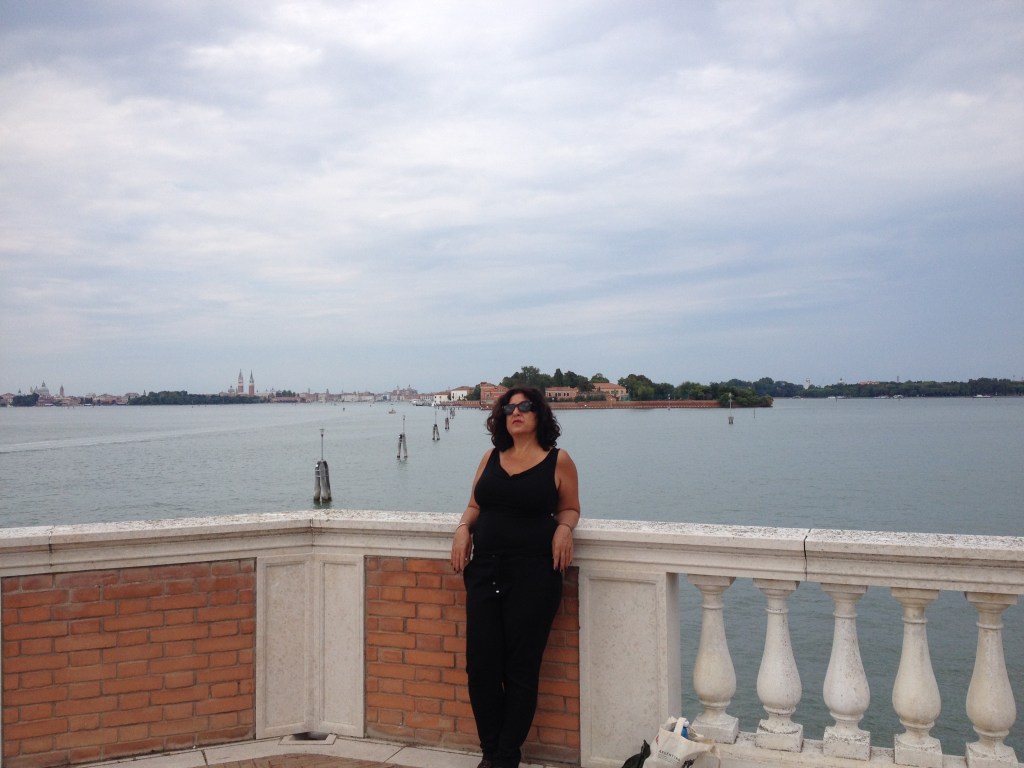
Alessandra Galletta in Venice. Courtesy of Alessandra Galletta 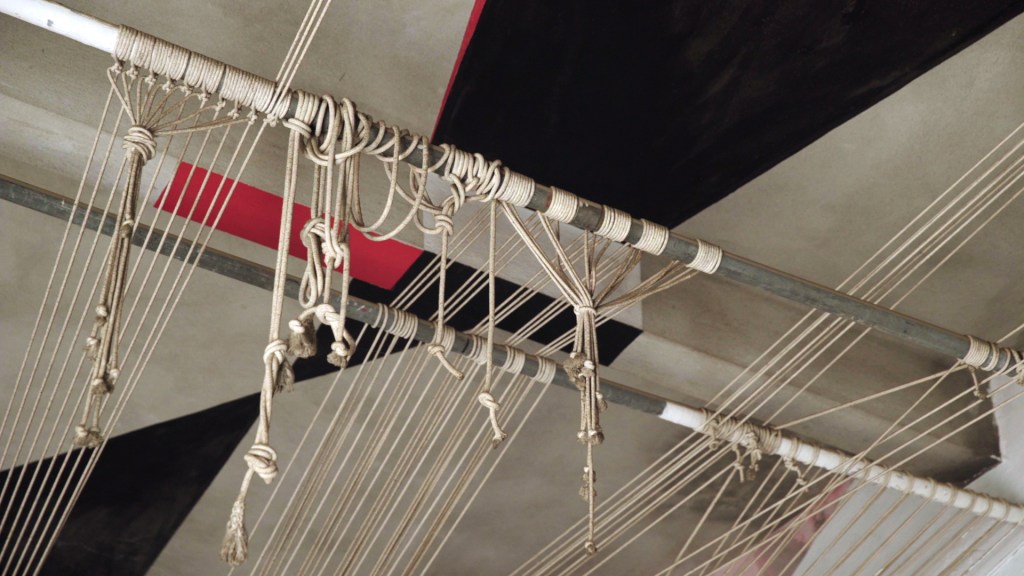
Maria Lai, Telaio-soffitto, 1982, Open-air museum, Ulassai. Credit: © LAGALLA 23 productions 2020 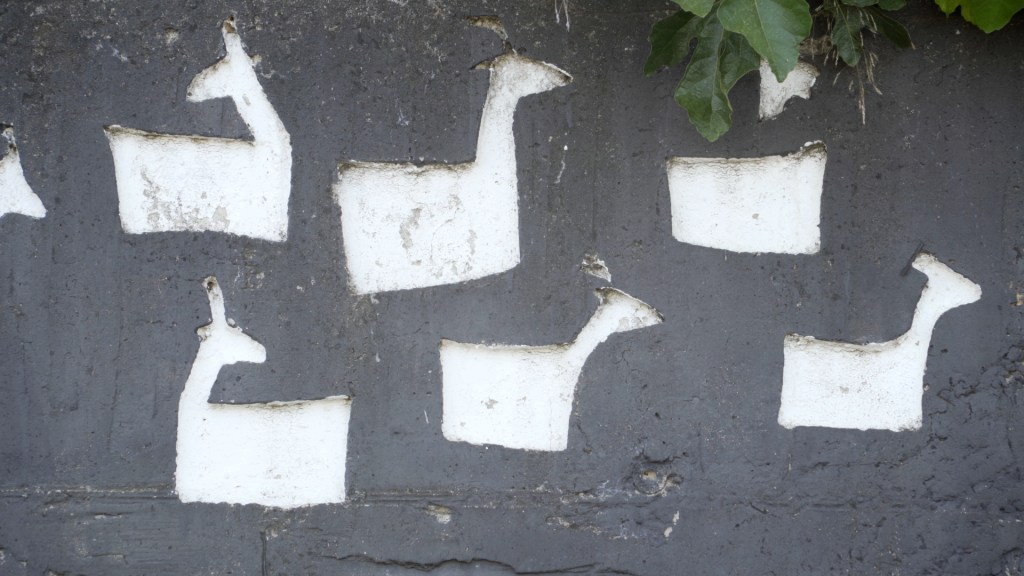
Maria Lai, Pastorello mattiniero con capretta (detail), 2005, Open-air museum, Ulassai. Credit: © LAGALLA 23 productions 2020 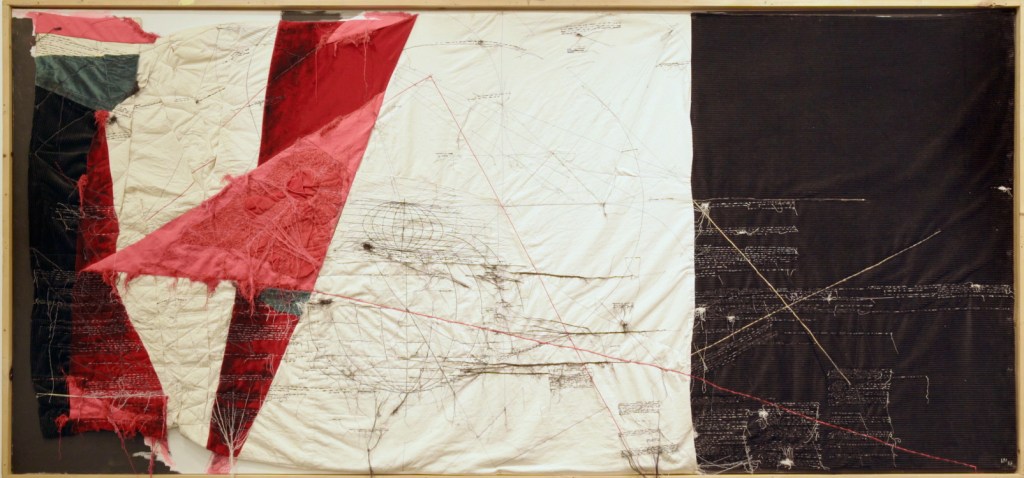
Maria Lai, Mondo incandescente, 1988. Credit: © LAGALLA 23 productions 2020 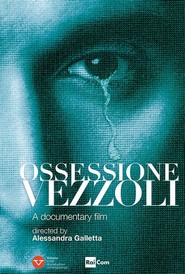
Poster of the documentary Ossessione Vezzoli. Credit: Alessandra Galletta 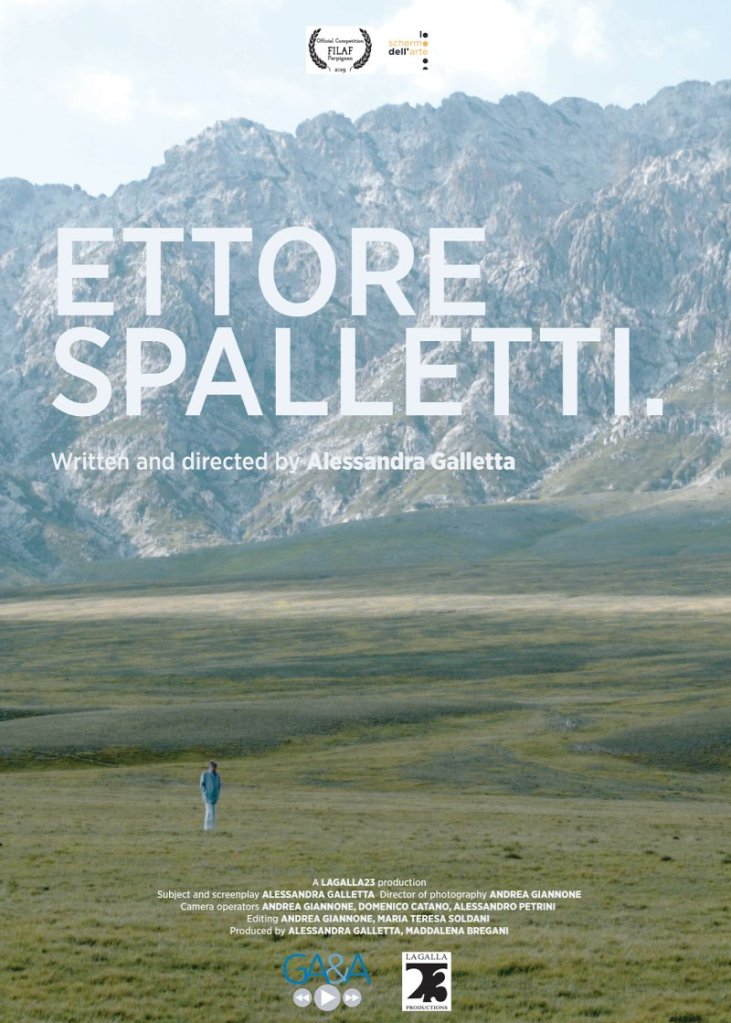
Official poster of the Ettore Spalletti documentary. Credit: Alessandra Galletta 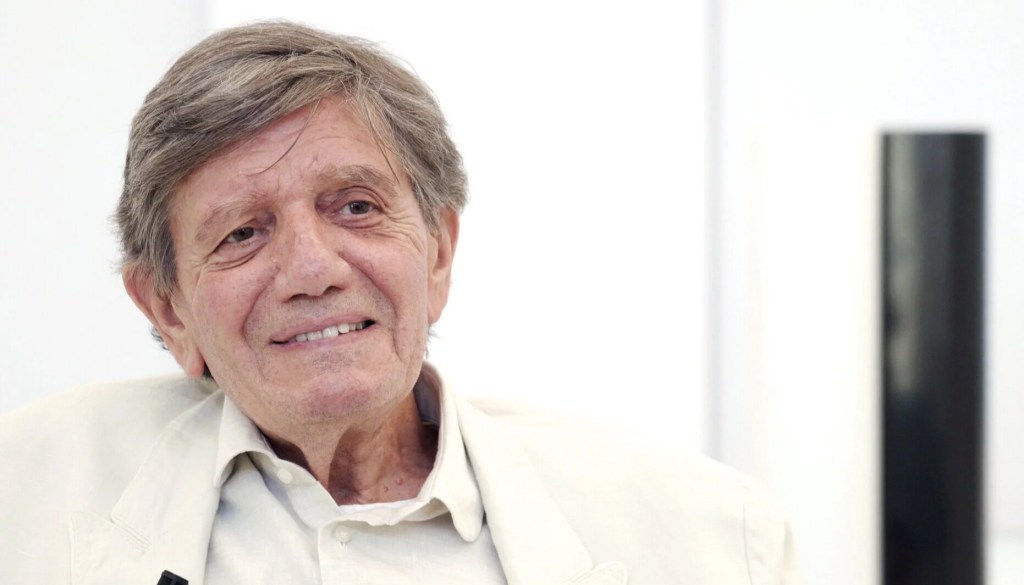
Ettore Spalletti, detail view. Credit: Alessandra Galletta 
Film still of Ettore Spalletti. Credit: Alessandra Galletta
Translated with AI

