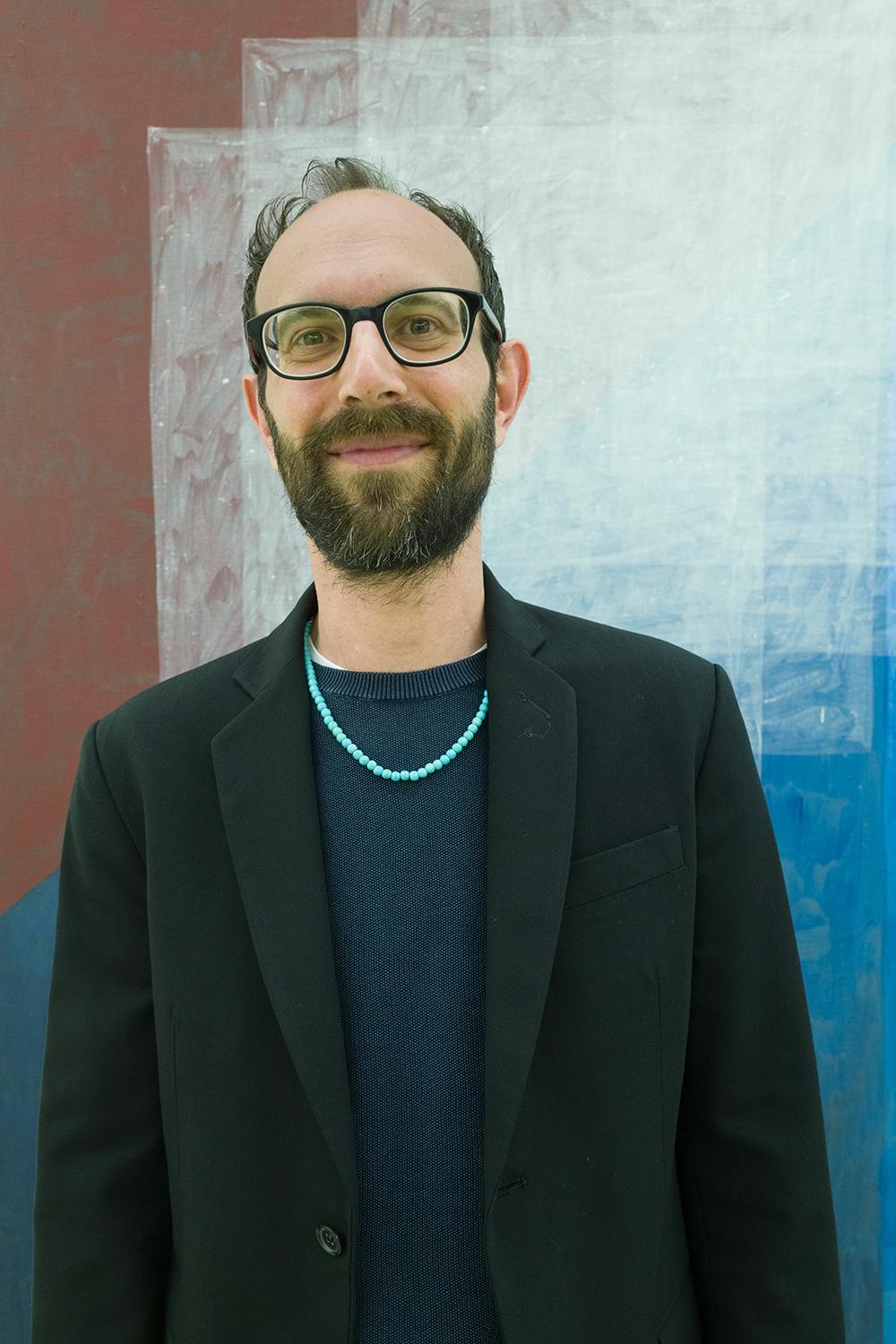
For more than twenty years, Antonio Frugis has been dedicated to studying and promoting the work of Pino Pascali. This interview explores the work of the Foundation, based in Polignano a Mare, focusing on an artist who, sixty years after his death, continues to defy definition and challenge the present.
In Puglia, in Polignano a Mare, the Pino Pascali Foundation has overlooked the Adriatic coast since 2010, paying homage to and keeping alive the memory of the eponymous artist. Pino Pascali (Bari, 1935 – Rome, 1968) crossed the contemporary art scene of the 1960s like a meteor, establishing himself in a very short time as one of the most important exponents of Italian creativity in the world, and distinguishing himself for his eclecticism and for a practice that does not remain confined to a precise historical placement but is current and projected towards the future. An attitude that makes Pascali’s production always deserving of study and a source of inspiration. In this article, we have analyzed the work of the Foundation; its role in the relationship with international institutions and curators who investigate Pascali’s work; we have deepened some theoretical and practical implications of managing his legacy and we have dwelt on the meaning and implications of a curatorial research that develops over time around the figure of a single artist, exploring how this type of continuity can translate into new perspectives of research, interpretation and valorization of his work and his territory. We talked about it with a prominent figure: Antonio Frugis – Senior Curator and General Coordinator of the Foundation –, who for more than twenty years has dedicated his career to the accurate study of Pino Pascali’s work.

THE INTERVIEW WITH ANTONIO FRUGIS
How do you curate and protect the legacy of an artist who passed away so prematurely in an ethical and scientific manner?
Study certainly remains the first fundamental step to effectively govern Pascali’s legacy, because without a profound understanding of the artist it would be unthinkable to activate the useful devices to protect his identity and, therefore, his legacy. Pino Pascali, although he operated for such a short time, remains (and will remain) one of the fundamental paradigms in Art History, his eclecticism undoubtedly offers many points of reflection that one must know how to grasp in their true context. Personally, I have never felt the urgency to channel research on the artist by perimetering it within institutional boundaries; every researcher and scholar must be able to feel free to conduct research and study following the models they deem most appropriate and, in this sense, taking care of Pino Pascali’s artistic legacy means providing the best tools for understanding the Archives, the documents and that know-how that is acquired after many years of study and daily attendance with these materials. It also remains essential to engage with scholars and researchers who, from the 1960s to the present day, have been studying Pascali’s work from both a historical and a critical perspective; research, study and publications remain essential because they often reveal unprecedented points of view or add subtleties deserving of further depth declined with respect to one’s own background. Finally, in the question there is already the best possible answer: without ethics and intellectual honesty, the risk is that of making understanding border into an arbitrary truth which, undoubtedly, I personally do not feel I possess.
CURATING PINO PASCALI’S LEGACY
Managing Pino Pascali’s legacy means confronting ephemeral, industrial materials and a multidisciplinary practice that ranges from sculpture to performance. What are the most complex challenges you encounter in the conservation, authentication and cataloguing of this heritage?
One must well understand the spirit of the time in which Pascali operates: a world, the Western one, which in those 1960s was changing at great speed and technological progress was seen as the further liberation and emancipation of man, while the economy began to assume the forms of voracious capitalism. There is a society charmed by the new, but there is also a part of it that would like to overcome the alienation that the new generates. Pascali used both waste materials that he collected from Roman second-hand dealers and new, industrial materials: steel wool, acrylic plush and even fibre cement; materials that one should have a thorough understanding of (e.g. European steel wool differs from the American variety used by Pascali) but which time and numerous exhibitions have worn away, posing questions regarding restoration and, in some cases, have led to an overproduction of exhibition copies of the work. Cataloguing is made easier by the fact that we are familiar with all of Pascali’s sculptures and their locations (only a few have been completely lost to history); their authenticity is guaranteed by the historical records compiled by each institution and gallery owner.
THE INTERNATIONAL COMMITMENT OF THE FOUNDATION
In addition to the precious work of conservation and protection of the archive, the Foundation is committed to the promotion of major exhibitions dedicated to Pino Pascali. How is the work articulated that guarantees the presence of the artist in international museums, ensuring that his practice does not remain tied exclusively to the narrative of the Italian context of the 1960s?
Almost without exception, anyone organising a solo exhibition or an event at which Pascali is likely to consult the Foundation, and this gives us great satisfaction, given the considerable efforts made, which lend the institution a sense of authority. Pascali remains inextricably linked to the vibrant atmosphere of the 1960s, and yet his work seems as though it could have been created tomorrow, for it retains a dawn-like freshness that transcends time; the artist was capable of creating formal statutes through archetypal models that border physical geography and belong to the hidden Self. This is one of the key aspects, as this interpretation denies any physical location in space-time, extending Pascali’s artistic practice along the line of infinity; Pino Pascali worked in the 1960s, turning his gaze towards an archaic and ancestral past, embracing the present whilst constantly projecting his work into the future.

The Foundation still administers the Pino Pascali Prize, established in 1969. Originally created as a commemorative initiative and closely linked to the artist’s circle, the Prize has evolved over time to become an international award that brings world-renowned artists to Polignano. In light of this transformation, what strategic role does the Prize play today, both for the Foundation and for the artists who take part in it?
The relationship between the award-winning artists and the Prize itself is a two-way one, especially now that its track record has been firmly established; every award-winning artist is familiar with Pino Pascali before entering the Foundation’s galleries. Yet coming into contact with the very essence of the places associated with Pascali evokes sensations that the artists perceive. The prize is not awarded to a mere follower of Pascali but to those capable of following in the methodological footsteps of the linguistic research carried out by Pino. The exhibition celebrating, as is traditional, the winning artist thus becomes the vehicle for turning our gaze towards those artists who engage in a silent yet powerful dialogue, capable of triggering a rupture in artistic languages to the point of overturning them entirely. And it responds perfectly to what Pascali himself wrote, because even the Prize that bears his name is like a snake that sheds its skin every year.

ANTONIO FRUGIS’S CURATORIAL RESEARCH
Yours is an exceptional curatorial career: for more than twenty years, your research has been linked to a specific venue and has consistently focused on the work of a single artist who is no longer with us, whose creative career was meteoric, spanning just four or five years. How does this specific form of curatorship manifest itself in day-to-day practice? And how do you manage to continually draw new inspiration from a body of work that is inevitably limited and already historicised?
My work with the Foundation has now reached its twenty-first year – wow! I think I’ve been very lucky to have met, throughout my professional career, the right people who, as well as placing their trust in me, have above all helped me to grow, to challenge myself and to mature (I hope!). Study is always the winning formula, but it must be complemented by a deeper understanding: studying Pascali requires knowledge and a thorough understanding of many aspects of art history, but also of television, theatre, sociology, anthropology and all those worlds the artist frequented and, above all, lived in. I enjoy exploring everything and, to be honest, I owe my thirst for knowledge largely to the role I try to play to the best of my ability. Take, for example, Pascali’s graphic work, particularly his advertising and television pieces: to understand Algida’s rejection of the ‘I Killers’ advert, one needs to know what the written and moral rules were of a television that, in its early days, felt the need to educate Italians and which, thanks to this, provided, for the first time, a unique audio-visual language for the whole of Italy. Similarly, it becomes difficult to understand some of the artist’s technical and stylistic choices unless one examines in depth his work as a set designer at RAI alongside Cesarini da Senigallia, the set designer for television. It is therefore necessary to use a magnifying glass and delve into minutiae which will often yield very few results but which, at the same time, allow us to uncover revealing details that time may have scattered or erased. Pascali moves within boundaries that are fluid yet extensive; the risk is that we may lose sight of the horizon, and our task is to serve as the star chart to guide the artist’s journey.

Art history has cemented Pascali’s place within the Arte Povera canon, thereby risking oversimplifying his extraordinary multidisciplinary complexity. The exhibition Pascali Memoria. Notes in Images, on display at the Teatro Kursaal Santalucia in Bari until 25 October 2026, shines a spotlight on his 1965 photographic series commissioned by Cirio for an advertising campaign. What are the ‘blind spots’ or the less-explored aspects of Pascali’s work that you believe it is urgent for critics to focus on today?
Pascali was an artist who, right from the start of his career, attracted the attention of art historians and critics who recognised the value of his work; his work was never seen as something for the future but was already considered contemporary. Those who have followed his dazzling rise have clearly explained his place in art history, setting out certain aspects from the outset and dispelling the notion that Pascali can be pigeonholed into a particular school or movement, because the artist himself is movement. Critics will always find new inspiration to explore every aspect of the work of this extraordinary artist; I believe, if anything, that today it would be important to address certain issues, such as the conservation of the work, improving its upkeep and thereby avoiding the production of exhibition copies, as I mentioned earlier; one could discuss exhibition solutions, since the concepts of ‘total width’ and ‘scenic space’, which envisage ways of occupying space starting from the surface, from the floor, and which so greatly influence the experience of the works, remain fundamental to fully understanding the meaning of Pascali’s work; yet I also fully understand the ‘rules’ imposed by museum practice. It really strikes me as an interesting topic.
THE RELATIONSHIP BETWEEN THE FOUNDATION AND THE LOCAL AREA
The Foundation’s institutional history is inextricably linked with the processes of urban regeneration in the local area: its first premises in Polignano a Mare ‒ at the time not yet a Foundation but a museum ‒ were a former hospital; its current premises are housed in a former abattoir; and the exhibition in Bari is held at the Teatro Kursaal, which has reopened following extensive restoration. How does the Foundation ensure that the regeneration of these historic and industrial spaces translates into a driving force for genuine political and social transformation for the region and the people of Puglia, as well as for tourists and professionals in the field?
Over the years, we have been able to collaborate with various organisations and we are grateful for all the opportunities we have had to bring the experience of contemporary art to Puglia, raising awareness not only of Pascali’s work but also of the Foundation’s activities. Having access to and working in such prestigious, albeit unusual, spaces is a significant challenge, and so the use of a theatre such as the Kursaal highlights the multidisciplinary nature of the arts and a mutual exchange of influences; in this way, spaces are returned to the public, becoming not merely places to gather but genuine centres of cultural exchange, so that the debate is not the exclusive preserve of professionals but can include everyone. This is how a cultural venue becomes a catalyst for thought and a defining feature of a community; but it is a lengthy process that cannot be dispensed with.

During his lifetime, Pascali spent only his childhood and part of his adolescence in Puglia, leaving at an early age to pursue his studies, first in Naples and then in Rome, which were then the centres of contemporary art. For Pascali, Puglia existed more as a realm of myth and nostalgia, as a reservoir of the imagination, but not as a market or an exhibition space. From a curatorial perspective, how does the Foundation – now based in his parents’ hometown, a place particularly dear to the artist – avoid the risk of ‘folklorising’ or regionalising his work, whilst keeping intact the tension between his roots and his global reception?
For Pascali, Puglia was naturally a source of anthropological inspiration, myth and myth-making, not a place to be staged but one that was already inhabited, where nature and the natural held an almost primitive significance; today, that archaic tension has almost completely faded, and tourism has taken hold to the point of affecting not only the Mediterranean spirit but also the landscape itself. Perhaps, in this sense, it is once again Pino Pascali himself who helps us, enabling us to understand how we must not renounce our roots whilst, at the same time, moving forward; it is essential to find that balance. Polignano is now a significant and important destination that attracts tourists from all over the world; many of them choose to visit it precisely because of the Foundation’s presence: this is due to the iconic status that Pascali represents, but also to the work carried out precisely because it was decided not to confine Pino to his Mediterranean but to leave him free to swim, to follow the currents – a modern-day Ulysses returning to his Ithaca but who, during his journey, has scaled the highest peaks of art.
Alice Longo
23 July ‒ 25 October 2026
PASCALI MEMORIA. Appunti per Immagini
Teatro Kursaal Santalucia, Bari
The text has been translated in English using AI
Antonio Frugis, 2025. Photo by Luciana Galli 
Maurizio Mochetti, Lo Spazio il Vuoto l’Orizzonte, 2023. Photo by Marino Colucci 
Pino Pascali Award, Roberto Cuoghi, 2025. Photo by Marino Colucci Pino Pascali, From Image to Shape, collateral event of the 58th Venice Biennale, 2019. Photo by Marino Colucci 
Pino Pascali Award, Hans Op de Beeck, 2017. Photo by Marino Colucci Pino Pascali Award, Francesco Arena, 2024. Photo by Carlo Romano Pino Pascali Award, Ibrahim Mahama, 2021. Photo by Marino Colucci Pino Pascali e la fotografia, 2018. Photo by Marino Colucci 
Confluenze, Pino Pascali and Toti Scialoja, 2024. Photo by Barbara Rigon. 
Dialoghi, Pino Pascali and Gino Marotta, 2021. Photo by Marino Colucci