The exhibition “Over, under and in between” by Mona Hatoum in the Cisterna space of the Fondazione Prada in Milan brings together three site-specific installations that explore the dimensions of the “over,” the “under,” and the “in between” as both spatial and existential coordinates. Hatoum translates her diasporic experience into a field of tensions between boundary and crossing, stability and precariousness, turning the Cisterna into an interstitial space to inhabit.
“Over, under and in between.” Three spaces. What is over: superstructure, boundary, the ideological scaffold. What is under: matter, body, personal memory, identity. What lies in between: diaspora, hybridity, statelessness, thirdness. These three coordinates – spatial as well as existential – unfold across the three naves of the Cisterna at the Fondazione Prada in Milan, where, until 9 November 2026, three new site-specific installations by Mona Hatoum are on view. The artist’s practice itself unfolds within this triadic structure.
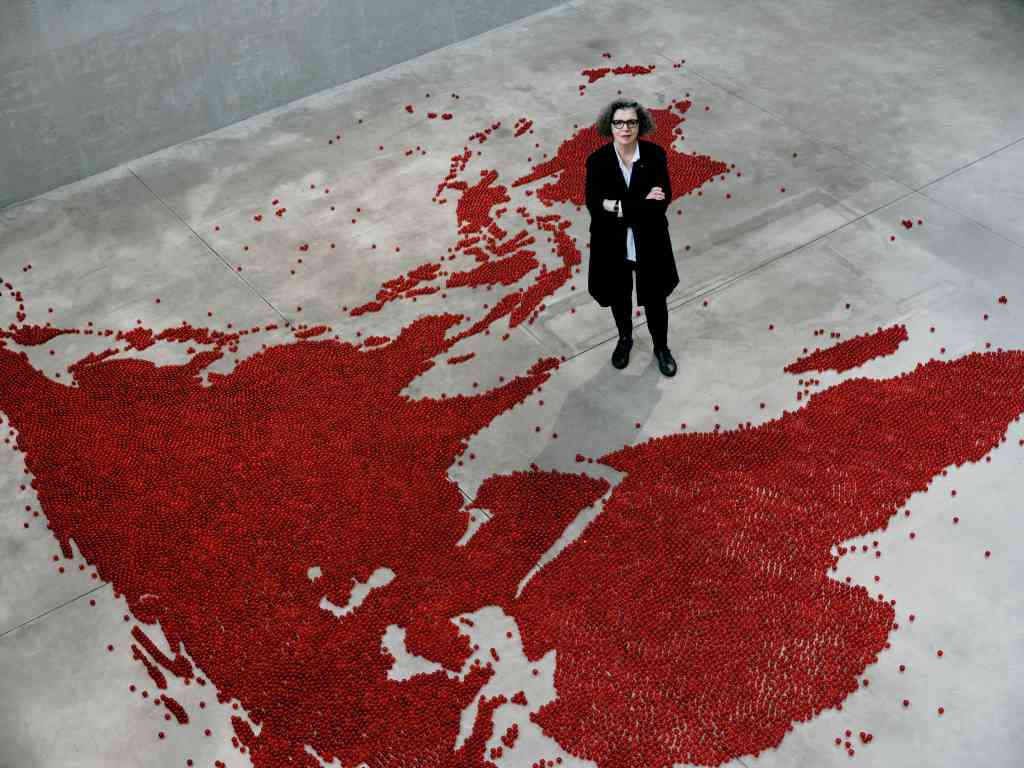
Mona Hatoum was born in Beirut in 1952 to Palestinian parents exiled in Lebanon. In 1975, when the artist travelled to London for a short stay, the outbreak of the Lebanese civil war forced her into exile, making it impossible for her to return to her family. This condition of stateless exile would later translate into her artistic practice as the materialization of an interstitial mental space – paradoxical, dislocated, and intimately violated. Starting in the early 1990s, Mona Hatoum’s interest gradually shifted from performance and video toward environmental and sculptural installations. The epidermalization of statelessness, coercion, and displacement that marked her early work becomes, in this phase, a meditation on matter and structure. Hatoum appropriates certain elements of a minimalist vocabulary – the modular grid, seriality, orthogonality – while unsettling their supposed objectivity and phenomenological reduction by introducing a disturbing deviation. Repetition becomes the intensification of a tension; the grid becomes a cage; structure turns into a field of contradictory and unstable forces. Matter itself seems to think – or rather, to remember. The body is evoked, form remains indeterminate, and meaning is traced back to the root of an existential conflict. Hatoum inhabits matter much as she inhabits her own identity: matter becomes diasporic, an in-between space, a field of antithetical tensions. Rootedness/migration, existence/disappearance, structure/superstructure, stability/instability, building/demolishing, boundary/crossing, intimacy/surveillance, fragility/threat.
MONA HATOUM’S EXHIBITION IN MILAN
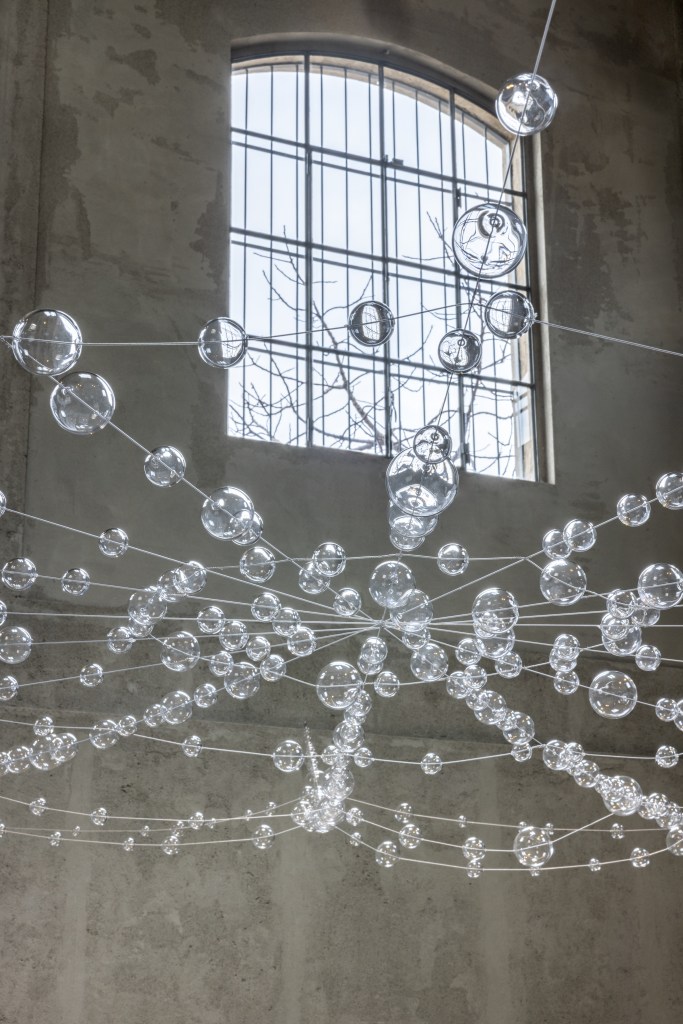
Within the post-industrial spaces of the Cisterna – once used as the storage silos of a former alcohol distillery – Mona Hatoum intervenes site-specifically, engaging the architecture and the viewer’s physical and emotional experience, inviting them to occupy an in-between position across the three rooms. At the entrance stands Web (2026), a vast spider’s web of metal wire studded with blown-glass spheres that hangs above the space. Hatoum weaves a net in which displacement, entrapment and coercion crystallize in the fragile glass globules: the web becomes a superstructure that both ensnares and connects: it evokes barbed wire that blocks and confines, yet also the threads of familial bonds and interconnection. As the artist notes in the exhibition’s introductory text: “A web can be seen as a looming net which suggests oppressive entrapment, while also providing a home or a place of safety […]”. The second room presents Map (Red) (2026). Here the floor is covered with a world map composed of more than thirty thousand loose red glass spheres. Stripped of geopolitical borders, the world dissolves into a shifting, ephemeral configuration, exposed to the pull of external forces. Historically, mapping the world has functioned as a device of colonial discourse and imperial power: Hatoum re-signifies this narrative by adopting the Gall-Peters projection, which restores the Global South to its actual scale, countering the well-known distortions of the Mercator projection. Standing before it, the viewer experiences a sense of vertigo at the instability of a world composed of fragile, minute, glass-like globules – evoking tiny, provisional droplets of blood.
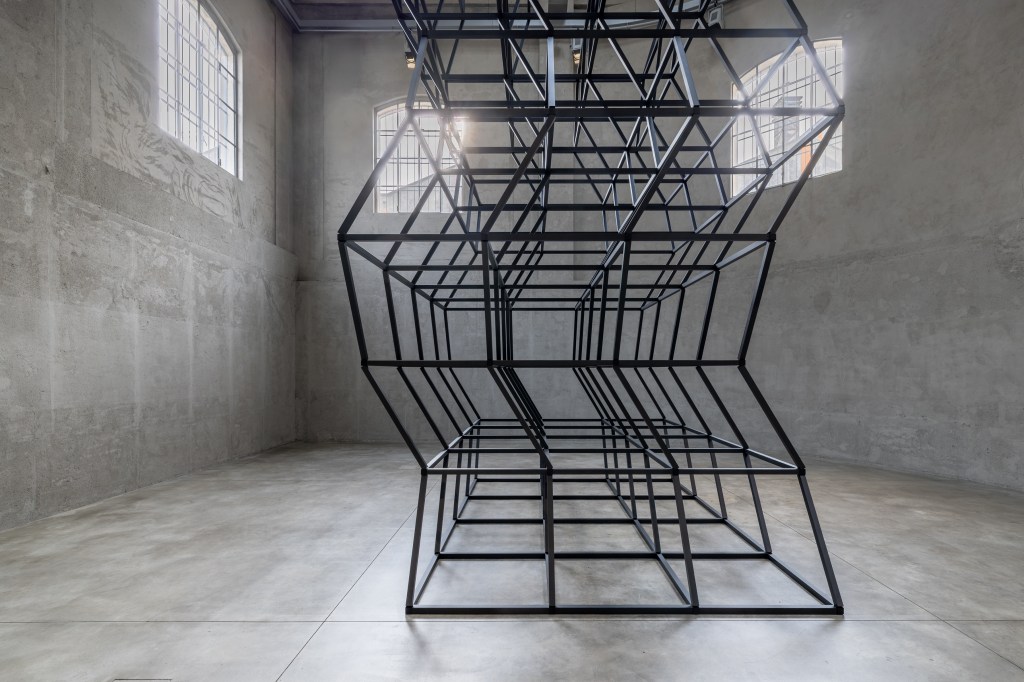
The final room is activated by all of a quiver (2022). A monumental kinetic metal grid oscillates, dismantling and reassembling itself perpetually. The cubes that make up the structure periodically collapse inward, creating a rhythmic alternation of solids and voids, of birth and death, destruction and reconstruction, stability and instability, peace and war. Hatoum disrupts the minimalist grid, transforming it into a thinking body – one charged with memory, pain, and a visceral interiority. Beneath it remains only a sense of vertigo before the precariousness of existence.
OVER, UNDER AND IN BETWEEN BY MONA HATOUM AT THE FONDAZIONE PRADA
In Over, under and in between, space itself is set into play as a field of forces. The three installations trace out a third, interstitial space. Moving through the naves of the Cisterna, the visitor is compelled to negotiate distance and proximity, attraction and alertness, stability and risk. The grid reveals itself as a potential cage; glass becomes the crystallization of an identity that is never final; the interstice turns into the dwelling place of a subjectivity that exists only in tension. “In between,” then, becomes not only a position in space but also an ethical and cultural stance from which to inhabit one’s identity: to inhabit the interstice is to accept instability as a form of consciousness, transforming vulnerability into a tool for reading the reality.
Niccolò Freri
The exhibition of Mona Hatoum at the Fondazione Prada in Milan
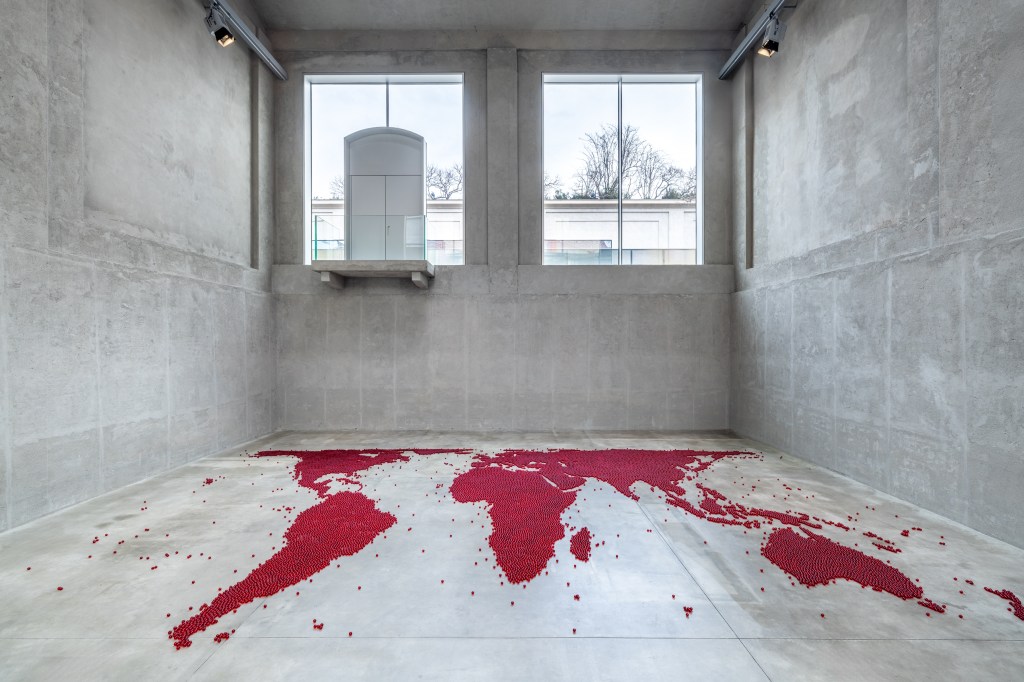
Exhibition view of Over, Under and In Between by Mona Hatoum, Fondazione Prada, Milan, 29 January – 9 November 2026. Photo: Roberto Marossi. Courtesy Fondazione Prada. Mona Hatoum, Map (red), 2026, 25 mm clear red glass balls 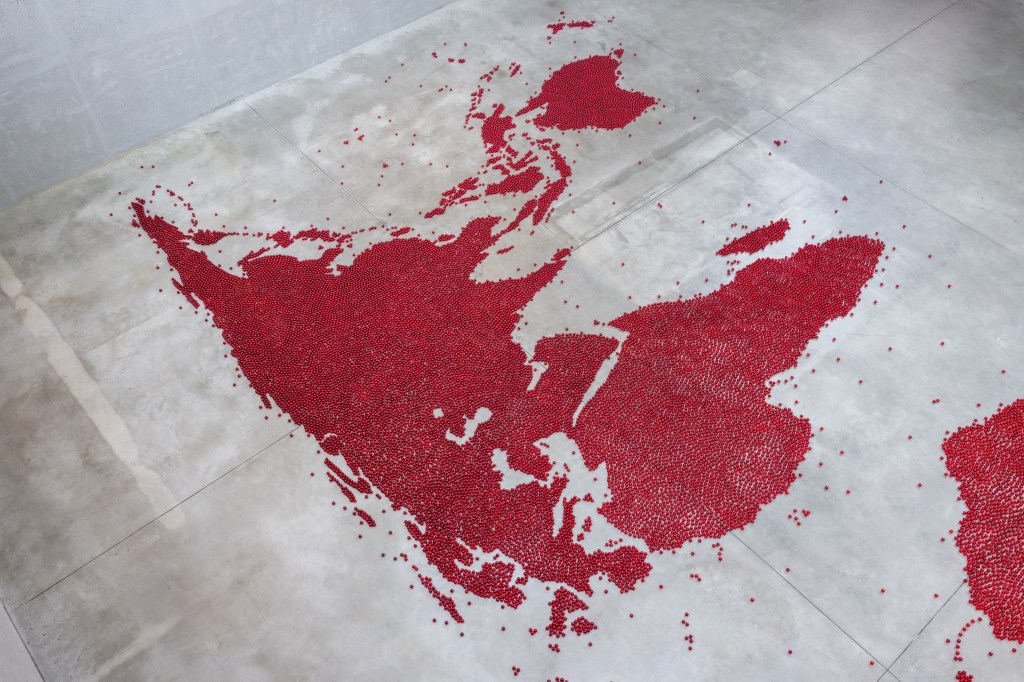
Exhibition view of Over, Under and In Between by Mona Hatoum, Fondazione Prada, Milan, 29 January – 9 November 2026. Photo: Roberto Marossi. Courtesy Fondazione Prada. Mona Hatoum, Map (red), 2026, 25 mm clear red glass balls 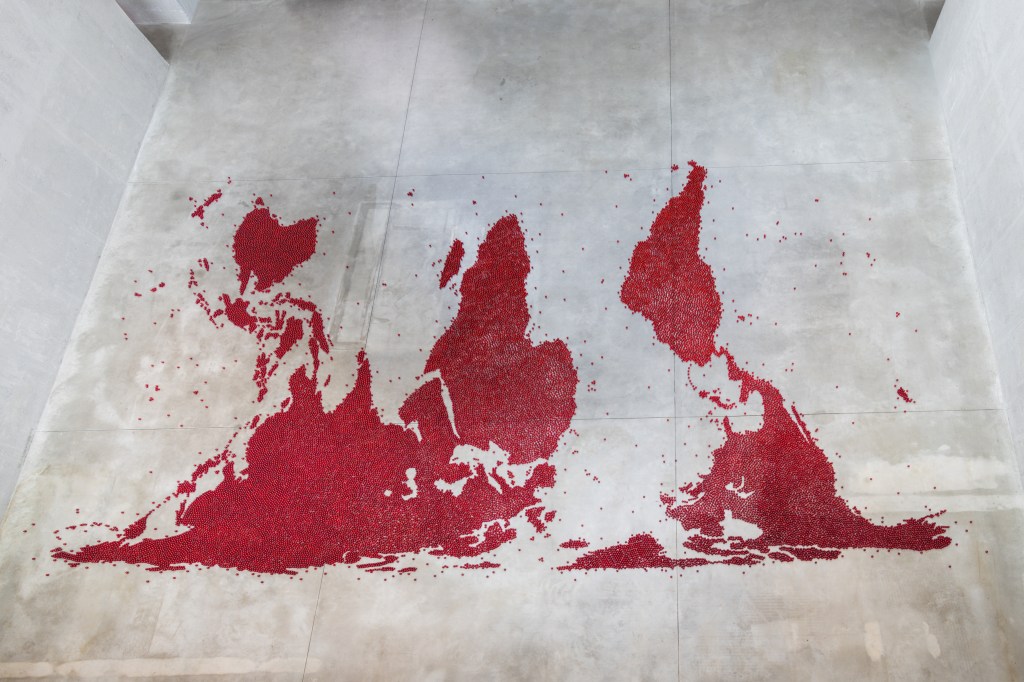
Exhibition view of Over, Under and In Between by Mona Hatoum, Fondazione Prada, Milan, 29 January – 9 November 2026. Photo: Roberto Marossi. Courtesy Fondazione Prada. Mona Hatoum, Map (red), 2026, 25 mm clear red glass balls 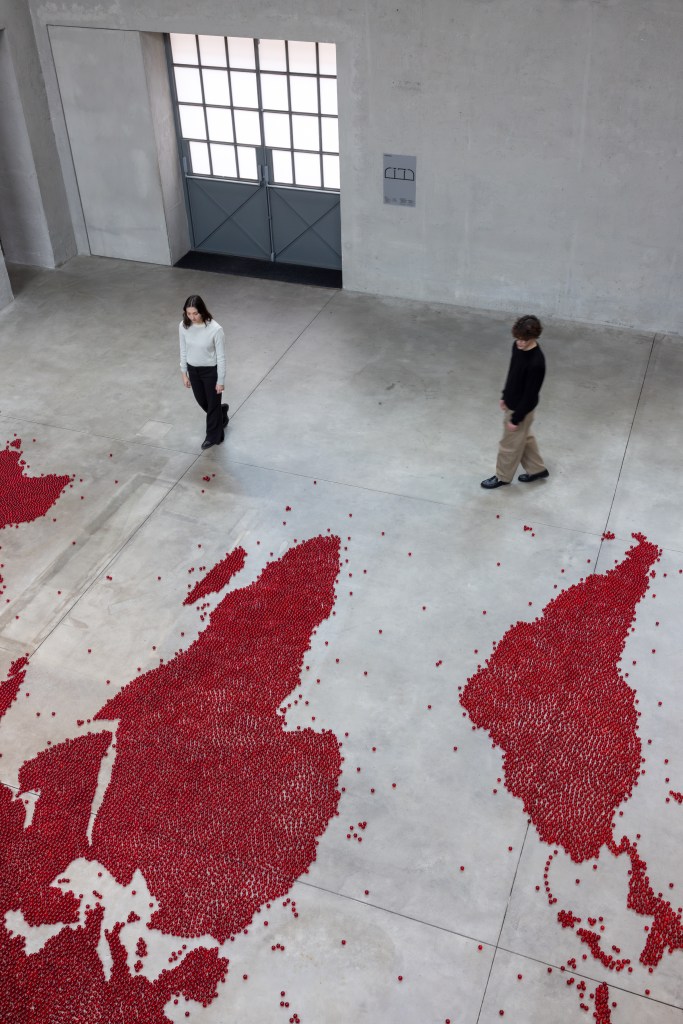
Exhibition view of Over, Under and In Between by Mona Hatoum, Fondazione Prada, Milan, 29 January – 9 November 2026. Photo: Roberto Marossi. Courtesy Fondazione Prada. Mona Hatoum, Map (red), 2026, 25 mm clear red glass balls 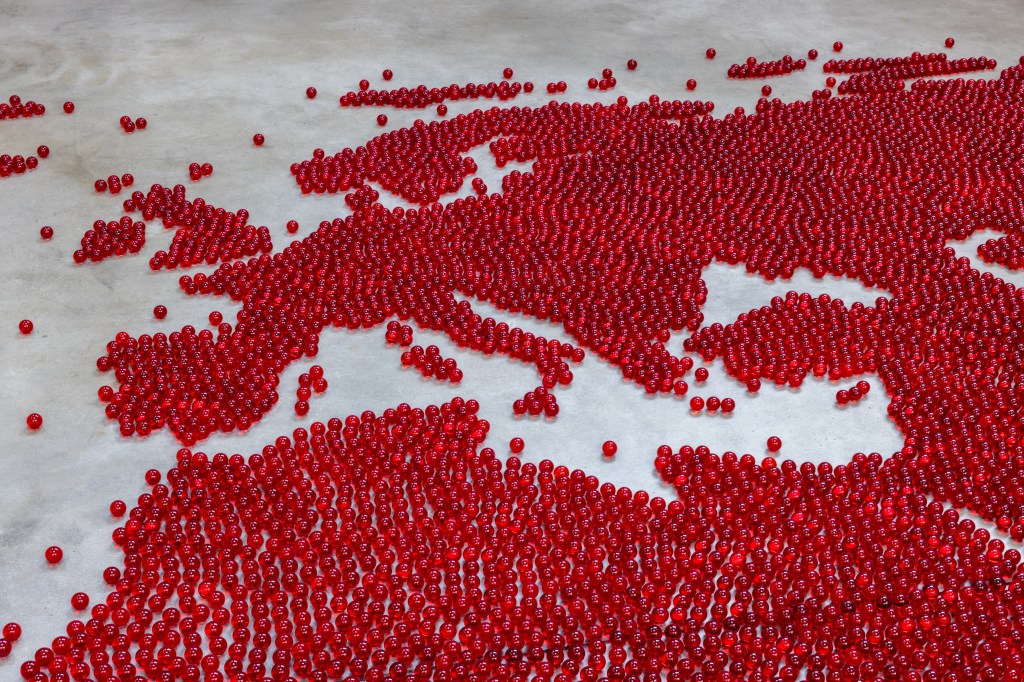
Exhibition view of Over, Under and In Between by Mona Hatoum, Fondazione Prada, Milan, 29 January – 9 November 2026. Photo: Roberto Marossi. Courtesy Fondazione Prada. Mona Hatoum, Map (red), 2026, 25 mm clear red glass balls 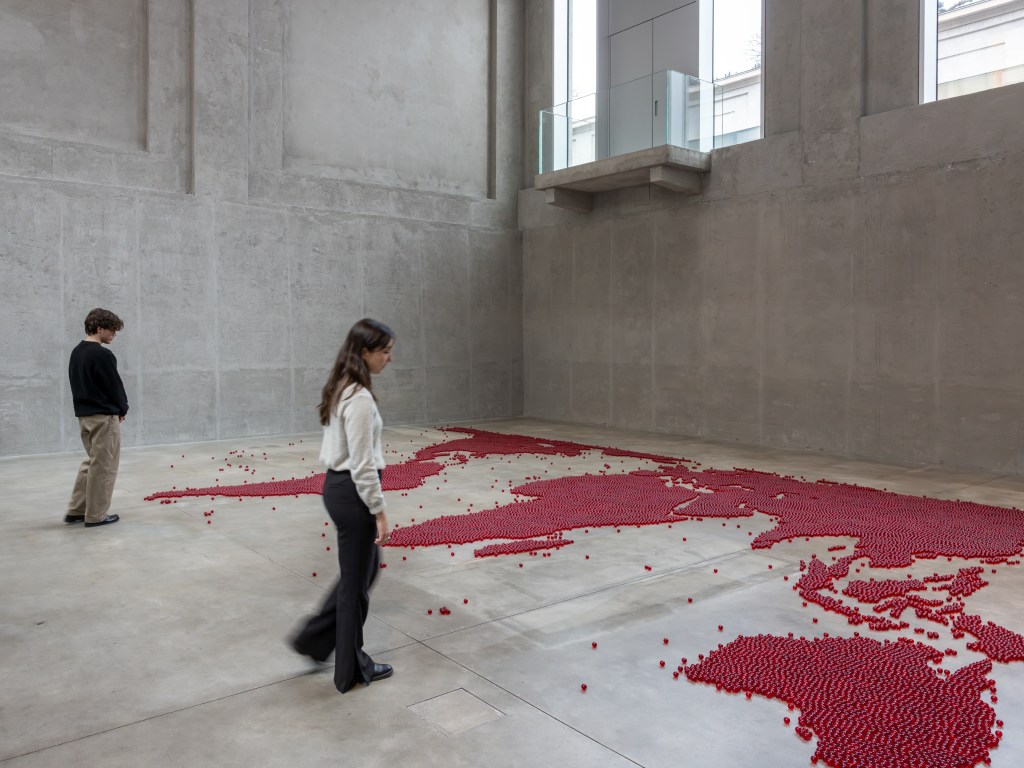
Exhibition view of Over, Under and In Between by Mona Hatoum, Fondazione Prada, Milan, 29 January – 9 November 2026. Photo: Roberto Marossi. Courtesy Fondazione Prada. Mona Hatoum, Map (red), 2026, 25 mm clear red glass balls Exhibition view of Over, Under and In Between by Mona Hatoum, Fondazione Prada, Milan, 29 January – 9 November 2026. Photo: Roberto Marossi. Courtesy Fondazione Prada. Mona Hatoum, All of a Quiver, 2022, aluminum square tubes, steel hinges, electric motor, cable Exhibition view of Over, Under and In Between by Mona Hatoum, Fondazione Prada, Milan, 29 January – 9 November 2026. Photo: Roberto Marossi. Courtesy Fondazione Prada. Mona Hatoum, Web, 2026, hand-blown clear glass spheres, stainless steel cable 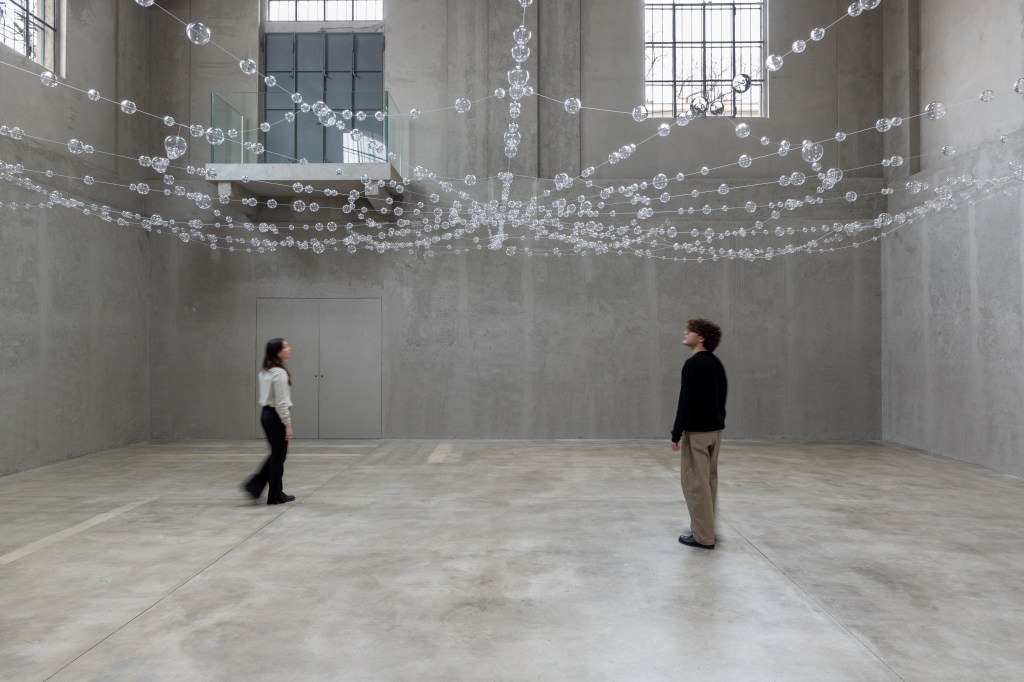
Exhibition view of Over, Under and In Between by Mona Hatoum, Fondazione Prada, Milan, 29 January – 9 November 2026. Photo: Roberto Marossi. Courtesy Fondazione Prada. Mona Hatoum, Web, 2026, hand-blown clear glass spheres, stainless steel cable 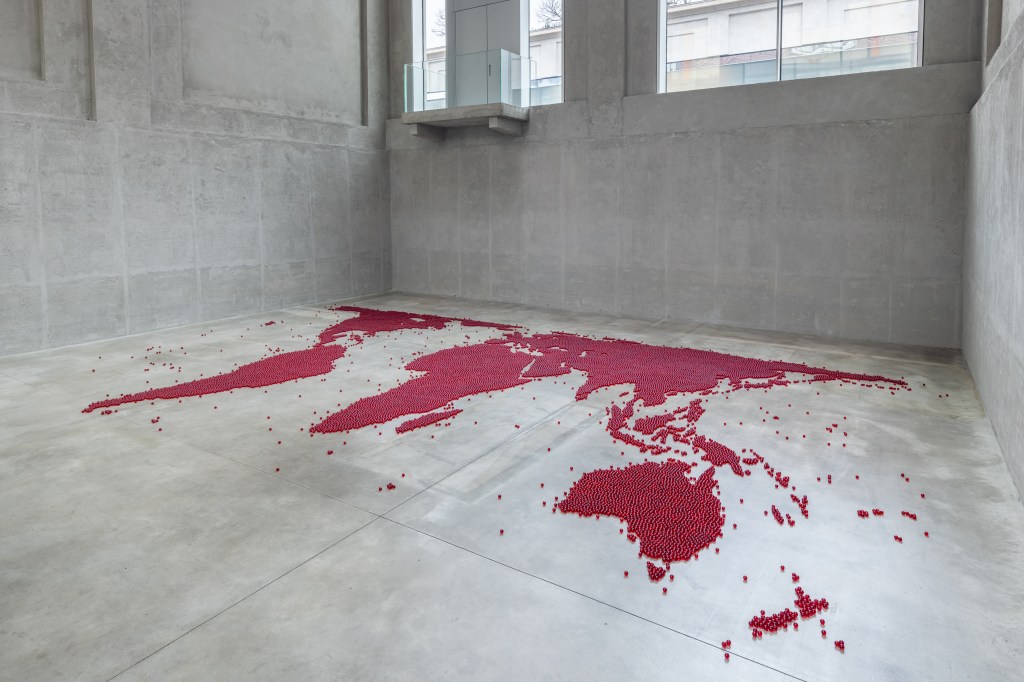
Exhibition view of Over, Under and In Between by Mona Hatoum, Fondazione Prada, Milan, 29 January – 9 November 2026. Photo: Roberto Marossi. Courtesy Fondazione Prada. Mona Hatoum, Map (red), 2026, 25 mm clear red glass balls 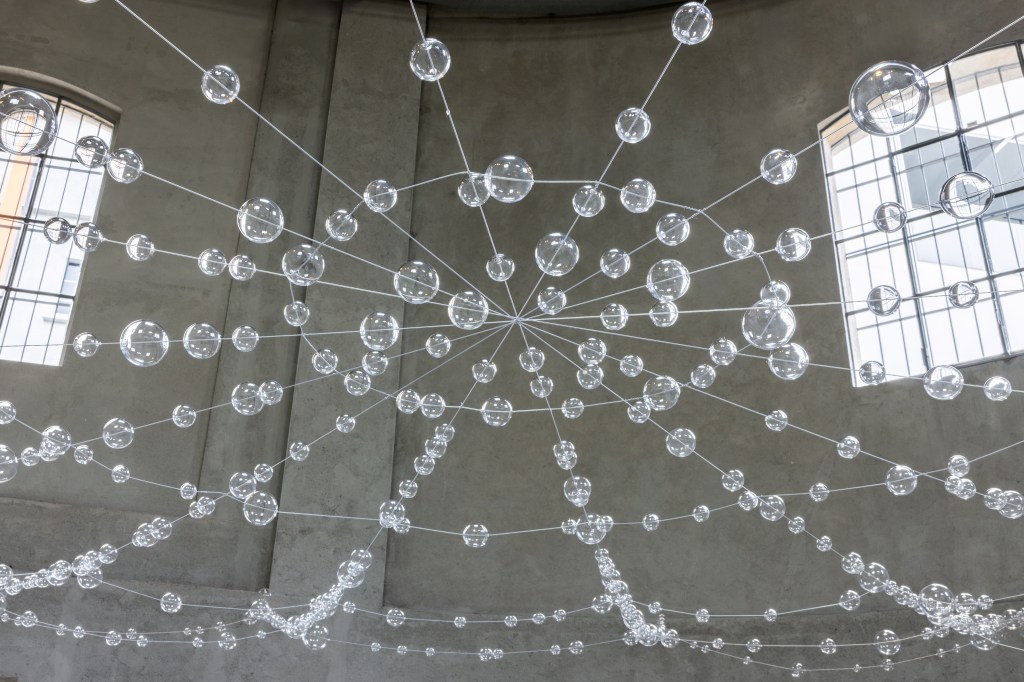
Exhibition view of Over, Under and In Between by Mona Hatoum, Fondazione Prada, Milan, 29 January – 9 November 2026. Photo: Roberto Marossi. Courtesy Fondazione Prada. Mona Hatoum, Web, 2026, hand-blown clear glass spheres, stainless steel cable 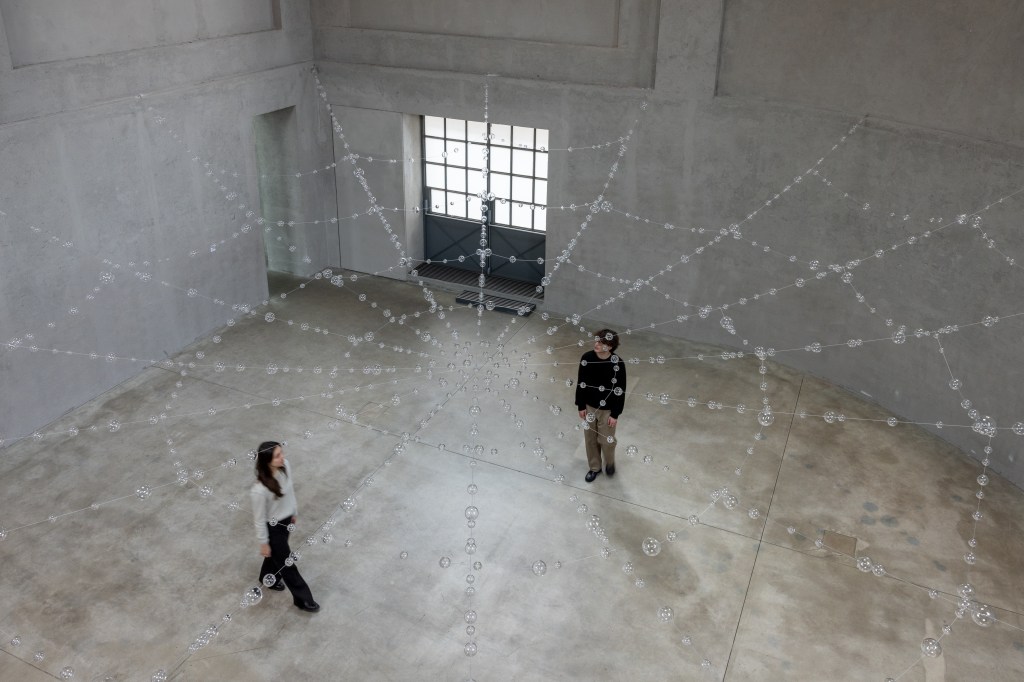
Exhibition view of Over, Under and In Between by Mona Hatoum, Fondazione Prada, Milan, 29 January – 9 November 2026. Photo: Roberto Marossi. Courtesy Fondazione Prada. Mona Hatoum, Web, 2026, hand-blown clear glass spheres, stainless steel cable 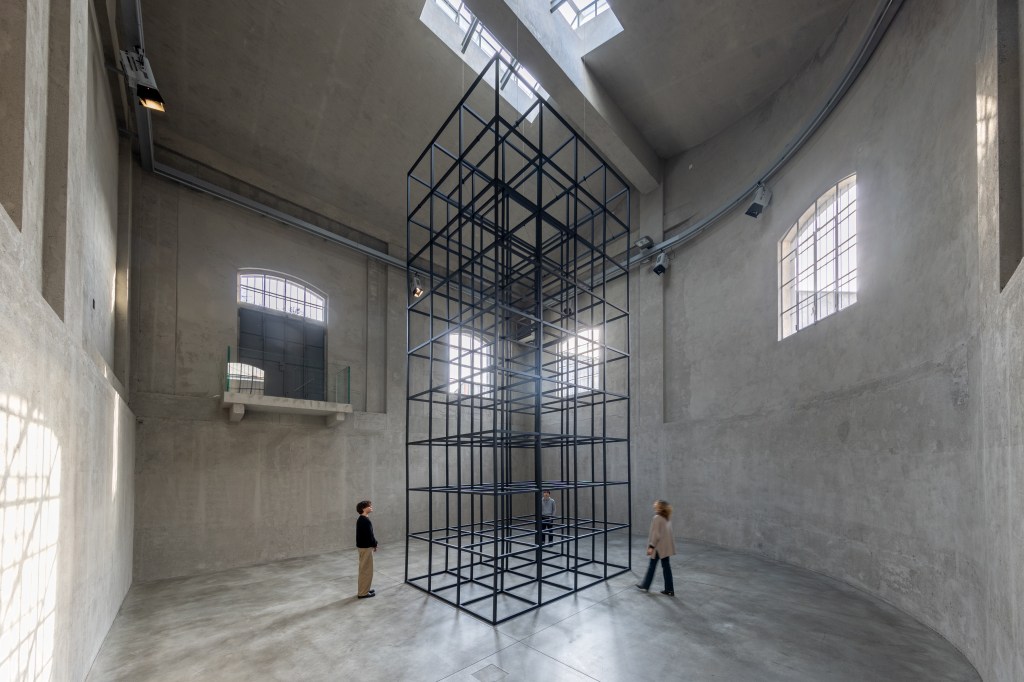
Exhibition view of Over, Under and In Between by Mona Hatoum, Fondazione Prada, Milan, 29 January – 9 November 2026. Photo: Roberto Marossi. Courtesy Fondazione Prada. Mona Hatoum, All of a Quiver, 2022, aluminum square tubes, steel hinges, electric motor, cable 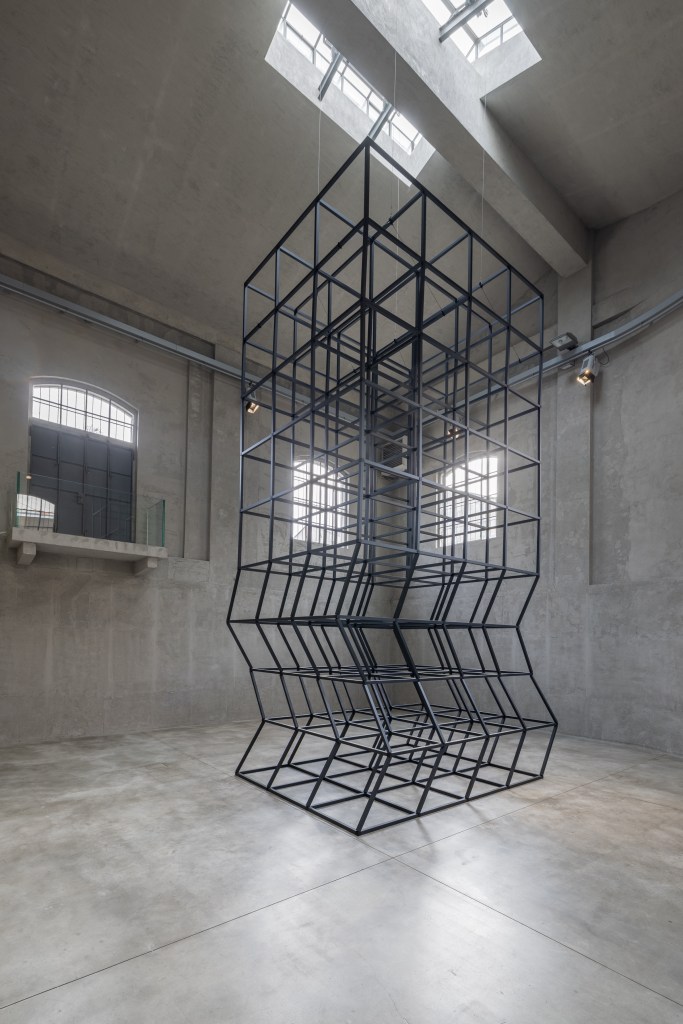
Exhibition view of Over, Under and In Between by Mona Hatoum, Fondazione Prada, Milan, 29 January – 9 November 2026. Photo: Roberto Marossi. Courtesy Fondazione Prada. Mona Hatoum, All of a Quiver, 2022, aluminum square tubes, steel hinges, electric motor, cable 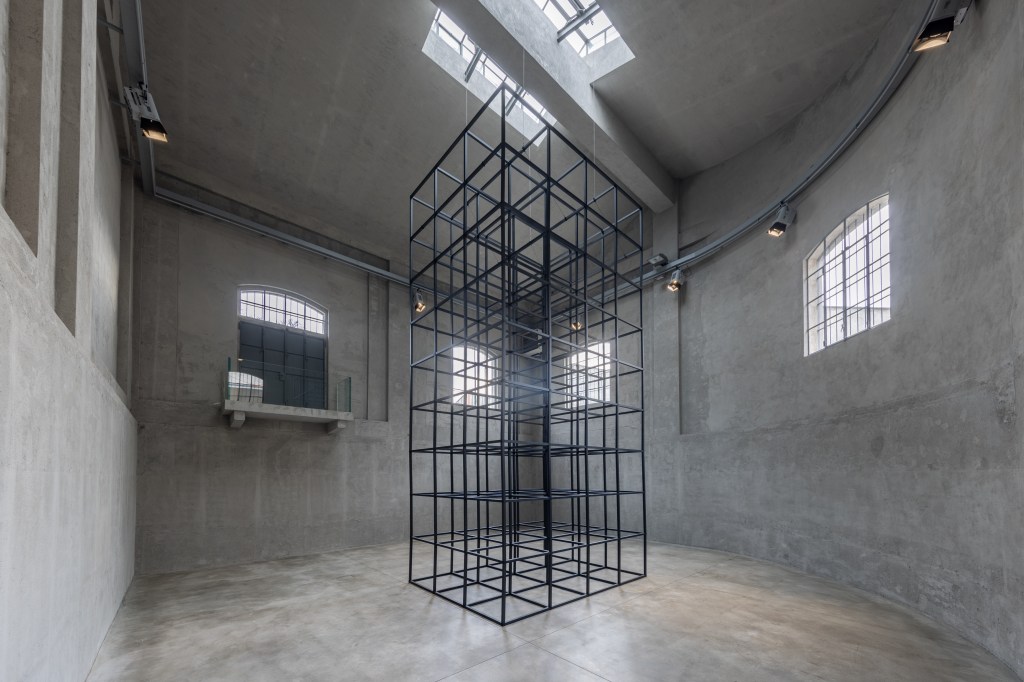
Exhibition view of Over, Under and In Between by Mona Hatoum, Fondazione Prada, Milan, 29 January – 9 November 2026. Photo: Roberto Marossi. Courtesy Fondazione Prada. Mona Hatoum, All of a Quiver, 2022, aluminum square tubes, steel hinges, electric motor, cable 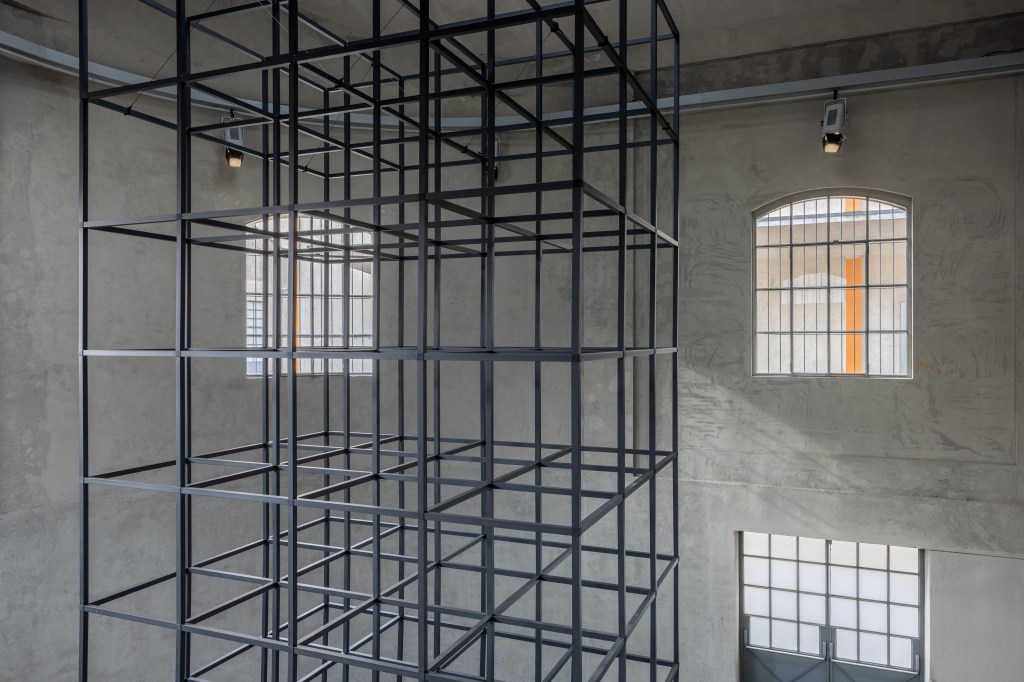
Exhibition view of Over, Under and In Between by Mona Hatoum, Fondazione Prada, Milan, 29 January – 9 November 2026. Photo: Roberto Marossi. Courtesy Fondazione Prada. Mona Hatoum, All of a Quiver, 2022, aluminum square tubes, steel hinges, electric motor, cable 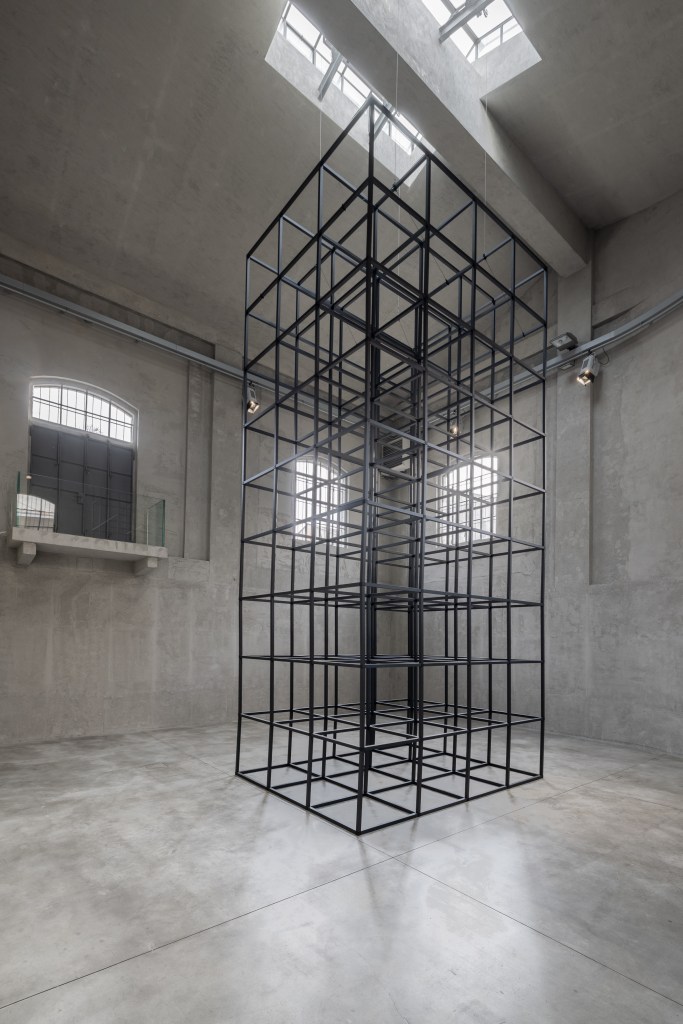
Exhibition view of Over, Under and In Between by Mona Hatoum, Fondazione Prada, Milan, 29 January – 9 November 2026. Photo: Roberto Marossi. Courtesy Fondazione Prada. Mona Hatoum, All of a Quiver, 2022, aluminum square tubes, steel hinges, electric motor, cable 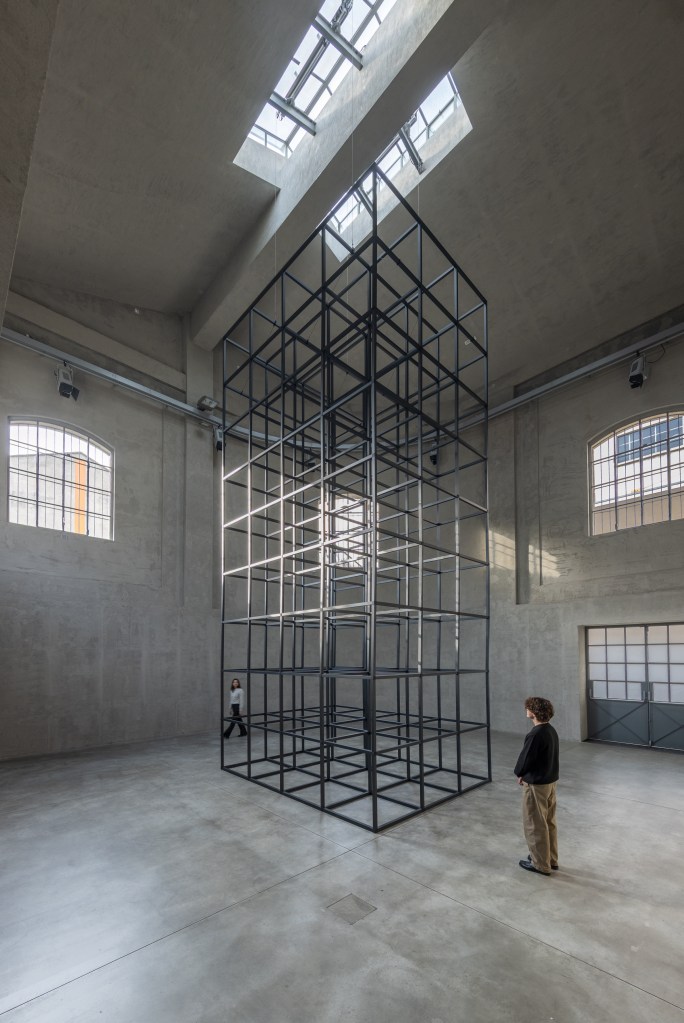
Exhibition view of Over, Under and In Between by Mona Hatoum, Fondazione Prada, Milan, 29 January – 9 November 2026. Photo: Roberto Marossi. Courtesy Fondazione Prada. Mona Hatoum, All of a Quiver, 2022, aluminum square tubes, steel hinges, electric motor, cable 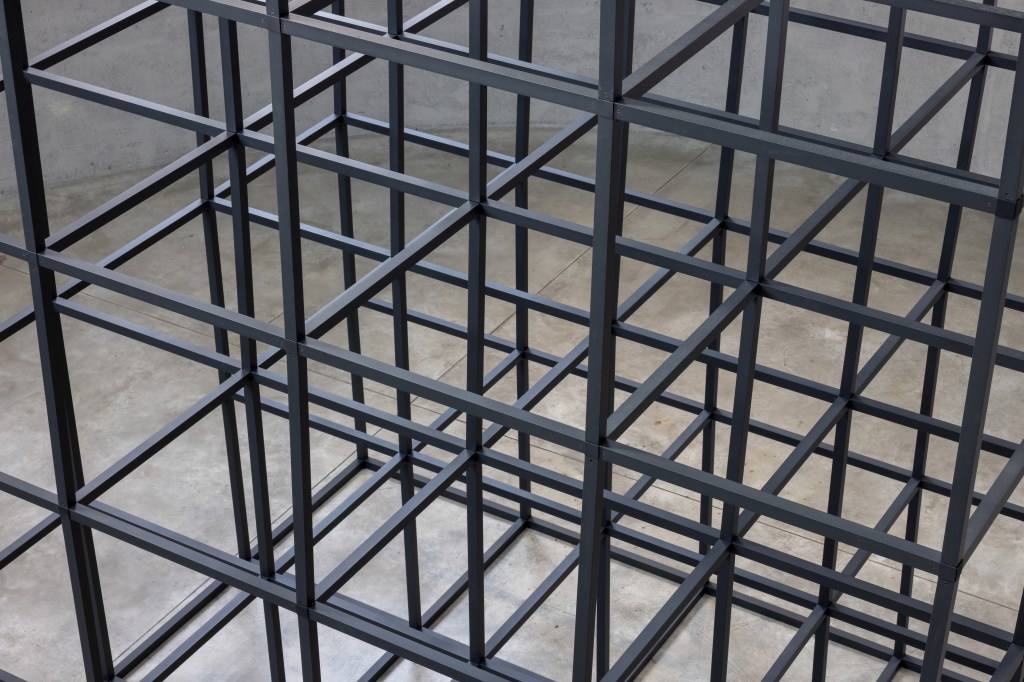
Exhibition view of Over, Under and In Between by Mona Hatoum, Fondazione Prada, Milan, 29 January – 9 November 2026. Photo: Roberto Marossi. Courtesy Fondazione Prada. Mona Hatoum, All of a Quiver, 2022, aluminum square tubes, steel hinges, electric motor, cable Mona Hatoum, photo Marta Marinotti. Courtesy Fondazione Prada 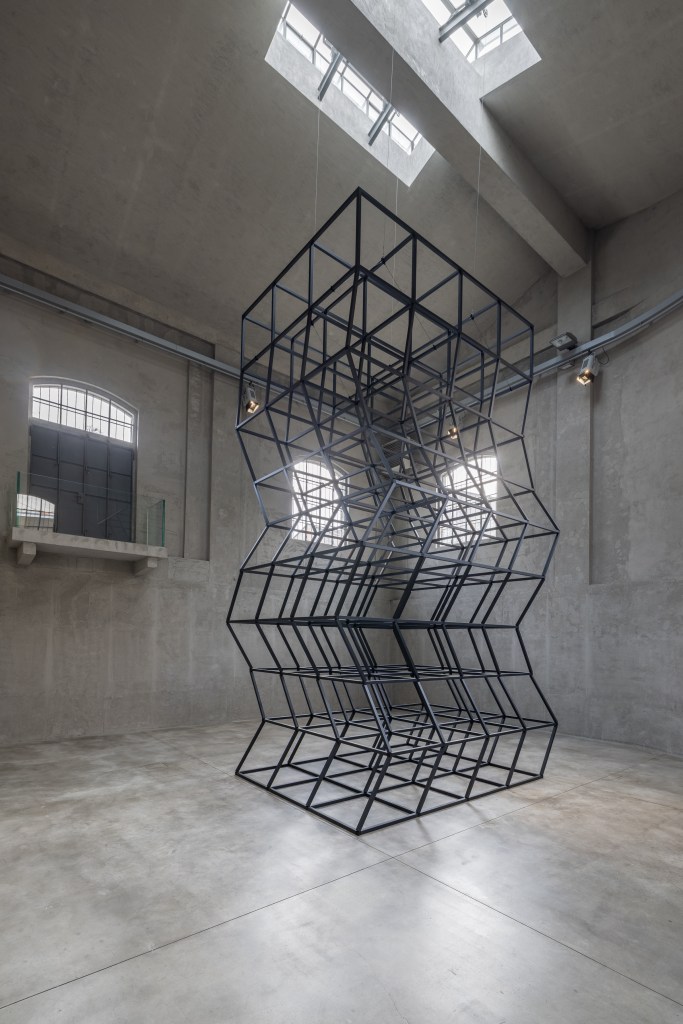
Exhibition view of Over, Under and In Between by Mona Hatoum, Fondazione Prada, Milan, 29 January – 9 November 2026. Photo: Roberto Marossi. Courtesy Fondazione Prada. Mona Hatoum, All of a Quiver, 2022, aluminum square tubes, steel hinges, electric motor, cable 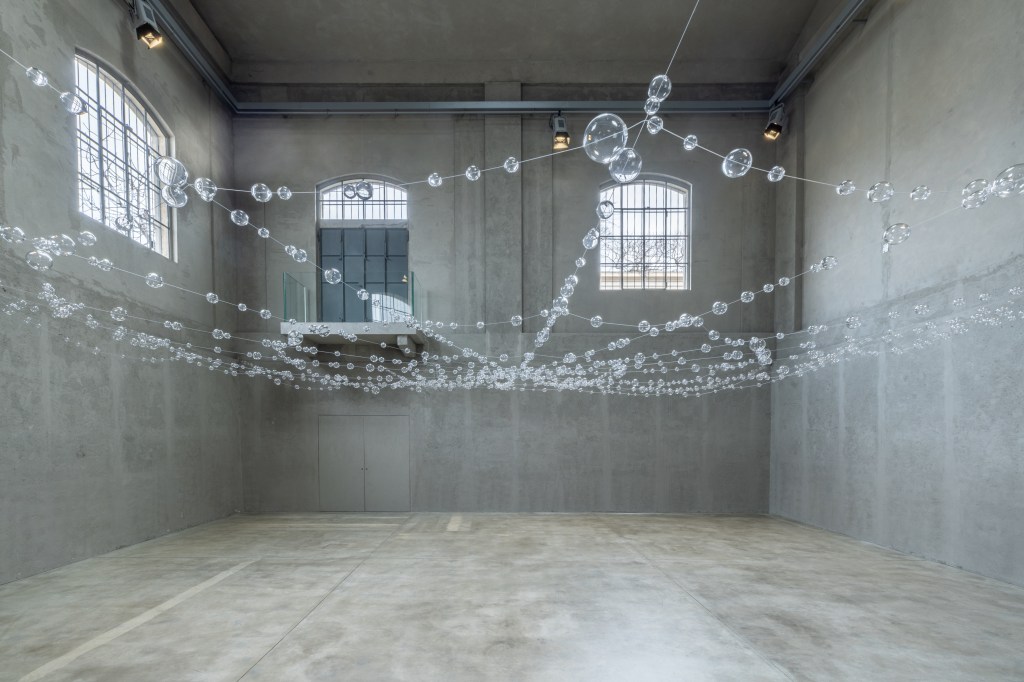
Exhibition view of Over, Under and In Between by Mona Hatoum, Fondazione Prada, Milan, 29 January – 9 November 2026. Photo: Roberto Marossi. Courtesy Fondazione Prada. Mona Hatoum, Web, 2026, hand-blown clear glass spheres, stainless steel cable. 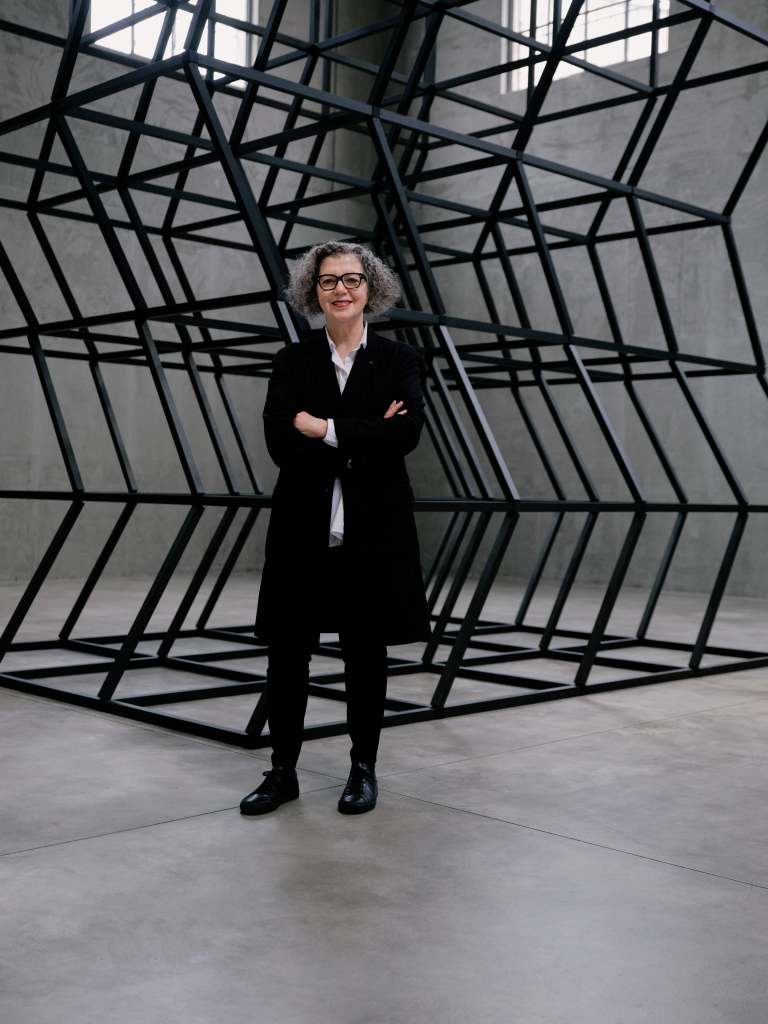
Mona Hatoum, photo Marta Marinotti. Courtesy Fondazione Prada 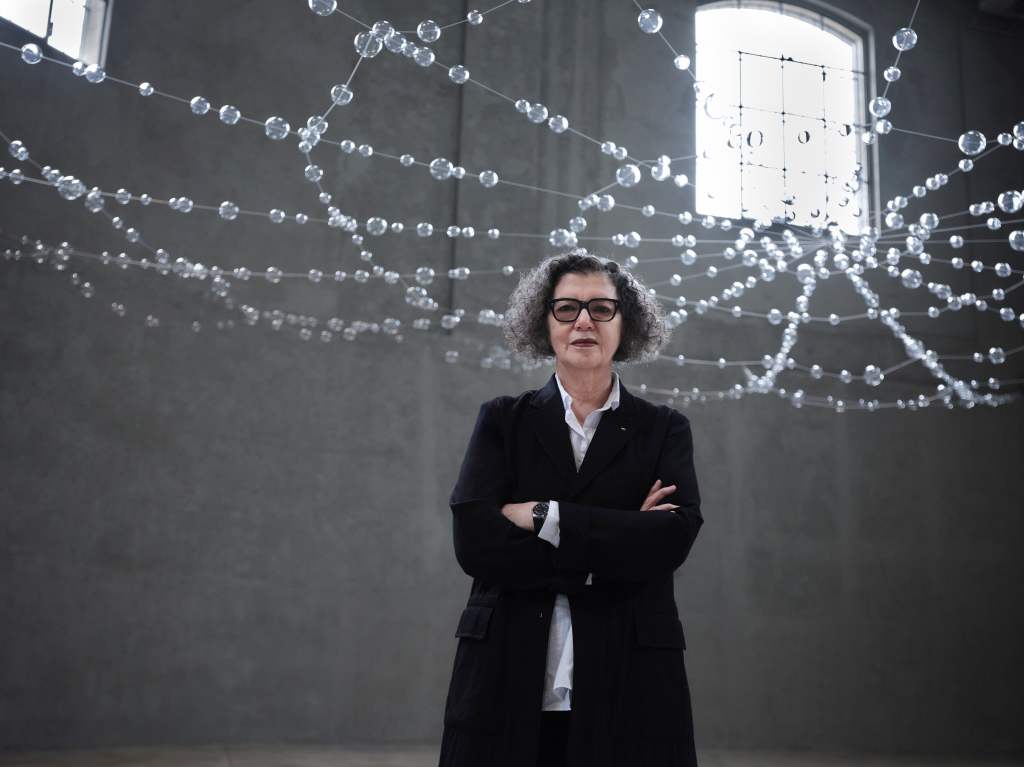
Mona Hatoum, photo Marta Marinotti. Courtesy Fondazione Prada
The text has been translated in English using AI
 c plus c
Leave a comment