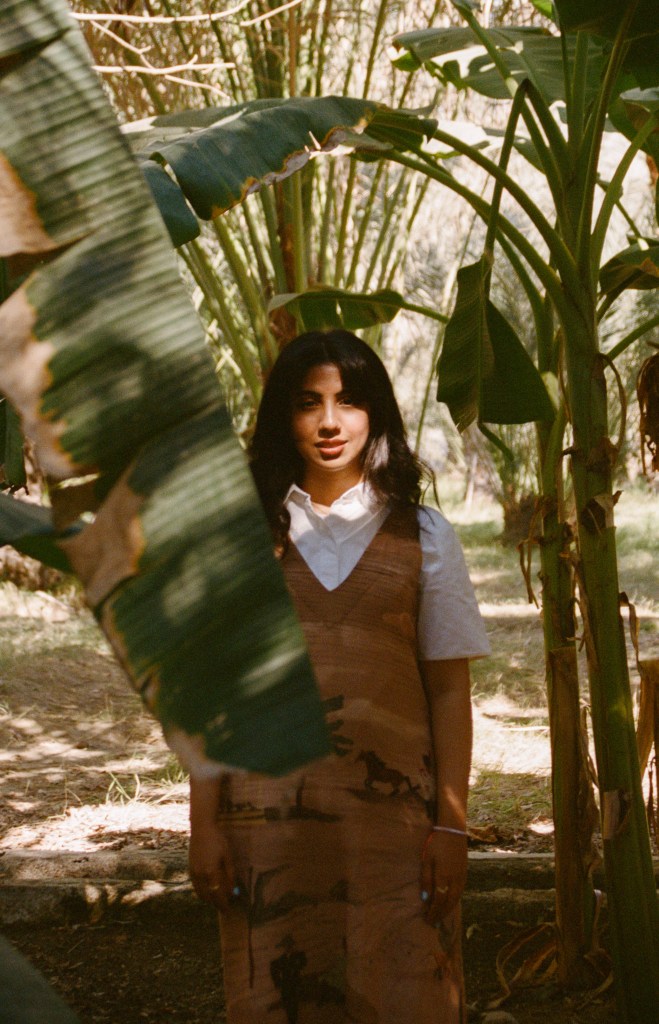
Moza Almatrooshi is a young Arab artist and pastry chef whose work blends art, food, humanity, and nature. Attracted by the symbolism in food, she now conducts cultural research and artistic practices involving art, food, her land, and those who inhabit and cultivate it. Almatrooshi defines herself as a living archive, conscious and responsible towards the environment and current events.
ballad is title of the new project by Moza Almatrooshi (Dubai, 1991). It is an art and culinary research where landscapes are transformed into menus shaped by seasonality and offered to the public through convivial gatherings. The theme of the meals varies from event to event, but it is always the result of careful artistic practice linked to the traditions and culture of the United Arab Emirates and Oman.
Starting from the origins of her artistic path and arriving to the “many worlds ahead to build”, Moza Almatrooshi told us about her need to communicate, cure, and preserve. The advice for young curators and artists is “to look within”.
THE INTERVIEW WITH MOZA ALMATROOSHI
Think back to your childhood and what you used to eat when you realized that your artistic practice would inevitably be linked to food. What flavors inspired you back then? When did you realize that this would be your path?
It actually didn’t start out that way for me. There is a trope for people who work with food that the love of cooking sprung from early memory but for me it was a slow burn romance. I grew up with a modest knowledge of cooking and baking but nothing that was worth noting as a spark that led to a flame. Progressively as my art practice evolved it took form in materialising ephemerality while looking at landscapes, earth matter, histories, and myths. In all of these thematics food entered in one way or another as a reality or as a symbol (or both). That’s how my practice expanded to involve food, and that’s where my love for food truly began.
Your early projects already featured food, but the result was more visual, performative and strictly artistic. Although the relational factor was already present in your projects, with ballad the approach is more methodological and purposeful and, above all, it requires that the food be actually consumed as a real meal. Tell us about the project, starting with the necessary sense of care, aesthetics, and sensory experience that offering food entails.
In the first instances of food appearing in my work, it was embodying symbolism and standing in for language. I started to question if I want to introduce cooking into the practice; at that time, it seemed art events were reducing art mediums like performances into event activations, and although I was not able to avoid that destiny in the future, I wanted to take time to challenge my own notions on food as an image, object, and encounter. After graduating from Slade School of Fine Arts, I enrolled in culinary school back home for the sole purpose of adding a skillset in furthering my art, but also picking up a vocation that can keep my practice and my life viable. ballad was founded years later, on the basis that it’s a studio that merges both my art & culinary worlds into one universe, one that generates its own projects as well as responds to community requests & commissions.
ART AND CURATORSHIP ACCORDING TO MOZA ALMATROOSHI
You describe the choice of seasonal ingredients, the act of purchasing them and the preparation of the dish in a very evocative way. Food is not just a medium; it almost becomes the protagonist. You research, choose, and compose: you communicate. All of this is similar to curatorial practice. Organizing the space, selecting what to show and how to do so are the prerogatives of the curator. Do you feel, in the broadest sense of the term, that you are also a curator? Would you like to curate a real exhibition? Regardless of whether food is the focus.
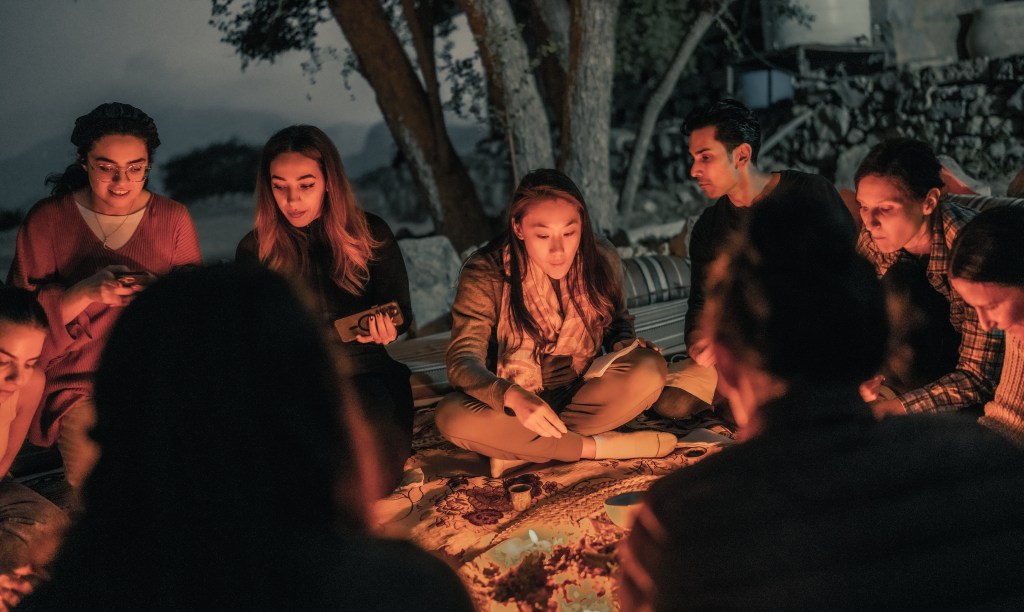
I tend to largely use the term conduit to describe my role in my work. Before ballad was founded, I started an on-going body of work titled The Agriculture School, in this work the main medium was a spatial installation around an active public program. There were talks, workshops, discussions, book clubs, all framed around a shared cooked meal. There were frequent admissions at that time that many participants were motivated by the food more than the content of the programme, only to be pulled into the discussions and shared knowledge naturally and inevitably. The first studio generated series via ballad, Eat the Landscape, which took groups of people out to the mountainous region of the UAE to eat a designed menu while being expertly guided by mountain guides, who also serve as researchers and collaborators. Seeing the success of this series to date and how the same admission about being motivated by trying the menu and get pleasantly surprised by the knowledge they then get to hold and take away with them as well.
When the work on display is placed at hand height, rather than on walls or pedestals, we naturally feel the urge to touch it. Today, haptic practices are very popular in exhibitions: visitors, especially younger ones, want to activate and feel artistic devices. In the installations you propose during ballad events, food is on the table and can ‒ must ‒ be touched. Do you think the success of the project also stems from its participatory and multisensory nature? Would your works still make sense without being consumed, but simply displayed?
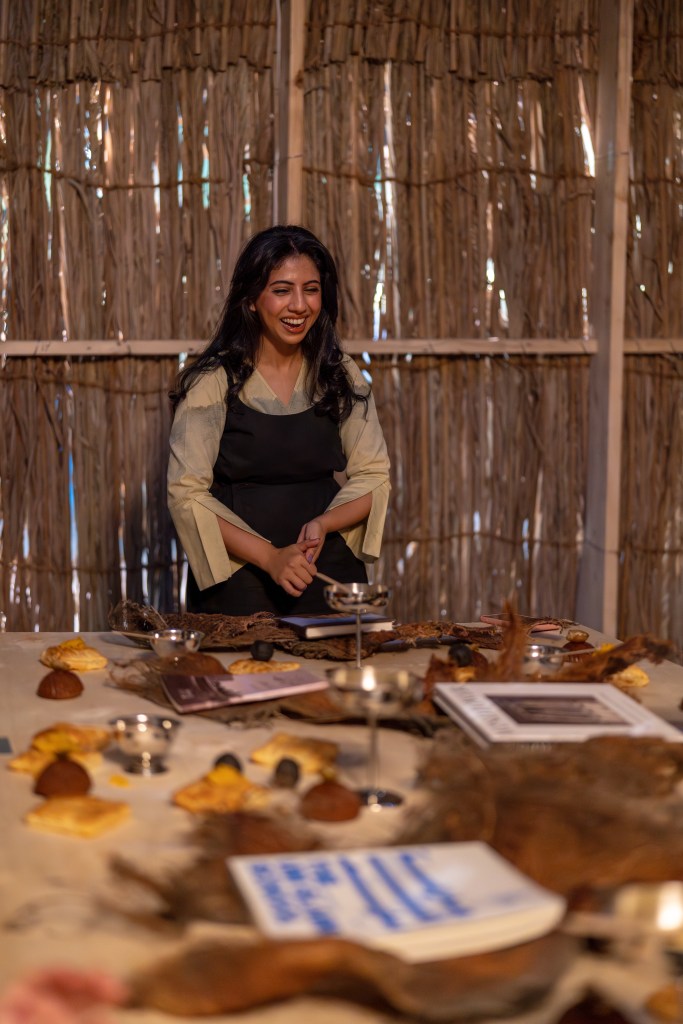
Food is encountered in multiple ways via ballad; in Eat the Landscape we eat as we go within the landscape itself, in catered events I stand to greet and explain to guests while serving them, creating a necessary pause to explain the menu and the stories behind it, similar to dinner events. ballad also has a series called The Edible Library where materials, books, ingredients, and a edible outcomes are on a table that’s put together to present a research by a creative / cultural practitioner, while people eat they listen, feel, taste, exchange and see the research, immersing themselves in a live sensory format of knowledge dissemination that is framed by conviviality and joy, which are employed as essential mediums as well.
You curate your feed and the online narrative of your work in a thoughtful way, holding together your life, your creative vision, and the way you bring it to life. It almost seems as if you want to build a digital archive. Your storytelling seems to be the result of an urge to make yourself understood, but also to preserve and archive. Do you think this is due to the inevitably ephemeral nature of the medium you use? How do you feel about the fact that your work is destined to disappear after the meal?
The more I grow the less I can separate my practice from my embodied and lived experience. It’s a generative loop that’s moved by curiosity and community. Even if I didn’t turn it into a viable system I would still live and create this way. So, relaying this through storytelling and visuals on public platforms forms as a natural mélange due to the intertwining of these paths.
When you describe your work to the public, you always take great care to mention and thank those who accompanied you in the project and those who curated it. It may seem like a foregone conclusion, but it is not. How do you experience your relationship with those who curate your act of care towards food and with your guests?
Without community the work does not see the light. In order to create a menu, I need the land, I need to then connect with someone who knows something about it, works with it, loves it, has ties to it, then I need to step further to see the human and more than human actors within it, while counting myself in as well. Finally it needs to be held and retained by an audience who do more than just passively consume. The circle closes and starts again with every interaction, therefore it’s extremely important to highlight the horizontality of authorship and effort that goes into making it all come to life.
Just following you on social media is enough to understand how many interests, activities, and projects occupy your time. All linked by a common thread ‒ food ‒, they vary in type, practice and approach. How do you manage to balance everything? What advice would you give to young artists and curators to keep up with the pace that characterizes the current era?
My advice is to look within. I find that for some people they need me to verbally or visually connect the dots between all my curiosities, interests, and outcomes, but for me it all makes sense and feels like one thing led to another. This is because I haven’t lost touch with what the core of my practice is. Whether I am producing a film, performance, menu, experience, or object, it’s all born from one vast universe I keep feeding from within, and I’m very cautious about replicating other people’s work. It’s good to know how fine the line is between inspiration and referencing, versus extraction.
SELF AWARNESS AND FUTURE
Your feminist vision and the centrality of women in your work are evident. What does it mean for you to be a young Arab artist today? How does it affect the way you produce meaning and leave your mark?
Of course existing as both a woman and as an Arab I can only pull from my life experience to set the course of my life and work. When it comes to time though this gets warped for me as the time the land records and experiences is different than the time felt by my own body. Even how time passes in the city I live in versus the location of my kitchen studio in the desert, and the rural towns and areas I work in stretches and contracts within differing sets of rules. I feel the most attuned as a being of nature that will exist and leave a mark in more ways than one but hopefully it is experienced as I am living as a living archive of the land, both in the ephemeral and lasting sense.
Venice plays an important role in your artistic training. According to you, your work experience at the Biennale led you towards the world of art. Would you return to the Lagoon? In recent years, there have been an increasing number of initiatives in Venice aimed at bringing together food, the island and social issues. Would you like to explore these food-related realities further and perhaps initiate collaborations?
I would return to any place that feels contextually relevant to share a narrative in. When I had my work experience there over a decade ago, I was still very fresh in terms of the access I had to viewing art and engaging in discourse outside of my art programme in university. It was pivotal but broad in every sense, so I would be happy to enter that space again after all these years of compounded experience and specificity.
Are you satisfied with what you have achieved so far? How do you think your relationship with food will evolve?
Yes! I’m satisfied enough to still imagine many worlds ahead to build and cultivate within my universe. Sometimes that makes it seem like I am still far away from achieving what I have planned, but when I get moments of repose I can see that it’s just as organic as planting seeds, and that I already have a sprouting and lush garden.
I can see my relationship with food continuing to enable me to bring people and land-based knowledge together, and hopefully this has potency in revising our relationship with ecology as well, another urgent theme of our lifetime.
Vittoria Colagiovanni
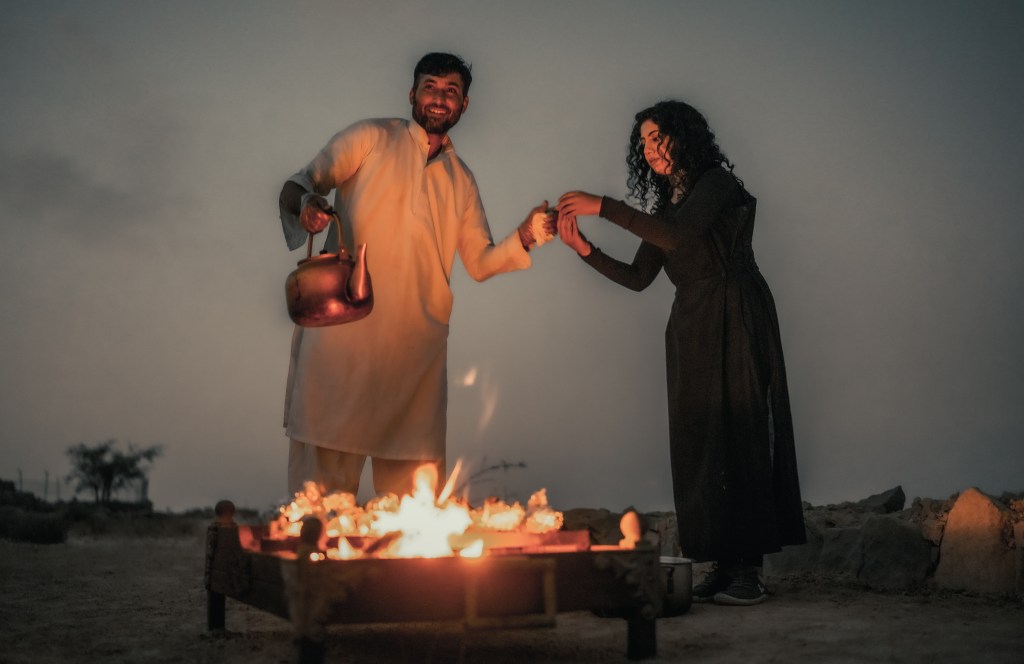
Moza Almatrooshi, performance derived from The Agriculture School, part of the exhibition On Foraging, 421 Arts Campus, 2022. The programme and performance were planned and cooked in collaboration with artist Nahla Al Tabbaa. Credits: Al Ameel. Courtesy of 421 Arts Campus 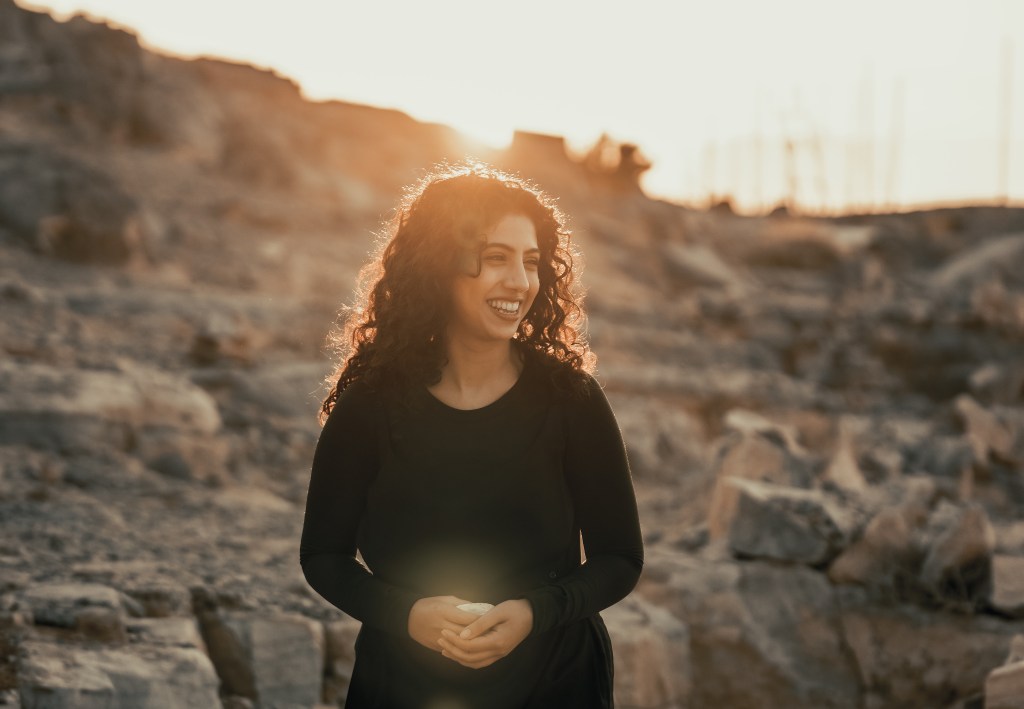
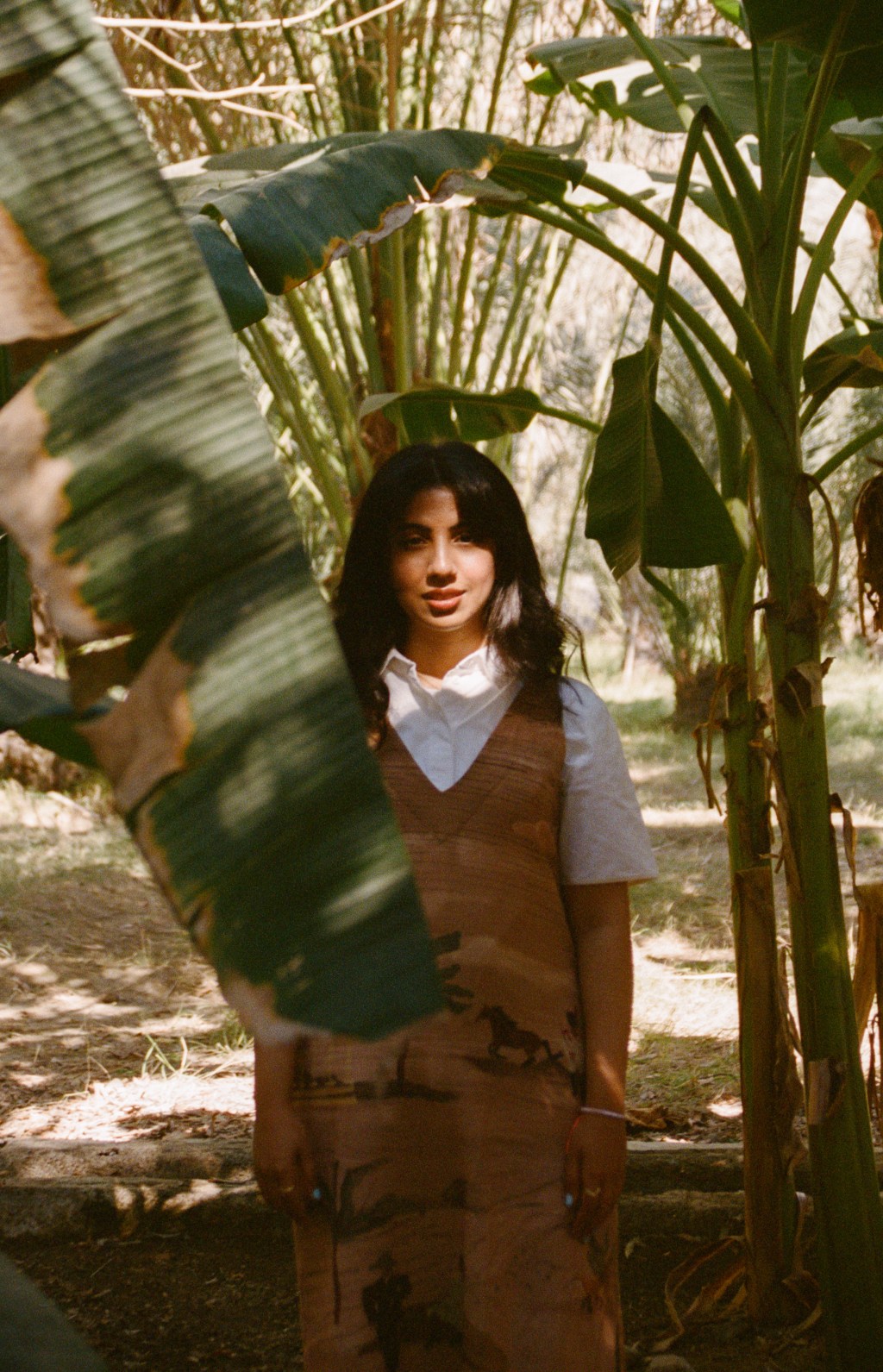
Moza Almatrooshi, performance derived from The Agriculture School, part of the exhibition On Foraging, 421 Arts Campus, 2022. The programme and performance were planned and cooked in collaboration with artist Nahla Al Tabbaa. Credits: Al Ameel. Courtesy of 421 Arts Campus Moza Almatrooshi, performance derived from The Agriculture School, part of the exhibition On Foraging, 421 Arts Campus, 2022. The programme and performance were planned and cooked in collaboration with artist Nahla Al Tabbaa. Credits: Al Ameel. Courtesy of 421 Arts Campus Moza Almatrooshi, ballad’s Edible Library project, in collaboration with architects Omar Darwish and Abdulla Abbas, 2025. Courtesy of Dubai Design Week Moza Almatrooshi. Photo: Arnold Barretto
 c plus c