Until 30 November 2025, the Nicola Trussardi Foundation presents “Fata Morgana: Memories of the Invisible” in the spaces of Palazzo Morando | Costume, Moda, Immagine in Milan. Curated by Massimiliano Gioni, Daniel Birnbaum, and Marta Papini in the current museum dedicated to the city’s historical memory and customs, the exhibition tells the story of illusions and a collective imagination linked to the occult.
Palazzo Morando is a Baroque building in the heart of Milan’s fashion district and home, between the end of the nineteenth century and the first decades of the twentieth century, to Countess Lydia Caprara Morando Attendolo Bolognini, patron and creator of a library dedicated to all things liminal. Her interests revolved around alchemy, spiritualism and esotericism, themes on which she constituted her collection, now preserved in the Civic Historical Archives and Trivulziana Library in Milan.
Fata Morgana: Memories of the Invisibile is conceived in this context. Following the research of the personality who inhabited the palace, the exhibition develops through the many facets of those additional creative expressions that reveal the plurality of contemporary art. The exhibition curated by Massimiliano Gioni, Daniel Birnbaum, and Marta Papini is a journey into occultism, an exhibition of more than two hundred works presented according to a thematic division consisting of eight sections.
The title takes its name from the Fata Morgana of the Arthurian cycle, and it is inspired by the homonymous poem by the surrealist artist André Breton, composed during his exile in Marseille in 1940. The exhibition echoes the text which narrates mystical drifts, of a confused elsewhere of the visible and the invisible. Like the poem, the exhibition presents a confusion of boundaries, of expressions evocative of something else that becomes art only in the contemporary.
THE SECTIONS OF THE FATA MORGANA EXHIBITION IN MILAN
The exhibition brings together diverse media and figures, including artists – canonically recognized as such – and mediumistic personalities, as well as female artists often obscured by a “linear” art history. In fact, among the lenders of the works on display are archives, libraries, museums of anthropology and ethnography and galleries, alongside private collections. Fata Morgana: Memories of the Invisible offers a true atlas of the invisible, as well as, inevitably, the occult. “The works on display” – explain the curators – “tell how the history of art is crossed by invisible forces and a constant tension towards elsewhere”, underlining the blurred boundaries of artistic expression which, between the nineteenth and twentieth centuries, no longer had limits of definition.
The atlas of the invisible traces the developments of a practice, that of the occult, from the end of the nineteenth century to the present. Alongside the first disembodied representations in Georgiana Houghton’s watercolours, there is a section – Mediums and Mystics – which describes the links between the occult and the female figure. Here, photographs of the early twentieth-century sessions of the medium Linda Gazzera, characterized by the presence of ethereal entities, dialogue with Chiara Fumai’s 2015 video The Book of Evil Spirits. Then a section dedicated to Automatic Message, then Surrealism with Man Ray, Antonin Artaud but also Lee Miller and Unica Zürn. The female presence, already very significant in the first rooms, becomes preponderant in the subsequent ones, where nature and body take over. Body that is otherworldly, but also strongly carnal, in the works of Judy Chicago and Carol Rama. The path becomes more abstract in liturgies and rituals, towards an increasingly prophetic discourse in the last rooms on the ground floor. Here then is the most important core of works in the entire exhibition, with the visions of Hilma af Klint and Emma Jung, among others.
Fata Morgana’s narrative oscillates between the concrete and the abstract, driven by encyclopaedic research that identifies occultism in every contemplable form. In this way, the exhibition opens a new perspective, further even than the contemporary one itself, where every expression is valued and every point of view is valid.
Central themes are esotericism and automatism in all their forms – even in the descriptions of the artists exhibited, generated with AI. The invisible is revealed in the most recent contemporary but also in the most distant one of the early twentieth century. Digital is invisible just as the voices of some female authors have been invisible, obscured by the predominant male presences – as in the case of Emma Jung.
FATA MORGANA’S CURATORSHIP
The large, visibly invisible atlas told at Palazzo Morando allows the viewer to travel through time and space in an exhibition curated in the spirit of a major artistic event. In Fata Morgana, the Milk of Dreams, curated by Cecilia Alemani for the 2022 Venice Biennale, resonates: echoing are not only the themes, but also the research approach, with a view to feminist re-evaluation and the rediscovery of dreams and marginal artistic practices. This research hat finds its roots even earlier, again at the Venice Biennale, in the Palazzo Enciclopedico curated in 2013 by Massimiliano Gioni, who chose Carl Gustav Jung’s Red Book as its fulcrum.
Today, the seventy-eight protagonists of Fata Morgana connect the dots on a map drawn up by the curators, who do not seek to provide answers but rather to leave questions open, providing the tools for visitors to reflect on their own. What are the boundaries of art? What and who is truly marginal in society?
Rebecca Canavesi
The exhibition Fata Morgana: Memories of the Invisible in Milan

Diego Marcon La Gola, 2024 [Still], digital video transferred from 35mm film. CGI animation, color, sound. Duration: 22 min 22 sec © Diego Marcon. Courtesy the Artist; Sadie Coles HQ, London; Galerie Buchholz, Berlin/Cologne/New York; Kunstverein Hamburg; Kunsthalle Wien; and Centre d’Art Contemporain Genève for BIM ’24 
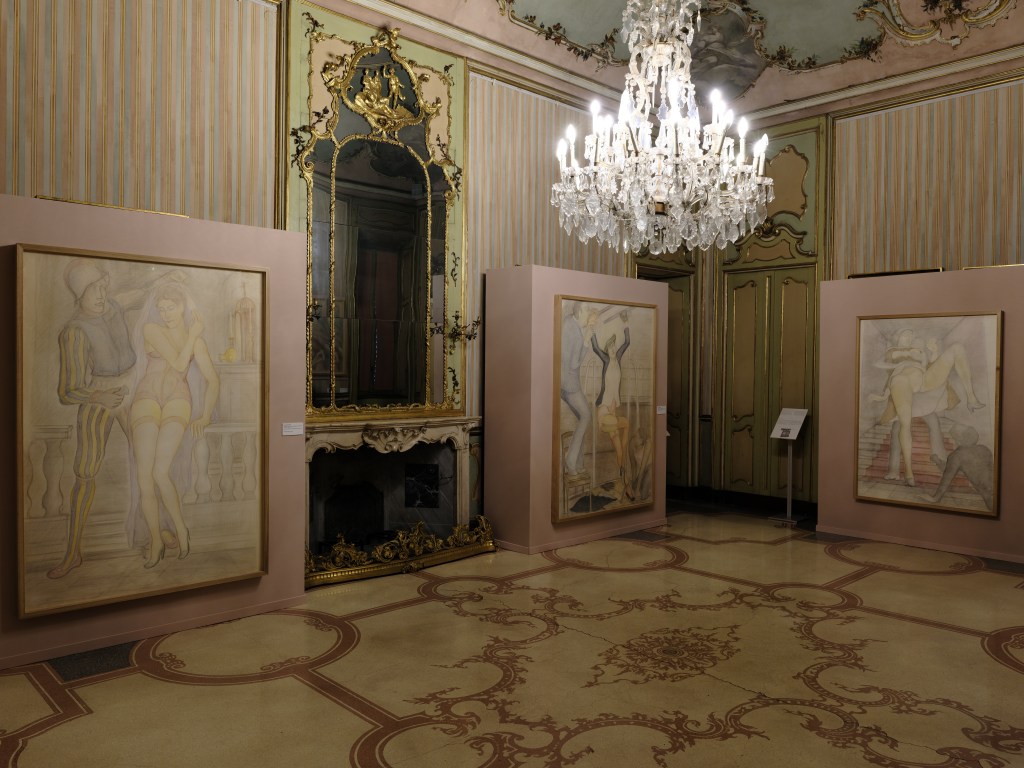
Pierre Klossowski, Le Jeune Ogier dans les bras du Frère Lahire II, 1972. Pencil and crayon on paper, 110 x 75 cm. Collezione Bilinelli, Milano 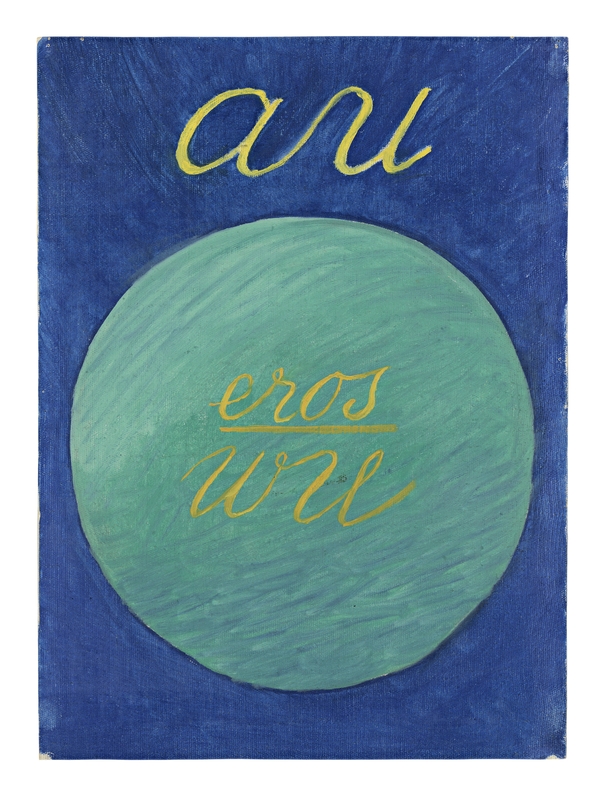
Hilma af Klint, Primordial Chaos, The WU/Rose Series, Group 1, 1906-1907. Oil on canvas, 53 x 37 cm. HaK017. By courtesy of the Hilma af Klint Foundation. Photo: The Moderna Museet, Stockholm, Sweden 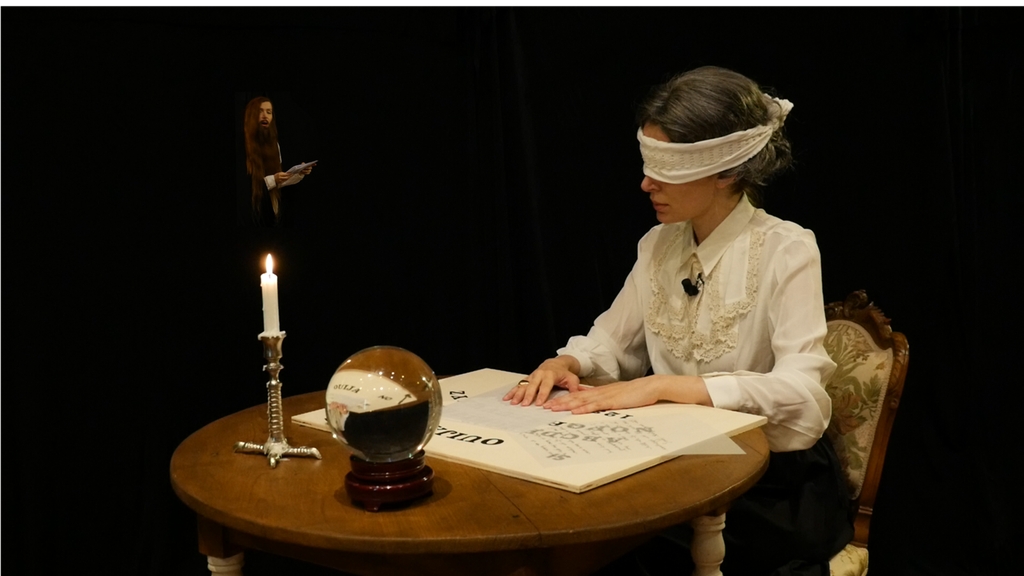
Chiara Fumai, The Book of Evil Spirits, 2015. Single channel video, color, sound. Duration: 26 min 24 sec, video still. Courtesy Archivio Chiara Fumai 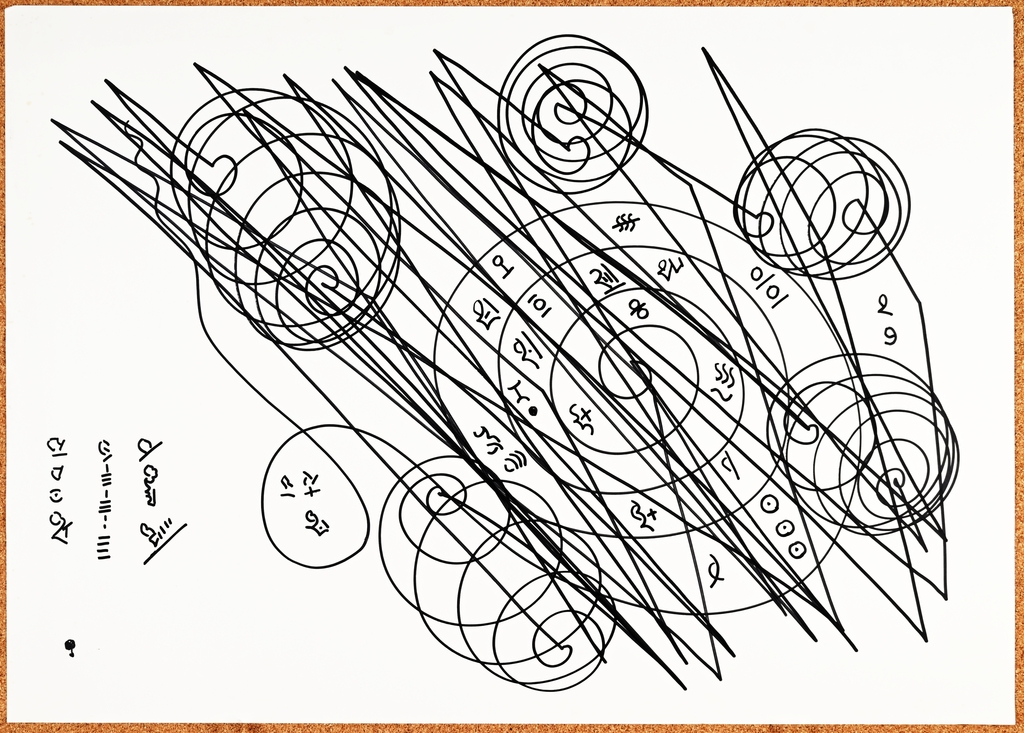
Milly Canavero, Untitled, 1985. Exhibition copy. Marker pen on paper, 46.5 x 65 cm. Elmar R. Gruber Collection of Mediumistic Art Fata Morgana: memorie dall’invisibile [Fata Morgana: Memories of the Invisible], 2025. Installation view of the exhibition conceived and produced by Fondazione Nicola Trussardi for Palazzo Morando | Costume Moda Immagine, curated by Massimiliano Gioni, Daniel Birnbaum, and Marta Papini. Courtesy of Fondazione Nicola Trussardi. Photo by Marco De Scalzi 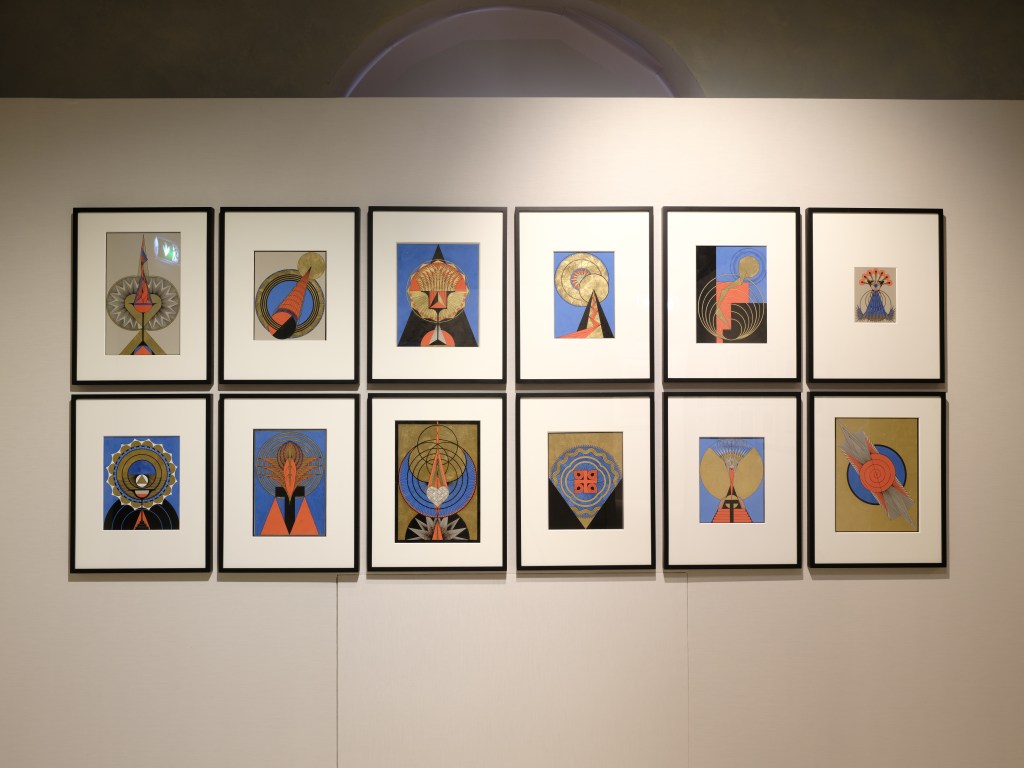
Fata Morgana: memorie dall’invisibile [Fata Morgana: Memories of the Invisible], 2025. Installation view of the exhibition conceived and produced by Fondazione Nicola Trussardi for Palazzo Morando | Costume Moda Immagine, curated by Massimiliano Gioni, Daniel Birnbaum, and Marta Papini. Courtesy of Fondazione Nicola Trussardi. Photo by Marco De Scalzi 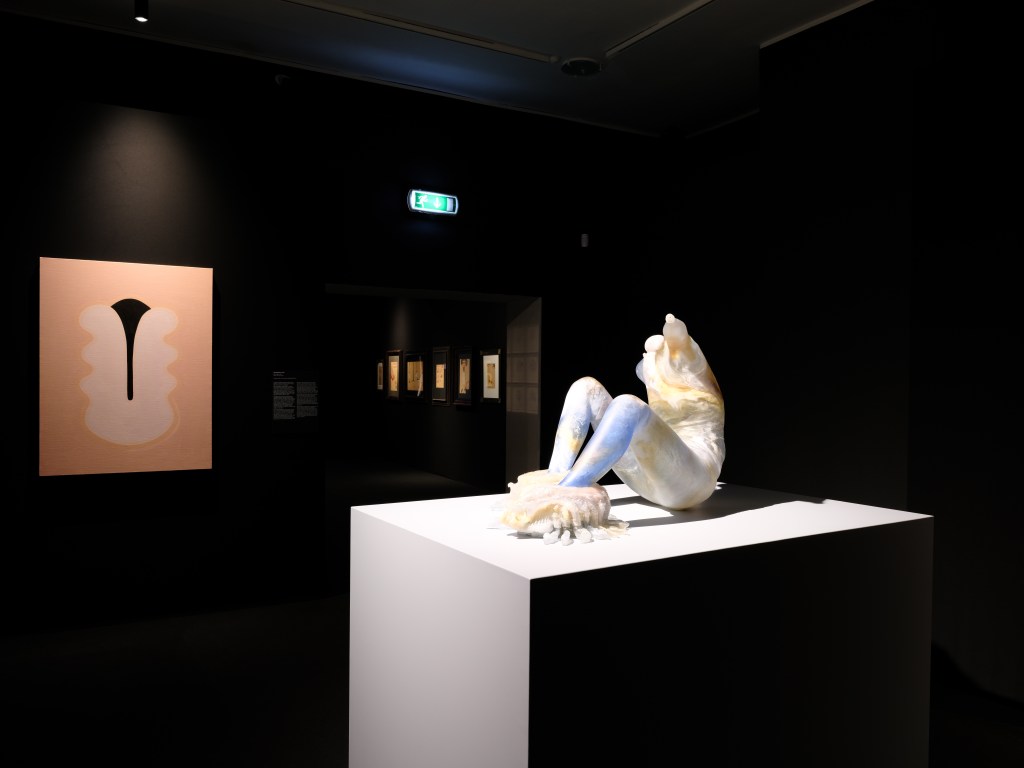
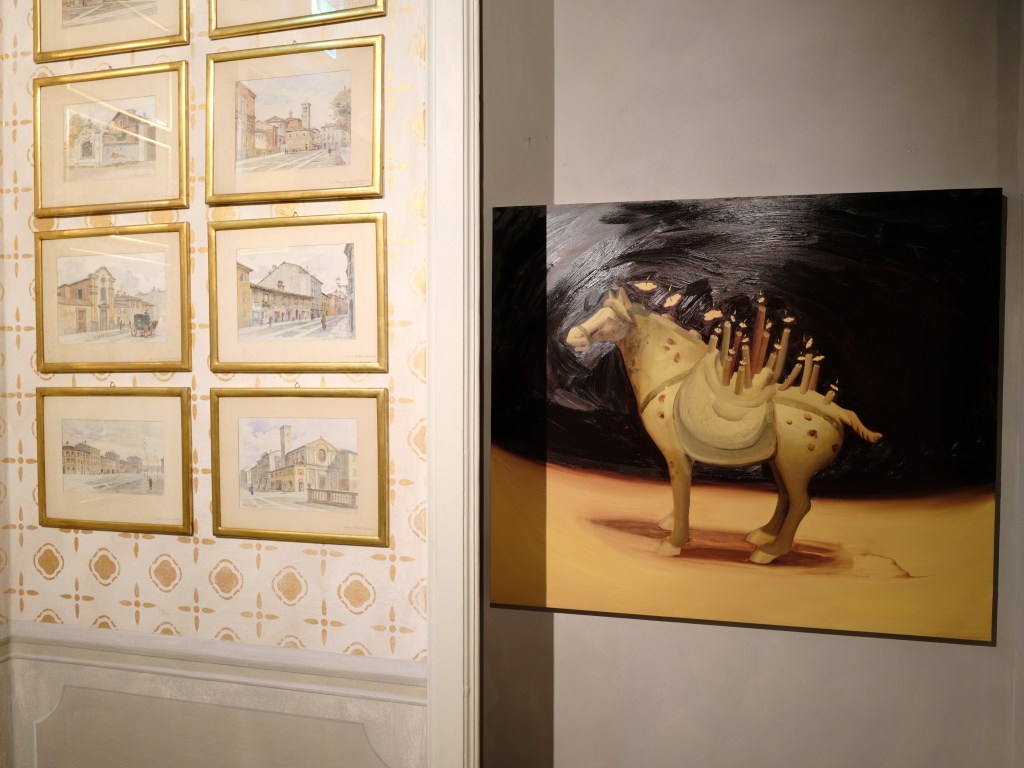
Fata Morgana: memorie dall’invisibile [Fata Morgana: Memories of the Invisible], 2025. Installation view of the exhibition conceived and produced by Fondazione Nicola Trussardi for Palazzo Morando | Costume Moda Immagine, curated by Massimiliano Gioni, Daniel Birnbaum, and Marta Papini. Courtesy of Fondazione Nicola Trussardi. Photo by Marco De Scalzi 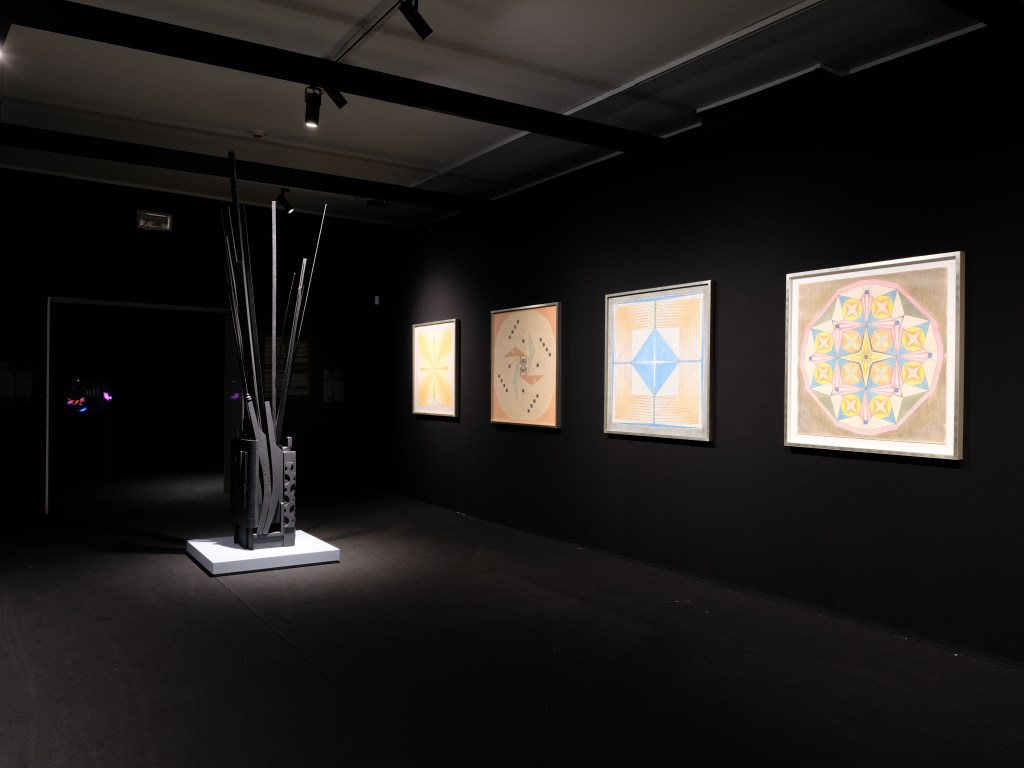
Fata Morgana: memorie dall’invisibile [Fata Morgana: Memories of the Invisible], 2025. Installation view of the exhibition conceived and produced by Fondazione Nicola Trussardi for Palazzo Morando | Costume Moda Immagine, curated by Massimiliano Gioni, Daniel Birnbaum, and Marta Papini. Courtesy of Fondazione Nicola Trussardi. Photo by Marco De Scalzi Fata Morgana: memorie dall’invisibile [Fata Morgana: Memories of the Invisible], 2025. Installation view of the exhibition conceived and produced by Fondazione Nicola Trussardi for Palazzo Morando | Costume Moda Immagine, curated by Massimiliano Gioni, Daniel Birnbaum, and Marta Papini. Courtesy of Fondazione Nicola Trussardi. Photo by Marco De Scalzi
The text has been translated in English using AI
 c plus c