In Parabita, in the province of Lecce, has taken shape a public art initiative that interweaves care, community and territory. Through site-specific interventions, urban heritage is transformed into a shared collection and art becomes an everyday gesture and collective responsibility.
Parabita is a town in the province of Lecce, in the heart of Salento, which ‒ thanks to the administration of mayor Stefano Prete ‒ is experiencing a unique artistic and cultural development through the Parabita per il contemporaneo project. The aim is to create a permanent collection of contemporary artworks owned by the municipality itself, which not only enabled their realization but also acquired them, effectively becoming an art collector. Currently, the projects Votiva and Ipogea are revitalizing the town, turning it into an open-air laboratory and museum, which the local community is invited to care for on a daily basis.
VOTIVA
Curated by Flavia Bonino and Laura Perrone in 2024, Votiva consists of seventeen works installed in former votive shrines ‒ a distinctive feature of the Salento territory. These are small niches embedded in the town’s walls, which once housed statues or images of saints and Madonnas, serving as small neighborhood altars that expressed a popular rituality also characterized by social functions, as they were gathering points. Just as those sacred figures were believed to protect streets, houses, and inhabitants, the entire community cared for the niches. Votiva aims to recreate this communal practice: the shrines act as devices reactivating collectivity for the common good. The selected works are by some of the most significant figures on the Italian and international art scenes, including Francesco Arena, Felice Levini, Helena Hladilová, Namsal Siedlecki, Liliana Moro, Adrian Paci, ektor garcia, Gianni Dessì, Mimmo Paladino, Michelangelo Pistoletto, Ludovica Carbotta, Chiara Camoni, Giovanni Lamorgese, Claudia Losi, Luigi Presicce, K.R.M. Mooney, and Claire Fontaine. Through these site-specific works, it is possible to experience the sacred beyond religion; although reflecting different artistic approaches, they engage in a harmonious dialogue and blend into the urban environment that hosts them. During the conference inaugurating the second project of the season, the Parabita per il contemporaneo app was also presented, allowing geolocation of the shrines, with narration by Michele Placido and Francesco Pannofino, along with the catalog published by Cura Books.
IPOGEA
Ipogea is an evolution of Votiva. The idea originated during a walk taken by artistic director Giovanni Lamorgese and the mayor through the town’s municipal storage areas, and it was developed under the curatorship of Carmelo Cipriani. In these storages, stone basins used for collecting oil produced in the underground oil mills (frantoi ipogei) were found. Francesco Arena, who had already participated in Votiva, was commissioned to create the first work of this second project, ensuring continuity. With his piece La Grotta, Arena performed a second decontextualization of these basins, placing them on the munteddha, the town’s highest and oldest area, beneath which lies a large underground chamber ‒ once an invisible workplace for hundreds of farmers who shaped the economic and cultural history of the town. The sites hosting the artworks are undergoing redevelopment, so that art, beyond its social function, has a transformative power for the territory. The local community is involved throughout the project phases and is called upon to take responsibility not only for the existing heritage but also for the heritage still being formed.
Votiva and Ipogea connect the identity of Parabita with contemporary art, honoring traditions and roots that are simultaneously reinterpreted, revitalized, and valorized.
Alice Longo
https://www.comune.parabita.le.it/informazione/parabita-per-il-contemporaneo
https://www.instagram.com/parabitaperilcontemporaneo/

Felice Levini, Il piede del santo, 2024, glazed ceramic and iron, foot approx. cm 28 x 15, arrow cm 60. Photo Gabriele Fiorito 
Francesco Arena, DIO (CUBO), 2024, site-specific installation, Carrara marble, cm 40 x 40 x 40. Photo Gabriele Fiorito 
Gianni Dessì, Dell’arte…. l’oro, 2024, metallic colour on wall, plaster and gold leaf, environmental dimensions. Photo Gabriele Fiorito 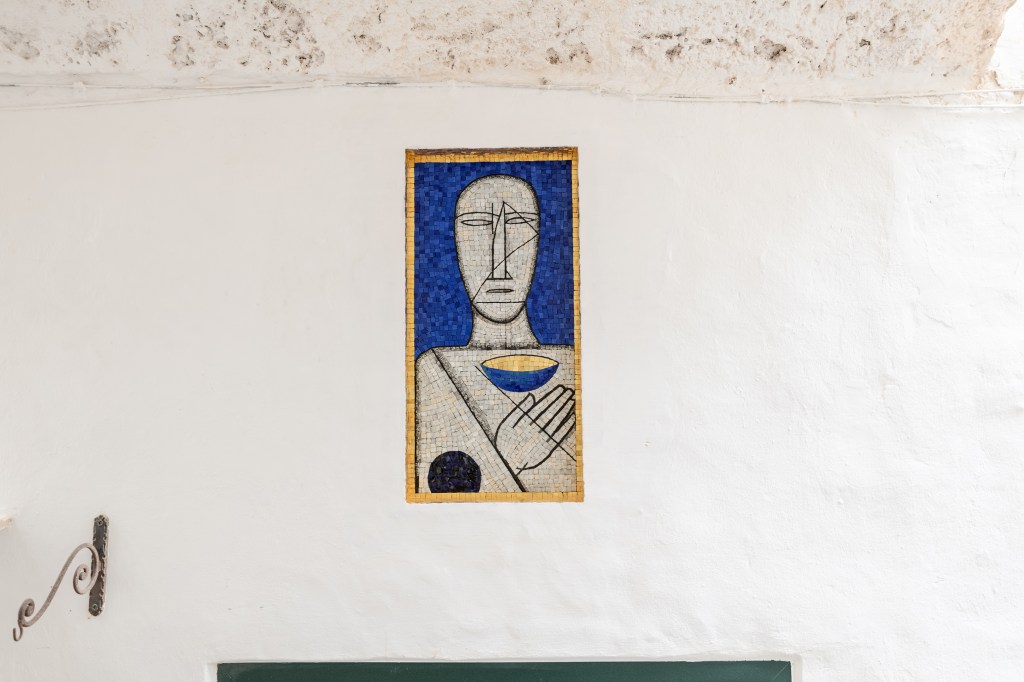
Mimmo Paladino, Untitled, 2024, site-specific installation, steel, marble tesserae, enamel and gold, cm 70 x 35. Photo Gabriele Fiorito 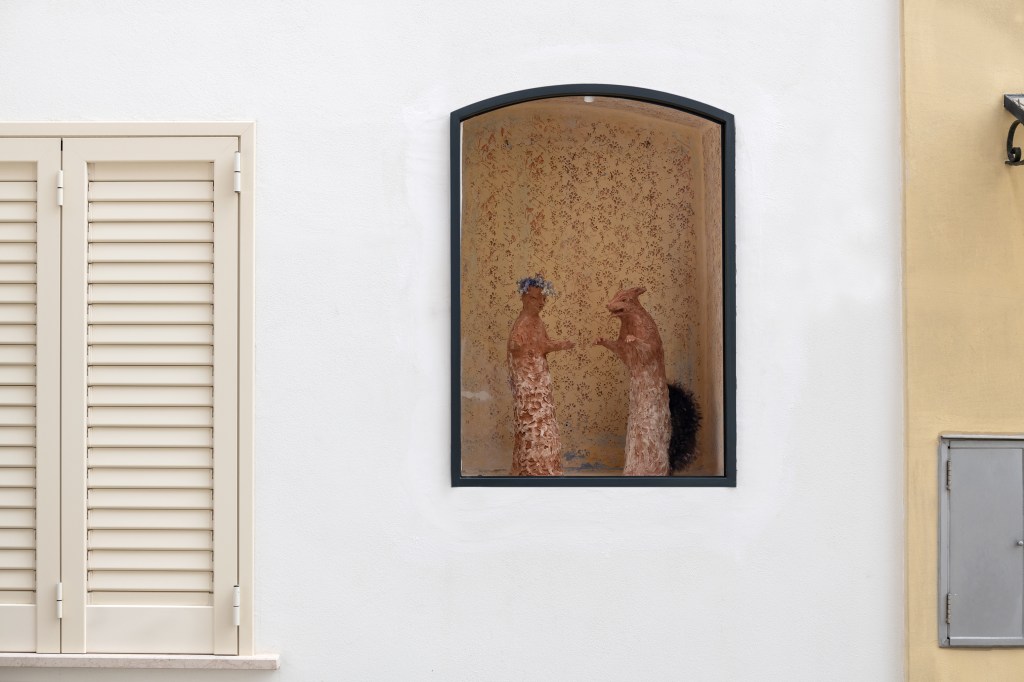
Chiara Camoni, Annunciazione, 2024, site specific installation terracotta galestro, recycled fur, dried flowers, cm 20 x 30 x 55 each, variable dimensions overall. Photo Gabriele Fiorito 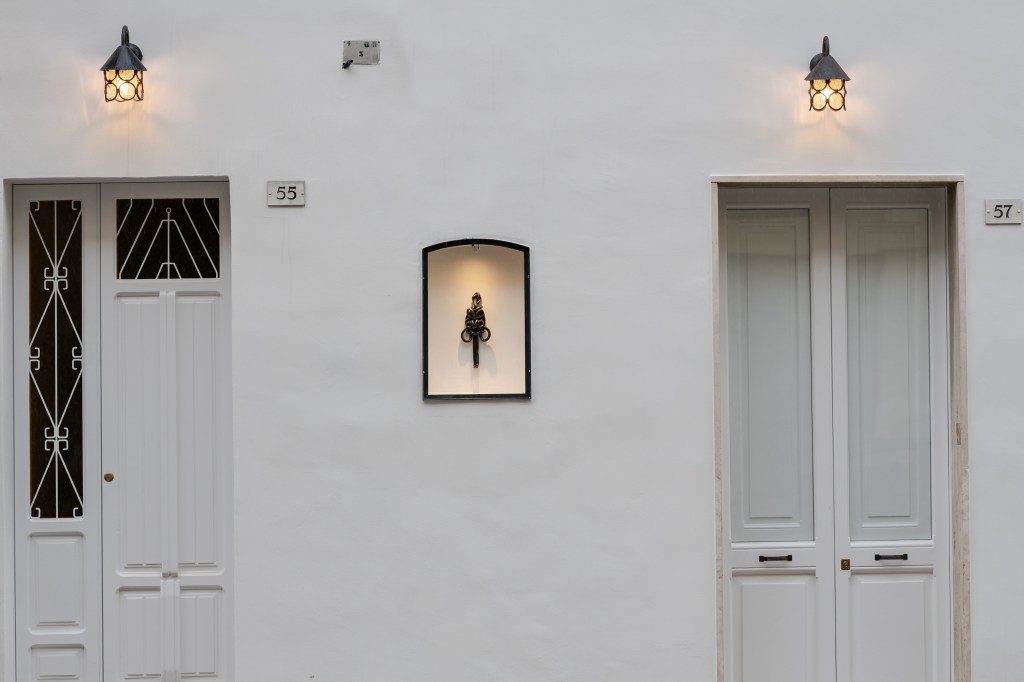
ektor garcia, figura de nudo, 2018, glazed ceramic, 30 x 15 cm. Photo Gabriele Fiorito 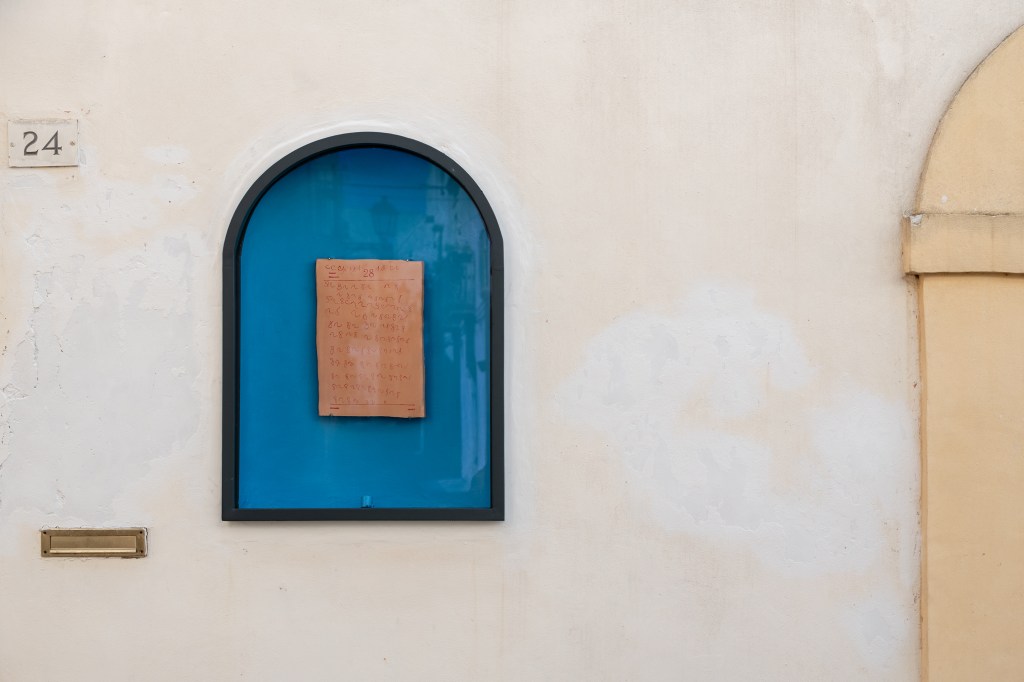
Adrian Paci, Compito #20, 2024, ceramics, cm 35 x 24. Photo Gabriele Fiorito 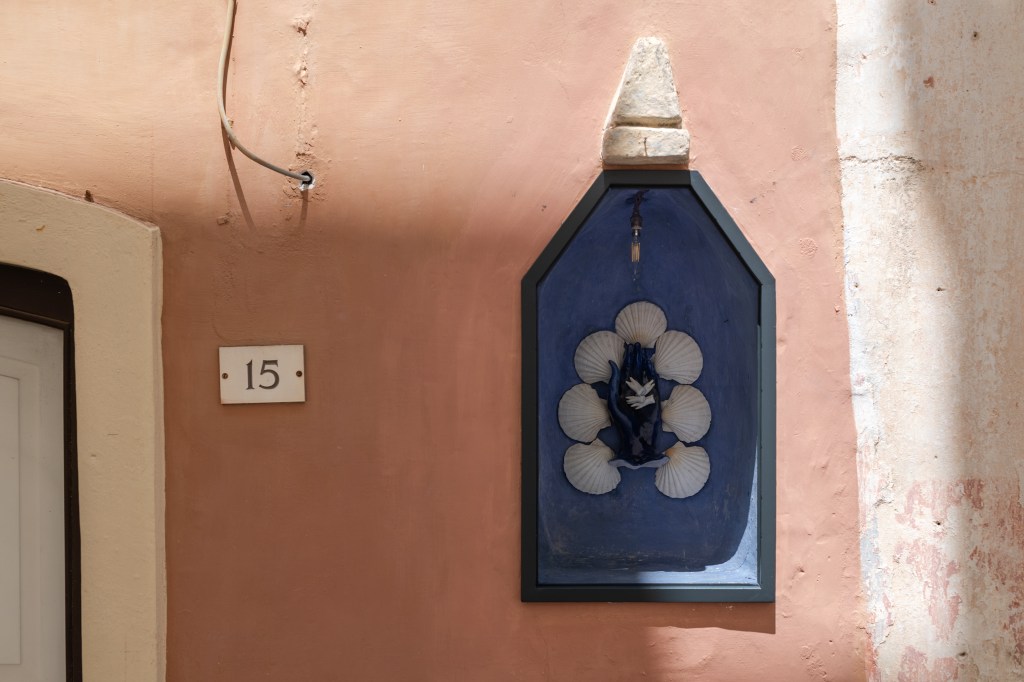
Luigi Presicce, Miracolo senza titolo, 2024, site-specific installation, environmental dimensions. Photo Gariele Fiorito 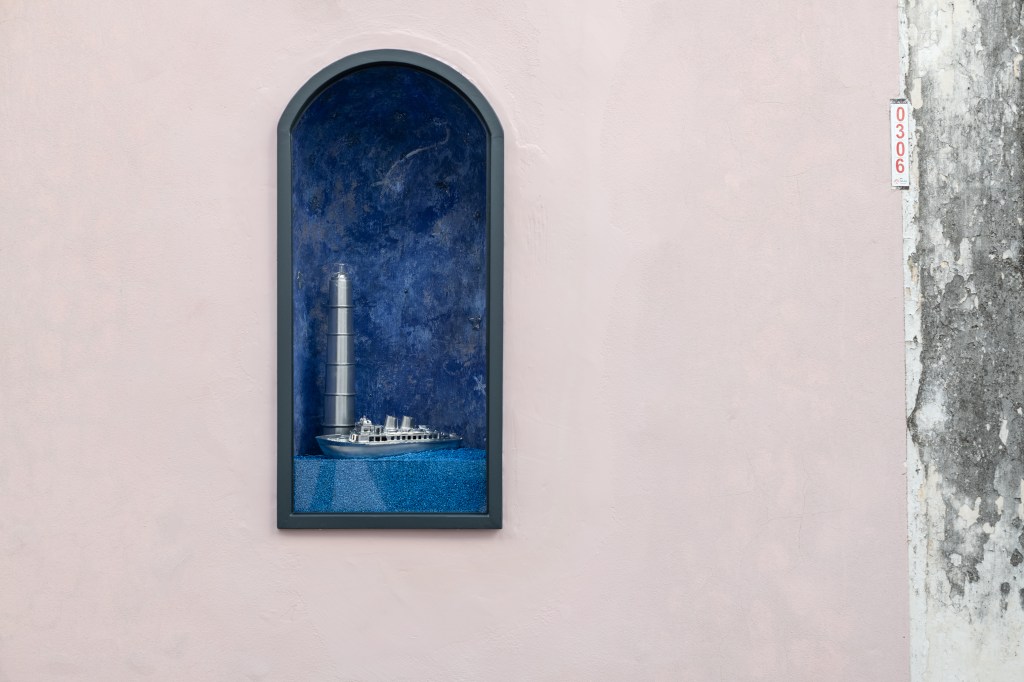
Liliana Moro, Polaris, 2024, site-specific installation, plastic, chrome steel spray paint, intermittent lights. Photo Gabriele Fiorito 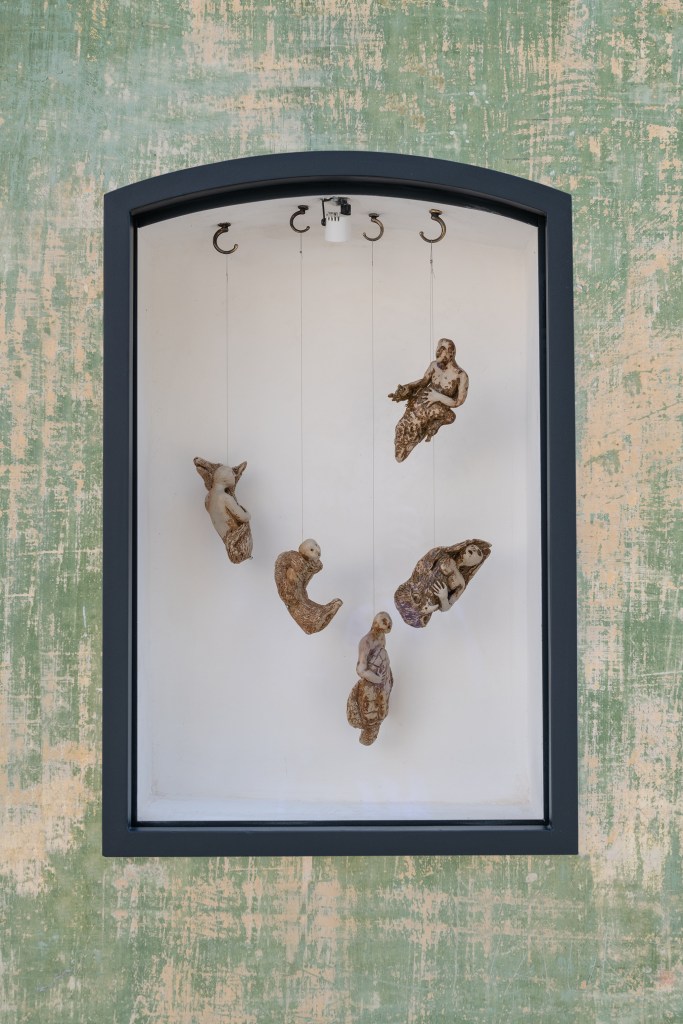
Claudia Losi, Amuleti Animalia, 2024, site-specific installation, fireclay and natural glazes, 5 elements, variable dimensions. Photo Gariele Fiorito 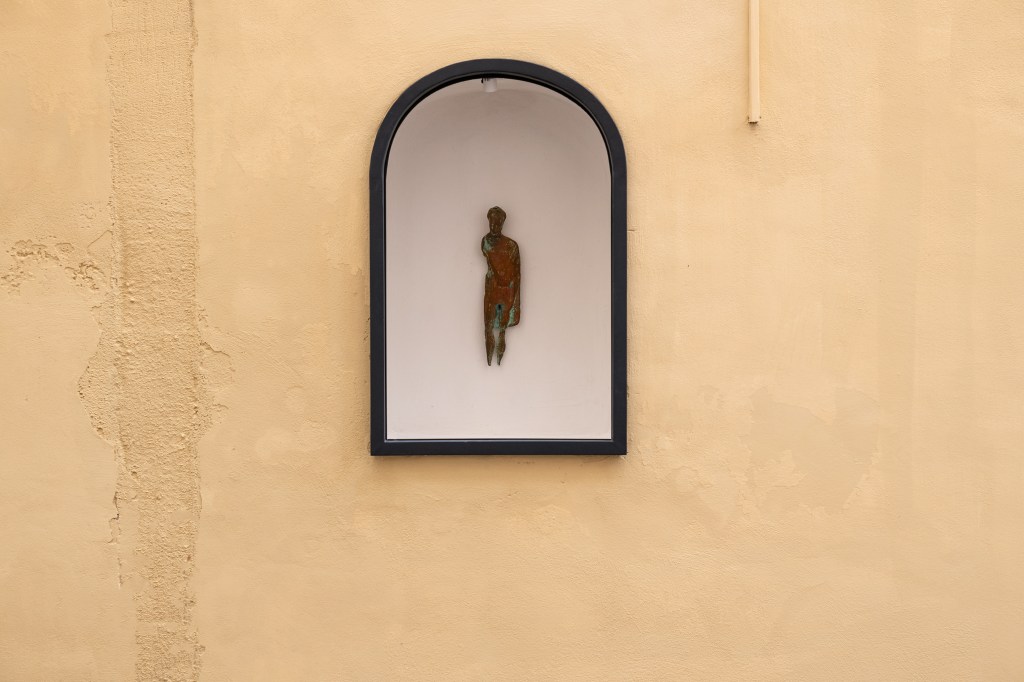
Namsal Siedlecki, Viandante, 2023, copper, cm 27 x 5 x 3. Photo Gabriele Fiorito 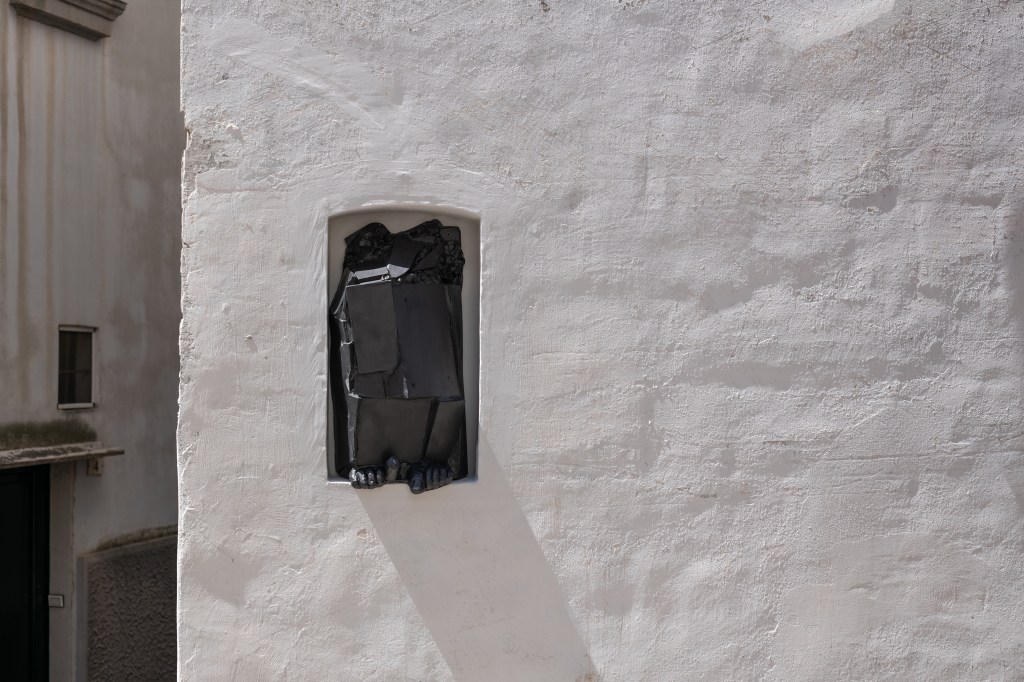
Ludovica Carbotta, S/T (segnale non visivo), 2024, site-specific installation, high relief, water-based resin, graphite, paint, cm 70 x 40 x 40. Photo Gabriele Fiorito 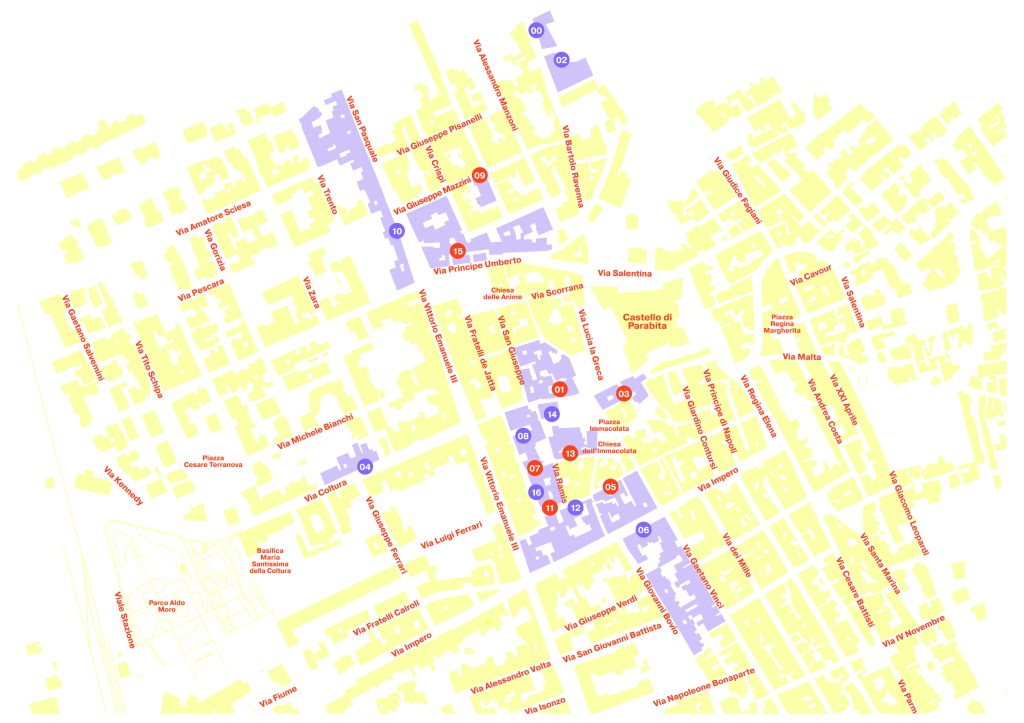
Mappa Votiva. Grafica Walter Santomauro 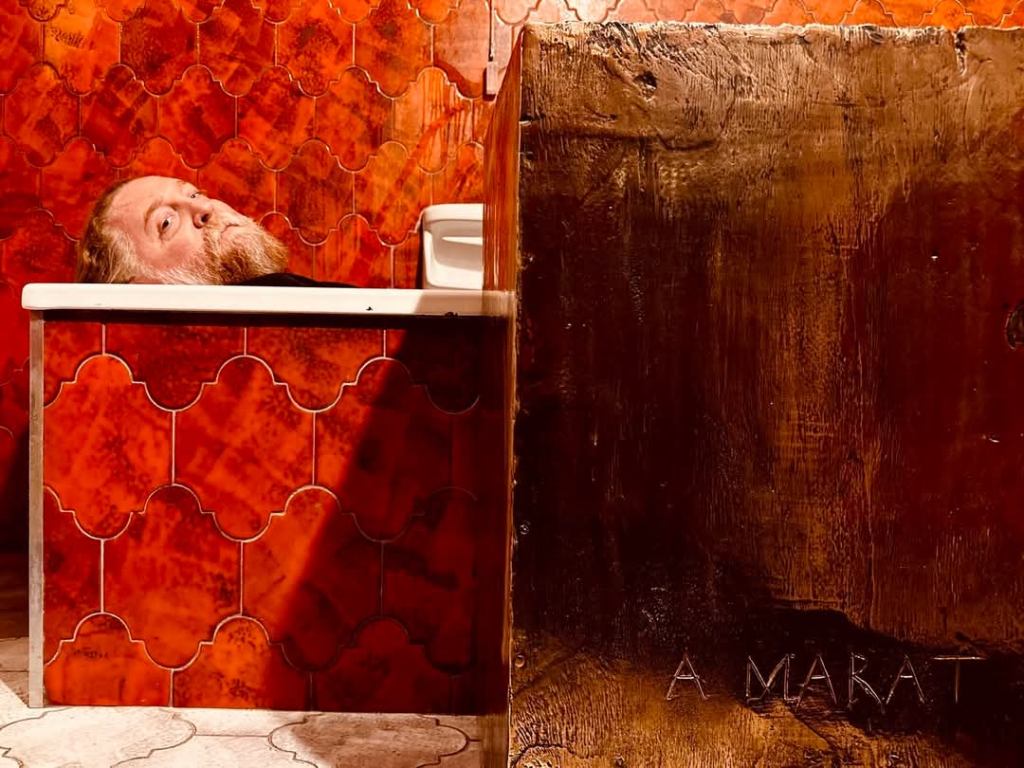
Francesco Arena. Photo Irene Pucci 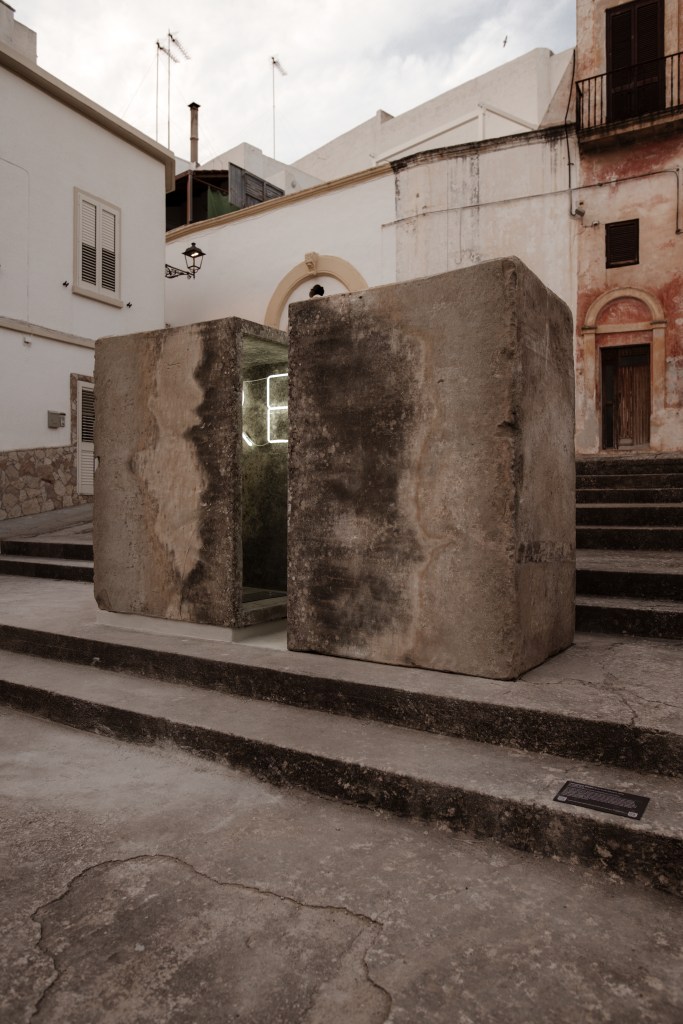
Francesco Arena, La Grotta, 2025, site-specific installation (basins in leccese stone, neon). Ipogea project, City of Parabita. Photo by Gabriele Fiorito 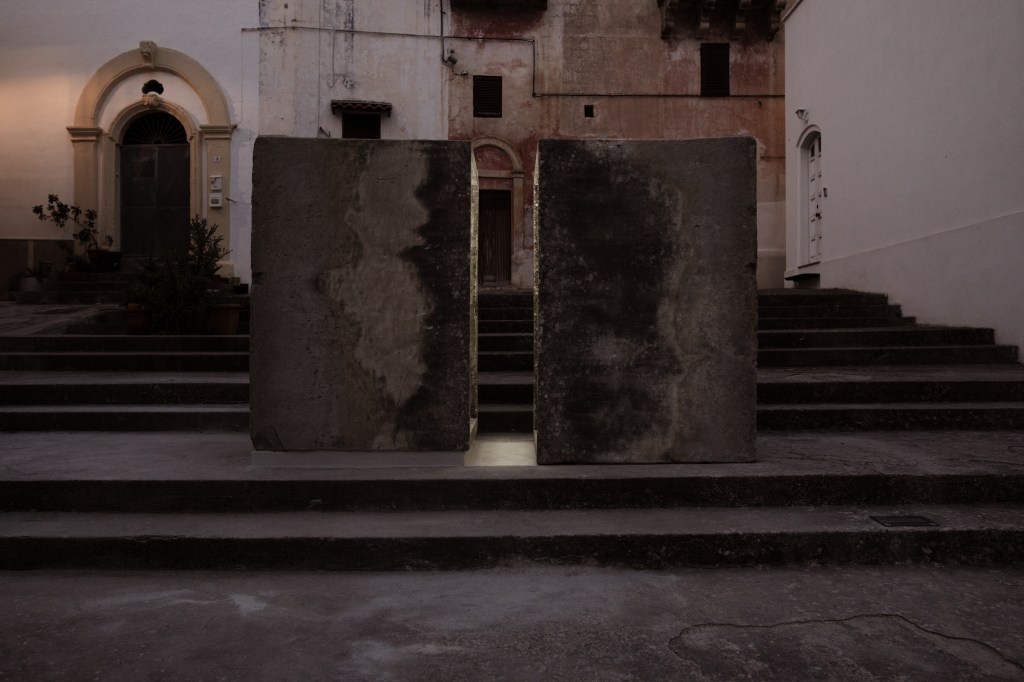
Francesco Arena, La Grotta, 2025, site-specific installation (basins in leccese stone, neon). Ipogea project, City of Parabita. Photo by Gabriele Fiorito 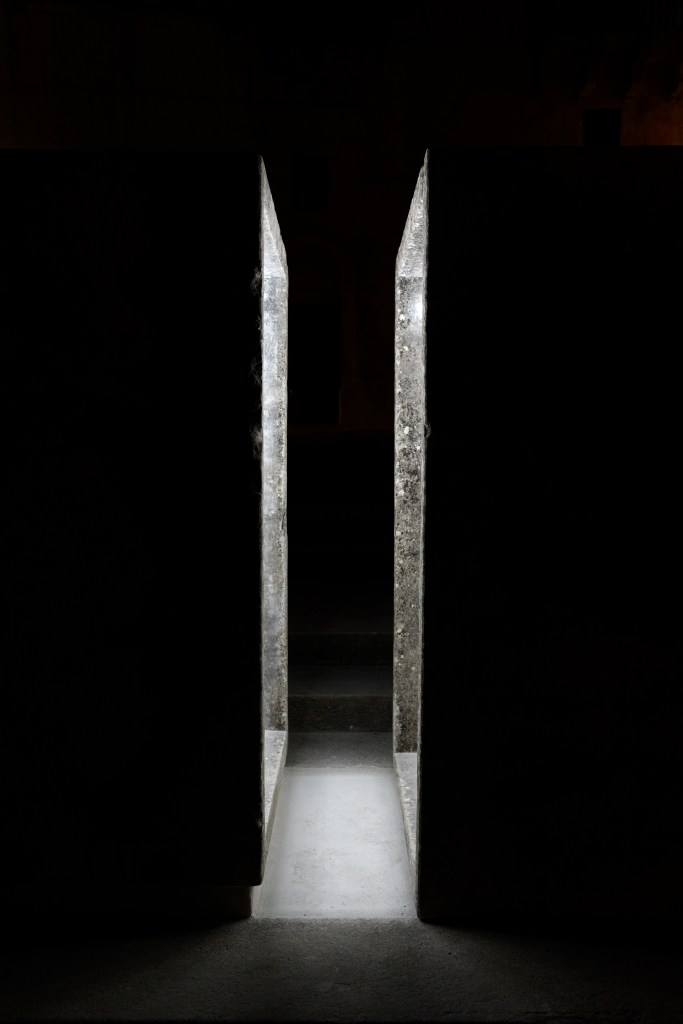
Francesco Arena, La Grotta, 2025, site-specific installation (basins in leccese stone, neon). Ipogea project, City of Parabita. Photo by Gabriele Fiorito 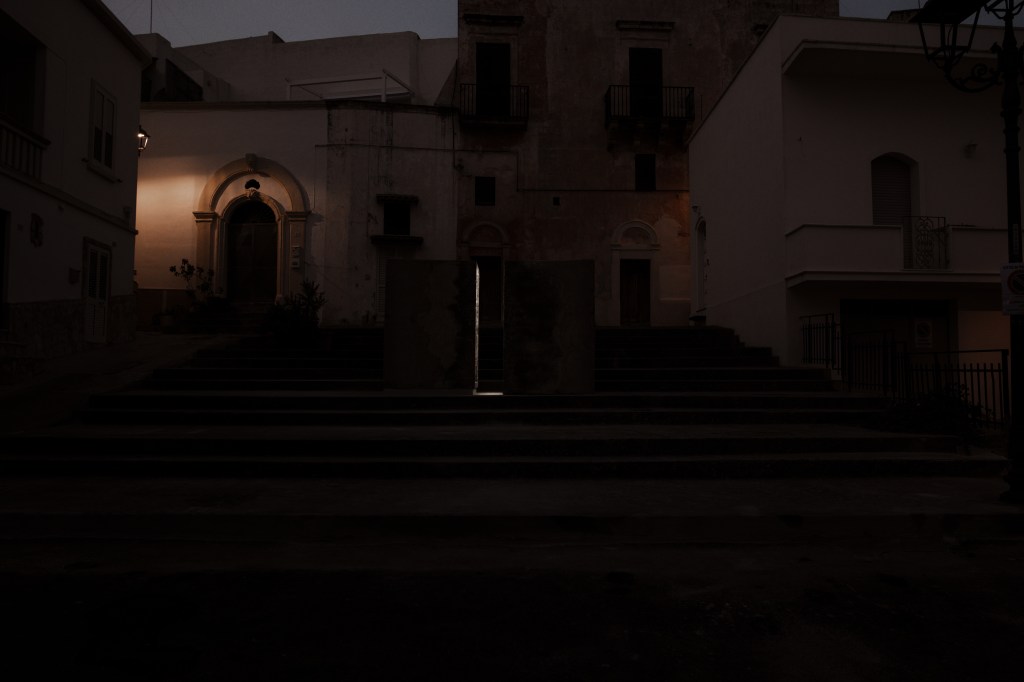
Francesco Arena, La Grotta, 2025, site-specific installation (basins in leccese stone, neon). Ipogea project, City of Parabita. Photo by Gabriele Fiorito 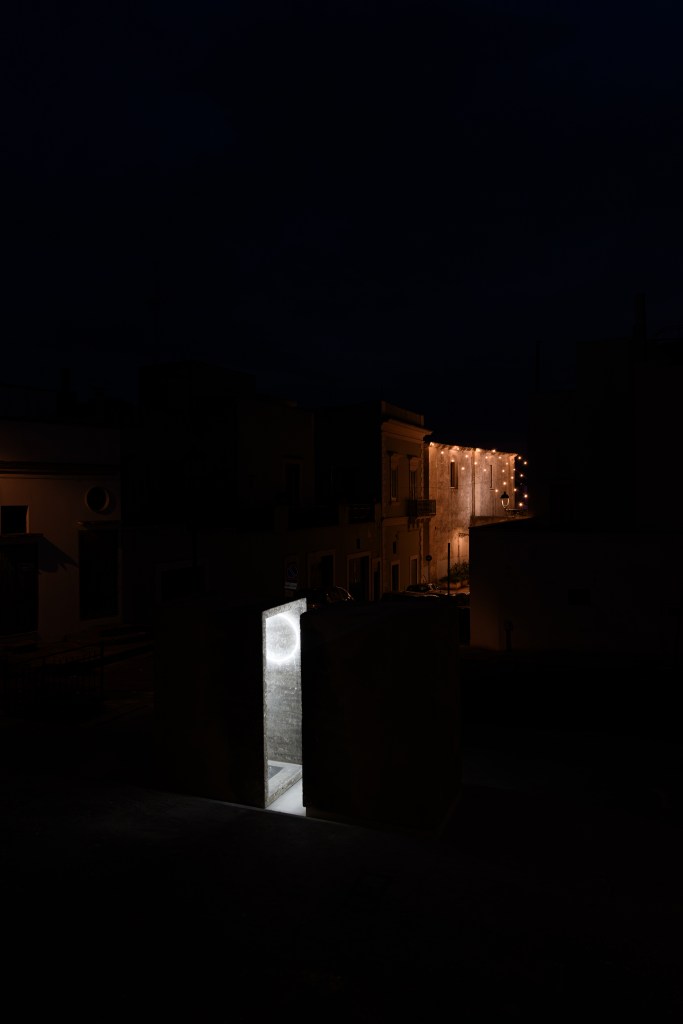
Francesco Arena, La Grotta, 2025, site-specific installation (basins in leccese stone, neon). Ipogea project, City of Parabita. Photo by Gabriele Fiorito 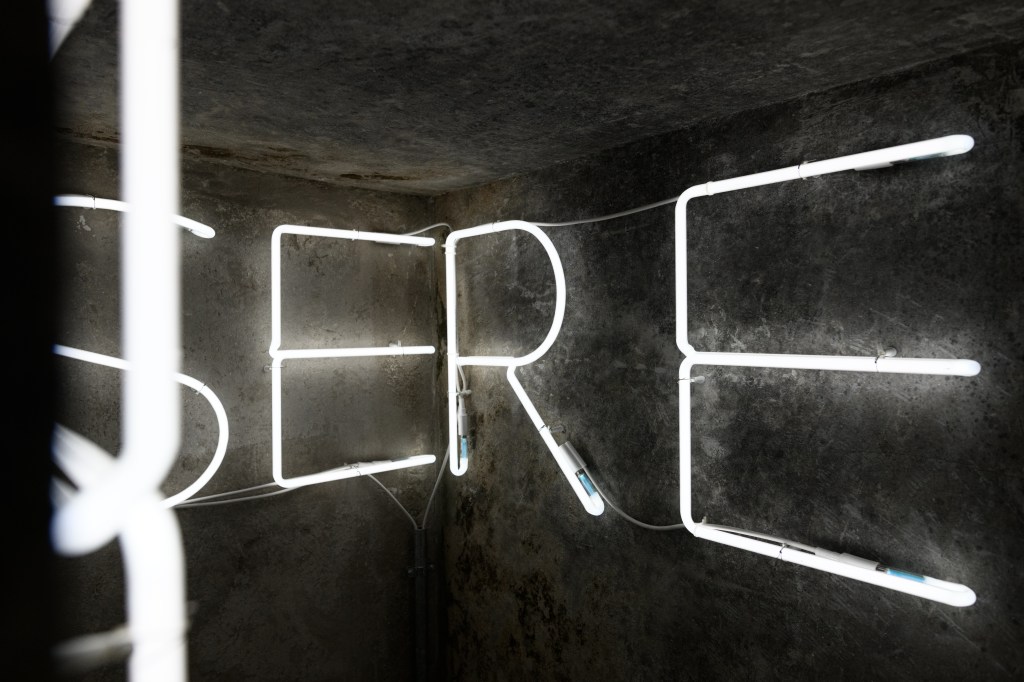
Francesco Arena, La Grotta, 2025, site-specific installation (basins in leccese stone, neon). Ipogea project, City of Parabita. Photo by Gabriele Fiorito 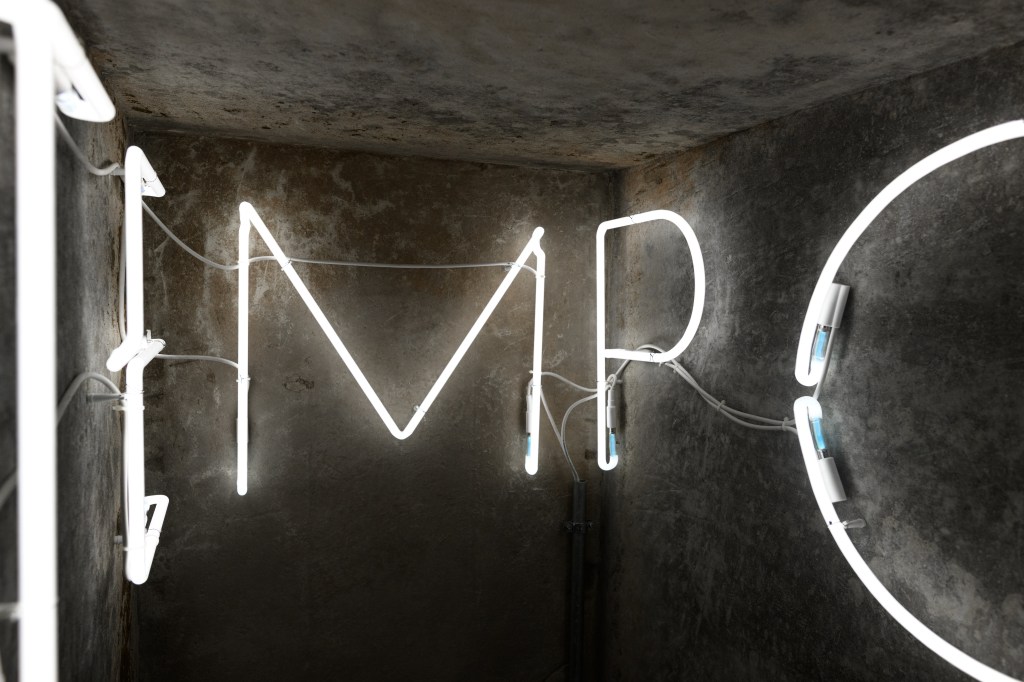
Francesco Arena, La Grotta, 2025, site-specific installation (basins in leccese stone, neon). Ipogea project, City of Parabita. Photo by Gabriele Fiorito
Translated with AI
 c plus c