More than two hundred years have passed since what we in Western history have termed the “colonial era”. Even today, the most visited museums in major European and other cities display artefacts looted during that period. Ocean Space, a collaborative platform led by TBA21, is hosting ‘Tide of Returns’ – an exhibition curated by Khadija von Zinnenburg Carroll that explores the themes of community and repatriation – in the former church of San Lorenzo in Venice.
Just as waves carry objects to and from the shore, the exhibition Tide of Returns, on display in the former Church of San Lorenzo in Venice – home to Ocean Space – until 11 October 2026, places an ancestral connection with nature at the heart of its discourse, acting as a voice for calls for the return and repatriation of cultural heritage. The exhibition comprises two site-specific installations that prompt a series of reflections on the links between objects and the territories in which they were produced, as well as on the limitations and contradictions of the Western perspective.
THE “TIDE OF RETURNS” EXHIBITION AT THE OCEAN SPACE IN VENICE
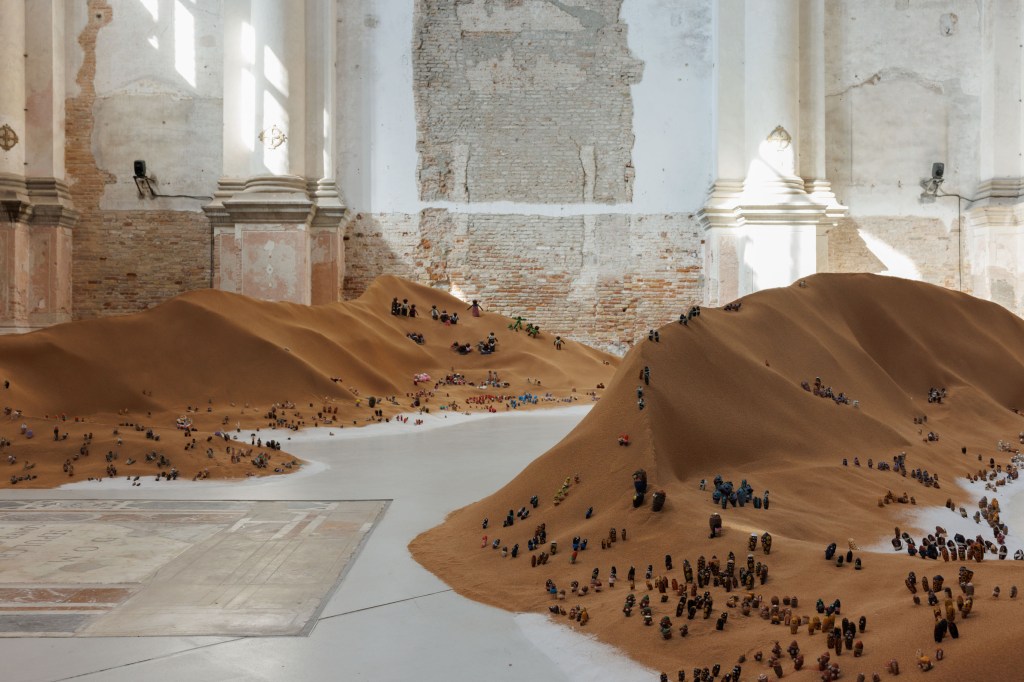
The installation by Repatriates Collective, From My Mother’s Country (2026), consists of sand dunes made partly from sand sourced from the homeland of the artist Noeleen Lalara, near the Gulf of Carpentaria: a place threatened by the passage of time and by changes ‒ both natural and man-made, such as the waves of rubbish constantly washed ashore by the tides. Faced with these spectres, territory and community intertwine in an act of continuous resilience: the natural and the artificial come together, affirming a sense of closeness to and care for the place. Arranged along the dunes are the Dadikwakwa-kwa – “shell dolls” –, a symbol of fertility and a narrative and educational tool for the girls of the Warnindilyakwa community. Precisely because of their social function, the Dadikwakwa-kwa fulfil a totemic and ritual role, protecting the community from the specific threats of the territory. The installation also includes a video that bears witness to the social value of the dolls for the women, highlighting the deep connection between totems, the female figure and nature. The artefacts are also central to a story of restitution: in 2023, the Manchester Museum returned 174 items belonging to the cultural heritage of the Warnindilyakwa people, including the Dadikwakwa-kwa. The installation thus reveals multiple layers of interpretation: the first concerns the ancestral connection between humankind and nature, and the second is inspired by the need to give back to the community. It is therefore becoming increasingly urgent to reflect not only on plunder and restitution, but also on the colonial framework inherent in the Western museum’s perspective and institutional structure. The act of renaming and exhibiting the Dadikwakwa-kwa far from the context in which they were created – as has happened in the past – amounts to plundering not only an object but also the entire culture and tradition that gave rise to it. Ocean Space thus presents itself as a space for reinterpreting and revaluing the Dadikwakwa-kwa in terms of their collective and ritual power.
THE WORK OF VERENA MELGAREJO WEINANDT
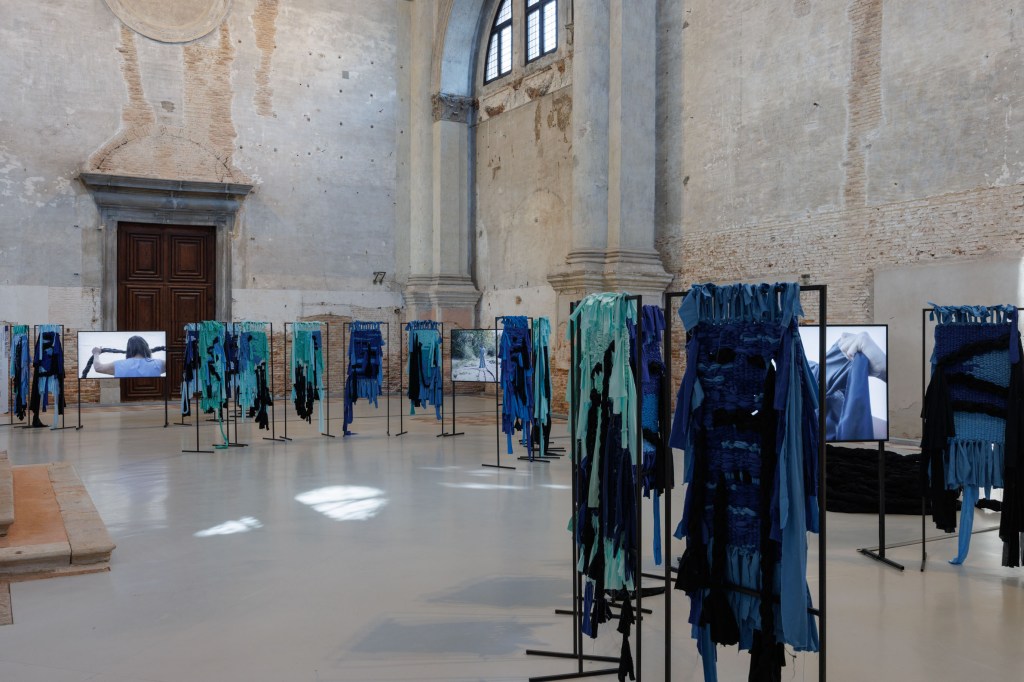
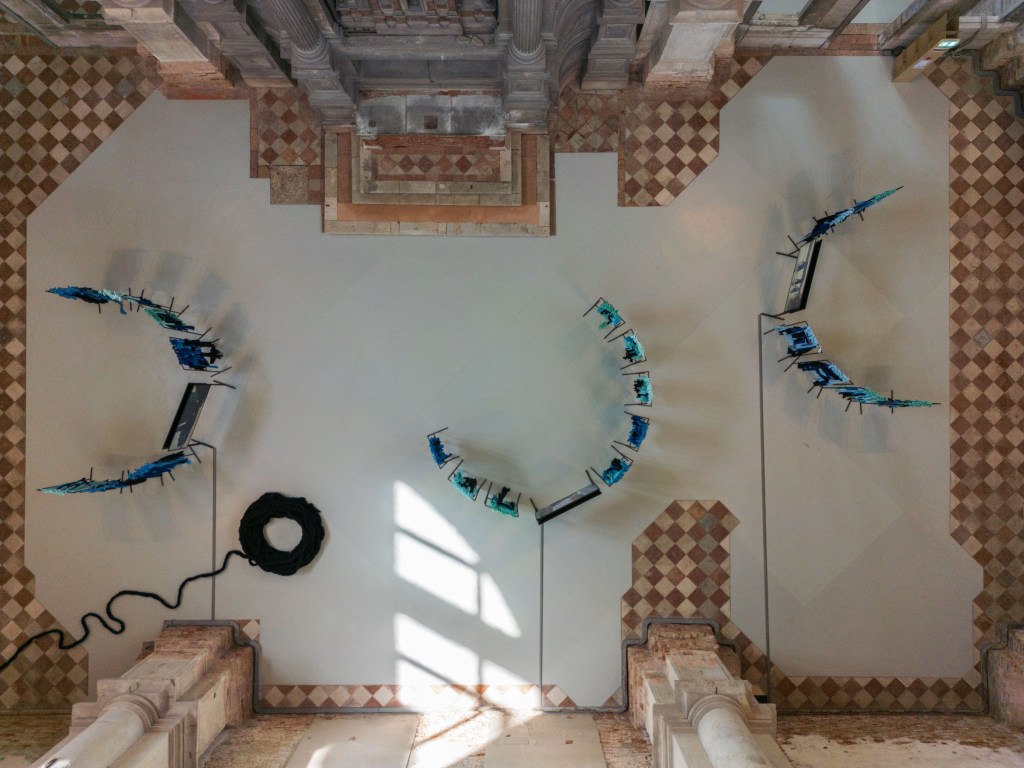
It is no coincidence, then, that the exhibition continues with Weaving Connections, the result of research by the German-Bolivian artist Verena Melgarejo Weinandt. The installation consists of textiles and a video featuring two women washing a braid of fabric in the waters of a river. Through a cyclical and repetitive gesture, hair is metaphorically associated with the flow of water and its intertwining, prompting reflection on the cycles within which we are all, as human beings, encompassed and bound. Starting with water, Weaving Connections offers a shift in perspective, particularly regarding stereotypes concerning indigenous peoples in the German cultural imagination. Water and braids evoke, on the one hand, a collective and ritualistic gesture, and on the other, the relationships and interdependencies that give rise to identities. The act of braiding becomes central to Verena Melgarejo Weinandt’s artistic practice as an expression of connections and continuous transformation. In the video on display, filmed on the banks of the Danube in Kritzendorf, Austria, the artist weaves a cloak which she wears and washes in water, carrying and conveying the symbolic weight of an oppressive colonial past. Water once again serves as an element of transformation, in the hope that this weight, now made visible, may become something new. The multiple layers of interpretation in Tide of Returns highlight the stratification of stereotypes and colonial dynamics, emphasising their consequences and pointing to restitution as a possible happy ending. Ocean Space takes a positive and proactive stance on an issue that has weighed heavily on world history and continues to do so. Restitution must be the first step towards reconciliation; however, this requires a transformation of the entire Western museum institution and, even before that, a shift in perspective.
THE REPATRIATES PROJECT
Tide of Returns stems from Repatriates, a research project founded by curator Khadija von Zinnenburg Carroll, which experiments with the creation of collaborative platforms through open calls, grants and residencies. The project’s aim and objective are to support museums’ efforts to return artefacts to their communities of origin. Through hybrid approaches combining art and research, the collective seeks to collaborate with communities to ensure their voices are heard, commissioning works capable of replacing or forging a relationship with the objects that are – or should be – returned. In this way, the exhibition at the Ocean Space serves not only as a vision for the future, but also as a new narrative within which to redefine the value of these objects.
The work of Repatriates seems even more urgent in a city like Venice. “But what did it mean to stage these conversations in Venice – a city whose collections hold colonial legacies that remain largely unacknowledged and unquestioned?”, asks Francesca Tarocco, director of the NICHE Centre for Environmental Humanities – in her contribution Talanoa in Venice: Unfinished Dialogues in the publication Tide of Returns, edited by Khadija von Zinnenburg Carroll, Christopher Williams-Wynn and Verena Melgarejo Weinandt – in light of the many Venetian collections exhibiting art from the Pacific.
This is why, in Venice more than in any other city, there is an urgent need for an openly declared stance such as that of the Ocean Space.
THE RESEARCH DEVELOPED BY THE OCEAN SPACE
The decolonisation of the gaze is, in fact, at the heart of the Ocean Space’s entire research programme, which offers activities and projects aimed at raising awareness of nature, acting as a champion of rights and perspectives that are inevitably intersectional. It is within this context that Nature Speaks has emerged, an initiative curated by Pietro Consolandi and Amalia Rossi and developed in collaboration with the NICHE Centre for Environmental Humanities at Ca’ Foscari University of Venice and a network of activists including IDRA – Initiative for the Rights of Water Networks and the Confluence of European Water Bodies. The Nature Speaks project involves the creation of a searchable archive of research materials ‒ housed in a room within the former Church of San Lorenzo – as well as a Policy Lab that focuses on the local context of Venice and which, in October last year, drew up a Declaration of the Rights of the Venice Lagoon.
In this way, the Ocean Space manages to engage with various communities – from the international to the Venetian – bringing them together within a collective discourse. Further examples of this are the events in the public programme or those linked to the exhibitions, such as The Many Venices, a programme of guided walks organised between June and September in collaboration with the Venetian publishing house wetlands: each session is dedicated to rediscovering the city through new perspectives and the eyes of the various communities that have shaped the area.
Rebecca Canavesi
The Tide of Returns exhibition at the Ocean Space in Venice
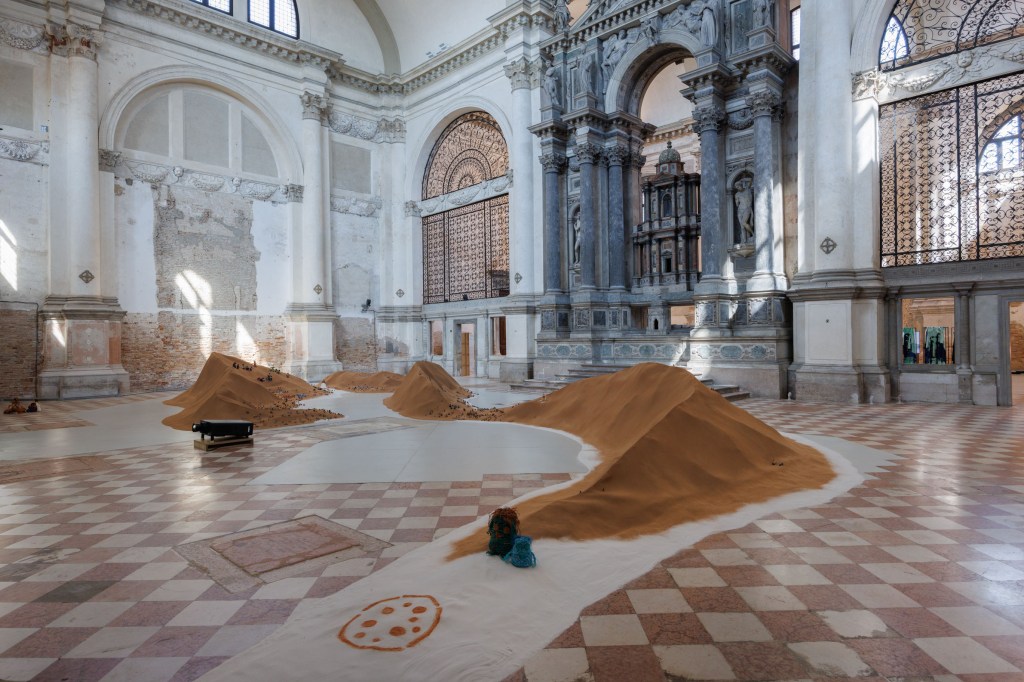
Repatriates Collective, “From My Mother’s Country”, 2026. Exhibition view of “Tide of Returns”, Ocean Space, Venice. Commissioned and produced by TBA21–Academy. Photo: Jacopo Salvi 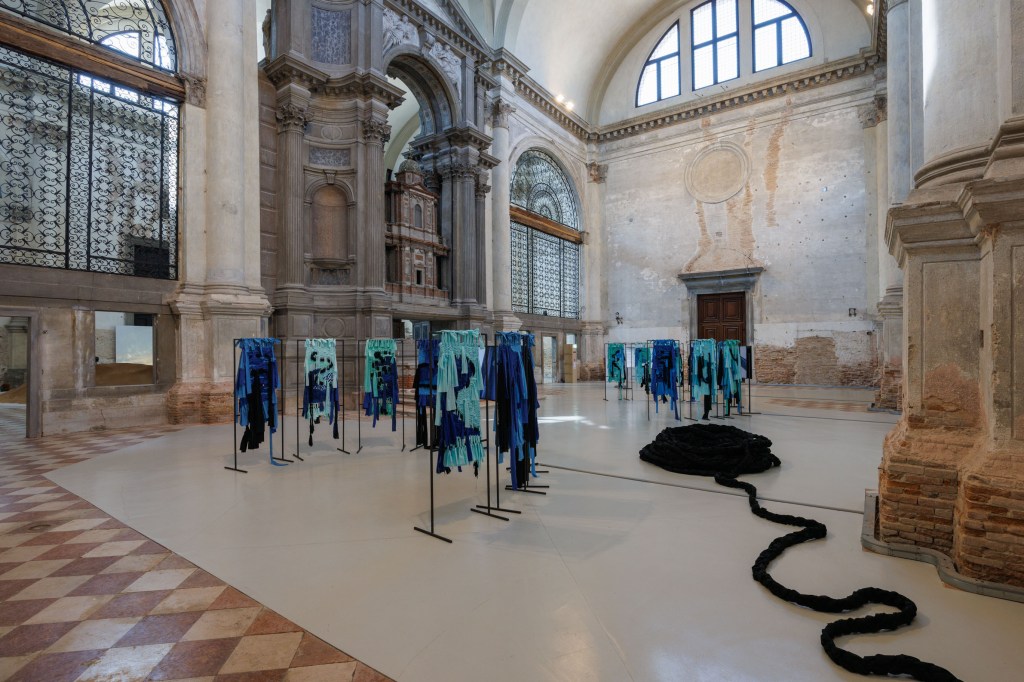
Verena Melgarejo Weinandt, “Weaving Connections”, 2026. Exhibition view of “Tide of Returns”, Ocean Space, Venice. Commissioned and produced by TBA21–Academy. Photo: Jacopo Salvi 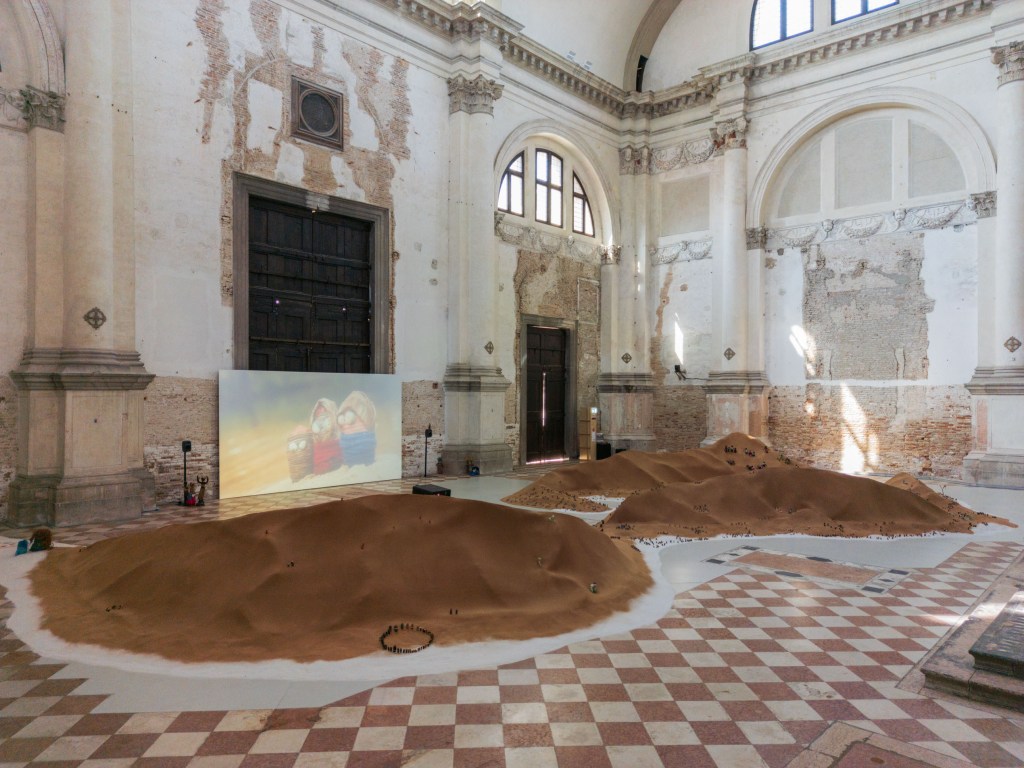
Repatriates Collective, “From My Mother’s Country”, 2026. Exhibition view of “Tide of Returns”, Ocean Space, Venice. Commissioned and produced by TBA21–Academy. Photo: Jacopo Salvi Verena Melgarejo Weinandt, “Weaving Connections”, 2026. Exhibition view of “Tide of Returns”, Ocean Space, Venice. Commissioned and produced by TBA21–Academy. Photo: Jacopo Salvi Verena Melgarejo Weinandt, “Weaving Connections”, 2026. Exhibition view of “Tide of Returns”, Ocean Space, Venice. Commissioned and produced by TBA21–Academy. Photo: Jacopo Salvi 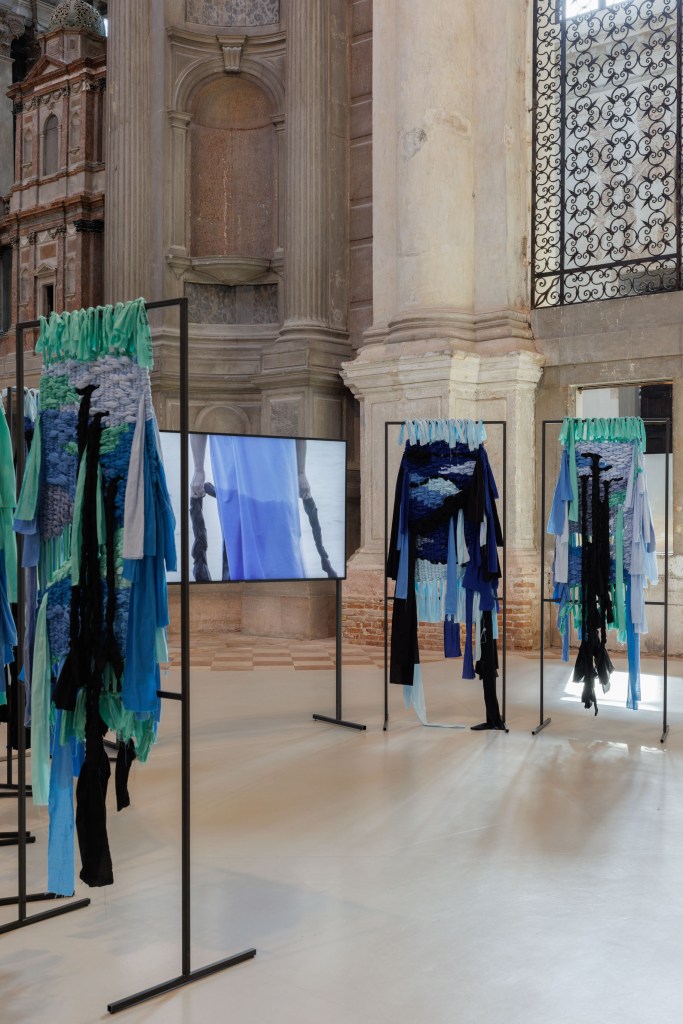
Verena Melgarejo Weinandt, “Weaving Connections”, 2026. Exhibition view of “Tide of Returns”, Ocean Space, Venice. Commissioned and produced by TBA21–Academy. Photo: Jacopo Salvi 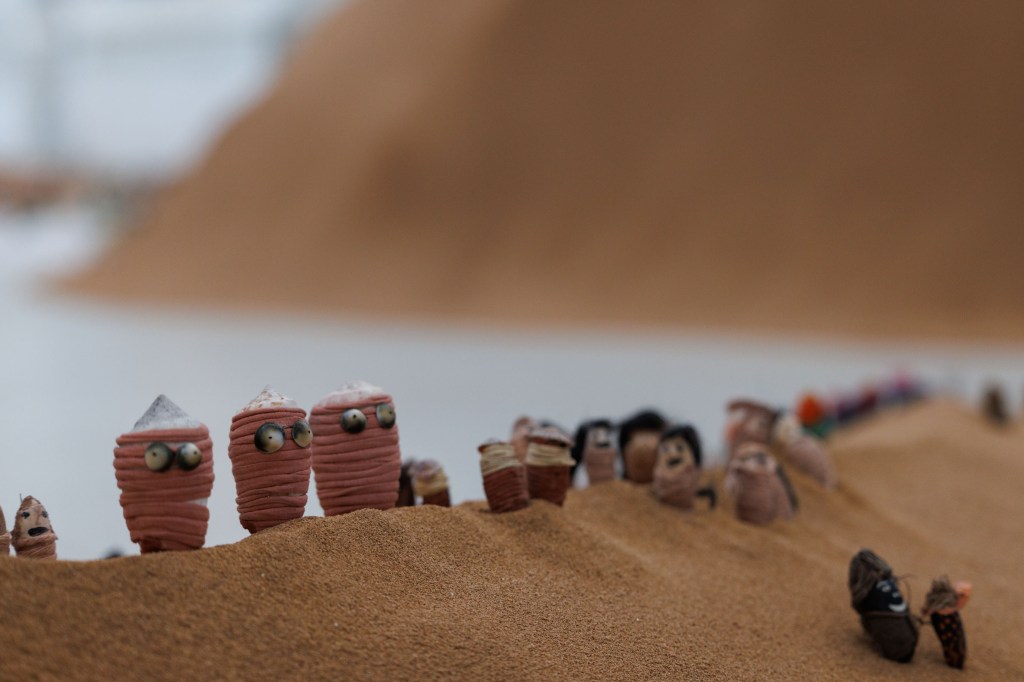
Repatriates Collective, “From My Mother’s Country”, 2026. Exhibition view of “Tide of Returns”, Ocean Space, Venice. Commissioned and produced by TBA21–Academy. Photo: Jacopo Salvi 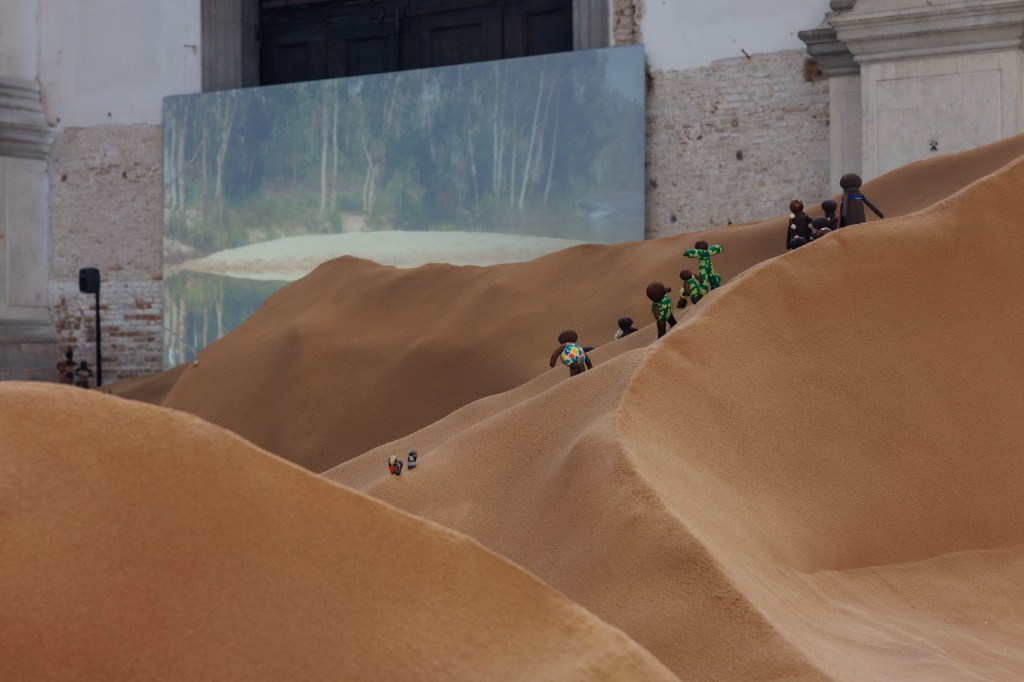
Repatriates Collective, “From My Mother’s Country”, 2026. Exhibition view of “Tide of Returns”, Ocean Space, Venice. Commissioned and produced by TBA21–Academy. Photo: Jacopo Salvi 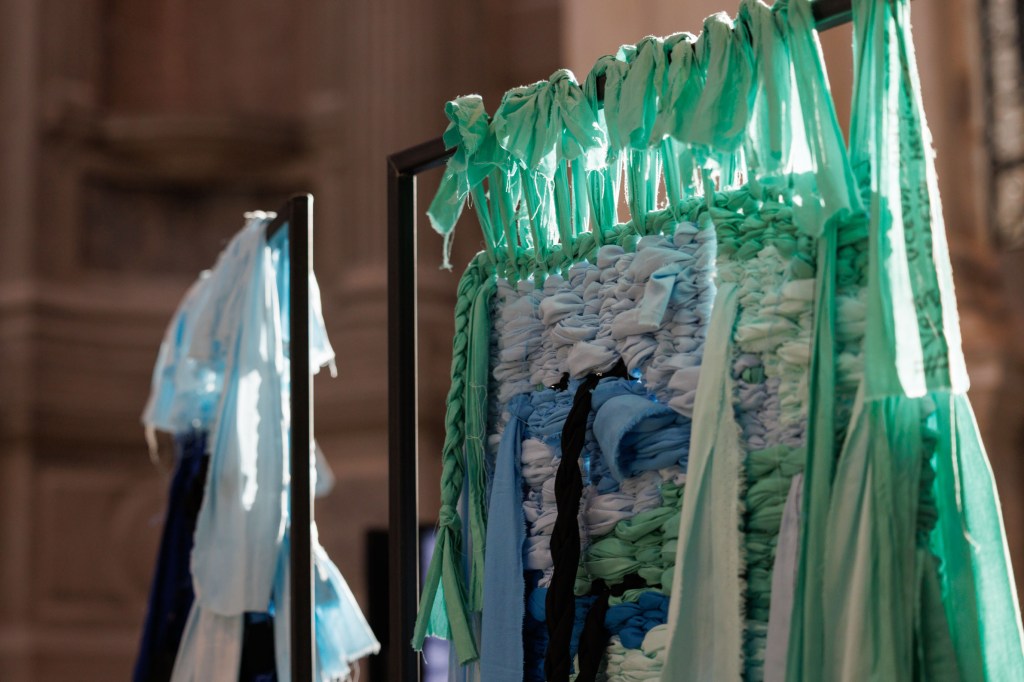
Verena Melgarejo Weinandt, “Weaving Connections”, 2026. Exhibition view of “Tide of Returns”, Ocean Space, Venice. Commissioned and produced by TBA21–Academy. Photo: Jacopo Salvi 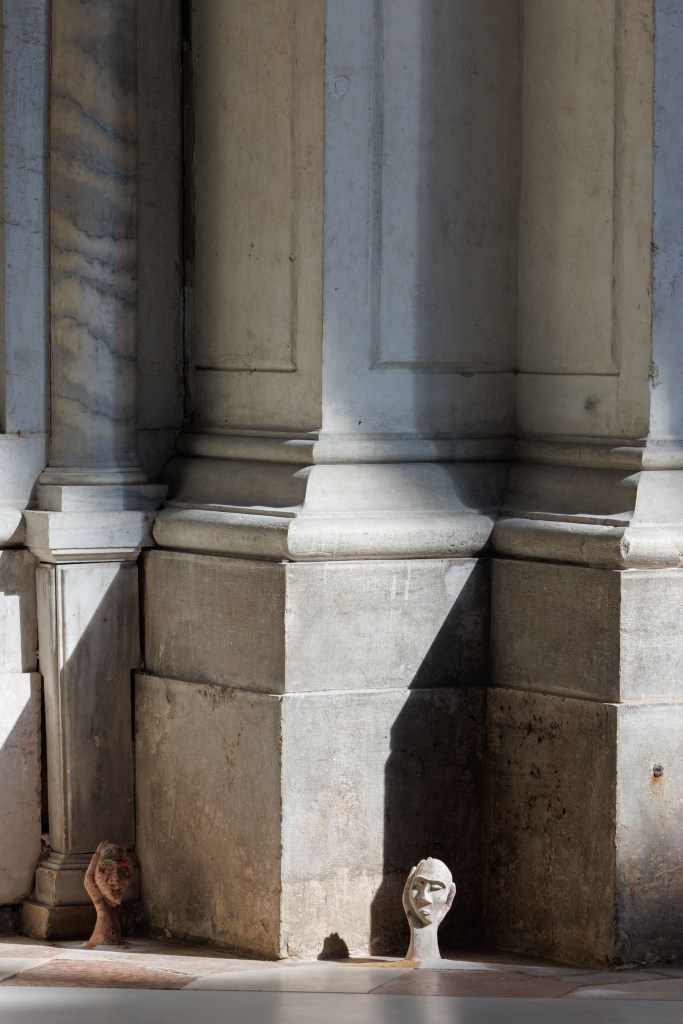
Repatriates Collective, “From My Mother’s Country”, 2026. Exhibition view of “Tide of Returns”, Ocean Space, Venice. Commissioned and produced by TBA21–Academy. Photo: Jacopo Salvi Repatriates Collective, “From My Mother’s Country”, 2026. Exhibition view of “Tide of Returns”, Ocean Space, Venice. Commissioned and produced by TBA21–Academy. Photo: Jacopo Salvi
The text has been translated in English using AI

