Until 22 November 2026, Lorna Simpson’s solo exhibition “Third Person” at Punta della Dogana in Venice immerses visitors into a layered and elusive visual universe, where identity proves to be fluid, irreducible to a single definition. Through paintings, collages and installations, the artist explores the processes of image construction, inviting the viewer to question their own gaze and to accept the intrinsic opacity of reality.
Silent rays of light traverse the spaces of Punta della Dogana – the Pinault Collection’s Venetian venue – passing through the precarious totemic sculptures of glass and magazines and striking the surface of the paintings, altering their perception. The works by Lorna Simpson (Brooklyn, 1960) do not present themselves directly to the visitor’s eye, but appear veiled, filtered, blurred. The fluidity of the paint breaks upon the canvases, further eroding their texture, reconfiguring with its own viscosity the layers of meaning in the images depicted by the artist.
The Venice exhibition, curated by Emma Lavigne in collaboration with Simpson, is the largest solo exhibition dedicated to the artist in Europe, featuring over fifty works, including paintings, collages, installations and videos. Organised in collaboration with the Metropolitan Museum of Art in New York, where an earlier version entitled Source Notes, curated by Loren Rosati, was presented in 2025, the exhibition in Venice reconfigures the curatorial project by bringing together works from the Pinault Collection, international museums, private collections and the artist’s studio, as well as new works created specifically for the spaces at Punta della Dogana.
LORNA SIMPSON IN VENICE
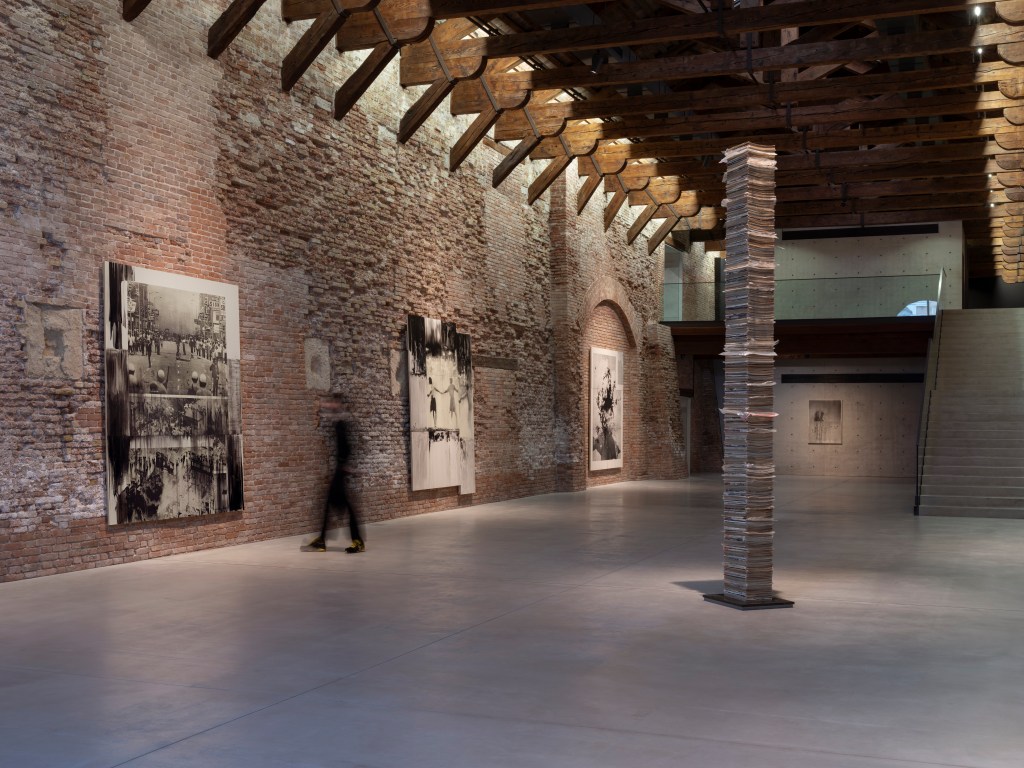
In the introductory section, the connection with the lagoon city is evident in the presence of the artist’s very first paintings, which were shown for the first time in 2015 at the Venice Biennale curated by Okwui Enwezor. The black ink drips, indelible traces of the genealogy of racial violence, pierce the screen-printed surfaces, heralding the never fully decipherable opacity of the works on display. In Three Figures (2014), the composition is fragmented; the characters appear as fading shadows, destined to lose their balance and slip out of the painting. The paint splashes blur the original photograph – a vintage image of the 1963 racial riots in Birmingham – transforming it into a universal icon of resistance to erasure and an indestructible monument to the civil struggle against violence.
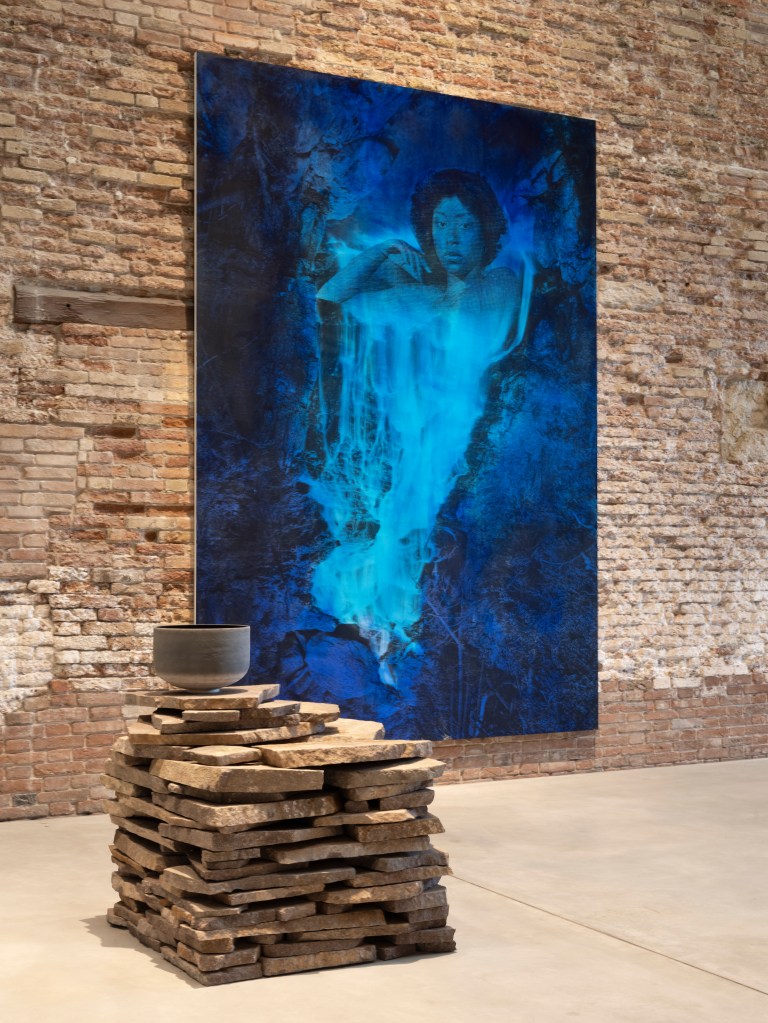
Moving forward along the exhibition route, the twilight chiaroscuro of the urban scenes gives way to the polar landscapes of the paintings in the most recent Ice series, where glacial expanses – suspended between documentation and imagination – evoke a liminal, almost posthuman state. In these rarefied settings, bathed in a metaphysical blue light, solitary female figures emerge, breaking the unperturbed silence of the ice and opening up dreamlike glimpses of new possible forms of existence and relationship.
The large canvases find a sensory resonance in the 2026 installation Vibrating Cycles, where black obsidian Tibetan bells, placed upon archaic structures of porphyry slabs stacked one upon another, invite the visitor to participate in a collective ritual: the act of sound becomes a meditative practice, a social act of healing that expands the iconic universe of the paintings into a shared multisensory narrative.
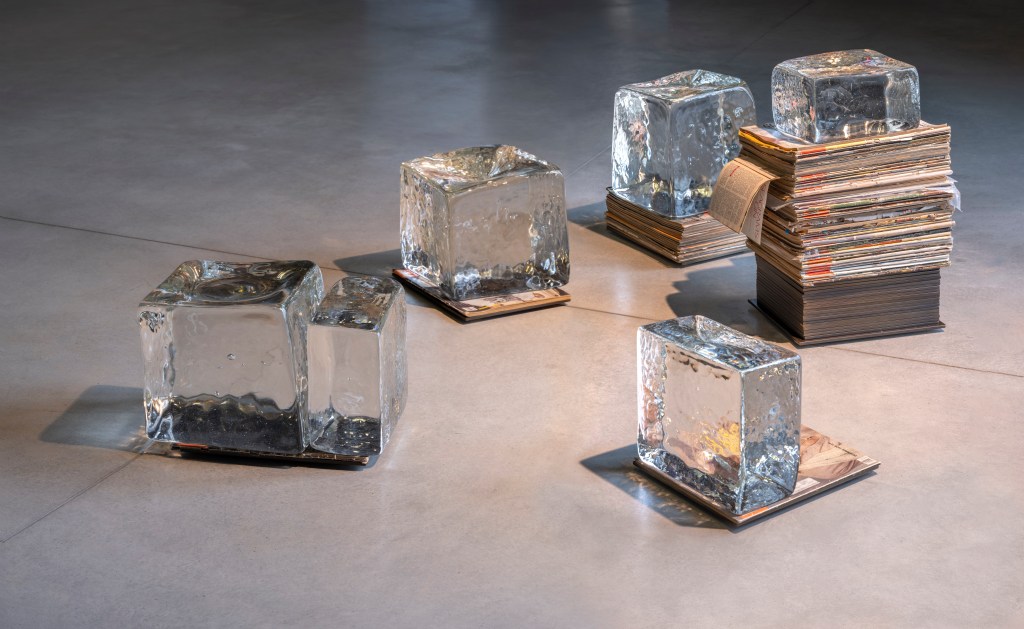
Ice reappears as a sculptural element in the installations scattered throughout the subsequent rooms: stacks of magazines, sometimes as tall as totems, rising from the floor and topped by blocks of glass that shield the covers, suggesting a filtered imagery, frozen forever in a dimension not fully accessible to the eye. The Ebony and Jet magazines embedded in the sculptures represent the collective memory of the African-American community, whose visual testimonies appear altered, in a precarious balance, perhaps destined to melt and disappear forever like the ice that covers them.
Magazines form part of the visual archive used by the artist in her work, particularly in her collages. These explore the processes by which images are constructed and the ways in which they convey meaning. The choice of black and white is imbued with semantic value, as the collages juxtapose, in a jarring and provocative manner, the faces of African-American women with imagery alien to them, belonging to the male, white, Western and colonising sphere. In these works, women become objects of desire, transform into animal prey, wear cumbersome European armour, dematerialise in fire, or risk sinking and disappearing forever as they unstably balance on drifting icebergs. Through these images, the artist gives voice to the precariousness of the female condition and to the impossibility for Black culture to effectively appropriate Western visual language, which cannot therefore be repurposed but must inevitably be reassembled and reinvented.
LORNA SIMPSON’S PAINTING
Painting – as is evident from the curatorial decision to give it a central role in the exhibition – proves to be the most suitable medium for conveying the complex and elusive nature of black women’s identity. The anonymous female portraits displayed in Tadao Ando’s Cube appear as ghostly presences destined to dissolve, ambiguous representations suggesting an unstable balance between individuality, authorship and perception. The viewer’s gaze – the “third person” evoked by the exhibition’s title – is the true protagonist of the exhibition: an external, subjective and shifting viewpoint, once again undefined. Simpson’s painting seems to translate into images the philosophical concept of “opacity” suggested by Édouard Glissant in Poetics of Relation: human identity has a fundamental right, namely not to be transparent or crystallised, but rather fluid, indefinable, irreducible. The women painted by the artist elude the gaze; they are not entirely legible, thereby challenging the Western desire for clarity and control.
Finally, the last room serves as a concise and universal epilogue. The 2024 work did time elapse depicts a suspended meteorite, a third element of space, which, on its journey through the universe, might remain on the periphery of human affairs or, conversely, disrupt them and leave an indelible mark. In Simpson’s work, the fate of humankind is constantly threatened by the mechanisms of erasure. Yet it is precisely this suspended temporality and the metamorphic nature of existence that allow for its eternal survival in the collective memory.
Alessandro Cerchier
Lorna Simpson’s exhibition at Punta della Dogana in Venice
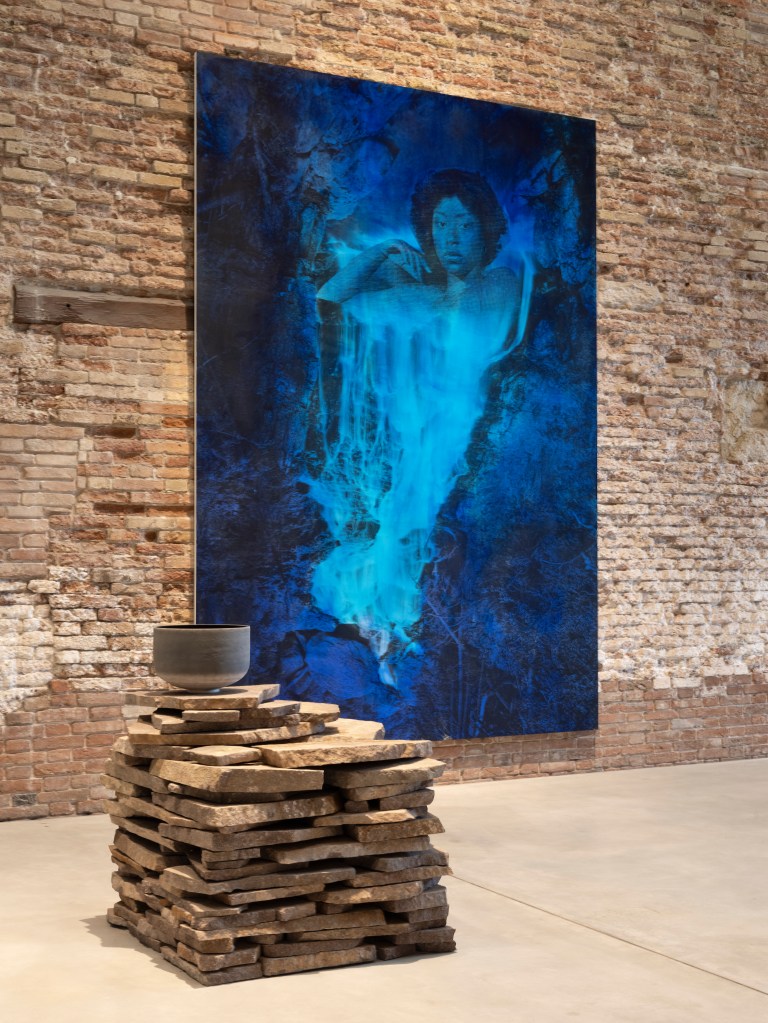
(floor) Lorna Simpson, Vibrating cycles, 2026, Courtesy of the artist and Hauser & Wirth (wall) Lorna Simpson, Night Fall, 2023, Private Collection Installation views, Lorna Simpson. Third Person, 2026, Punta della Dogana, Venezia. Ph. James Wang © Palazzo Grassi, Pinault Collection 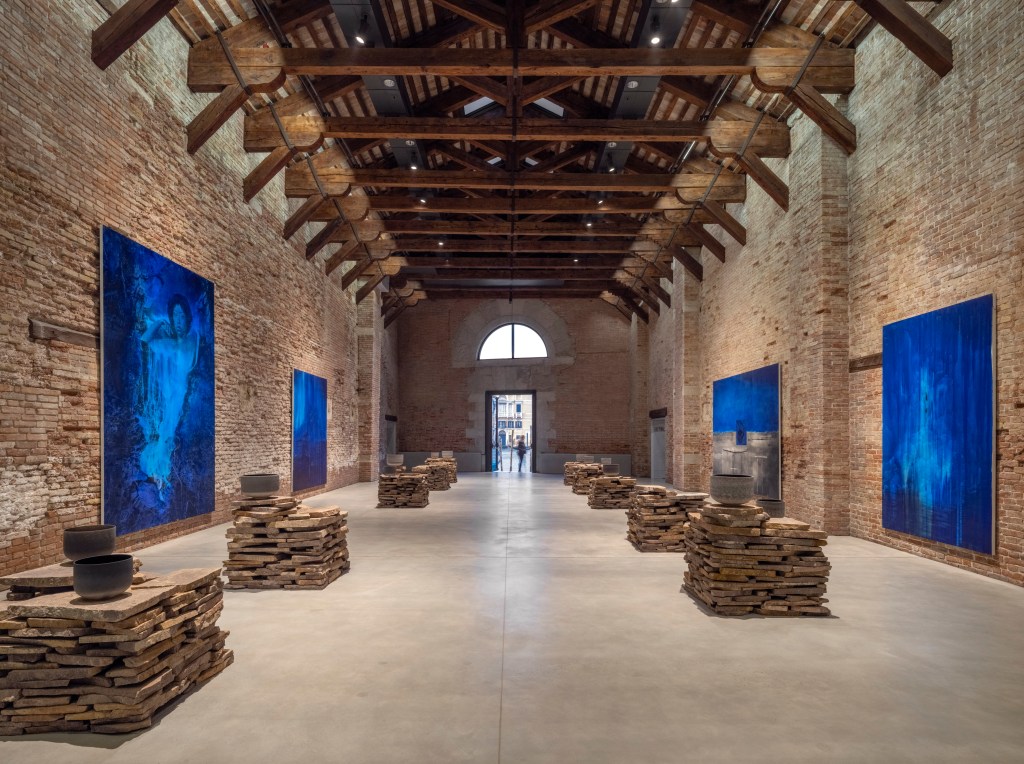
(floor) Lorna Simpson, Vibrating cycles, 2026, Courtesy of the artist and Hauser & Wirth (wall, from left to right) Lorna Simpson, Night Fall, 2023, Private Collection; Thin Bands, 2019, Courtesy of the artist and Hauser & Wirth; Time, 2021, Private Collection; Howling, 2020, Gina and Stuart Peterson Collection. Installation views, Lorna Simpson. Third Person, 2026, Punta della Dogana, Venezia. Ph. James Wang © Palazzo Grassi, Pinault Collection 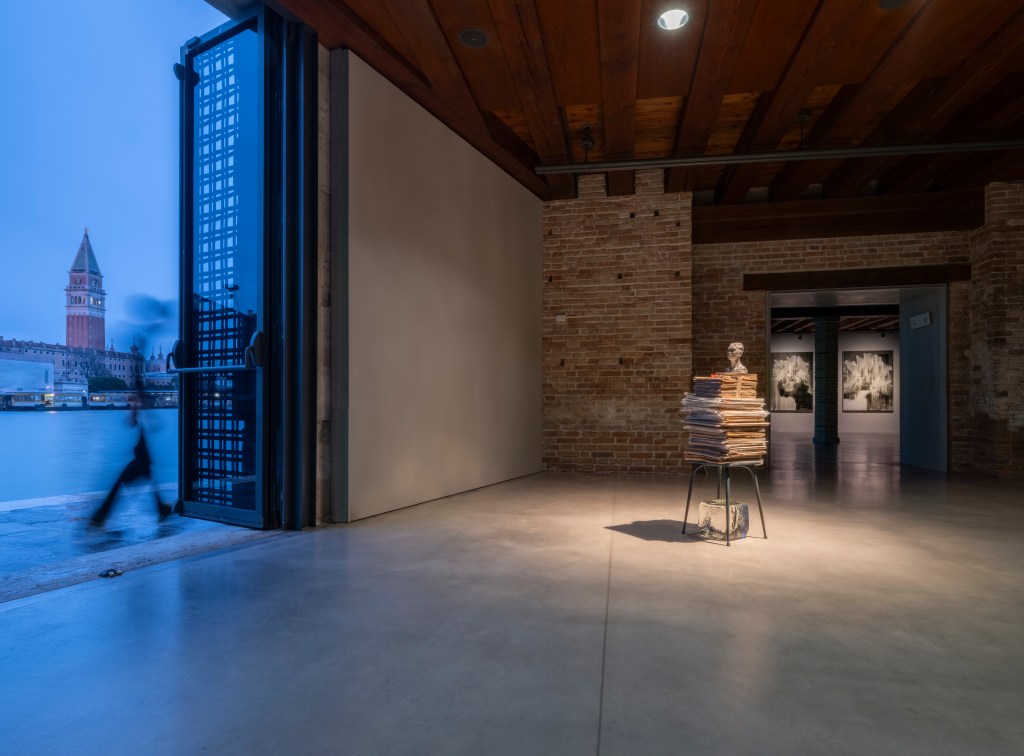
(from left to right) Lorna Simpson, 5 Properties, 2018, Private Collection; Head on Ice #4, 2016, The George Economou Collection, Athens; Head on Ice #3, 2016, courtesy of The Modern Art Museum of Fort Worth, Gift of the Director’s Council and Museum purchase, 2017 (2017.6) Installation views, Lorna Simpson. Third Person, 2026, Punta della Dogana, Venezia. Ph. James Wang © Palazzo Grassi, Pinault Collection 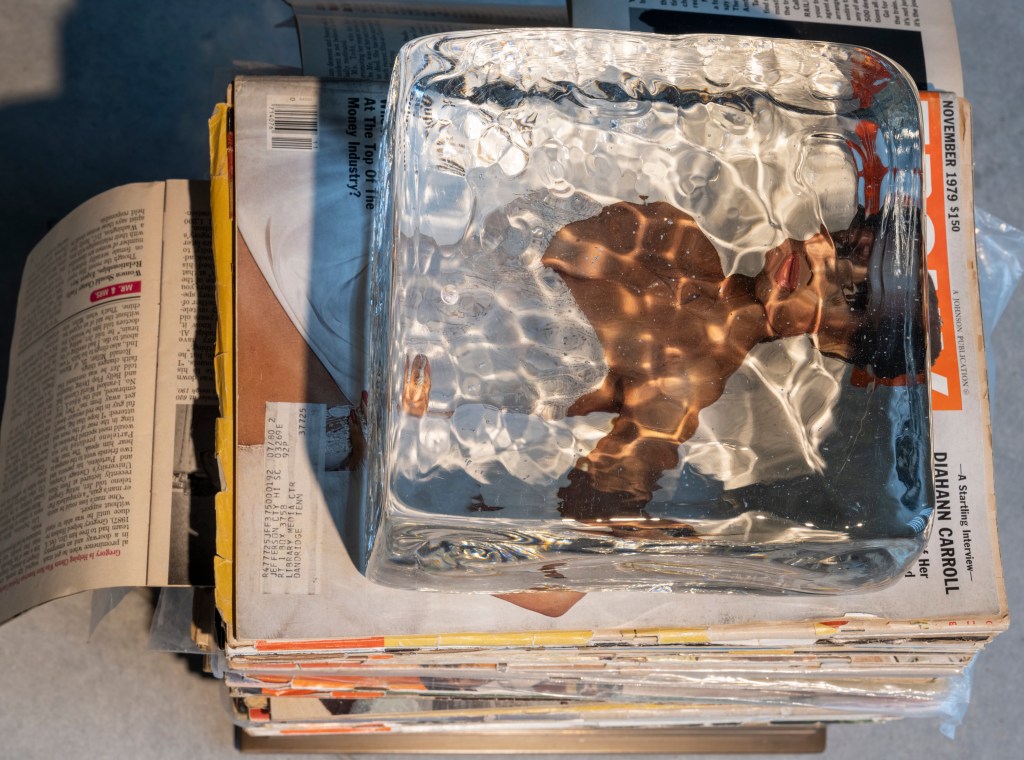
Lorna Simpson, Tried by Fire (detail), 2017, courtesy of the artist and Hauser & Wirth. Installation views, Lorna Simpson. Third Person, 2026, Punta della Dogana, Venezia. Ph. James Wang © Palazzo Grassi, Pinault Collection 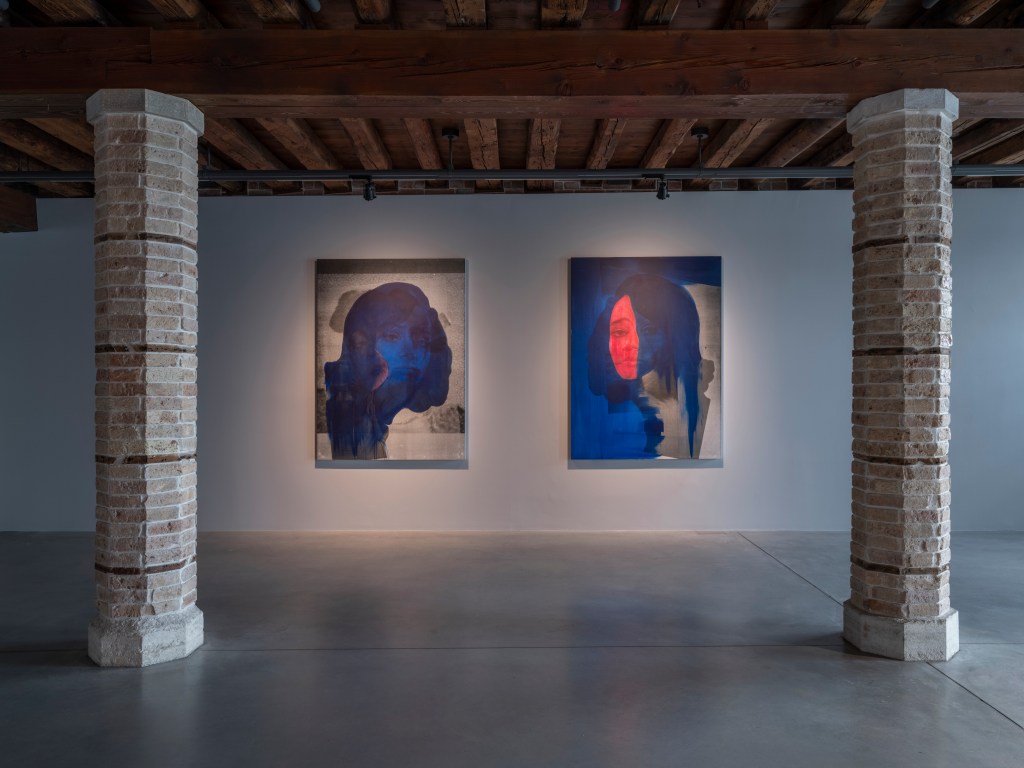
(from left to right) Lorna Simpson, For or by the eyes, 2023, Ursula Hauser Collection, Switzerland; Third Person, 2023, Private Collection Installation views, Lorna Simpson. Third Person, 2026, Punta della Dogana, Venezia. Ph. James Wang © Palazzo Grassi, Pinault Collection (floor) Lorna Simpson, Black Totem, 2025, courtesy of the artist and Hauser & Wirth. (wall, from left to right) Lorna Simpson, Then & Now, 2016, Tate: Presented by Tate Americas Foundation, purchased using endowment income 2017, accessioned 2021 (T15605); Three Figures, 2014, Forman Family Collection; Black Nebula, 2016, Collection of the artist; Polka Dot & Bullet Holes #2, 2016, The Holly Peterson Collection, New York Installation views, Lorna Simpson. Third Person, 2026, Punta della Dogana, Venezia. Ph. James Wang © Palazzo Grassi, Pinault Collection 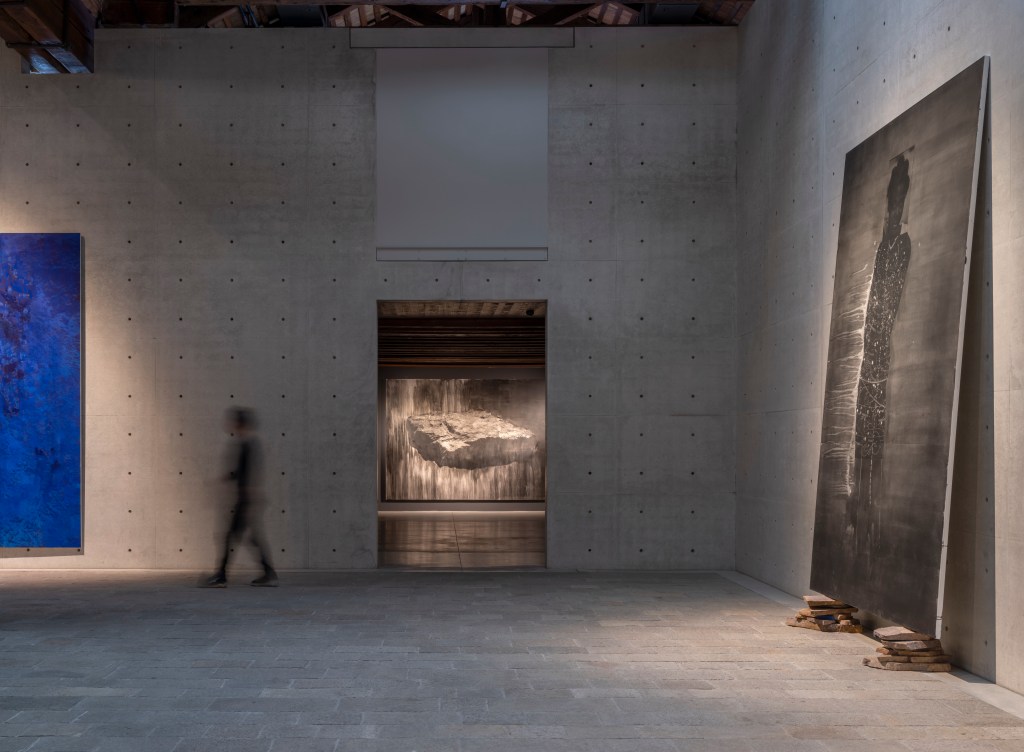
(from left to right) Lorna Simpson, Specific Notation, 2019, courtesy of Glenstone Museum, Potomac, Maryland; did time elapse, 2024, courtesy of The Metropolitan Museum of Art, New York, Purchase, Cheryl and Blair Effron, Lila Acheson Wallace, The Holly Peterson Foundation, and Modern Circle Gifts, 2025 (2025.14); All Night, 2021, Forman Family Collection Installation views, Lorna Simpson. Third Person, 2026, Punta della Dogana, Venezia. Ph. James Wang © Palazzo Grassi, Pinault Collection 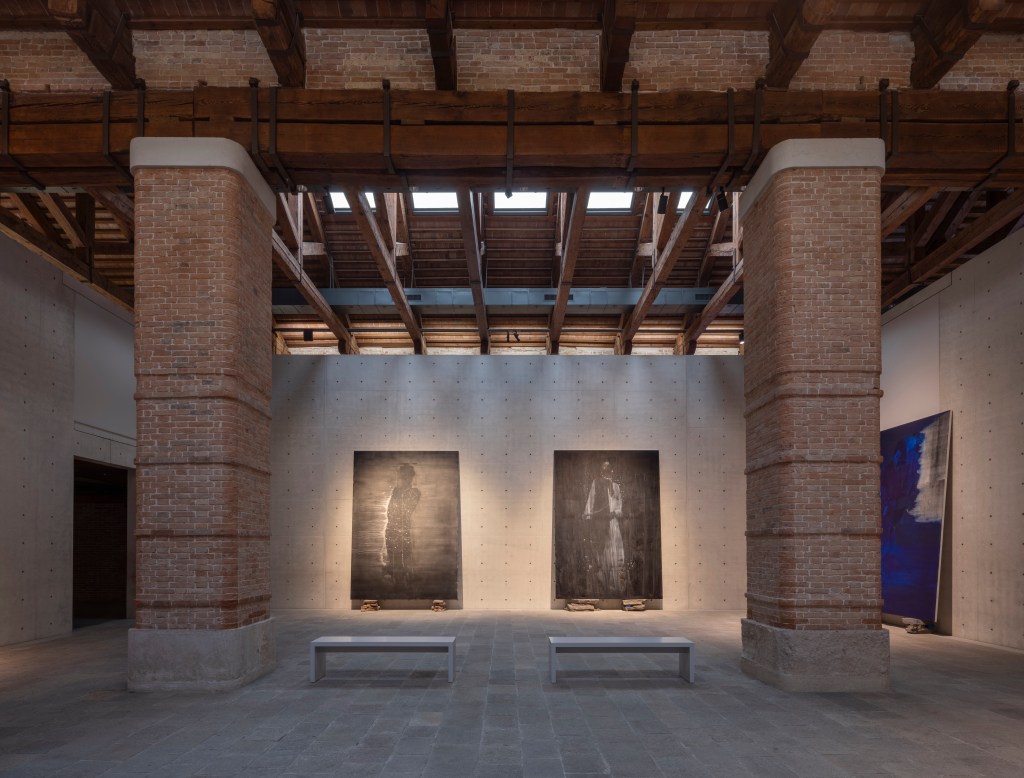
(from left to right) Lorna Simpson, All Night, 2021, Forman Family Collection; Observer, 2021, Collection of Marguerite Steed Hoffman; Painting, 2025, courtesy of the artist and Hauser & Wirth Installation views, Lorna Simpson. Third Person, 2026, Punta della Dogana, Venezia. Ph. James Wang © Palazzo Grassi, Pinault Collection 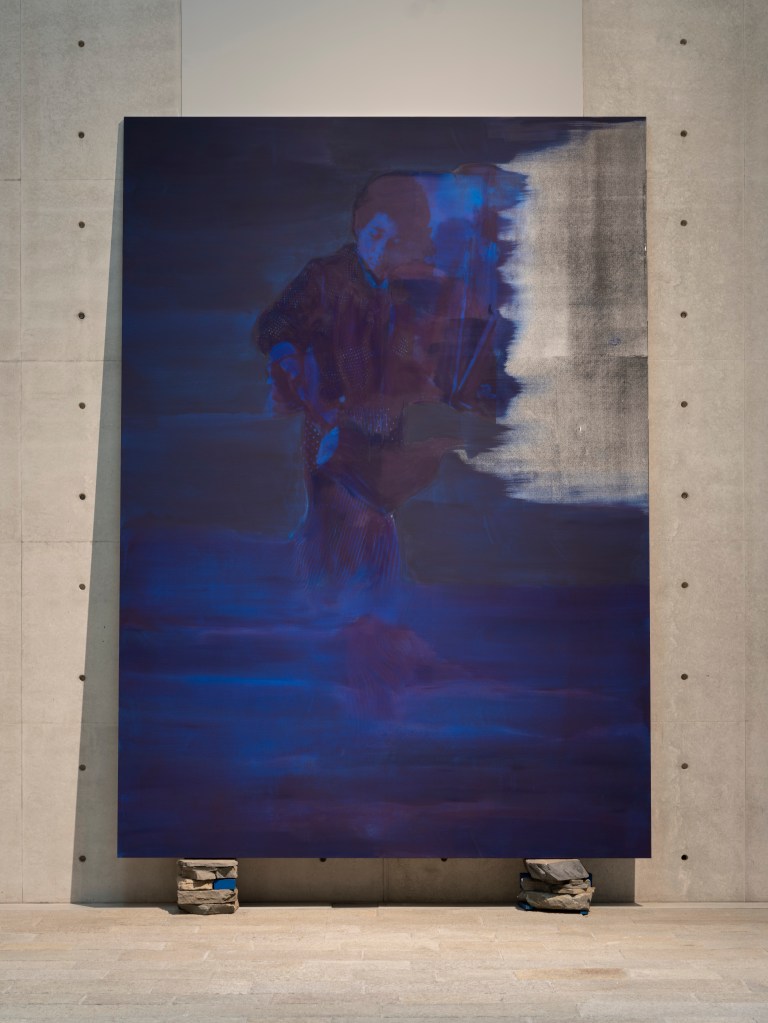
Lorna Simpson, Painting, 2025, Courtesy of the artist and Hauser & Wirth. Installation views, Lorna Simpson. Third Person, 2026, Punta della Dogana, Venezia. Ph. James Wang © Palazzo Grassi, Pinault Collection 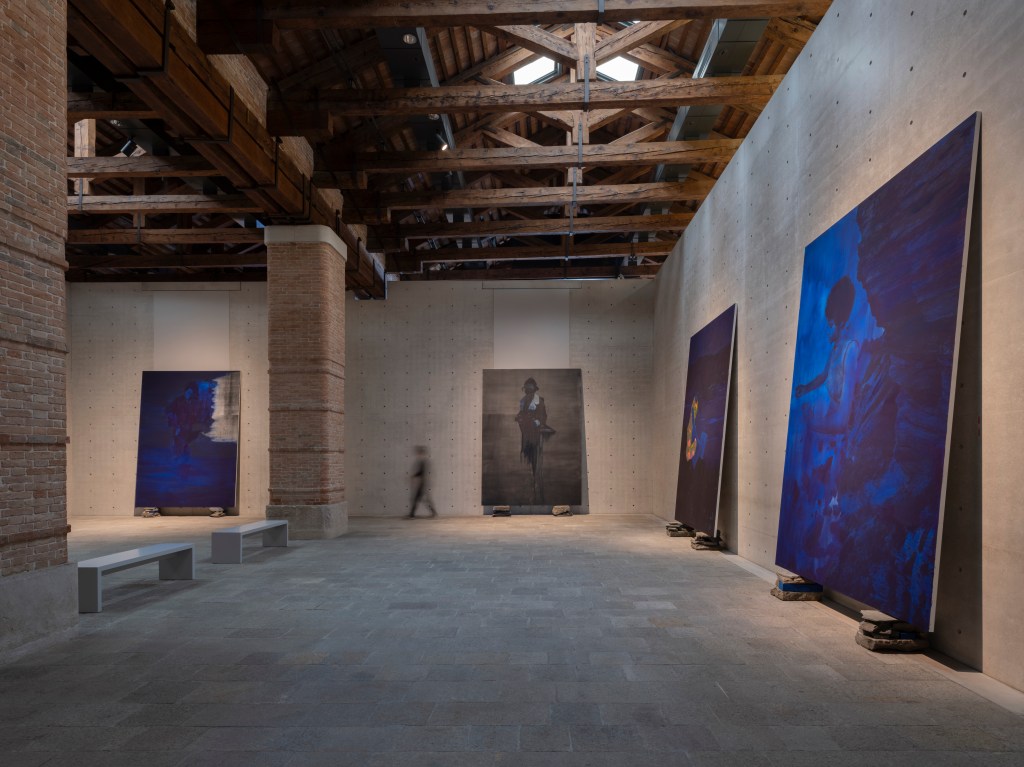
(from left to right) Lorna Simpson, Painting, 2025, courtesy of the artist and Hauser & Wirth; Zenith, 2021, courtesy of Christen Sveaas Art Collection; L.A., 2025, courtesy of the artist and Hauser & Wirth; Cliffs, 2025, Pinault Collection Installation views, Lorna Simpson. Third Person, 2026, Punta della Dogana, Venezia. Ph. James Wang © Palazzo Grassi, Pinault Collection 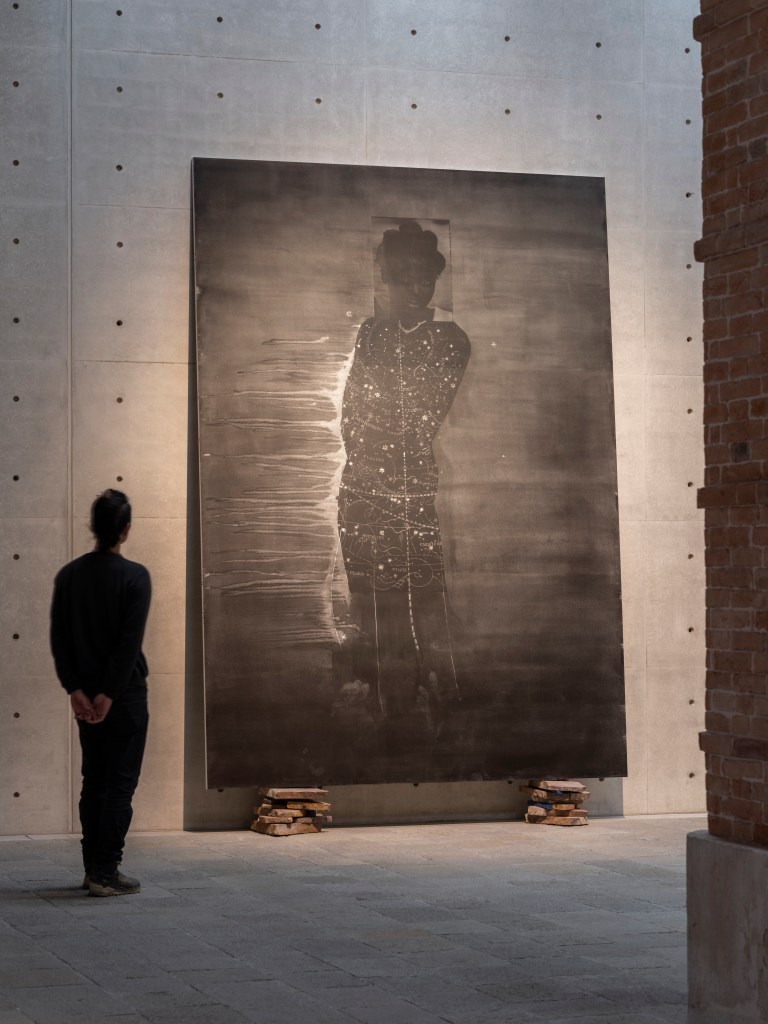
Lorna Simpson, All Night, 2021, Forman Family Collection. Installation views, Lorna Simpson. Third Person, 2026, Punta della Dogana, Venezia. Ph. James Wang © Palazzo Grassi, Pinault Collection 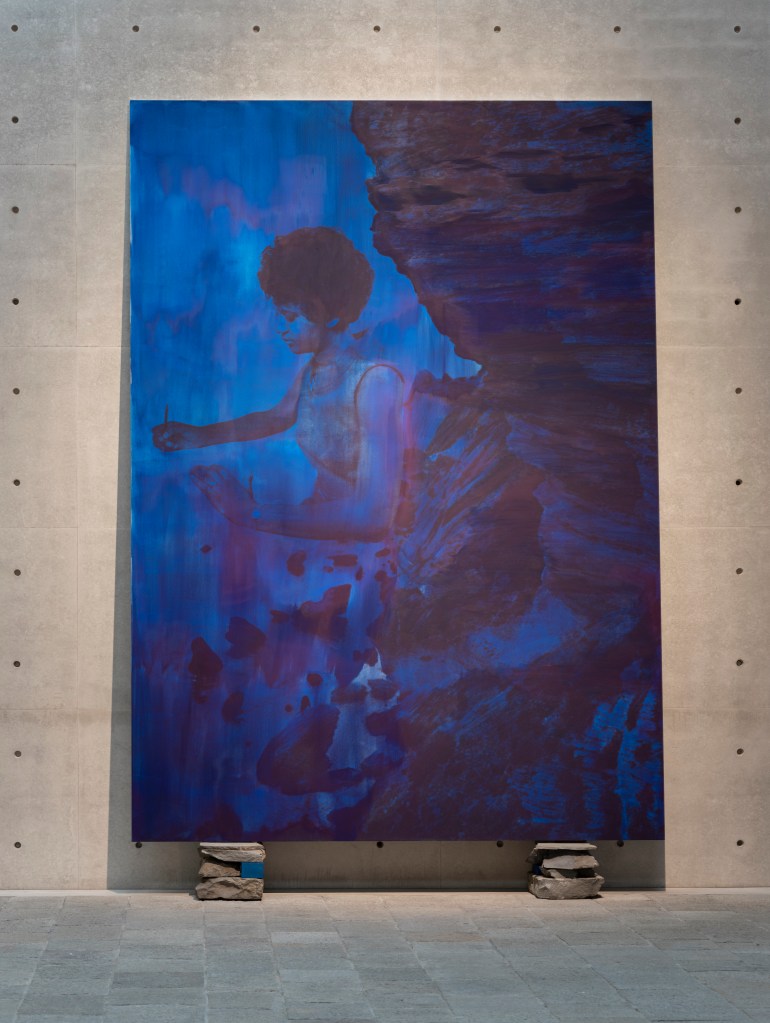
Lorna Simpson, Cliffs, 2025, Pinault Collection. Installation views, Lorna Simpson. Third Person, 2026, Punta della Dogana, Venezia. Ph. James Wang © Palazzo Grassi, Pinault Collection Lorna Simpson, Tried by Fire (detail), 2017, courtesy of the artist and Hauser & Wirth. Installation views, Lorna Simpson. Third Person, 2026, Punta della Dogana, Venezia. Ph. James Wang © Palazzo Grassi, Pinault Collection 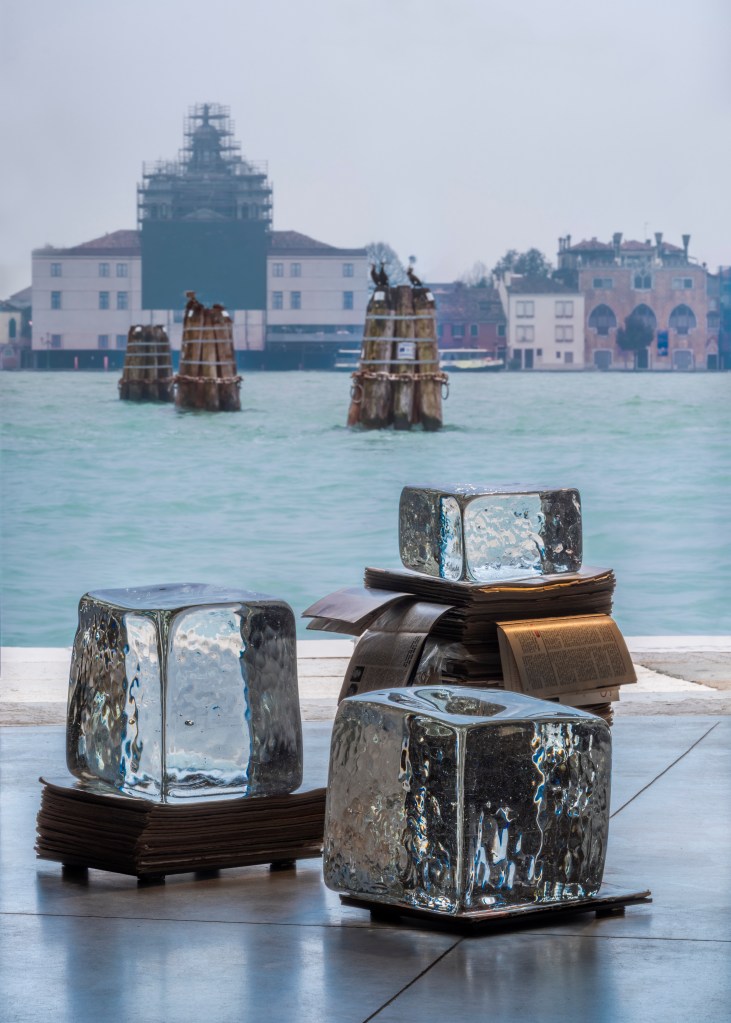
Lorna Simpson, Tried by Fire (detail), 2017, courtesy of the artist and Hauser & Wirth. Installation views, Lorna Simpson. Third Person, 2026, Punta della Dogana, Venezia. Ph. James Wang © Palazzo Grassi, Pinault Collection
The text has been translated in English using AI

