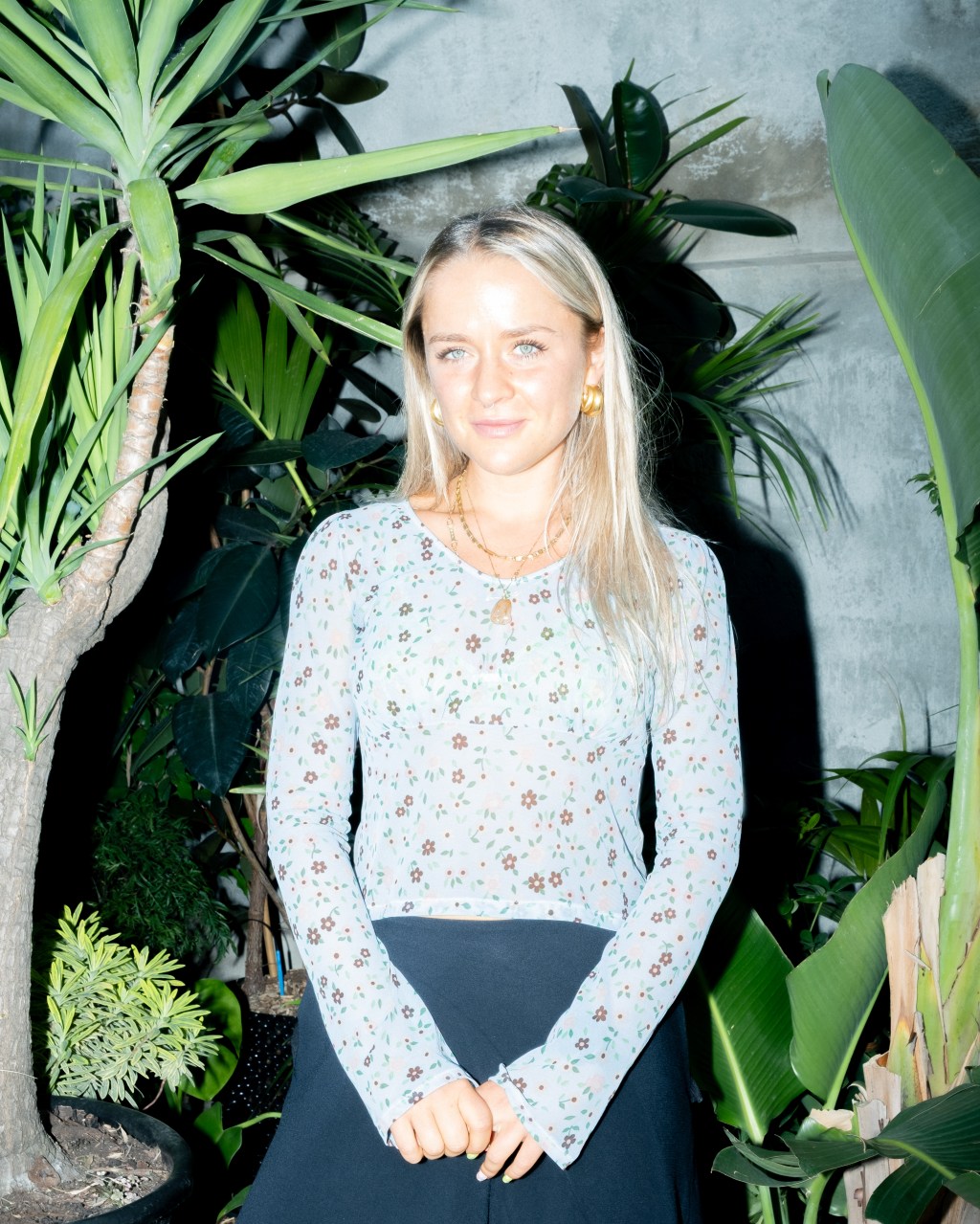
Starting from the success of the project “Forgotten Architecture” and reaching back to the roots of her research, this conversation with Bianca Felicori explores the key points of her work, situated at the intersection of architecture, art, and life. Embracing the radical legacy, her practice becomes a medium of inquiry and intervention for the present time, connecting architecture with social and cultural issues.
Bianca Felicori (Bologna, 1994) is an architect and researcher active between Milan, Paris, and Brussels, where she obtained her PhD by investigating the convergence between artistic and architectural research in the 1960s and 1970s across Europe and America. Throughout her career, she has curated independent projects and collaborates with brands and institutions as a moderator and author.
In 2019 you founded Forgotten Architecture, a project aimed at rehabilitating and sharing 20th-century architectural works that were left out of the institutional writing of architectural history and its great masters. Born as a Facebook page, it quickly created a phenomenon of collective research, open to anyone who wished to contribute projects, images, or photographs; fundamental is its premise as an open-source space for a possible bottom-up form of valorization and preservation. Do you believe there is a need for greater horizontal integration within architectural culture to allow the discipline to generate reflections beyond its more restricted circle?
Absolutely yes, it is a fundamental aspect. Years after its launch, what I can say I’ve understood with Forgotten Architecture is that, in order to avoid widespread ignorance about architectural culture ‒ or for it to be reduced to an elite audience ‒ it is necessary to update the tools through which the history of architecture is discussed and disseminated. This doesn’t mean diminishing it, but rather providing the right information to as wide an audience as possible, so that recurring trends ‒ such as Brutalism or Minimalism ‒ can also be understood by people who don’t necessarily need to know the history of these neologisms, which in fact don’t really exist, but are overused in magazine headlines, from Corriere to AD. In my opinion, all useful means of talking about the history of architecture should be increasingly explored with proper scientific accuracy, translating the information at our disposal into something accessible to everyone with equal awareness. However, this path is not entirely simple, just as it is not psychologically easy for those who carry forward this struggle: for instance, I have often been labeled an influencer and have had to face sometimes very misogynistic attacks. Having a voice in this field requires a great deal of energy and remarkable resilience.
Forgotten Architecture later took the form of an editorial project that you curated yourself, materializing in the publication of the book of the same name in 2022 (NERO), followed by an expanded second edition in 2024. Within the framework of what can be defined as a participatory archive, accessible in its online dimension, what curatorial criteria guided the selection of the architectures included in the book?
For me it has always been very interesting to translate a digital archive into the most traditional form and medium possible: the book. This question about structure is therefore extremely important because it represents one of the most enjoyable parts of producing Forgotten Architecture: it wasn’t easy to figure out how to structure it, but now that several years have passed since the first edition, I can say I still like how I set it up. Basically, the book was divided into chapters, each dedicated to one of the most recurring categories in the Facebook group; this led me to reflect on the years that were most prominent, namely the post-World War II period, particularly between the 1950s and the 1970s. Then, I assigned each chapter to authors whom I knew were interested in a specific theme; in many cases I didn’t know them beforehand and met them precisely for this book. They selected the projects that serve as appendices to each chapter, although I would say I selected most of them myself. To convey the idea of a group and open source ‒ as you rightly defined it ‒ each project includes a set of information, and the captions list the names of the people who selected and posted them in the Facebook group. For me, this was ‒ and still is ‒ the best way to convey the horizontality of the project. I am now thinking of producing a second book; the approach will certainly be different, but I will try to maintain this horizontal orientation as much as possible.
THE PROJECT FORGOTTEN ARCHITECTURE
The expression Forgotten Architecture reveals the intention to address forgotten architectural works. However, this rehabilitation does not follow institutional criteria of cataloguing and historical memory, but aims instead to build a participatory archive, in which works are welcomed as opportunities for new forms of action. Forgotten Architecture shifts the perspective away from traditional archival logic and creates a living ground for dialogue between past and present: in what way can this model of archive interact with contemporary practice?
To answer this, I would start from the name itself, which is deliberately ambiguous. It can be interpreted in different ways by the people in the group, and that has also been the most controversial aspect. Everything is based on a use of language almost in the sense of Umberto Eco ‒ open source as in Opera aperta. That said, as a historian of architecture working with archives, I believe that today more than ever we live in a time when it is necessary to rethink both the role of architecture and the role of the architect in society. We cannot think of writing architectural history in a traditional or self-referential way; rather, we must investigate where the need to preserve memory, study history, and safeguard materials in physical archives comes from. There should be a continuous cross-checking of the sources and tools at our disposal.
For example, with Forgotten Architecture we made popular ‒ in the strict sense of the word ‒archival material that had been forgotten or long unused, and for me this was almost an affective operation. Over time, many of the architects mentioned have passed away, but I have been able to maintain relationships with their families; for them too, being included in a publication that has done very well and attracted a very young audience was a breath of fresh air I hadn’t expected. This is already a way of rethinking the archive ‒ and also history and memory ‒ in a physical sense, linked to the bodily and emotional dimension of human beings. If it were up to me, I would do this with everyone’s archives, and if resources allowed, this could be my full-time work.
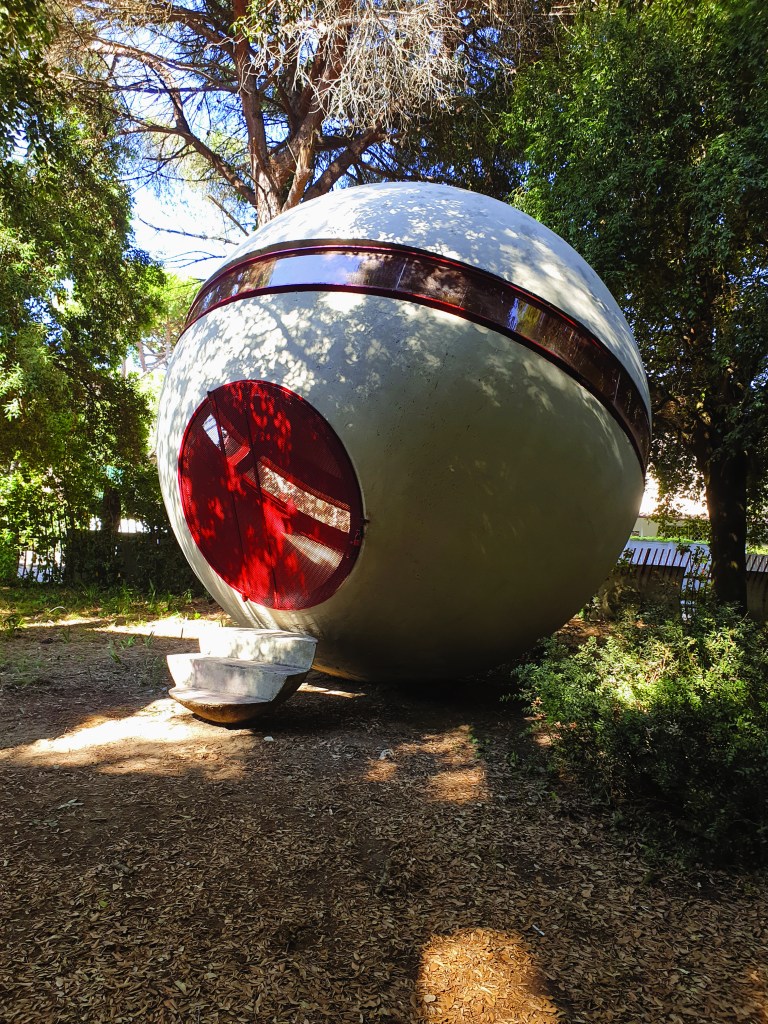
In the thematic sections of the volume, emphasis is given to works that intertwine with different moments of human life: architecture is not only linked to the design of living spaces but becomes a vehicle for irony, play, ideals, and provocations. This experience, defined historiographically as Radical architecture, could perhaps represent a path for a renewed contemporary practical attitude. Which elements of the radical experience should contemporary architecture recover in order to respond to present expectations and re-establish an active dialogue with new generations?
I’m glad you asked this question because I think it is the reason that pushed me to continue my academic research with a PhD, and it also encapsulates the reasons behind Forgotten Architecture. I’ll quote Beatriz Colomina in Global Tools (NERO, 2018): in the introduction she asks whether this desire to return to the 1960s and 1970s is a nostalgic revival or whether there is a more structured reason.
Personally, I believe that trying to understand how architecture can be reinterpreted not only through built form but also as a critical political form is central to the future of our discipline, especially in a historical moment marked by multiple crises. Particularly in the context of an economic crisis that prevents us from designing and building as we once did, we feel an even stronger need to go beyond the boundaries of constructing buildings and architecture strictly tied to a Vitruvian function. What I have always tried to do is to revisit key aspects of the radical experience, especially the idea of revolution that passes through the discipline itself. This has translated into a desire to align my life with architecture in order to offer a new perspective. This revolutionary drive has led me to study architectural history from a female perspective, bordering on feminist, and to adopt new media capable of creating a horizontal discourse that is not always easy to understand.
ARCHITECTURE, MUSIC, AND ART ACCORDING TO BIANCA FELICORI
On the occasion of (T)rap&Architecture ‒ the digital talk held in 2021 at the Triennale Milano ‒ you connected architectural discourse with the social realities of urban peripheries, involving members of the Milanese rap scene and blending different cultural languages: in your opinion, does this capacity for hybridization represent a necessary direction for contemporary architectural discourse?
This is where everything comes together: in my practice I have always tried to use different media. Although I consider myself a curator, I have almost never used the exhibition as a medium in the traditional sense: in my view it is not sustainable, it is often self-referential, and lacks the ability to connect with audiences. Some exhibition formats are appropriate, but I have always tried to avoid them in favor of creating engagement and collective connections.
For me, (T)rap&Architecture was a very radical experiment, if we want to define it that way. It stems from a personal background and from the desire to understand how certain political narratives are completely ignored by architecture and urban planning, often for class-related reasons. This is a topic I have explored extensively, most recently in 2023 when I had the opportunity to bring Ghali to the Venice Biennale. This was a unique opportunity to move from the scale of the city to that of conflict in the Mediterranean and, when possible, I intend to return to this theme to explain how today it is necessary to write architectural history in relation to the present. Preserving memory does not mean ignoring contemporary debate ‒ quite the opposite. What (T)rap&Architecture, like Forgotten Architecture, should become is the idea that such initiatives can expand into other disciplines and other forms of dialogue.
In what ways?
For example, I noticed that this project brought particular critical attention to the periphery, opening up a crucial reflection on architectural complexes designed in the second half of the 20th century ‒ not as mere scenic backdrops, but as entities with their own political and social identity. Recently, however, this attention is being lost, and these places are becoming mere settings for music videos, films, and so on, stripped of their intrinsic political role.
Initiatives like (T)rap&Architecture, therefore, become absolutely necessary to maintain focus. My mother, for example, is from the Melara district of Trieste, and I often watch the Friuli-Venezia Giulia regional news: I know very well what happens daily in such a place, yet at the same time I see it aestheticized in all kinds of media. This dynamic, in my view, represents a major risk of the contemporary image overload, and that is why I believe this form of hybridization is more necessary than ever.
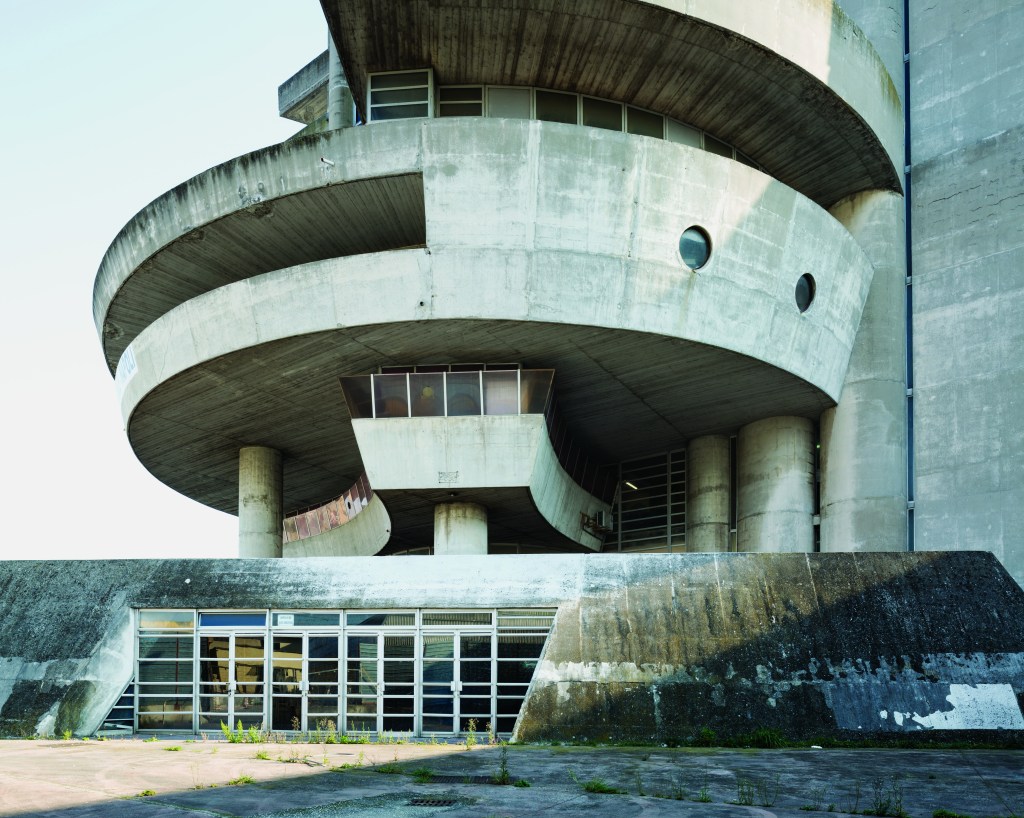
In all your work, curatorial practice applied to architecture is central, and images, stories, and experiences play a fundamental role. Practicing architecture, therefore, is not only about the concrete essence of design, but also about building a broader infrastructure around it, capable of connecting architectural discourse with various social and cultural fields. How does curatorial practice fit into this mechanism, and from what reflections does your personal work on integration emerge?
I think I’ve partly already answered this, but thank you ‒ these are truly beautiful questions and not easy to receive. One of the greatest lessons I learned from the Radical movement and the 1960s generation ‒ especially from Germano Celant ‒ is the total adherence between art, architecture, and life. I have always held onto this teaching as a methodology for reinterpreting architecture today, and it is also why I use different media.
What I do is reinterpret cultural urgencies and what I feel most connected to personally, translating them into projects: I try to maintain a constant parallel between the academic-institutional world and a more “pop” discourse, to use a term from Superstudio. Essentially, everything I do stems from personal interests. For example, (T)rap&Architecture originates from a connection I have felt since childhood with hip hop and Italian underground rap. Although I come from Bologna and had a privileged education, I am the daughter of parents from more provincial backgrounds: my mother from the complex border context of the Bisiacaria in Friuli-Venezia Giulia, and my father from public housing in the Mazzini district of Bologna. The project therefore also arises from a class perspective I developed growing up in a privileged school environment while knowing I did not belong to that world. When underground music became popular ‒ from neighborhood kids to Bocconi students ‒ I began to question this shift and sensed warning signs about how it could become a double-edged sword. So yes, I maintain a connection between architecture and life that manifests in multiple forms, and that is why my work has such a strong emotional and personal character.
The boundary between artwork and architectural work is often very thin, and the language of visual arts is frequently used to interpret architectural projects. In your research, do you see the art world as a transversal critical tool? Do you think there is a risk of aestheticization in using art and its criteria as a means of interpreting architecture?
This is precisely what I tried to investigate in my PhD thesis, developed over four years of extensive archival research. My methodology involved researching and collecting testimonies through oral histories, examining the relationship between art and architecture across centuries and through different forms of exploration. Certainly, for those unfamiliar with the topic, this might appear as a simple integration ‒ like Baroque churches, Domus, or Le Corbusier’s synthesis of the arts. In reality, what I have tried to show ‒ and what I believe is crucial today ‒ is how, particularly between the 1950s and 1970s, architects did not draw from art merely from an aesthetic perspective or with the aim of some sort of integration, but rather used artistic processes to define their practice.
In that period, few buildings were actually constructed, and architecture often used performance, the body, collage, photomontage, and editorial production as media. I therefore believe it is important to keep that experience alive and to understand how connections with other disciplines can provide new foundations and a new landscape for architecture.
This can take many forms, and it is what I pursue in different ways. For example, combining architecture with urban music (a term I don’t particularly like, but which works better academically) is for me a way of giving new foundations to an emerging idea of architecture. I hope this marks the beginning of shaping an inter-landscape made up of new voices that constantly intersect and intertwine with one another.
Alessia Leoni
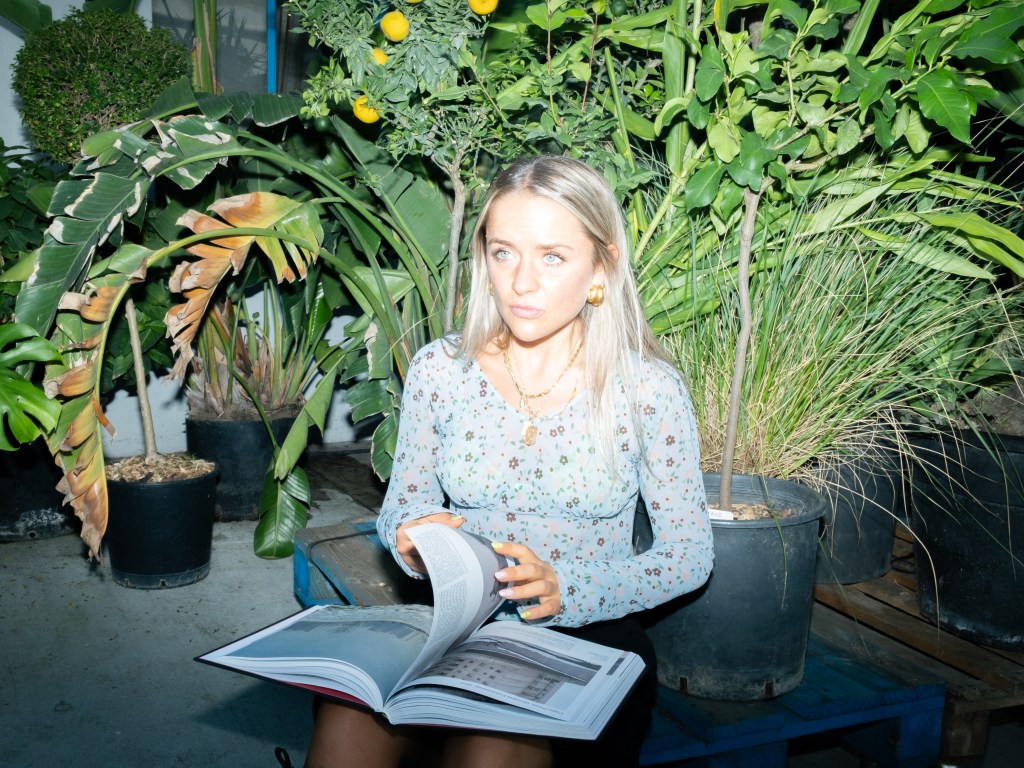
Bianca Felicori. Credits: Benedetta Andrea Bonaschi 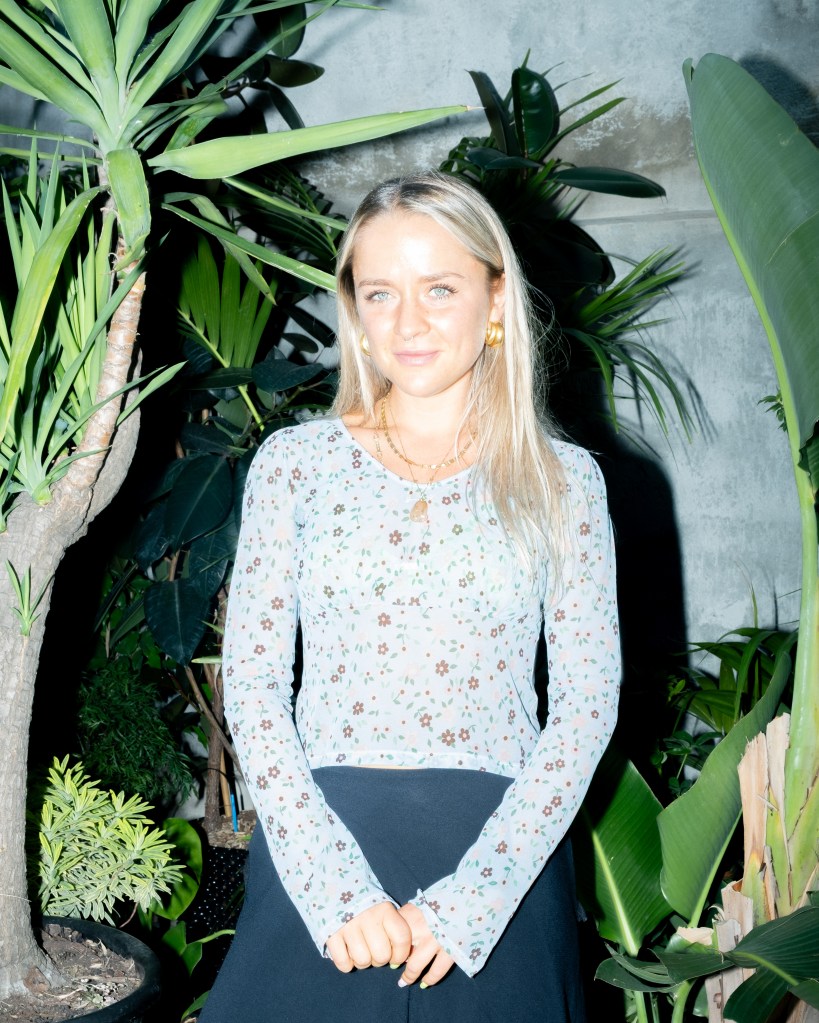
Bianca Felicori. Credits: Benedetta Andrea Bonaschi Giuseppe Perugini with Uga De Plaisant and Raynaldo Perugini, Casa Albero, Fregene, 1968-1975. Image credits: Archivio Studio Perugini LIBERATO, “TU T’E SCURDAT’ ‘E ME,” 2017. Image credits: screenshot from the music video “TU T’E SCURDAT’ ‘E ME,” 2017; photographs of the architectural complex by Fabrizio Vatieri 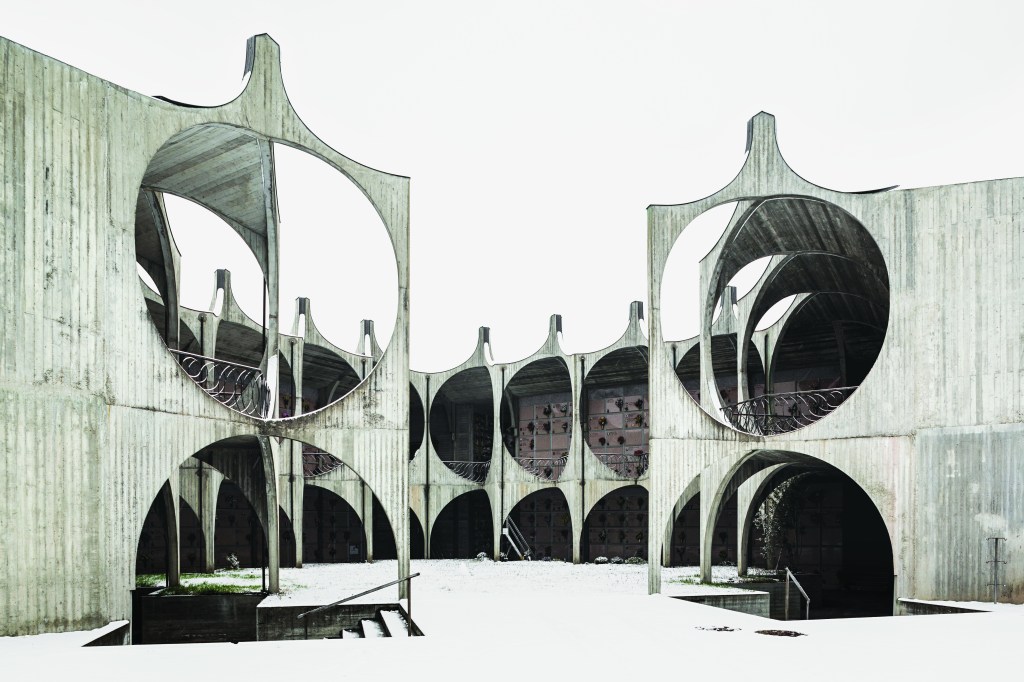
Luigi Ciapparella, Extension of the Cemetery of Busto Arsizio, Italy, ca. 1970. Image credits: Stefano Perego 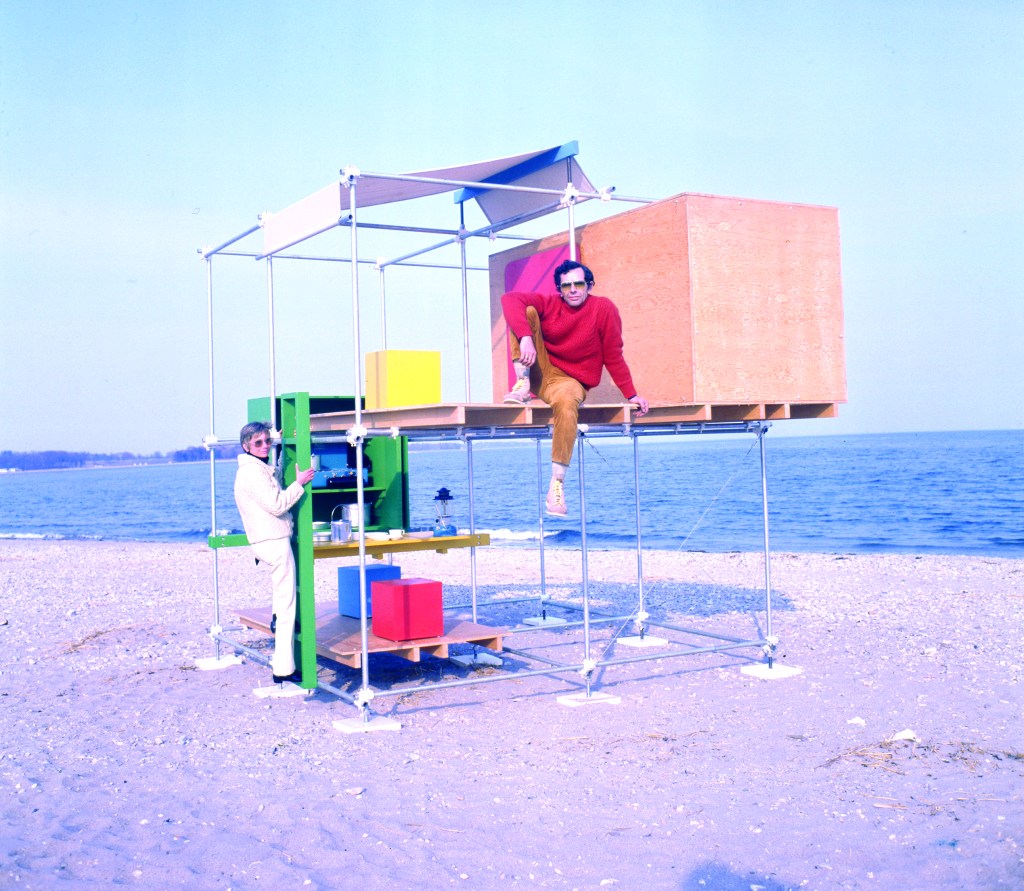
Ken Isaacs, Beach Matrix, Westport, Connecticut, 1967. Image credits: Archivio Vittorio Giorgini, Camilla Messini, Giovanni Presutti 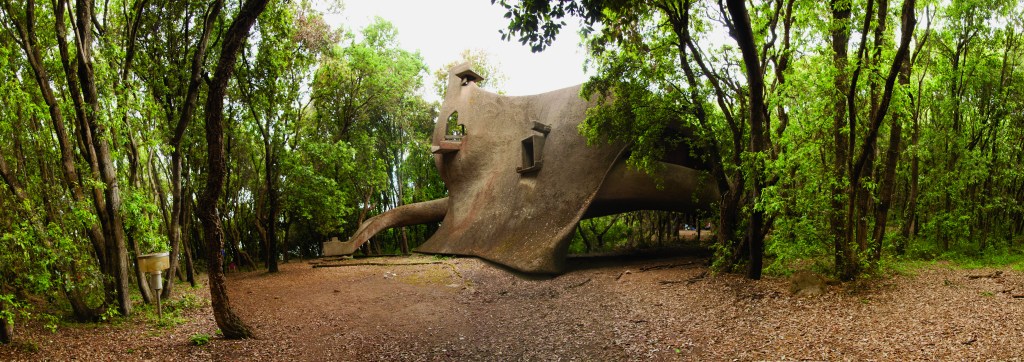
Vittorio Giorgini, Casa Saldarini, Piombino, Italy, 1961-62. Image credits: Archives Nice Côte d’Azur – Ville de Nice, fonds Guy Rottier 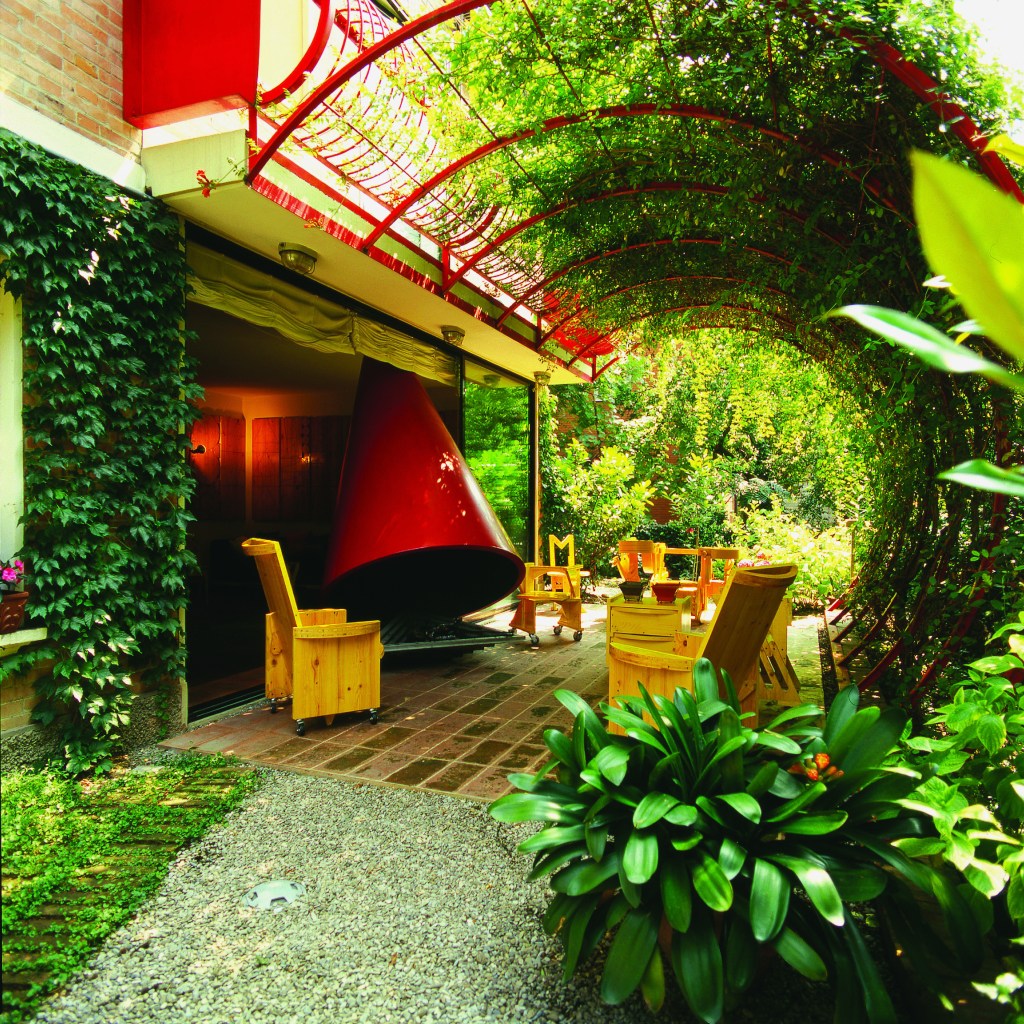
Cesare Leonardi, Casa Mescoli-Goich, Modena, Italy, 1984-93. Image credits: Archivio Cesare Leonardi Progetti 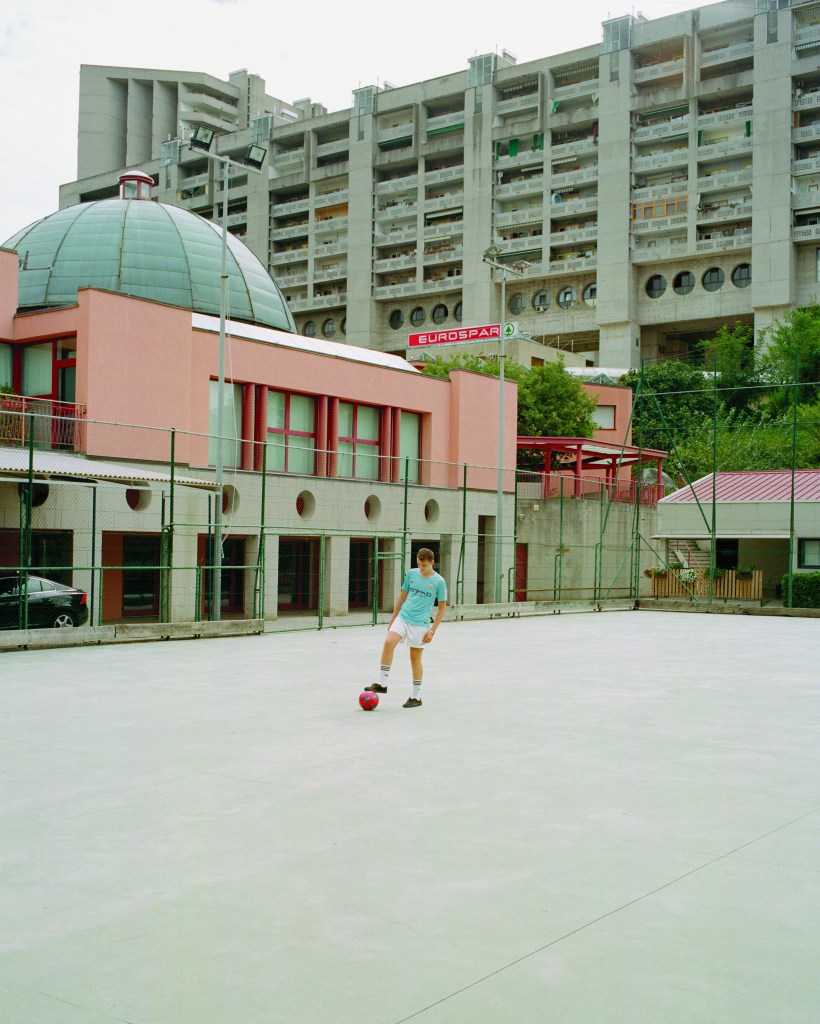
Rkomi x TNS aka The Night Skinny, “Fuck Tomorrow,” 2016. Image credits: screenshots from the video of “Fuck Tomorrow,” 2016; photographs by Federico Torra
The text has been translated in English using AI