Central figure of the Italian Pavilion at the Venice Art Biennale in 2017, Giorgio Andreotta Calò talks about his creative process, his relationship with matter, and the often-complex dialogue between the artist’s intuition and the mediation of the curator.
The encounter with the work of Giorgio Andreotta Calò (Venice, 1979) was, for me, rare. With an educational background in the field of materials engineering, my gaze is used to deciphering the world through stress graphs and physical laws. And yet, in front of his works, that technical language was transfigured into visual poetry. His bronze Clessidre, born from Venetian briccole corroded by the tide, evoke in me the image of tensile test specimens brought to breaking point in the laboratory. But whereas I see a fracture point, a mechanical limit, Giorgio Andreotta Calò sees an imprint of time, a form that preserves the memory of the lagoon. This double reading, this bridge between scientific rigour and artistic imagination, is the engine of our conversation.
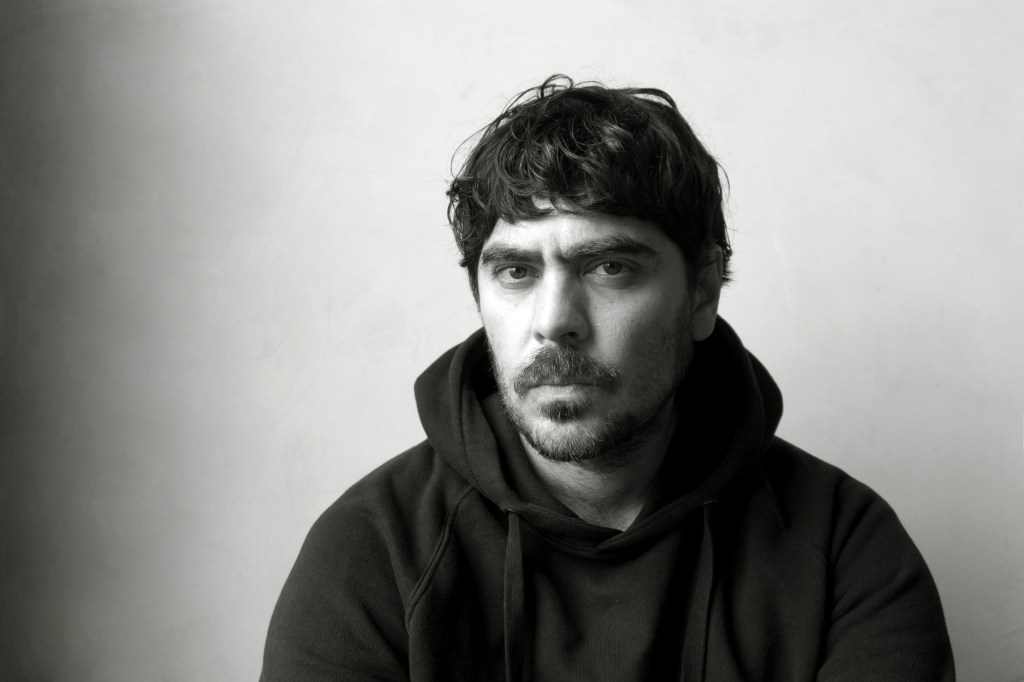
Giorgio Andreotta Calò is one of the central figures on the Italian contemporary art scene, whose research moves between sculpture, performance and installation. His artistic practice is deeply rooted in the places he has crossed and inhabited, from Venice, his native city and inexhaustible source of inspiration, to Berlin and Amsterdam, where he completed his professional education.
The recurring themes in his poetics are the passage of time, seen as a dynamic process of transformation, and stratification, expressed through an almost archaeological investigation of places and materials. Through works such as the Clessidre, the Carotaggi or performative actions such as Il Ritorno, Giorgio Andreotta Calò establishes a deep dialogue with matter, architecture and memory, inviting the viewer to reconsider their own relationship with space and time.
THE INTERVIEW WITH GIORGIO ANDREOTTA CALÒ
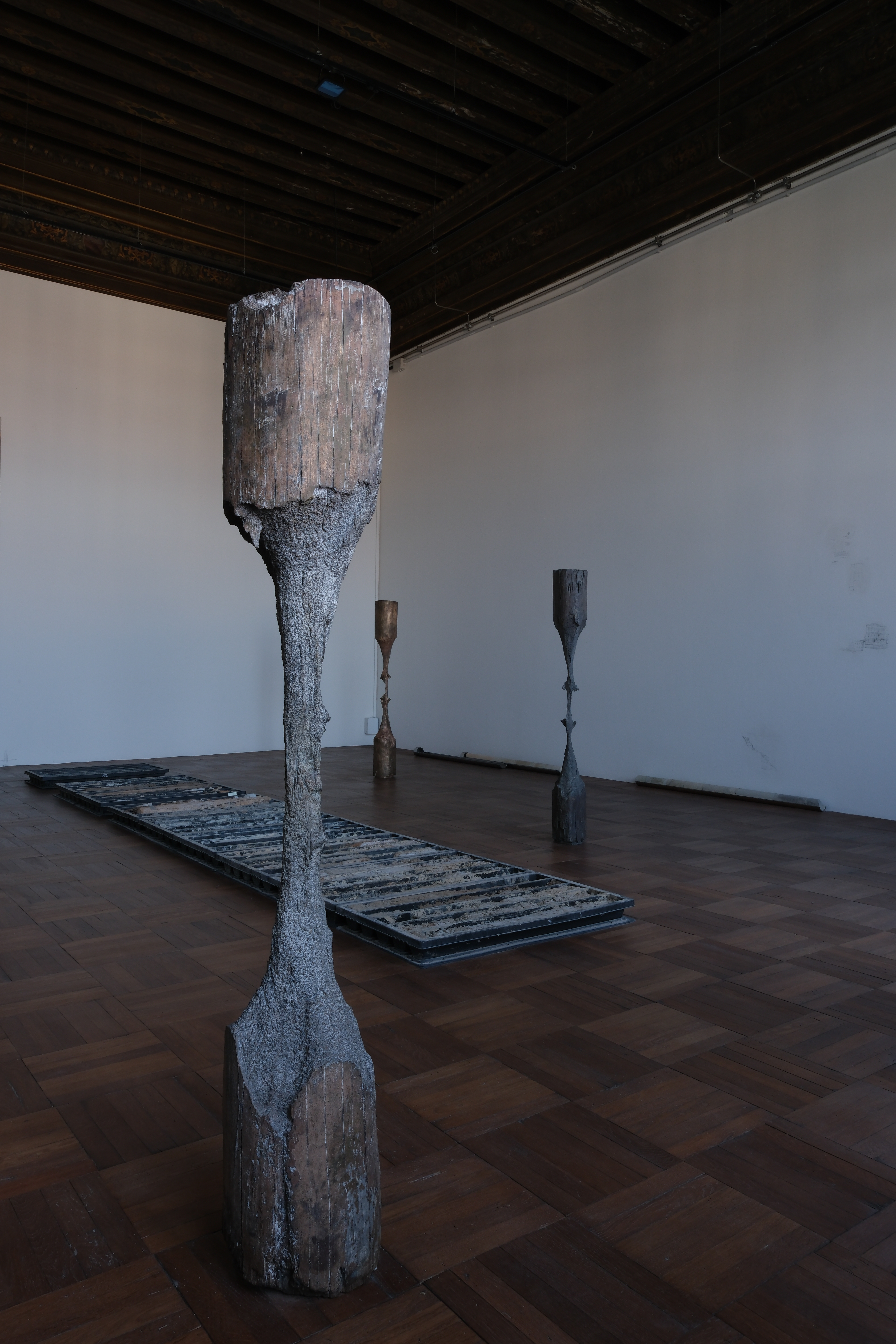
Your artistic practice often starts from materials, such as the wood of the briccole, which undergo a process of transformation over time. With the work Clessidra, however, you choose to translate this process into bronze. What does it mean for you to stop a natural process in such a definitive sculptural form?
My intervention, in reality, fits into a much longer process of transformation that is already underway. The starting material is a tree, which is cut, worked and finally planted in the water of the lagoon. There, it undergoes a further transformation: the movement of the tides corrodes it, imprinting on it a visible trace of the ecosystem. I arrive at the moment when these poles, thinned out, break and drift away. I began to collect these fragments, fascinated by their forms. The sculpture is born from the mirror-like combination of two of these elements, generating the shape of an hourglass. This recalls the idea of reflection, but also the etymological meaning of the word: from the Greek kléptein (to steal) and hýdōr (water), “to steal the water”. The decision to translate all this into bronze is a precise intention: to give a fixed, crystallised and resistant form to an element that would otherwise be destined to wear away. It is a way of defining a precise moment, of freezing in a form a process that would otherwise vanish.
You are experimenting with new technologies such as 3D scanning. How do you see this process evolving and the relationship between the natural and the mechanical element in your future work?
We are now using 3D scanning and printing, which allows us a further passage. We scan the original piece of wood and then 3D-print it by inverting the algorithm, thus creating a “opposable” form, mirroring the starting one, like our hands. This fully realises the idea of reflection. It is a process we would like to carry forward, because it marks a meeting point between the natural element and the mechanical one, a hybridisation that is occurring more and more today. From here, we could think of using different materials, perhaps with reflective properties, which would open the work to a new dimension, transforming it into a threshold towards space and the surrounding environment.
The exhibition at Litografia Bulla in Rome is an example of “four-hands” collaboration. How did it come about and why did it work?
There the format of the gallery, “windows on the landscape”, already provided a very strong curatorial framework. They identified the street-facing window as a display, a diaphragm between the internal space and the public one. I was asked to work within this framework. My interest was to modify that transparent diaphragm, shifting the colouring of the glass towards aqua green to create an immersive, almost underwater environment. This colour reinforced the narrative of the work, linked to the part of the wood corroded by the water. The dialogue was very close-knit: they knew the space well and made proposals, but they also allowed themselves to be surprised. We had worked together on the prints, so we all knew the material very well.
THE WORK OF ARTISTS AND CURATORS ACCORDING TO GIORGIO ANDREOTTA CALÒ
Works such as Pinna Nobilis can be transformed or rethought in each exhibition. What are the main challenges for the artist and the curator in the face of works in mutation, and how is the poetry of these processes preserved in the exhibition set-up?
Works have a margin of modification when they are placed in a space. At Ca’ Pesaro, the Pinne Nobilis were rethought in relation to the exhibition room. It was decided to insert them into the door jambs, attached to vertical pipes that recalled the set-up of the 2017 Biennale. On that occasion they were also turned upside down. This is possible because they are small-sized sculptures, more manageable. Works such as the Clessidre, instead, have their own fixity and less margin of modification. The real rethinking of the work takes place during the realisation phase, when one works on the wax. Once it is cast, the margin of change shifts to how the object is set up in the space, which requires a dialogue with the curator.
In an exhibition such as CITTÀDIMILANO, you transformed Pirelli HangarBicocca using the device of the camera obscura. How can such a complex concept, which requires time and adaptation of the gaze, be made accessible to a non-specialist audience?
I try to work on a stratification of meanings. A work must be able to open up to different readings, from the most immediate and formal to the deepest one, depending on the sensitivity and predisposition of the viewer. As far as accessibility is concerned, it must be understood in various ways. At times, a certain difficulty can push the viewer towards a more active investigation. At other times, choices must be made. For the Italian Pavilion at the Biennale, I had a discussion with the curator Cecilia Alemanni because the staircase we had designed was not accessible to people with disabilities. I was asked for a ramp, but I had to weigh up the aesthetic and functional needs of the work and those of accessibility. In the end I insisted, while knowing that I was excluding a portion of the public, because modifying the project would have weakened the final impact of the work. I do not believe that one must always sacrifice the strength of a work in order to make it universally accessible.
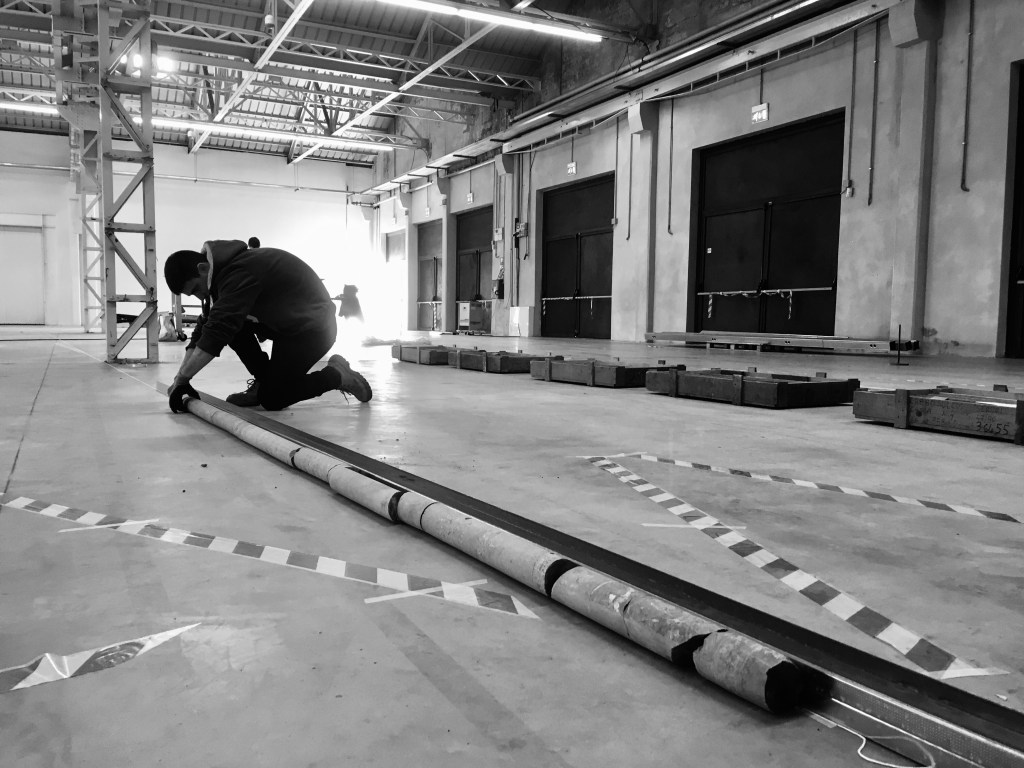
The pathway-work Il Ritorno unites performance, time and territory. How can such a complex experience be transposed into traditional exhibition modes without losing its performative dimension?
In this work we wanted to work on absence, or rather on an idea of waiting, of advent. The public was asked for an act of faith, that is, to imagine that in that precise moment in which they were inside the place of the advent, the place towards which the action of the return was tending (the Sculpture Garden designed by Carlo Scarpa), this return was actually taking place elsewhere, between Amsterdam and Venice precisely. It was a matter of working on the evocative power of a radical gesture, which excludes the physical presence of an object in the exhibition space but at the same time opens onto a possible imaginative dimension.
How crucial is the curatorial or critical text for the understanding of the work, and what distinguishes an effective text from a superfluous one?
I have always given great importance to the story that lies behind a work. Our archive grants ample space to this narrative part, because my works lend themselves to a complex narrative. Today, however, I see that there is little time to really focus on a work, and many texts are simply “copy and paste” of information taken online. Building a text that truly serves a purpose requires either a great sensitivity, which few have, or great dedication and study. It is a complex job.
CRITIQUE AND FUTURE
To criticise a work, is it necessary to place it in its present context, or is sensitivity alone enough?
The work must resonate in its present. But it is also true that there are works that transcend temporality. I am more interested in this aspect: when a work manages to exit a contingent dimension and opens up to a broader, absolute reflection, almost outside of time, reaching a degree of absoluteness that makes it always current.
Looking to the future, how do you both imagine and hope the relationship between artists and curators will develop?
Too often I encounter an approach that I would define as “extractive” or “parasitic”. And this does not concern only curators: at times, artists themselves lack fundamental practical skills. There is a widespread incapacity to read a space, to manage the complexity of an exhibition set-up, to know even just how to “hammer in a nail”. This incompetence leads to delegating or to settling, weakening the final result. A curator, for me, is someone who engages with the work at all levels, from the logistical bases to conceptual research. I believe we will witness a natural selection: the current situation will put many fragilities to the test and will reward those who work with seriousness and dedication, those who are willing to start from the basics and build a real path of knowledge.
What qualities should a curator possess today to create real added value?
A curator is a person who has dealt with the full complexity of making an exhibition. A person who has also understood what it truly means to set one up: from how you move a crate to how you install a work, up to communication and economic strategies. It takes humility in recognising that there is a long path to follow before being able to curate an exhibition. You have to start from the basics.
Press releases and projects such as Produttivo connect your work to debates on raw materials and socio-ecological changes. What is the role of the artist in this debate? Does an artist need to be an activist?
I am not interested in creating works by default in order to follow the wave of a specific debate. Those works risk dying once the debate is over. I prefer to work on complexity, creating works that aspire to a more absolute value, almost outside of time, but which precisely for this reason lend themselves to different perspectives of investigation. A work such as the Sulcis Carotaggi can be read as a reflection on sculptural form, but also as a comment on the extractive economy or on the psychological perception of space. A complex work remains communicative over time and can be questioned by different urgencies, including the ecological one, without being confined by it.
Beyond new production methodologies, what exhibition strategies and formats do you imagine could help regaining time, complexity and quality?
New and different strategies must be activated. Each of my projects is born as a response to a situation or a limitation, which in some way generates a possibility and therefore an innovation. My studio, for example, is an absurd place in which to think of making sculpture; it is almost impossible in itself; and yet, this limitation pushes one to think of different strategies, to rethink the way of producing, perhaps returning to a certain way of making art. It is fundamental to return to a less agitated and compulsive dimension of making. Production must be reduced and more time dedicated to individual works, if only to regain that complexity in giving form to works that is progressively being lost. The general quality is decreasing notably. A lot is produced, exhibitions are made continuously, many of which are absolutely useless: they are more like parties that leave nothing behind. I believe that more and more a natural selection will be made between those who have embarked on this path thinking it was a shortcut and those who instead have taken it very seriously. We must try to make the complexity that lies behind a work understood, invest in its history, in everything that sustains it.
Linda Rubino
Giorgio Andreotta Calò. Photo by Studio Giorgio Andreotta Calò 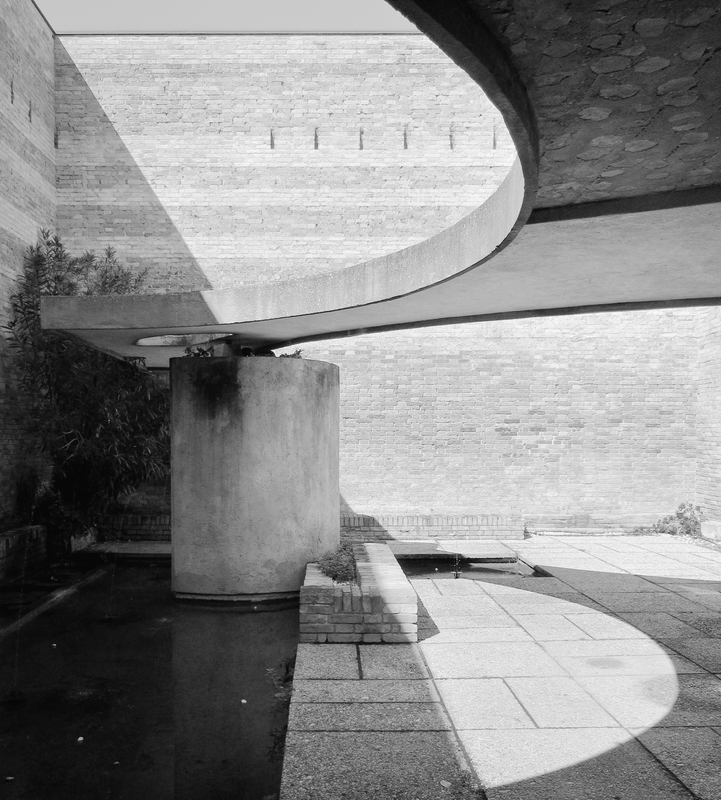
Ritorno, 2011, ILLUMInazioni, 54th International Art Exhibition, La Biennale di Venezia. Photo by Christopher Schroeer-Heiermann 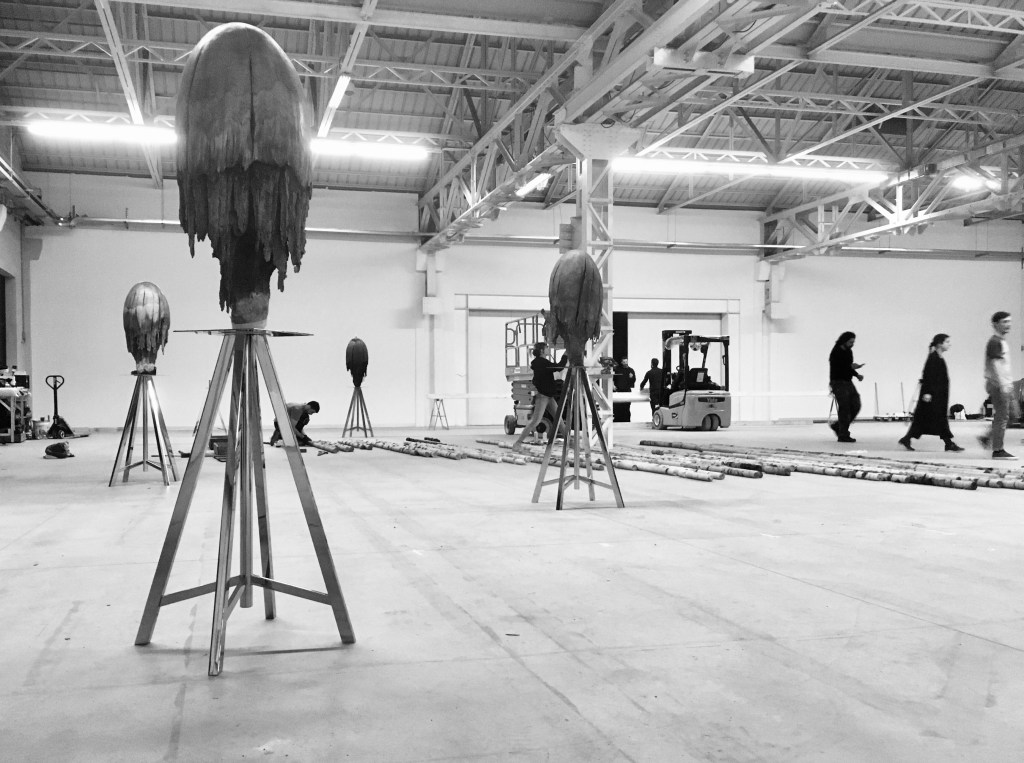
CITTÀDIMILANO, set-up, Pirelli HangarBicocca, Milano, 2019. Photo by Giorgio Andreotta Calò Produttivo, set-up, Pirelli HangarBicocca, Milano, 27 January 2019. Photo by Giorgio Andreotta Calò 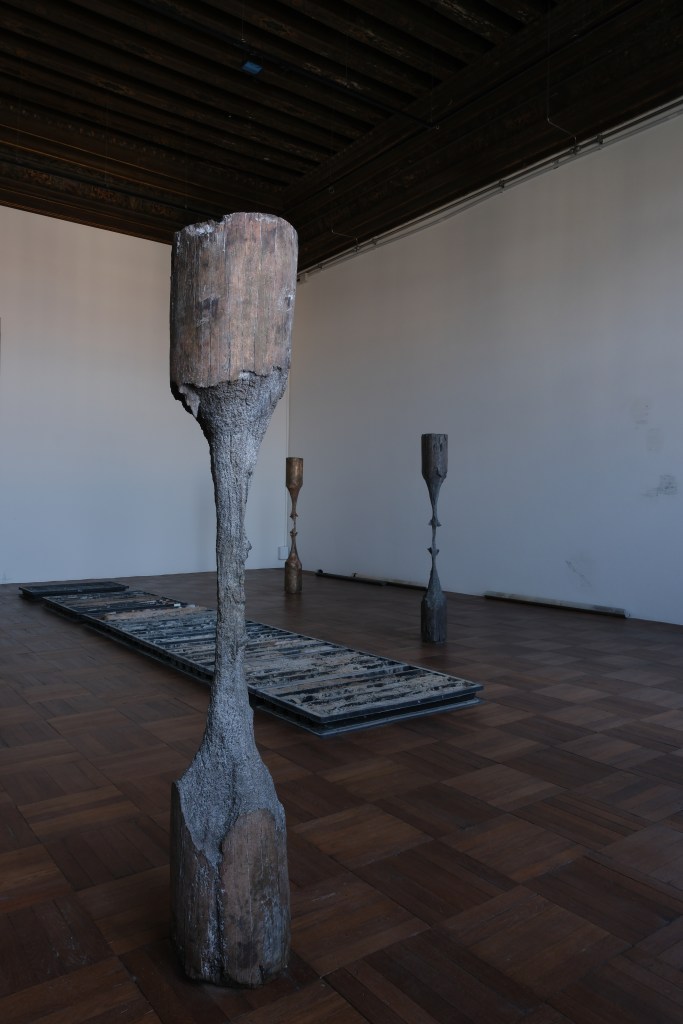
Scultura lingua morta, exhibition view, Ca’ Pesaro – Galleria Internazionale d’Arte Moderna, Venezia, 2024–2025. Photo by Kirsten Suzanna de Graaf 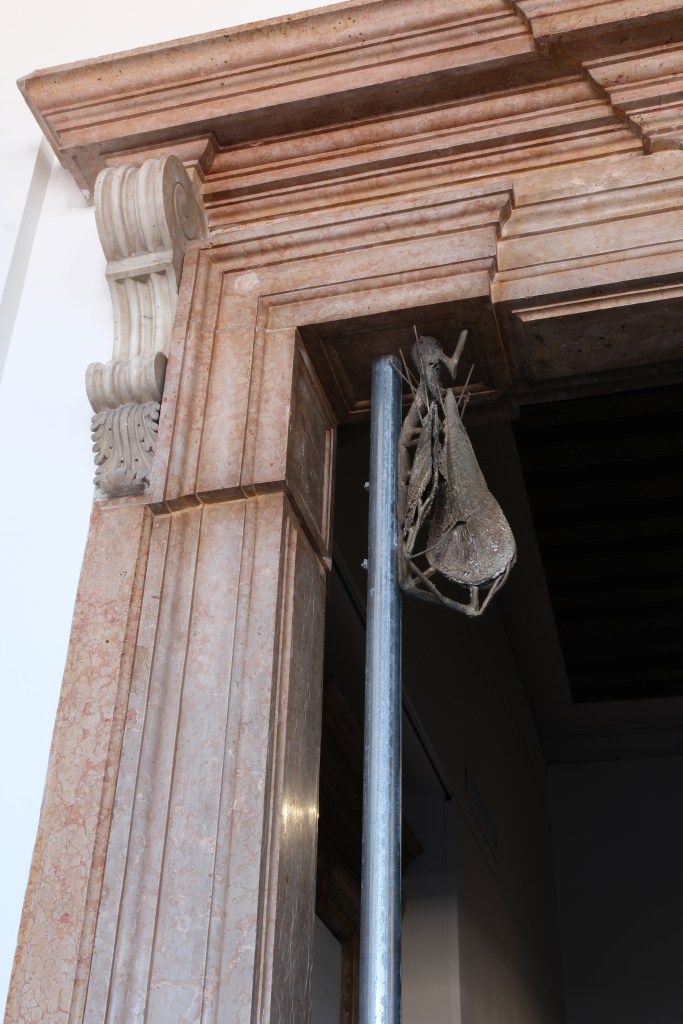
Scultura lingua morta, exhibition view, Ca’ Pesaro – Galleria Internazionale d’Arte Moderna, Venezia, 2024–2025. Photo by Kirsten Suzanna de Graaf 
Senza titolo (La fine del mondo), Pinna Nobilis, 2017, lower level, Italian Pavilion, 57th International Art Exhibition, La Biennale di Venezia. Photo by Kirsten Suzanna de Graaf 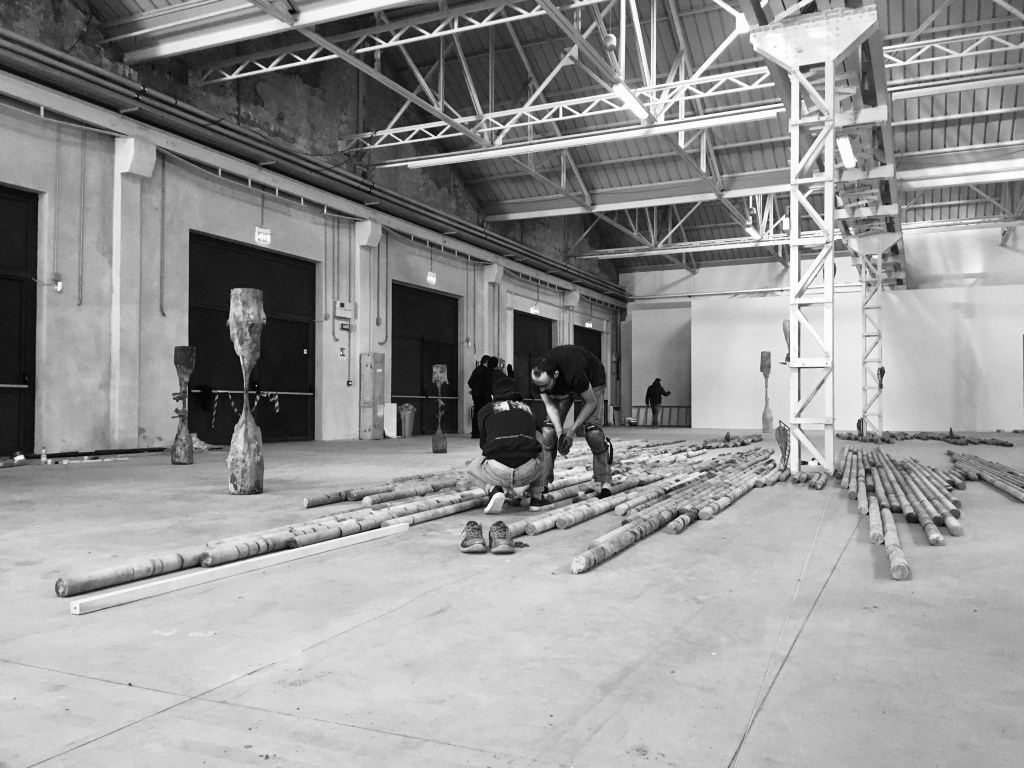
CITTÀDIMILANO, set-up, Pirelli HangarBicocca, Milano, 2019. Photo by Giorgio Andreotta Calò 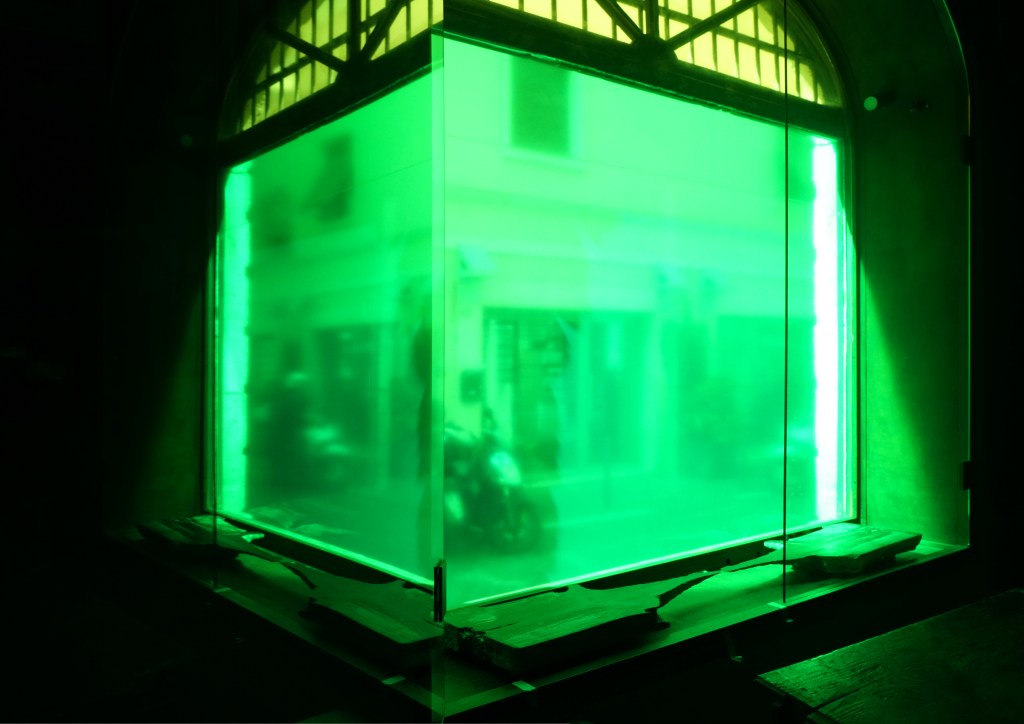
Giorgio Andreotta Calò, chapter sixteen of Passaggi, Litografia Bulla, Roma. Photo by Luis Do Rosario
The text has been translated in English using AI

