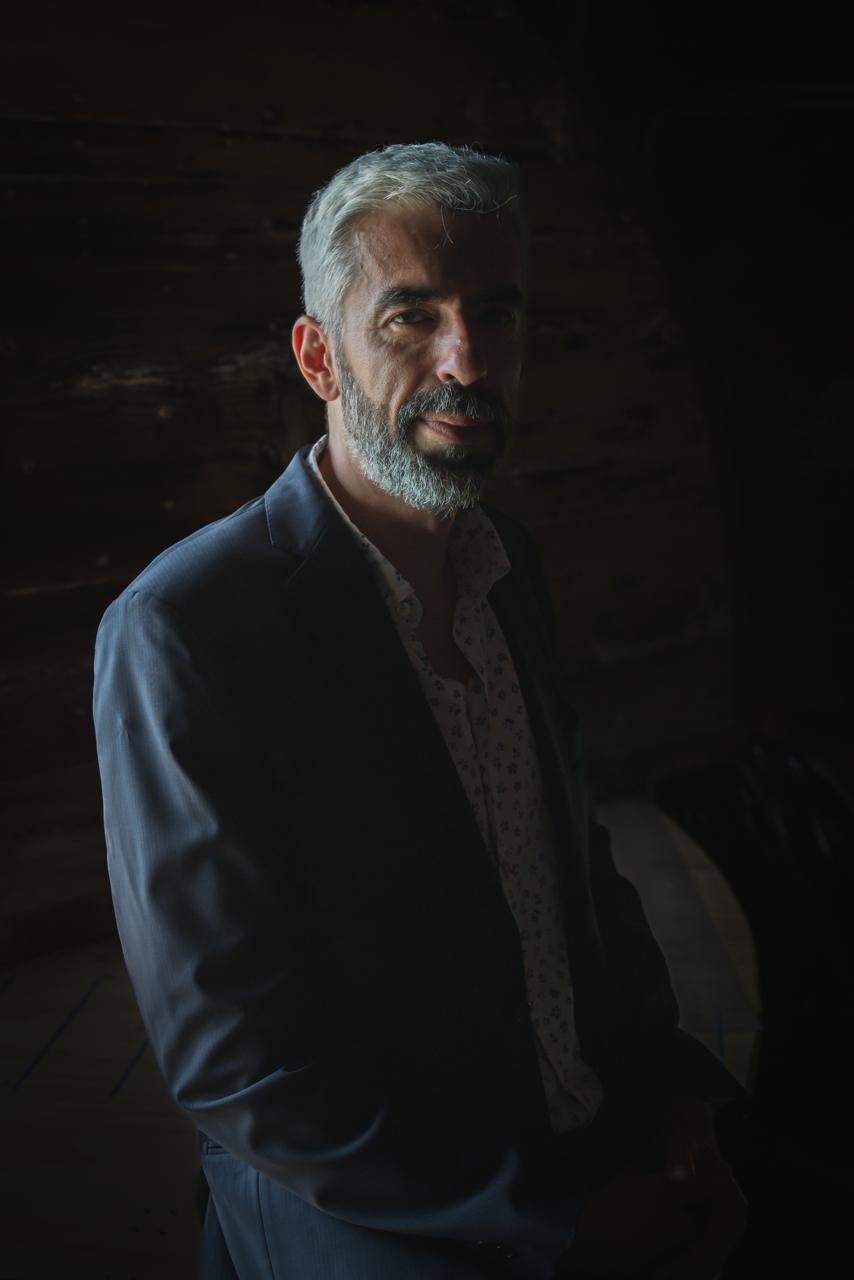
Curator, teacher and activist, Marco Baravalle is one of the founders of S.a.L.E. Docks, an independent Venetian space that promotes exhibitions and initiatives focused on the combination of art and political reflection. In this interview we have deepened his vision and his way of intending curatorship.
S.a.L.E. Docks and The Institute of Radical Imagination are two key realities to understand Marco Baravalle’s thinking and approach to curatorship. He’s member of the collective of activists who, in 2007 in Venice, gave birth to S.a.L.E. Docks, occupying one of the Sale Warehouses and thus transforming a place now disused into an independent space for contemporary arts. Since then, Baravalle has contributed to the definition of a reality capable of reversing the processes that privatise cultural commons, including local cultural operators and hosting international projects.
The mission of The Institute of Radical Imagination has similar origins, engaging in international solidarity actions in the Mediterranean and global South. Ideally it stands between the formalized institution and a community center, launching processes of mutual contamination for the convergence between art and life.
Professor of History and practices of curatorship, Marco Baravalle shared with us his understanding of the role of curators from his own research.
THE INTERVIEW WITH MARCO BARAVALLE
In your book L’autunno caldo del curatore, published by Marsilio Editori, there is a sense of political urgency that calls into question the very foundations of the curatorial institution. Can we still talk about the curator’s “neutrality”? What intentions guided your reflection on the contemporary curatorial role?
In the book you quote I try, through the focus on Harald Szeemann, to trace an unusual genealogy of the figure of the curator. I do not focus so much on the debate around the couple neutrality/ authorship, rather highlight how the model asserted from Szeemann has become hegemonic because it encodes a neoliberal figure: an entrepreneur of the self, flexible and creative. According to the official narrative, the independent curator would be a product of the temperament of 1968 (it is Szeemann himself who tells it like this). In fact, under the patina of romanticism hides a figure absolutely in line with the cognitive becoming of capitalism and the new market requirements. In contrast, I want to highlight different curatorial models. For example the work of Enrico Crispolti between ‘73 and ‘77 which is interesting because it focuses on a new figure that the critic calls “aesthetic co-operator”. In the new book I am writing for the publisher Verso, I deepen this aspect only mentioned in L’autunno caldo del curatore.
S.a.L.E. Docks was born from the desire to generate a social and cultural change. When and why did you feel the need to launch a project like this?
It was a collective idea, born within the movement of social centres in Venice. It was 2007, we started from the realization that Venice was increasingly oriented towards the contemporary, but also that art was getting closer and closer to capital and that it intertwined with real estate income and the tourism industry. We therefore wanted a place to organize the many precarious cultural work and to experience an artistic project that followed different logics from those of the Biennale or large private foundations that since then have multiplied without stopping in Venice.
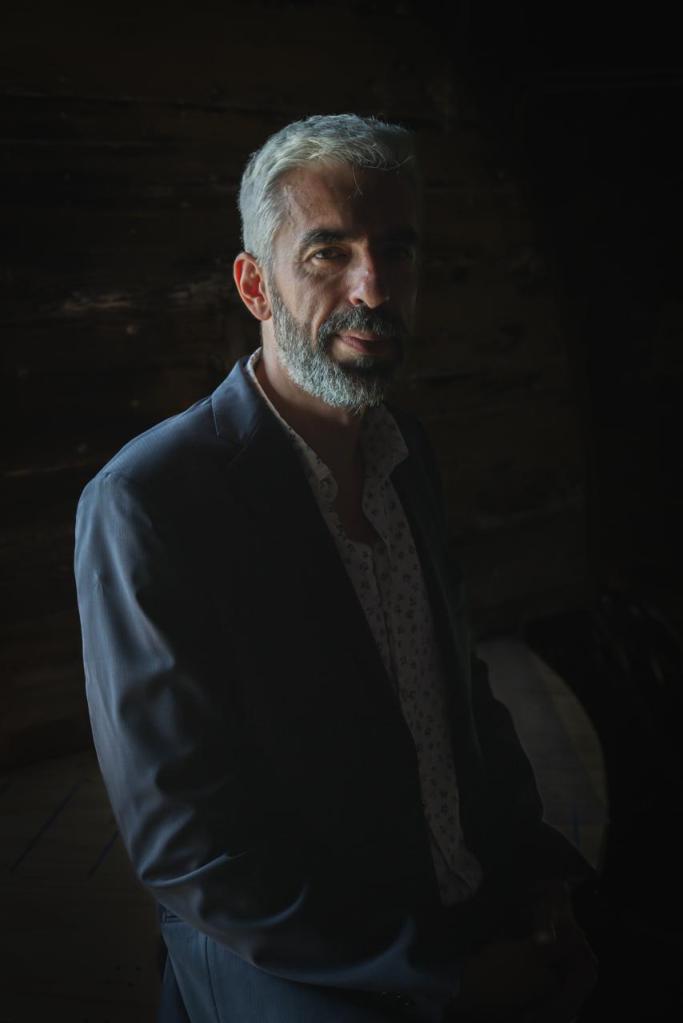
What meanings do you give to the idea of community as curator, scholar and activist?
It depends on what is the core of the community. Whether it is about national or ethnic-religious identities, as always it ends badly. On the contrary, if a community is based on assumptions of social justice, on the common use of resources, then it becomes an asset. If it is disconnected from essential identities, if the term community does not refer to an indisputable starting point, but to a continuous work of revision of its constitution and its institutions.
CURATORSHIP AND ACTIVISM ACCORDING TO MARCO BARAVALLE
We are witnessing the growing phenomenon of mass tourism, and it is precisely in this context that cultural impoverishment proliferates in favour of an extractivist enrichment, especially in cities such as Venice. In your opinion, what should be the attitude of those who want to continue working in this field?
I certainly believe that we can no longer be exempt from a radical criticism of this phenomenon whose social and environmental impacts put at risk the social fabric of entire cities and the integrity of many habitats.
As a teacher, how do you think that the new generations of students of art and curatorship are facing the daily precariousness generated by competitive social pressure and ever less remunerative wages?
On the one hand, it seems to me that there is an increasing awareness of precariousness, on the other hand that we still face difficulties in responding not only individually but also collectively. The reactionary political situation in which we find ourselves certainly does not help. But something always moves. In Venice, we founded Biennalocene, an assembly of precarious culture workers in the city. Nationally, Mi Riconosci does a great job around cultural goods and “Vogliamo tutt’altro” is a network that has formed against the Meloni government’s attempt to dismantle the independent performing arts scene.
A figure like the Artivistis still possible? What would you recommend to those who decide to embark on this type of journey today? What risks does this choice entail within an increasingly normalizing and precarious art system?
Yes, it is absolutely possible to trace alternative ways of life and work compared to those that capital plans for art workers. There are no recipes, the only thing I really recommend is to act collectively. The risks involved? It depends. It is possible that at the beginning you will be completely marginalized or even repressed, depending on market trends. It is possible that the system tries to absorb you or your work. In any case, those who operate “radical” choices very often remain an outsider and it is also my case. That said, I couldn’t do much on my own, especially not when I was 25. Perhaps I would have given up everything, perhaps I would have adapted to become what I did not want to be. The fact of being in a collective, in turn in a network of collectives, and the construction of an international network of relationships based on a common vision of art and the world are elements without which my path would never have been possible.
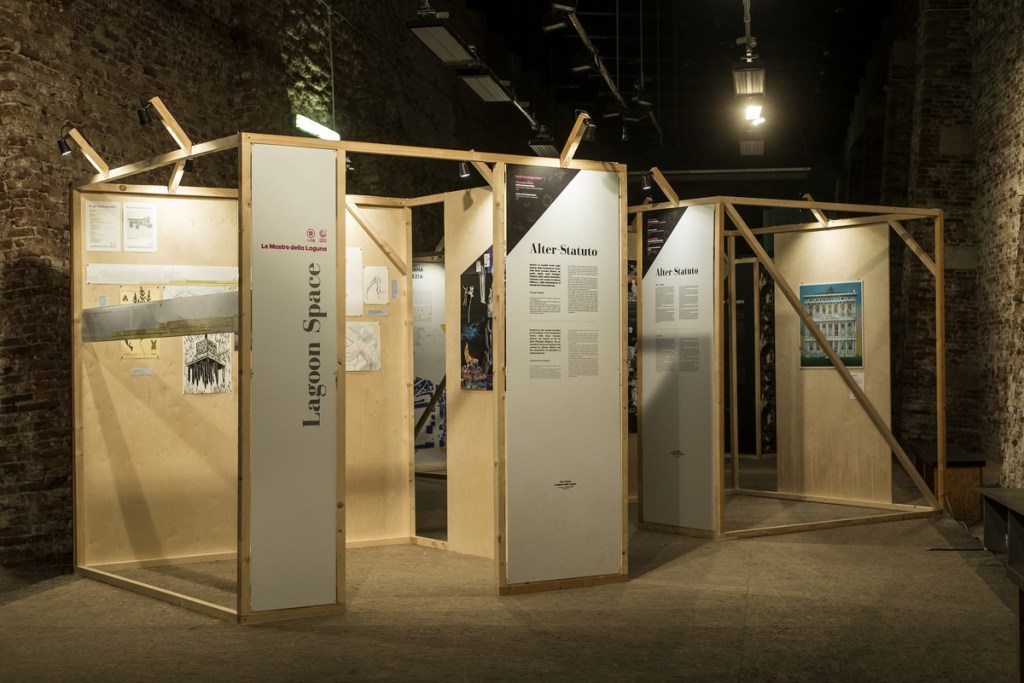
DISSENT AND CULTURAL INSTITUTIONS
What are, in your opinion, the artistic practices that today really succeed in sabotaging the aestheticization of dissent?
Dissent has always had its aesthetics, but it cannot be reduced to a sampling of forms, an exercise in style. So it is essential not to separate the aesthetics of dissent from the broader social processes from which they emerge. From another perspective, I would say that it is important to position oneself, or at least not only in relation to the individual map of privileges and subordinations, but also in relation to the institutions of the art world and the effects of capture and exclusion that they project, depending on the case.
What role can public art institutions play in today’s cultural landscape? Are they still an open battlefield or a compromised terrain?
It depends. Serious decolonial activism has exposed the toxic philanthropy that fuels many large private museums. In the wake of historic African American activism, there are calls for the abolition of these museums, not just their reform. Of course, abolition is a long-term goal, a marathon rather than a sprint, and there is no abolition without the simultaneous tension to establish something else. This institutional tension seems fundamental to me, I called it alter-institutionality, that is the organization and not only the imagination of art institutions that function differently from the neoliberal model. But even the public is no guarantee, because there is a certain return to order in the public sphere as well. Think of the many instances of censorship of pro-Palestine voices in recent years. It is true that there are exceptions, but the yardstick cannot be limited to exhibition themes, whether more or less progressive. What matters above all is the political positioning of the institutions, their local and international alliances, the way in which they choose to play their own political and cultural influence. Governance and curatorial models.
The realities of S.a.L.E. Docks and The Institute of Radical Imagination how much and what have they taught you?
They taught me almost everything, for better or worse. They teach me the arduous but fundamental work of creating spaces for autonomy. It is a collective work of imagination, comparison, organization and constant care.
To conclude, in the fragmented contemporary landscape, how do you try to stay true to yourself and your ethics as an independent curator?
For the reasons I tried to explain in the first answer, I would say that mine is not an ethics of independent curator. It is not so much to myself that I remain faithful, but to a shared vision of the world, a world which is still largely to be built. Perhaps one day I will realize that I have been naive, a fool or worse, then it will be time to be true to myself and change direction. That day, however, has not yet come.
Maria Rosaria Santosuosso
https://www.marcobaravalle.com/
Translated with AI


One response to “Activism, curatorship and community practices. Interview with Marco Baravalle”
[…] collective Taring Padi, cardboard becomes the privileged medium for grassroots political action. Taring Padi was founded in Yogyakarta during the final years of Suharto’s New Order regime, formally […]