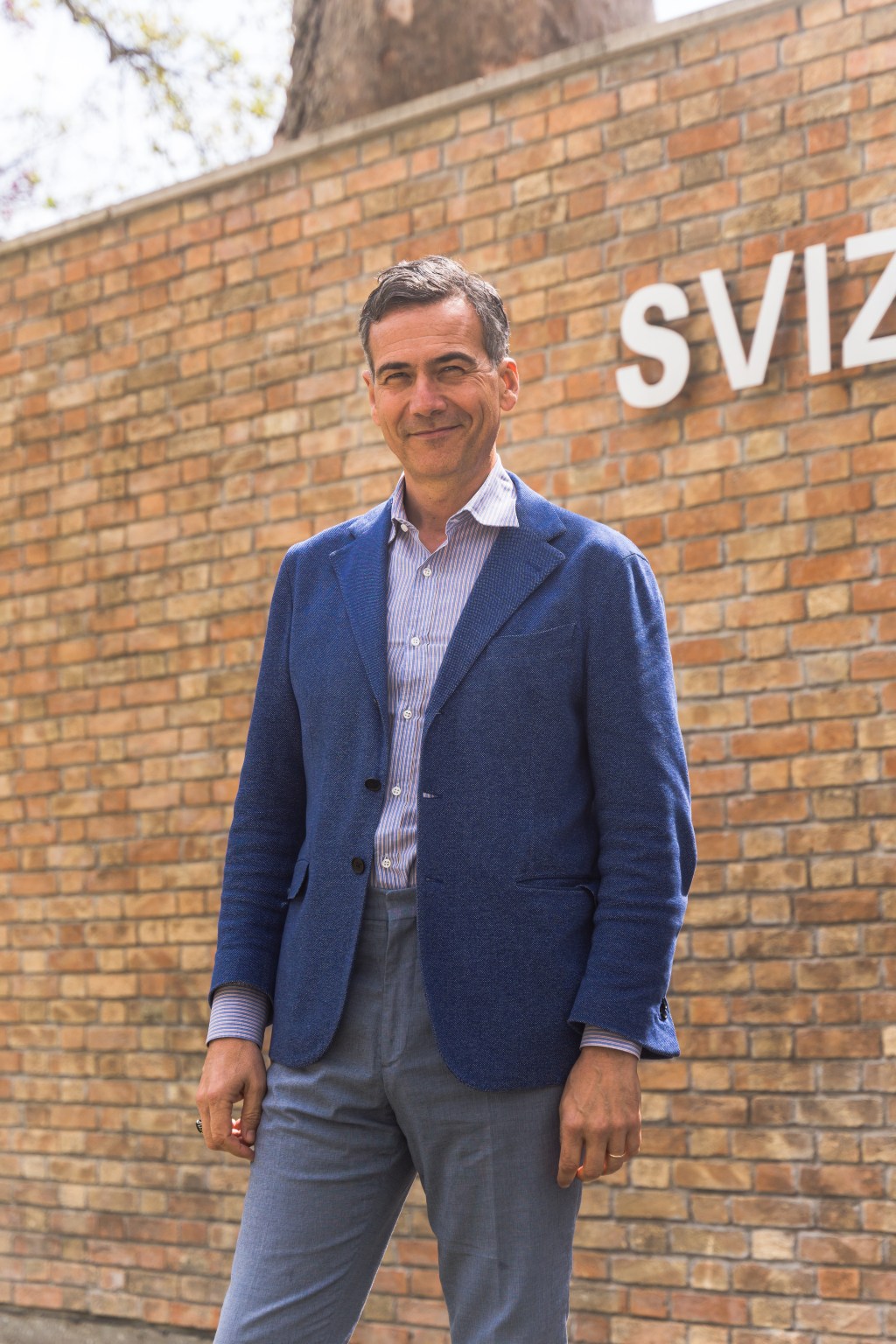
Andrea Bellini is an Italian curator with a background in philosophy, archaeology, and art history. He has consistently challenged traditional curatorial formats through performative strategies, experimental time-based media, and inter-institutional collaborations. This interview explores Bellini’s curatorial philosophies, the shifting status of the curator in contemporary art, and his vision for future exhibition formats.
Since 2012, Andrea Bellini (1971) has served as director of the Centre d’Art Contemporain Genève, where he relaunched the Biennale de l’Image en Mouvement in 2014 focusing on research and production. Former editor-in-chief of Flash Art in New York, director of the Artissima fair in Turin, and co-director of Castello di Rivoli, he was the curator of the Swiss Pavilion at the 2024 Venice Biennale. We asked him a few questions about his approach to curating.
You radically restructured the Biennale de l’Image en Mouvement in 2014 by having participants create entirely new works instead of submitting pre-existing ones. Given that this model requires two years of development for each piece, how does it reshape the curatorial process and your relationship with artists?
I transformed the Geneva Biennale of Moving Images from a simple exhibition into a production platform precisely because I felt the need (both on a human and an intellectual level) to establish a new way of working with artists. I could no longer stand the cynicism of large curatorial exhibitions. That is also why I abandoned thematic exhibitions. Why force dozens of diverse art works through one particular thematic funnel? I wanted to give a small group of artists (somewhere between 15 and 28 of them) carte blanche, to work with them over two years to create something completely new, to make an unexpected exhibition. If you want to surprise an audience, you first need to surprise yourself. My limitation as a curator is myself ‒ my pre-existing notions, my prejudices, my triteness, my pomposity.
The 2024 edition of the Biennale ‒ A Cosmic Movie Camera ‒ explored themes of AI, invisible media, and fictional space. How did these concepts influence the exhibition’s narrative construction, and what new responsibilities did this place on you as curator?
Exhibition co-curator Nora Kahn and I limited ourselves to selecting the artists. We did not want to impose any preconceived ideas about artificial intelligence on the artists or the viewers. Our aim was to let the works speak for themselves. I see my responsibility as curator as to take a step back and help the artists create something important for them and ‒ hopefully ‒ for us, too.
You have spoken admiringly of curators who create “conditions of possibility” rather than dictating content. How has this approach shaped the spatial and temporal experience of your exhibitions, especially those involving newly commissioned works?
It is of course possible to organize excellent group exhibitions around a specific theme. I don’t want to be misunderstood about this. But, with dozens of international biennials, this game has become a bit boring and predictable. Good ideas are so rare, and everything in the art world risks becoming a cliché, a sort of parody. That’s why I wanted to focus the Biennale in Geneva on the production of completely new artworks. It has given me the opportunity to establish intense and lasting relationships with the artists.
ANDREA BELLINI AND THE CURATOR’S ROLE
You’ve often embraced alternative formats that stretch beyond the traditional white cube, including working with performance, moving images, and interdisciplinary collaborations. How do you see the curator’s role evolving in engaging broader publics outside the walls of art institutions? What spatial or social dynamics become crucial in these contexts?
I think that curators, like artists, should go in all directions. Everyone works according to their own sensibilities and inclinations. There is room for everyone, both inside and outside institutions. Obviously, I look very favorably on those who are working to introduce contemporary art into public space and to bring it to people who are not necessarily part of the “art world.” In this sense, I think that the protocol of the Nouveau Commanditaires created by the Belgian artist François Hers is truly extraordinary and should spread to every corner of the world. For those who want to take a look, here it is: http://www.nouveauxcommanditaires.eu/en/44/protocol.
To celebrate the Centre’s fiftieth anniversary, you organized a project around the notion of “the gift”, which involved distributing catalogues and limited-edition printed matter to the public. How do you see this gesture in relation to institutional memory and public engagement with contemporary art?
Yes, the gift. Isn’t it a great idea to share catalogues, posters, and memorabilia with your public? You only need to teach at an art school and interact with twenty-year-olds to understand that what is needed most today is tenderness. It may sound like a cliché, but I truly believe it.
With the closure of the Centre’s main building for renovation till 2029, the institution has provisionally moved operations to temporary or digital venues. What curatorial possibilities and constraints have emerged from this spatial transition?
Every limitation creates room for invention and movement. It’s a law of evolution: adapt and survive. The temporary absence of physical headquarters for holding exhibitions prompted me and the young philosopher Federico Campagna to conceive AGORA, a free, accessible online school that brings together the transformative powers of art and philosophy to reimagine the world. With a scholarship for eight students and universally accessible resources, AGORA encourages creative thinking beyond conventional academic boundaries. We’ve also built up a series of important collaborations with Kunsthalle Basel, MAXXI in Rome, and the non-profit space Pivô in São Paulo, Brazil. We’ve even rented commercial space in Geneva (previously home to an eyewear shop). The idea is to put on a series of special exhibitions, a sort of mobile Wunderkammer, with which we will demonstrate that in art, the greatness of an idea does not necessarily go hand in hand with the size of the work. We’ll see!
THE FUTURE OF THE BIENNALE DE L’IMAGE EN MOUVEMENT
In October 2026, the Centre d’Art Contemporain Genève will mark its debut in Tunisia with a selection of works from 2026 Biennale de l’Image en Mouvement, BIM’26, which you are co‑curating with Lina Lazaar. How do you intend to maintain the institution’s conceptual continuity while adapting to this new cultural context?
The fact that the next edition of the Biennale is being held in Tunisia does not change our core idea: to provide artists with money and support so that they can create something relevant for them and ‒ of course ‒ for viewers.
Looking ahead, what themes or curatorial experiments are you most interested in pursuing? Are there any future projects that signal a new direction in your approach to curating?
As I grow older, my sense of having gained a lot from life and art grows keener. And with it comes an awareness that I might lose everything in an instant. One thing I am really enjoying right now is writing ‒ but not art essays; I have been writing fiction and children’s books. This may seem like a bit of a cliché, but I do find it enriches my work with artists to spend time each day doing something creative on my own. As for the future, I would like to take better care of myself and the people around me.
Having held positions in institutions across Italy, the U.S., and Switzerland, how has each cultural and institutional setting influenced your curatorial strategies, from selecting the artists you show to exhibition design?
I won’t talk about the influence of any institution in particular on my vision. Life is a journey, right? Professionally, I’m very different from the person I was more than 25 years ago when I would prowl New York City looking for exhibitions to write about for Flash Art. The important thing is to know how to change, to remain open-minded, not to remain stuck to our ego and our old ideas. This is the greatest adventure and the most challenging commitment.
Mina Baniahmadi
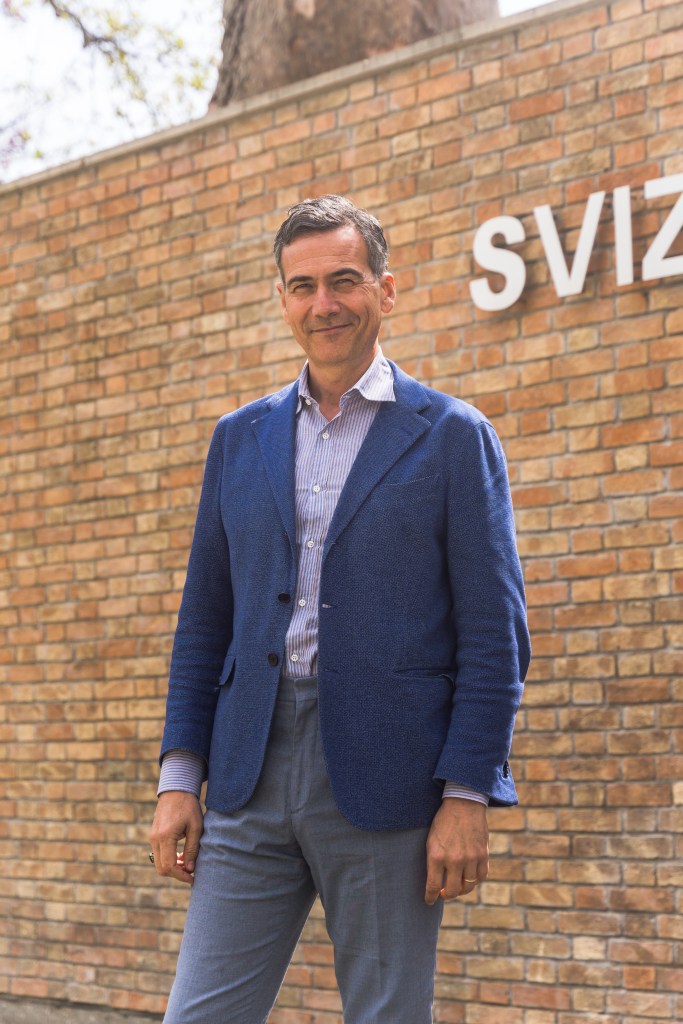
Andrea Bellini. Photo Samuele Cherubini 
Exhibition view of the Biennale de l’Image en Mouvement 2024, A Cosmic Movie Camera, at Centre d’Art Contemporain Genève. Photo: Mathilda Olmi © Centre d’Art contemporain Genève 
Exhibition view of the Biennale de l’Image en Mouvement 2024, A Cosmic Movie Camera, at Centre d’Art Contemporain Genève. Photo: Mathilda Olmi © Centre d’Art contemporain Genève 
Exhibition view of the Biennale de l’Image en Mouvement 2024, A Cosmic Movie Camera, at Centre d’Art Contemporain Genève. Photo: Mathilda Olmi © Centre d’Art contemporain Genève 
Exhibition view of the Biennale de l’Image en Mouvement 2024, A Cosmic Movie Camera, at Centre d’Art Contemporain Genève. Photo: Mathilda Olmi © Centre d’Art contemporain Genève 
Exhibition view of the Biennale de l’Image en Mouvement 2024, A Cosmic Movie Camera, at Centre d’Art Contemporain Genève. Photo: Mathilda Olmi © Centre d’Art contemporain Genève 
Exhibition view of the Biennale de l’Image en Mouvement 2024, A Cosmic Movie Camera, at Centre d’Art Contemporain Genève. Photo: Mathilda Olmi © Centre d’Art contemporain Genève 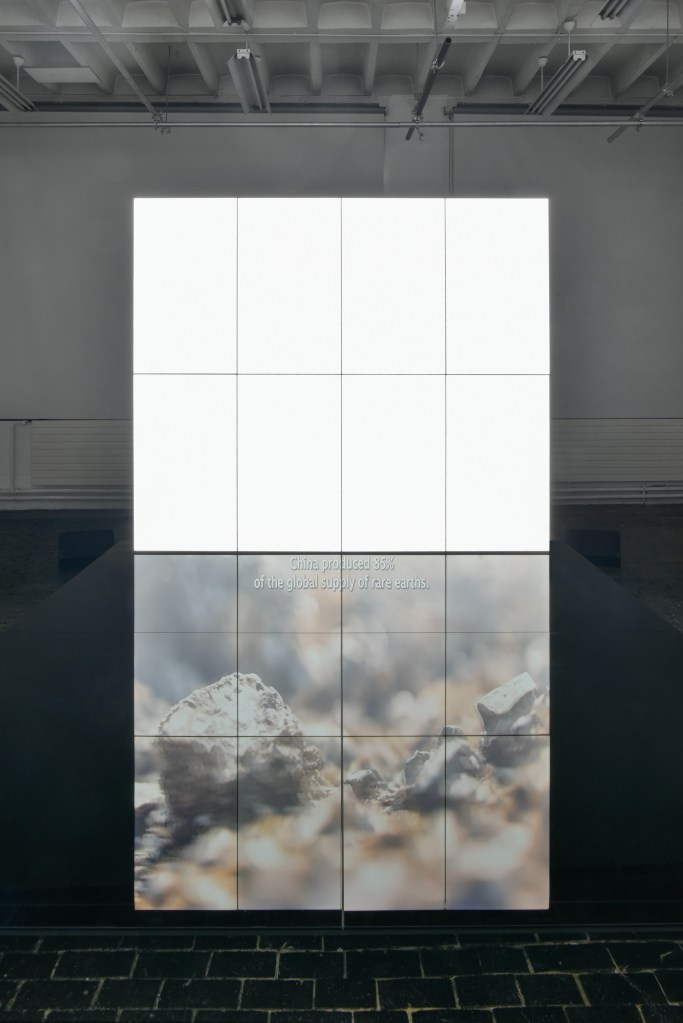
Exhibition view of the Biennale de l’Image en Mouvement 2024, A Cosmic Movie Camera, at Centre d’Art Contemporain Genève. Photo: Mathilda Olmi © Centre d’Art contemporain Genève 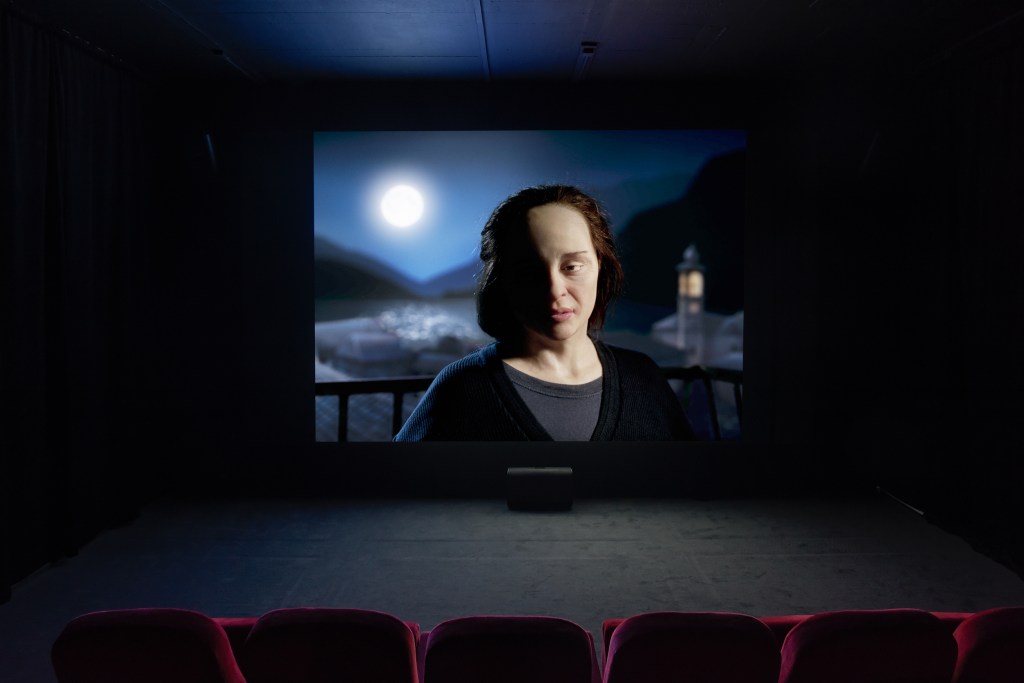
Exhibition view of the Biennale de l’Image en Mouvement 2024, A Cosmic Movie Camera, at Centre d’Art Contemporain Genève. Photo: Mathilda Olmi © Centre d’Art contemporain Genève 
Exhibition view of the Biennale de l’Image en Mouvement 2024, A Cosmic Movie Camera, at Centre d’Art Contemporain Genève. Photo: Mathilda Olmi © Centre d’Art contemporain Genève 
Exhibition view of the Biennale de l’Image en Mouvement 2024, A Cosmic Movie Camera, at Centre d’Art Contemporain Genève. Photo: Mathilda Olmi © Centre d’Art contemporain Genève 
Exhibition view of the Biennale de l’Image en Mouvement 2024, A Cosmic Movie Camera, at Centre d’Art Contemporain Genève. Photo: Mathilda Olmi © Centre d’Art contemporain Genève 
Exhibition view of the Biennale de l’Image en Mouvement 2024, A Cosmic Movie Camera, at Centre d’Art Contemporain Genève. Photo: Mathilda Olmi © Centre d’Art contemporain Genève