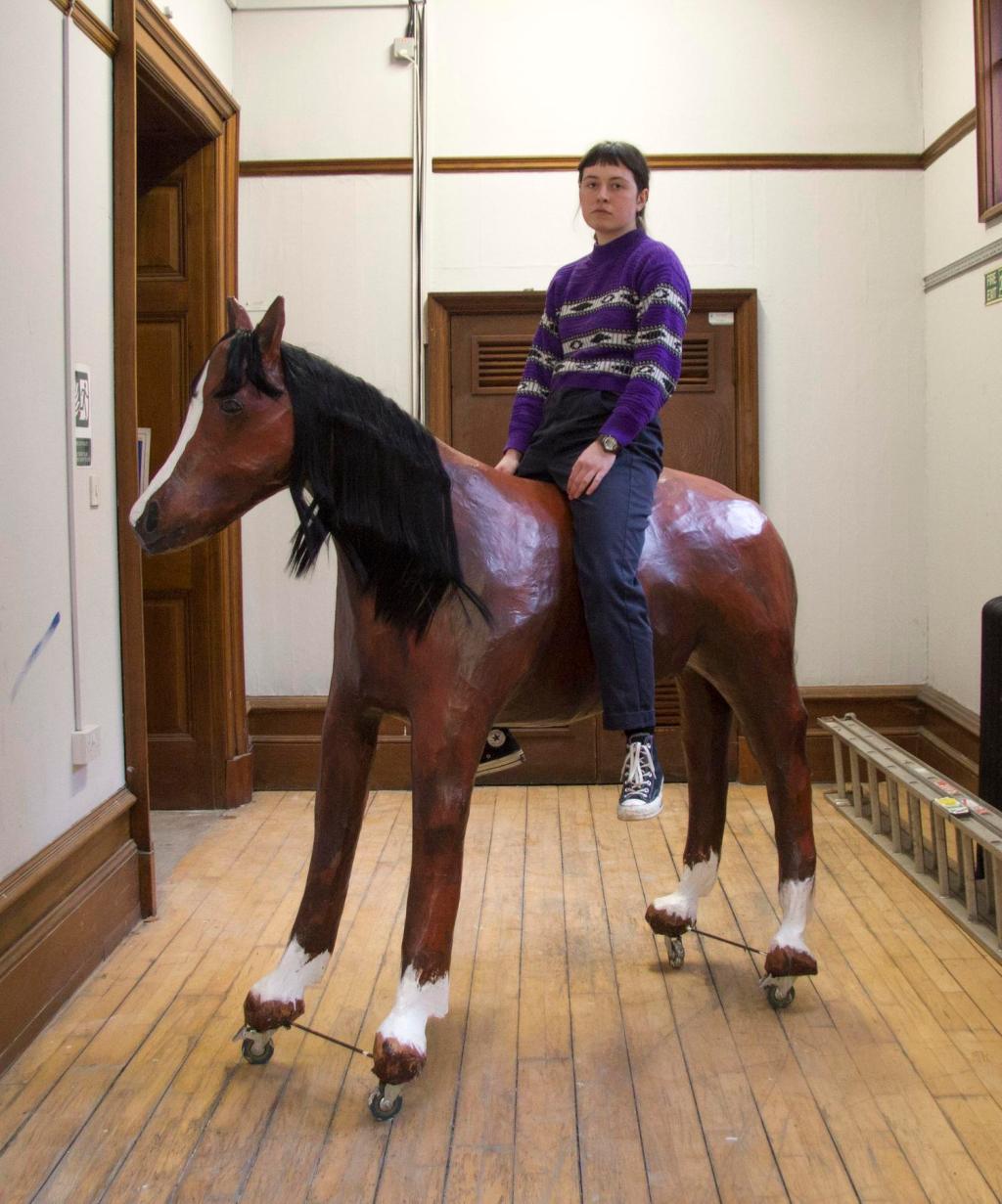
On the occasion of the opening of the exhibition “Slow Manifesto” at A plus A Gallery in Venice, curated by the participants of the 32nd edition of the Course in Curatorial Practices and Contemporary Arts at the School for Curatorial Studies Venice, we interviewed Esther Gamsu, one of the artists featured in the show.
Concluded on 15 July 2025, the exhibition Slow Manifesto at A plus A Gallery in Venice explored the theme of desire through works capable of challenging the boundaries between authenticity and manipulation. In a world saturated with stimuli, the exhibition invited visitors to slow down and reflect as a revolutionary act ‒ stepping away from external conditioning and reclaiming the right to cultivate authentic desire.
Within this context lies the work of Esther Gamsu (Sheffield, 1995), who investigates the construction of identity through the culture we consume, particularly through the public figures that populate our collective imagination. Using an ironic and multilayered approach, the artist deconstructs pop myths, childhood memories, and media references, offering new readings that bring awareness. In Venice, she presented Bugsy Malone, a work that explores the construction of identity and the pervasive influence of celebrity imagery, filtered through humor and personal reinvention.
THE INTERVIEW WITH ESTHER GAMSU
Your work is often characterized by humor. Is this a conscious choice or does it arise spontaneously from the way you observe the world?
Humor is very important to me both in my everyday life and in my work. I am interested in how we use humor as a tool; to relate to others, to shield ourselves, to cope with difficult situations. I employ humor in my work for many different reasons; to explore shame, to approach difficult topics or memories, to relate to and engage with an audience. For me humor is a way of opening things up, and bringing people together.
In your work, you draw on personal and collective references, from childhood fears to pop myths. How do you choose the elements that enter your pieces?
I’m interested in how our identities are built from the culture we consume. In a way I’m often working backwards, attempting to reclaim the pop culture that has shaped me. The objects and images I use are not always conscious choices: they are often materials that have been with me for a long time and arouse in me an instinctive sense of belonging.
What drives you to reinterpret famous films and musicals in your videos? Is it an act of homage, deconstruction, or something else?
Reenactment for me is a form of becoming. I started remaking famous musicals as a teenager, playing all of the parts in my bedroom in front of a green screen. I was a shy and introverted person at the time, but making these films allowed me to take on a different identity and see how it felt. They are certainly an homage, but also a way to transform existing materials into something new, personal.
THEMES OF ESTHER GAMSU‘S ARTISTIC RESEARCH
Pop figures in your art often seem to balance between icon and parody. What is your relationship with the myth of celebrity?
I grew up in the 2000s, when celebrity culture was really booming; gossip magazines, reality TV shows, TMZ. So many of my early memories are mixed in with these celebrity cultural moments ‒ Britney shaving her head, the death of Michael Jackson, etc. ‒, in a way they have become part of my own childhood.
We live in an age where everything can become a meme or a parody. How do you see the difference between your work and the satire on the internet?
Much of the time I work from the position of a fan. I’m a fan of the culture that employ in my work through appropriation and reenactment. I take the material I work with seriously, never intending to parody or poke fun at it. I’m interested in what happens when we treat “low culture” in the same way that we have been taught to engage with “high culture”.
You use recycled materials and low-fi techniques like papier-mâché and knitting. Is there a political or conceptual idea behind this choice? Or is it a way to challenge the idea of monumentality in art?
It’s twofold: on the one hand it is dictated by the limited budget ‒ I work with what I can afford, often for free. But it is also a conceptual choice: I am fascinated by DIY processes and alternative materials. For me, being an artist also means finding creative ways to work with what you have, without waiting for ideal conditions.
ESTHER GAMSU AND CURATORSHIP
You say you think about the audience only during the installation phase. How does your work change based on the exhibition space?
Working in a site-specific way is something that really excites me. I am a big fan of public sculpture and I enjoy the challenge of working in public space. I make my work in private, alone in the studio, it’s only when that work enters a public space that I start to consider how an audience might interact with it.
Have you ever collaborated with curators who have influenced the interpretation of your work? How do you see the role of curating in relation to your practice?
I’ve had a few opportunities to work with curators over the past few years. It’s an exciting feeling when you get to work with someone who shares similar artistic interests and concerns. Working with curators has helped me to further engage with and expand the conceptual scope of my own work. It’s also been a great way to connect with other artists working within similar areas of research.
And finally, why were you afraid of Michael Jackson when you were a kid?
I was 10 years old when he was on trial for child molestation, he would be on the TV all the time, surrounded by paparazzi, wearing those big sunglasses and his black hair over his face. His extreme appearance combined with the depiction of him as a monster in the press (rightly so) had a really strong impact on me as a child.
Ilona Prozorova
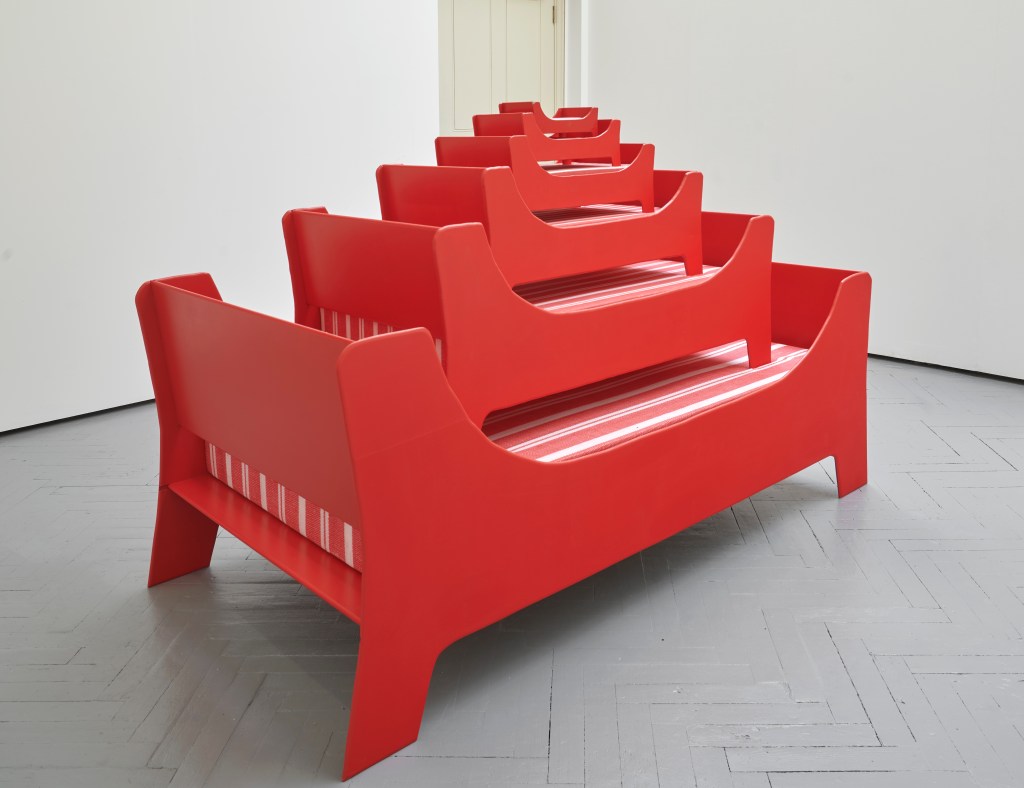
Esther Gamsu, Bed (2025), MDF, paint, glue, printed cotton, foam 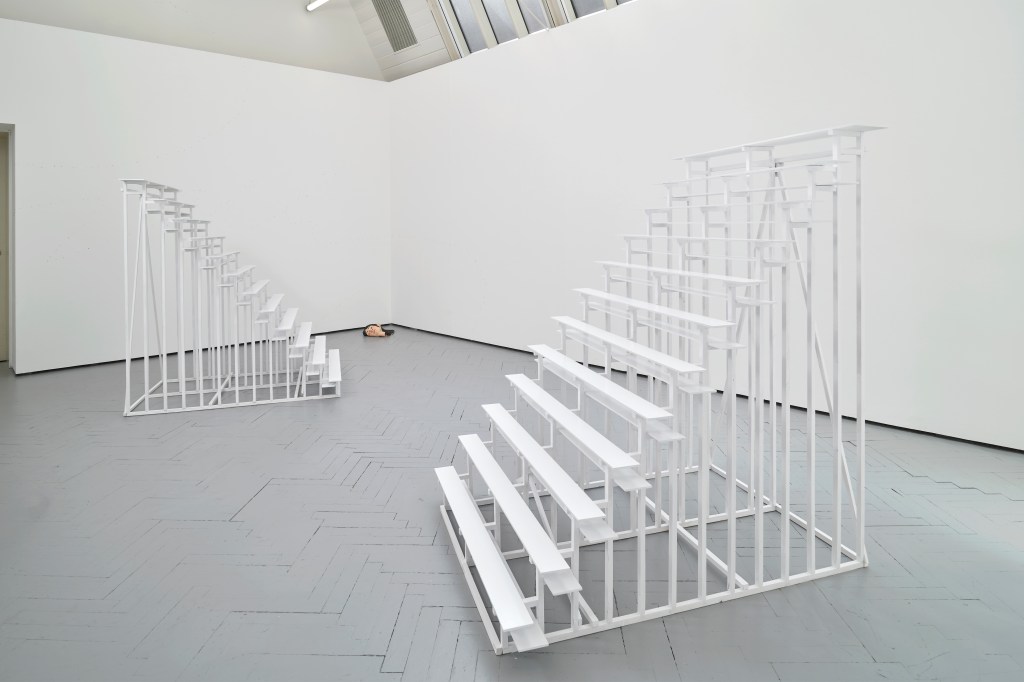
Esther Gamsu, Bleacher (2025), wood, PVA, gloss paint 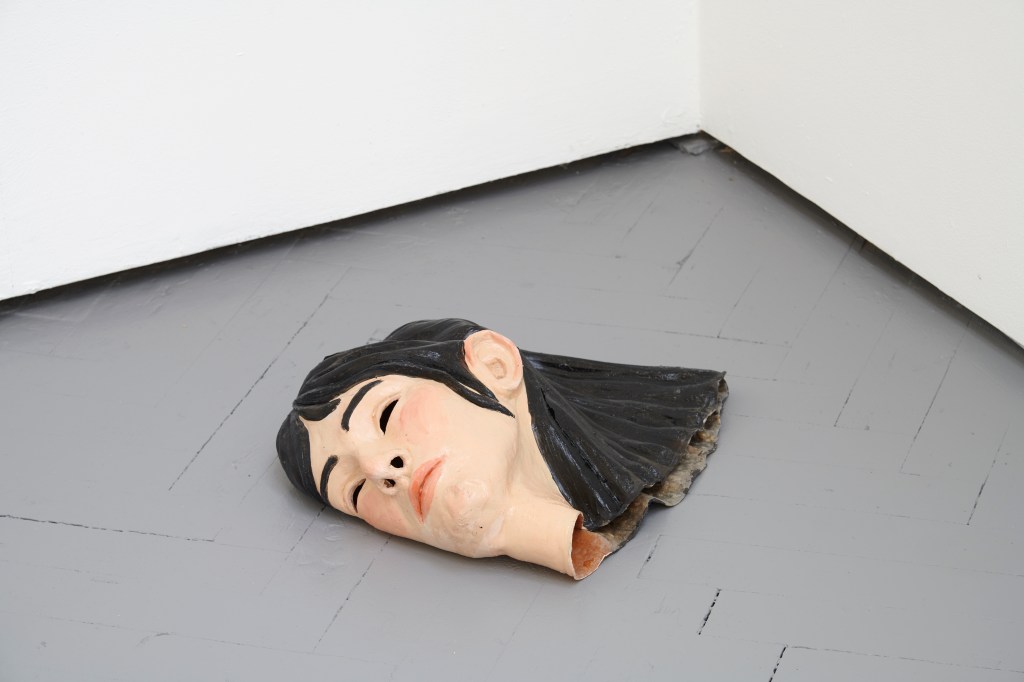
Esther Gamsu, Mask (2025), latex, acrylic paint, varnish 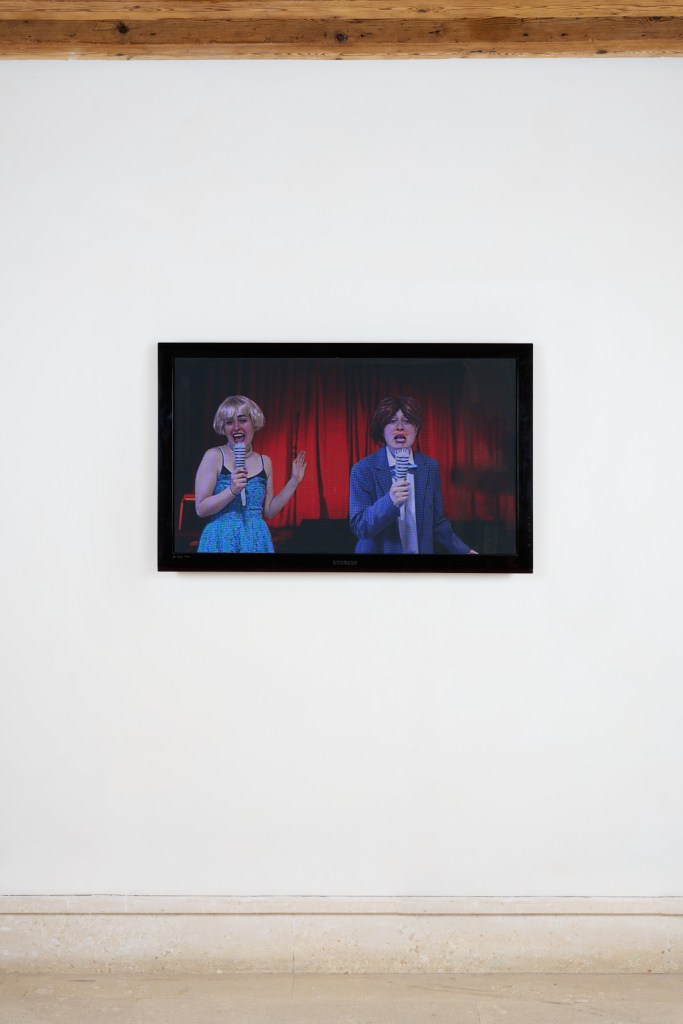
Esther Gamsu, Bugsy Malone, 2017 video, 31’. Courtesy of the artist, photo Clelia Cadamuro 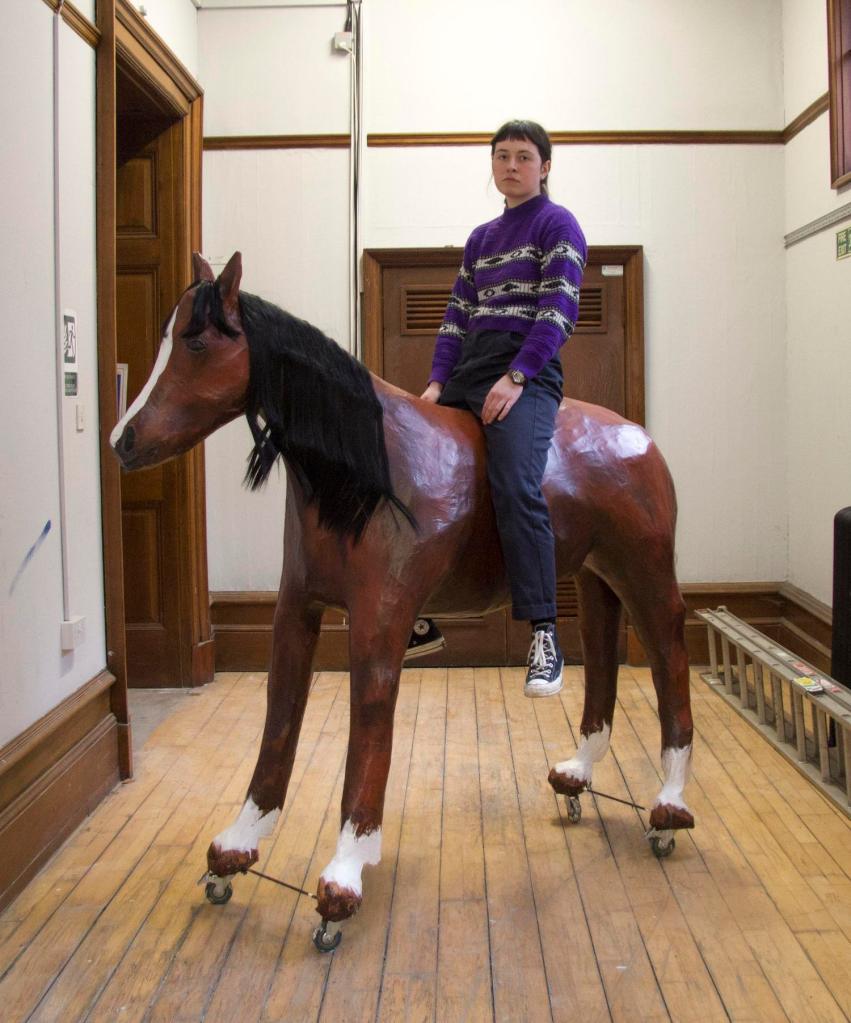
Esther Gamsu. Photo Andy Keate 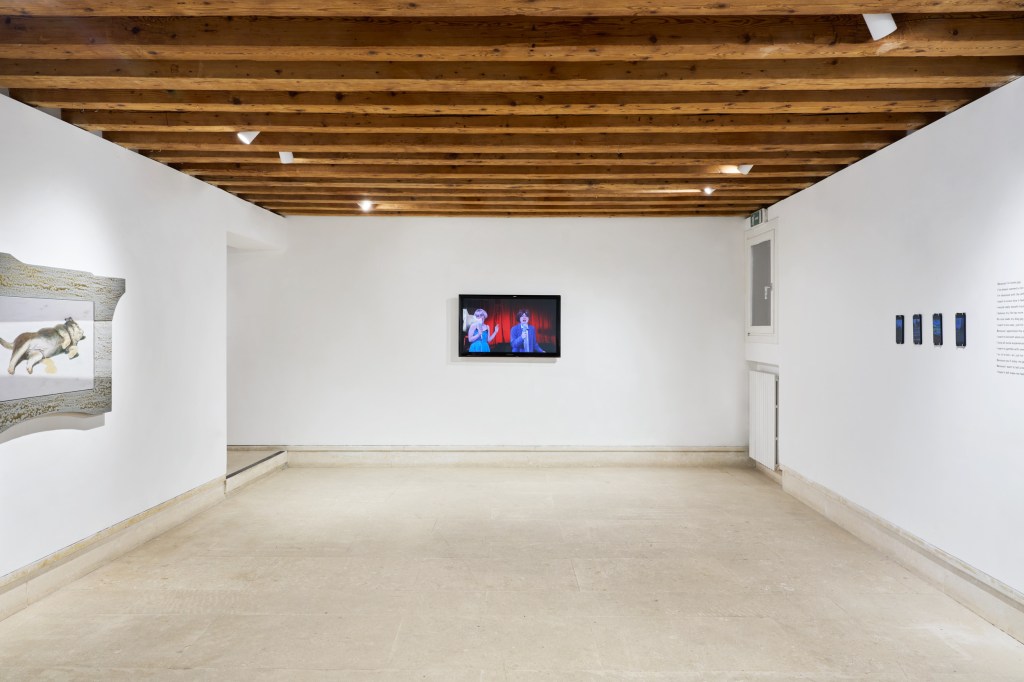
Slow Manifesto, exhibition view, 2025, School for Curatorial Studies Venice, A plus A Gallery, photo Clelia Cadamuro
Translated with AI