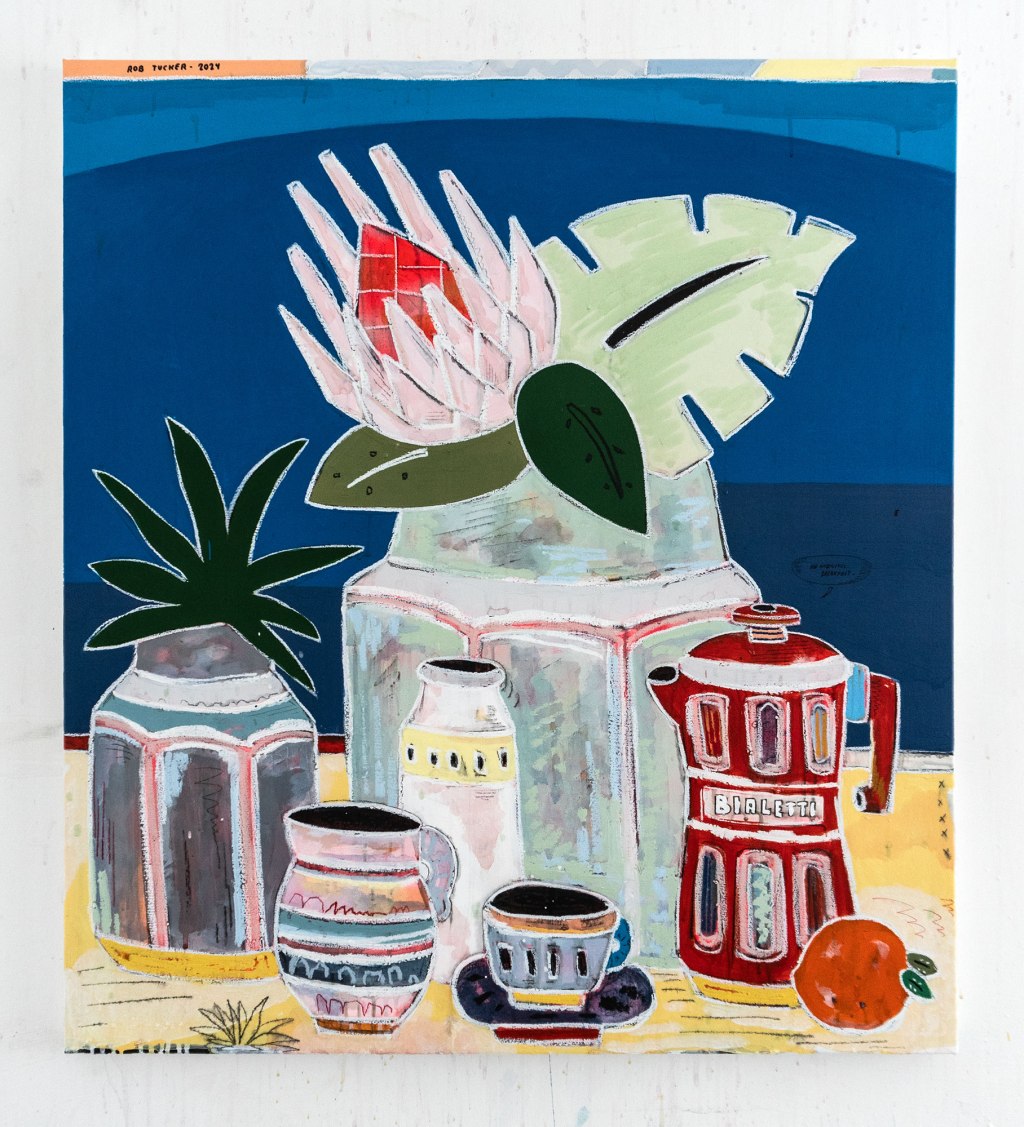
The exhibition “Perpetuate the Dreams” at 193 Gallery in Venice explored the pictorial language of the New Zealand artist Rob Tucker through neat shapes, vivid colours and a look at the 20th century.
Founded in Paris in 2018 by César Levy, the 193 Gallery promotes emerging and established artists from all over the world, with a focus on the southern scene of the globe. The venetian headquarters of the gallery, in the Dorsoduro district, hosted the solo exhibition of New Zealand artist Rob Tucker (b. 1987, Auckland) until 27 April 2025.
Perpetuate the Dreams explores the pictorial language of Tucker who, for the realisation of his works, draws inspiration from great masters such as David Hockney, Henri Matisse and Giorgio Morandi.
The artist has established himself on the contemporary scene due to his representations of still life subjects, architectures and landscapes, characterised by geometric shapes and a vivid colour palette. His canvases have been shown in group and solo exhibitions in Sydney, Paris, London and New York.
ROB TUCKER’S EXHIBITION IN VENICE
As he said: “Over time, I have refined my style and technique ‒ still lifes and figurative landscapes made with geometric shapes, simplified forms and a colorful palette. Oversized, textured and graphic, my work is an exploration of color and composition. I like to approach my subjects in a playful way, trying to achieve a whimsical, harmonious and light result”.
The main subjects of Tucker’s works are bottles, flowers pots and the iconic Bialetti coffee makers, which are present in works such One Confortable Cupa and An Ambiguous Breakfast, both dated 2024, but also industrial and architectonic elements, protagonists in Banana cake inside and The bridge before the hills, also executed in 2024 and exhibited in the spaces of 193 Gallery. In Tucker’s works the everyday objects become symbols of a hidden beauty that is waiting to be discovered by the viewer.
ROB TUCKER AT 193 GALLERY
The paintings, all large in size, invite viewers to dive in a suggestive and colourful world, interpreting still life in an unconventional way, like a lively scene. The attention is caught by a subtle detail, recurring in each canvas: a small comic strip, in which Tucker writes the title of the work.
The exhibition presented for the first time sculptures made of polyurethane foam and covered with resin, depicting coffee makers and vases. These three-dimensional works clearly echo the subjects of the canvases on display in the gallery and, as pointed out by the gallery owner Clémence Pons during our visit, Tucker himself refers to them as three-dimensional paintings and not sculptures.
Erica Garbin

Perpetuate the Dreams, 193 Gallery, Venezia, 2025. In primo piano: Rob Tucker, A Dark and Gloomy Nightcap, 2024. Installation view. Photo Credit: Elena Andreato / Courtesy: Rob Tucker 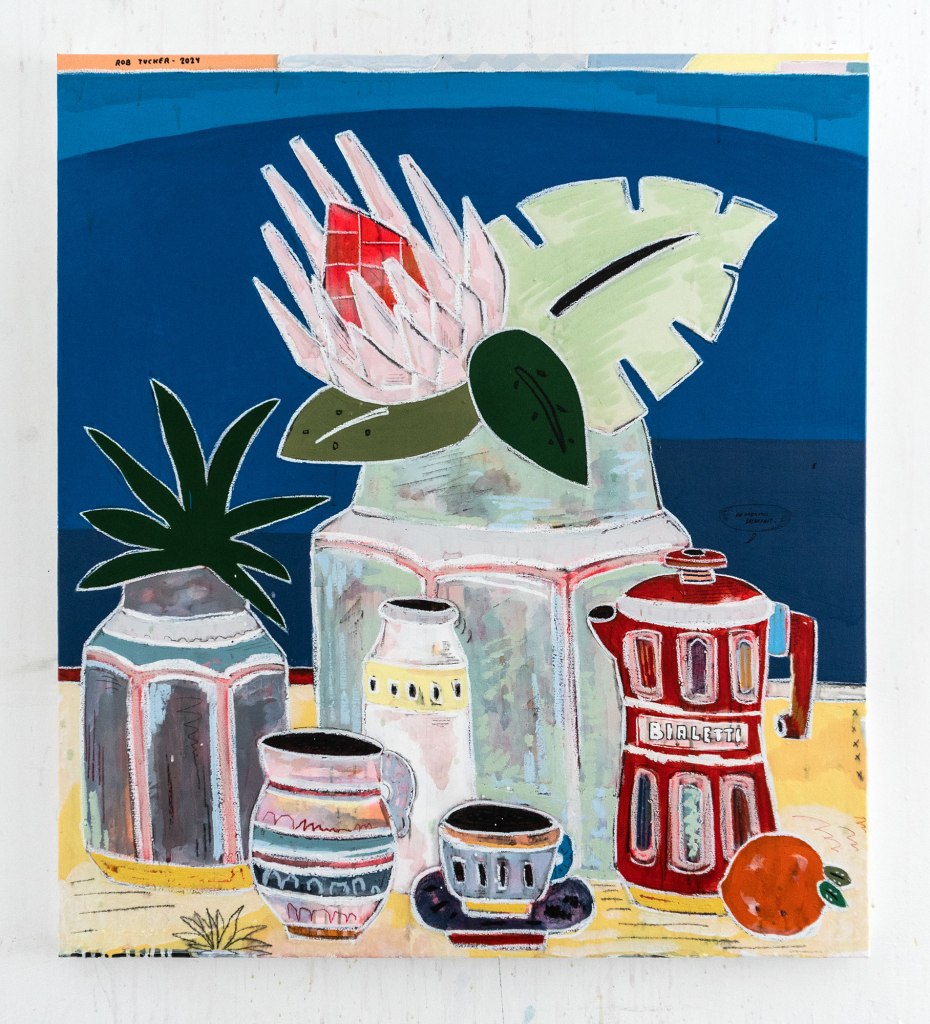
Rob Tucker, An Ambiguous Breakfast, 2024. Acrylic painting, oil pastel and stick, oil varnish, diluted dye, and water pencil with an epoxy resin finish, 90 x 100 cm. Photo Credit: Elena Andreato / Courtesy: Rob Tucker 
Perpetuate the Dreams, 193 Gallery, Venice, 2025. In the foreground: Rob Tucker, The bridge before the hills, 2024. Installation view. Photo Credit: Elena Andreato / Courtesy: Rob Tucker 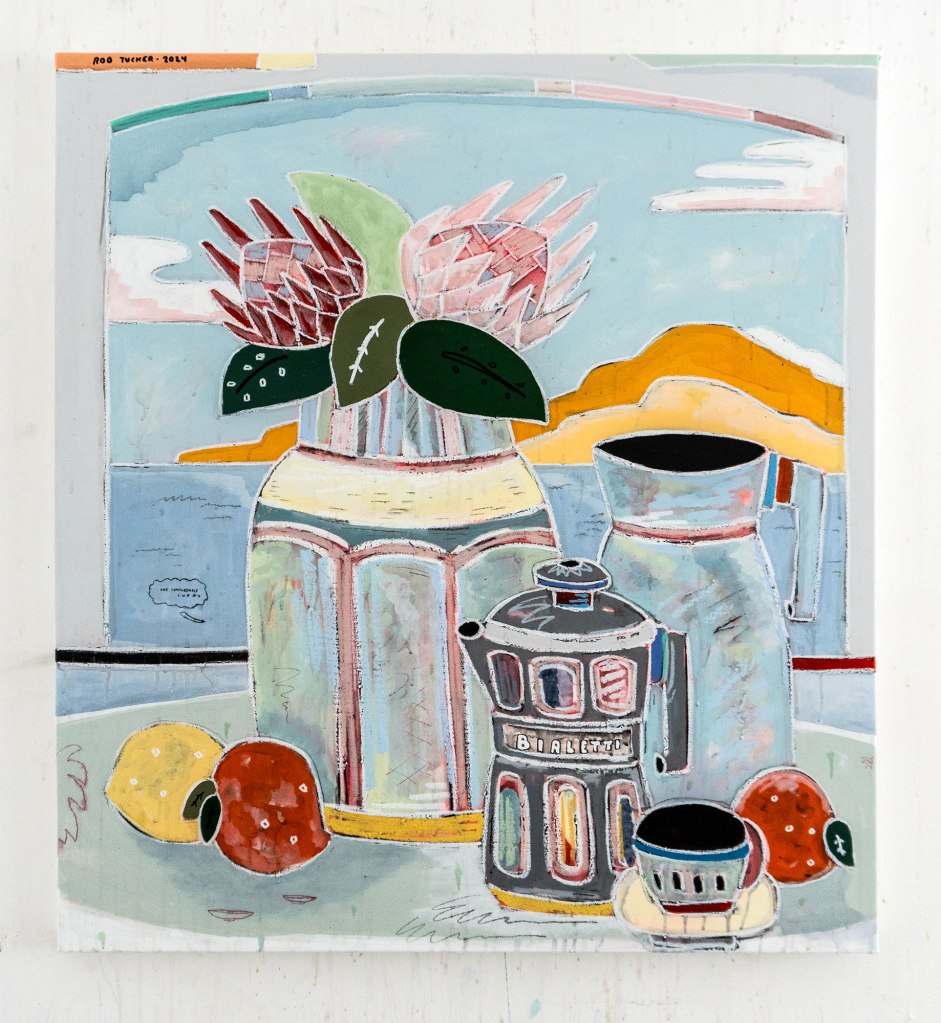
Rob Tucker, One Comfortable Cupa, 2024. Acrylic paint, oil pastel and stick, oil glaze, diluted dye and watercolour pencil with epoxy resin finish, 90 × 100 cm. Photo credit: Elena Andreato / Courtesy: Rob Tucker
Translated with AI