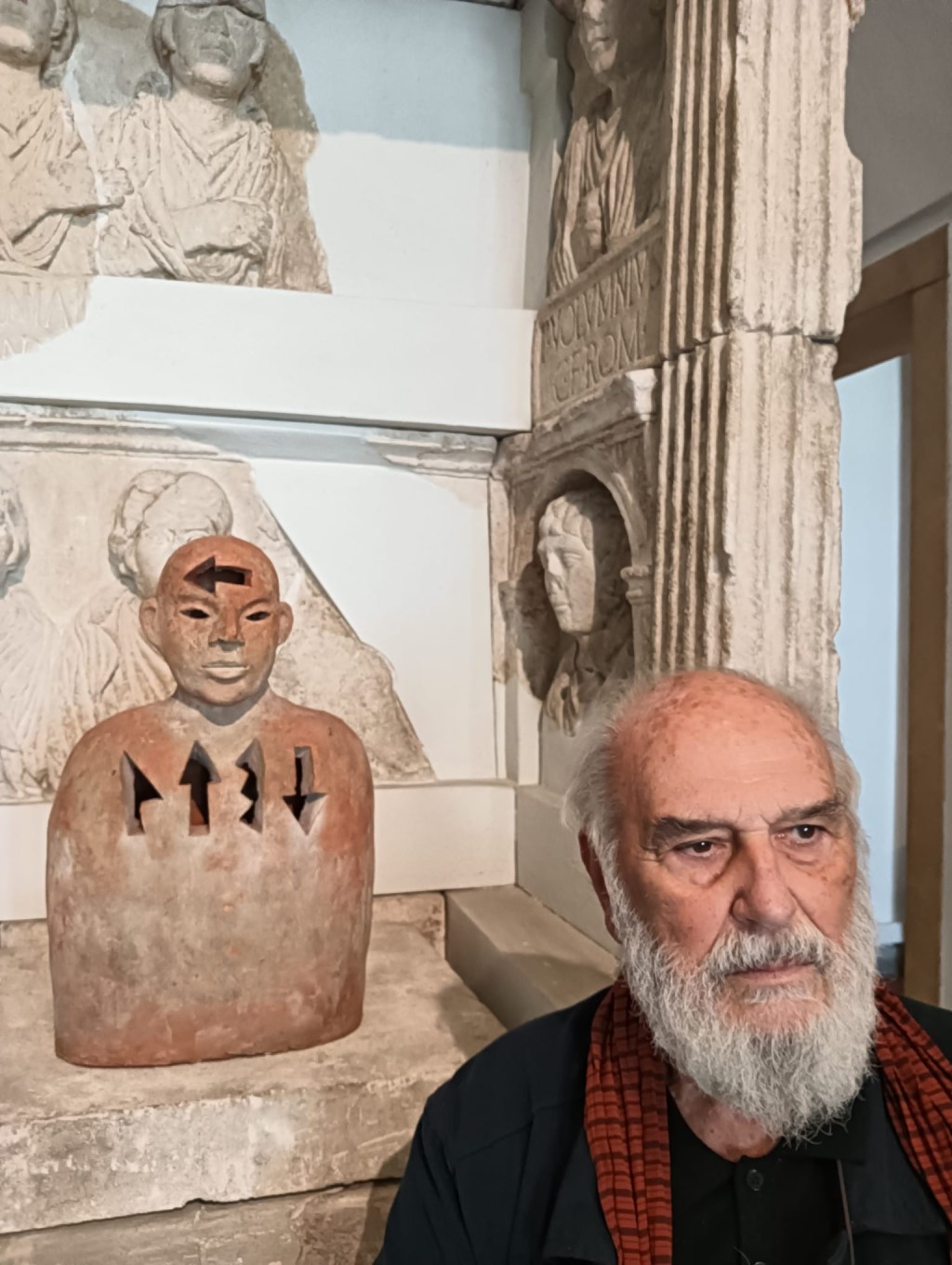
On the occasion of Elio Armano’s eightieth birthday, the Archaeological Museum in Padua hosted, until 6 April 2025, an exhibition dedicated to one of the most influential sculptors of the contemporary scene.
The earth, in its purest essence, becomes art in the hands of Elio Armano (Padua, 1945).
Terrestre is not only the material from which his sculpture comes to life, but it is also the deep root of a civic and artistic commitment that spans decades of research and innovation. In the anthological exhibition curated by Stefano Annibaletto and Francesca Veronese, terracotta becomes the thread of a dialogue between past and present that is renewed in the rooms of the Archaeological Museum in Padua.
Each work of Armano is a piece of land that tells stories and reveals a sculpture that is not only form, but an act of social and political reflection. Among the archaeological finds, his creations emerge not as mere copies of the past, but as modern interpretations, full of meaning and life.
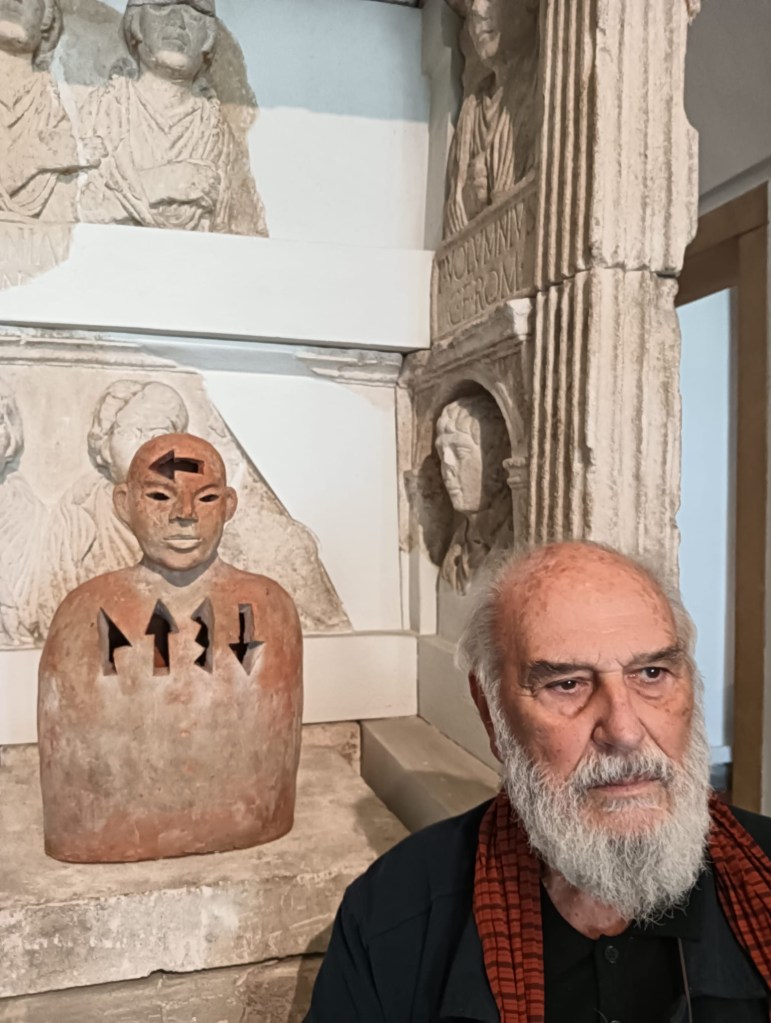
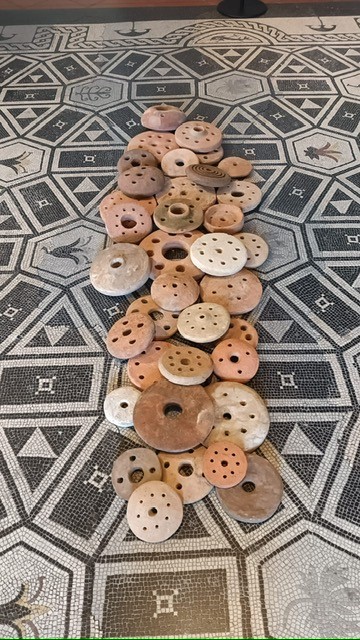
The exhibition has been developed in the rooms of the Eremitani Museum, where the sculptures of Armano have integrated harmoniously with the archaeological context in which they were inserted. His terracotta works, which evoke the craft tradition, were related to ancient finds, creating visual and conceptual connections between different eras.
ELIO ARMANO ON SHOW IN PADUA
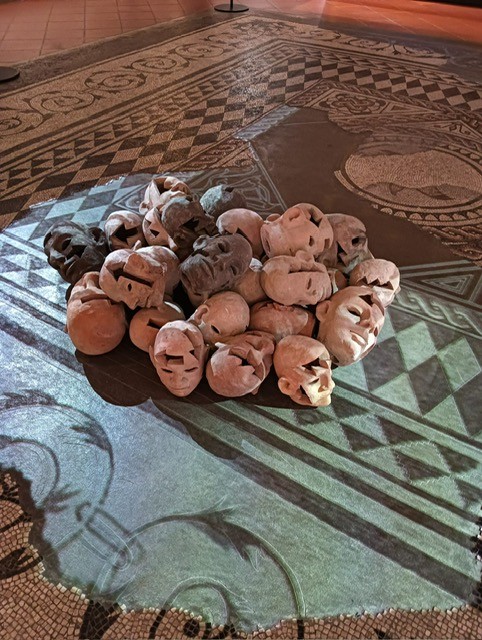
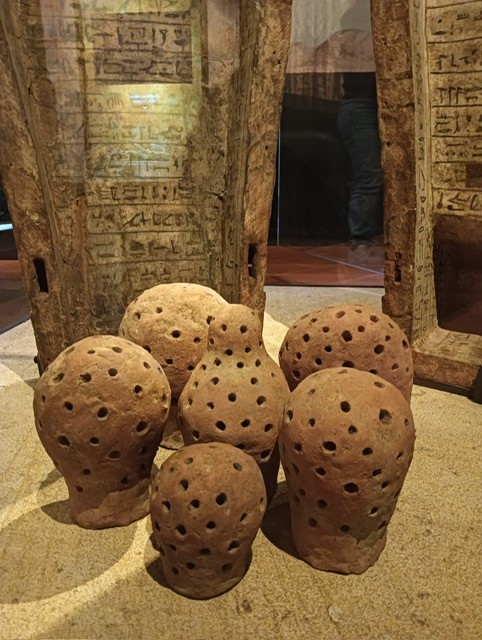
The exhibition retraces the artistic evolution of the sculptor, through a selection of works belonging to the different phases of his artistic research. Among the most significant are the Giardini in scatola made in the 1970s, small landscapes enclosed inside perspective boxes inspired by the painting of Francis Bacon. Once in the Mosaic Hall, we encountered the Teste forate and the Bottoni cosmici, works that move on the borderline between figuration and abstraction, exploring themes related to identity, perception and the human-universe relationship.
The installation that matched Armano’s work with the Mesopotamian statuette of Uruk (IV millennium B.C.) exalted the sculpture as a timeless language, able to bring together the interventions of the contemporary artist and the precious archaeological evidence.
Armano’s work reflects his openness to different artistic traditions, from African and pre-Columbian sculpture to the visual vocabulary of Henry Moore. His works are never mere aesthetic objects, but vehicles of a social and political message that has its roots in a civil and public dimension, as shown by his vision of sculpture as an integral part of the urban environment.
Valeria Eneide
https://padovamusei.it/it/eventi-e-mostre/elio-armano-terrestre
Translated with AI