A new episode of our series dedicated to museums embracing art, particularly contemporary art. This time, we talk about MUSE – the Science Museum in Trento: an offshoot of the century-old Trento Civic Museum of Natural History, it has, in recent years, taken on a key role in the contemporary art scene, thanks to its research programmes, open calls and exhibitions.
“The function of a natural history museum is first to increase and then to disseminate scientific knowledge”. This quote from James Smithson, founder of the Smithsonian Institution, features on MUSE’s platforms and encapsulates the museum’s approach adopted by the Trentino-based institution. MUSE – the Science Museum in Trento presents itself as a centre for research through selected guests, collaborations, projects and open calls. This research is communicated to the public in a clear, interdisciplinary and accessible manner. The museum network now comprises six affiliated venues, exemplifying a dense web of collaborations woven across the region. Within these spaces, each with its own distinct character, the results of research are conveyed through exhibition programmes. This is how the Science Museum places rigorous scientific practice at the service of cultural enrichment, with a view to generating knowledge whilst remaining open to the surrounding realities. The promotion of culture championed by MUSE, particularly through initiatives focused on contemporary art, is effective because it is multifaceted and far-reaching. Through interdisciplinary and targeted projects, the Science Museum has built a genuine art ecosystem comprising open calls, residencies, publications and exhibitions.
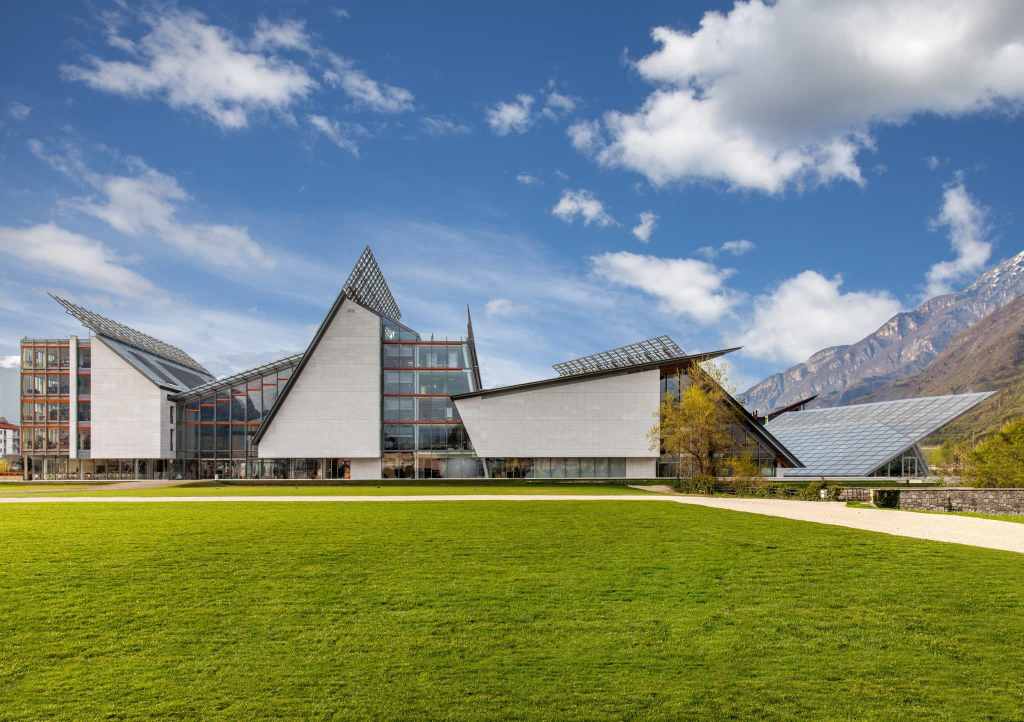
THE COLLECTION AND RESEARCH AT THE MUSE IN TRENTO
The Anthropocene programme was launched in 2020 and is structured as a research initiative addressing urgent ecological issues, developed through transdisciplinary approaches. The aim is to stimulate debate by adopting a scientific perspective blended with artistic elements. Anthropocene draws on the creative output of We Are The Flood. A fluid platform, as its curator Stefano Cagol describes it, conceived by the Trento Science Museum, which, by fostering a dialogue between art and science, presents itself as a New Bauhaus, where archival and curatorial dimensions coexist.
The project proves effective in both method and content: as well as raising awareness of the present, thanks to the open call it ensures the participation of emerging artists and the subsequent staging of exhibitions within the museum, triggering exchanges and experimentation both within the museum and beyond its walls.
The collection, established as part of the project and the Plan for Contemporary Art (PAC) 2022-2023, is the first in Italy to focus on the theme of the Anthropocene. Launched with an initial core of fourteen works, the collection has expanded over the years to embrace transdisciplinary practices and languages to explore today’s ecological issues.
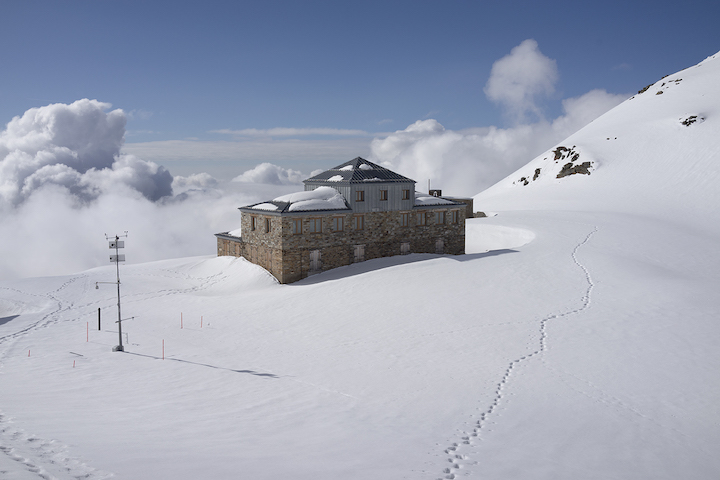
Laura Pugno’s work fits well within the extensive network of collaborations promoted by MUSE. Over Time is one of the winning projects of the Italian Council 2020, now part of the Anthropocene collection but initially conceived for the Post-Water exhibition, hosted by the Museo Nazionale della Montagna in Turin. The artist, interested in landscape as a cultural product, had presented a reflection on the form and memory of snow at the Turin museum, exhibiting, in 2018, a few snow casts in Jesmonite. Andrea Lerda, curator of the Sustainability programme at the Museo Nazionale della Montagna, describes the work that has entered the MUSE collection as follows:
“The Overtime project set out to explore our historical and ancestral relationship with the imagery of winter and snow, and how this might change because of global warming. It examined how the decline in snowfall might lead to a loss of connection with this deeply romantic world. Thus, with the involvement of the scientific community, Overtime was born. Laura conceived this three-channel video installation, one channel of which was filmed at the Oasi Zegna (Biella), another at the Angelo Mosso Institute (located on the Passo dei Salati, in the Monte Rosa massif, Vercelli) and the third at the synthetic snow production facility near Cremona. This dystopian imagery has been distilled into these narratives, and the video was presented with a soundtrack composed by sound artist Magda Drozd, who accompanied the artist throughout the recording process, sampling the sounds of snow”.
The transdisciplinary and open-ended approach underpinning Anthropocene is confirmed by its residency programmes, such as the one launched in 2022 with the participation of Mary Mattingly, and by its editorial focus, with the publications of We Are The Flood – including the latest from postmediabooks.
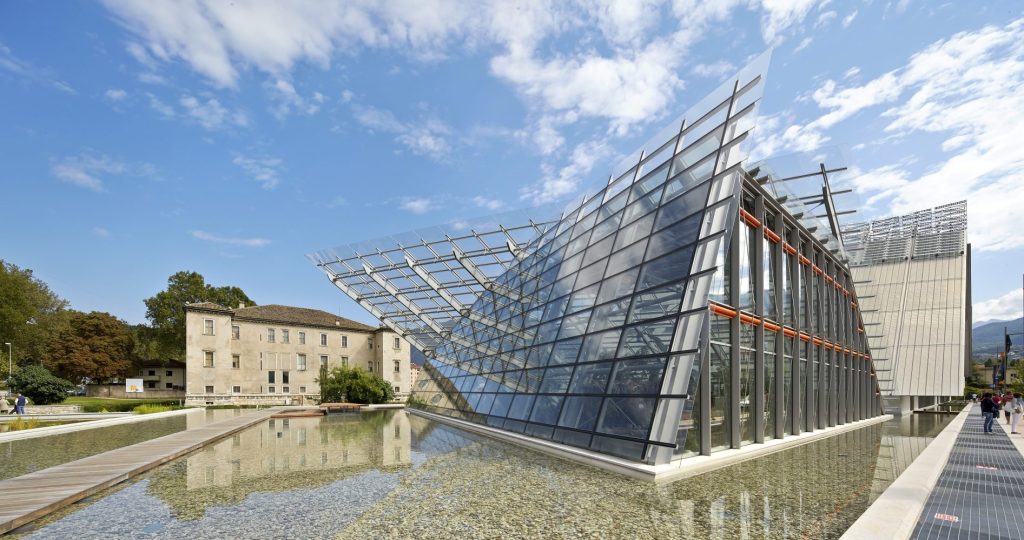
THE VENUES OF MUSE
The various exhibition spaces and partner venues across the region, each dedicated to specific exhibitions and projects, reinforce the system established by MUSE. The museum’s collection is displayed within the glass-fronted building designed by Renzo Piano with a strong focus on environmental sustainability, evident in the materials used and the building’s relationship with its surroundings. The MUSE building engages in dialogue and interacts with the Palazzo delle Albere, another exhibition venue within the museum circuit dedicated to historical exhibitions.
Until 13 September 2026, the Renaissance palace provides the setting for The Power of Machines. Humanity, Environment, Technology in 16th-Century Trentino, the exhibition that reaffirms, once again, the close bond between the museum and the local area.
Among the various venues with which MUSE maintains a partnership, Castel Belasi is particularly noteworthy: the contemporary art centre directed since 2023 by Stefano Cagol, housed within a medieval castle in the municipality of Campodenno (Trento). Castel Belasi showcases not only diverse media and artistic languages, but also established and emerging artists who contribute to the evolution of a coherent and comprehensive system.
Fragile. A Selection of Glasstress, curated by Sandrine Welte and Adriano Berengo, the result of a collaboration with Berengo Studio in Murano, presented an exploration of the ambivalence of glass – its interplay of strength and fragility – through the work of artists such as Erwin Wurm, Ai Weiwei, Mimmo Paladino and Thomas Schütte, whilst From the Anthropocene to the Biocene brought together in the project room nine artists under 35 from the masterclass organised by the museum. In this way, works by internationally renowned artists and emerging research within the museum converge in the same spaces, layering the MUSE’s levels of interest in contemporary art and integrating into the exhibition programme of Castel Belasi.
Considering the projects analysed and the fruitful relationships forged by the museum, it is possible to confirm the validity of the initial slogan: MUSE occupies a space at the intersection of knowledge production and participatory dialogue with society, raising awareness of current urgent issues and disseminating knowledge rooted in both the scientific and artistic spheres.
Rebecca Canavesi
MUSE ‒ The Science Museum in Trento
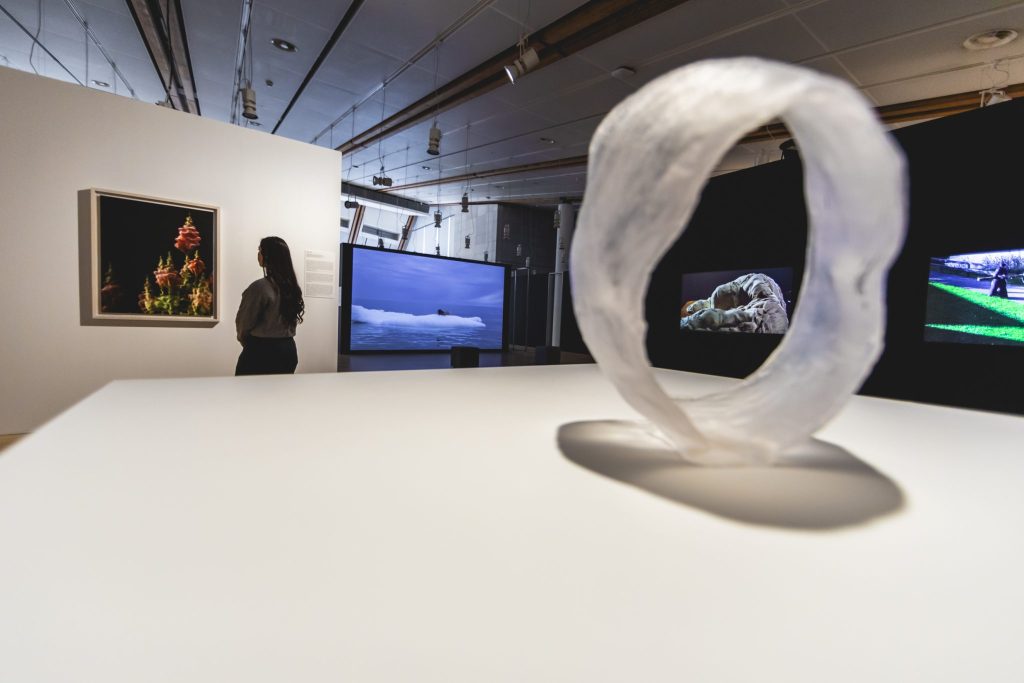
Anthropocene Collection. Courtesy MUSE Archive. Photo Michele Purin 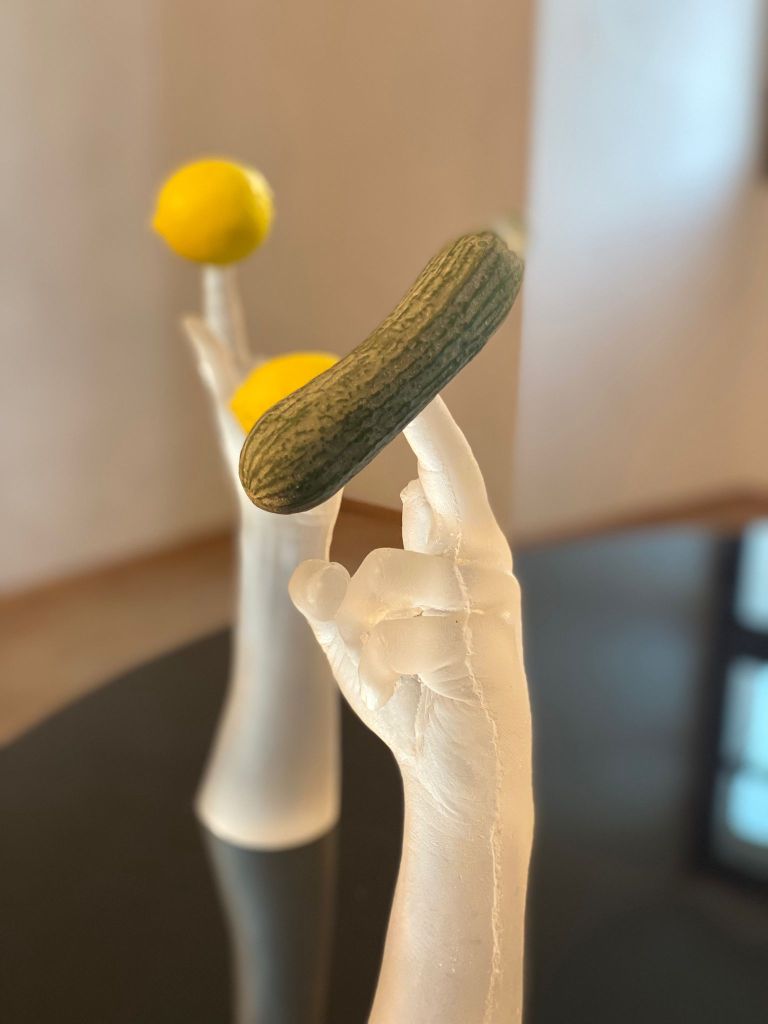
Erwin Wurm, Iced Pickle Tree (detail). Fragile. A selection of Glasstress. Photo J.B. Musick Laura Pugno, Over Time, 2021. Documentation, video footage, Passo dei Salati. Photo Laura Pugno 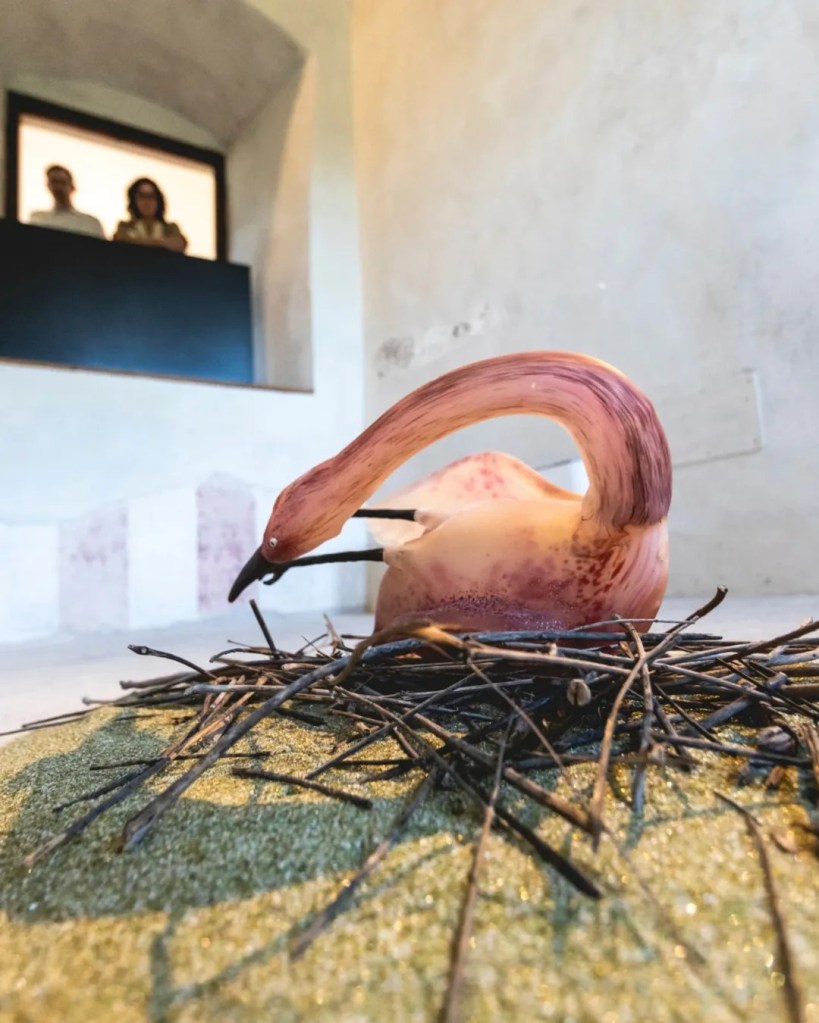
Fragile. A selection of Glasstress, exhibition view. Courtesy MUSE Archive. Photo Michele Purin MUSE. Courtesy MUSE Archive. Photo Roberto Nova 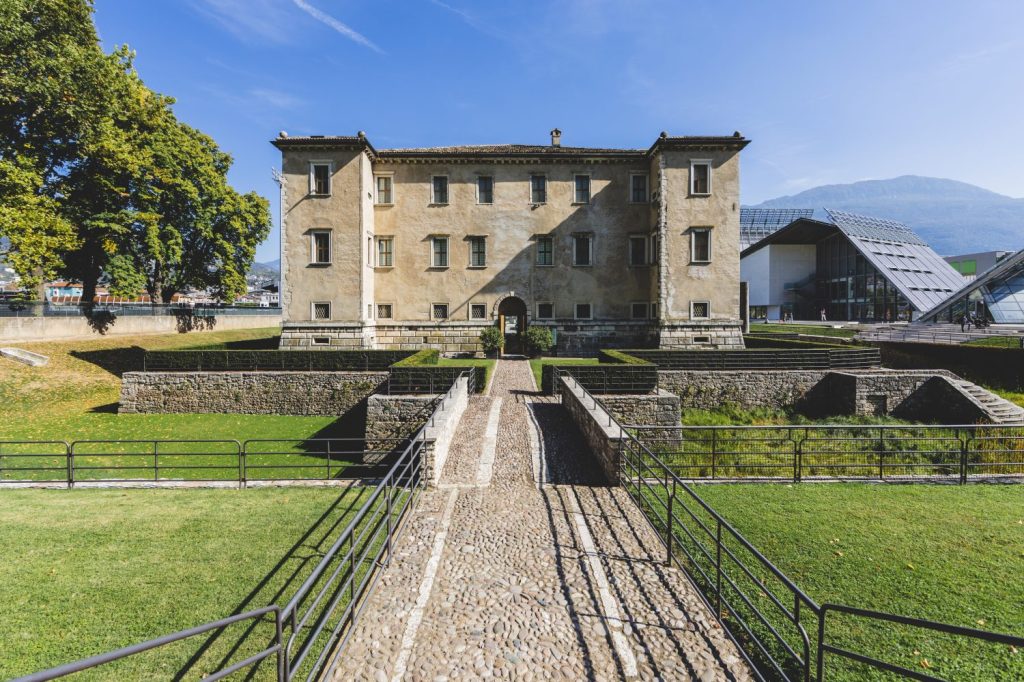
Palazzo delle Albere. Courtesy MUSE Archive. Photo Michele Purin 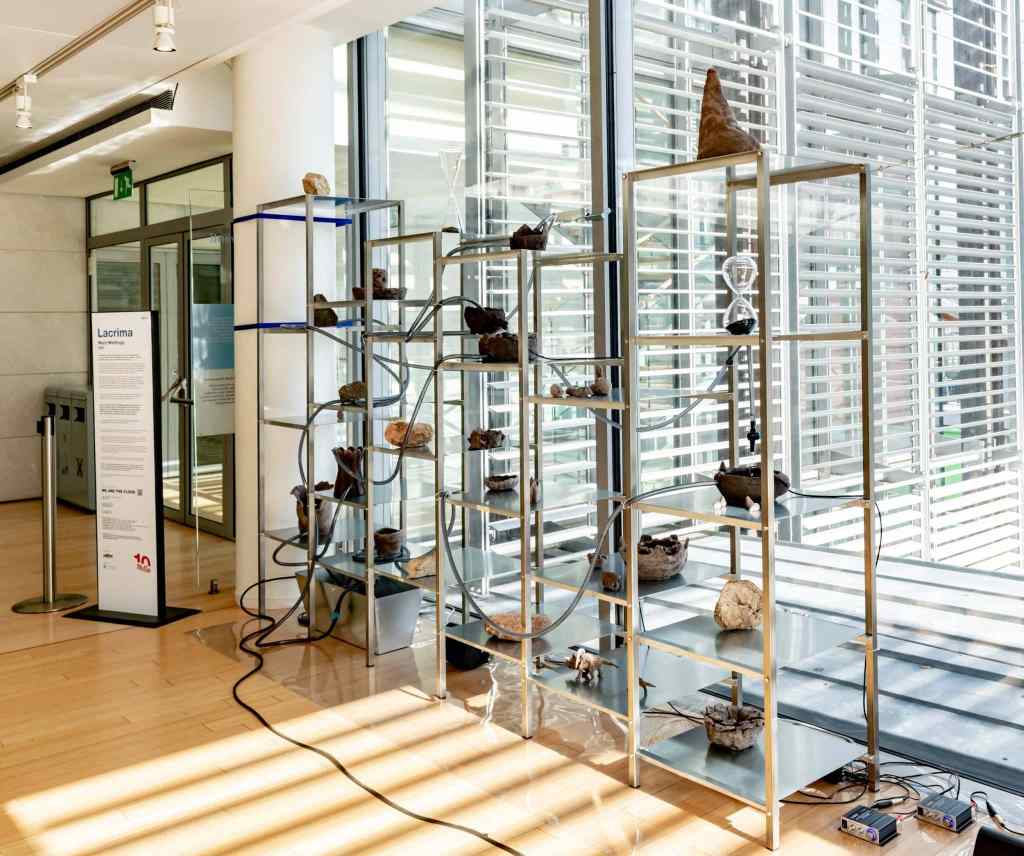
Mary Mattingly, Lacrima, 2023. Courtesy MUSE Archive Palazzo delle Albere and MUSE. Courtesy MUSE Archive
The text has been translated in English using AI
 c plus c