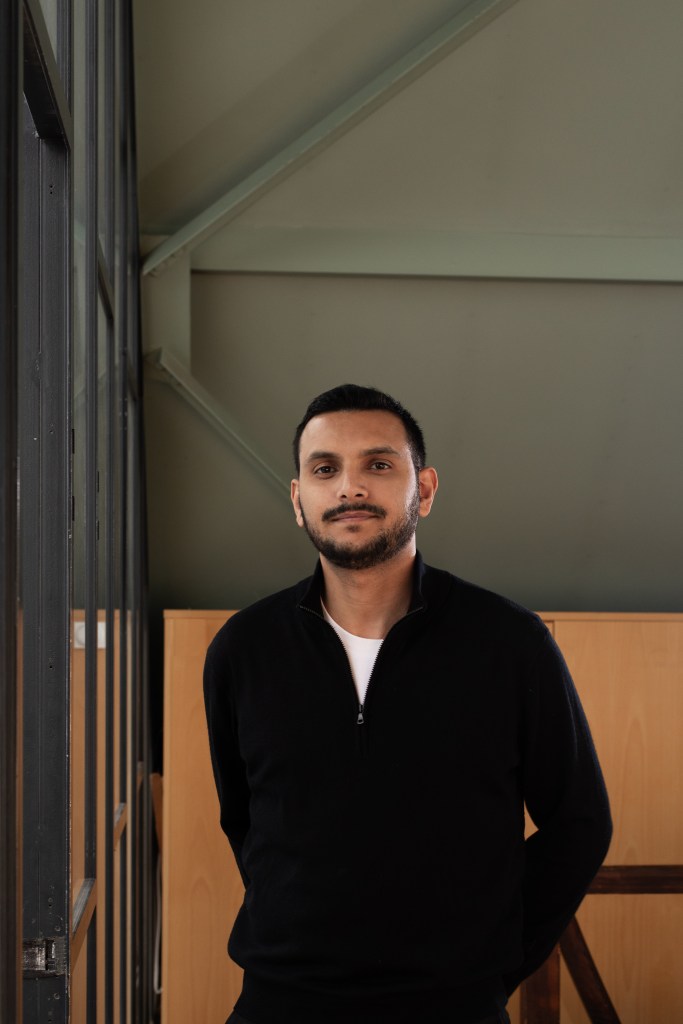
Mohamed Almusibli has been appointed director of Kunsthalle Basel at the age of 33. He previously worked as a consultant for Amsterdam’s Hartwig Art Foundation and is also the co-founder and curator of the independent artist-run space Cherish in Geneva. Throughout his career, he has consistently emphasized the importance of independent cultural spaces and community-building.
In March 2024 Mohamed Almusibli was appointed director of Kunsthalle Basel, one of the most influential institutions in Switzerland, becoming one of the youngest directors in the museum’s history. Known for his community-based approach and his background as an artist-as-curator, he is considered one of the most promising figures in contemporary curatorial practice. In this interview, we discussed how he brings these principles into the framework of a major institution, how he envisions Kunsthalle Basel as a welcoming space for both artists and audiences, and how he navigates the dynamics of the Basel art scene and its connections with international art fairs.
THE INTERVIEW WITH MOHAMED ALMUSIBLI
You are known for your artist-based approach and for working outside institutional frameworks ‒ as an artist yourself and as a co-founder of Cherish in Geneva. What elements of these practices have you been able to bring into a large institution like Kunsthalle Basel, and what had to be reconsidered? What challenges did you encounter in this transition?
At Cherish, we literally lived in the space where we made exhibitions. That changes everything about how you think about art and hospitality. The works weren’t chosen to fit an institution; the institution shaped itself around the works and the people. That principle, putting the artist genuinely at the centre, is something I’ve carried directly into Kunsthalle Basel.
What had to shift was my relationship with pace and structure. Eight exhibitions per year is a real challenge; at Cherish, we had the luxury of time and improvisation. Here, decisions have consequences for my team, our audience, our artists, and our supporters. I’ve had to learn to be rigorous without losing spontaneity. It’s a transition I’m still navigating, and I’ve come to see that ongoing process not as a weakness, but as part of what keeps the work honest.
What role do networking and community-building play in your curatorial practice? At Cherish, you and your colleagues aimed to create a space that was comfortable not only for artistic production but also for living inside this space. Do these values still guide your work within an institutional context today?
Absolutely, though they take a different shape. My goal has always been to establish the institution as a host, as a place where people and artworks feel comfortable. That was true at Cherish, and it’s just as true here.
What I’ve come to understand is that community-building at an institution requires more intentionality. At Cherish, it happened organically because we were living there. At Kunsthalle Basel, I had to be more proactive, building real relationships with the local scene, art students, the audience, and the artists. My first exhibition, Regionale 25, which I curated from the start, was very exciting because it gave me the chance to meet local artists and visit their studios. It was the ideal way to immerse myself in Basel’s art scene.
Many major museums and institutions operate under constant financial and institutional pressure and are often expected to produce blockbuster exhibitions. How do you balance your alternative, artist-centered approach with the budgetary and structural demands of a large institution in practice?
What is special about Kunsthalle Basel is that it puts artists at its centre, and I believe that when you do that well, audiences feel it.
We don’t have a collection. We can’t rely on a Monet to fill the room on a slow Tuesday. Every exhibition has to earn its own attention. That’s actually a freedom; it means I’m never programming around what we own, only around what I believe matters right now. My response to financial pressure is not to dilute the programme, but to be precise about it. I’ve had to become comfortable with fundraising; what matters is that the programme shapes the budget, not the other way around.
MOHAMED ALMUSIBLI’S CURATORIAL APPROACH
Basel, much like Venice, is strongly shaped by one major annual event ‒ Art Basel ‒despite a vibrant cultural life throughout the year. How does this rhythm affect your work as a curator and the programming of Kunsthalle Basel? Do you align exhibitions with the Art Basel calendar, or do you deliberately position the institution independently from it?
Both, honestly, but not in equal measure. Art Basel brings an extraordinary concentration of people who care deeply about art to this city, and it would be foolish to pretend that doesn’t create an opportunity. I must say that I first underestimated how vibrant Basel is! I expected something quiet and cosy, but since arriving, there has always been something happening. Art Basel is part of that energy, not separate from it.
That said, Kunsthalle Basel’s programme follows its own logic year-round. We are not a satellite event. If something in our programme aligns with Art Basel week, it’s because it’s the right moment for that work, not because we timed it to the fair calendar. The rest of the year, we have a loyal, critical, engaged audience in Basel, and they deserve a programme that treats them as the main event, not the warm-up act. For me, every exhibition is an Art Basel show :)
Together with Cherish, you have also participated as a curator in art fairs such as artgenève, Art Monte-Carlo, and Paris Internationale. How do you relate to the commercial side of the art world today? Do you see it as a necessary skill, a separate field of experience, or primarily as a platform for direct dialogue with collectors?
I don’t think you can be a credible curator today without understanding the market, not because you should serve it, but because you need to know how it operates in order to navigate around it when necessary. My experiences at artgenève or Paris Internationale taught me that an art fair is not a monolithic commercial space. There are real conversations happening, real risks being taken by some galleries, and real discoveries to be made.
What I bring into those contexts is the same curatorial stance I have everywhere else. The artists I’ve worked with, like Ser Serpas, whose work I’ve loved watching evolve since we first did a show together in 2019 at Truth and Consequences in Geneva. I choose Ser because I believe in what she’s doing, not because of her market position. And I think collectors respect that.
MOHAMED ALMUSIBLI’S PERSPECTIVE ON THE KUNSTHALLE BASEL
Historically, Kunsthalle Basel has served as a platform for emerging artists. How do you continue this tradition today? Through which activities and projects?
Kunsthalle Basel has an over 150-year tradition of identifying and showcasing artists before they achieve widespread recognition. Working with artists at pivotal moments in their careers is a privilege and a responsibility. I cannot promise that every artist shown will become a star, but if you’re willing to accept the risk, you’re in the right place. That’s the commitment.
In practice, it means staying close to emerging practices; through studio visits, through the schools, through my network around the globe. Marie Matusz is a great example: a young French sculptor working with transparency and materiality in really compelling ways, who had a show at Cherish and whose back wall project at Kunsthalle Basel I was very much looking forward to. That kind of continuity, following an artist across different contexts and scales, is how I try to nurture practices rather than just present them.
Recently the figure of the artist-as-curator have become more widespread. Your experience represents perfectly this phenomenon. Would you say that your work as curator, as well as a director, is an extension of your artistic views?
Yes, fundamentally. I consider myself a good observer, and I think that quality stems from my experiences as an artist and from spending a lot of time around other artists. You learn to look slowly, to notice what’s not being said, to understand what a work needs rather than what you want from it. That attention is what I bring into every exhibition.
But I’m also honest about the limits of the idea. Being an artist doesn’t automatically make you a better curator – it makes you a different kind of curator. What it does give you is a genuine understanding of vulnerability: what it means to put work into the world, what’s at stake in an exhibition for the person who made it. That changes how I work with artists, how I listen to them, and ultimately what ends up in the room.
Looking ahead, what do you see as your main priorities, and perhaps risks, over the next five years, not only as a director, but specifically as a curator?
My priority is straightforward: to make Kunsthalle Basel genuinely necessary. Not institutionally necessary, it already is that, but culturally necessary. A place that people feel they need to visit because something is happening there that isn’t happening anywhere else. Kunsthalle Basel has always placed the artist at its centre and stood as a beacon in the art world. I want to deepen that, not just maintain it.
The risk I think about most is normalisation, the slow drift towards safety that happens in every institution over time. You start making decisions based on what has worked before, on what supporters are comfortable with, and on avoiding controversy. The warm reception I received upon arrival was surprising and encouraging, but comfort can also be a trap. I’d rather make a programme that occasionally unsettles people than one that reliably pleases them.
Luiza Gareeva
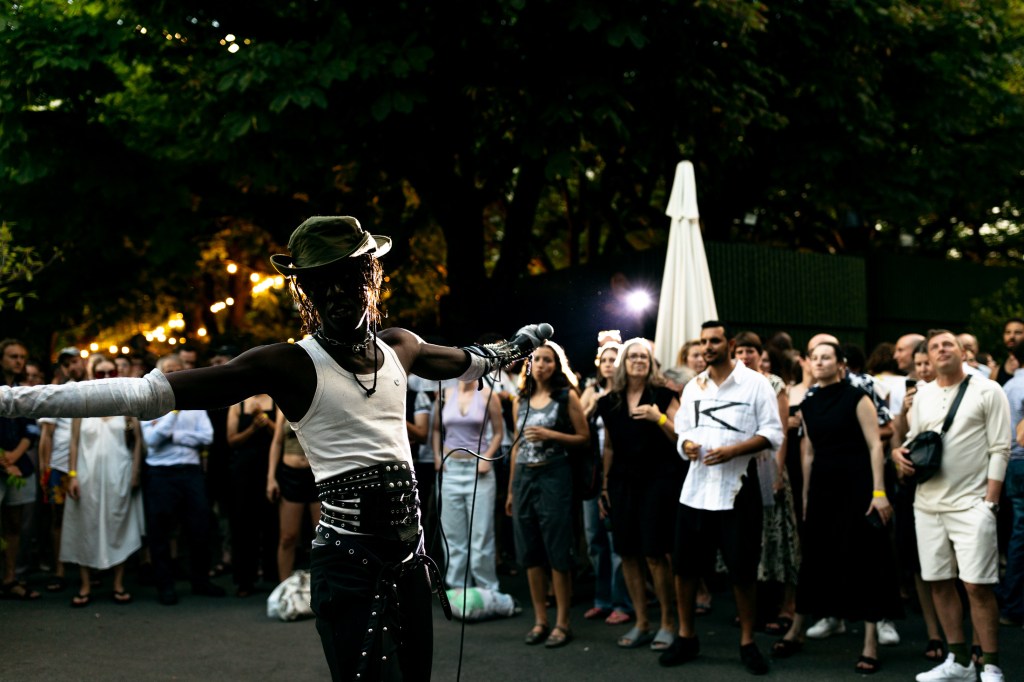
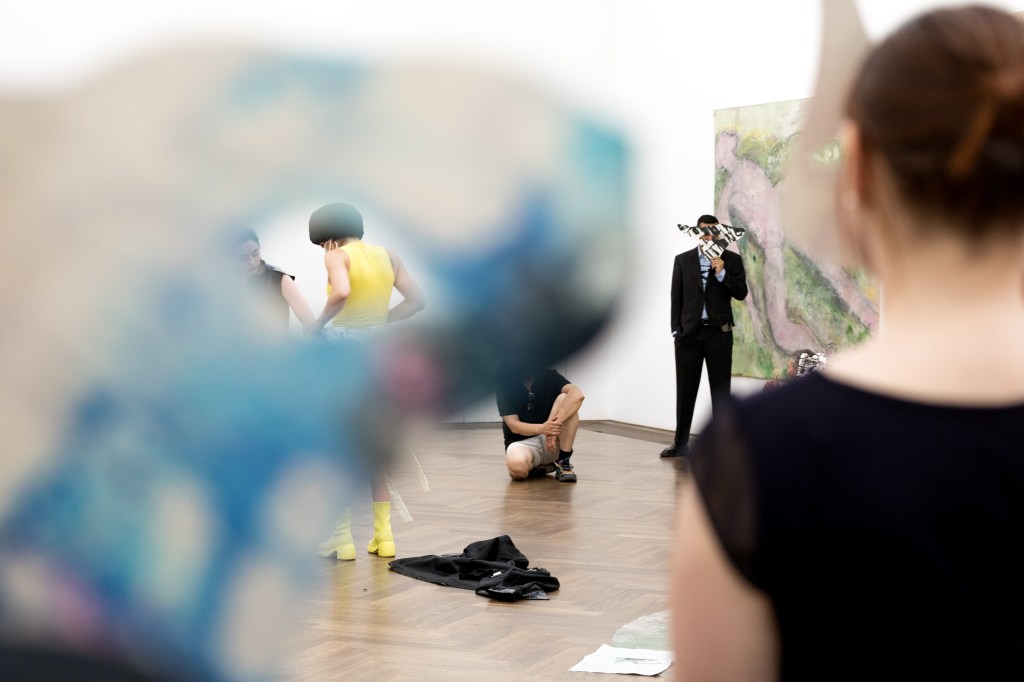
Mohamed Almusibli. Photo Mathilde Agius Kunsthalle Basel, 2025. Photo Nicolas Gysin – Kunsthalle Basel Kunsthalle Basel, 2025. Photo Nicolas Gysin – Kunsthalle Basel 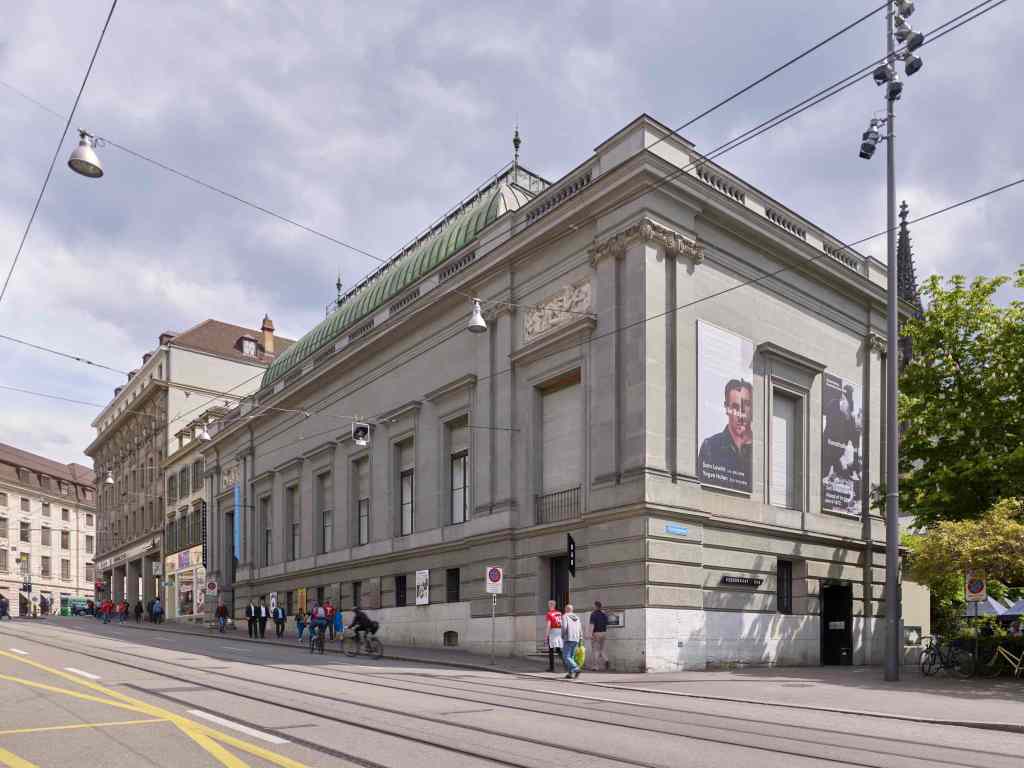
Kunsthalle Basel, 2016 Photo Yohan Zerdoun – Kunsthalle Basel 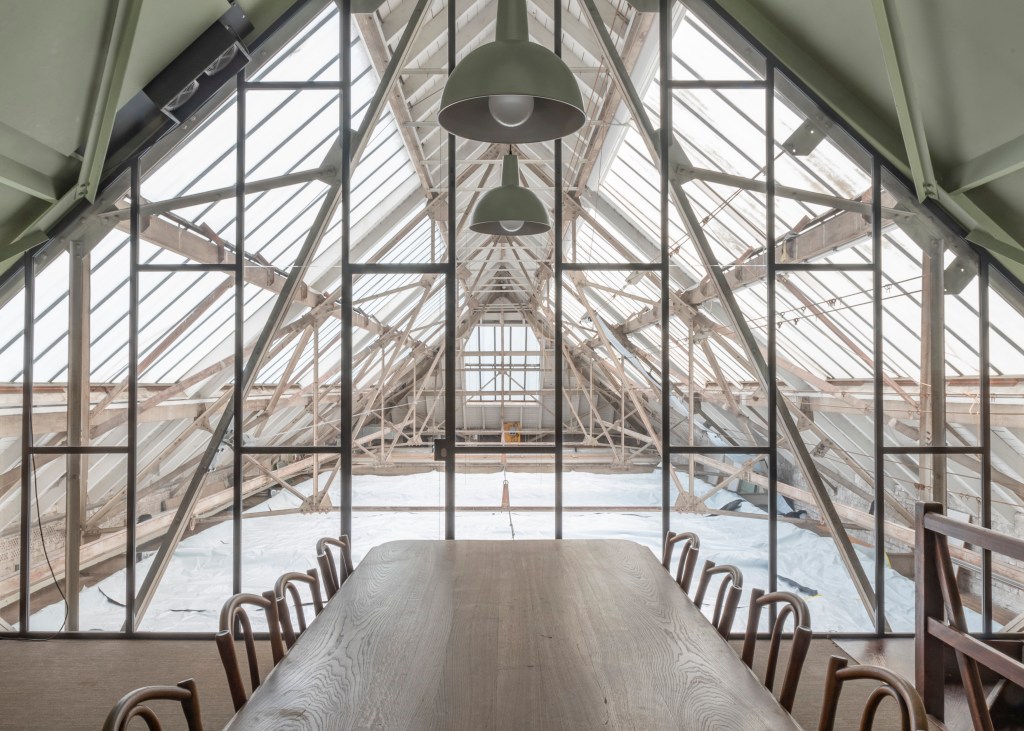
BibliothekArchiv Lesesaal, 2023, Photo Anja Furrer – Kunsthalle Basel 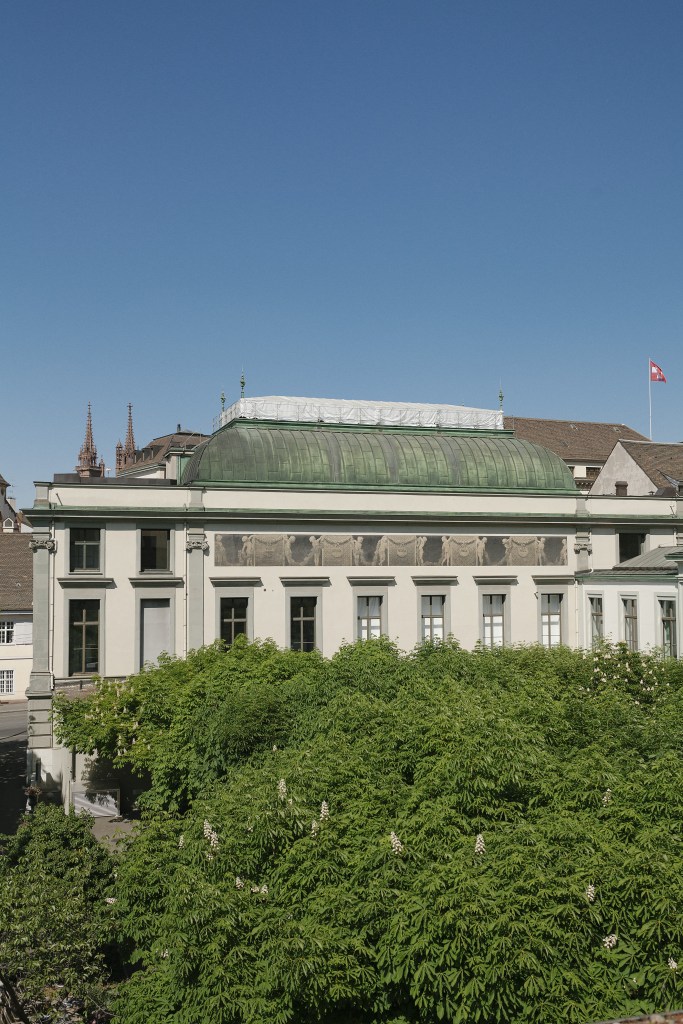
Kunsthalle Basel, 2021, Photo Moritz Schermbach – Kunsthalle Basel
 c plus c