Michela Alessandrini, curator at the Fondation Cartier pour l’art contemporain in Paris, spoke to us about her professional background and the key aspects of her practice, whilst also offering some reflections on the distinctive features of contemporary curating.
The Fondation Cartier pour l’art contemporain in Paris is a leading institution in the contemporary art scene, and Michela Alessandrini (Tivoli, 1987), curator responsible for international projects, took us through the stages of her career that have equipped her to meet the challenges of today’s art world within an institution characterised by an experimental approach.
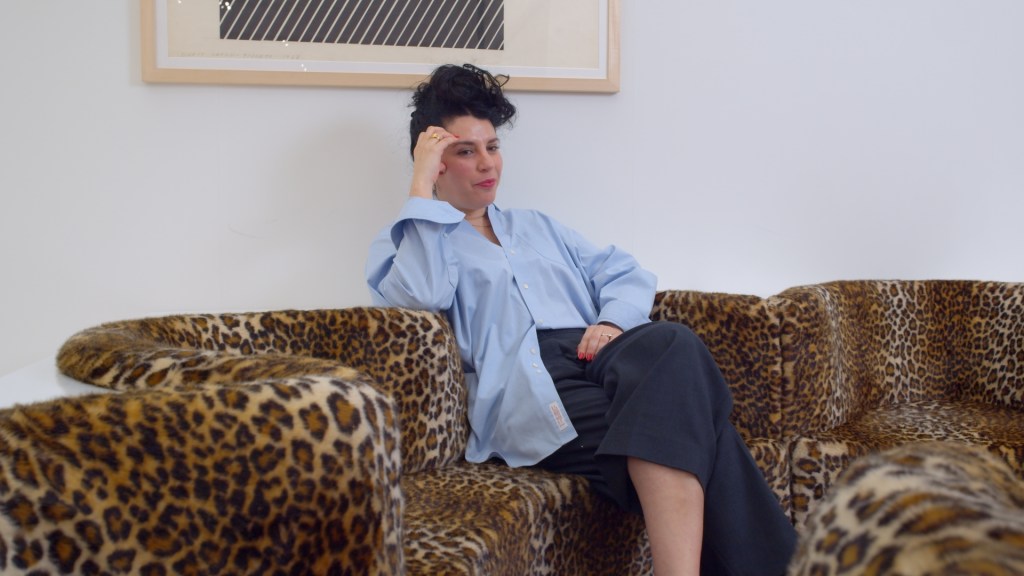
THE INTERVIEW WITH MICHELA ALESSANDRINI
One striking feature of your past experiences is their diversity, which was already evident in your formation: you studied in different countries, including Italy and France, and later worked in Hungary, Belgium, Morocco, Switzerland, Spain, the Netherlands and Qatar. How do you think this international dimension may have influenced your experience and your curatorial approach?
Although I grew up in a semi-rural setting, away from the contemporary art scene, I belong to a generation of curators who were strongly encouraged to travel and have international experiences. Those were the days of Obrist’s Don’t Stop and night-bus journeys to see exhibitions; fortunately, we later realised we needed to slow down, at least a little. During those years of frequent travel, with no precise strategy in mind, I was lucky enough to work at institutions such as Mathaf (Arab Museum of Modern Art) in Doha, where I served as a research consultant on its extensive collection of Arab art; the ERG (École de Recherche Graphique) in Brussels; residencies in Geneva, Rennes and Rabat; experimental hubs such as FUTURA in Prague or Labor Gallery in Budapest; and museums like the MACBA in Barcelona and the Van Abbemuseum in Eindhoven, where I was able to develop my research, always in between academia and cultural institutions dedicated to contemporary art in all its forms. Today I can apply these experiences – which vary greatly in terms of the type of institution and cultural contexts in which they operated – to my curatorial practice at the Fondation Cartier, where I am specifically involved in international projects.
The wide geographical scope of your experience is matched by a very solid academic foundation – first your degree, then curatorial training and a PhD – as well as publishing, writing, residencies and exhibitions. How do these very different aspects come together in your professional life? Do they blend well, or is there a risk that they sometimes remain separate?
One of the central aspects of curating is precisely the creation of connections, and for this reason, I feel that learning to navigate between layered experiences, different formats and various disciplinary fields is fundamental. Art is many things and exists in many places; it creates many worlds. Overall, I would say that my formative years were an indispensable learning experience that has taught me to adapt to very different realities, from small and experimental to large and international ones, striving to evolve not only as a curator but also, hopefully, as a human being. For example, at the École du Magasin in Grenoble, I learnt from my fellow curators (there was no “top-down” teaching) that, in order to work in a group, one must accept compromise and trust the other’s vision, letting go of parts of oneself. Research, then, has been an extremely significant aspect that continues to accompany me to this day: I could never abandon it, and I am fortunate to be able to use both exhibitions and writing to create spaces dedicated to it. Curating is an umbrella discipline that allows me to switch on and off parts of myself and their related manifestations, depending on the creative (or destructive) phase I am going through.
THE PROJECTS BY MICHELA ALESSANDRINI
One of your early projects, carried out for the magazine Droste Effect, was The Portrait Room, a collection of “portraits” of curators and personalities from the art world. To what extent did comparing your work with that of other curators help you define your own approach?
If I had to identify a common thread linking all my projects right from the start, I would say that I have always been interested in starting with the subject, with people’s stories and lives. The idea of a human-scale history of art strikes me, an history that begins with individual experiences to speak of collective dynamics. Ginzburg’s cheese and worms… My writing practice is closely tied to the anecdotal, the self-fictional, the interstitial: even today, when I conduct interviews, I try to bring out those little things shared by everyone, as they seem to me to be the true guarantee of a common sense of humanity. It was particularly significant to see how the interview format was used by Tiziana Casapietra in Radicate and by Chiara Bertola in Curare l’arte (Mondadori Electa, 2008). Chiara interviewed other curators to understand their practice and their approach to art, a project still ongoing and one that has brought us together to the point of developing a sequel to the book, which will be titled Un cammino lungo: le cure dell’arte (in progress). I believe that engaging with others – not just curators but also artists, philosophers, architects, designers, etc. – is necessary to clarify the role of our practice in the world. When I set out on the path to becoming a curator, there were few courses focused on this practice, and asking questions was the only way to learn. Today, however, everyone wants to be a curator (as Lea Vergine says in a video interview, that I screenshotted and set as my desktop background. I let myself be guided by the smoke from her cigarette, thinking of Romana Loda or Cérès Franco and all those historic curators I’ve been lucky enough to meet, directly or indirectly, and who have taught me more than any school or journey I’ve done).
Another key theme in your work as an art historian and curator is the archive – and particularly the curatorial archive – understood not merely as documentation produced by the curator in the course of their work, but as a genuine working method and a living space. What use, then, can the archive have for a curator during their professional practice or that of their colleagues?
I don’t have a definitive answer, and I believe that the Curatorial Archives in Curatorial Practices project (which I have been curating since 2015) serves precisely to offer some answers, albeit provisional. One of the features that appeals to me most, in the archives I have visited and those I imagine, is that they allow us to “see something else”, taking into account aspects held within those folds of reality by what we call memory: a concept that needs to be completely re-examined, not least thanks to a more generous and contemporary definition of the archive, which, it seems to me, we are beginning to arrive at. Engaging with the archive allows one to gain a deeper understanding of an artwork, rethinking its role and re-examining its univocity and hegemonic role in relation to the archival record, for example through a curated display. The same can be done with institutions, by investigating why certain exhibitions were organised, why certain works were chosen or others acquired. For Harald Szeemann, for example, the archive was a tool for divination and self-representation; for Charles Esche, it is a collective device that speaks of a shared behaviour within the museum and the society that creates and sustains it. I like to sit somewhere between the two (to name just two, even though the CACP interviews are now more than thirty). I believe that the personal dimension is highly significant, because it is only by starting from the subjective experience and giving it its due weight that we can reach the collective, or universal, dimension, if you like. What is human unites us.
Do you have your own archive?
My relationship with the archive is mediated by my memory, which operates, so to speak, through convective movements, grasping things and then letting them go. The archive is necessary because it allows me to revisit what I would otherwise have lost or forgotten (I forget a great deal, and I believe that forgetting is, in some way, cathartic if approached with innocence and grace). In short, I would say that I trust in the organic nature of my memory’s flow, aided by the archive, even if, for now, it is scattered, fragmented and disordered, just like me. Perhaps the most recurring theme in the curators’ responses regarding their archives is that these archives resemble them, embodying their vision of time, space and of the existence between these two dimensions.
MICHELA ALESSANDINI’S WORK WITH THE FONDATION CARTIER IN PARIS
After such a diverse range of experiences, how did you settle into and relate to an institution with such a rich tradition behind it as the Fondation Cartier pour l’art contemporain in Paris?
When I was asked to curate exhibitions for the Fondation Cartier pour l’art contemporain, I was ready and eager to get started, to put my research aside for a moment, since I had just defended my PhD thesis in the summer of 2020. Between one lockdown and the next, I began curating the exhibitions developed by the foundation as part of its partnership with Triennale Milano, where we have just opened the tenth exhibition, Andrea Branzi by Toyo Ito, which I co-curated with Nina Bassoli. My background was well suited to the interdisciplinary and international nature that characterises the work of the Fondation Cartier – which, over the years, has made very deliberate choices to represent art in its many forms, as well as moments, geographical and cultural spheres that were “in between” and marginal at the time – and that now enjoys considerable attention.
Your curatorial work for the Fondation Cartier, as you said, was also part of a fruitful partnership with the Triennale Milano that has been ongoing since 2019. In particular, the exhibition Mondo Reale (23rd International Exhibition Triennale Milano, 2022) was based on the idea of rediscovering the wonders of our planet; subsequently, with the exhibition Siamo Foresta (2023), you focused on a vision of the forest understood as an ecological state of mind, in a dialogue between works by indigenous and non-indigenous artists; ranging from an exhibition of the collection as seen through the eyes of the Argentine artist Guillermo Kuitca (Les Citoyens, 2020), a retrospective on the work of Alessandro Mendini (2024), and the most recent one, which you mentioned, on Andrea Branzi. To these we can also add the exhibition Féminin Plurielles (2022), which you organised as an independent curator – invited by the Musée Cérès Franco – centred on plurality as a fundamental condition for the interpretation of the “feminine”, trying to deconstruct the univocal and canonical definition that is claimed to exist. From your point of view, what might be an effective way for a curator to engage with such complex contemporary themes, without resorting to repetitive approaches that fail to do justice to the reflection and poetics of the artists involved?
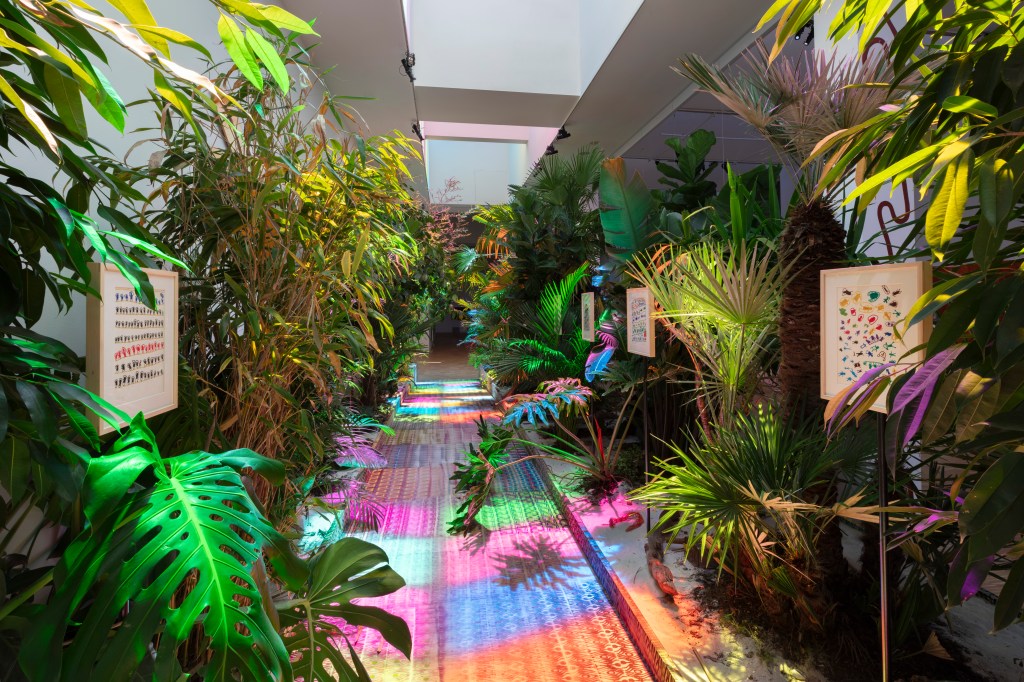
In Siamo Foresta, the central theme was the relationship between nature and culture, and the forest as a space for the creation of new ecological practices and philosophies, whilst Mondo Reale sought to reflect on what we look at and how we look at it. Formafantasma’s exhibition design was pivotal, and the collaboration was truly fruitful. The distinctly contemporary nature of these themes is undoubtedly due to the Fondation Cartier’s experimental approach and sensitivity to the contemporary world. As a curator, I believe it is necessary to constantly question one’s own practice, seeking to avoid the hyper-focus that could lead to dangerous forms of exploitation and exhaustion of a theme without resulting in a re-evaluation of the behavior – institutional, curatorial and experiential – associated with it. The curator bears responsibility not only for what is shown, but for why it is. The slow and careful work that these key issues of contemporary culture – memory, the dialogue between the real and the virtual, gender issues and ecology – deserve seems to me to be a methodology to be mindful of, an ethic to which we must return.
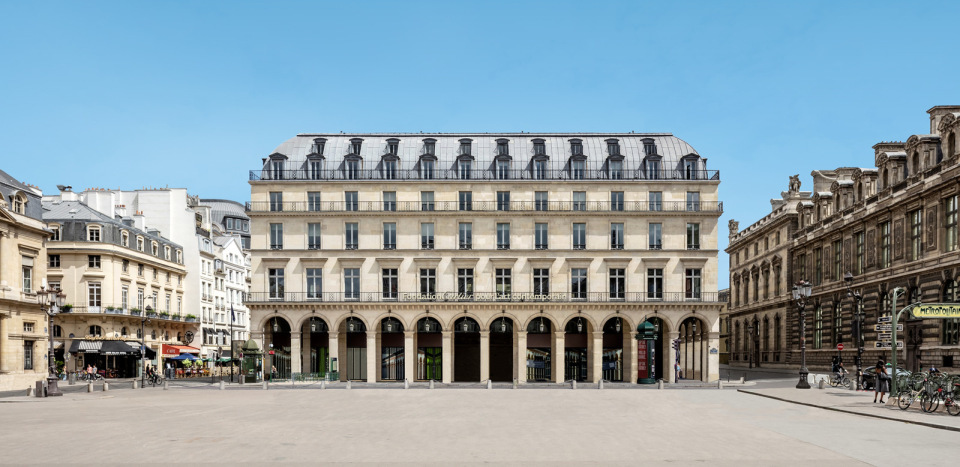
In October 2025, the Fondation Cartier pour l’art contemporain moved from its historic premises on Boulevard Raspail to its new space in Place du Palais-Royal, opposite the Louvre. The new venue, in an 1855 building, have been redesigned by Jean Nouvel with a focus on flexibility, adaptability and transparency. As a curator, how do you intend to approach this new space, and the opportunities and challenges it will present compared to the previous one?
Once located in Montparnasse, a neighbourhood of great historical significance for the arts, the Fondation Cartier now occupies a space – and, by extension, a cultural ecosystem – with a strong institutional identity, given its proximity to the Louvre, the Centre Pompidou, the Musée des Arts Décoratifs or the Bourse de Commerce. The principle of dynamic architecture is based on the ideas of porosity, flexibility and the continuous reinvention of space, inviting artists to experiment, in line with the Fondation Cartier’s approach. For a curator, this poses a fascinating challenge: we are accustomed to perceiving, thinking and projecting “in relation” to the space (of the museum), to temporality (the ephemeral nature of the exhibition), to the public, to the artist, to the work, and to the period in which the exhibition takes place. I feel it is urgent to ask ourselves what an exhibition is and what purpose it serves today. For me, the space of the new Fondation Cartier offers this chance by highlighting the proximity of the exhibition medium to that of a performance or a theatrical piece. Its location between Rue de Rivoli and Rue du Faubourg Saint-Honoré exposes us to the constant flow of people walking past the windows, who, in turn, see the exhibition shift within the ordinary flow of their daily lives. Everything passes, but this encounter is a breach in the bubble we call reality and, at the same time, a reminder of the possibility we have to constantly reshape that very bubble. We must always remember that the exhibition is just one point on the complex line of an artwork’s life; therefore, it is and must be undefined and non-definitive, otherwise it loses its power and, indeed, its raison d’être. The ephemeral nature of the exhibition compels me to accept my own finitude and the sequence of states I must pass through.
Given the vast range of experiences you’ve had – both as a scholar and as a curator – is there any particular theme or curatorial approach you haven’t yet had the chance to explore and would like to try?
Every curator has countless exhibitions in mind that they haven’t had the chance to realise, but I believe it is essential for me to continue focusing on counterexamples. A few weeks ago, I was in Miami, preparing an exhibition on the artist Sheroanawe Hakihiiwe, which will open in autumn 2026 at the Institute of Contemporary Art. On that occasion, I was able to see one of the sacred trees on which Ana Mendieta imprinted one of her Siluetas (1981), specifically in Little Havana, where rituals linked to Santeria are still performed (leaving behind offerings that are very much present, both visually and olfactorily). I think there are two very interesting things about that place: the presence-absence of Ana Mendieta (which reminds me of the coats designed by Branzi, like uninhabited sculptures); and its nature as a counterpoint, an anti-monument to the official monument commemorating the Bay of Pigs Invasion. It seems to me that, in these times of withdrawal, clinging to something sacred yet mundane, to the invisible, is absolutely necessary. In the future, I would like to work starting from reflections of this kind, in whatever form it will be possible, from exhibitions to critical discourse to dialogue with other artists and colleagues; and especially writing, because writing is like weaving, and I never want to stop (words too are invisible rituals, always broken). Perhaps we, as curators, should focus less on the projects themselves and more on how they might flourish in others, without exploiting, and thus weakening, their essence by manipulating it. From mediation to therapy, we often try to bend art to a function it can only fulfil spontaneously: at best, I can accompany it so that it reaches the heart of those willing to receive it. I already know that it saves you, because it’s happened to me and keeps happening, cyclically. Reproducing this miracle so that it can reach many people is a strategy that institutions could aim for, embracing the crisis that inevitably runs through them and compels them to regenerate, if possible, with commitment and grace.
Elia Castello
View from Siamo Foresta, Triennale Milano, 2023. Credits Andrea Rossetti / Héctor Chico The Fondation Cartier pour l’art contemporain, 2 place du Palais-Royal, Paris. Photo © Luc Boegly 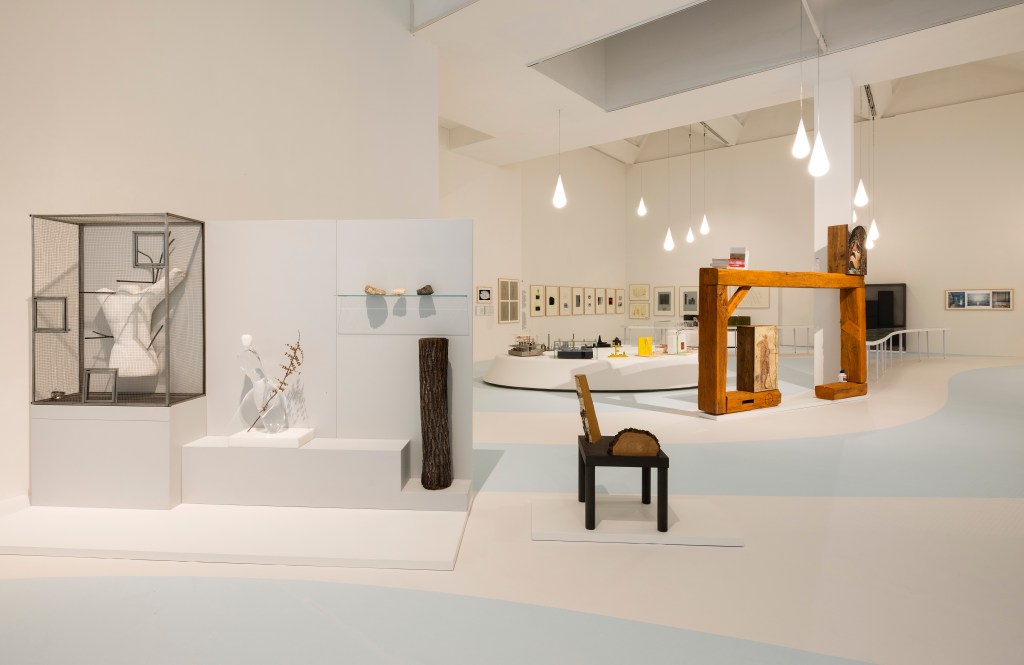
View from Andrea Branzi By Toyo Ito. Continuous Present, Triennale Milano, 2026. Photo Andrea Rossetti 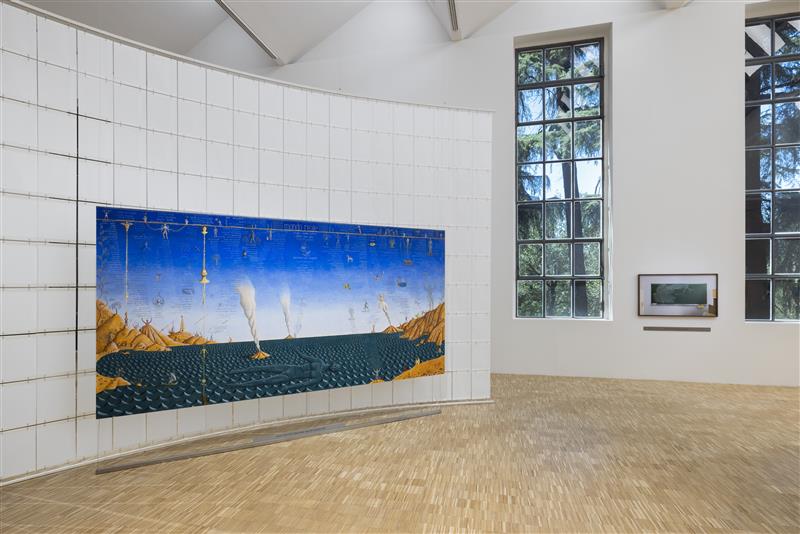
View from Mondo Reale, Triennale Milano, 2022. Credits Andrea Rossetti 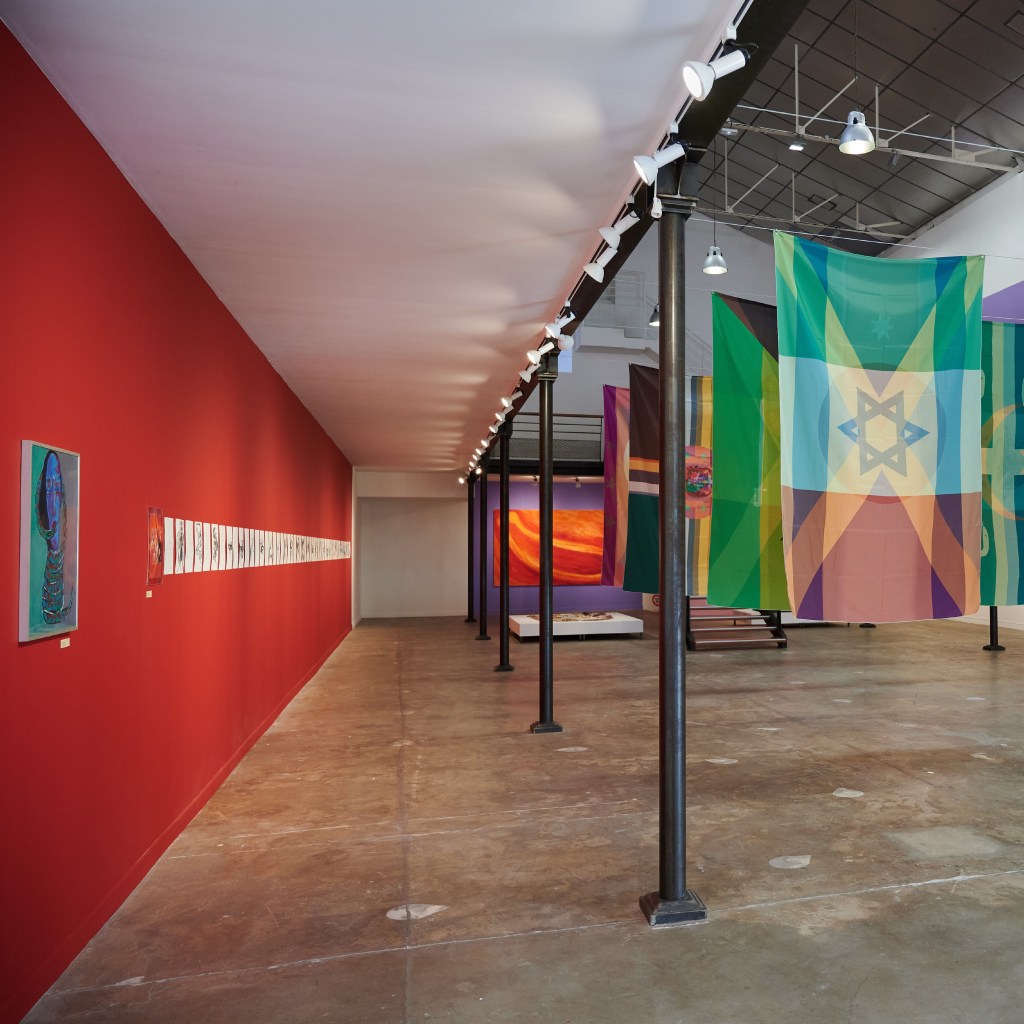
View from Féminin Plurielles, Musée Cérès Franco, 2022. Photo © Alain Machelidon Michela Alessandrini in the exhibition Andrea Branzi by Toyo Ito at Triennale Milano, 2026. Photo (still from video) @ Edera studio
 c plus c