2026 will be the last year of Lorenzo Balbi’s second term as director of MAMbo ‒ Museo d’Arte Moderna in Bologna. In this interview, we focused on the main stages of his tenure, from institutional experimentation to the socio-political urgencies that are currently affecting the art system.
The artistic and cultural offering is a fundamental component of Bologna’s distinctive character, both nationally and internationally. For nine years, Lorenzo Balbi (Turin, 1982) has been Head of the Modern and Contemporary Art Area of the Civic Museums Sector of the Municipality of Bologna, which includes MAMbo, Museo Morandi, Casa Morandi, Villa delle Rose, Museo per la Memoria di Ustica, and Residenza per artisti Sandra Natali. We retraced some of the decisive stages of his career with him, reflecting on the responsibilities of the contemporary museum and the challenges facing those working in the cultural field today.

THE INTERVIEW WITH LORENZO BALBI
Since 2017, you have been Head of the Modern and Contemporary Art Area of the Bologna Civic Museums Sector and artistic director of MAMbo – Museum of Modern Art in Bologna. Since 2018, you have also been the artistic director of ART CITY BOLOGNA, and in 2020 you taught at the AMaC (Arts, Museology, and Curatorship) master’s program at DAMS. Since 2021, you have been teaching Tools and Skills for Artistic Practice at the Academy of Fine Arts. Bologna seems to be not only the location of your work, but also an active partner in your projects. What does this city represent for you?
For me, Bologna is much more than a place of work: it is a living interlocutor, a context that stimulates and guides every design choice. I think that the role of the artistic director of a public museum goes far beyond the management of an exhibition space. It means being part of a community, intercepting its demands, catalyzing energies, becoming a sensitive antenna for the territory. Bologna, with its cultural history, its institutions, and its civic dimension, has allowed me to understand the museum as a porous organism, capable of continuously dialoguing with the city and seeking to restore its complexity and vitality.
In an interview with ProfessioneARTE, regarding the role of the contemporary museum director, you said that today it is important to be an aggregator of multiple demands. In your experience, which collaboration — with an artist, a community, or an archive — has been particularly significant?
Of all the experiences I have been fortunate enough to develop, that of the Nuovo Forno del Pane has been the most radical. During the pandemic, we redefined the museum as a center of production and a place for community, offering artists a space to work, meet, and rebuild a critical mass together. The legacy of that project continued with the Outdoor edition, in which the museum became the activator of a network of artistic production centers spread throughout the territory. It was concrete proof that a public museum can transform its identity and role in response to the real needs of the historical moment.
MEMORIES, ARCHIVES, AND CRITICAL PRACTICES IN THE PRESENT
The Project Room is an exhibition space within MAMbo which, under your direction, has taken on a specific function, welcoming research, local memory, archives, emerging artists, and little-known historical figures. What role does it play in relation to the museum’s general programming?
Of all the experiences curated at MAMbo over the past nine years, the Project Room is the one I am most proud of. I wanted to dedicate a space — taken from the permanent collection — to historical and archival research on Bologna and Emilia-Romagna. The goal was to offer the public, almost 60% of whom are international visitors, a glimpse into the stories, places, events, and people that have shaped the collective consciousness of the region. At first, it wasn’t clear to everyone what we wanted to do: I received many proposals for solo exhibitions from local artists. But the consistency and continuity of the programming made the direction clear. Today, many people identify with that space, finding fragments of their own experiences there, while those who weren’t there can come into contact with a tradition that gives meaning to our contemporary museum choices.
Among the programmatic points of your second term at MAMbo, you mentioned decolonization. What do you think is the best way to act radically in this regard?
I believe that a museum can act in a decolonial sense not by hiding objects, but by activating them to generate new meanings. The exhibition The Floating Collection, which I co-curated with Caterina Molteni, was born precisely from this principle. We invited international artists to build a “floating” collection based on their direct experience with the city’s collections. This approach does not rewrite history, but rather places it in tension with the present, creating plural and shared narratives.
FUTURE CHALLENGES ACCORDING TO LORENZO BALBI
Your work can be described as a device that intertwines works and context, institutions and communities, artists and cities, capable of capturing needs and directions. If you had to point out a socio-political urgency that museums must address in the coming years, what would it be?
In recent years, we have been confronted with fundamental issues: gender, provenance, religion, decolonization, sustainability, post-digital, artificial intelligence. I believe that the new urgency concerns access to the artistic professions. Today, becoming an artist or curator is still possible, especially for those from economically privileged backgrounds. This is no longer sustainable. Museums, together with the art system, must take responsibility for addressing this imbalance by creating tools, pathways, and opportunities that allow disadvantaged talents to emerge and grow.
Under your direction, ART CITY — a contemporary art event that takes place in various venues in Bologna in conjunction with ArteFiera — has gained increasing visibility. Looking to the future, which area of the city would you like to transform into the next major space for artistic activation?
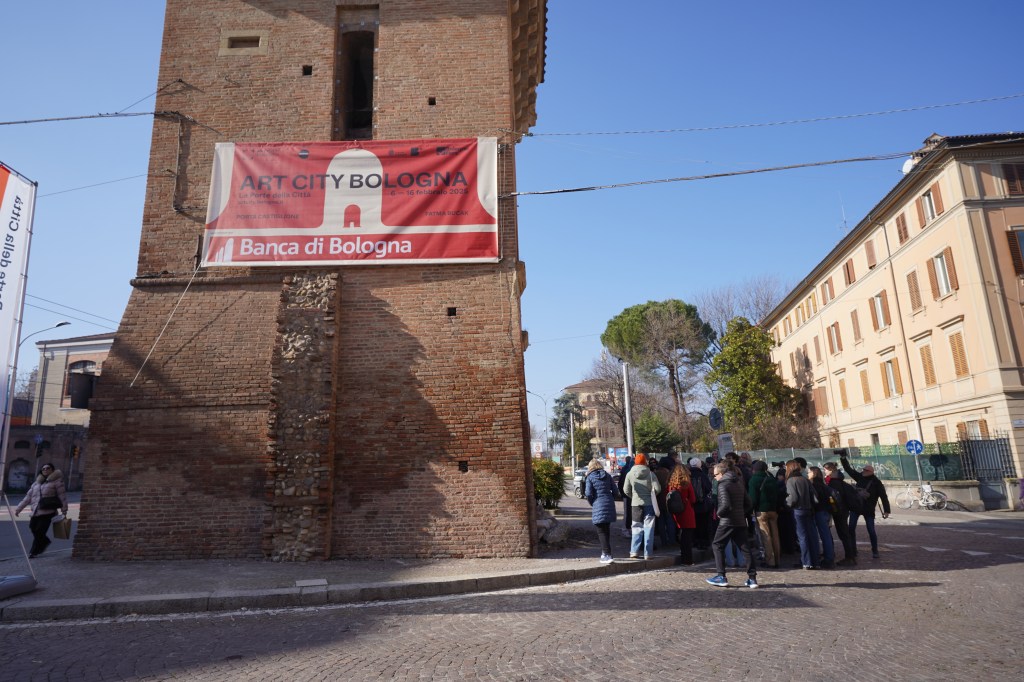
Since I took over as artistic director, ART CITY has gone through several phases: from special events with major international artists — from Tino Sehgal to Gregor Schneider, from Zakharov to Castellucci — to a project that is increasingly rooted in the territory and capable of recounting it through contemporary art. After working on Morandi’s sites and the city’s ten historic gates, in 2026 we will open to the public some exceptional sites linked to the University of Bologna, the oldest in the Western world, founded in 1088, and we are already imagining a very ambitious project for 2027. The goal remains the same: to transform a different part of the city each time into a large field of artistic activation, bringing out identities, memories, and possibilities that we may not have looked at enough yet.
Throughout your career, you have demonstrated a search for balance between production and ethical responsibility. How do you reconcile the urgency of supporting contemporary production with the need to avoid cultural overproduction?
During the pandemic, we wondered whether the exhibition and fair models had come to an end. The facts have shown the opposite: not only have they returned, but cultural consumption has intensified. I believe that museums must take responsibility for reflecting on this acceleration: avoiding ephemeral productions, choosing to work over longer periods, prioritizing depth over quantity, reducing waste and temporary installations.
Museums must return to being bastions of complexity: places that cultivate meaning, not just events.
After years of institutional assignments, do you ever miss the position of independent curator, which allows you to act without the constraints of a public museum?
I worked as a curator — always within institutions — for many years, and today I am happy with the role I play. I don’t see it as a departure from curating, but as an extension of it: my role is to provide scientific and strategic direction to the institution, while the daily research on artists and projects is the responsibility of the internal and external curators with whom I collaborate. They are the ones who can devote themselves continuously to investigating the present.
I deeply enjoy this work, it stimulates me every day, and I feel I still have a lot to say. I also believe that I could bring this experience to different institutional, geographical, and cultural contexts, continuing to measure myself against new challenges. I don’t miss anything from the past: it is the present, with its responsibilities, that really motivates me.
Alice Longo
Lorenzo Balbi, director of MAMbo – Museum of Modern Art in Bologna. Photo by Ornella De Carlo 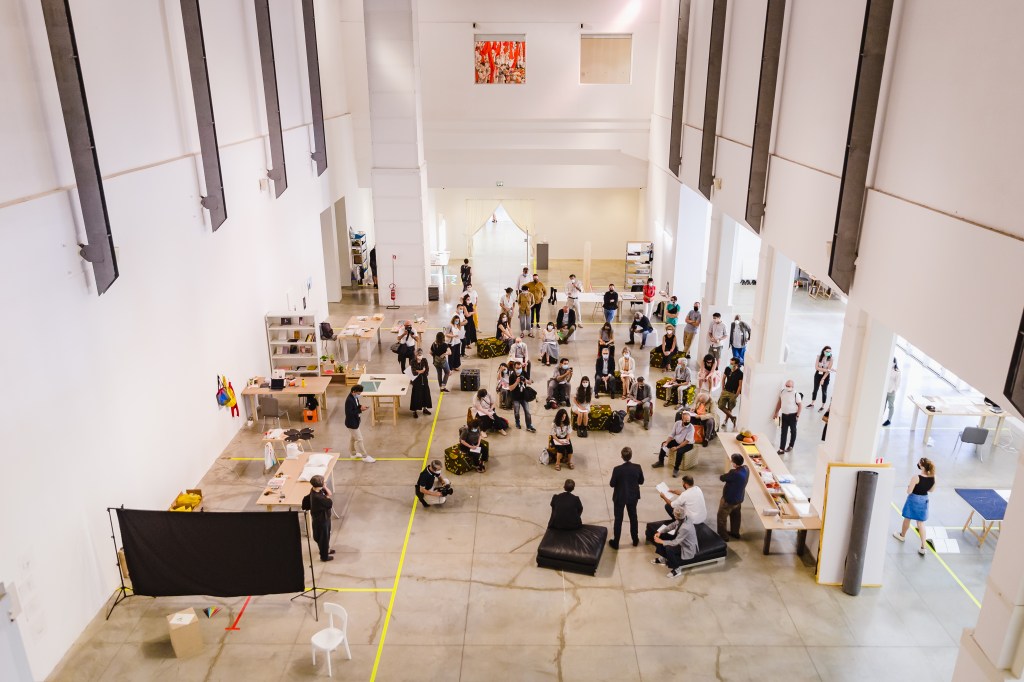
Nuovo Forno del Pane, opening, MAMbo – Museum of Modern Art in Bologna, 2020. Courtesy of MAMbo – Museum of Modern Art in Bologna, part of the Civic Museums Sector of the Municipality of Bologna 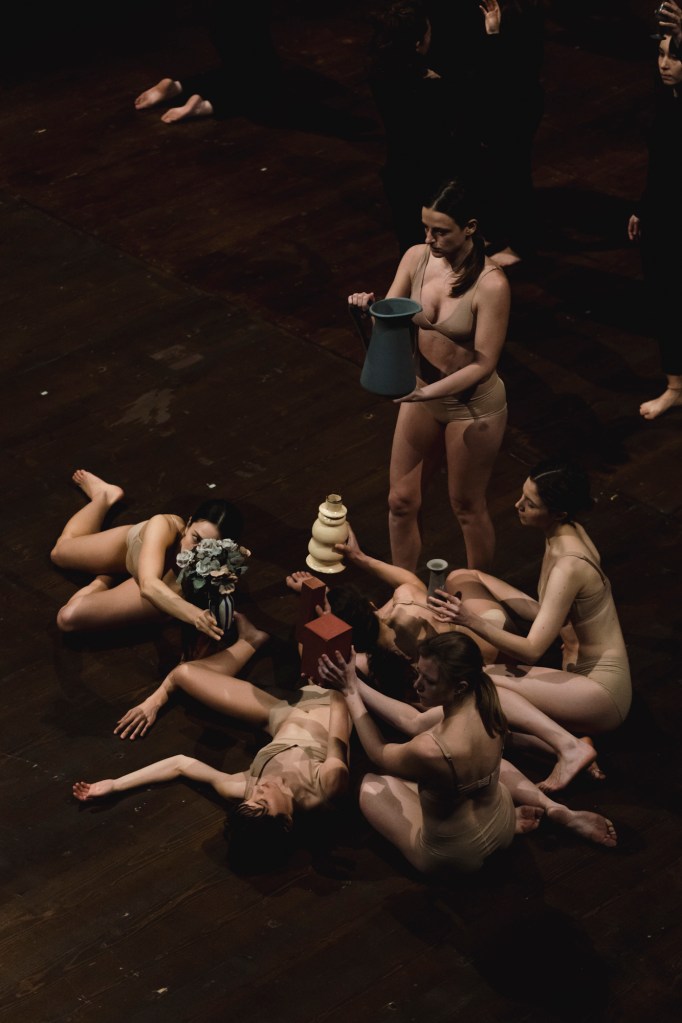
ART CITY Bologna 2024, Special project Elegia Luminosa, Virgilio Sieni, Teatro Comunale di Bologna. Courtesy of MAMbo – Museum of Modern Art in Bologna, part of the Civic Museums Sector of the Municipality of Bologna 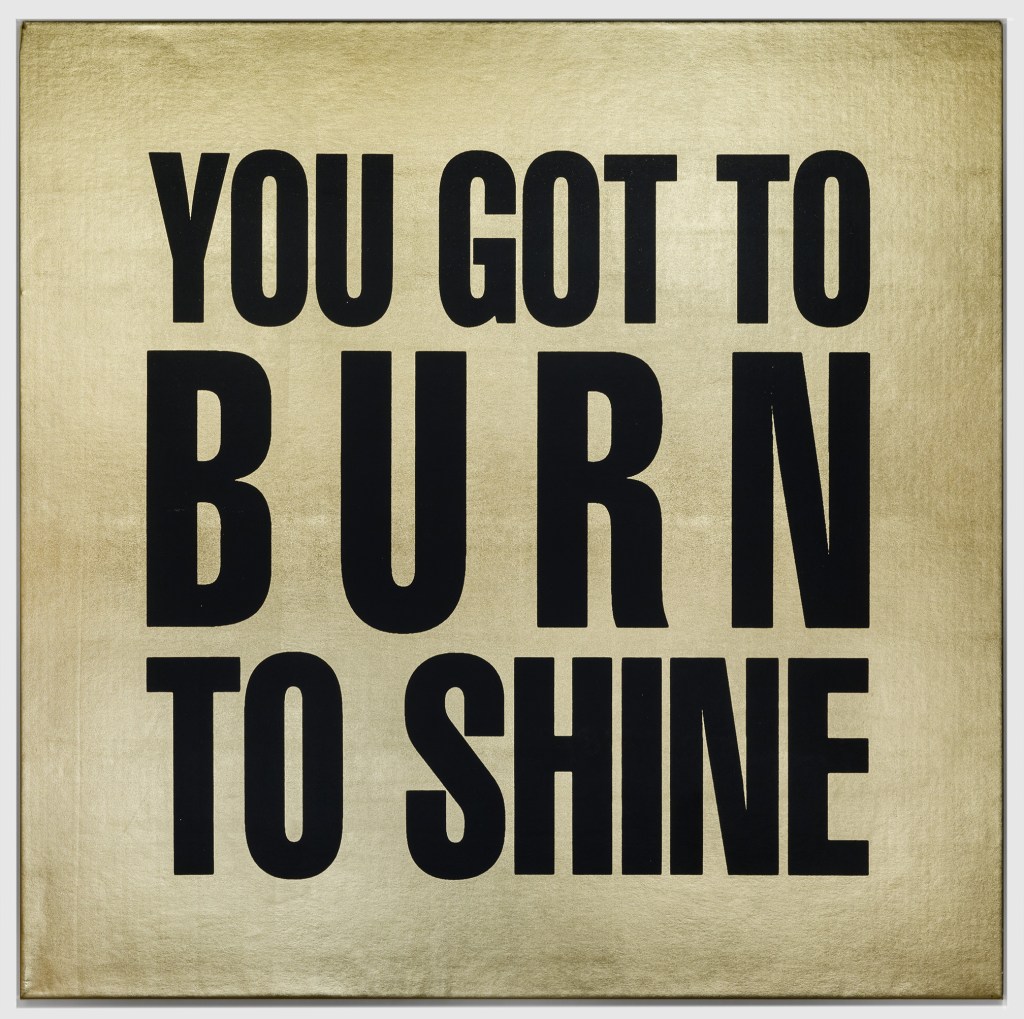
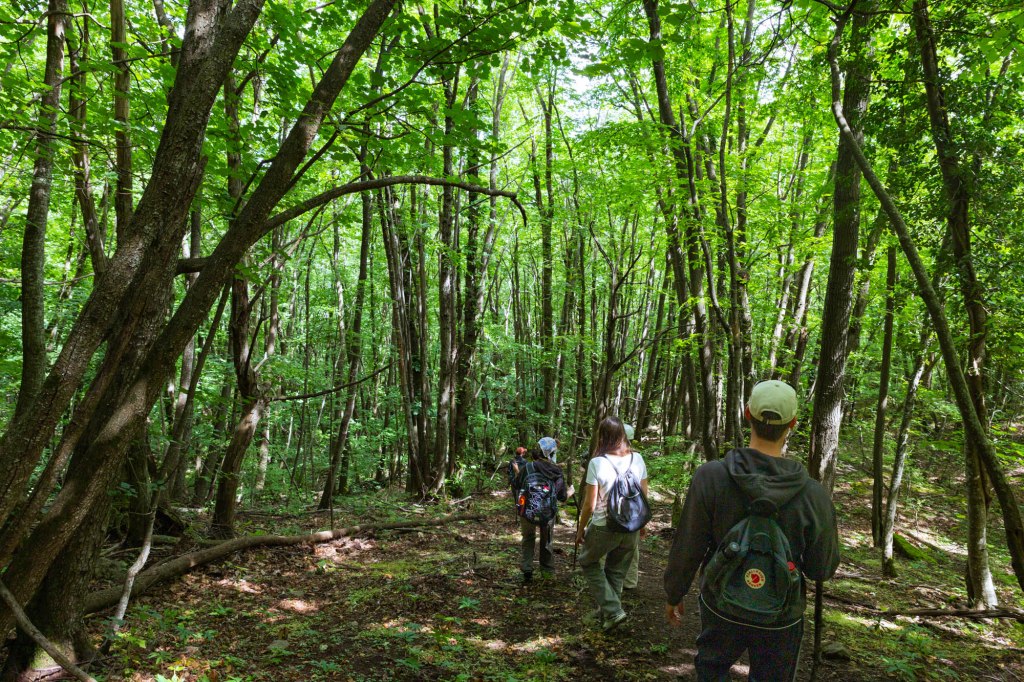
John Giorno, YOU GOT TO BURN TO SHINE, 1989. Acrylic on vinyl, 48×48 inches. Courtesy of Giorno Poetry Systems Nuovo Forno del Pane Outdoor edition 2024, self-training activities in the WWF Oasis of Montovolo. Photo by Valentina Cafarotti and Federico Landi of Migliorare con l’età (Improving with Age). Courtesy of MAMbo – Museum of Modern Art in Bologna, part of the Civic Museums Sector of the Municipality of Bologna 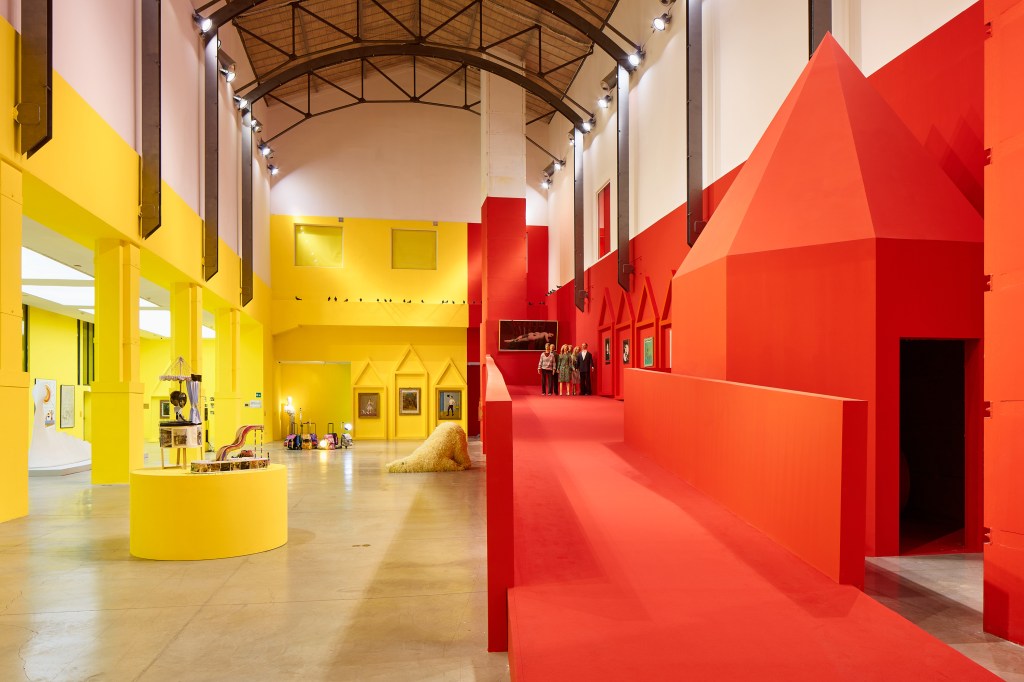
View of the exhibition Facile ironia. Irony in Italian art between the 20th and 21st centuries, MAMbo – Museum of Modern Art in Bologna. Photo by Carlo Favero. Courtesy of MAMbo – Museum of Modern Art in Bologna, part of the Civic Museums Sector of the Municipality of Bologna ART CITY Bologna 2025, Special Program Le Porte della Città. Courtesy of MAMbo – Museum of Modern Art in Bologna, part of the Civic Museums Sector of the Municipality of Bologna
The text has been translated in English using AI
 c plus c