Following celebrations for its 40th anniversary, the Castello di Rivoli is introducing a new curatorial format titled “Inserzioni”. Three contemporary artists engage in a dialogue with the museum’s permanent collection, generating new and unexpected interpretations. The project runs through February 2026.
The Castello di Rivoli presents Inserzioni ‒ a new curatorial format in which contemporary artists are invited to create site-specific works conceived for the museum. Curated by director Francesco Manacorda, the project aims to foster an evolving dialogue, allowing artists to exhibit their works for six months within the rooms typically dedicated to the permanent collection. The first featured artists are Guglielmo Castelli (Turin, 1987), Lydia Ourahmane (Saïda, Algeria, 1992), and Oscar Murillo (Valle del Cauca, Colombia, 1986).

INSERZIONI AT CASTELLO DI RIVOLI
Since 1984, the Castello di Rivoli has played a vital role in the contemporary art scene. The museum is an unfinished container that embraces a layering of meanings and artistic languages shaped by innovation and experimentation. As Monica Trigona noted in La Stampa, Manacorda highlights the institution’s ongoing commitment to innovation and its openness to new voices ‒ particularly those from geographic areas historically underrepresented in the art discourse by the museum. The result is a narrative no longer defined by traditional hierarchies, but by a collective storytelling approach ‒ one that reveals how art, past, and future can intertwine in a harmonious and dynamic interplay. Inserzioni is also a tribute to the Castello’s very first exhibition, Ouverture (1984), curated by then-director Rudi Fuchs. For that inaugural show, each participating artist was invited to create a site-specific work in direct dialogue with the museum’s architecture, envisioning the permanent collection as an “ideal gathering” of works. This spirit of innovation and collaboration continues to define both exhibitions, affirming the Castello di Rivoli’s role as a vital center for creative research. By giving voice to contemporary artists ‒ alongside renowned figures such as Richard Long, Hito Steyerl, and Nicola De Maria ‒, the museum reaffirms its relevance and centrality in today’s cultural landscape. With this new format, the museum is not simply a container for art; it becomes a true incubator of ideas and a prototype for active experimentation.
THE WORKS ON VIEW AT CASTELLO DI RIVOLI
In the frescoed Room of the Continents, there is the corpus of works created by Guglielmo Castelli. The walls are adorned with new paintings that evoke dark, dreamlike worlds. At the center of the room, two large tables display small cases containing delicate paper sculptures, rooted in the world of scenography ‒ a familiar artistic language to Castelli. These figures, charged with tension, lead the viewer in a space that hovers between the real and the imaginary, the finished and the unfinished. In the adjacent room, the artist’s sketchbooks are on view for the first time, revealing thoughts and ideas from his imagined worlds.
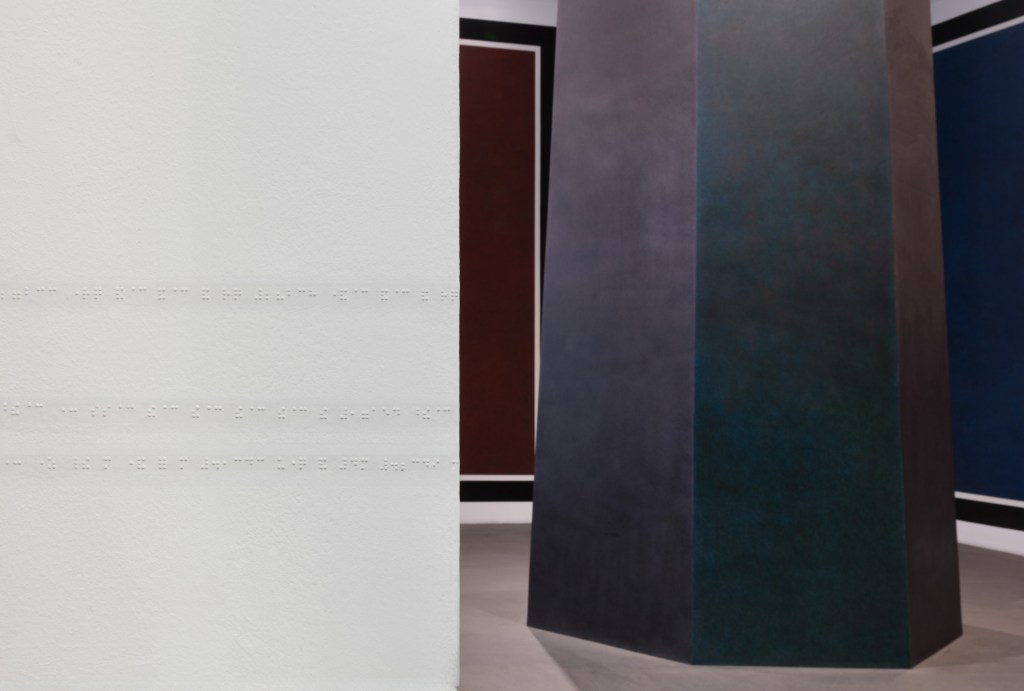
Per voce (2025) is the title of Lydia Ourahmane’s contribution, created in collaboration with her sister Sarah, a musician and composer. At first glance, the work appears imperceptible: only upon approaching the walls does a long Braille score become visible. The composition adapts to the space, its rhythm shaped by the architectural voids ‒ windows and openings ‒ that punctuate three walls. Three blind singers perform by reading the Braille notation, bringing the piece to life through a fusion of body, space, and sound.
The final work is A see of history (2025) by Oscar Murillo ‒ an immersive, site-specific installation located in Room 18. The large room is almost entirely filled with forty-eight massive canvases from his Disrupted Frequencies series, all laid face-down, prompting visitors to actively engage with the installation. Using wheeled beds and headlamps, viewers can explore this ocean of signs and blue brushstrokes. The canvases ‒ previously engraved with marks made by students from different countries ‒ are assembled into a vast, flowing sea that gathers years of shared memories. The message is both poetic and powerful: the emergence of a global culture that transcends borders.
The museum’s permanent collection is thus enriched by these new commissions, which actively rewrite its narrative ‒ rooted in the past, focused on the future.
Maddalena Domenghini
The exhibition Inserzioni at the Castello di Rivoli
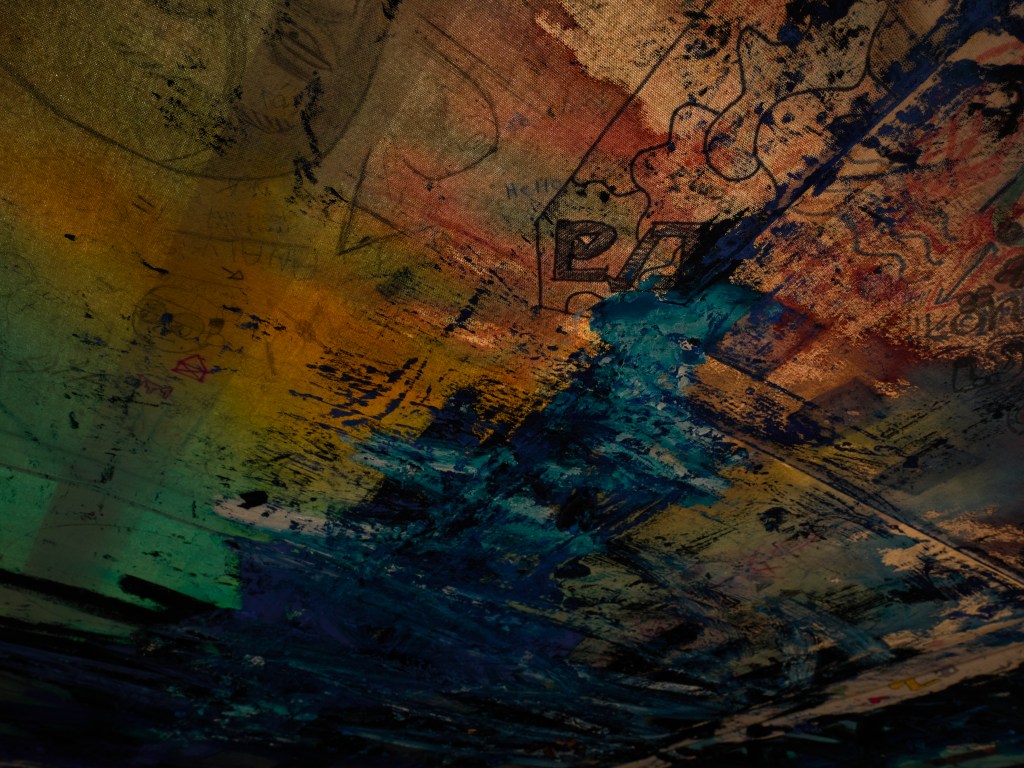
Oscar Murillo, A see of history (Una visione della storia), 2025, installation view, Inserzioni, Castello di Rivoli Museo d’Arte Contemporanea, Rivoli-Torino, 2025. Photo Tim Bowditch. Courtesy the artist © Oscar Murillo Oscar Murillo, A see of history (Una visione della storia), 2025, installation view, Inserzioni, Castello di Rivoli Museo d’Arte Contemporanea, Rivoli-Torino, 2025. Photo Tim Bowditch. Courtesy the artist © Oscar Murillo 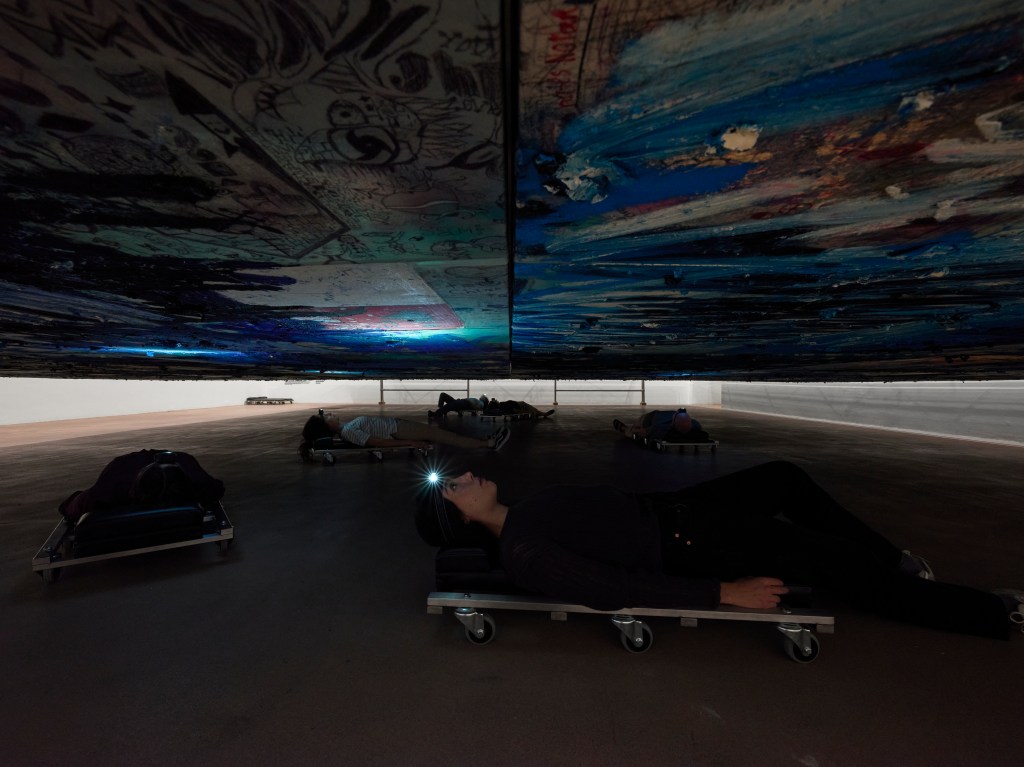
Oscar Murillo, A see of history (Una visione della storia), 2025, installation view, Inserzioni, Castello di Rivoli Museo d’Arte Contemporanea, Rivoli-Torino, 2025. Photo Tim Bowditch. Courtesy the artist © Oscar Murillo 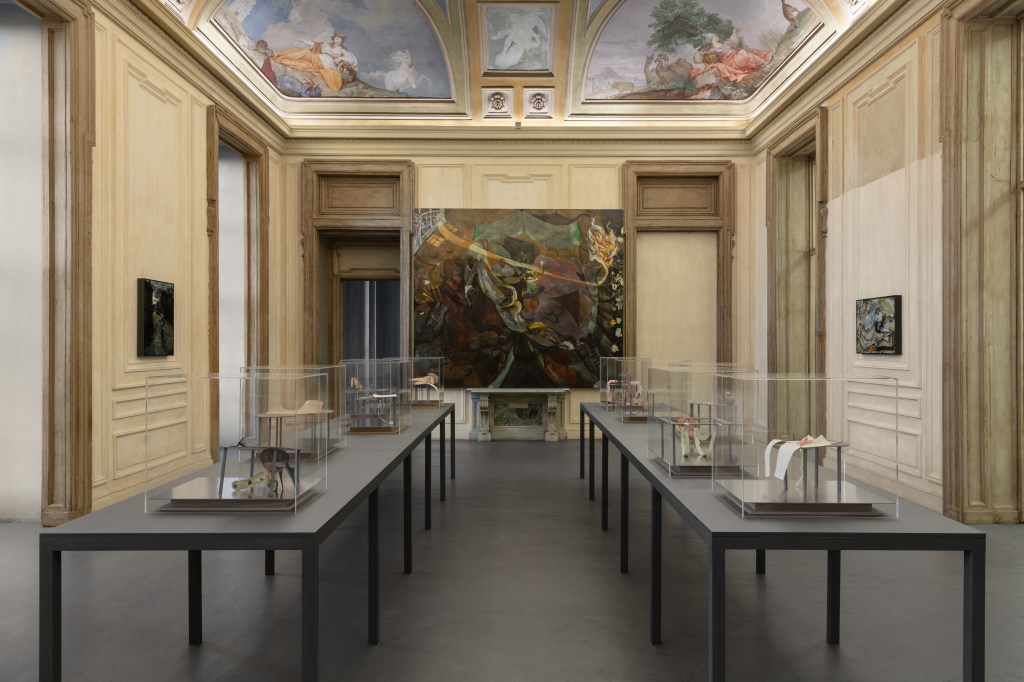
Guglielmo Castelli, installation view, Inserzioni, Castello di Rivoli Museo d’Arte Contemporanea, Rivoli-Torino, 2025. Courtesy Castello di Rivoli Museo d’Arte Contemporanea, Rivoli-Torino. Photo Sebastiano Pellion di Persano 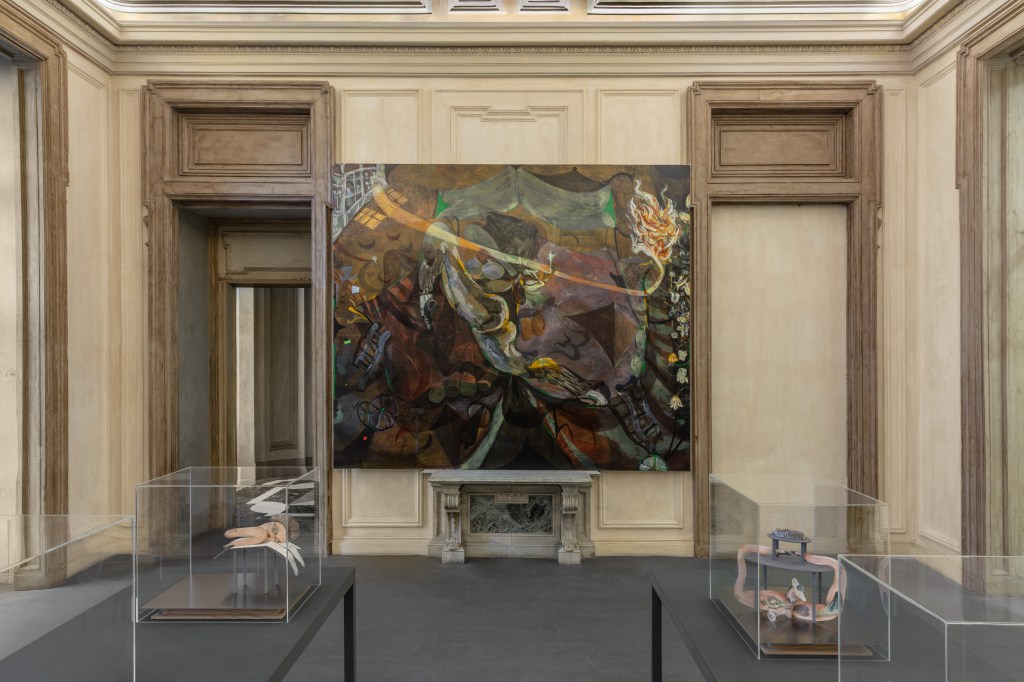
Guglielmo Castelli, installation view, Inserzioni, Castello di Rivoli Museo d’Arte Contemporanea, Rivoli-Torino, 2025. Courtesy Castello di Rivoli Museo d’Arte Contemporanea, Rivoli-Torino. Photo Sebastiano Pellion di Persano 
Guglielmo Castelli, installation view, Inserzioni, Castello di Rivoli Museo d’Arte Contemporanea, Rivoli-Torino, 2025. Courtesy Castello di Rivoli Museo d’Arte Contemporanea, Rivoli-Torino. Photo Sebastiano Pellion di Persano 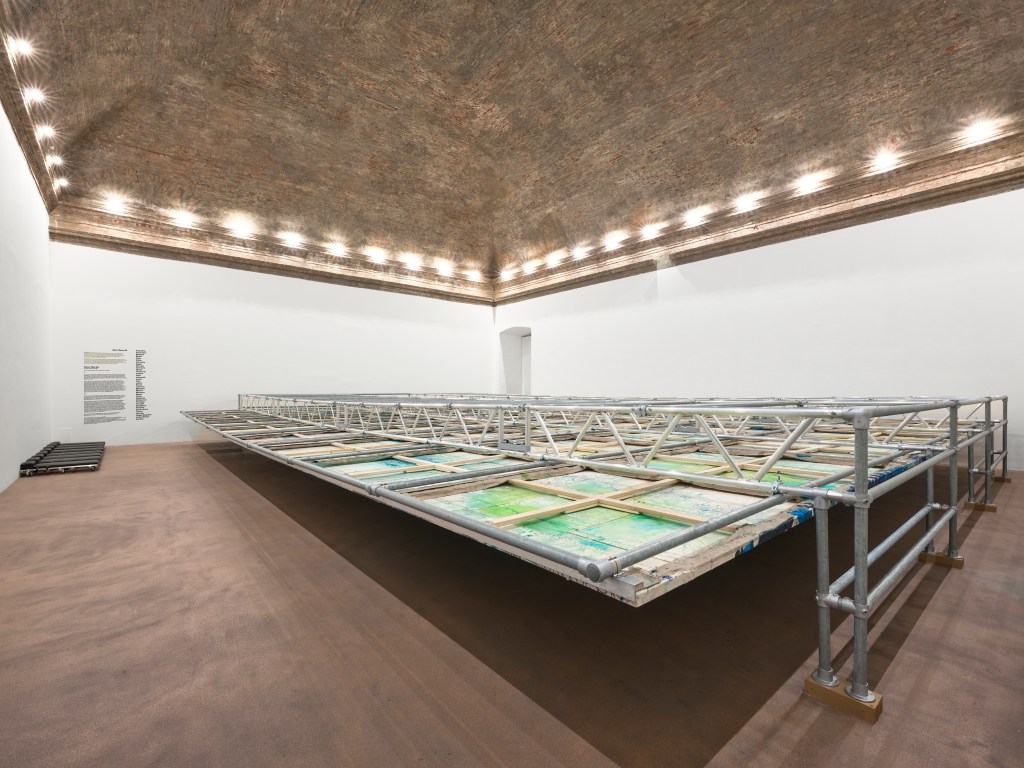
Oscar Murillo, A see of history (Una visione della storia), 2025, installation view, Inserzioni, Castello di Rivoli Museo d’Arte Contemporanea, Rivoli-Torino, 2025. Photo Tim Bowditch. Courtesy the artist © Oscar Murillo Lydia Ourahmane, Per voce (For voice), 2025, installation view, Inserzioni, Castello di Rivoli Museo d’Arte Contemporanea, Rivoli-Torino, 2025. Courtesy Castello di Rivoli Museo d’Arte Contemporanea, Rivoli-Torino. Photo Sebastiano Pellion di Persano 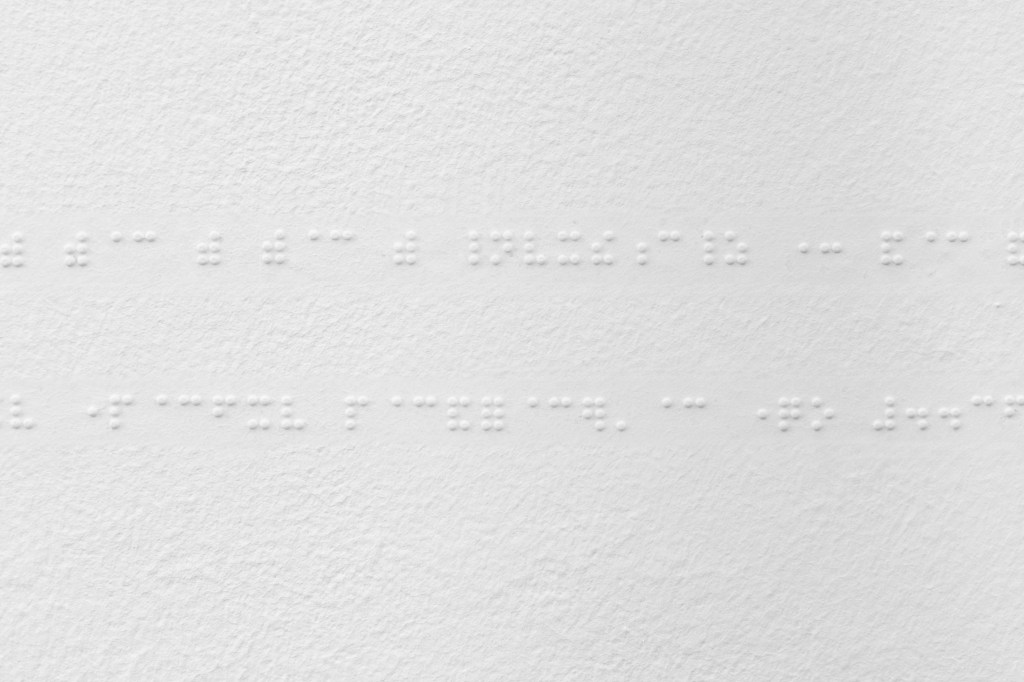
Lydia Ourahmane, Per voce (For voice), 2025, installation view, Inserzioni, Castello di Rivoli Museo d’Arte Contemporanea, Rivoli-Torino, 2025. Courtesy Castello di Rivoli Museo d’Arte Contemporanea, Rivoli-Torino. Photo Sebastiano Pellion di Persano
The text has been translated in English using AI
 c plus c