Carola Cappellari is a documentary photographer born in Venice in 1995. Her work explores the connections between photography and human rights, with a particular focus on themes like identity, migration, and family. Thanks to her attentive gaze and in-depth research in the documentary and humanistic fields, she was selected in 2024 for the annual residency at the Bevilacqua La Masa Foundation in Venice. In this interview, we asked her to tell us about one of her projects, “Sons of the Sun”.
Developed between 2021 and 2024 in Gaziantep, in southern Turkey near the Syrian border, Sons of the Sun tells the stories of young Syrians ‒ Mustafa, Sondos, Duah, Michael, and Hamza ‒ whose lives were completely transformed after being forced to flee from Syria to Turkey.
Cappellari invites us to go beyond the one-sided narrative we are often accustomed to in the media, offering instead a story based on relationships ‒ centered on listening, intimacy, and co-creation. Through photography, Cappellari creates a space where people deprived of their homes can reclaim life experiences, identity, and the stories they safeguard.
THE INTERVIEW WITH CAROLA CAPPELLARI
How was the project Sons of the Sun born? When did you begin telling these stories?
While still living in London, I was offered the opportunity to participate in a European volunteer project in Turkey that provided educational activities for Syrian and Turkish children and youth. I had already collaborated as a volunteer with a London-based cultural association, Qisetna, which works to give voice to the Syrian diaspora.
When I arrived in Turkey, however, I was confronted ‒ in a much more direct way ‒ with the difficulties some people, especially my peers, had to face because of forced migration. This influenced my interest and research into how migration contributes to the formation of personal identity. All this led me to work on the project, involving people I already knew.
How did you build a relationship of trust with the young people you photographed? Was there a particularly intense or revealing episode?
I arrived in Gaziantep in January 2021, and for months I didn’t take a single photo. I immersed myself completely in the association’s activities and in the shared life with companions from various countries, as well as with local Turkish, Kurdish, and Syrian volunteers.
I remember those months as the most beautiful because I lived them fully. There were so many of us, and it was an intense time full of emotions and memories. Among them, the wedding of two friends, Mustafa and Irene, in September 2021: he, a Syrian local volunteer with the organization; she, an Italian who had come to Gaziantep like me through the European volunteer program. They fell in love and opted for marriage as the only solution to continue their story either there or elsewhere. Together with other friends, we helped them organize the wedding, navigating countless challenges and bureaucratic hurdles, and I had the honor of being their photographer.
That day I took the first photo of Sons of the Sun: Irene at Mustafa’s house wearing the traditional Syrian wedding dress on the evening of their wedding, followed the next day by the Italian-style ceremony. Looking back at those photos in the following months, I became even more aware of the richness of what we were experiencing ‒ both for them, as newlyweds, and for the bond we had built among ourselves.
I began to think about continuing to tell the stories of the people around me, creating a collaborative work. I liked the idea of developing these friendships through photography, so I involved other young people I already knew or who had expressed interest in collaborating. Meanwhile, there were opportunities to take photographs, and I spent time in their family homes. They were younger than me, still living with their parents, so I was often invited to lunches, including Ramadan Iftar meals, and so on. Everything was ‒ as I like to call it ‒organic, meaning the process was truly natural.
How do you think the cultural identity of these young people has changed after forced migration?
This aspect emerges mainly from the conversations I had. For example, Mustafa told me he no longer felt he belonged either to Syria, because the Syria he knew no longer existed, or to Turkey, because he never felt it was his homeland, despite speaking Turkish fluently and having much of his family and friends living there. “Maybe Italy will be home”, he told me one day, as he was about to move there.
I often talked with all of them about the sense of belonging, and the feeling of being in a limbo ‒ suspended between two worlds ‒ emerged frequently. At a pre-adolescent age, having to adapt to a different culture and language is not easy, even though Gaziantep is culturally quite similar to Aleppo. Many hoped to move elsewhere.
A friend told me he didn’t believe he would ever see a free Syria, perhaps not even in fifty years. He had little hope that Assad’s regime would fall and the country could become free again. There was always a mix of hope and bitterness ‒ not being able to return to one’s country, which in any case would never be the same after years of conflict, and not being able to go elsewhere, creates a sense of limbo.
CAROLA CAPPELLARI AND PHOTOGRAPHY
Do you believe photography can be a tool to help those who have lost their home and, in a sense, their social identity?
For me, the hope and motivation came from the idea that this project could somehow also benefit them, even though I was aware it was still “just” photography.
Michael was very happy to have the chance, through this project, to share his passion for music ‒ to tell his story as a musician and music producer. Duah, on the other hand, joined the project later, in 2023, after the earthquake in Turkey. I met her while traveling with colleagues to villages around Gaziantep for an assignment for a newspaper. My Turkish colleague spotted a girl painting a wall of the tent where she and her family had taken refuge after their home was destroyed. Everyone was struck by her paintings on that white tent. They depicted the night of the earthquake ‒ extremely expressive and powerful.
I returned several times to meet her. Thanks to these meetings and the visibility gained when part of the project was published on the Time pages a few months later, Duah was contacted by an American organization that helped her sell her paintings and support her family through her art. This was a deeply meaningful outcome for me ‒ being able to help her and her family in a tangible way.
What challenges did you encounter in carrying out this project in a context of forced migration?
The most difficult moment came when two young women decided to withdraw from the project. This happened in 2023, after we had already worked together and produced many images.
I was, of course, saddened, because we had shared a strong friendship and many memories. They were the first people I reached out to when I returned to Turkey immediately after the earthquake. Due to the instability caused by the earthquake and the subsequent elections in Turkey, incidents of racism against Syrians increased, and from a legal perspective, the situation became even more uncertain.
The young women, understandably, had many concerns about exposure, especially with regard to their families, even though I had always been collaborative in creating the photos and transparent about their intended use. It is completely understandable that some chose not to continue. The fact that they didn’t feel safe enough to take part is part of the story itself ‒ it says a lot about the situation in Turkey and, until last December, in Syria.
Photography is never neutral; it always falls within certain mechanisms and can travel beyond the boundaries we initially imagine.
If you could show this project to a specific audience, who would you like to reach and why?
From the very beginning, I felt that a more personal narrative of their stories was especially important in Europe, because I realized there was a lot of misinformation about the Syrian community in general.
I often found myself telling my compatriots about what I saw, heard, and learned from them, and I noticed people were surprised to hear stories different from those constantly circulated by the media. This convinced me even more of the need to provide an alternative narrative ‒more personal and intimate.
That’s why I always envisioned the audience as European, excluding the Turkish public for reasons related to the participants’ safety, even though this was not a project with political aims or opinions. In any case, I tried to ensure the focus remained on them as individuals with their own stories and dreams, allowing them to identify themselves in the way they chose.
Ilona Prozorova

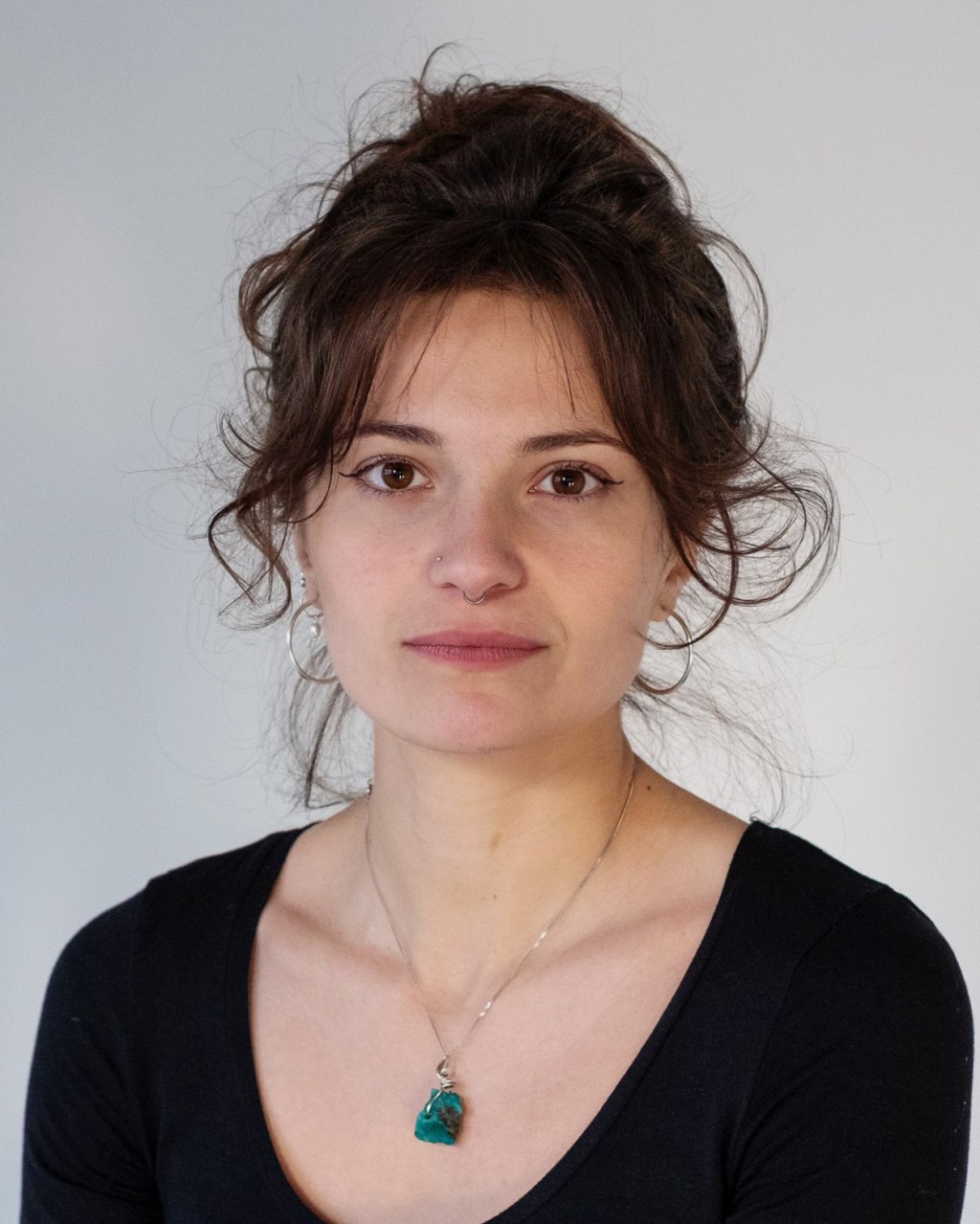
Carola Cappellari. Photo Matteo Giardiello 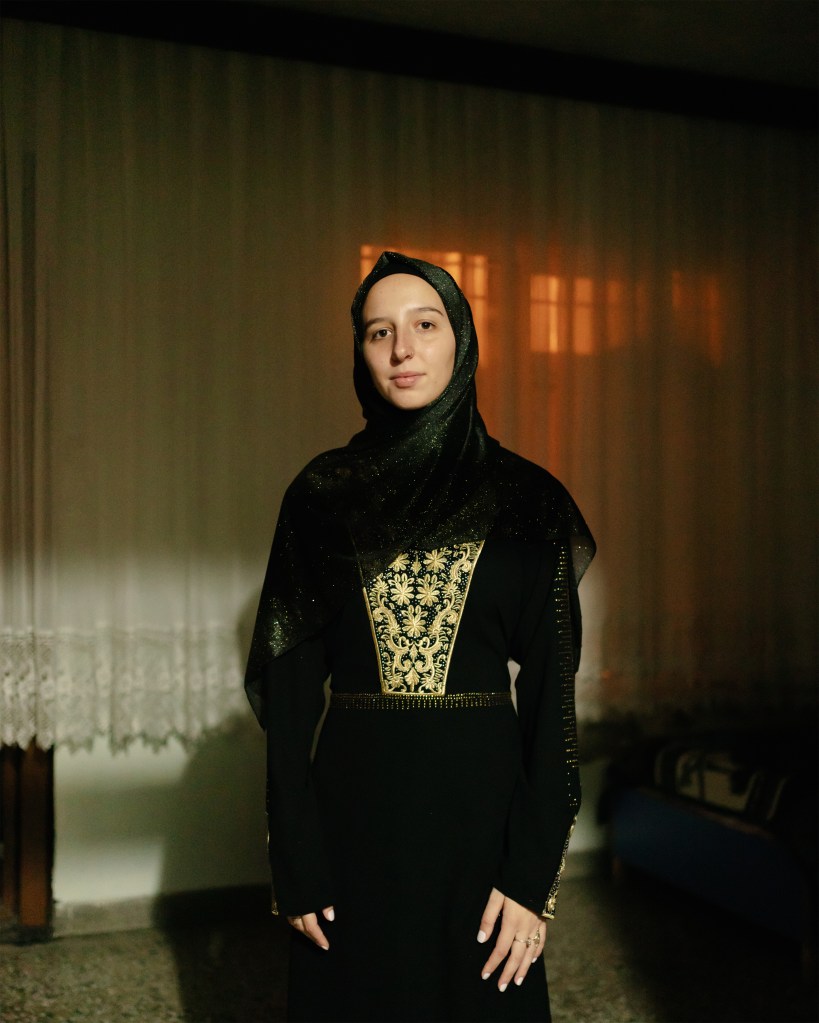
Carola Cappellari, Irene, on her wedding day in Gaziantep, Turkey, wearing a traditional Syrian wedding dress, September 2021. Courtesy of Carola Cappellari 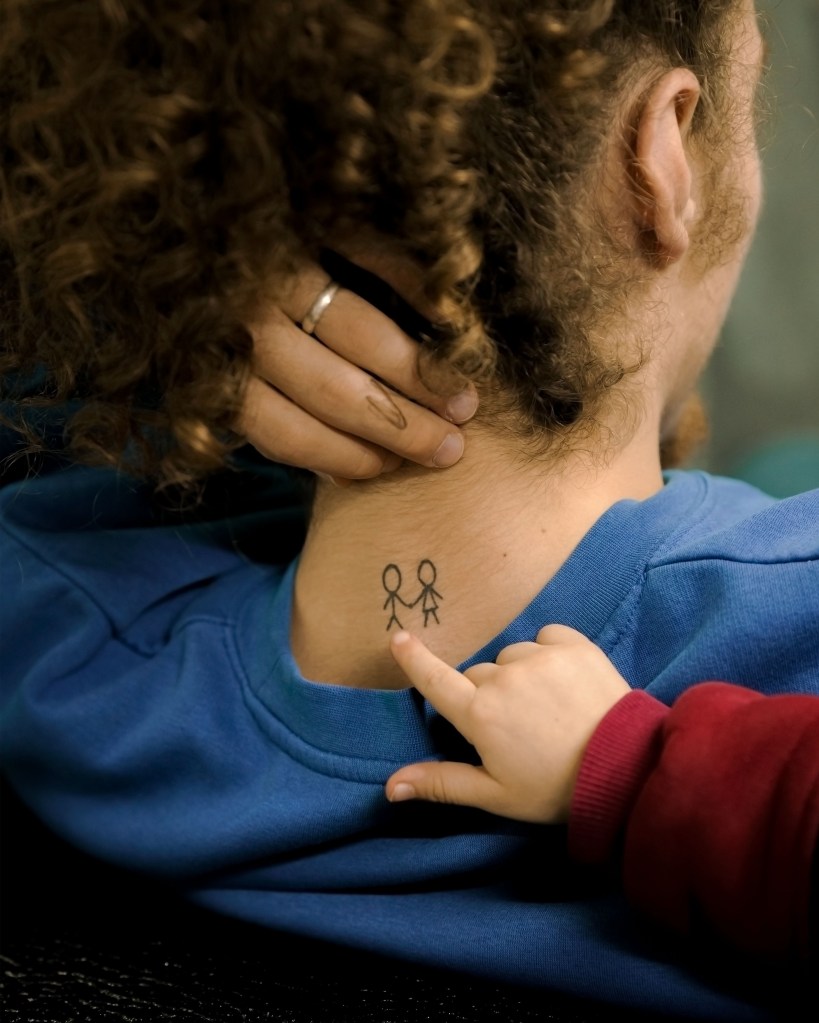
Carola Cappellari, Baraah, Mustafa’s younger sister, points to her brother’s tattoo dedicated to Irene. Gaziantep, Turkey, May 2022. Courtesy of Carola Cappellari
 c plus c