The Brolo, Center of Art and Culture of the city of Mogliano Veneto, inaugurated its exhibition season with the anthological exhibition of the Bosnian artist Safet Zec, open until 18 May 2025. A pictorial exploration of the themes of exodus, abandonment and hope.
Included among the artists of the Venice Pavilion at 60th International Art Exhibition – La Biennale di Venezia in 2024, Safet Zec arrived at the Brolo Center of Art and Culture in Mogliano Veneto with twenty-four works that retrace the stages of his life and career.
The artist’s story begins in Rogatica (Bosnia and Herzegovina), where he was born in 1943. After graduating from the Academy of Fine Arts in Belgrade, he began his career in the former Yugoslavia, establishing himself as a painter and engraver. However, because of the war that broke out in 1992, he was forced to leave his homeland and flee to Italy, first to Udine and then, in 1998, to Venice, a city which marked his artistic rebirth, as can be seen from the more than one hundred exhibitions held so far between Europe and the United States.
SAFET ZEC’S EXHIBITION IN MOGLIANO VENETO
The exhibition, curated by Angelo Zennaro and entitled Le anime e i corpi (The souls and the bodies), reflects the artistic and personal journey of Zec: large canvases, mixed techniques collages and engravings are articulated along the two floors of the exhibition space of the Municipality of Mogliano Veneto. The central theme around which the exhibition is developed is that of the artist’s escape from his native country, a gesture that from personal becomes universal, bearing witness to the pain and brutality caused by wars. Zec himself, in a sentence in the exhibition catalogue, recalls: “I would like to remember that I was a refugee, a man who had to leave the country he loved, the country where he was born, where he lived, where he was educated, where he studied… a country torn apart by war and nationalism”.
A painful reflection present in his works in the form of tangles of intertwined hands that touch souls and bodies that embrace and abandon themselves to each other, becoming the tale of a current tragedy.
A leading exponent of Poetic realism, Zec creates secular representations imbued with spirituality, silent but radical denunciations that show the fragility of those who are forced to leave everything they know and love to go ff into the unknown. The work Abbraccio (Hug) (2000) synthesizes these aspects, having as protagonists two subjects that, dressed in white and stained with red, with their heads bowed, embrace and merge in an embrace that encompasses pain but infuses hope. The poetics of abandonment is connected to that of escape: clothes hanging in the closet, doors closed with bolts and uneaten food are signs left by those who are no longer there, pieces of life lived by invisible souls who, with a bit of luck, seek refuge elsewhere, sowing memories.
THE WORKS BY SAFET ZEC AT BROLO
Like so many fragments of life, the exhibition highlighted the subjects dear to the artist, articulated in works that tell of landscapes seen outside the window, objects of daily use, work tables in the various studios, angelic female figures. As proof that life begins again even after the exodus and abandonment, Zec dedicates some works to a place to which he is very attached, his Venetian studio, which portrays in works such as Tavolo con colori (Table with colors) (2009), in which brushes, jars, colors, bottles and other objects of the craft are characterized by a dense and full-bodied painting, that defines the detail wrapping the forms and charging them with matter. The island that will see him reassert as an internationally renowned artist would thus become his second homeland, to which he would dedicate works such as Porta veneziana con numero (Venetian door with number) (2018).
“Deeply ethical and prophetic, because it is absolutely secular and yet intensely religious”, as the art historian Giandomenico Romanelli defines it in the pages of the catalogue, the art of Safet Zec is able to translate every moment of his life, especially the most painful, into shapes, colors and compositions that invite us to look at today’s world with new eyes, finding hope even in adversity.
Laura Ferrone
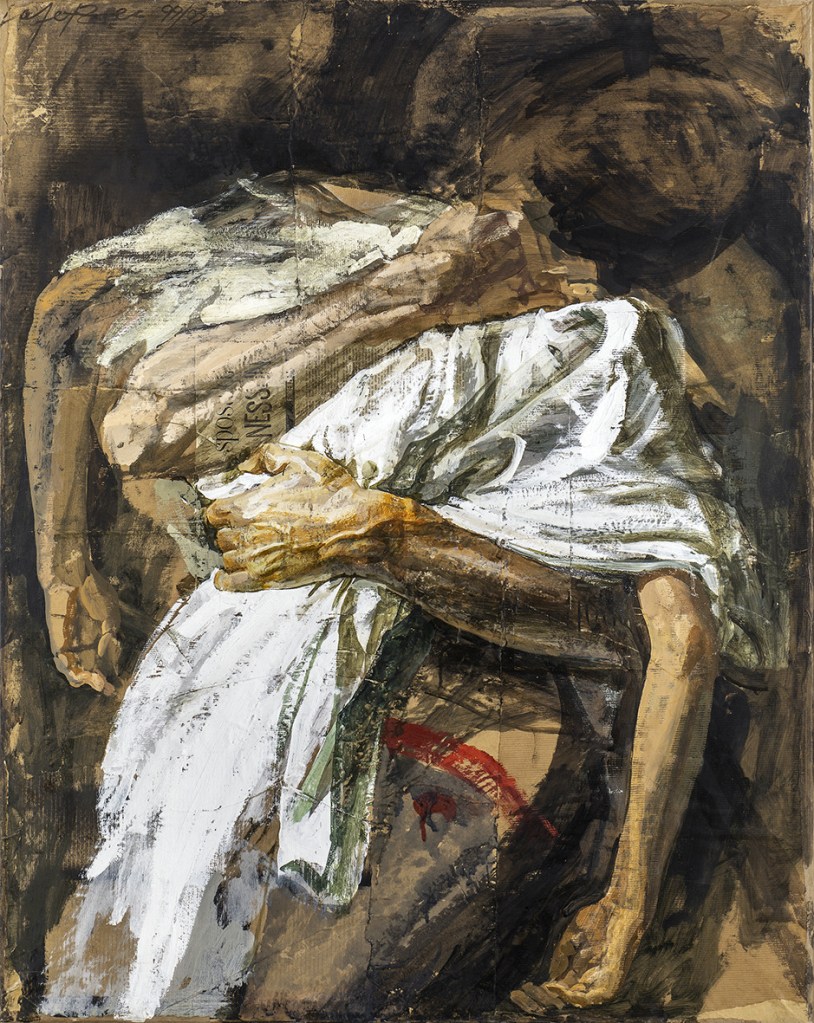
Safet Zec, Abbraccio, 2000, oil and collage on canvas, 100×80 cm 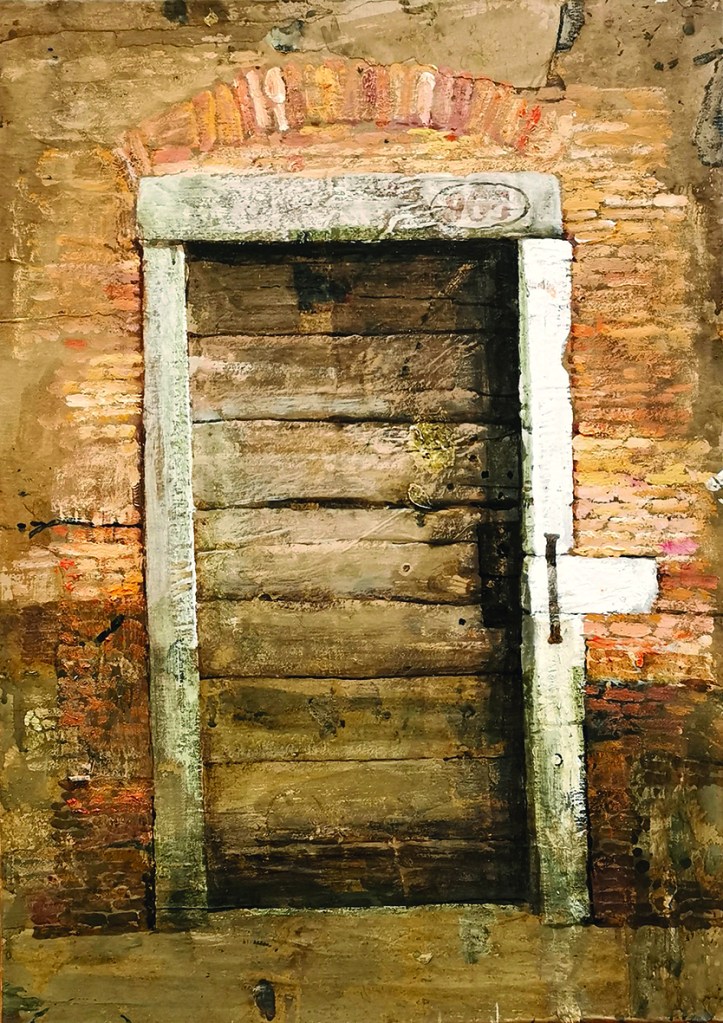
Safet Zec, Porta veneziana con numero, 2018, tempera, collage on paper and canvas, 70×50 cm 
Safet Zec, Tavolo con colori, 2009, tempera, collage on paper and canvas, 120×160 cm 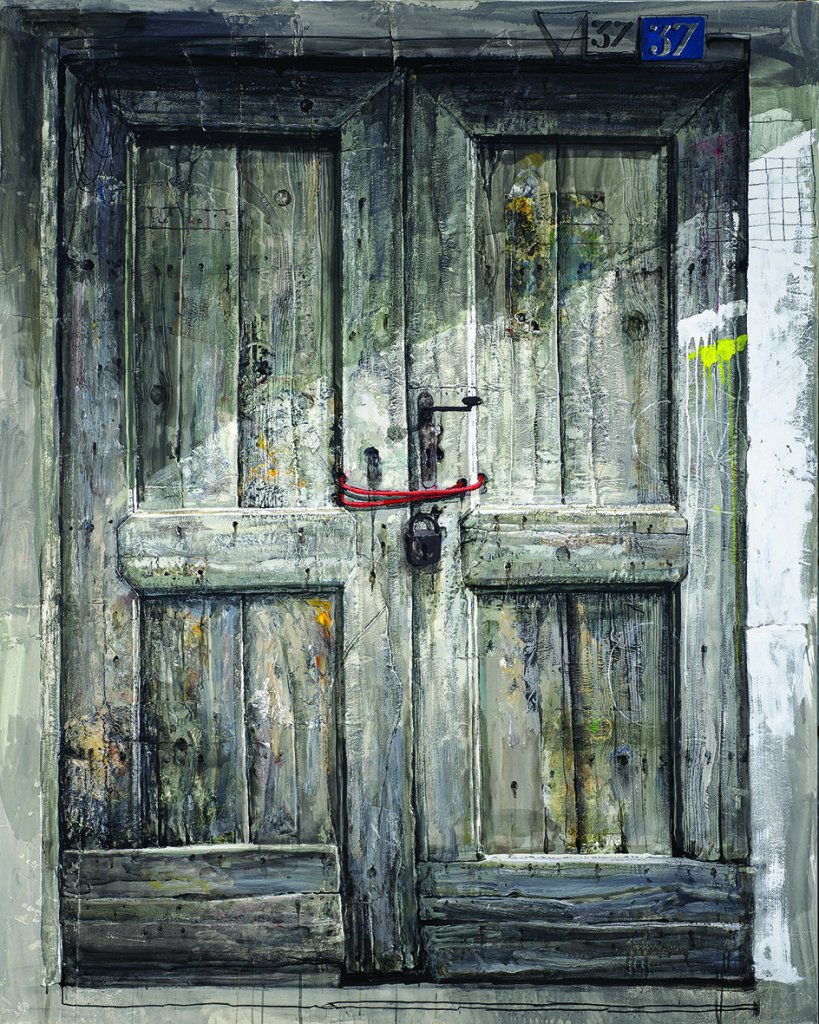
Safet Zec, Porta di legno, 2012, tempera and collage on paper, canvas on wooden stretcher, 200×160 cm
Translated with AI
 c plus c