The exhibition “Memory of Hope” by Kazakh artist Gulnur Mukazhanova, hosted in the Sala delle Colonne at Ca’ Giustinian in Venice, is configured as a journey into memory, identity and spirituality through the language of weaving.
The exhibition Memory of Hope in the Sala delle Colonne at Ca’ Giustinian is part of the project È il vento che fa il cielo. La Biennale di Venezia sulle orme di Marco Polo. It is an initiative of the Biennale’ Historical Archives curated by Luigia Lonardelli to celebrate the 700th anniversary of Marco Polo’s death. The Biennale’s Historical Archives thus becomes a reservoir of active memory, where the past is not just documentation but living material to build new narratives. The first stage of the project was in Hangzhou, China, with Il sentiero perfetto. The second stage, in Venice, featured Gulnur Mukazhanova, who explored the geography of a lesser-known journey, that of Marco Polo’s father and uncle, Niccolò and Matteo, across the Kazakh steppes, a place of connection and exchange between East and West.
GULNUR MUKAZHANOVA IN VENICE
Gulnur Mukazhanova (b. 1984, Semipalatinsk), after specializing in textile arts at the National Academy of Arts in Almaty, moved to Berlin in 2008 and attended the Kunsthochschule Berlin-Weißensee, deepening her knowledge of textile art and establishing a dialogue between her culture of origin and the European context. The Kazakh artist’s attention is therefore focused on little-known archives and stories, giving shape to works that combine the need to recover one’s origins and the desire to project oneself into the future. The Venetian exhibition invited the visitor to walk around the work along its perimeter, in an environment that has become a place of introspection. The three layers of fabric that cover it represent the different dimensions of human existence: body, mind and soul. Developed in an infinite shape, if observed in plan it reveals lines that ideally rise towards heaven and descend towards the underworld, resting on an oval platform that recalls a flame, a symbol of transformation and renewal. The layers depict the symbolism of the tree of life which, in the Kazakh nomadic tradition, has a profound meaning of union between the sky, the earth and human beings. The weave of fabrics, pouring like a waterfall onto the last layer, reflects the formation of personal and collective identity, the soul of every individual and society, suggesting that it develops through experiences lived thanks to the body and the mind.
THE WORKS BY GULNUR MUKAZHANOVA
The work communicates with the space by incorporating the columns that, from simple architectural elements, become visual obstacles capable of stimulating the visitor’s imagination, encouraging them to ask themselves what lies behind the columns. The layering of fabrics evokes a non-static identity. Many different textiles have been used: the merino wool felt stands out and it symbolizes the connection to nomadic cultural roots, the combed merino wool has been chosen for its fineness and softness, the white silk recalls light and the vegetable viscose velvet, a fabric historically produced in Russia until the 1980s, then banned for environmental reasons. All this is combined with scraps from Chinese production. Each fabric is worked differently to express specific conceptual qualities, incorporating symbols such as the dragon, a mythological creature as a metaphor for rebirth, continuity and spiritual guidance, and the phoenix, which evokes the ideas of regeneration and beauty. “In the archives there is living matter […] The archive is that instinct that we all have to classify in order to understand ourselves,” explained the curator Luigia Lonardelli during the presentation of the project at Ca’ Giustinian.
After Venice, the project will stop in Istanbul in the autumn of 2025, continuing the path of research and dialogue between cultures along the stages of Marco Polo’s journey.
Linda Rubino
https://www.labiennale.org/it/news/la-mostra-‘gulnur-mukazhanova-memory-hope’
https://gulnurmukazhanova.com/
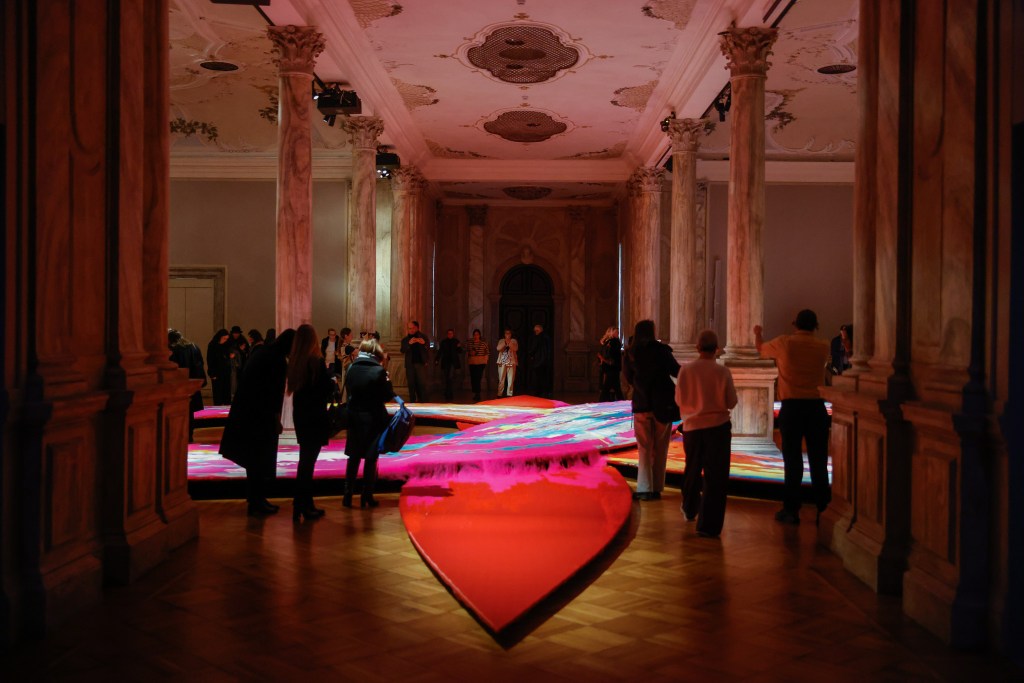
Gulnur Mukazhanova. Memory of Hope, exhibition view, Ca’ Giustinian, Sala delle Colonne, Venezia 2024 – 25. Photo Andrea Avezzù, Courtesy of La Biennale di Venezia 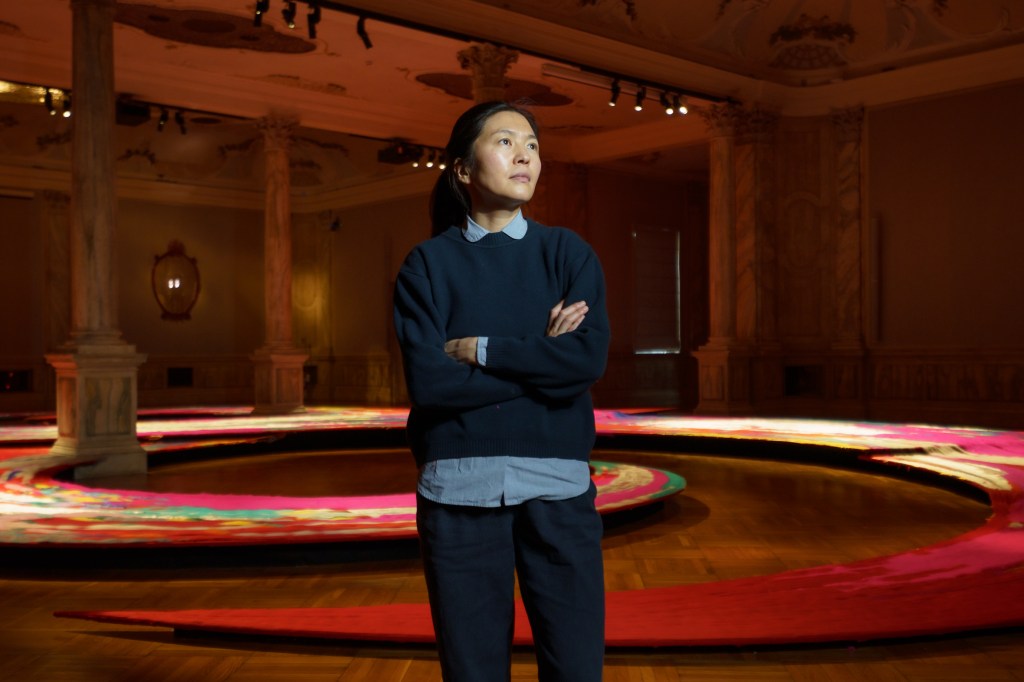
Portrait of Gulnur Mukazhanova. Photo Andrea Avezzù, Courtesy of La Biennale di Venezia 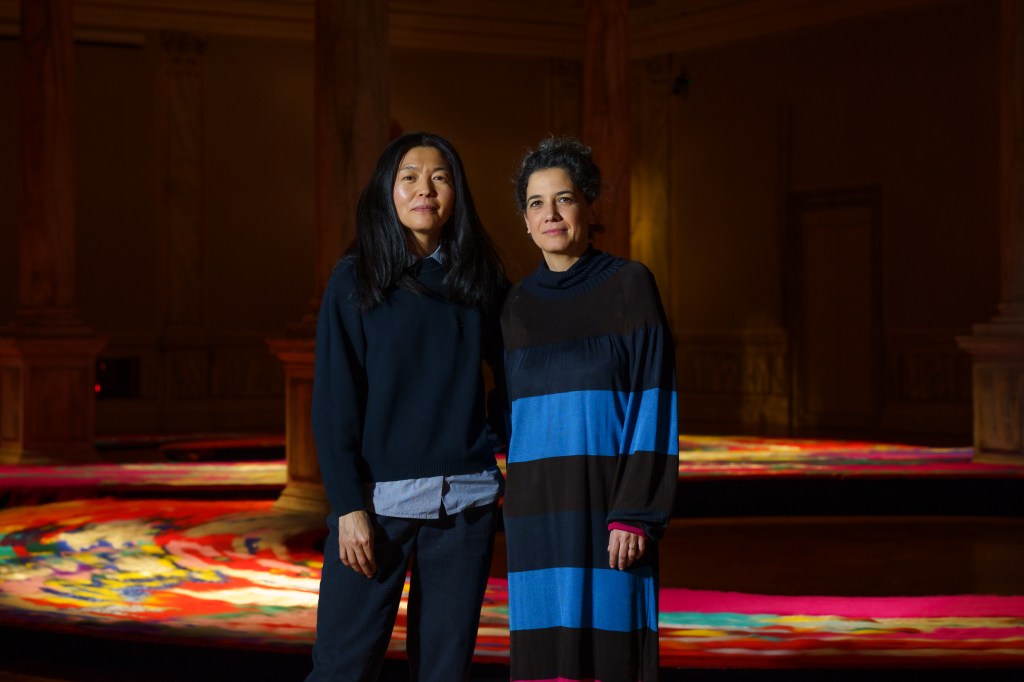
Portrait of Gulnur Mukazhanova and Luigia Lonardelli. Photo Andrea Avezzù, Courtesy of La Biennale di Venezia 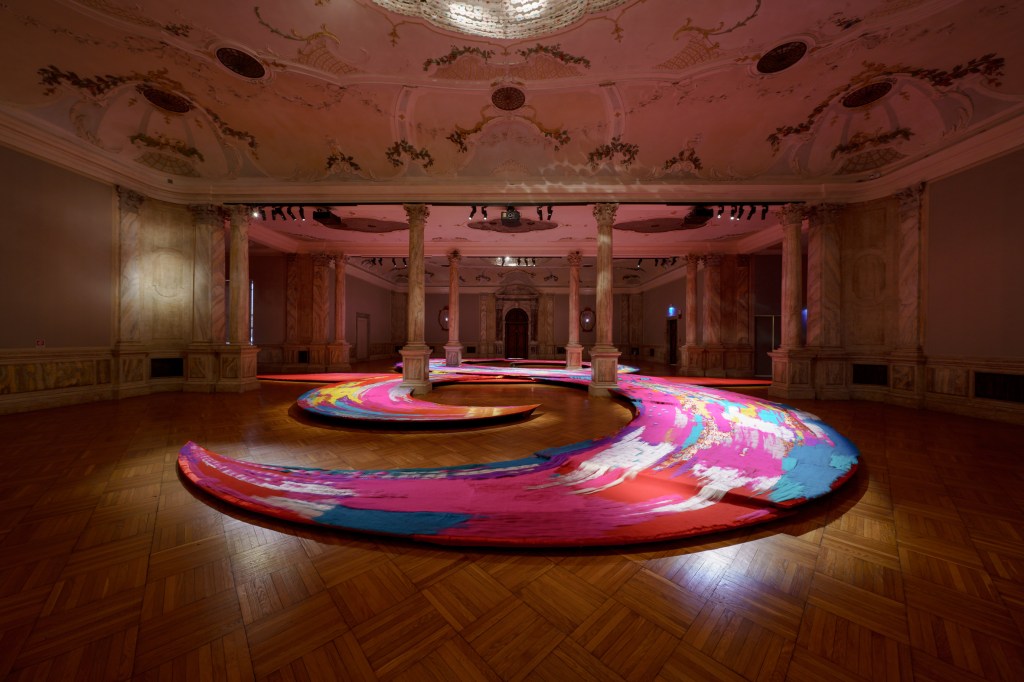
Gulnur Mukazhanova. Memory of Hope , exhibition view, Ca ’ Giustinian, Sala delle Colonne, Venezia 2024 – 25. Photo Andrea Avezzù, Courtesy of La Biennale di Venezia 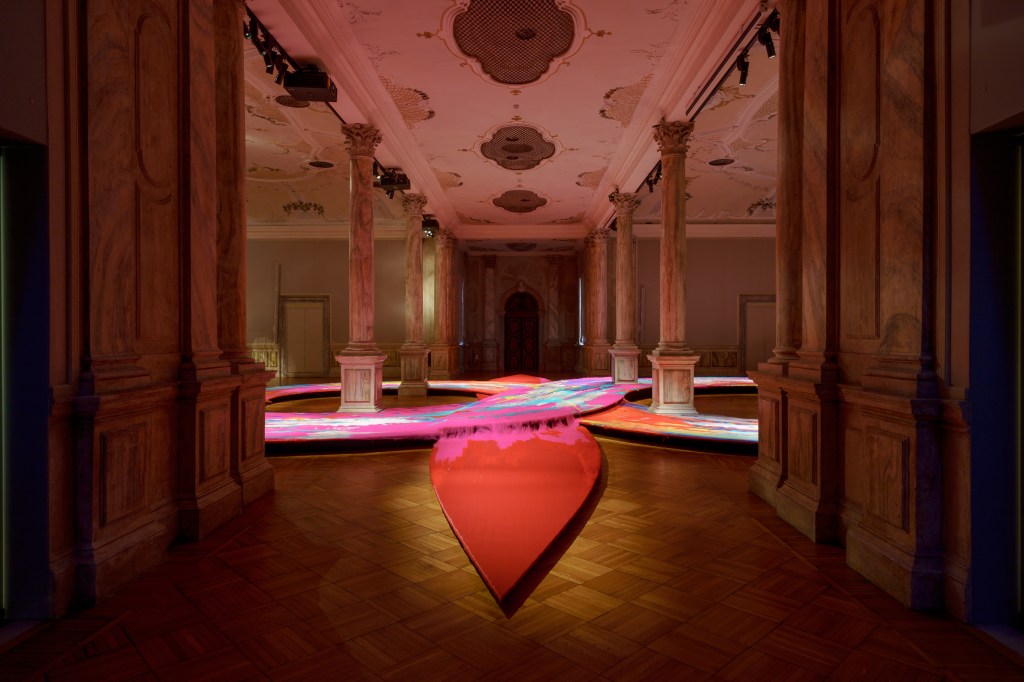
Gulnur Mukazhanova. Memory of Hope , exhibition view, Ca ’ Giustinian, Sala delle Colonne, Venezia 2024 – 25. Photo Andrea Avezzù, Courtesy of La Biennale di Venezia 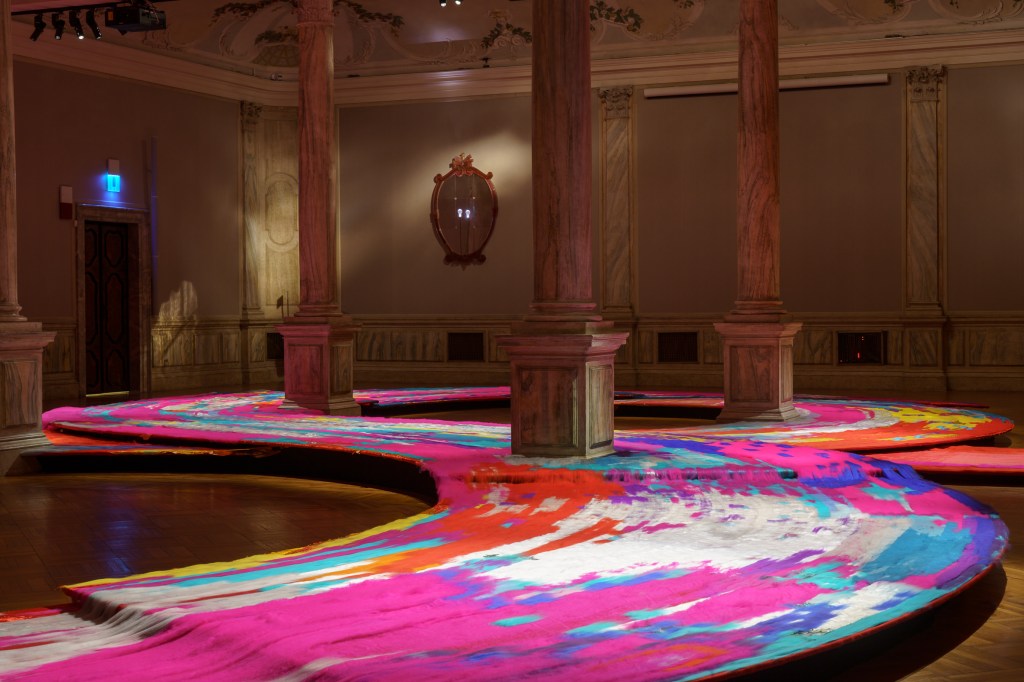
Gulnur Mukazhanova. Memory of Hope , exhibition view, Ca ’ Giustinian, Sala delle Colonne, Venezia 2024 – 25. Photo Andrea Avezzù, Courtesy of La Biennale di Venezia 
Gulnur Mukazhanova. Memory of Hope , exhibition view, Ca ’ Giustinian, Sala delle Colonne, Venezia 2024 – 25. Photo Andrea Avezzù, Courtesy of La Biennale di Venezia 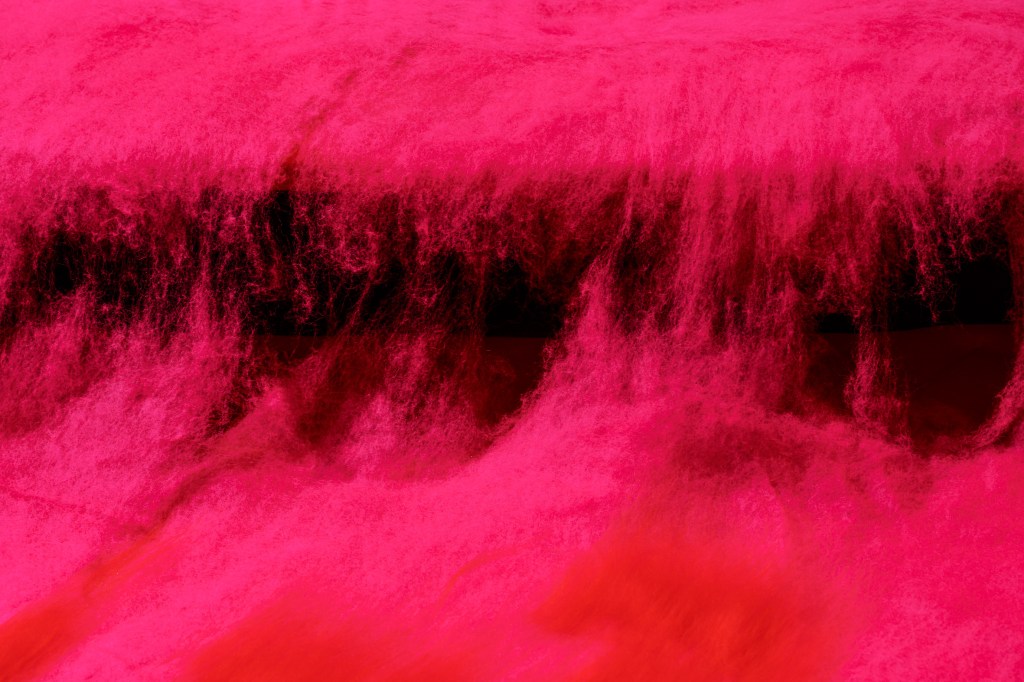
Gulnur Mukazhanova. Memory of Hope , exhibition view, Ca ’ Giustinian, Sala delle Colonne, Venezia 2024 – 25. Photo Andrea Avezzù, Courtesy of La Biennale di Venezia 
Gulnur Mukazhanova. Memory of Hope , exhibition view, Ca ’ Giustinian, Sala delle Colonne, Venezia 2024 – 25. Photo Andrea Avezzù, Courtesy of La Biennale di Venezia
 c plus c