Until 29 June 2025, Palazzo Roverella hosts the exhibition “Hammershøi and the painters of silence between Northern Europe and Italy”. In the heart of Rovigo, a corpus of works by the Danish painter describes his poetics in an intimate and silent path made of interiors, portraits and landscapes.
Atmospheres suspended in a time frozen by the gray, earthy and pearly tones. The eye of the visitor wanders in search of a grip, finding the void: only silence, solitude and shadows.
Almost a century after one of his works was exhibited at the Venice Biennale in 1932, the works of Vilhelm Hammershøi (Copenhagen, 1864-1916) return to Italy as a tribute to the long-forgotten Danish painter who has recently been rediscovered internationally.
Thanks to the initiative of curator Paolo Bolpagni, the collaboration of the Municipality of Rovigo and the Accademia dei Concordi, it was possible to gather a corpus of about one hundred works, fourteen of which signed by the artist and placed in dialogue with those of other European painters, who share with him the poetics of silence.
VILHELM HAMMERSHØI ON SHOW IN ROVIGO
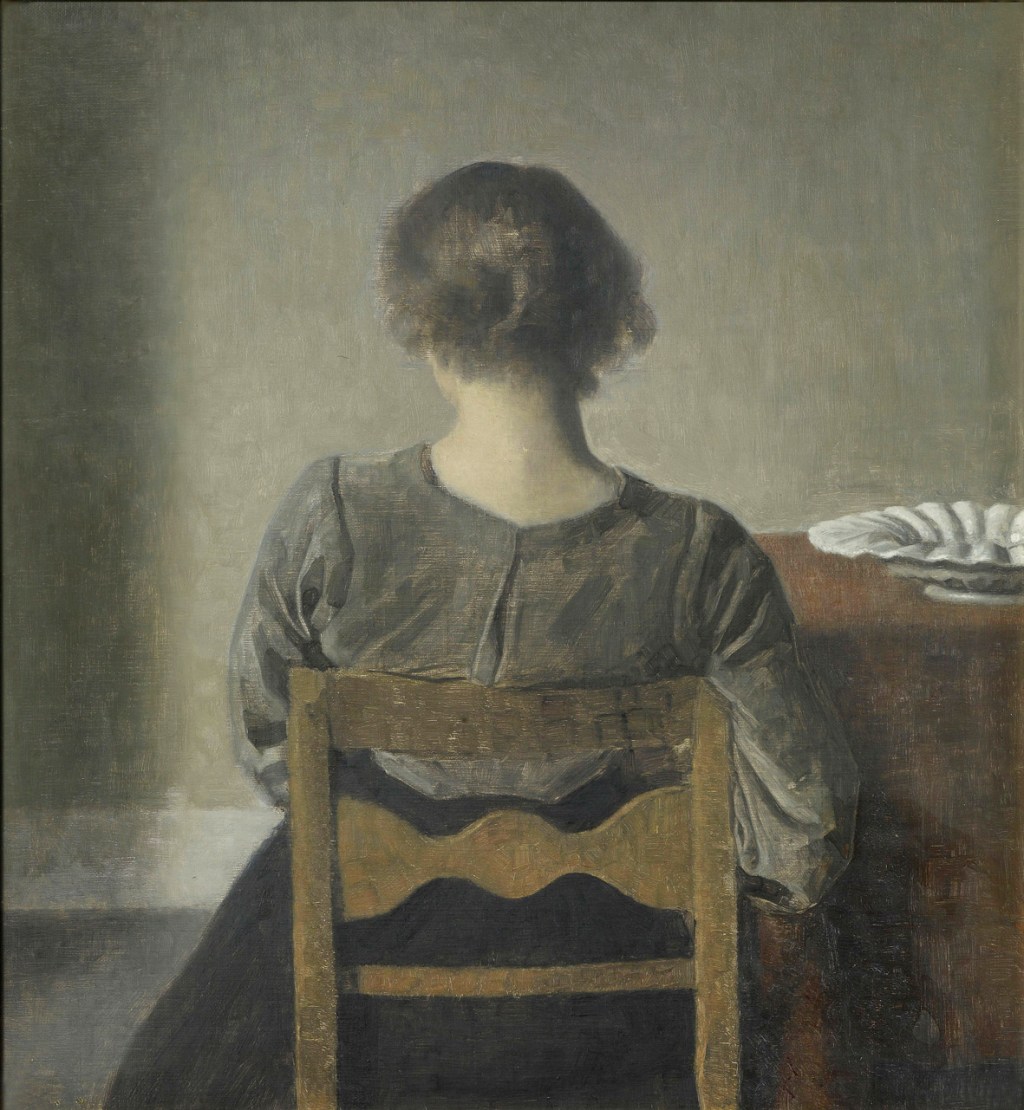
The exhibition’s path merges with that of the young artist Hammershøi, who began drawing at the age of eight and later became a painter. Coming from a middle-class family, he enjoyed an excellent education since childhood, with private teachers of the caliber of Niels Christian Kierkegaard and Holger Grønvold, then enroll at the Royal Danish Academy of Fine Arts in 1879 and attend courses by Frederik Vermehren. The first work we encounter, linked to the period of training at the Independent Study School for Artists, where he received the teachings of Peder Severin Krøyer, is Study of male nude seen from the back (ca. 1884). This charcoal reveals the early ability of Hammershøi to describe the bodies realistically and, above all, to prefer a subject with shoulders theme that will transform him in the precursor of this type of portraits. To complete his training, in 1887 he made a trip to the Netherlands, following in the footsteps of the great Dutch and Flemish masters of the seventeenth century. From them he assimilates the introspective approach, the earthy colors and the choice of subjects: domestic interiors, women in reading and incommunicability between the characters.
THE ARTWORKS BY VILHELM HAMMERSHØI
From here opens, in a consistent and linear way, a second section dedicated to the domestic interiors without human presence, which the artist begins to paint around 1898, when he moves with his wife Ida Ilsted in the district of Christianshavn in Copenhagen. His house, located at 30 Strandgade, becomes his favorite subject, of which he paints in an austere way the walls almost completely bare. In this phase, Hammershøi lays the foundations of a poetics characterized by emptiness and light, absence of movement and restless atmospheres, which are well connected to his nature as a shy and lonely man, marked by a troubled marriage. A masterpiece of this period is the work Sunlight in the living room III (1903): from a window hidden to the eye of the viewer enters a cold light, which illuminates a dark interior composed of few essential elements, solid in their composure, all strictly marked by neutral tones. Many European artists will draw inspiration from this way of painting ‒ as evidenced by the works on display ‒, but without being able to show the same feeling of tension, suspension and restlessness. The exhibition also offers an interesting parallel with Gertrud (1964), a film produced by the Danish filmmaker Carl Theodor Dreyer, whose environments and dynamics between the characters seem like direct quotations from Hammershøi’s works. A further section of comparison, with works by contemporary artists such as Carl Holsøe, Georges Le Brun, Oscar Ghiglia and Tyra Kleen, shows an evolution: the addition to the interior scenes of a human subject. The human presence, even if it appears, is always something elusive and generates anguish, mystery and suspicion in those who observe. This aspect is clearly evident in the work Interior, Strandgade 30 (1902), in which Ida, the artist’s wife, appears engaged in daily cleaning and portrayed inside a room delineated by claustrophobic geometries.
The section dedicated to portraiture is illuminating. Hammershøi, in fact, liked to only draw the people he knew best, convinced that it was the only way to make a more satisfying result.
Emblematic is Double portrait of the artist and his wife seen through a mirror (1911), in which the painter portrays himself frontally with respect to the spectator, with the palette in his hand, while his wife is standing with her back against a window. Between the two there is distance, no dialogue, only silence and acceptance. A work dated 1902 is also worth mentioning, the only testimony of the journey in Italy. This is an interior view of the church of Santo Stefano Rotondo al Celio in Rome, which defines the artist’s interest in ancient remains. The atmosphere remains dreamlike, the soft light seems to place the architecture in another world.
VILHELM HAMMERSHØI AND HIS COLLEAGUES
The final sections, that gives Hammershøi’s colleagues an immoderate amount of space, are intended to be a tribute to landscape painting from the late 19th and early 20th centuries. The teachings of the Danish master are developed differently in the works of great Northern European and Mediterranean artists, such as those, among countless others, of the Belgians Fernand Khnopff and William Degouve de Nuncques and the French of Swiss origin Eugène Grasset, which depict cities with inanimate, silent and dreamlike atmospheres. All this is a little difficult to find in the last section of the exhibition focused on the “landscapes of the soul”, made largely by Italian artists such as Umberto Prencipe, Umberto Maggioli and Enrico Coleman, that give shape to landscapes full of melancholy and loneliness.
The last room welcomes the tribute that the contemporary Spanish photographer Andrés Gallego wanted to make to the Danish painter, reworking his look and bringing into scene faithfully environments and atmospheres through his lens.
The exhibition at Palazzo Roverella not only brings back the long-forgotten works of one of the greatest Danish masters of his time, but also creates a series of parallels with the work of other artists who will be inspired by him. The main focus remains on the production of Hammershøi, telling his training, travels and artistic heritage. An art that needs contemplation, calm and slowness: elements that are increasingly disappearing in today’s chaotic society, but which Hammershøi reminds us to keep in mind.
Laura Ferrone
https://www.palazzoroverella.com/hammershoi/
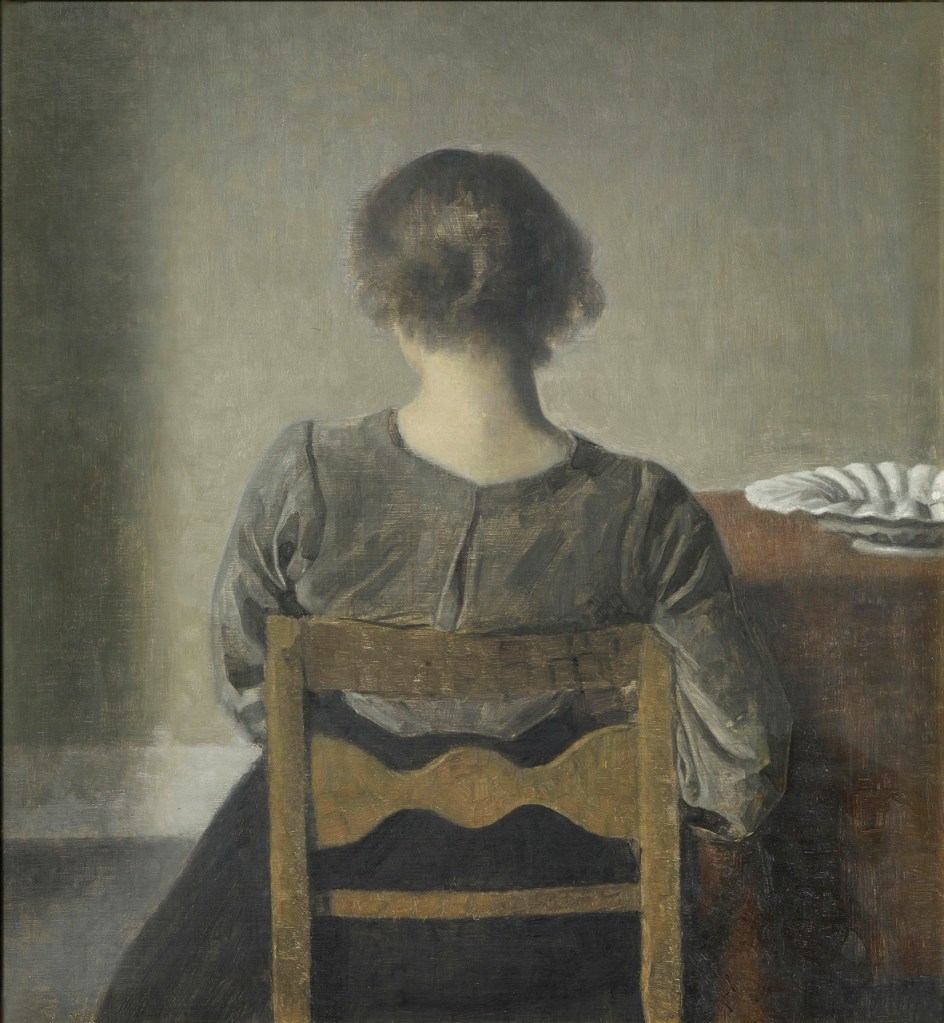
Vilhelm Hammershøi, Riposo, 1905, Parigi, Musée d’Orsay © RMN-Grand Palais / Martine Beck-Coppola/ Dist. Foto Scala, Firenze 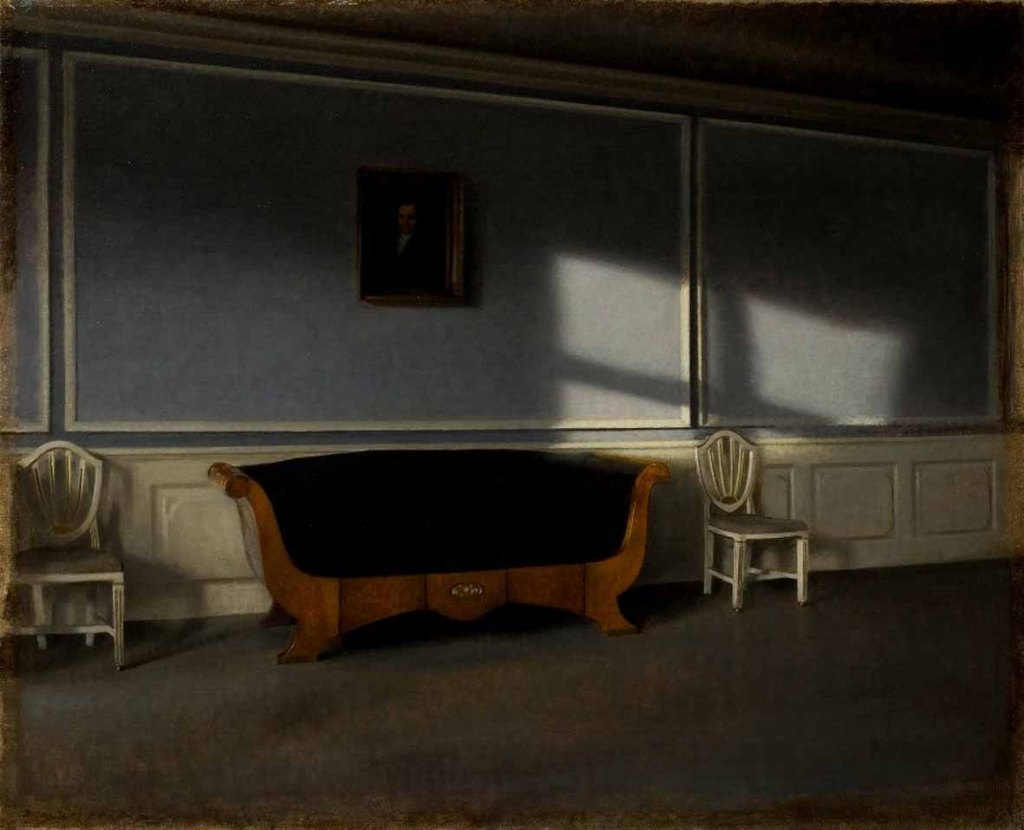
Vilhelm Hammershøi, Sunshine in the Drawing Room III. Strandgade 30, 1903. Stockholm. Nationalmuseum 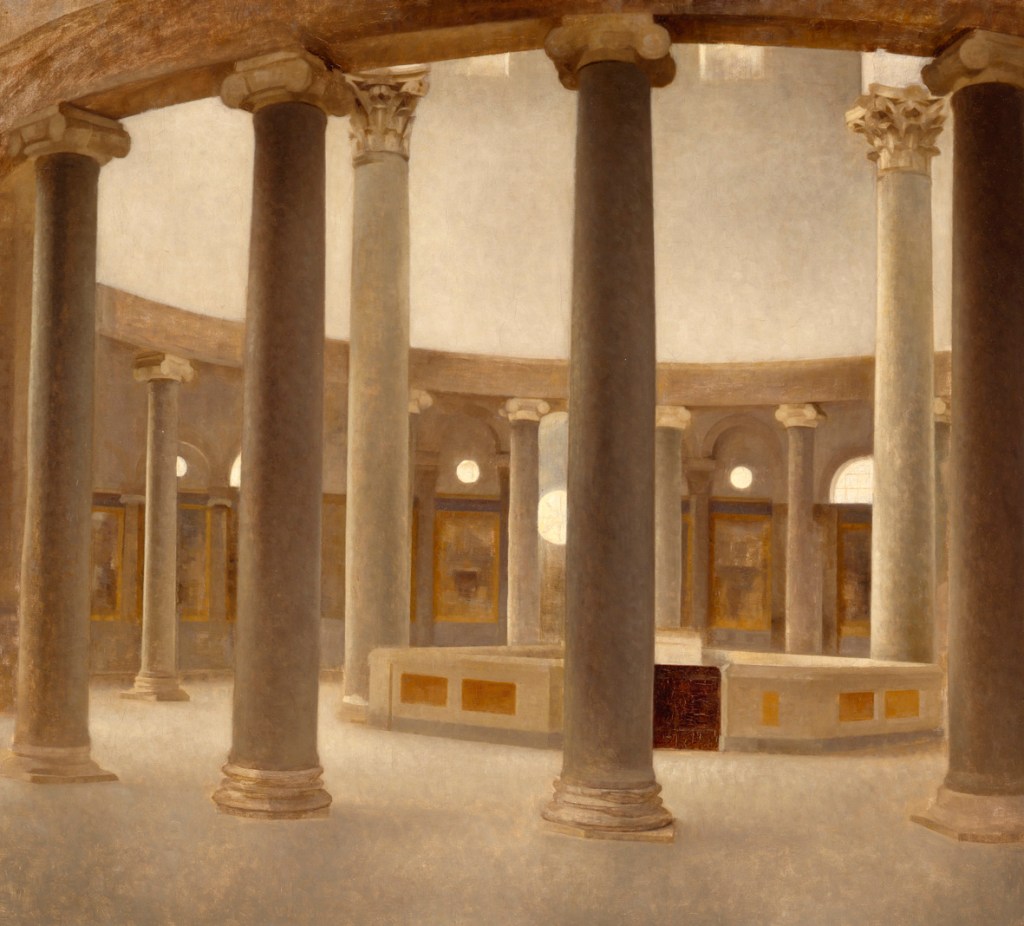
Vilhelm Hammershøi, Interno della chiesa di Santo Stefano Rotondo a Roma, 1902, Odense, Kunstmuseum Brandts © Kunstmuseum Brandts 
Vilhelm Hammershøi, Il violoncellista. Ritratto di Henry Bramsen, 1893, Odense, Kunstmuseum Brandts © Kunstmuseum Brandts 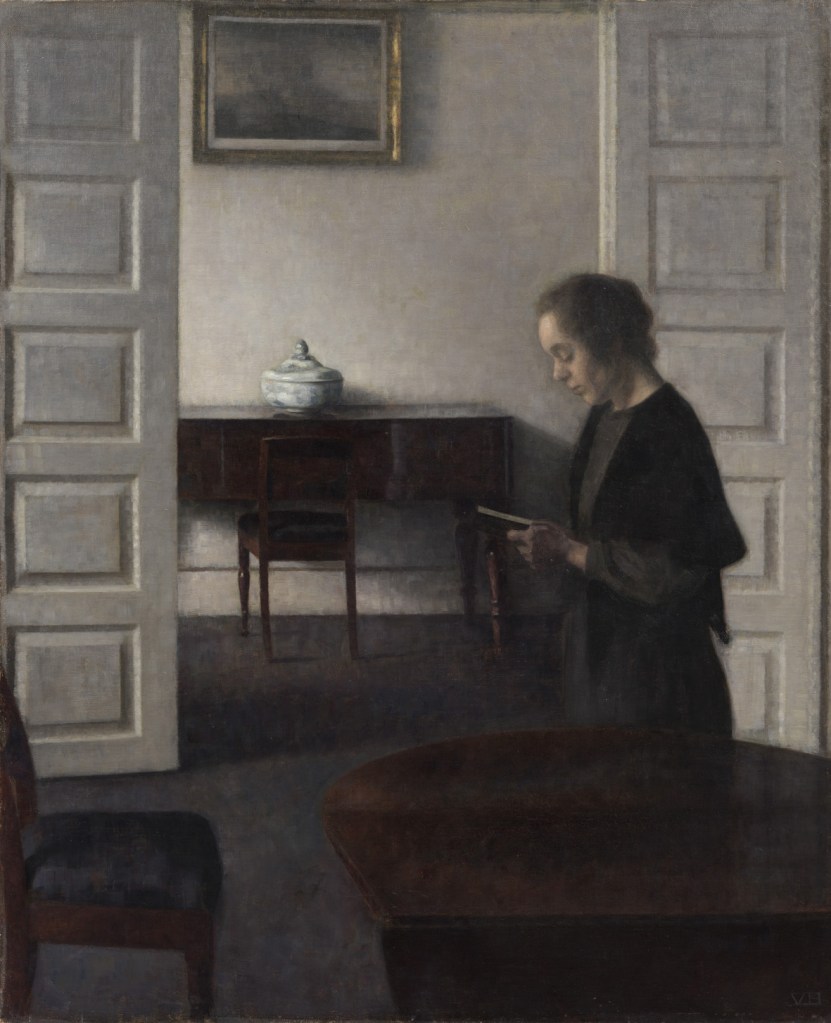
Vilhelm Hammershøi, Luce del sole nel salotto III, 1900 circa, Stoccolma, Nationalmuseum © Nationalmuseum / foto Cecilia Heisser 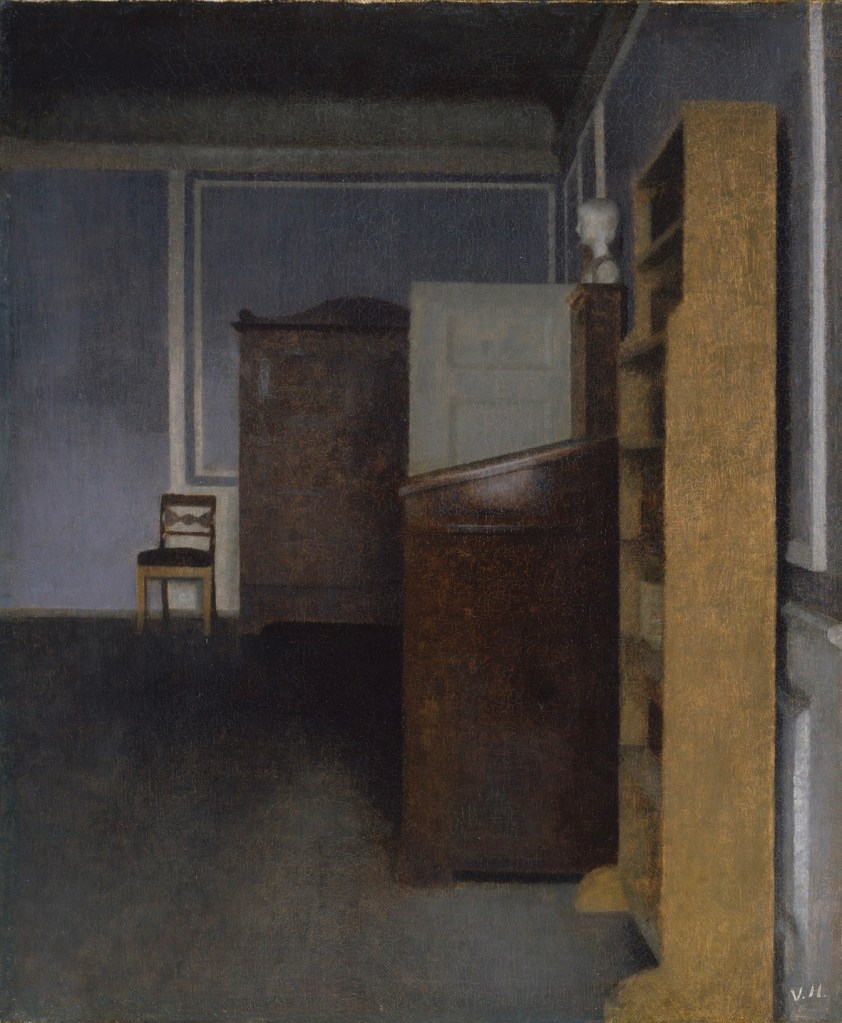
Vilhelm Hammershøi, Interno. Strandgrade 30, 1905-1909. Amburgo, Hamburger Kunsthalle © Foto Scala, Florence / bpk, Bildagentur fuer Kunst, Kultur und Geschichte, Berlin
Translated with AI
 c plus c